×

Dominican Republic🇩🇴 | attractionsMuseo del Ámbar Dominicanoamber specimens, mining history, local jewelry | things to do and best time to go

Explore Amber World MuseumExplore Museo Larimar

Backpacking in Museo del Ámbar Dominicano
🌟 Highlightattraction ranked #7
By Johan Kruseman 🇳🇱 | Updated May 13, 2026

Everyone’s seen the Instagram close-up: a chunk of golden amber with a prehistoric bug frozen inside, held up to the light at Museo del Ámbar Dominicano. But let’s get real—if you’re coming just to gawk at fossilized insects, you’ll be in and out in twenty minutes, wondering what the fuss was about. The real magic here isn’t the amber itself, but the stories it tells about the Dominican Republic’s wild, volcanic past and its role in the global amber trade. Tucked into a creaky colonial mansion in the heart of Puerto Plata’s old town, this museum is more time capsule than tourist trap. Yes, you’ll dodge a few cruise ship crowds and the entry fee isn’t pocket change by backpacker standards, but you get a crash course in geology, Caribbean history, and the art of spotting fakes from the real deal. Compared to the country’s beach resorts or adrenaline-junkie hikes, this place is quieter, brainier, and—if you let it—way more memorable.

Discover everything you want to know in the 📖 Dominican Republic Travel Guide.
Loading the map 🌍
CLICK TO FILTER
cities
towns
landmarks
national parks
hikes
beaches
attractions
festivals
regions
SHOW COUNTRY’S BESTSHOW ALL

✨ Why go?
Ranked #7 attraction in Dominican Republic
Why Museo del Ámbar Dominicano should be on your travel list

The Museo del Ámbar Dominicano isn’t just another shiny stop on the tourist checklist—it’s a deep dive into a story that’s millions of years old, right under your nose. Sure, you’ll find crowds here, especially during peak season, and yes, the entrance fee isn’t dirt cheap by local standards. But this place earns every peso because it’s the epicenter of Dominican amber, a natural treasure that’s both a geological marvel and a cultural icon.

Backpackers who make the trek aren’t just snapping photos of golden fossils; they’re connecting with a piece of Earth’s ancient past that shaped the island’s identity. The museum’s collection goes beyond pretty stones—it showcases insects trapped in amber, frozen in time, offering a glimpse into prehistoric ecosystems. This isn’t just a museum; it’s a … read more 👉
The Museo del Ámbar Dominicano isn’t just another shiny stop on the tourist checklist—it’s a deep dive into a story that’s millions of years old, right under your nose. Sure, you’ll find crowds here, especially during peak season, and yes, the entrance fee isn’t dirt cheap by local standards. But this place earns every peso because it’s the epicenter of Dominican amber, a natural treasure that’s both a geological marvel and a cultural icon.

Backpackers who make the trek aren’t just snapping photos of golden fossils; they’re connecting with a piece of Earth’s ancient past that shaped the island’s identity. The museum’s collection goes beyond pretty stones—it showcases insects trapped in amber, frozen in time, offering a glimpse into prehistoric ecosystems. This isn’t just a museum; it’s a milestone on the Dominican route, a place where history, science, and art collide in a way that’s rare and real.

If you’re chasing authentic experiences that reward curiosity and patience, the Museo del Ámbar Dominicano delivers. It’s a reminder that some treasures aren’t just about flash—they’re about the slow, fascinating stories waiting to be uncovered.
Want to include Museo del Ámbar Dominicano in your Dominican Republic route?
Create a personalized Dominican Republic itinerary that includes Museo del Ámbar Dominicano and the places that fit your trip — based on your travel style, budget, and available time. Get your route in seconds.

Generate my trip

💡 HighlightsKey sights and experiences for travelers

The 40-Million-Year-Old Amber Room
You’ll walk into a room that feels like a time capsule cracked open. This isn’t just a display case with a few shiny rocks. The museum’s main amber gallery is a lineup of fossilized tree resin so old it predates the Caribbean Sea itself. Some pieces are the color of honey, others deep cherry, and every single one is a window into a prehistoric jungle. You’ll see ancient insects—mosquitoes, beetles, even a lizard—trapped mid-crawl, perfectly preserved. It’s the closest you’ll get to Jurassic Park without a Hollywood budget or a death wish.


Amber Under the Microscope
Forget staring at glass cases from a distance. Here, you get to peer through microscopes at the inclusions inside the amber. This is where the museum stops being a passive stroll and turns into … read more 👉
The 40-Million-Year-Old Amber Room
You’ll walk into a room that feels like a time capsule cracked open. This isn’t just a display case with a few shiny rocks. The museum’s main amber gallery is a lineup of fossilized tree resin so old it predates the Caribbean Sea itself. Some pieces are the color of honey, others deep cherry, and every single one is a window into a prehistoric jungle. You’ll see ancient insects—mosquitoes, beetles, even a lizard—trapped mid-crawl, perfectly preserved. It’s the closest you’ll get to Jurassic Park without a Hollywood budget or a death wish.


Amber Under the Microscope
Forget staring at glass cases from a distance. Here, you get to peer through microscopes at the inclusions inside the amber. This is where the museum stops being a passive stroll and turns into a detective story. You’ll spot the veins on a 30-million-year-old leaf, or the delicate wings of a prehistoric gnat. It’s a rare museum moment: you’re not just looking, you’re discovering.


The Science of Amber: Not All That Glitters Is Gold
The museum doesn’t sugarcoat it—there’s a whole section dedicated to the science (and scams) of amber. You’ll learn how to spot the real deal versus the fakes sold in souvenir shops. They’ll show you the tricks: UV lights, saltwater tests, and the infamous “burn test” (don’t try that at home unless you want to ruin your necklace and your day). This is practical knowledge you’ll actually use if you plan to buy amber anywhere in the Caribbean.


Amber in Dominican Culture and History
This isn’t just a science museum—it’s a crash course in Dominican identity. Amber isn’t just pretty; it’s woven into the island’s history, from Taino jewelry to Spanish colonial trade. The museum lays out how amber shaped local economies, inspired legends, and even made its way into Hollywood (yes, that Jurassic Park mosquito is a Dominican export). You’ll leave knowing why Dominicans are fiercely proud of their amber—and why it’s not just another trinket for tourists.


The Gift Shop That’s Actually Worth Your Time
Most museum gift shops are a graveyard of overpriced mugs and keychains. Not here. The Museo del Ámbar Dominicano’s shop is run by people who know their stuff, and the jewelry is made by local artisans who treat amber like art, not just a commodity. If you want a souvenir that isn’t mass-produced plastic, this is where you find it. And after seeing the real science behind amber, you’ll know exactly what you’re buying.
Spotted a mistake or missing something? Contact us.

Things to do around Museo del Ámbar Dominicano

Ratings based on Tripadvisor reviews. When you book through this link, you support our work at no extra cost to you.

🌤️ When to go?Weather, crowds, and seasonal trade-offs


  • Weather: The Dominican Republic is tropical, so expect warmth year-round. From May to October, the rainy season kicks in with heavy afternoon showers and humidity often hitting 80% or more, making the amber museum visit less pleasant. November through April offers drier, more comfortable conditions with less stickiness.

  • Temperature: Daytime temps hover between 28-32°C (82-90°F) most of the year. The cooler months, January and February, dip slightly to 24-27°C (75-81°F), which feels like a relief if you’re trekking around all day.

  • Daylight Hours: The island enjoys roughly 11 to 12 hours of daylight year-round, with December and January having the shortest days. This means you have plenty of time to explore without rushing, regardless of when you go.

  • Crowds: Peak tourist season runs
read more 👉

  • Weather: The Dominican Republic is tropical, so expect warmth year-round. From May to October, the rainy season kicks in with heavy afternoon showers and humidity often hitting 80% or more, making the amber museum visit less pleasant. November through April offers drier, more comfortable conditions with less stickiness.

  • Temperature: Daytime temps hover between 28-32°C (82-90°F) most of the year. The cooler months, January and February, dip slightly to 24-27°C (75-81°F), which feels like a relief if you’re trekking around all day.

  • Daylight Hours: The island enjoys roughly 11 to 12 hours of daylight year-round, with December and January having the shortest days. This means you have plenty of time to explore without rushing, regardless of when you go.

  • Crowds: Peak tourist season runs from mid-December to April, coinciding with the dry season. Expect more visitors and higher prices during this window, especially around Christmas and Easter. The museum can get busy, so early mornings are your best bet for a quieter experience.

  • Seasonal Activities: Amber mining tours and workshops are more active during the dry months when conditions are safer and more predictable. Rainy season can limit outdoor excursions, so plan accordingly if you want the full hands-on experience.

  • Price Fluctuations: Accommodation and tours spike in the dry season, especially January through March. Visiting in the shoulder months of November or April can save you money without sacrificing much on weather or access.


Pro-tip: Aim for late November or early April to dodge crowds and rain, snag better prices, and still enjoy comfortable weather for a genuine amber adventure.


source: climatestotravel.comJANJanuary: highly recommended for travelingFEBFebruary: highly recommended for travelingMARMarch: highly recommended for travelingAPRApril: highly recommended for travelingMAYMay: fair for travelingJUNJune: fair for travelingJULJuly: fair for travelingAUGAugust: fair for travelingSEPSeptember: fair for travelingOCTOctober: fair for travelingNOVNovember: highly recommended for travelingDECDecember: good for traveling
dominican-republic-attraction-museo-del-ambar-dominicano v1
© Google |

✈️ The backpacker research shortcutDominican Republic Travel Guide

An offline-friendly backpacking guide with optimized travel routes, ranked highlights, transport advice, and the best areas to stay.
example page 0 from our offline Travel Guide for Dominican Republic
example page 1 from our offline Travel Guide for Dominican Republic
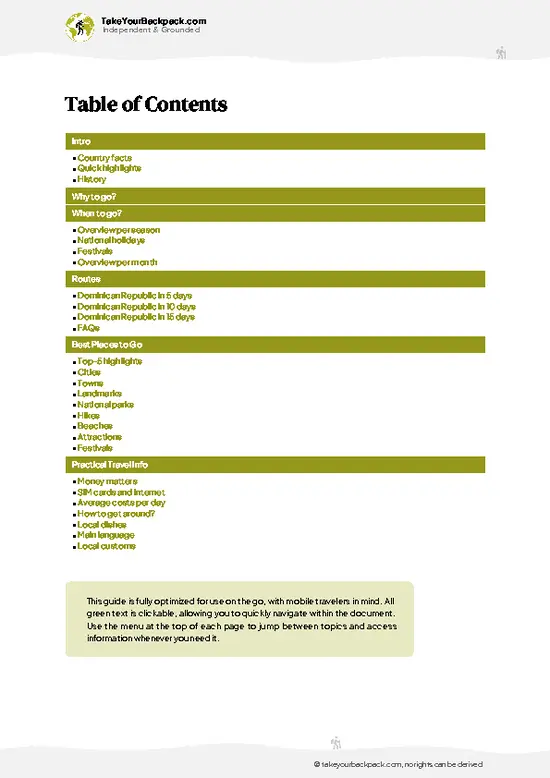
example page 2 from our offline Travel Guide for Dominican Republic
example page 3 from our offline Travel Guide for Dominican Republic
example page 4 from our offline Travel Guide for Dominican Republic
example page 5 from our offline Travel Guide for Dominican Republic
example page 6 from our offline Travel Guide for Dominican Republic
example page 7 from our offline Travel Guide for Dominican Republic
The digital guide (431 pages) contains:
119 highlights, ranked by travel appeal
Optimized 5, 10 & 15-day travel routes
Cities, national parks, landmarks, beaches
How to get around
Offline-friendly for travel without Wi-Fi
👉 Click to see all 30+ guide features

📅 Plan smarter in minutes, not weeks
Month by month travel advice
Festivals & national holidays
Budget expectations

🗺️ Go to the right places, skip the overrated ones
Honest pros & cons of destinations
Top hikes, parks & viewpoints
Lesser-known places most travelers miss
Clear “worth it vs skip it” guidance

🛏️ Travel smoothly without rookie mistakes
Best areas to stay
Transport systems explained simply
Common scams & safety advice
SIM cards, money & practical tips

🌍 Understand the country, not just visit it
Culture & traditions
52 Essential phrases & customs
Festivals worth planning around
Traveler-friendly historical context
Insights that make places more meaningful

📱 Built for real travel conditions
Fully downloadable PDF
Works completely offline
Optimized for phone use
Useful in remote areas & buses
Everything in one place
Save weeks of stressful planning
Get instant access to your full guide. 30‑day money-back guarantee.


By proceeding you agree to our terms.
Sent to your inbox immediately after payment • 100% Secure Checkout
Best Backpacking Travel Advisor 2025 tourism awardBest Backpacking
Travel Advisor
2025
What others say about Take Your Backpack Guides:
⭐⭐⭐⭐⭐
Fantastic, amazing amount of information!
⭐⭐⭐⭐⭐
My goodness this is amazing, it's what I've been looking for hats off too you!
⭐⭐⭐⭐⭐
I think this is absolutely BRILLIANT
⭐⭐⭐⭐
Very complete and informative. It's still missing places, but I gotta to commend you
⭐⭐⭐⭐⭐
This is truly amazing, thank you, can't wait to explore it with my kids!
⭐⭐⭐⭐⭐
Awesome resource, thank you!
⭐⭐⭐⭐⭐
This is amazing! Can't wait to explore the ones I haven't seen
⭐⭐⭐⭐
I love this! Well done, great idea.
⭐⭐⭐⭐⭐
Thanks for taking the time to make this gem!
⭐⭐⭐⭐⭐
This might be the best website I've ever seen.
⭐⭐⭐⭐⭐
Congratulations, and thank you so much for your work; it's incredibly valuable.
⭐⭐⭐⭐
In all seriousness I think you did a great job pointing out the important spots
⭐⭐⭐⭐⭐
10/10 very good
⭐⭐⭐⭐⭐
As someone who's only just starting to visit regularly this is awesome, thank you.
⭐⭐⭐⭐
Thank you very much! I'm going to visit my dad, it's going to be very useful!
⭐⭐⭐⭐⭐
This is really cool! We'll be travelling for the first time and this definitely come in handy.
⭐⭐⭐⭐⭐
You are now our minister of culture, congratulations 👨‍💼
⭐⭐⭐⭐⭐
Just wanted to tell you that this is a pearl! Going to follow your recommendations.
⭐⭐⭐⭐⭐
This is so cool. I'll definitely be using the resource for my travels soon.
⭐⭐⭐⭐⭐
This is very impressive! Good work.
⭐⭐⭐⭐⭐
This is an amazing and informative site. Very well done!

🛏️ Where to stay?Best areas and accommodation options

If you’re heading to the Museo del Ámbar Dominicano, brace yourself: this spot is a magnet for tourists, especially midday when the crowds swarm like bees to honey. It’s not a secret hideaway, and the entrance fee isn’t exactly pocket change for a backpacker. But here’s the kicker—beyond the polished displays and souvenir shops, the real draw is the neighborhood vibe around the museum, not just the amber itself.

The best place to crash is the area around the Colonial Zone in Santo Domingo. It’s a short ride from the museum and offers a gritty, authentic pulse that’s missing from the sanitized … read more 👉
If you’re heading to the Museo del Ámbar Dominicano, brace yourself: this spot is a magnet for tourists, especially midday when the crowds swarm like bees to honey. It’s not a secret hideaway, and the entrance fee isn’t exactly pocket change for a backpacker. But here’s the kicker—beyond the polished displays and souvenir shops, the real draw is the neighborhood vibe around the museum, not just the amber itself.

The best place to crash is the area around the Colonial Zone in Santo Domingo. It’s a short ride from the museum and offers a gritty, authentic pulse that’s missing from the sanitized tourist traps. This is where you’ll find safe streets buzzing with local life, street food vendors grilling up Dominican staples, and a mix of travelers and locals that makes for easy socializing. It’s not luxury, but it’s real, and that’s what counts when you’re backpacking.

You want to be where the energy is—cafés with loud bachata, plazas where locals gather after work, and affordable spots where you can swap stories with fellow travelers without breaking the bank. The Colonial Zone’s charm isn’t in polished facades but in its lived-in feel, the kind that sticks with you long after you leave. Skip the tourist-heavy blocks right next to the museum and dive into this neighborhood instead. That’s where the Dominican Republic’s soul shows up, amber or no amber.

👛 Costs (as of 22 July 2025)What things cost and how to budget

The entrance fee for Museo del Ámbar Dominicano typically ranges from USD5 to USD10. Additional costs may include guided tours or purchasing amber souvenirs inside the museum.

source: godominicanrepublic.com
⚠️ Prices can change and everyone travels differently, so take this as a rough guide. Hope it helps you plan your adventure!

Other Dominican attractions near Museo del Ámbar Dominicano

Explore more nearby:


💡 Not sure where to go next?
Create a personalized itinerary for Dominican Republic including Museo del Ámbar Dominicano and the places that fit your trip.

Generate my itinerary

👉 Discover all attractions

Or checkout all Dominican Republic has to offer (think cities, towns, villages, national parks, hikes, beaches, festivals)
Country photo of Dominican Republic

We 💚 feedbackKey takeaways before you go

The Museo del Ámbar Dominicano isn’t some polished, crowd-pleasing tourist trap, and that’s exactly why it’s worth your time. Yes, it can get busy, especially midday, but the real magic is in the quiet moments when you’re face-to-face with ancient amber pieces that look like they hold entire prehistoric worlds. The surprise? The way the light catches the amber, turning it into liquid gold right before your eyes. Just don’t expect flashy exhibits—this place is about raw history, not gimmicks. If you’re into genuine stories trapped in stone, this is your spot.

✍️ Help improve this page!
The information on this page is based on in-depth research, insights shared by experienced travelers, and feedback from the local travel community in Dominican Republic. While every effort is made to keep the information accurate and current, conditions can change — so if you spot anything incorrect or outdated, please get in touch.


🙋‍♂️ Give feedback

👋 Meet the founderWho’s Behind Take Your Backpack?

Johan, backpacker and founder of TakeYourBackpackHi, I’m Johan (Netherlands 🇳🇱), the creator of TakeYourBackpack. Over the past decade, I’ve backpacked through 80+ countries across six continents, gaining extensive experience with independent travel, long-term trips, and overland routes.

This site is built on a combination of firsthand travel experience and carefully curated insights from other backpackers. Many guides are based on places I’ve personally visited, while others bring together tips, observations, and practical advice shared by trusted travelers I’ve met along the way.

The goal is to provide realistic, experience-driven guidance — not generic itineraries — so you can explore destinations with better context, clearer expectations, and more confidence.

Get full country guide •
Instant download • 119 highlights • Full Offline guide