

×

Ecuador🇪🇨 | national parksCajas National Parkhigh-altitude lakes, rugged páramo, misty trails | things to do and best time to go

Explore Podocarpus National Park TrailExplore Chimborazo National Park

Backpacking in Cajas
🌟 Highlightnational park ranked #5
By Johan Kruseman 🇳🇱 | Updated May 27, 2026

Your first real decision with Cajas National Park is simple but huge: do you treat it as a quick day trip from Cuenca, or do you commit to an overnight with camping or a refugio stay. That choice decides whether you just skim the lakes or actually feel the place. Cajas sits in the Andean highlands west of Cuenca, in southern Ecuador, and it’s a cold, wet, high-altitude park that rewards people who come prepared. The hiking is excellent—loop trails, off-trail páramo wandering, lake-to-lake routes—but the weather turns fast, the fog is real, and the mud will eat cheap shoes. Wildlife is more about birds and silence than big animals. It’s cheaper and less regulated than Cotopaxi, wilder and less Instagrammed than El Cajas’ coastal counterparts, but also less forgiving if you underestimate altitude, transport schedules, or how early the last bus back actually leaves.

Discover everything you want to know in the 📖 Ecuador Travel Guide.


Get your Ecuador guide
94 ranked highlights, routes & tips, works offline (362 pages)
Loading the map 🌍
CLICK TO FILTER
cities
towns
landmarks
national parks
hikes
beaches
attractions
festivals
regions
SHOW COUNTRY’S BESTSHOW ALL

✨ Why go?
Ranked #5 national park in Ecuador
Why Cajas should be on your travel list

Cajas National Park in Ecuador is a backpacker’s haven for several reasons. First, it offers independent exploration. You can wander its vast landscapes without the constraints of a guided tour. The trails are well-marked, making it easy to navigate on your own.

For budget-conscious travelers, there are camping options and affordable hostels nearby. This means you can stretch your dollars while soaking in the stunning scenery. The park features a variety of trails, catering to different skill levels. Whether you’re up for a challenging hike or a leisurely stroll, there’s something for everyone.

Cajas is particularly suited for self-guided travelers. The park’s layout encourages you to set your own pace, allowing for spontaneous detours to enjoy the unique flora and fauna. Just be prepared … read more 👉
Cajas National Park in Ecuador is a backpacker’s haven for several reasons. First, it offers independent exploration. You can wander its vast landscapes without the constraints of a guided tour. The trails are well-marked, making it easy to navigate on your own.

For budget-conscious travelers, there are camping options and affordable hostels nearby. This means you can stretch your dollars while soaking in the stunning scenery. The park features a variety of trails, catering to different skill levels. Whether you’re up for a challenging hike or a leisurely stroll, there’s something for everyone.

Cajas is particularly suited for self-guided travelers. The park’s layout encourages you to set your own pace, allowing for spontaneous detours to enjoy the unique flora and fauna. Just be prepared for the weather changes; it can shift quickly, so pack layers.

In short, Cajas National Park combines freedom, affordability, and diversity, making it a top choice for backpackers looking to immerse themselves in Ecuador’s natural beauty.
Want to include Cajas National Park in your Ecuador route?
Create a personalized Ecuador itinerary that includes Cajas National Park and the places that fit your trip — based on your travel style, budget, and available time. Get your route in seconds.

Generate my trip

💡 HighlightsTop highlights of Cajas

  • Laguna Toreadora — The most accessible and photogenic lake in the park: glassy water, reed fringes and easy trails that let you walk right up to the shore. Great for sunrise reflections and quick wildlife spotting — my personal favorite for a short, rewarding outing.
  • The maze of 200+ lagoons — Cajas isn’t one big lake but hundreds of small glacial tarns scattered across the páramo. Hike between clusters of blue pools and you’ll see how light, altitude and wind make each one feel like its own tiny world.
  • Queñua (Polylepis) woodlands — These twisted, high-altitude trees are rare and photogenic; their gnarled trunks host mosses and insects and attract specialty birds. Walking a queñua patch feels like stepping into a micro-forest amid the open moorland.
  • Páramo vistas and bofedales — Miles
read more 👉
  • Laguna Toreadora — The most accessible and photogenic lake in the park: glassy water, reed fringes and easy trails that let you walk right up to the shore. Great for sunrise reflections and quick wildlife spotting — my personal favorite for a short, rewarding outing.
  • The maze of 200+ lagoons — Cajas isn’t one big lake but hundreds of small glacial tarns scattered across the páramo. Hike between clusters of blue pools and you’ll see how light, altitude and wind make each one feel like its own tiny world.
  • Queñua (Polylepis) woodlands — These twisted, high-altitude trees are rare and photogenic; their gnarled trunks host mosses and insects and attract specialty birds. Walking a queñua patch feels like stepping into a micro-forest amid the open moorland.
  • Páramo vistas and bofedales — Miles of wind-swept grasses, cushion plants and peat bogs (bofedales) create the park’s dramatic, otherworldly skyline. The plants and peat hold water like a sponge, so colors and textures change fast with clouds — pack windproof layers.
  • Birdlife and waterfowl — The lakes and wetlands are magnets for highland birds: Andean geese, coots, ducks and a variety of passerines. Binoculars pay off here; even a short stroll from the parking areas can turn up surprising sightings.
  • Short loops to full-day hikes — Trails range from 30-minute loops around main lakes to longer ridge walks that cross into remote corners of the park. Trails are well marked near the main access points but weather changes fast, so plan for mud, wind and lower oxygen.
  • Scenic viewpoints and roadside panoramas — The road through Cajas offers several quick pullouts with sweeping views if you’re short on time. They’re perfect for a photo stop or a five-minute stretch before getting back on the trail.
Spotted a mistake or missing something? Contact us.

Things to do around Cajas National Park

Ratings based on Tripadvisor reviews. When you book through this link, you support our work at no extra cost to you.

🌤️ When to go?Choosing the right time of year


  • Weather: The dry season from June to September offers the most reliable conditions for backpacking, with less rain and clearer skies. The wet season, October to May, brings frequent showers that can turn trails muddy and slippery, making hiking less enjoyable and sometimes risky.

  • Temperature: Expect daytime highs around 15-18°C (59-64°F) and nighttime lows dropping to 2-5°C (36-41°F). It’s chilly, especially at night, so pack layers. The dry season tends to be colder but more stable, while the wet season feels damper and colder due to humidity.

  • Daylight Hours: Daylight remains fairly consistent year-round, roughly 11 to 12 hours. Plan your hikes to start early; afternoon clouds and rain are common in the wet season, cutting into your daylight window.

  • Crowds: Peak visitation aligns
read more 👉

  • Weather: The dry season from June to September offers the most reliable conditions for backpacking, with less rain and clearer skies. The wet season, October to May, brings frequent showers that can turn trails muddy and slippery, making hiking less enjoyable and sometimes risky.

  • Temperature: Expect daytime highs around 15-18°C (59-64°F) and nighttime lows dropping to 2-5°C (36-41°F). It’s chilly, especially at night, so pack layers. The dry season tends to be colder but more stable, while the wet season feels damper and colder due to humidity.

  • Daylight Hours: Daylight remains fairly consistent year-round, roughly 11 to 12 hours. Plan your hikes to start early; afternoon clouds and rain are common in the wet season, cutting into your daylight window.

  • Crowds: Peak visitation aligns with the dry season, especially July and August, when local tourists and international visitors converge. For solitude, aim for shoulder months like May or September, balancing decent weather with fewer people.

  • Seasonal Activities: Birdwatching peaks during the dry months when visibility is better and migratory species are present. Wet months see fewer outdoor activities due to slippery trails and persistent rain.

  • Price Fluctuations: Accommodation and guided tours tend to be pricier during the dry season’s peak months. Booking in advance is wise. The wet season offers lower prices but comes with the trade-off of less predictable conditions.


Pro-tip: Visit in late May or early September to dodge crowds and rain, keeping your energy for the trails, not drying your gear.


source: climatestotravel.comJANJanuary: fair for travelingFEBFebruary: fair for travelingMARMarch: fair for travelingAPRApril: fair for travelingMAYMay: highly recommended for travelingJUNJune: excellent for travelingJULJuly: excellent for travelingAUGAugust: excellent for travelingSEPSeptember: highly recommended for travelingOCTOctober: fair for travelingNOVNovember: fair for travelingDECDecember: fair for traveling
ecuador-national-park-cajas-national-park
© Google | Christian Gonzalez

✈️ The backpacker research shortcutEcuador Travel Guide

An offline-friendly backpacking guide with optimized travel routes, ranked highlights, transport advice, and the best areas to stay.
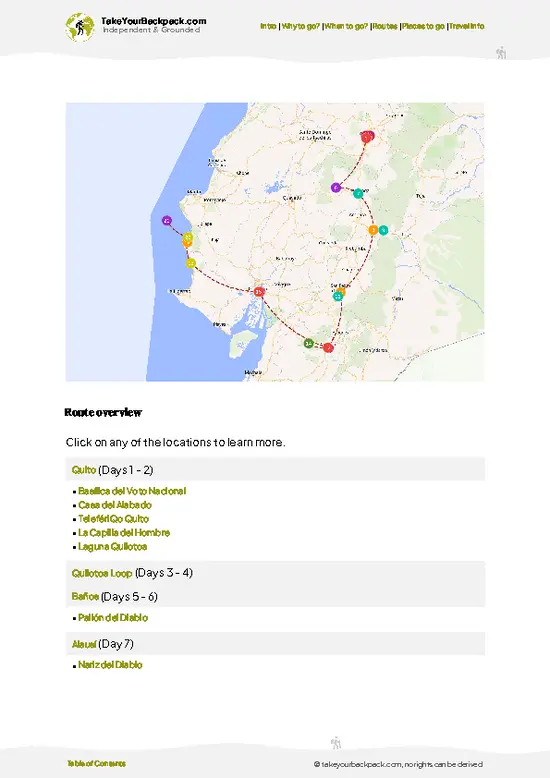
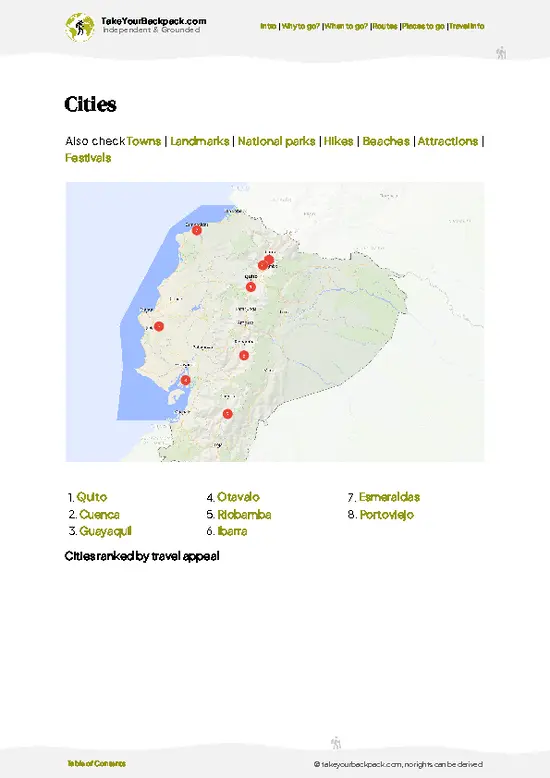
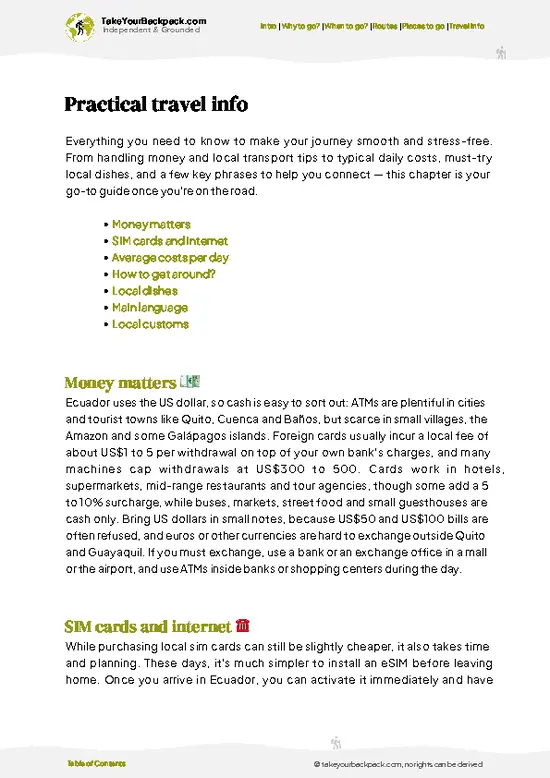
example page 0 from our offline Travel Guide for Ecuador
example page 1 from our offline Travel Guide for Ecuador
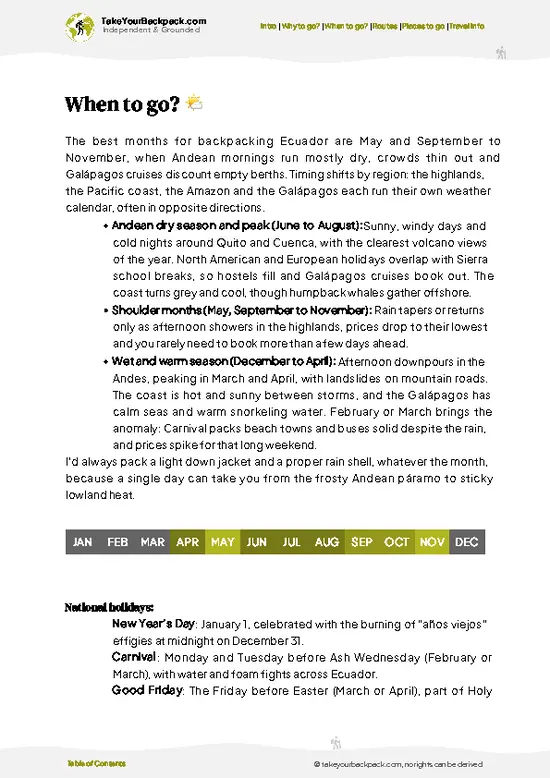
example page 2 from our offline Travel Guide for Ecuador
example page 3 from our offline Travel Guide for Ecuador
example page 4 from our offline Travel Guide for Ecuador
example page 5 from our offline Travel Guide for Ecuador
example page 6 from our offline Travel Guide for Ecuador
example page 7 from our offline Travel Guide for Ecuador
The digital guide (362 pages) contains:
94 highlights, ranked by travel appeal
Optimized 5, 10 & 15-day travel routes
Cities, national parks, landmarks, beaches
How to get around
Offline-friendly for travel without Wi-Fi
👉 Click to see all 30+ guide features

📅 Plan smarter in minutes, not weeks
Month by month travel advice
Festivals & national holidays
Budget expectations

🗺️ Go to the right places, skip the overrated ones
Honest pros & cons of destinations
Top hikes, parks & viewpoints
Lesser-known places most travelers miss
Clear “worth it vs skip it” guidance

🛏️ Travel smoothly without rookie mistakes
Best areas to stay
Transport systems explained simply
Common scams & safety advice
SIM cards, money & practical tips

🌍 Understand the country, not just visit it
Culture & traditions
52 Essential phrases & customs
Festivals worth planning around
Traveler-friendly historical context
Insights that make places more meaningful

📱 Built for real travel conditions
Fully downloadable PDF
Works completely offline
Optimized for phone use
Useful in remote areas & buses
Everything in one place
Save weeks of stressful planning
Get instant access to your full guide. 30‑day money-back guarantee.


By proceeding you agree to our terms.
Sent to your inbox immediately after payment • 100% Secure Checkout
Best Backpacking Travel Advisor 2025 tourism awardBest Backpacking
Travel Advisor
2025
What others say about Take Your Backpack Guides:
⭐⭐⭐⭐⭐
Fantastic, amazing amount of information!
⭐⭐⭐⭐⭐
My goodness this is amazing, it's what I've been looking for hats off too you!
⭐⭐⭐⭐⭐
I think this is absolutely BRILLIANT
⭐⭐⭐⭐
Very complete and informative. It's still missing places, but I gotta to commend you
⭐⭐⭐⭐⭐
This is truly amazing, thank you, can't wait to explore it with my kids!
⭐⭐⭐⭐⭐
Awesome resource, thank you!
⭐⭐⭐⭐⭐
This is amazing! Can't wait to explore the ones I haven't seen
⭐⭐⭐⭐
I love this! Well done, great idea.
⭐⭐⭐⭐⭐
Thanks for taking the time to make this gem!
⭐⭐⭐⭐⭐
This might be the best website I've ever seen.
⭐⭐⭐⭐⭐
Congratulations, and thank you so much for your work; it's incredibly valuable.
⭐⭐⭐⭐
In all seriousness I think you did a great job pointing out the important spots
⭐⭐⭐⭐⭐
10/10 very good
⭐⭐⭐⭐⭐
As someone who's only just starting to visit regularly this is awesome, thank you.
⭐⭐⭐⭐
Thank you very much! I'm going to visit my dad, it's going to be very useful!
⭐⭐⭐⭐⭐
This is really cool! We'll be travelling for the first time and this definitely come in handy.
⭐⭐⭐⭐⭐
You are now our minister of culture, congratulations 👨‍💼
⭐⭐⭐⭐⭐
Just wanted to tell you that this is a pearl! Going to follow your recommendations.
⭐⭐⭐⭐⭐
This is so cool. I'll definitely be using the resource for my travels soon.
⭐⭐⭐⭐⭐
This is very impressive! Good work.
⭐⭐⭐⭐⭐
This is an amazing and informative site. Very well done!

🛏️ Where to stay?Best areas to stay in Ecuador

Cajas National Park is a stunning expanse, but finding the right place to stay can make or break your experience. Inside the park, options are limited. There’s the basic but cozy Refugio Cajas, a simple lodge that offers dormitory-style accommodations. It’s a good base for early hikes, but don’t expect luxury. Bring your own food; the kitchen is basic.

For more amenities, head to Cuenca, about an hour away. This charming city has a range of hostels and budget hotels. Check out Hostal Casa del Barranco for a friendly vibe and easy access to local eateries. Cuenca’s colonial architecture and vibrant … read more 👉
Cajas National Park is a stunning expanse, but finding the right place to stay can make or break your experience. Inside the park, options are limited. There’s the basic but cozy Refugio Cajas, a simple lodge that offers dormitory-style accommodations. It’s a good base for early hikes, but don’t expect luxury. Bring your own food; the kitchen is basic.

For more amenities, head to Cuenca, about an hour away. This charming city has a range of hostels and budget hotels. Check out Hostal Casa del Barranco for a friendly vibe and easy access to local eateries. Cuenca’s colonial architecture and vibrant markets provide a nice contrast to the rugged park.

If you prefer a quieter town, Gualaceo is another option, about 45 minutes from the park. It’s less touristy and offers a glimpse into local life. Just be aware that public transport can be a bit unpredictable, so plan your trips carefully.

Avoid the temptation to stay too far from the park. The extra travel time can sap your energy for those breathtaking hikes. Prioritize proximity to maximize your adventure.

👛 Costs (as of 20 December 2025)Travel costs and budget guide for Cajas

Cajas National Park in Ecuador is a stunning destination, but it’s essential to be aware of the costs involved to avoid surprises.

Entry fees are typically around $2 to $5 USD per person. This is a small price for access to breathtaking landscapes and diverse wildlife.

If you plan to camp, expect to pay about $10 to $15 USD per night for a designated camping area. Make sure to bring your own gear, as rentals are limited and can be pricey.

Transportation can be a hidden cost. If you’re coming from Cuenca, a bus ride will cost you around $2 to $3 USD. However, if you opt for a taxi or private shuttle, it can range from $25 to $50 USD, depending on your negotiation skills and the service you choose.

Food options within the park are minimal. Pack your own meals to save money. If you do … read more 👉
Cajas National Park in Ecuador is a stunning destination, but it’s essential to be aware of the costs involved to avoid surprises.

Entry fees are typically around $2 to $5 USD per person. This is a small price for access to breathtaking landscapes and diverse wildlife.

If you plan to camp, expect to pay about $10 to $15 USD per night for a designated camping area. Make sure to bring your own gear, as rentals are limited and can be pricey.

Transportation can be a hidden cost. If you’re coming from Cuenca, a bus ride will cost you around $2 to $3 USD. However, if you opt for a taxi or private shuttle, it can range from $25 to $50 USD, depending on your negotiation skills and the service you choose.

Food options within the park are minimal. Pack your own meals to save money. If you do buy food, budget around $5 to $10 USD for basic snacks or meals at nearby towns.

Lastly, consider the cost of guided tours. These can range from $30 to $100 USD, depending on the length and inclusions. While a guide can enhance your experience, weigh this against your budget and comfort level with navigating the trails alone.

Being aware of these costs will help you allocate your budget wisely, ensuring you have the energy and funds for the experiences that truly matter.


source: ecuador.travel
⚠️ Prices can change and everyone travels differently, so take this as a rough guide. Hope it helps you plan your adventure!

🥾 TrailsExploring Cajas: trails, terrain, and views

Cajas National Park is a gem in Ecuador, offering a mix of stunning landscapes that range from rolling hills to jagged peaks and shimmering lakes. The terrain can be a bit challenging, with high altitudes (around 3,100 to 4,450 meters) and unpredictable weather, so be prepared for some ups and downs. Wildlife is a highlight here; keep an eye out for the elusive Andean condor and the quirky spectacled bear.

If you’re looking for specific trails, check out the following:
  • Trail Name: Laguna Toreadora
    • Length: 3.5 km
    • Estimated Duration: 2 hours
    • Difficulty Level: Moderate
    • Key Features: Stunning lake views,
read more 👉
Cajas National Park is a gem in Ecuador, offering a mix of stunning landscapes that range from rolling hills to jagged peaks and shimmering lakes. The terrain can be a bit challenging, with high altitudes (around 3,100 to 4,450 meters) and unpredictable weather, so be prepared for some ups and downs. Wildlife is a highlight here; keep an eye out for the elusive Andean condor and the quirky spectacled bear.

If you’re looking for specific trails, check out the following:
  • Trail Name: Laguna Toreadora
    • Length: 3.5 km
    • Estimated Duration: 2 hours
    • Difficulty Level: Moderate
    • Key Features: Stunning lake views, diverse flora
    • Terrain: Mostly flat with some gentle inclines

  • Trail Name: Chicamocha Trail
    • Length: 10 km
    • Estimated Duration: 4-5 hours
    • Difficulty Level: Challenging
    • Key Features: Breathtaking panoramas, unique rock formations
    • Terrain: Rocky paths, steep sections

  • Trail Name: Laguna Llaviucu
    • Length: 8 km
    • Estimated Duration: 3-4 hours
    • Difficulty Level: Easy
    • Key Features: Picturesque lake, birdwatching
    • Terrain: Well-marked paths, gentle slopes

Getting to Cajas is pretty straightforward. You can hop on a bus from Cuenca, and it’s usually a quick ride—around an hour. The park can get busy, especially on weekends, but there’s enough space to find your own little slice of tranquility. As for the entrance fee, it’s quite reasonable, so you won’t break the bank while soaking in all that natural beauty. Just be ready for some unpredictable weather; layers are your best friend up there!
⚠️ Hiking info can sometimes be outdated or inaccurate. Before you hit the trail, check the latest conditions with locals. If you do spot anything that's off, I'd love to hear from you, so I can update it for fellow travelers.

🛡️ SafetyStaying Safe: What Travelers Should Know

Cajas National Park offers a stunning backdrop for backpackers, but it’s essential to be prepared for its unique challenges. The weather can shift rapidly, so layering is key. Mornings might be crisp, but by afternoon, you could be caught in a downpour.

At high altitudes, even seasoned hikers can feel the effects. Take it slow, especially if you’re not acclimatized. The terrain varies from gentle slopes to steep, rocky paths. Navigation can be tricky; keep an eye on trail markers and don’t hesitate to consult a map if you feel lost.

Wildlife is present but generally shy. If you spot a llama or a condor, enjoy the moment from a distance. Always respect their space.

Many first-timers underestimate the need for sturdy footwear. A good pair of hiking boots will save you from slips on wet … read more 👉
Cajas National Park offers a stunning backdrop for backpackers, but it’s essential to be prepared for its unique challenges. The weather can shift rapidly, so layering is key. Mornings might be crisp, but by afternoon, you could be caught in a downpour.

At high altitudes, even seasoned hikers can feel the effects. Take it slow, especially if you’re not acclimatized. The terrain varies from gentle slopes to steep, rocky paths. Navigation can be tricky; keep an eye on trail markers and don’t hesitate to consult a map if you feel lost.

Wildlife is present but generally shy. If you spot a llama or a condor, enjoy the moment from a distance. Always respect their space.

Many first-timers underestimate the need for sturdy footwear. A good pair of hiking boots will save you from slips on wet rocks or uneven ground. With the right preparation, you can focus on the beauty around you rather than the hurdles ahead.

Other Ecuadorian national parks near Cajas

Explore more nearby:


💡 Not sure where to go next?
Create a personalized itinerary for Ecuador including Cajas and the places that fit your trip.

Generate my itinerary

👉 Discover all national parks

Or checkout all Ecuador has to offer (think cities, towns, villages, national parks, hikes, beaches, festivals)
Country photo of Ecuador

We 💚 feedbackParting advice and final tips

Cajas National Park is a treasure for those who crave solitude and breathtaking landscapes. The high-altitude lakes and unique páramo ecosystem offer a rare chance to connect with nature. However, be prepared for unpredictable weather; it can shift from sunny to rainy in minutes. Layer up and pack a solid rain jacket. Embrace the elements, and you’ll find the park’s raw beauty is worth the effort.

✈️ When did I visit Ecuador?
Ecuador I visited during my half year trip through South and Central America back in 2003

✍️ Help improve this page!
The information on this page is based on my own backpacking experience in Ecuador, supplemented with up-to-date research and feedback from other travelers. Travel details can change, so if you notice anything outdated or incomplete, feel free to let me know.


🙋‍♂️ Give feedback

👋 Meet the founderWho’s Behind Take Your Backpack?

Johan, backpacker and founder of TakeYourBackpackHi, I’m Johan (Netherlands 🇳🇱), the creator of TakeYourBackpack. Over the past decade, I’ve backpacked through 80+ countries across six continents, gaining extensive experience with independent travel, long-term trips, and overland routes.

This site is built on a combination of firsthand travel experience and carefully curated insights from other backpackers. Many guides are based on places I’ve personally visited, while others bring together tips, observations, and practical advice shared by trusted travelers I’ve met along the way.

The goal is to provide realistic, experience-driven guidance — not generic itineraries — so you can explore destinations with better context, clearer expectations, and more confidence.

Get full Ecuador guide •
Instant download • 94 highlights • Full Offline guide