×

Ecuador🇪🇨 | attractionsCasa del Alabado Pre-Columbian Art MuseumCeramic relics, ancient goldwork, restored colonial mansion | things to do and best time to go

Explore Museo Nacional del EcuadorExplore TelefériQo Quito

Backpacking in Casa del Alabado Pre-Columbian Art Museum
👀 For curious travelersattraction ranked #14
By Johan Kruseman 🇳🇱 | Updated May 3, 2026

Let’s kill the myth right away: Casa del Alabado Pre-Columbian Art Museum is not just another dusty hall of pots and statues for bored school groups. It’s tucked inside Quito’s historic center—yes, the UNESCO-listed old town, where the air is thin and the churches are thick. Backpackers usually skip it, chasing volcanoes or the Galápagos, but that’s a rookie mistake. This place is a knockout if you care about the real roots of South America. The building itself is a 17th-century mansion, all cool stone and shadow, and the collection is curated with surgical precision—no endless glass cases, just a few hundred pieces, each with a story that’ll make you rethink what you know about pre-Columbian life. It’s not cheap by Ecuador standards, and you’ll dodge a few selfie-stick tour groups, but the vibe is calm, almost reverent. Compared to the chaos of Otavalo Market or the adrenaline of Cotopaxi, Casa del Alabado is a deep breath—a rare, brainy detour that actually feels like a privilege.

Discover everything you want to know in the 📖 Ecuador Travel Guide.


Get your Ecuador guide
94 ranked highlights, routes & tips, works offline (362 pages)
Loading the map 🌍
CLICK TO FILTER
cities
towns
landmarks
national parks
hikes
beaches
attractions
festivals
regions
SHOW COUNTRY’S BESTSHOW ALL

✨ Why go?
Ranked #14 attraction in Ecuador
Why Casa del Alabado Pre-Columbian Art Museum should be on your travel list

Backpackers often breeze past Ecuador’s flashy natural wonders, but the Casa del Alabado Pre-Columbian Art Museum demands a pause—and here’s why. This isn’t your typical tourist pit stop plastered with Instagram filters. It’s a deep dive into ancient Ecuadorian civilizations that shaped the continent long before the conquistadors showed up. The museum’s collection of ceramics, stone carvings, and ritual objects isn’t just old stuff behind glass; it’s a visceral connection to the spiritual and daily lives of cultures like the Valdivia and Manteño.

Sure, it’s not a wild jungle trek or a heart-pounding volcano climb, but the intellectual payoff is huge. For backpackers threading through Ecuador’s cultural circuit, Casa del Alabado is a major milestone—a place where you can actually feel the … read more 👉
Backpackers often breeze past Ecuador’s flashy natural wonders, but the Casa del Alabado Pre-Columbian Art Museum demands a pause—and here’s why. This isn’t your typical tourist pit stop plastered with Instagram filters. It’s a deep dive into ancient Ecuadorian civilizations that shaped the continent long before the conquistadors showed up. The museum’s collection of ceramics, stone carvings, and ritual objects isn’t just old stuff behind glass; it’s a visceral connection to the spiritual and daily lives of cultures like the Valdivia and Manteño.

Sure, it’s not a wild jungle trek or a heart-pounding volcano climb, but the intellectual payoff is huge. For backpackers threading through Ecuador’s cultural circuit, Casa del Alabado is a major milestone—a place where you can actually feel the weight of history pressing in, without the crowds that swamp better-known sites. The entry fee is modest, especially compared to the value of what you’re absorbing.

If you want to understand Ecuador beyond the postcard, this museum is a non-negotiable stop. It’s where the country’s soul gets real, raw, and unforgettable—no filters needed.
Want to include Casa del Alabado Pre-Columbian Art Museum in your Ecuador route?
Create a personalized Ecuador itinerary that includes Casa del Alabado Pre-Columbian Art Museum and the places that fit your trip — based on your travel style, budget, and available time. Get your route in seconds.

Generate my trip

💡 HighlightsTop highlights of Casa del Alabado Pre-Columbian Art Museum

The Courtyard: The Museum’s Living Heart
Forget the hushed, sterile galleries you might expect from a museum. Casa del Alabado’s central courtyard is a living, breathing space that sets the tone for everything else. You’re standing in a 17th-century colonial mansion, and the stone walls and open sky do more than look pretty—they remind you that pre-Columbian art isn’t locked in the past. It’s part of the city’s pulse. Locals actually hang out here. The light, the air, the echo of footsteps—this is the museum’s soul, not just its lobby.


The Shamanic World Gallery
This is where the Instagrammers thin out and the real magic starts. The gallery plunges you into the spiritual universe of Ecuador’s ancient cultures—think jaguar masks, hallucinogenic snuff trays, and ceramic figures that look like … read more 👉
The Courtyard: The Museum’s Living Heart
Forget the hushed, sterile galleries you might expect from a museum. Casa del Alabado’s central courtyard is a living, breathing space that sets the tone for everything else. You’re standing in a 17th-century colonial mansion, and the stone walls and open sky do more than look pretty—they remind you that pre-Columbian art isn’t locked in the past. It’s part of the city’s pulse. Locals actually hang out here. The light, the air, the echo of footsteps—this is the museum’s soul, not just its lobby.


The Shamanic World Gallery
This is where the Instagrammers thin out and the real magic starts. The gallery plunges you into the spiritual universe of Ecuador’s ancient cultures—think jaguar masks, hallucinogenic snuff trays, and ceramic figures that look like they’re mid-transformation. It’s not just a parade of artifacts; it’s a crash course in how people saw the world before conquistadors rewrote the script. The curation is sharp, not overwhelming, and the lighting is theatrical without being cheesy. You’ll walk out seeing the Andes with new eyes.


The Ceramics Collection
If you think “pottery” sounds dull, you haven’t seen a Valdivia Venus up close. These aren’t just pots—they’re 5,000-year-old expressions of identity, fertility, and power. The museum’s ceramics are displayed with space to breathe, so you can actually appreciate the details: the fingerprints, the stylized faces, the wild animal motifs. It’s tactile history, not just something to squint at behind glass.


The Gold and Metalwork Room
Here’s where you realize how much Hollywood has undersold ancient Ecuador. The goldwork isn’t about bling for bling’s sake; it’s about status, ritual, and cosmic symbolism. The nose rings and pectorals are bold, sometimes downright intimidating. The room is dim, almost reverent, and the pieces seem to glow from within. It’s a reminder that “treasure” meant something deeper than just wealth.


Interactive Workshops (Personal Favorite)
This is where Casa del Alabado breaks the museum mold. On certain days, you can join hands-on workshops—think ancient pottery techniques, traditional weaving, or even cacao rituals. It’s not a touristy afterthought; the instructors are legit artisans, and the vibe is more “community gathering” than “school field trip.” I once spent an afternoon here learning to shape clay with a local master, and it was the most human, memorable part of my visit. If you want to feel the living thread between past and present, this is it.


The Building Itself
Don’t sleep on the architecture. The museum’s restoration is a masterclass in blending old and new. You’ll spot original adobe walls, centuries-old wood beams, and sleek modern glass—all coexisting without pretense. It’s a rare case where the building is as much a draw as the collection. Every corner has a story, and you can feel the layers of Quito’s history under your feet.
Spotted a mistake or missing something? Contact us.

Things to do around Casa del Alabado Pre-Columbian Art Museum

Ratings based on Tripadvisor reviews. When you book through this link, you support our work at no extra cost to you.

🌤️ When to go?Weather, crowds, and seasonal trade-offs


  • Weather: Quito’s dry season runs from June to September, offering the most reliable weather for exploring Casa del Alabado without the damp chill that can sneak in during the wet months of October to May. Expect occasional drizzle outside this window, which can make wandering the city less pleasant.

  • Temperature: Quito hovers around a steady 14-20°C (57-68°F) year-round thanks to its elevation. The museum’s indoor setting means temperature swings outside won’t impact your visit much, but cooler mornings and evenings are typical in June and July.

  • Daylight Hours: Near the equator, daylight is consistent year-round, roughly 12 hours daily. This means you won’t need to rush your visit based on fading light, giving you flexibility regardless of the month.

  • Crowds: Tourist traffic peaks during
read more 👉

  • Weather: Quito’s dry season runs from June to September, offering the most reliable weather for exploring Casa del Alabado without the damp chill that can sneak in during the wet months of October to May. Expect occasional drizzle outside this window, which can make wandering the city less pleasant.

  • Temperature: Quito hovers around a steady 14-20°C (57-68°F) year-round thanks to its elevation. The museum’s indoor setting means temperature swings outside won’t impact your visit much, but cooler mornings and evenings are typical in June and July.

  • Daylight Hours: Near the equator, daylight is consistent year-round, roughly 12 hours daily. This means you won’t need to rush your visit based on fading light, giving you flexibility regardless of the month.

  • Crowds: Tourist traffic peaks during the dry season and Ecuadorian holidays like August’s Independence Day. Visiting in shoulder months like May or October can mean fewer tourists, letting you absorb the exhibits without the usual buzz.

  • Seasonal Activities: The museum doesn’t host seasonal events, but pairing your visit with Quito’s cultural festivals in June or July adds a rich local flavor to your trip, though expect more crowds.

  • Price Fluctuations: Entrance fees remain stable year-round, but accommodation and flights spike during dry season and holidays. Booking in shoulder months can save you serious cash without sacrificing the experience.


Pro-tip: Aim for late May or early October—weather’s decent, crowds thin, and you dodge the tourist price hikes, making your Casa del Alabado visit both smooth and wallet-friendly.


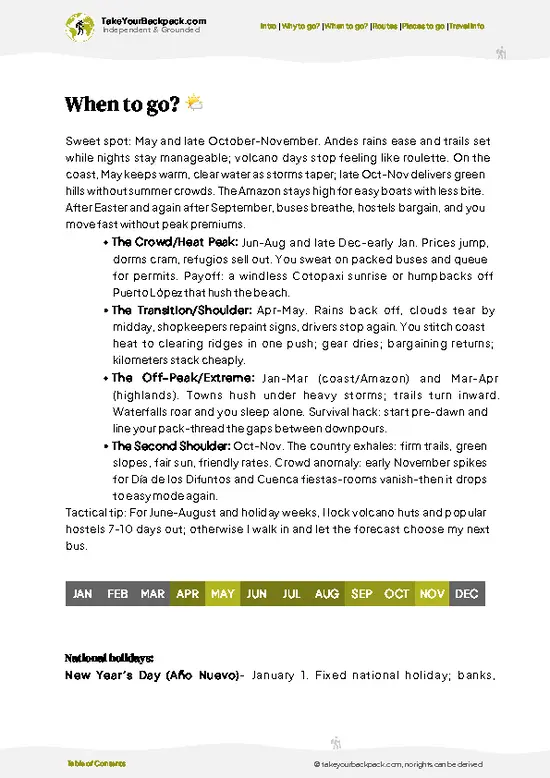
source: climatestotravel.comJANJanuary: fair for travelingFEBFebruary: fair for travelingMARMarch: fair for travelingAPRApril: fair for travelingMAYMay: highly recommended for travelingJUNJune: highly recommended for travelingJULJuly: highly recommended for travelingAUGAugust: good for travelingSEPSeptember: excellent for travelingOCTOctober: highly recommended for travelingNOVNovember: fair for travelingDECDecember: fair for traveling
when-to-go

✈️ The backpacker research shortcutEcuador Travel Guide

An offline-friendly backpacking guide with optimized travel routes, ranked highlights, transport advice, and the best areas to stay.
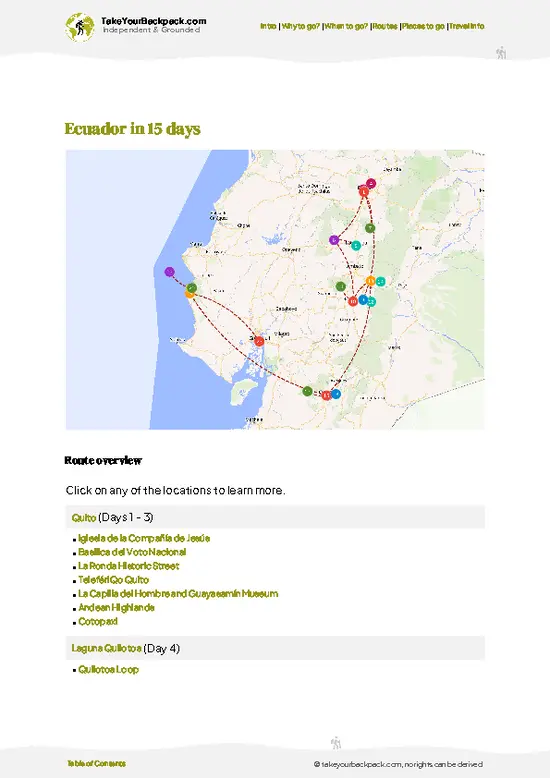
example page 0 from our offline Travel Guide for Ecuador
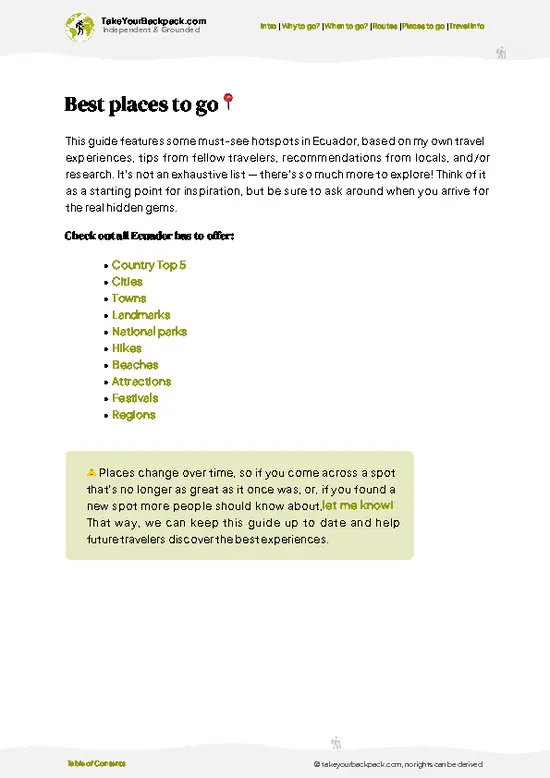
example page 1 from our offline Travel Guide for Ecuador
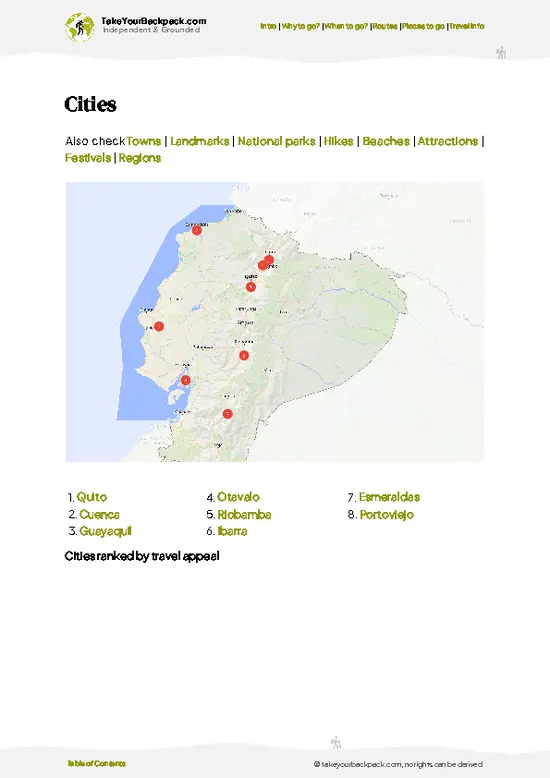
example page 2 from our offline Travel Guide for Ecuador
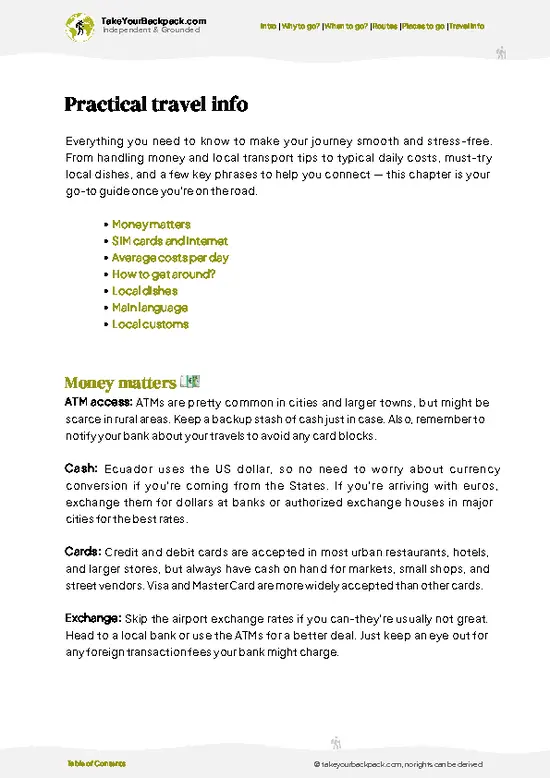
example page 3 from our offline Travel Guide for Ecuador
example page 4 from our offline Travel Guide for Ecuador
example page 5 from our offline Travel Guide for Ecuador
example page 6 from our offline Travel Guide for Ecuador
example page 7 from our offline Travel Guide for Ecuador
The digital guide (362 pages) contains:
94 highlights, ranked by travel appeal
Optimized 5, 10 & 15-day travel routes
Cities, national parks, landmarks, beaches
How to get around
Offline-friendly for travel without Wi-Fi
👉 Click to see all 30+ guide features

📅 Plan smarter in minutes, not weeks
Month by month travel advice
Festivals & national holidays
Budget expectations

🗺️ Go to the right places, skip the overrated ones
Honest pros & cons of destinations
Top hikes, parks & viewpoints
Lesser-known places most travelers miss
Clear “worth it vs skip it” guidance

🛏️ Travel smoothly without rookie mistakes
Best areas to stay
Transport systems explained simply
Common scams & safety advice
SIM cards, money & practical tips

🌍 Understand the country, not just visit it
Culture & traditions
52 Essential phrases & customs
Festivals worth planning around
Traveler-friendly historical context
Insights that make places more meaningful

📱 Built for real travel conditions
Fully downloadable PDF
Works completely offline
Optimized for phone use
Useful in remote areas & buses
Everything in one place
Save weeks of stressful planning
Get instant access to your full guide. 30‑day money-back guarantee.


By proceeding you agree to our terms.
Sent to your inbox immediately after payment • 100% Secure Checkout
Best Backpacking Travel Advisor 2025 tourism awardBest Backpacking
Travel Advisor
2025
What others say about Take Your Backpack Guides:
⭐⭐⭐⭐⭐
Fantastic, amazing amount of information!
⭐⭐⭐⭐⭐
My goodness this is amazing, it's what I've been looking for hats off too you!
⭐⭐⭐⭐⭐
I think this is absolutely BRILLIANT
⭐⭐⭐⭐
Very complete and informative. It's still missing places, but I gotta to commend you
⭐⭐⭐⭐⭐
This is truly amazing, thank you, can't wait to explore it with my kids!
⭐⭐⭐⭐⭐
Awesome resource, thank you!
⭐⭐⭐⭐⭐
This is amazing! Can't wait to explore the ones I haven't seen
⭐⭐⭐⭐
I love this! Well done, great idea.
⭐⭐⭐⭐⭐
Thanks for taking the time to make this gem!
⭐⭐⭐⭐⭐
This might be the best website I've ever seen.
⭐⭐⭐⭐⭐
Congratulations, and thank you so much for your work; it's incredibly valuable.
⭐⭐⭐⭐
In all seriousness I think you did a great job pointing out the important spots
⭐⭐⭐⭐⭐
10/10 very good
⭐⭐⭐⭐⭐
As someone who's only just starting to visit regularly this is awesome, thank you.
⭐⭐⭐⭐
Thank you very much! I'm going to visit my dad, it's going to be very useful!
⭐⭐⭐⭐⭐
This is really cool! We'll be travelling for the first time and this definitely come in handy.
⭐⭐⭐⭐⭐
You are now our minister of culture, congratulations 👨‍💼
⭐⭐⭐⭐⭐
Just wanted to tell you that this is a pearl! Going to follow your recommendations.
⭐⭐⭐⭐⭐
This is so cool. I'll definitely be using the resource for my travels soon.
⭐⭐⭐⭐⭐
This is very impressive! Good work.
⭐⭐⭐⭐⭐
This is an amazing and informative site. Very well done!

🛏️ Where to stay?Best areas and accommodation options

The area around Casa del Alabado in Quito’s historic center is a magnet for backpackers who want to dive deep into Ecuador’s pre-Columbian roots without breaking the bank. But let’s cut the fluff: this neighborhood is busy, noisy, and packed with tourists during peak hours. It’s not a quiet retreat, and safety can be a mixed bag if you’re not street-smart—pickpockets lurk where crowds gather. That said, this is exactly where you want to be if you crave social energy and easy access to the museum’s raw cultural punch. The streets here pulse with local vendors, street food stalls, and budget-friendly … read more 👉
The area around Casa del Alabado in Quito’s historic center is a magnet for backpackers who want to dive deep into Ecuador’s pre-Columbian roots without breaking the bank. But let’s cut the fluff: this neighborhood is busy, noisy, and packed with tourists during peak hours. It’s not a quiet retreat, and safety can be a mixed bag if you’re not street-smart—pickpockets lurk where crowds gather. That said, this is exactly where you want to be if you crave social energy and easy access to the museum’s raw cultural punch. The streets here pulse with local vendors, street food stalls, and budget-friendly cafés where you’ll swap stories with fellow travelers. Staying here means you’re steps away from the museum’s jaw-dropping artifacts and the gritty, authentic vibe of Quito’s old town—no polished tourist bubble, just real life buzzing around you.

👛 Costs (as of 28 November 2025)Money, prices, and spending tips

Admission fees at the Casa del Alabado Pre-Columbian Art Museum in Quito, Ecuador, are as follows:

- Adults: USD 10
- Students with ID: USD 5
- Children under 8 years old: Free admission
- People with disabilities and tour guides: Free admission

Additionally, the museum offers free admission on the last Wednesday of each month upon reservation. ([alabado.org](https://alabado.org/home/?utm_source=openai))

source: alabado.org
⚠️ Prices can change and everyone travels differently, so take this as a rough guide. Hope it helps you plan your adventure!

Other Ecuadorian attractions near Casa del Alabado Pre-Columbian Art Museum

Explore more nearby:


💡 Not sure where to go next?
Create a personalized itinerary for Ecuador including Casa del Alabado Pre-Columbian Art Museum and the places that fit your trip.

Generate my itinerary

👉 Discover all attractions

Or checkout all Ecuador has to offer (think cities, towns, villages, national parks, hikes, beaches, festivals)
Country photo of Ecuador

We 💚 feedbackParting advice and final tips

Casa del Alabado isn’t your typical museum stop—it’s a deep dive into Ecuador’s ancient soul, with artifacts that hit you harder than any postcard-perfect plaza. But heads up: it’s small, and if you’re expecting a sprawling, glossy setup, you’ll be underwhelmed. The real magic is in the intimacy—the way each piece whispers stories that no tourist brochure can capture. If you crave genuine connection over crowds and flash, this place delivers.

✈️ When did I visit Ecuador?
Ecuador I visited during my half year trip through South and Central America back in 2003

✍️ Help improve this page!
The information on this page is based on my own backpacking experience in Ecuador, supplemented with up-to-date research and feedback from other travelers. Travel details can change, so if you notice anything outdated or incomplete, feel free to let me know.


🙋‍♂️ Give feedback

👋 Meet the founderWho’s Behind Take Your Backpack?

Johan, backpacker and founder of TakeYourBackpackHi, I’m Johan (Netherlands 🇳🇱), the creator of TakeYourBackpack. Over the past decade, I’ve backpacked through 80+ countries across six continents, gaining extensive experience with independent travel, long-term trips, and overland routes.

This site is built on a combination of firsthand travel experience and carefully curated insights from other backpackers. Many guides are based on places I’ve personally visited, while others bring together tips, observations, and practical advice shared by trusted travelers I’ve met along the way.

The goal is to provide realistic, experience-driven guidance — not generic itineraries — so you can explore destinations with better context, clearer expectations, and more confidence.

Get full Ecuador guide •
Instant download • 94 highlights • Full Offline guide