×

Ecuador🇪🇨 | attractionsMalecón 2000Guayas riverfront, Moorish clock tower, Ferris wheel, iguana gardens | things to do and best time to go

Explore Museo Antropológico y de Arte ContemporáneoExplore Las Peñas

Backpacking in Malecón 2000
👍 Recommendedattraction ranked #10
By Johan Kruseman 🇳🇱 | Updated October 18, 2026

Malecón 2000 is not a single stretch of riverside promenade; it runs about 2.5 kilometers along the Guayas River and holds gardens, museums, a mall and a lookout tower. It sits in the center of Guayaquil, Ecuador’s largest city, and it is free to enter. Walk it south to north, because the heat and crowds build toward the Las Peñas end, so you finish in shade and food. At dusk I love the clack of skateboards and the sizzle of street corn drifting off the grills near the plazas. Pay for nothing at the gate, carry small bills for snacks, and go after the afternoon heat fades, because the fenced area closes at night.

Discover everything you want to know in the 📖 Ecuador Travel Guide.


example page 0 from our offline Travel Guide for Ecuador
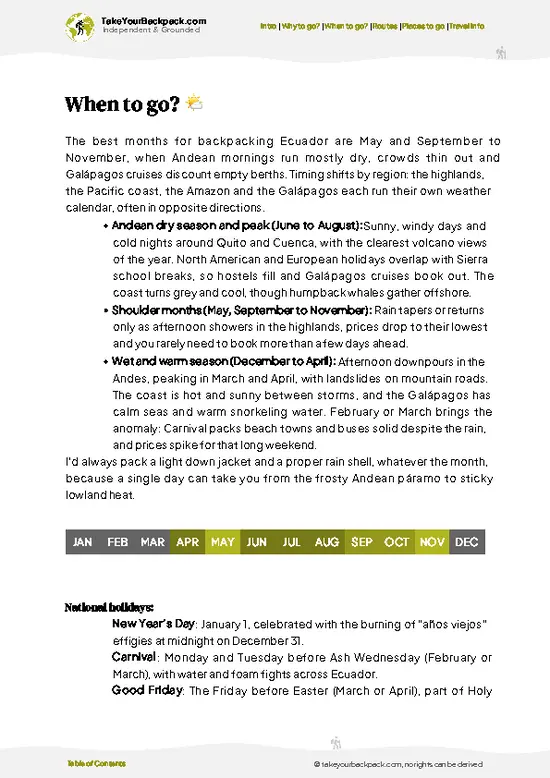
example page 1 from our offline Travel Guide for Ecuador
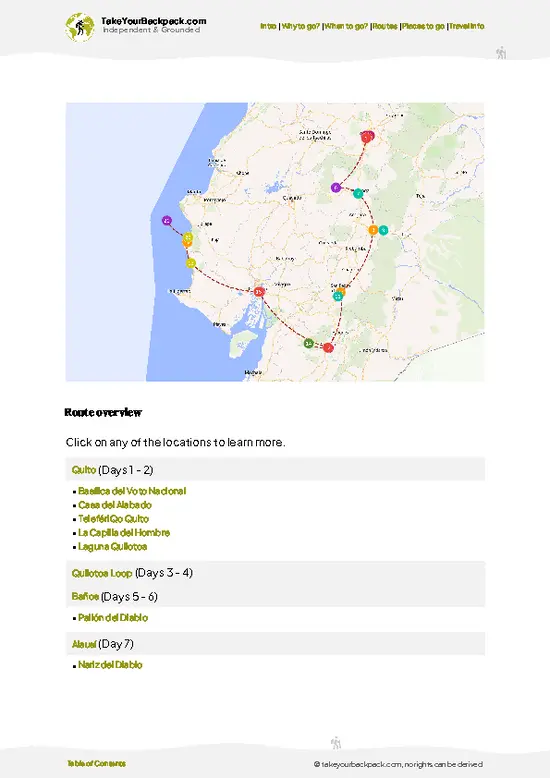
example page 2 from our offline Travel Guide for Ecuador
example page 3 from our offline Travel Guide for Ecuador
example page 4 from our offline Travel Guide for Ecuador
example page 5 from our offline Travel Guide for Ecuador
example page 6 from our offline Travel Guide for Ecuador
example page 7 from our offline Travel Guide for Ecuador
Loading the map 🌍
CLICK TO FILTER
cities
towns
landmarks
national parks
hikes
beaches
attractions
festivals
SHOW COUNTRY’S BESTSHOW ALL

✨ Why go?
Ranked #10 attraction in Ecuador
Reasons people choose to visit here

Malecón 2000 is the easiest way to understand Guayaquil, a port city that most travelers rush through on the way to the Galápagos. Within one walk you see the river that built the city, the clock tower and monuments that tell its story, and locals using the space for jogging, dating and Sunday strolls. That makes it a real cultural milestone on an Ecuador route, a place to see coastal life rather than Andean postcards. It also costs nothing, and the 2.5 kilometers of riverfront are safe, patrolled and clean, which is a relief after the chaos of the surrounding streets. Add the Moorish Clock Tower and the climb up to the Santa Ana hill nearby, and you get a full half-day for almost no money. For a first look at the city, nothing else comes close.

💡 HighlightsEssential experiences to have while visiting Malecón 2000

  1. Torre Morisca (Moorish Clock Tower): The white and red tower with a Moorish-style design is the icon most people photograph, and it chimes on the hour beside the river.
  2. La Rotonda: A monument to the 1822 meeting of Bolívar and San Martín stands at the center, with a sweeping river view and a fine sunset spot.
  3. Jardín Botánico Malecón 2000 plantings: Tropical gardens shade the walkway with palms and flowering plants, and iguanas sometimes lounge nearby.
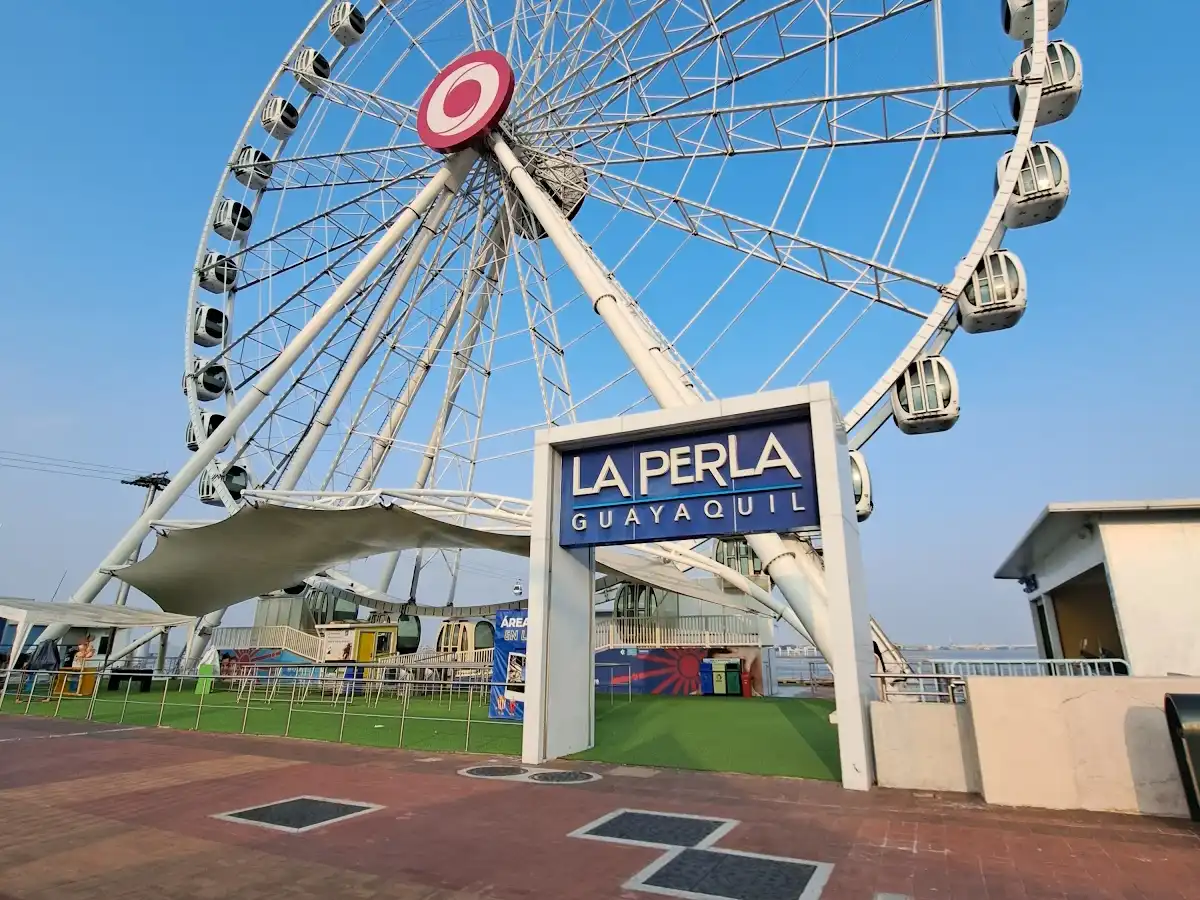
  4. Mirador La Perla: The giant Ferris wheel gives wide views over the Guayas and the city, and it runs mostly in the evening for a small fee.
  5. Plaza Olmedo and Plaza Cívica: These open squares hold statues, fountains and the boulevard’s main gathering points, and they are lively on weekends.
  6. Museo Antropológico y de Arte Contemporáneo (MAAC): The museum
… read more 👉
  1. Torre Morisca (Moorish Clock Tower): The white and red tower with a Moorish-style design is the icon most people photograph, and it chimes on the hour beside the river.
  2. La Rotonda: A monument to the 1822 meeting of Bolívar and San Martín stands at the center, with a sweeping river view and a fine sunset spot.
  3. Jardín Botánico Malecón 2000 plantings: Tropical gardens shade the walkway with palms and flowering plants, and iguanas sometimes lounge nearby.
  4. Mirador La Perla: The giant Ferris wheel gives wide views over the Guayas and the city, and it runs mostly in the evening for a small fee.
  5. Plaza Olmedo and Plaza Cívica: These open squares hold statues, fountains and the boulevard’s main gathering points, and they are lively on weekends.
  6. Museo Antropológico y de Arte Contemporáneo (MAAC): The museum on the north side has pre-Columbian pieces and contemporary art, with a river-facing building.
  7. Fast-food and craft vendors along the riverside: Stalls and food courts sell ceviche, corn and grilled snacks, which makes a cheap meal stop mid-walk.
  8. Las Peñas and Cerro Santa Ana: The path ends at the colorful stairway neighborhood, where 444 steps climb to a lighthouse and chapel with the best skyline view.
If time is short, skip the museum and spend it on the river walk and the climb at Las Peñas.
Spotted a mistake or missing something? Contact us.

Things to do around Malecón 2000

Ratings based on Tripadvisor reviews. When you book through this link, you support our work at no extra cost to you.

🌤️ When to go?Choosing the right time of year

  • Dry Season (June to November): Guayaquil stays mostly rainless, with highs of 28 to 31°C (82 to 88°F) and cooler evenings near 21°C (70°F). Walking the 2.5-kilometer riverfront is comfortable, and the breeze off the Guayas River helps.
  • Wet Season (December to May): Expect hot, sticky days of 30 to 33°C (86 to 91°F) with heavy afternoon downpours, strongest February to April. Mornings are often clear, so plan around the rain.
  • Holidays: Weekends, Carnival and late December bring local families, loud music and packed gardens. Hotel prices in the city rise only modestly.
  • Daylight: Days run close to 12 hours all year, and the lit-up riverfront after dark is lively and cooler.
Go late afternoon on a weekday, when the heat fades and the crowds are thin.

source: climatestotravel.comJANJanuary: fair for travelingFEBFebruary: fair for travelingMARMarch: fair for travelingAPRApril: fair for travelingMAYMay: fair for travelingJUNJune: excellent for travelingJULJuly: excellent for travelingAUGAugust: excellent for travelingSEPSeptember: excellent for travelingOCTOctober: highly recommended for travelingNOVNovember: good for travelingDECDecember: fair for traveling
ecuador-attraction-malecon-2000
© Google |

✈️ The backpacker research shortcutEcuador Travel Guide

An offline-friendly backpacking guide with optimized travel routes, ranked highlights, transport advice, and the best areas to stay.
example page 0 from our offline Travel Guide for Ecuador
example page 1 from our offline Travel Guide for Ecuador
example page 2 from our offline Travel Guide for Ecuador
example page 3 from our offline Travel Guide for Ecuador
example page 4 from our offline Travel Guide for Ecuador
example page 5 from our offline Travel Guide for Ecuador
example page 6 from our offline Travel Guide for Ecuador
example page 7 from our offline Travel Guide for Ecuador
The digital guide (274 pages) contains:
✅ 87 highlights, ranked by travel appeal
✅ Optimized 5, 10 & 15-day travel routes
✅ Cities, national parks, landmarks, beaches
✅ How to get around
✅ Offline-friendly for travel without Wi-Fi
👉 Click to see all 30+ guide features

📅 Plan smarter in minutes, not weeks
✅ Month by month travel advice
✅ Festivals & national holidays
✅ Budget expectations

🗺️ Go to the right places, skip the overrated ones
✅ Honest pros & cons of destinations
✅ Top hikes, parks & viewpoints
✅ Lesser-known places most travelers miss
✅ Clear “worth it vs skip it” guidance

🛏️ Travel smoothly without rookie mistakes
✅ Best areas to stay
✅ Transport systems explained simply
✅ Common scams & safety advice
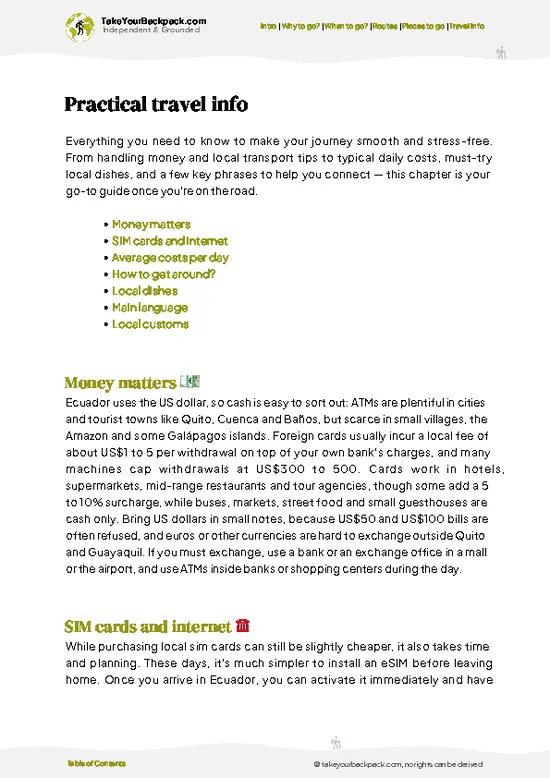
✅ SIM cards, money & practical tips

🌍 Understand the country, not just visit it
✅ Culture & traditions
✅ 52 Essential phrases & customs
✅ Festivals worth planning around
✅ Traveler-friendly historical context
✅ Insights that make places more meaningful

📱 Built for real travel conditions
✅ Fully downloadable PDF
✅ Works completely offline
✅ Optimized for phone use
✅ Useful in remote areas & buses
✅ Everything in one place
Stop searching, start planning
Get instant access to your full guide. 30‑day money-back guarantee.
+ Add another guide for just

By proceeding you agree to our terms.
Sent to your inbox immediately after payment • 100% Secure Checkout
Best Backpacking Travel Advisor 2025 tourism awardBest Backpacking
Travel Advisor
2025
What others say about Take Your Backpack Guides:
⭐⭐⭐⭐⭐
Fantastic, amazing amount of information!
⭐⭐⭐⭐⭐
My goodness this is amazing, it's what I've been looking for hats off too you!
⭐⭐⭐⭐⭐
I think this is absolutely BRILLIANT
⭐⭐⭐⭐
Very complete and informative. It's still missing places, but I gotta to commend you
⭐⭐⭐⭐⭐
This is truly amazing, thank you, can't wait to explore it with my kids!
⭐⭐⭐⭐⭐
Awesome resource, thank you!
⭐⭐⭐⭐⭐
This is amazing! Can't wait to explore the ones I haven't seen
⭐⭐⭐⭐
I love this! Well done, great idea.
⭐⭐⭐⭐⭐
Thanks for taking the time to make this gem!
⭐⭐⭐⭐⭐
This might be the best website I've ever seen.
⭐⭐⭐⭐⭐
Congratulations, and thank you so much for your work; it's incredibly valuable.
⭐⭐⭐⭐
In all seriousness I think you did a great job pointing out the important spots
⭐⭐⭐⭐⭐
10/10 very good
⭐⭐⭐⭐⭐
As someone who's only just starting to visit regularly this is awesome, thank you.
⭐⭐⭐⭐
Thank you very much! I'm going to visit my dad, it's going to be very useful!
⭐⭐⭐⭐⭐
This is really cool! We'll be travelling for the first time and this definitely come in handy.
⭐⭐⭐⭐⭐
You are now our minister of culture, congratulations 👨‍💼
⭐⭐⭐⭐⭐
Just wanted to tell you that this is a pearl! Going to follow your recommendations.
⭐⭐⭐⭐⭐
This is so cool. I'll definitely be using the resource for my travels soon.
⭐⭐⭐⭐⭐
This is very impressive! Good work.
⭐⭐⭐⭐⭐
This is an amazing and informative site. Very well done!

🛏️ Where to stay?Where staying makes the most sense

Stay in the Centro/Malecón area or the Urdesa district, since both put you within a short walk or a cheap taxi ride of the riverfront.
  • Centro and Las Peñas: This is the closest option, with Malecón 2000 at one end and the Santa Ana hill steps at the other. Budget dorms and simple private rooms are common, and you can walk to museums, plazas and cheap lunch counters. Stick to well-lit streets after dark and take a taxi at night.
  • Urdesa: A leafy residential neighborhood about 15 minutes by taxi north of the river. It feels safer and calmer at night, with plenty of restaurants and cafes on Víctor Emilio
… read more 👉
Stay in the Centro/Malecón area or the Urdesa district, since both put you within a short walk or a cheap taxi ride of the riverfront.
  • Centro and Las Peñas: This is the closest option, with Malecón 2000 at one end and the Santa Ana hill steps at the other. Budget dorms and simple private rooms are common, and you can walk to museums, plazas and cheap lunch counters. Stick to well-lit streets after dark and take a taxi at night.
  • Urdesa: A leafy residential neighborhood about 15 minutes by taxi north of the river. It feels safer and calmer at night, with plenty of restaurants and cafes on Víctor Emilio Estrada, and it suits solo travelers wanting a quieter base.
  • Near the airport or Terminal Terrestre: Practical for early buses to Cuenca or the coast, but it is farther from the waterfront and less social.
Dorms run roughly US$10 to 15 a night.

👛 Costs (as of 18 October 2026)Typical daily expenses

A day at Malecón 2000 costs about US$32 for a backpacker, and the riverfront itself is free to enter.
CategoryBudget RangeLocal Reality
EntryUS$0Open to the public, with no ticket for the main promenade.
Attractions insideUS$0 to 3The gardens and playgrounds are free. The Moorish clock tower and the viewing wheel cost a few dollars at most.
Boat or river tourUS$2 to 5Short sightseeing trips on the Guayas River leave from the docks.
FoodUS$6 to 10Set lunches (almuerzos) in the center cost US$3 to 5. Food-court meals along the riverfront cost more.
Local transportUS$1 to 4The Metrovía bus costs US$0.30. Short taxi rides in the center cost US$2 to 4.
Accommodation (high season)US$10 to 15Dorm beds in Centro or Urdesa. Private rooms cost US$25 to 40.
Total Daily BudgetUS$32Per person, per day, in high season.
⚠️ Prices can change and everyone travels differently, so take this as a rough guide. Hope it helps you plan your adventure!

FAQFrequently asked questions about Malecón 2000

Plan 1.5 to 3 hours for Malecón 2000, enough to walk the full 2.5-kilometer promenade along the Guayas River with stops. Add another hour if you climb the 444 steps of Las Peñas and Cerro Santa Ana at the northern end. Late afternoon into early evening works best, when the heat drops and the lights come on.
Yes, because Malecón 2000 has no entrance fee and the promenade, gardens and river views cost nothing. Only extras such as the viewing wheel, boat trips of about US$2 to 5, or snacks add up. Few city attractions in Ecuador deliver this much for free.
Take the Metrovía bus or a taxi from anywhere in Guayaquil, since Malecón 2000 sits on the river in the city center. From José Joaquín de Olmedo Airport, a taxi takes about 20 to 30 minutes and costs US$6 to 10. From the Terminal Terrestre, a taxi takes around 20 minutes for US$4 to 6, and the Metrovía costs US$0.30.
⚠️ Things can change over time, so always validate details locally before you go.

Other Ecuadorian attractions near Malecón 2000

Explore more nearby:


💡 Not sure where to go next?
Create a personalized itinerary for Ecuador including Malecón 2000 and the places that fit your trip.

Generate my itinerary

👉 Discover all attractions

Or checkout all Ecuador has to offer (think cities, towns, villages, national parks, hikes, beaches, festivals)
Country photo of Ecuador

We 💚 feedbackIs it worth it?

Malecón 2000 is at its best in the late afternoon, when the heat eases and the river turns gold. I would arrive around four, walk north slowly, and finish with dinner and the climb at Las Peñas before dark. Weekends are busier but livelier, so choose by your mood.

✈️ When did I visit Ecuador?
Ecuador I visited during my half year trip through South and Central America back in 2003

✍️ Help improve this page!
The information on this page is based on my own backpacking experience in Ecuador, supplemented with up-to-date research and feedback from other travelers. Travel details can change, so if you notice anything outdated or incomplete, feel free to let me know.


🙋‍♂️ Give feedback

👋 Meet the founderWho’s Behind Take Your Backpack?

Johan, backpacker and founder of TakeYourBackpackHi, I’m Johan (Netherlands 🇳🇱), the creator of TakeYourBackpack. Over the past 3 decades, I’ve backpacked through 90+ countries across six continents, gaining extensive experience with independent travel, long-term trips, and overland routes.

This site is built on a combination of firsthand travel experience and carefully curated insights from other backpackers. Many guides are based on places I’ve personally visited, while others bring together tips, observations, and practical advice shared by trusted travelers I’ve met along the way.

The goal is to provide realistic, experience-driven guidance — not generic itineraries — so you can explore destinations with better context, clearer expectations, and more confidence.