×

Ecuador🇪🇨 | citiesPortoviejoManabí cooking, riverside parks, rebuilt center, Manteño ceramics | things to do and best time to go

Explore EsmeraldasExplore Carnaval de Guaranda

Backpacking in Portoviejo
👀 For curious travelerscity ranked #9
By Johan Kruseman 🇳🇱 | Updated October 19, 2026

Portoviejo was once a sleepy provincial capital that travelers rolled through on the way to the beach, and the 2016 earthquake flattened much of its center. Today it is rebuilt, busy and quietly proud. You will find it in Manabí province in western Ecuador, inland from the Pacific coast. I came by bus from Manta, and halfway there a vendor climbed aboard with a bucket of warm, salty corn cakes and sold out before the next stop, so I ate lunch for pocket change. Skip it if you want hostels and parties. Spend your time at the riverside parks, the markets and the plates of Manabí cooking. It suits curious, Spanish-speaking travelers who like real cities, and bores anyone chasing beaches or nightlife.

Discover everything you want to know in the 📖 Ecuador Travel Guide.


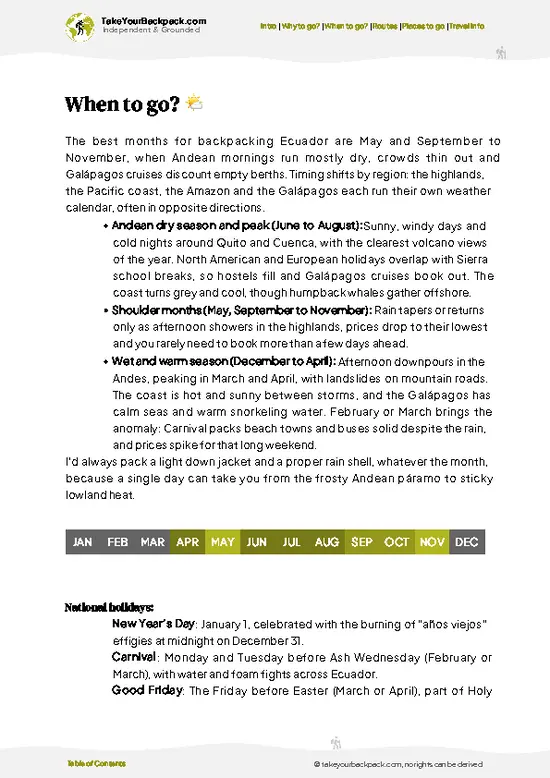
example page 0 from our offline Travel Guide for Ecuador
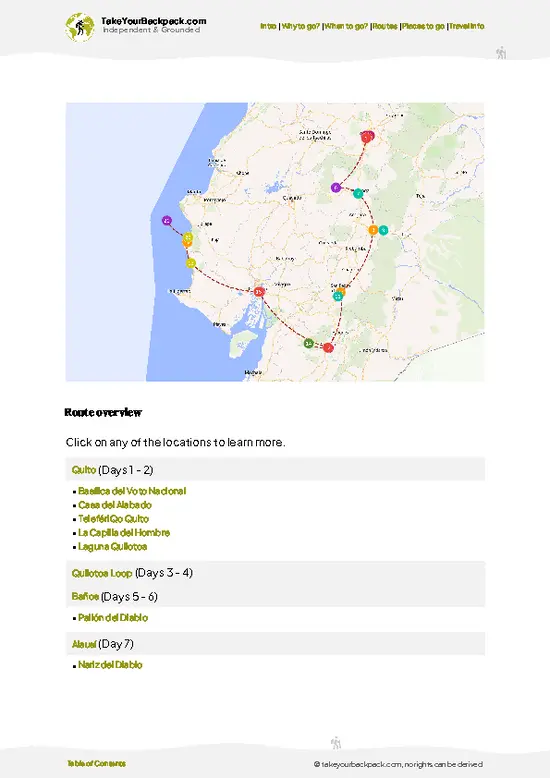
example page 1 from our offline Travel Guide for Ecuador
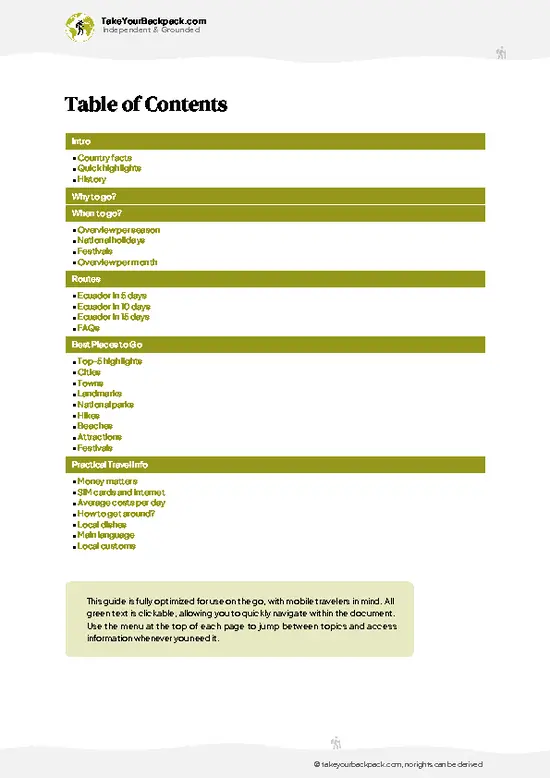
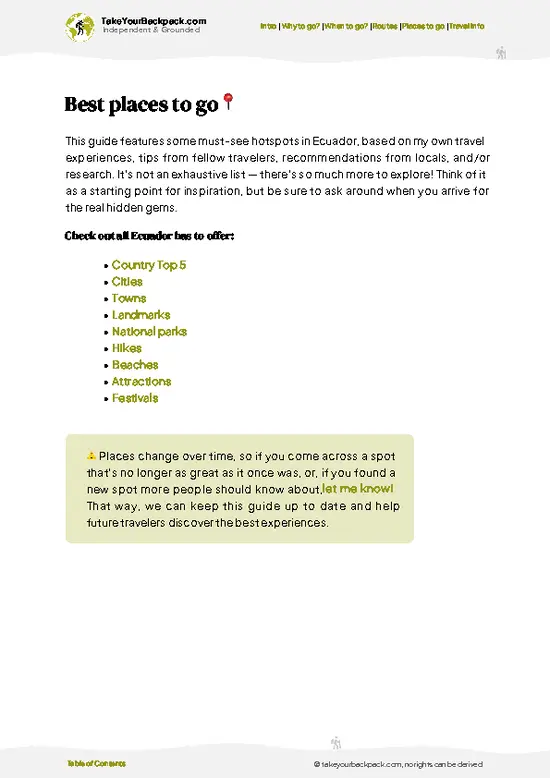
example page 2 from our offline Travel Guide for Ecuador
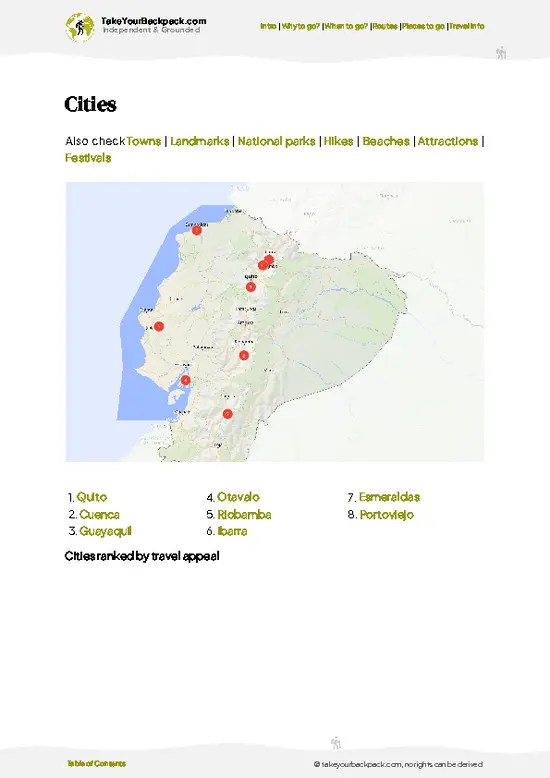
example page 3 from our offline Travel Guide for Ecuador
example page 4 from our offline Travel Guide for Ecuador
example page 5 from our offline Travel Guide for Ecuador
example page 6 from our offline Travel Guide for Ecuador
example page 7 from our offline Travel Guide for Ecuador
Loading the map 🌍
CLICK TO FILTER
cities
towns
landmarks
national parks
hikes
beaches
attractions
festivals
SHOW COUNTRY’S BESTSHOW ALL

✨ Why go?
Ranked #9 city in Ecuador
Why Portoviejo should be on your travel list

Portoviejo works for backpackers who want a working Ecuadorian city instead of a resort town, and it makes the most sense as a Manabí coastal route pivot. Its bus terminal sends buses toward Manta, Montecristi, Guayaquil and Quito, so you can slot it between beach stops without backtracking. The food is the other draw: this is the heartland of Manabí cooking, where peanut sauces, plantain and fresh seafood show up in everyday fondas rather than tourist menus. English is rare, so basic Spanish helps a lot. Accommodation is mostly business hotels, not social hostels, so you will not meet many other backpackers. That makes it a good one or two night stop for eating, wandering and using it as a practical hub, not a place for a week.

💡 HighlightsTop highlights of Portoviejo

  1. Parque Las Vegas and the Río Portoviejo riverfront: The green strip along the river is where locals walk, jog and eat ice cream. Go late afternoon when the heat eases. Free, 1 hour.
  2. Catedral de Portoviejo: The cathedral on the central plaza was rebuilt after earthquake damage and anchors the city center. Morning is quietest. Free, 20 to 30 minutes.
  3. Parque Eloy Alfaro: The central plaza is the best place to watch daily life, with shoe-shiners, students and office workers on the benches. Early evening is liveliest. Free, 30 minutes.
  4. Mercado Municipal and the markets: Stalls sell fruit, dried fish, cheese and cooked breakfasts. Go before 10 AM for the best selection. A meal costs around US$3 to 5, 1 hour.
  5. Museo Arqueológico y Centro Cultural: Displays ceramics and figurines from Manabí cultures such
… read more 👉
  1. Parque Las Vegas and the Río Portoviejo riverfront: The green strip along the river is where locals walk, jog and eat ice cream. Go late afternoon when the heat eases. Free, 1 hour.
  2. Catedral de Portoviejo: The cathedral on the central plaza was rebuilt after earthquake damage and anchors the city center. Morning is quietest. Free, 20 to 30 minutes.
  3. Parque Eloy Alfaro: The central plaza is the best place to watch daily life, with shoe-shiners, students and office workers on the benches. Early evening is liveliest. Free, 30 minutes.
  4. Mercado Municipal and the markets: Stalls sell fruit, dried fish, cheese and cooked breakfasts. Go before 10 AM for the best selection. A meal costs around US$3 to 5, 1 hour.
  5. Museo Arqueológico y Centro Cultural: Displays ceramics and figurines from Manabí cultures such as Manteño and Chorrera, which explains why this coast was once densely settled. Entry is usually free or a dollar or two, 1 hour.
  6. Estadio Reales Tamarindos: The city’s football stadium, home of Liga de Portoviejo, is worth a look on a match night for the noise. Tickets run about US$5 to 15, 2 hours.
  7. Parque Forestal: A shaded park on the edge of town with trails, birds and picnic spots, good for a quiet morning. Free, 1 to 2 hours.
For day trips, Montecristi, famous for straw hats, and the beaches of Manta and Crucita are all close by. The riverfront and the cathedral pair well in one easy afternoon, with a market lunch in between.
Spotted a mistake or missing something? Contact us.

Things to do near Portoviejo

Ratings based on Tripadvisor reviews. When you book through this link, you support our work at no extra cost to you.

🏘️ NeighborhoodsWhere things are and how it's laid out

Portoviejo sprawls along the Río Portoviejo, and you can cover its useful corners in a day or two. Here is where to spend your time.
  • Centro Histórico: Start here. Parque Eloy Alfaro, the cathedral and the surrounding grid pack banks, markets, juice stands and cheap lunch counters into a few blocks. It is flat, loud by day and walkable on foot. Skip it after dark, when shutters drop and the streets empty.
  • Riverfront and Parque La Rotonda area: Cross the bridges and stroll the riverside paths for breezes and local families. Worth an easy hour at dusk, not a half day.
  • Ciudad Alegría and the north-west: Mall country, with modern restaurants, chain cafés and bars. Convenient for ATMs and air-conditioning, but short on character. Take a taxi and don’t linger.
  • Mercado Municipal district: Dive into the
… read more 👉
Portoviejo sprawls along the Río Portoviejo, and you can cover its useful corners in a day or two. Here is where to spend your time.
  • Centro Histórico: Start here. Parque Eloy Alfaro, the cathedral and the surrounding grid pack banks, markets, juice stands and cheap lunch counters into a few blocks. It is flat, loud by day and walkable on foot. Skip it after dark, when shutters drop and the streets empty.
  • Riverfront and Parque La Rotonda area: Cross the bridges and stroll the riverside paths for breezes and local families. Worth an easy hour at dusk, not a half day.
  • Ciudad Alegría and the north-west: Mall country, with modern restaurants, chain cafés and bars. Convenient for ATMs and air-conditioning, but short on character. Take a taxi and don’t linger.
  • Mercado Municipal district: Dive into the market for fruit, fish and the best-value meals in town. Go in the morning, when stalls are fullest and the energy peaks.
  • Avenida Manabí corridor: Busy commercial strip with bus links and late-night eateries. Functional rather than pretty, so use it for logistics.

⌛️ 1 day1-day itinerary for Portoviejo

8:00 AM: Mercado Municipal. Start at the market, when stalls are fully stocked and the breakfast counters are open. Order a plate of eggs, plantain and coffee, then browse the fruit and cheese stands.
9:30 AM: Parque Eloy Alfaro and the cathedral. Walk a few blocks to the central plaza, sit among the locals and step inside the rebuilt cathedral. It is a short, easy stroll.
11:00 AM: Museo Arqueológico y Centro Cultural. See the Manteño and Chorrera ceramics for context on the region. Take a taxi if the sun is strong.
1:00 PM: Lunch at a local fonda. Order a Manabí specialty such as seafood with peanut sauce, or a simple set lunch.
3:30 PM: Parque Forestal. This is the less visited stop. Take a taxi to the edge of town and wander the shaded trails, where you may spot birds and see families picnicking. … read more 👉
8:00 AM: Mercado Municipal. Start at the market, when stalls are fully stocked and the breakfast counters are open. Order a plate of eggs, plantain and coffee, then browse the fruit and cheese stands.
9:30 AM: Parque Eloy Alfaro and the cathedral. Walk a few blocks to the central plaza, sit among the locals and step inside the rebuilt cathedral. It is a short, easy stroll.
11:00 AM: Museo Arqueológico y Centro Cultural. See the Manteño and Chorrera ceramics for context on the region. Take a taxi if the sun is strong.
1:00 PM: Lunch at a local fonda. Order a Manabí specialty such as seafood with peanut sauce, or a simple set lunch.
3:30 PM: Parque Forestal. This is the less visited stop. Take a taxi to the edge of town and wander the shaded trails, where you may spot birds and see families picnicking.
5:30 PM: Riverfront at Parque Las Vegas. Walk along the river as the day cools and locals come out. Finish with ice cream or a snack from a street cart.

🌤️ When to go?Weather, crowds, and seasonal trade-offs

Portoviejo is hot all year, so timing comes down to rain and humidity rather than cold.
  • Wet Season (January to May): Heavy downpours and sticky heat, with highs around 30 to 32°C (86 to 90°F) and nights near 23°C (73°F). Roads can flood, but fields turn green and rooms are easy to find.
  • Dry Season (June to December): Cooler and grayer, with garúa mist and highs near 27 to 30°C (81 to 86°F). Nights dip to about 20 to 22°C (68 to 72°F). This is the most comfortable window for walking the center.
  • Holidays and Crowds: Carnival (February or March), Easter and local fiestas in September fill buses and coast-bound lodging. Prices rise modestly, since Portoviejo is not a resort town.
  • Daylight: Roughly 12 hours in every month.
Book buses a day ahead around Carnival and long weekends.

source: climatestotravel.comJANJanuary: fair for travelingFEBFebruary: fair for travelingMARMarch: fair for travelingAPRApril: fair for travelingMAYMay: fair for travelingJUNJune: highly recommended for travelingJULJuly: excellent for travelingAUGAugust: excellent for travelingSEPSeptember: highly recommended for travelingOCTOctober: excellent for travelingNOVNovember: excellent for travelingDECDecember: excellent for traveling
when-to-go

✈️ The backpacker research shortcutEcuador Travel Guide

An offline-friendly backpacking guide with optimized travel routes, ranked highlights, transport advice, and the best areas to stay.
example page 0 from our offline Travel Guide for Ecuador
example page 1 from our offline Travel Guide for Ecuador
example page 2 from our offline Travel Guide for Ecuador
example page 3 from our offline Travel Guide for Ecuador
example page 4 from our offline Travel Guide for Ecuador
example page 5 from our offline Travel Guide for Ecuador
example page 6 from our offline Travel Guide for Ecuador
example page 7 from our offline Travel Guide for Ecuador
The digital guide (274 pages) contains:
✅ 87 highlights, ranked by travel appeal
✅ Optimized 5, 10 & 15-day travel routes
✅ Cities, national parks, landmarks, beaches
✅ How to get around
✅ Offline-friendly for travel without Wi-Fi
👉 Click to see all 30+ guide features

📅 Plan smarter in minutes, not weeks
✅ Month by month travel advice
✅ Festivals & national holidays
✅ Budget expectations

🗺️ Go to the right places, skip the overrated ones
✅ Honest pros & cons of destinations
✅ Top hikes, parks & viewpoints
✅ Lesser-known places most travelers miss
✅ Clear “worth it vs skip it” guidance

🛏️ Travel smoothly without rookie mistakes
✅ Best areas to stay
✅ Transport systems explained simply
✅ Common scams & safety advice
✅ SIM cards, money & practical tips

🌍 Understand the country, not just visit it
✅ Culture & traditions
✅ 52 Essential phrases & customs
✅ Festivals worth planning around
✅ Traveler-friendly historical context
✅ Insights that make places more meaningful

📱 Built for real travel conditions
✅ Fully downloadable PDF
✅ Works completely offline
✅ Optimized for phone use
✅ Useful in remote areas & buses
✅ Everything in one place
Stop searching, start planning
Get instant access to your full guide. 30‑day money-back guarantee.
+ Add another guide for just

By proceeding you agree to our terms.
Sent to your inbox immediately after payment • 100% Secure Checkout
Best Backpacking Travel Advisor 2025 tourism awardBest Backpacking
Travel Advisor
2025
What others say about Take Your Backpack Guides:
⭐⭐⭐⭐⭐
Fantastic, amazing amount of information!
⭐⭐⭐⭐⭐
My goodness this is amazing, it's what I've been looking for hats off too you!
⭐⭐⭐⭐⭐
I think this is absolutely BRILLIANT
⭐⭐⭐⭐
Very complete and informative. It's still missing places, but I gotta to commend you
⭐⭐⭐⭐⭐
This is truly amazing, thank you, can't wait to explore it with my kids!
⭐⭐⭐⭐⭐
Awesome resource, thank you!
⭐⭐⭐⭐⭐
This is amazing! Can't wait to explore the ones I haven't seen
⭐⭐⭐⭐
I love this! Well done, great idea.
⭐⭐⭐⭐⭐
Thanks for taking the time to make this gem!
⭐⭐⭐⭐⭐
This might be the best website I've ever seen.
⭐⭐⭐⭐⭐
Congratulations, and thank you so much for your work; it's incredibly valuable.
⭐⭐⭐⭐
In all seriousness I think you did a great job pointing out the important spots
⭐⭐⭐⭐⭐
10/10 very good
⭐⭐⭐⭐⭐
As someone who's only just starting to visit regularly this is awesome, thank you.
⭐⭐⭐⭐
Thank you very much! I'm going to visit my dad, it's going to be very useful!
⭐⭐⭐⭐⭐
This is really cool! We'll be travelling for the first time and this definitely come in handy.
⭐⭐⭐⭐⭐
You are now our minister of culture, congratulations 👨‍💼
⭐⭐⭐⭐⭐
Just wanted to tell you that this is a pearl! Going to follow your recommendations.
⭐⭐⭐⭐⭐
This is so cool. I'll definitely be using the resource for my travels soon.
⭐⭐⭐⭐⭐
This is very impressive! Good work.
⭐⭐⭐⭐⭐
This is an amazing and informative site. Very well done!

🛏️ Where to stay?Choosing the right base

The center around Parque Eloy Alfaro is the best budget base in Portoviejo, with the most low-cost rooms and guesthouses in the city. Dedicated backpacker hostels are rare, so expect simple private rooms with fans or air-conditioning, often cheaper than a dorm elsewhere. You can walk to the market, cafés and money changers, and city buses pass nearby. Noise is the price: traffic and street vendors start early, so pack earplugs. After dark the side streets empty, so take a short taxi ride back if you are out late.
The area around the bus terminal and Avenida Manabí is the second option. It suits … read more 👉
The center around Parque Eloy Alfaro is the best budget base in Portoviejo, with the most low-cost rooms and guesthouses in the city. Dedicated backpacker hostels are rare, so expect simple private rooms with fans or air-conditioning, often cheaper than a dorm elsewhere. You can walk to the market, cafés and money changers, and city buses pass nearby. Noise is the price: traffic and street vendors start early, so pack earplugs. After dark the side streets empty, so take a short taxi ride back if you are out late.
The area around the bus terminal and Avenida Manabí is the second option. It suits early departures and late arrivals, with taxis always waiting and several budget lodgings within a few blocks. It is less atmospheric and busier with traffic, but practical if you are passing through on a coastal route. For a quieter, safer-feeling night, the north-west near the malls has newer mid-range hotels, though prices climb above typical backpacker levels.

🚌 Getting aroundHow to get around Portoviejo

The historic center is flat and compact, so you can walk it end to end in 20 minutes, but distances to the bus terminal and malls make walking miserable in midday heat. Traffic clogs around the market and main avenues at rush hour. Public transport is cheap and frequent, if basic.
  • Walking: Best for the center, the market and the riverfront. Go early or after 4 pm, when the sun eases.
  • Taxis: The fastest way to cross town, typically US$1.50 to 3 for most rides. Agree on the fare before you hop in, or insist on the meter. Worth it at night.
  • City buses: Fares run about US$0.30 to 0.35, and routes link the terminal, center and outer districts. They are slow and crowded at peak hours, but unbeatable for value. Service mostly winds down by about 9 or 10 pm.
  • Intercity buses: The terminal terrestre handles
… read more 👉
The historic center is flat and compact, so you can walk it end to end in 20 minutes, but distances to the bus terminal and malls make walking miserable in midday heat. Traffic clogs around the market and main avenues at rush hour. Public transport is cheap and frequent, if basic.
  • Walking: Best for the center, the market and the riverfront. Go early or after 4 pm, when the sun eases.
  • Taxis: The fastest way to cross town, typically US$1.50 to 3 for most rides. Agree on the fare before you hop in, or insist on the meter. Worth it at night.
  • City buses: Fares run about US$0.30 to 0.35, and routes link the terminal, center and outer districts. They are slow and crowded at peak hours, but unbeatable for value. Service mostly winds down by about 9 or 10 pm.
  • Intercity buses: The terminal terrestre handles coastal and national routes. Manta is about 45 minutes to 1 hour for US$1 to 1.50, and Guayaquil takes roughly 3 to 3.5 hours for US$5 to 7. Departures are frequent from early morning to evening.
  • Mototaxis and ride-hailing: Mototaxis cover short hops in outlying barrios for around US$1. Ride apps are patchy, so stick with licensed taxis.

👛 Costs (as of 19 October 2026)Typical daily expenses

A backpacker in Portoviejo needs roughly US$32 to 45 a day, and about US$36 in high season at mid-range of this budget.
CategoryBudget RangeLocal Reality
Dorm (high season)US$10 to 14Few true dorms; a basic private room or shared option is the norm.
Dorm (off-season)US$8 to 12Prices drop slightly outside holidays and Carnival.
MealsUS$8 to 12Set lunches cost US$2 to 3.50; dinner at casual spots US$4 to 6.
Local transportUS$1 to 3Buses about US$0.30 to 0.35; short taxis US$1.50 to 3.
City transport passUS$0No pass exists; pay per ride.
Activities/entry feesUS$2 to 6Museums are cheap or free; day trips add a few dollars in fares.
MiscellaneousUS$3 to 5Water, snacks, SIM data, laundry.
Total Daily BudgetUS$32 to 45Based on US$12 for high-season accommodation, US$10 meals, US$2 transport, US$4 activities,
… read more 👉
A backpacker in Portoviejo needs roughly US$32 to 45 a day, and about US$36 in high season at mid-range of this budget.
CategoryBudget RangeLocal Reality
Dorm (high season)US$10 to 14Few true dorms; a basic private room or shared option is the norm.
Dorm (off-season)US$8 to 12Prices drop slightly outside holidays and Carnival.
MealsUS$8 to 12Set lunches cost US$2 to 3.50; dinner at casual spots US$4 to 6.
Local transportUS$1 to 3Buses about US$0.30 to 0.35; short taxis US$1.50 to 3.
City transport passUS$0No pass exists; pay per ride.
Activities/entry feesUS$2 to 6Museums are cheap or free; day trips add a few dollars in fares.
MiscellaneousUS$3 to 5Water, snacks, SIM data, laundry.
Total Daily BudgetUS$32 to 45Based on US$12 for high-season accommodation, US$10 meals, US$2 transport, US$4 activities, US$4 extras.
Eat your biggest meal at lunch, when set menus cost half the dinner price.


source: ecuador.travel
⚠️ Prices can change and everyone travels differently, so take this as a rough guide. Hope it helps you plan your adventure!

🚌 Day tripsWhere to go beyond the main area

Portoviejo sits close to the Manabí coast and rural hills, making it an easy base for day trips by bus.
Montecristi: Famous for the original Panama hat, woven here from toquilla straw. Buses take about 45 minutes and cost around US$1 to 1.50. Visit workshops and the Alfaro mausoleum at Ciudad Alfaro, and expect a total spend of US$10 to 15. First-timers often buy cheap machine-made hats from roadside sellers; ask for fine hand-woven ones.

Crucita: A beach town about 40 minutes away for US$1 to 1.50, known for paragliding and kitesurfing along a windy coast. Flights cost roughly US$25 to 40. Go from June to December for steadier winds, and avoid busy weekends if you want space on the sand.

Manta: The coast’s main port, about an hour by bus for US$1 to 1.50. Walk the Murciélago beach, the seafood … read more 👉
Portoviejo sits close to the Manabí coast and rural hills, making it an easy base for day trips by bus.
Montecristi: Famous for the original Panama hat, woven here from toquilla straw. Buses take about 45 minutes and cost around US$1 to 1.50. Visit workshops and the Alfaro mausoleum at Ciudad Alfaro, and expect a total spend of US$10 to 15. First-timers often buy cheap machine-made hats from roadside sellers; ask for fine hand-woven ones.

Crucita: A beach town about 40 minutes away for US$1 to 1.50, known for paragliding and kitesurfing along a windy coast. Flights cost roughly US$25 to 40. Go from June to December for steadier winds, and avoid busy weekends if you want space on the sand.

Manta: The coast’s main port, about an hour by bus for US$1 to 1.50. Walk the Murciélago beach, the seafood stalls and the harbor, with a day costing US$15 to 25. Leave by 4 pm to avoid evening bus gaps.

Parque Nacional Machalilla and Puerto López: This is a long day, around 2.5 to 3 hours each way via Jipijapa, so start by 6 am. Budget US$25 to 40 including park entry. It is best from June to September for whale watching.
👉 Explore Puerto López

🍲 FoodWhat to Eat & Drink

Portoviejo sits in the heart of Manabí, Ecuador’s coastal food region, and the cooking is built on plantain, peanuts and seafood. Try tonga, a banana-leaf parcel of rice, chicken and peanut sauce, and viche, a thick fish or shrimp soup with peanut and plantain. Corviche, a fried plantain ball stuffed with fish, is the local street snack, usually under US$1. Tortillas de maduro and fresh ceviche de camarón are everywhere, and Manabí’s version often comes with peanut-based sauces and toasted corn.
For cheap eating, head to the Mercado Municipal and the stalls around the center, where set lunches (almuerzos) run US$2 to 3.50. Juice stands sell fresh fruit blends for US$1 to 2, and you can wash it all down with a cold local beer for US$1.50 to 2.50. Evening snacks appear along the avenues, and … read more 👉
Portoviejo sits in the heart of Manabí, Ecuador’s coastal food region, and the cooking is built on plantain, peanuts and seafood. Try tonga, a banana-leaf parcel of rice, chicken and peanut sauce, and viche, a thick fish or shrimp soup with peanut and plantain. Corviche, a fried plantain ball stuffed with fish, is the local street snack, usually under US$1. Tortillas de maduro and fresh ceviche de camarón are everywhere, and Manabí’s version often comes with peanut-based sauces and toasted corn.
For cheap eating, head to the Mercado Municipal and the stalls around the center, where set lunches (almuerzos) run US$2 to 3.50. Juice stands sell fresh fruit blends for US$1 to 2, and you can wash it all down with a cold local beer for US$1.50 to 2.50. Evening snacks appear along the avenues, and malls offer air-conditioned sit-downs when the heat peaks.

🛡️ SafetyTraveler Safety Guide

Portoviejo is reasonably safe for backpackers, but it is a working city with petty theft. The center is fine by day, though the market, buses and crowded streets attract pickpockets, so keep your phone in a front pocket and your bag zipped. After dark, avoid walking empty side streets and take a taxi instead, which costs only a couple of dollars. Solo travelers, including women, generally manage well with normal city awareness. Taxi drivers sometimes quote inflated fares to foreigners, so agree on a price first. Don’t flash cash or electronics at the bus terminal, and keep a copy of your passport rather than carrying the original. Flooding in the wet season can cut off roads, so check conditions before heading out.

FAQFrequently asked questions about Portoviejo

Two days is enough for Portoviejo itself, which has a compact center, the market and the riverfront. Add one or two more days for day trips to Montecristi (about 45 minutes) and Crucita (about 40 minutes), both cheap by bus at US$1 to 1.50 each way.
Portoviejo is generally safe for solo backpackers if you use normal city sense. Stick to the center by day, take taxis (US$1.50 to 3) after dark, and watch your phone and bag at the market and bus terminal, where pickpocketing happens.
Portoviejo is known as the capital of Manabí province and for its food, especially tonga, viche and corviche. It is also a gateway to Panama hat country in Montecristi and to beaches like Crucita, all within about an hour by bus.
⚠️ Things can change over time, so always validate details locally before you go.

Other Ecuadorian cities near Portoviejo

Explore more nearby:

  • Guayaquil—Guayas riverfront, iguana park, painted hill steps, Galápagos gateway| 141 km away
  • Ambato—Fruit orchards, flower trade, hillside parks| 205 km away
  • Riobamba—Chimborazo base, Devil’s Nose train, Saturday market, wide grid streets| 211 km away

💡 Not sure where to go next?
Create a personalized itinerary for Ecuador including Portoviejo and the places that fit your trip.

Generate my itinerary

👉 Discover all cities

Or checkout all Ecuador has to offer (think cities, towns, villages, national parks, hikes, beaches, festivals)
Country photo of Ecuador

We 💚 feedbackSumming up the experience

Portoviejo hides its best side in the small fondas, where a plain lunch tells you more about Manabí than any monument does. I would eat there twice and treat the museum as a bonus. It is a modest city, so keep expectations realistic and enjoy the pace.

✈️ When did I visit Ecuador?
Ecuador I visited during my half year trip through South and Central America back in 2003

✍️ Help improve this page!
The information on this page is based on my own backpacking experience in Ecuador, supplemented with up-to-date research and feedback from other travelers. Travel details can change, so if you notice anything outdated or incomplete, feel free to let me know.


🙋‍♂️ Give feedback

👋 Meet the founderWho’s Behind Take Your Backpack?

Johan, backpacker and founder of TakeYourBackpackHi, I’m Johan (Netherlands 🇳🇱), the creator of TakeYourBackpack. Over the past 3 decades, I’ve backpacked through 90+ countries across six continents, gaining extensive experience with independent travel, long-term trips, and overland routes.

This site is built on a combination of firsthand travel experience and carefully curated insights from other backpackers. Many guides are based on places I’ve personally visited, while others bring together tips, observations, and practical advice shared by trusted travelers I’ve met along the way.

The goal is to provide realistic, experience-driven guidance — not generic itineraries — so you can explore destinations with better context, clearer expectations, and more confidence.