×

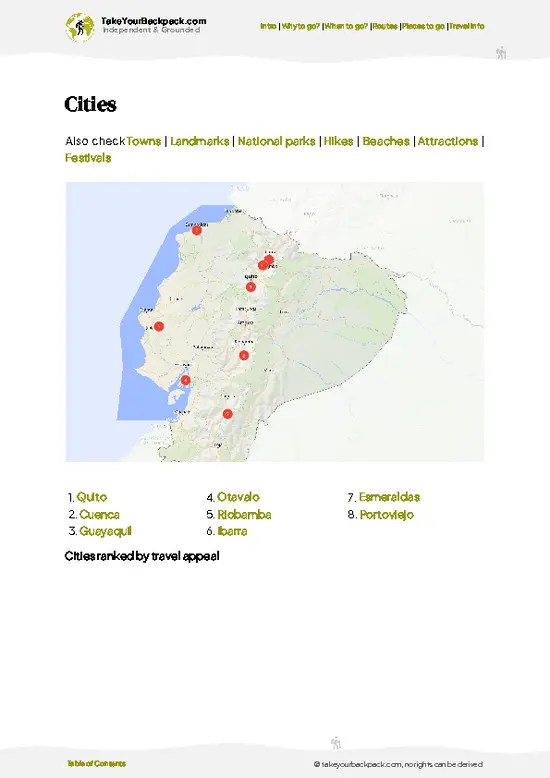
Ecuador🇪🇨 | citiesGuayaquilGuayas riverfront, iguana park, painted hill steps, Galápagos gateway | things to do and best time to go

Explore CuencaExplore Otavalo

Backpacking in Guayaquil
🌟 Highlightcity ranked #3
By Johan Kruseman 🇳🇱 | Updated October 19, 2026

Guayaquil spent decades as the city travelers flew into and fled straight out of, a port with a reputation. Now Ecuador’s biggest city sits on the Guayas River in the southwest, and it has a rebuilt riverfront, painted hill neighborhoods and plenty to explore on foot. My mistake was booking a cheap room beside the bus terminal to save a night’s fare, then waking to diesel roaring through the wall and a long crawl across town before I saw anything. The saved money vanished in taxis and lost morning hours. Sleep near the Malecón, a little pricier, and you win back time and comfort for good. Stay a day or two and you get the most for the least. Food lovers, river-walkers and onward travelers to the Galápagos will like it most. Anyone chasing mountains and colonial postcards will not.

Discover everything you want to know in the 📖 Ecuador Travel Guide.


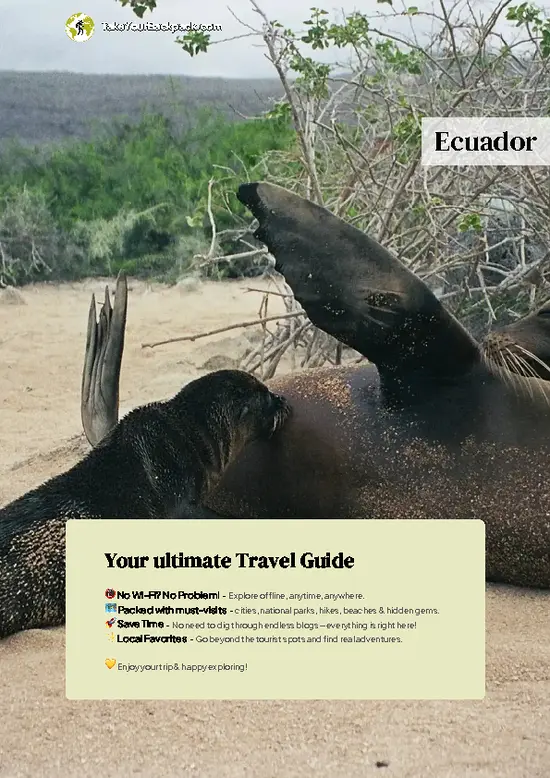
example page 0 from our offline Travel Guide for Ecuador
example page 1 from our offline Travel Guide for Ecuador
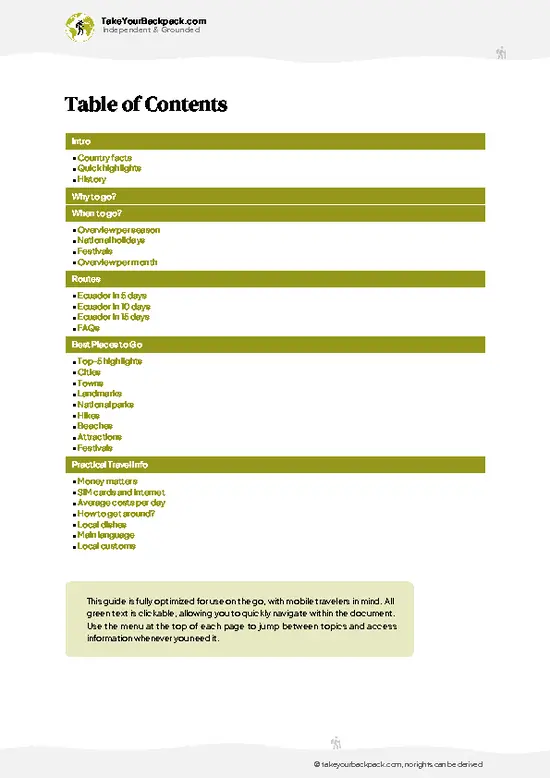
example page 2 from our offline Travel Guide for Ecuador
example page 3 from our offline Travel Guide for Ecuador
example page 4 from our offline Travel Guide for Ecuador
example page 5 from our offline Travel Guide for Ecuador
example page 6 from our offline Travel Guide for Ecuador
example page 7 from our offline Travel Guide for Ecuador
Loading the map 🌍
CLICK TO FILTER
cities
towns
landmarks
national parks
hikes
beaches
attractions
festivals
SHOW COUNTRY’S BESTSHOW ALL

✨ Why go?
Ranked #3 city in Ecuador
Reasons people choose to visit here

Guayaquil earns its place in a route as Ecuador’s great connector, and that matters more than any single sight. Most international and Galápagos flights land here, and buses fan out to the coast, the Andes and the Peruvian border, so you pass through whether you plan to or not. Use the stop well. The city packs a surprising number of things into the compact strip between the river and the hills, and a day or two covers it without wearing you out. The real draw is the food: fresh ceviche and encebollado eaten at humble counters beat anything you will find in the highlands. Evenings along the Malecón 2000 are when locals come out to stroll, so the city feels lived in rather than staged. Nightlife exists but sits well behind the food. If you want cool mountain air and old stone churches, treat Guayaquil as a short, sharp stop and move on.

💡 HighlightsKey sights and experiences for travelers

  1. Malecón 2000: The 2.5-kilometer riverfront promenade along the Guayas River is the city’s front porch, with gardens, a lookout tower, museums and food stalls. Free to walk. Go late afternoon into evening when the breeze picks up and families fill the paths. Allow 2 to 3 hours.
  2. Las Peñas and Cerro Santa Ana: The 444 steps climb past brightly painted houses, galleries and cafés to a small chapel and lighthouse at the top, with views over the river and rooftops. Free. Climb in the morning before the crowds or at dusk. Allow 1.5 to 2 hours.
  3. Parque Seminario (Parque de las Iguanas): Dozens of green iguanas sprawl on the lawns and branches beside the cathedral, and a few land-dwelling turtles share the pond. Free. Midday is when the iguanas bask most visibly. Allow 30 to 45 minutes.
  4. Museo Antropológico
… read more 👉
  1. Malecón 2000: The 2.5-kilometer riverfront promenade along the Guayas River is the city’s front porch, with gardens, a lookout tower, museums and food stalls. Free to walk. Go late afternoon into evening when the breeze picks up and families fill the paths. Allow 2 to 3 hours.
  2. Las Peñas and Cerro Santa Ana: The 444 steps climb past brightly painted houses, galleries and cafés to a small chapel and lighthouse at the top, with views over the river and rooftops. Free. Climb in the morning before the crowds or at dusk. Allow 1.5 to 2 hours.
  3. Parque Seminario (Parque de las Iguanas): Dozens of green iguanas sprawl on the lawns and branches beside the cathedral, and a few land-dwelling turtles share the pond. Free. Midday is when the iguanas bask most visibly. Allow 30 to 45 minutes.
  4. Museo Antropológico y de Arte Contemporáneo (MAAC): Pre-Columbian ceramics from the Valdivia, Machalilla and Guangala cultures sit alongside contemporary Ecuadorian art, on the riverfront. Entry runs about US$2 to 5. Come on a weekday morning. Allow 1.5 to 2 hours.
  5. Cementerio General: White mausoleums, marble angels and the tombs of presidents and poets fill this hillside necropolis, and its painted wall murals and tree-lined avenues make it more walk than somber visit. Free. Go in the morning, and stay on the main paths. Allow 1 to 1.5 hours.
  6. Parque Histórico Guayaquil: Across the river in Samborondón, this park recreates a traditional hacienda, an urban-architecture zone and a small wildlife area with caimans, monkeys and birds. Entry is about US$5 to 8. Visit in the morning. Allow 2 to 3 hours.
  7. Mercado Artesanal: A covered market near the Malecón with hammocks, Panama hats, tagua carvings, alpaca sweaters and woven bags. Bargain politely, expecting to shave off 10 to 20 percent. Open daily, best before noon. Allow 45 minutes to 1 hour.
  8. Parque Samanes: A huge green park in the north with bike paths, ponds and sports courts, and a very local weekend scene. Free, with bike rental for roughly US$2 to 4 an hour. Weekend mornings are liveliest. Allow 2 hours.
For day trips, Parque Nacional Cajas is far, but Playas beach, Parque Nacional Machalilla near Puerto López, the mangroves of Isla Santay and the Ruta del Sol beach towns like Montañita are all within reach, and the Cañar highlands sit further out.
Most visitors miss Cementerio General’s painted murals and shaded avenues, which make it one of the calmest places in the city to walk.
Spotted a mistake or missing something? Contact us.

Things to do around Guayaquil

Ratings based on Tripadvisor reviews. When you book through this link, you support our work at no extra cost to you.

🏘️ NeighborhoodsUnderstanding the local layout

Guayaquil sprawls along the Guayas River, but the pieces a backpacker needs sit close together, so you can cover most of them on foot and a few cheap rides.
  • Malecón 2000 and Las Peñas: Start here and stride the riverfront boardwalk, then climb the 444 painted steps of Cerro Santa Ana to the lighthouse and the pastel houses of Las Peñas. It is free, walkable and the best return for a first morning, though the steps are steamy by noon, so go early or at dusk.
  • Centro and Parque Seminario: Dive into the grid of old colonial-style streets, where iguanas lounge in the park, the cathedral stands beside it and street vendors sell fresh juice. Wander in daylight, since it empties and gets sketchy after dark.
  • Urdesa: Hop a taxi or bus to this leafy district for the best sit-down food and nightlife on Víctor
… read more 👉
Guayaquil sprawls along the Guayas River, but the pieces a backpacker needs sit close together, so you can cover most of them on foot and a few cheap rides.
  • Malecón 2000 and Las Peñas: Start here and stride the riverfront boardwalk, then climb the 444 painted steps of Cerro Santa Ana to the lighthouse and the pastel houses of Las Peñas. It is free, walkable and the best return for a first morning, though the steps are steamy by noon, so go early or at dusk.
  • Centro and Parque Seminario: Dive into the grid of old colonial-style streets, where iguanas lounge in the park, the cathedral stands beside it and street vendors sell fresh juice. Wander in daylight, since it empties and gets sketchy after dark.
  • Urdesa: Hop a taxi or bus to this leafy district for the best sit-down food and nightlife on Víctor Emilio Estrada avenue. Eating here costs a little more than downtown, but the variety beats anything in the center.
  • Samborondón and Puerto Santa Ana: Cross the river for the polished bars and restaurants. It is pricey and spread out, so go once for a drink and a skyline view, not as a base.
  • Bahía market area: Push into the chaotic stalls for cheap goods and snacks, and keep your phone tucked away. It is loud, fun and strictly a daytime stop.

⌛️ 1 daySeeing the highlights in 24 hours

7:30 AM: Cementerio General
Start here because the white tombs and tree-lined avenues are cool and quiet before the city heats up, and the mausoleums are as photogenic as any gallery. Walk the main paths for about an hour, then grab a taxi or rideshare to the center for a short ride.

9:30 AM: Mercado Artesanal
Browse hammocks, tagua nut carvings and Panama hats while stallholders are still fresh and willing to haggle. Aim for a polite 10 to 20 percent off. Walk a few minutes to the river.

11:00 AM: Malecón 2000
Stroll the promenade south, past gardens, fountains and the clock tower, and climb the lookout for views over the Guayas River. Stop for a cold juice at one of the stalls. Keep walking to the north end.

1:00 PM: Lunch near Las Peñas
Order a plate of encebollado, the fish and yuca soup … read more 👉
7:30 AM: Cementerio General
Start here because the white tombs and tree-lined avenues are cool and quiet before the city heats up, and the mausoleums are as photogenic as any gallery. Walk the main paths for about an hour, then grab a taxi or rideshare to the center for a short ride.

9:30 AM: Mercado Artesanal
Browse hammocks, tagua nut carvings and Panama hats while stallholders are still fresh and willing to haggle. Aim for a polite 10 to 20 percent off. Walk a few minutes to the river.

11:00 AM: Malecón 2000
Stroll the promenade south, past gardens, fountains and the clock tower, and climb the lookout for views over the Guayas River. Stop for a cold juice at one of the stalls. Keep walking to the north end.

1:00 PM: Lunch near Las Peñas
Order a plate of encebollado, the fish and yuca soup locals eat as a hangover cure, or ceviche with plantain chips at a family-run comedor in the streets behind the Malecón. Rest in the shade.

2:30 PM: Las Peñas and Cerro Santa Ana
Climb the 444 numbered steps past colorful houses and small galleries, and pause at the chapel and lighthouse at the top. Walk back down toward the center slowly.

4:30 PM: Parque Seminario
Watch the iguanas lounging under the trees beside the cathedral. It is a gentle way to cool off before dinner.

6:00 PM: Museo Antropológico y de Arte Contemporáneo
If the hours suit, take a quick look at Valdivia ceramics and contemporary art, then finish with sunset on the river, watching the lights come on along the promenade before dinner in the center.

🌤️ When to go?Choosing the right time of year

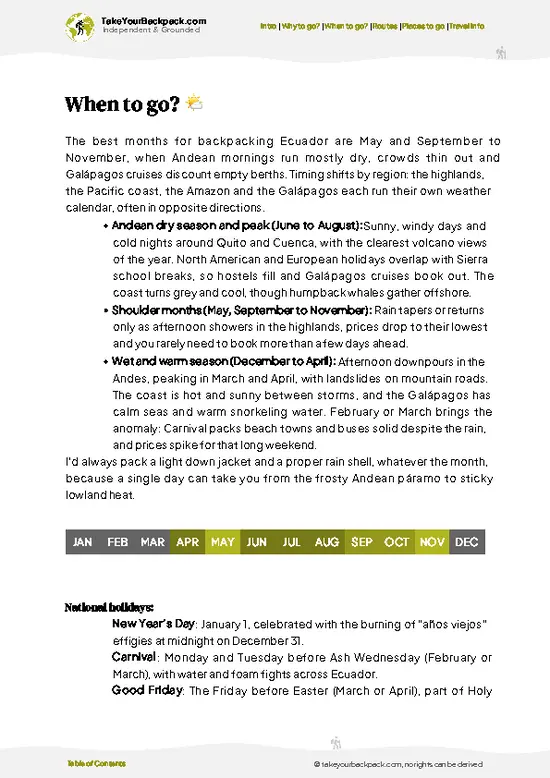
The dry season from June to November is the most comfortable window for Guayaquil, with cooler evenings and little rain.
  • Dry Season (June to November): Days run 27 to 30°C (81 to 86°F), nights dip to about 21°C (70°F), and skies are often overcast with garúa mist. Sightseeing on foot is easy and prices stay moderate.
  • Wet Season (December to May): Expect heat of 30 to 33°C (86 to 91°F), high humidity and heavy afternoon downpours, especially February to April. Streets can flood briefly, but mornings are often sunny and beds are easier to find.
  • Holidays and Crowds: Carnival in February or March, Guayaquil’s founding day on July 25 and Independence Day on October 9 bring local crowds and higher hostel prices. Daylight stays close to 12 hours all year.
Book ahead for the October long weekend, and plan outdoor walks before noon in any month.

source: climatestotravel.comJANJanuary: fair for travelingFEBFebruary: fair for travelingMARMarch: fair for travelingAPRApril: fair for travelingMAYMay: highly recommended for travelingJUNJune: highly recommended for travelingJULJuly: excellent for travelingAUGAugust: excellent for travelingSEPSeptember: highly recommended for travelingOCTOctober: highly recommended for travelingNOVNovember: highly recommended for travelingDECDecember: highly recommended for traveling
when-to-go

✈️ The backpacker research shortcutEcuador Travel Guide

An offline-friendly backpacking guide with optimized travel routes, ranked highlights, transport advice, and the best areas to stay.
example page 0 from our offline Travel Guide for Ecuador
example page 1 from our offline Travel Guide for Ecuador
example page 2 from our offline Travel Guide for Ecuador
example page 3 from our offline Travel Guide for Ecuador
example page 4 from our offline Travel Guide for Ecuador
example page 5 from our offline Travel Guide for Ecuador
example page 6 from our offline Travel Guide for Ecuador
example page 7 from our offline Travel Guide for Ecuador
The digital guide (274 pages) contains:
✅ 87 highlights, ranked by travel appeal
✅ Optimized 5, 10 & 15-day travel routes
✅ Cities, national parks, landmarks, beaches
✅ How to get around
✅ Offline-friendly for travel without Wi-Fi
👉 Click to see all 30+ guide features

📅 Plan smarter in minutes, not weeks
✅ Month by month travel advice
✅ Festivals & national holidays
✅ Budget expectations

🗺️ Go to the right places, skip the overrated ones
✅ Honest pros & cons of destinations
✅ Top hikes, parks & viewpoints
✅ Lesser-known places most travelers miss
✅ Clear “worth it vs skip it” guidance

🛏️ Travel smoothly without rookie mistakes
✅ Best areas to stay
✅ Transport systems explained simply
✅ Common scams & safety advice
✅ SIM cards, money & practical tips

🌍 Understand the country, not just visit it
✅ Culture & traditions
✅ 52 Essential phrases & customs
✅ Festivals worth planning around
✅ Traveler-friendly historical context
✅ Insights that make places more meaningful

📱 Built for real travel conditions
✅ Fully downloadable PDF
✅ Works completely offline
✅ Optimized for phone use
✅ Useful in remote areas & buses
✅ Everything in one place
Stop searching, start planning
Get instant access to your full guide. 30‑day money-back guarantee.
+ Add another guide for just

By proceeding you agree to our terms.
Sent to your inbox immediately after payment • 100% Secure Checkout
Best Backpacking Travel Advisor 2025 tourism awardBest Backpacking
Travel Advisor
2025
What others say about Take Your Backpack Guides:
⭐⭐⭐⭐⭐
Fantastic, amazing amount of information!
⭐⭐⭐⭐⭐
My goodness this is amazing, it's what I've been looking for hats off too you!
⭐⭐⭐⭐⭐
I think this is absolutely BRILLIANT
⭐⭐⭐⭐
Very complete and informative. It's still missing places, but I gotta to commend you
⭐⭐⭐⭐⭐
This is truly amazing, thank you, can't wait to explore it with my kids!
⭐⭐⭐⭐⭐
Awesome resource, thank you!
⭐⭐⭐⭐⭐
This is amazing! Can't wait to explore the ones I haven't seen
⭐⭐⭐⭐
I love this! Well done, great idea.
⭐⭐⭐⭐⭐
Thanks for taking the time to make this gem!
⭐⭐⭐⭐⭐
This might be the best website I've ever seen.
⭐⭐⭐⭐⭐
Congratulations, and thank you so much for your work; it's incredibly valuable.
⭐⭐⭐⭐
In all seriousness I think you did a great job pointing out the important spots
⭐⭐⭐⭐⭐
10/10 very good
⭐⭐⭐⭐⭐
As someone who's only just starting to visit regularly this is awesome, thank you.
⭐⭐⭐⭐
Thank you very much! I'm going to visit my dad, it's going to be very useful!
⭐⭐⭐⭐⭐
This is really cool! We'll be travelling for the first time and this definitely come in handy.
⭐⭐⭐⭐⭐
You are now our minister of culture, congratulations 👨‍💼
⭐⭐⭐⭐⭐
Just wanted to tell you that this is a pearl! Going to follow your recommendations.
⭐⭐⭐⭐⭐
This is so cool. I'll definitely be using the resource for my travels soon.
⭐⭐⭐⭐⭐
This is very impressive! Good work.
⭐⭐⭐⭐⭐
This is an amazing and informative site. Very well done!

🛏️ Where to stay?Choosing the right base

Centro and the Malecón area, plus Urdesa, are the best places for a budget bed in Guayaquil. Dorm beds and cheap private rooms cluster around the riverfront and old center, usually at about US$10 to 20, and you can walk to the main sights and the Metrovía. The trade-off is that central streets go quiet and edgy after dark, so arrive before nightfall and use a taxi for late returns. Choose a place on or just off the Malecón for the safest short walks and the best transport links.
Urdesa is the calmer alternative, with leafy streets, a handful of hostels and guesthouses, and a large choice of restaurants … read more 👉
Centro and the Malecón area, plus Urdesa, are the best places for a budget bed in Guayaquil. Dorm beds and cheap private rooms cluster around the riverfront and old center, usually at about US$10 to 20, and you can walk to the main sights and the Metrovía. The trade-off is that central streets go quiet and edgy after dark, so arrive before nightfall and use a taxi for late returns. Choose a place on or just off the Malecón for the safest short walks and the best transport links.
Urdesa is the calmer alternative, with leafy streets, a handful of hostels and guesthouses, and a large choice of restaurants and bars within a few blocks. It feels safer at night and is lively on weekends, but expect some noise near the main avenue. A taxi to downtown costs US$3 to 5, and local buses run along the main road. Hostels are fewer here than in the center, so book ahead in busy periods such as October and the Carnival weekend. If you arrive late from a bus or flight, Urdesa or the Malecón edge are easier to reach safely than deeper downtown.

🚌 Getting aroundHow to get from A to B

From the Terminal Terrestre, the main bus station about 10 minutes north of downtown, a taxi to the center costs US$4 to 7 and the Metrovía bus line costs US$0.30 to 0.35. Guayaquil is hot, flat and spread out, so you will mix walking in the compact core with buses or rides for longer hops. Traffic clogs at rush hour, but the systems work well enough to keep you moving.
  • Walking: Free and the best way to cover the Malecón, Las Peñas and Centro, which sit within roughly 2 kilometers of each other. Start early to dodge the midday heat and skip walking at night.
  • Metrovía: This dedicated-lane bus system charges about US$0.30 to 0.35 a ride, runs roughly 5:30 a.m. to 10 p.m., and beats regular traffic by a wide margin. It is crowded at peak times, but for the money it gives backpackers the most speed
… read more 👉
From the Terminal Terrestre, the main bus station about 10 minutes north of downtown, a taxi to the center costs US$4 to 7 and the Metrovía bus line costs US$0.30 to 0.35. Guayaquil is hot, flat and spread out, so you will mix walking in the compact core with buses or rides for longer hops. Traffic clogs at rush hour, but the systems work well enough to keep you moving.
  • Walking: Free and the best way to cover the Malecón, Las Peñas and Centro, which sit within roughly 2 kilometers of each other. Start early to dodge the midday heat and skip walking at night.
  • Metrovía: This dedicated-lane bus system charges about US$0.30 to 0.35 a ride, runs roughly 5:30 a.m. to 10 p.m., and beats regular traffic by a wide margin. It is crowded at peak times, but for the money it gives backpackers the most speed and savings on longer north to south hops.
  • City buses: Fares run about US$0.30 to 0.40 and routes reach everywhere, but they are packed and confusing to read. Use them only when the Metrovía does not go where you need to.
  • Taxis and ride apps: Short hops cost US$2 to 5, airport runs about US$5 to 8, and apps such as Uber and inDrive give fixed prices. At night, they are the comfortable choice worth the extra dollars, while hailed cabs need a price agreed first.

👛 Costs (as of 19 October 2026)Money, prices, and spending tips

A backpacker in Guayaquil needs roughly US$40 to 55 a day, or about US$51 with a high-season dorm bed.
CategoryBudget RangeLocal Reality
Dorm (high season)US$12 to 18Beds near the Malecón and Urdesa go up around holidays
Dorm (off-season)US$8 to 13Easier to haggle and find a place with air conditioning
MealsUS$12 to 18Set lunches cost US$2.50 to 4, seafood dinners US$6 to 10
Local transportUS$2 to 6Metrovía US$0.30 to 0.35, short taxi or app rides US$2 to 5
City transport passUS$2 to 3No tourist pass, so a rechargeable Metrovía card is the practical choice
Activities and entry feesUS$3 to 8Cerro Santa Ana and the Malecón are free, parks and museums charge a few dollars
MiscellaneousUS$3 to 5Water, SIM data and snacks, plus a beer at US$2 to 3
Total Daily BudgetUS$51Using the high-season dorm, mid-range
… read more 👉
A backpacker in Guayaquil needs roughly US$40 to 55 a day, or about US$51 with a high-season dorm bed.
CategoryBudget RangeLocal Reality
Dorm (high season)US$12 to 18Beds near the Malecón and Urdesa go up around holidays
Dorm (off-season)US$8 to 13Easier to haggle and find a place with air conditioning
MealsUS$12 to 18Set lunches cost US$2.50 to 4, seafood dinners US$6 to 10
Local transportUS$2 to 6Metrovía US$0.30 to 0.35, short taxi or app rides US$2 to 5
City transport passUS$2 to 3No tourist pass, so a rechargeable Metrovía card is the practical choice
Activities and entry feesUS$3 to 8Cerro Santa Ana and the Malecón are free, parks and museums charge a few dollars
MiscellaneousUS$3 to 5Water, SIM data and snacks, plus a beer at US$2 to 3
Total Daily BudgetUS$51Using the high-season dorm, mid-range of each row
Eat your main meal at lunch from a set menu, which costs about half of a dinner.


source: turismo.gob.ec
⚠️ Prices can change and everyone travels differently, so take this as a rough guide. Hope it helps you plan your adventure!

🚌 Day tripsWhere to go beyond the main area

Guayaquil works well as a base for day trips, with coastal, nature and cultural stops reachable by bus in 1 to 2.5 hours.
Parque Histórico Guayaquil:
This park in Samborondón recreates old Guayaquil with wildlife, a mangrove area and traditional architecture. It takes about 30 minutes by taxi or bus from downtown, costs roughly US$5 to 8 to enter, and works any time, though mornings are cooler. Many people skip the wildlife area, which is the best part.
👉 Explore Parque Histórico Guayaquil
Playas:
Playas, also called General Villamil, is the nearest beach, about 1.5 hours by bus for roughly US$2.50 to 3.50 each way. It is busiest from December to April, when the water is warm, and weekends fill with Ecuadorian families, so go midweek. Bring cash and expect basic seafood shacks.

Manglares Churute … read more 👉
Guayaquil works well as a base for day trips, with coastal, nature and cultural stops reachable by bus in 1 to 2.5 hours.
Parque Histórico Guayaquil:
This park in Samborondón recreates old Guayaquil with wildlife, a mangrove area and traditional architecture. It takes about 30 minutes by taxi or bus from downtown, costs roughly US$5 to 8 to enter, and works any time, though mornings are cooler. Many people skip the wildlife area, which is the best part.
👉 Explore Parque Histórico Guayaquil
Playas:
Playas, also called General Villamil, is the nearest beach, about 1.5 hours by bus for roughly US$2.50 to 3.50 each way. It is busiest from December to April, when the water is warm, and weekends fill with Ecuadorian families, so go midweek. Bring cash and expect basic seafood shacks.

Manglares Churute Ecological Reserve:
About 1 hour south by bus toward Machala, Churute offers boat and trail visits through mangroves with birds and sometimes dolphins. Budget US$10 to 20 with transport and a guide fee. It is best in the drier months from June to November, and first-timers often forget to ask the driver to drop them at the reserve entrance.

🍲 FoodEating & Drinking in Guayaquil

Guayaquil eats seafood first, and the coastal flavors set it apart from the highlands. Order encebollado, a tuna, yuca and pickled onion soup that locals eat for breakfast and as a hangover cure, usually US$2 to 4 at morning stalls. Ceviche here tends to come with shrimp, served with toasted corn or plantain chips, and it is lemony and soupy instead of dry. Look for cangrejo criollo, crab cooked in spicy sauces and eaten with your hands at crab houses in town. Try guatita and bollos de pescado, fish wrapped in banana leaf and steamed, for local comfort food.
Backpackers eat cheaply at markets and set-lunch places, where an almuerzo of soup, rice and a main costs US$2.50 to 4. Street vendors sell fresh coconut water and sugarcane juice by the riverfront. For a drink, locals favor cold Pilsener … read more 👉
Guayaquil eats seafood first, and the coastal flavors set it apart from the highlands. Order encebollado, a tuna, yuca and pickled onion soup that locals eat for breakfast and as a hangover cure, usually US$2 to 4 at morning stalls. Ceviche here tends to come with shrimp, served with toasted corn or plantain chips, and it is lemony and soupy instead of dry. Look for cangrejo criollo, crab cooked in spicy sauces and eaten with your hands at crab houses in town. Try guatita and bollos de pescado, fish wrapped in banana leaf and steamed, for local comfort food.
Backpackers eat cheaply at markets and set-lunch places, where an almuerzo of soup, rice and a main costs US$2.50 to 4. Street vendors sell fresh coconut water and sugarcane juice by the riverfront. For a drink, locals favor cold Pilsener or Club beer, and the bars of Urdesa and Las Peñas fill up on weekends. Eat the freshest seafood at busy spots, and expect afternoons to be quiet in the heat.

🛡️ SafetyTraveler Safety Guide

Guayaquil is a big port city with real petty crime, but sensible habits keep most travelers trouble-free. Stay alert in Centro away from the Malecón, around the Bahía market and in the bus terminal, where phone snatching and bag theft happen. Keep your phone in a front pocket, carry only the cash you need and leave jewelry at the hostel. Use ride apps or a taxi from your hostel after dark rather than walking, even short distances, and skip the areas south of the center entirely. Solo travelers do fine by sticking to the Malecón, Urdesa and Samborondón at night. Taxis hailed on the street can inflate prices or be risky, so use apps or radio taxis. Express kidnappings and fake police are rare but known, so never go off with strangers. Everyday annoyances are mostly heat, aggressive vendors and traffic, and a firm “no, gracias” works.

FAQTraveler FAQ

Two full days cover Guayaquil well: one for the Malecón, Las Peñas and Centro, another for Parque Histórico and Urdesa. Add a third day for a beach trip to Playas, about 1.5 hours away, or the Churute mangroves. Most backpackers use the city as a 2 to 3 day stop before the coast or the Galápagos flight.
Guayaquil is manageable for solo backpackers who use common sense, but it has more petty crime than most Ecuadorian cities. Stick to the Malecón, Las Peñas, Urdesa and Samborondón after dark and take ride apps (US$2 to 5) rather than walking. Keep phones hidden around the Bahía market and the bus terminal.
Guayaquil is known for its Malecón 2000 riverfront, the colorful Las Peñas neighborhood with 444 steps to a lighthouse, and its role as Ecuador’s largest city and main port. It is also famous for seafood such as encebollado and ceviche, plus the iguanas in Parque Seminario. Most Galápagos travelers also fly out from here, with flights taking about 2 hours.
⚠️ Things can change over time, so always validate details locally before you go.

Other Ecuadorian cities near Guayaquil

Explore more nearby:

  • Cuenca—Panama hat workshops, blue cathedral domes, Tomebamba riverside, Inca ruins| 126 km away
  • Portoviejo—Manabí cooking, riverside parks, rebuilt center, Manteño ceramics| 141 km away
  • Riobamba—Chimborazo base, Devil’s Nose train, Saturday market, wide grid streets| 149 km away

💡 Not sure where to go next?
Create a personalized itinerary for Ecuador including Guayaquil and the places that fit your trip.

Generate my itinerary

👉 Discover all cities

Or checkout all Ecuador has to offer (think cities, towns, villages, national parks, hikes, beaches, festivals)
Country photo of Ecuador

We 💚 feedbackIs it worth it?

Guayaquil is best on an evening in the drier months, roughly between June and November, when the Malecón fills with families and the air feels lighter after sundown. I would arrive in the morning, keep the day light, and save the long hill climb for the evening. Skip the mid-afternoon sights and plan on an unhurried dinner.

✈️ When did I visit Ecuador?
Ecuador I visited during my half year trip through South and Central America back in 2003

✍️ Help improve this page!
The information on this page is based on my own backpacking experience in Ecuador, supplemented with up-to-date research and feedback from other travelers. Travel details can change, so if you notice anything outdated or incomplete, feel free to let me know.


🙋‍♂️ Give feedback

👋 Meet the founderWho’s Behind Take Your Backpack?

Johan, backpacker and founder of TakeYourBackpackHi, I’m Johan (Netherlands 🇳🇱), the creator of TakeYourBackpack. Over the past 3 decades, I’ve backpacked through 90+ countries across six continents, gaining extensive experience with independent travel, long-term trips, and overland routes.

This site is built on a combination of firsthand travel experience and carefully curated insights from other backpackers. Many guides are based on places I’ve personally visited, while others bring together tips, observations, and practical advice shared by trusted travelers I’ve met along the way.

The goal is to provide realistic, experience-driven guidance — not generic itineraries — so you can explore destinations with better context, clearer expectations, and more confidence.