×

Ecuador🇪🇨 | beachesSalinasChipipe bay, La Chocolatera, whale boats, evening malecón | things to do and best time to go

Explore Punta CarneroExplore Cuenca

Backpacking in Salinas
🌟 Highlightbeach ranked #3
By Johan Kruseman 🇳🇱 | Updated October 19, 2026

Barefoot on hard-packed wet sand, I walked the full curve of Chipipe at low tide with a paper cone of fried shrimp from a beach cart, watching pelicans fold into the shallows beside the anchored fishing boats. Do the same. It costs nothing and shows you the place faster than any taxi. Salinas beach sits on the Santa Elena Peninsula in Ecuador, west of Guayaquil, and it is the country’s most built-up resort strip, a wall of high-rises behind a calm, shallow bay. Swimming is easy and the water is warm. Weekends and holidays pack the sand tight, and the water is murky, so skip the snorkel gear. Cleanliness is good along the malecón and patchier at the edges. Budget hostels and cheap seafood counters sit a block or two back from the sea. Come midweek, and walk the whole bay before you settle on a spot.

Discover everything you want to know in the 📖 Ecuador Travel Guide.


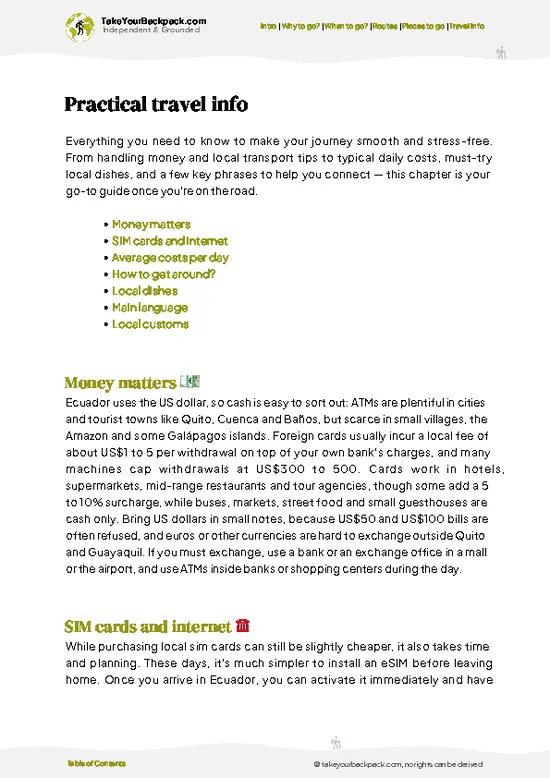
example page 0 from our offline Travel Guide for Ecuador
example page 1 from our offline Travel Guide for Ecuador
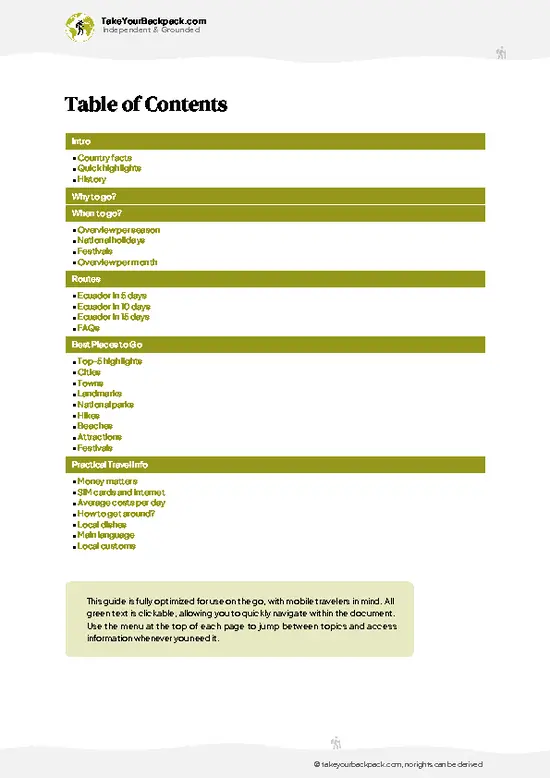
example page 2 from our offline Travel Guide for Ecuador
example page 3 from our offline Travel Guide for Ecuador
example page 4 from our offline Travel Guide for Ecuador
example page 5 from our offline Travel Guide for Ecuador
example page 6 from our offline Travel Guide for Ecuador
example page 7 from our offline Travel Guide for Ecuador
Loading the map 🌍
CLICK TO FILTER
cities
towns
landmarks
national parks
hikes
beaches
attractions
festivals
SHOW COUNTRY’S BESTSHOW ALL

✨ Why go?
Ranked #3 beach in Ecuador
What makes it a must-see beach

Salinas beach works as a pause on the Ecuadorian coast because it gives you a full resort town without resort prices. Backpackers come for the long, calm Chipipe bay, where the water is shallow and warm enough to float in for an hour, then climb out and eat ceviche at plastic tables a few steps from the sand. The social scene leans toward Ecuadorian families and weekend crowds from Guayaquil, so you meet locals more than other backpackers, and that is a point in its favor if you want practice with Spanish.

The other draw is geography. Salinas beach is the launch point for the westernmost cliffs of mainland Ecuador at La Chocolatera, and it is also where whale-watching boats go out during the humpback season. That makes it a useful hinge between the northern surf towns and the quieter coast … read more 👉
Salinas beach works as a pause on the Ecuadorian coast because it gives you a full resort town without resort prices. Backpackers come for the long, calm Chipipe bay, where the water is shallow and warm enough to float in for an hour, then climb out and eat ceviche at plastic tables a few steps from the sand. The social scene leans toward Ecuadorian families and weekend crowds from Guayaquil, so you meet locals more than other backpackers, and that is a point in its favor if you want practice with Spanish.

The other draw is geography. Salinas beach is the launch point for the westernmost cliffs of mainland Ecuador at La Chocolatera, and it is also where whale-watching boats go out during the humpback season. That makes it a useful hinge between the northern surf towns and the quieter coast toward Montañita and Puerto López. Stay two nights, spend one day on the peninsula and one on the water, and you have used the place well. Skip it in peak holiday weeks, when beds jump and the sand disappears under umbrellas.

💡 HighlightsPlaces and moments you shouldn't skip

  1. La Chocolatera: The rocky headland at Punta Santa Elena, a short ride from town, marks the westernmost point of mainland Ecuador. Waves slam into the cliffs and shoot spray through gaps in the rock, and seabirds wheel below the viewing platform. Go in the afternoon when the light is good, and bring a hat because there is almost no shade.
  2. Playa Chipipe: This quieter western town beach is a wide, gently sloping bay with calm water that suits long swims and beginner paddlers. Fishing boats and private yachts sit at anchor offshore. Vendors sell fruit, fried seafood and cold drinks, so you never need to leave the sand to eat. Weekends are crowded, and early mornings are quiet.
  3. Whale watching: From roughly June to September, humpback whales pass this coast to breed, and boats leave from the Salinas
… read more 👉
  1. La Chocolatera: The rocky headland at Punta Santa Elena, a short ride from town, marks the westernmost point of mainland Ecuador. Waves slam into the cliffs and shoot spray through gaps in the rock, and seabirds wheel below the viewing platform. Go in the afternoon when the light is good, and bring a hat because there is almost no shade.
  2. Playa Chipipe: This quieter western town beach is a wide, gently sloping bay with calm water that suits long swims and beginner paddlers. Fishing boats and private yachts sit at anchor offshore. Vendors sell fruit, fried seafood and cold drinks, so you never need to leave the sand to eat. Weekends are crowded, and early mornings are quiet.
  3. Whale watching: From roughly June to September, humpback whales pass this coast to breed, and boats leave from the Salinas area to find them. Trips run a few hours, and the animals often breach within sight of the boat. Go with a licensed operator and sit on the shaded side.
  4. Museo de Ballenas: This small museum is devoted to the whales of the Ecuadorian coast, with skeletons and displays on the humpback migration. It makes a good rainy-hour stop or a primer before a boat trip, and you will spot more on the water once you know how to read a blow and a fluke.
  5. The evening malecón: After dark the seafront promenade fills with families, joggers, ice-cream carts and grill stalls under the lit high-rises. There is no club scene to chase here, just a long walk by the water with snacks. Order grilled corn or a seafood cocktail and watch the bay lights.
For a first visit, start with La Chocolatera, because it shows you the dramatic edge of the peninsula that the calm bay hides.
Spotted a mistake or missing something? Contact us.

Things to do near Salinas

Ratings based on Tripadvisor reviews. When you book through this link, you support our work at no extra cost to you.

🌤️ When to go?Best time to visit Salinas

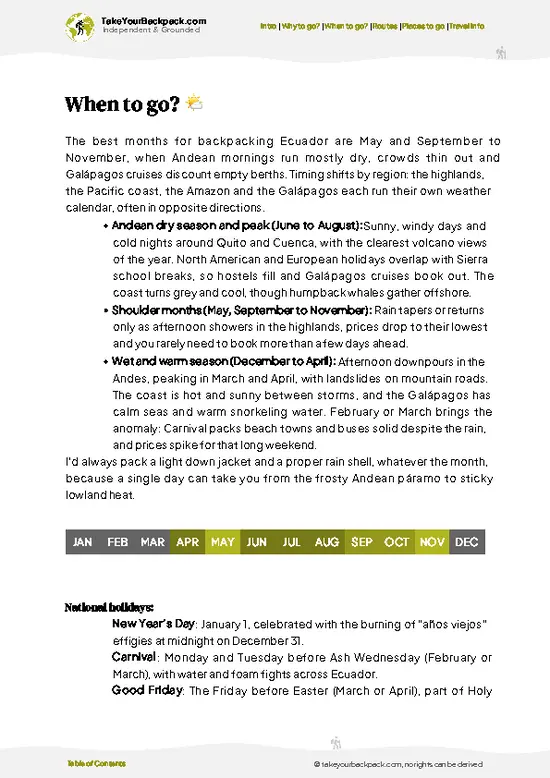
  • Peak Season (Jan to Apr): Salinas beach is at its hottest and wettest-feeling, with highs of 29 to 31°C (84 to 88°F), warm sea and the occasional afternoon shower. Ecuadorian holiday weekends and Carnival fill the Malecón, and room rates climb 30 to 60 percent.
  • Dry, Cooler Season (May to Dec): Mornings often start gray with garúa mist, then burn off. Highs run 24 to 28°C (75 to 82°F), nights 19 to 22°C (66 to 72°F). Water is cooler and the breeze stronger, which suits kitesurfing and windsurfing.
  • Whale Season (mid-June to September): Humpbacks pass offshore, and boat trips from nearby Salinas and Puerto López run daily. Beds are moderately priced outside July and August school holidays.
  • Daylight: Sun rises and sets close to 12 hours apart all year, so plan beach time before late afternoon.
Book … read more 👉
  • Peak Season (Jan to Apr): Salinas beach is at its hottest and wettest-feeling, with highs of 29 to 31°C (84 to 88°F), warm sea and the occasional afternoon shower. Ecuadorian holiday weekends and Carnival fill the Malecón, and room rates climb 30 to 60 percent.
  • Dry, Cooler Season (May to Dec): Mornings often start gray with garúa mist, then burn off. Highs run 24 to 28°C (75 to 82°F), nights 19 to 22°C (66 to 72°F). Water is cooler and the breeze stronger, which suits kitesurfing and windsurfing.
  • Whale Season (mid-June to September): Humpbacks pass offshore, and boat trips from nearby Salinas and Puerto López run daily. Beds are moderately priced outside July and August school holidays.
  • Daylight: Sun rises and sets close to 12 hours apart all year, so plan beach time before late afternoon.
Book midweek in February or August if you want sand without the crowds, since weekends fill with Guayaquil families.


source: climatestotravel.comJANJanuary: fair for travelingFEBFebruary: fair for travelingMARMarch: fair for travelingAPRApril: fair for travelingMAYMay: fair for travelingJUNJune: highly recommended for travelingJULJuly: excellent for travelingAUGAugust: excellent for travelingSEPSeptember: highly recommended for travelingOCTOctober: highly recommended for travelingNOVNovember: good for travelingDECDecember: good for traveling
ecuador-beach-salinas
© Google |

✈️ The backpacker research shortcutEcuador Travel Guide

An offline-friendly backpacking guide with optimized travel routes, ranked highlights, transport advice, and the best areas to stay.
example page 0 from our offline Travel Guide for Ecuador
example page 1 from our offline Travel Guide for Ecuador
example page 2 from our offline Travel Guide for Ecuador
example page 3 from our offline Travel Guide for Ecuador
example page 4 from our offline Travel Guide for Ecuador
example page 5 from our offline Travel Guide for Ecuador
example page 6 from our offline Travel Guide for Ecuador
example page 7 from our offline Travel Guide for Ecuador
The digital guide (274 pages) contains:
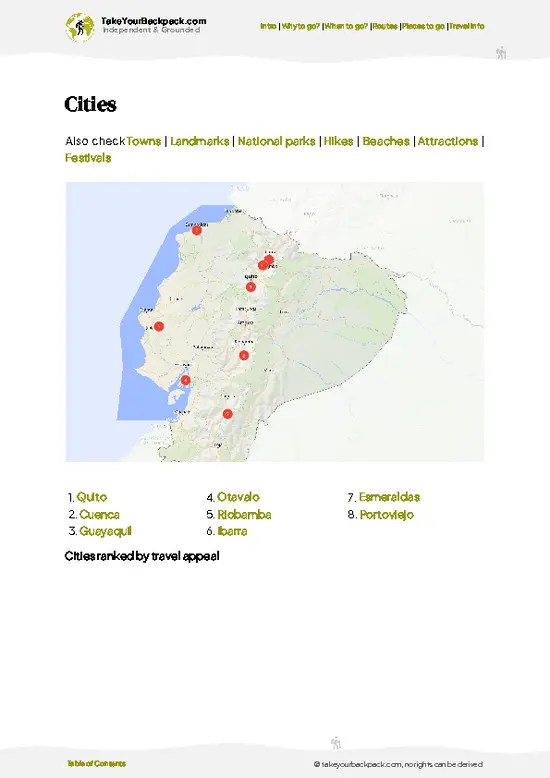
✅ 87 highlights, ranked by travel appeal
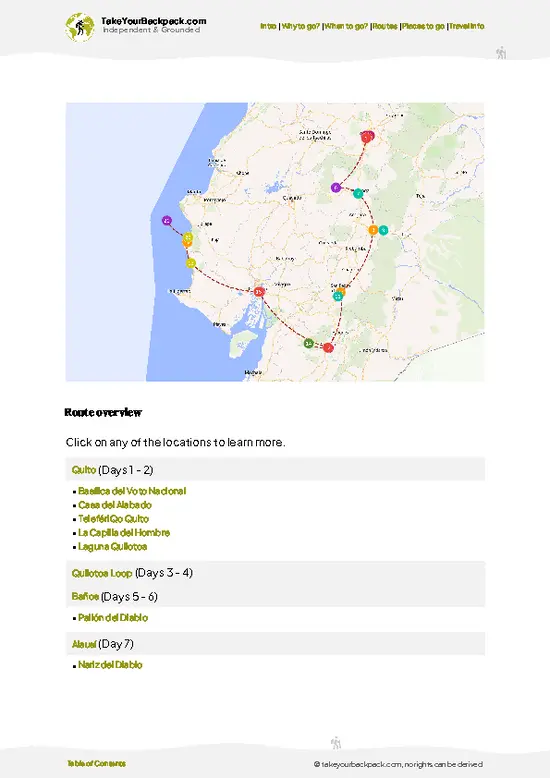
✅ Optimized 5, 10 & 15-day travel routes
✅ Cities, national parks, landmarks, beaches
✅ How to get around
✅ Offline-friendly for travel without Wi-Fi
👉 Click to see all 30+ guide features

📅 Plan smarter in minutes, not weeks
✅ Month by month travel advice
✅ Festivals & national holidays
✅ Budget expectations

🗺️ Go to the right places, skip the overrated ones
✅ Honest pros & cons of destinations
✅ Top hikes, parks & viewpoints
✅ Lesser-known places most travelers miss
✅ Clear “worth it vs skip it” guidance

🛏️ Travel smoothly without rookie mistakes
✅ Best areas to stay
✅ Transport systems explained simply
✅ Common scams & safety advice
✅ SIM cards, money & practical tips

🌍 Understand the country, not just visit it
✅ Culture & traditions
✅ 52 Essential phrases & customs
✅ Festivals worth planning around
✅ Traveler-friendly historical context
✅ Insights that make places more meaningful

📱 Built for real travel conditions
✅ Fully downloadable PDF
✅ Works completely offline
✅ Optimized for phone use
✅ Useful in remote areas & buses
✅ Everything in one place
Stop searching, start planning
Get instant access to your full guide. 30‑day money-back guarantee.
+ Add another guide for just

By proceeding you agree to our terms.
Sent to your inbox immediately after payment • 100% Secure Checkout
Best Backpacking Travel Advisor 2025 tourism awardBest Backpacking
Travel Advisor
2025
What others say about Take Your Backpack Guides:
⭐⭐⭐⭐⭐
Fantastic, amazing amount of information!
⭐⭐⭐⭐⭐
My goodness this is amazing, it's what I've been looking for hats off too you!
⭐⭐⭐⭐⭐
I think this is absolutely BRILLIANT
⭐⭐⭐⭐
Very complete and informative. It's still missing places, but I gotta to commend you
⭐⭐⭐⭐⭐
This is truly amazing, thank you, can't wait to explore it with my kids!
⭐⭐⭐⭐⭐
Awesome resource, thank you!
⭐⭐⭐⭐⭐
This is amazing! Can't wait to explore the ones I haven't seen
⭐⭐⭐⭐
I love this! Well done, great idea.
⭐⭐⭐⭐⭐
Thanks for taking the time to make this gem!
⭐⭐⭐⭐⭐
This might be the best website I've ever seen.
⭐⭐⭐⭐⭐
Congratulations, and thank you so much for your work; it's incredibly valuable.
⭐⭐⭐⭐
In all seriousness I think you did a great job pointing out the important spots
⭐⭐⭐⭐⭐
10/10 very good
⭐⭐⭐⭐⭐
As someone who's only just starting to visit regularly this is awesome, thank you.
⭐⭐⭐⭐
Thank you very much! I'm going to visit my dad, it's going to be very useful!
⭐⭐⭐⭐⭐
This is really cool! We'll be travelling for the first time and this definitely come in handy.
⭐⭐⭐⭐⭐
You are now our minister of culture, congratulations 👨‍💼
⭐⭐⭐⭐⭐
Just wanted to tell you that this is a pearl! Going to follow your recommendations.
⭐⭐⭐⭐⭐
This is so cool. I'll definitely be using the resource for my travels soon.
⭐⭐⭐⭐⭐
This is very impressive! Good work.
⭐⭐⭐⭐⭐
This is an amazing and informative site. Very well done!

🛏️ Where to stay?How to pick the right area

The Malecón area, a few blocks from the main promenade in the center of Salinas, is the best place to stay if you want beach access, food and other travelers within walking distance. Dorm beds in Salinas run roughly US$10 to 18 a night, private rooms US$25 to 45, and both rise sharply on holiday weekends.
The streets just behind the Malecón are the easiest compromise. You can walk to the sand in five minutes, eat set lunches (almuerzos) for US$3 to 5 at local comedores, and find bus stops and tour offices close by. It is lively at night, with noise from bars and weekend crowds, so ask for a room … read more 👉
The Malecón area, a few blocks from the main promenade in the center of Salinas, is the best place to stay if you want beach access, food and other travelers within walking distance. Dorm beds in Salinas run roughly US$10 to 18 a night, private rooms US$25 to 45, and both rise sharply on holiday weekends.
The streets just behind the Malecón are the easiest compromise. You can walk to the sand in five minutes, eat set lunches (almuerzos) for US$3 to 5 at local comedores, and find bus stops and tour offices close by. It is lively at night, with noise from bars and weekend crowds, so ask for a room away from the street.
Chipipe, the quieter neighborhood toward the west end of the beach, suits you if you want calmer evenings and a more local feel. It has a wide, gentler stretch of sand, simple guesthouses and a short walk to the fish market. Solo travelers who want company usually do better near the Malecón, where hostels cluster and the social scene is stronger.
If you plan to kitesurf or hit the beaches of the Santa Elena peninsula, staying in San Lorenzo, a short taxi ride away, puts you closer to the wind and open water.

🛡️ SafetyTraveler Safety Guide

Salinas beach is a busy, well-used city beach where swimming is generally safe along the main stretch in front of the Malecón, which is also where lifeguards and most locals gather. Waves are moderate, though rip currents can form on days with bigger swell, especially around the ends of the bay, so stay between the busy areas and check flags if posted. Tides change the width of the sand noticeably, and you can lose beach space on high tide.
Jellyfish are not a regular concern, but stingrays can rest in shallow sand, so shuffle your feet when entering. Sun is strong all year, even under the garúa haze, so bring reef-safe sunscreen and a hat. Midday is the hottest, and afternoon winds pick up.
Petty theft happens, mostly bags left unattended while people swim. Keep valuables in your hostel, take … read more 👉
Salinas beach is a busy, well-used city beach where swimming is generally safe along the main stretch in front of the Malecón, which is also where lifeguards and most locals gather. Waves are moderate, though rip currents can form on days with bigger swell, especially around the ends of the bay, so stay between the busy areas and check flags if posted. Tides change the width of the sand noticeably, and you can lose beach space on high tide.
Jellyfish are not a regular concern, but stingrays can rest in shallow sand, so shuffle your feet when entering. Sun is strong all year, even under the garúa haze, so bring reef-safe sunscreen and a hat. Midday is the hottest, and afternoon winds pick up.
Petty theft happens, mostly bags left unattended while people swim. Keep valuables in your hostel, take only cash you need, and stay on the busy Malecón after dark rather than walking dim side streets alone.

FAQFrequently asked questions about Salinas

Take a bus from Guayaquil’s main terminal (Terminal Terrestre) to Salinas, which takes about 2 to 2.5 hours and costs roughly US$4 to 6 with companies such as CLP or Liberty. Buses run frequently through the day, and the Salinas terminal is a short taxi ride (US$2 to 4) from the Malecón. By car, the road from Guayaquil via Progreso is about 140 km.
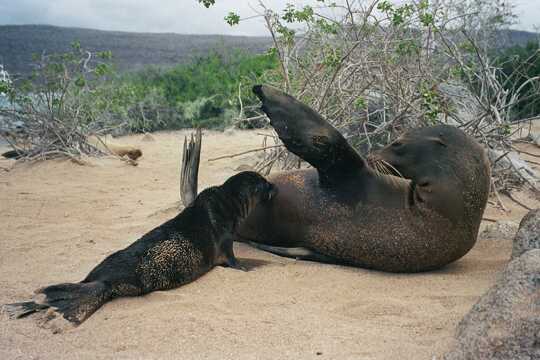
Swimming is good in front of the Malecón and at Chipipe, where the water is calm to moderate and lifeguards are usually present on busy days. Salinas beach is not known for surfing, but nearby Punta Carnero and Mar Bravo have better waves. Kitesurfing and windsurfing are popular in the stronger winds from June to December. Snorkeling is limited here, since visibility is mediocre, and the sea lion colony at La Lobería, on the Puntilla de Santa Elena, is watched from land.
Yes, Salinas beach is free to enter and has no gate or entrance fee. You only pay for extras such as a beach chair and umbrella (about US$3 to 8 a day), parking, or showers and bathrooms. Public access runs along the Malecón, and the beach is open all day.
⚠️ Things can change over time, so always validate details locally before you go.

Other Ecuadorian beaches near Salinas

Explore more nearby:

  • Punta Carnero—Surf lessons, wide windswept strand, southern point, humpback season| 10 km away
  • Montañita—Point break, Calle de los Cocteles, green headland, Olón walk| 49 km away
  • Playa de los Frailes—Turquoise crescent, clifftop loop, La Tortuguita cove, park entrance stalls| 82 km away

💡 Not sure where to go next?
Create a personalized itinerary for Ecuador including Salinas and the places that fit your trip.

Generate my itinerary

👉 Discover all beaches

Or checkout all Ecuador has to offer (think cities, towns, villages, national parks, hikes, beaches, festivals)
Country photo of Ecuador

We 💚 feedbackKey takeaways before you go

Most first-timers stay glued to Chipipe and never walk the long malecón to the far end of the bay, where the crowd thins and the fishing boats come in. I would go there in the late afternoon, buy whatever the boats just landed, and skip the beachfront restaurants with laminated menus.

✈️ When did I visit Ecuador?
Ecuador I visited during my half year trip through South and Central America back in 2003

✍️ Help improve this page!
The information on this page is based on my own backpacking experience in Ecuador, supplemented with up-to-date research and feedback from other travelers. Travel details can change, so if you notice anything outdated or incomplete, feel free to let me know.


🙋‍♂️ Give feedback

👋 Meet the founderWho’s Behind Take Your Backpack?

Johan, backpacker and founder of TakeYourBackpackHi, I’m Johan (Netherlands 🇳🇱), the creator of TakeYourBackpack. Over the past 3 decades, I’ve backpacked through 90+ countries across six continents, gaining extensive experience with independent travel, long-term trips, and overland routes.

This site is built on a combination of firsthand travel experience and carefully curated insights from other backpackers. Many guides are based on places I’ve personally visited, while others bring together tips, observations, and practical advice shared by trusted travelers I’ve met along the way.

The goal is to provide realistic, experience-driven guidance — not generic itineraries — so you can explore destinations with better context, clearer expectations, and more confidence.