×

Ecuador🇪🇨 | townsTenaJatunyacu rafting, river confluence, island park, Amazon fruit market | things to do and best time to go

Explore MindoExplore Puyo

Backpacking in Tena
👍 Recommendedtown ranked #8
By Johan Kruseman 🇳🇱 | Updated October 19, 2026

Tena puts you at the doorstep of the Amazon without a long, expensive jungle expedition, and that is the whole pitch. It sits in the Oriente of Ecuador, at the meeting of the Tena and Pano rivers, east of the Andes. Skip the town’s own sights, which are modest: a riverside walkway, a few murals, a small market. Spend your hours on rafting, tubing, waterfall hikes and community-run jungle lodges nearby. I still connect Tena with the low roar of the rivers carrying through the streets at night, and I would sleep within earshot of it. Getting here is easy by road from Quito and Baños. Hostels and riverside cafés make meeting other travelers simple, and evenings are lively but never wild. Compared with Puyo, which is mostly a transit stop, Tena actually gives you reasons to stay.

Discover everything you want to know in the 📖 Ecuador Travel Guide.


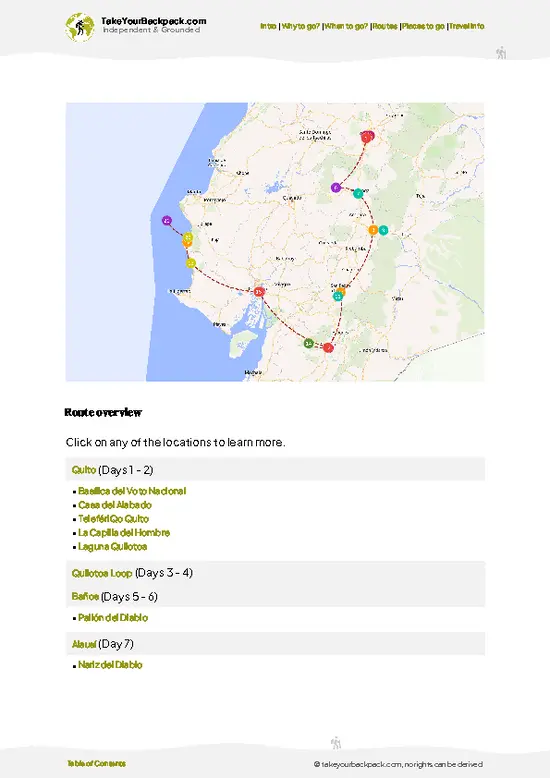
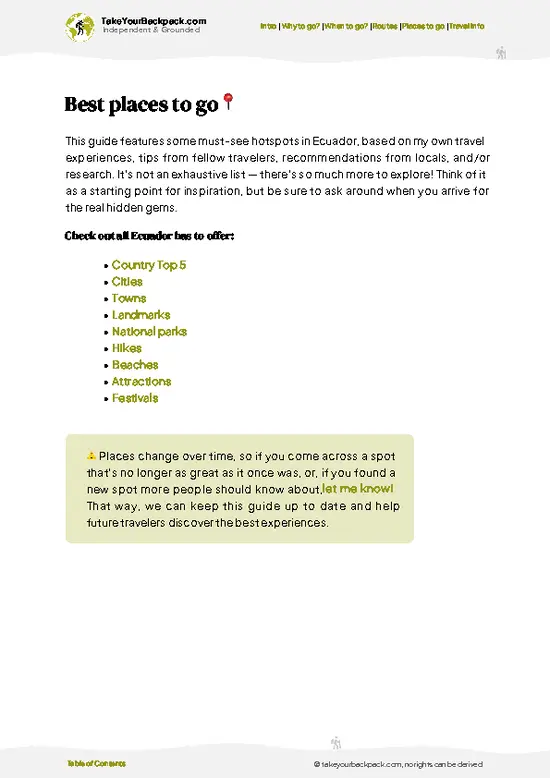
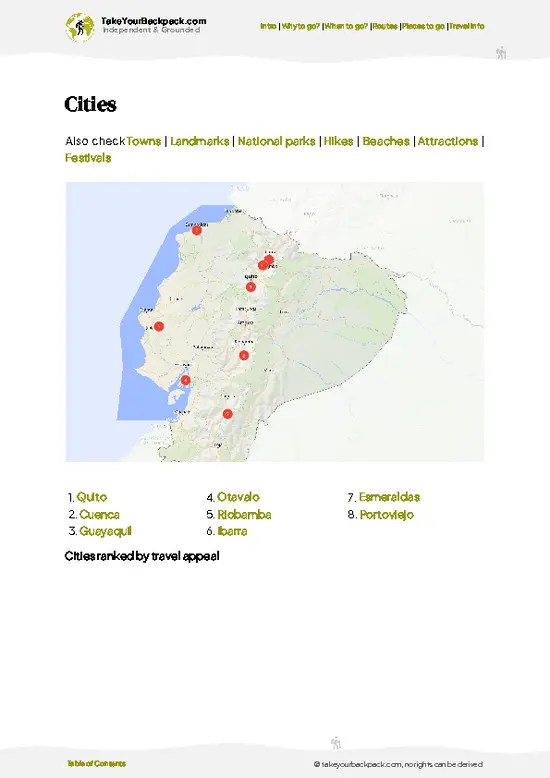
example page 0 from our offline Travel Guide for Ecuador
example page 1 from our offline Travel Guide for Ecuador
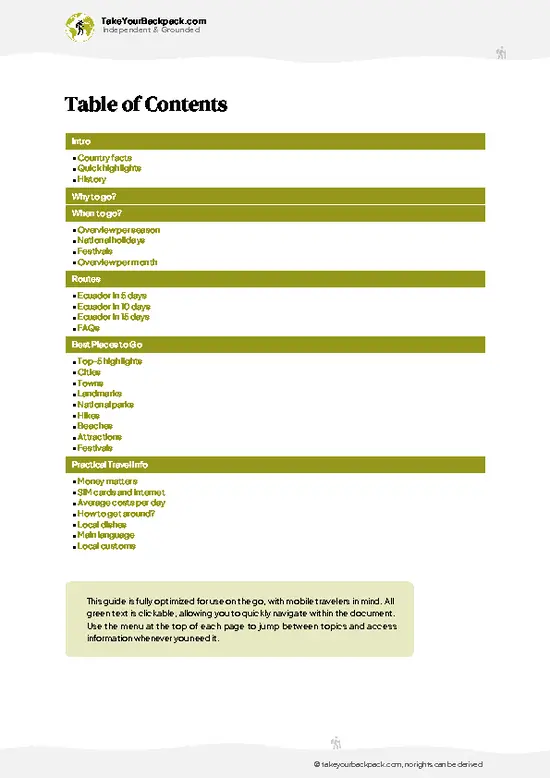
example page 2 from our offline Travel Guide for Ecuador
example page 3 from our offline Travel Guide for Ecuador
example page 4 from our offline Travel Guide for Ecuador
example page 5 from our offline Travel Guide for Ecuador
example page 6 from our offline Travel Guide for Ecuador
example page 7 from our offline Travel Guide for Ecuador
Loading the map 🌍
CLICK TO FILTER
cities
towns
landmarks
national parks
hikes
beaches
attractions
festivals
SHOW COUNTRY’S BESTSHOW ALL

✨ Why go?
Ranked #8 town in Ecuador
What makes it a must-see town

Tena is the Ecuadorian Amazon at its most accessible, and that is the whole case for coming. The town works as an adventure base: agencies along the river sell rafting on the Jatunyacu and Misahuallí rivers, kayaking lessons, tubing and day trips to Kichwa communities where you can try chocolate making and blowgun demonstrations. Most travelers stay two to four nights, long enough for a rafting day and a jungle outing, then move on toward Baños or Misahuallí. Evenings are quiet and social in a low-key way. Hostel common areas and a few riverside bars are where you will meet people, usually fellow rafters comparing bruises. It suits active solo travelers and small groups who want rapids and rainforest without a long expedition. If you prefer old colonial streets or nightlife, this is a short … read more 👉
Tena is the Ecuadorian Amazon at its most accessible, and that is the whole case for coming. The town works as an adventure base: agencies along the river sell rafting on the Jatunyacu and Misahuallí rivers, kayaking lessons, tubing and day trips to Kichwa communities where you can try chocolate making and blowgun demonstrations. Most travelers stay two to four nights, long enough for a rafting day and a jungle outing, then move on toward Baños or Misahuallí. Evenings are quiet and social in a low-key way. Hostel common areas and a few riverside bars are where you will meet people, usually fellow rafters comparing bruises. It suits active solo travelers and small groups who want rapids and rainforest without a long expedition. If you prefer old colonial streets or nightlife, this is a short stop at best, but the surrounding Napo Province is a good reason to linger.

💡 HighlightsPlaces and moments you shouldn't skip

  1. Parque Amazónico La Isla: A small island park reached by footbridge across the Tena River, with short forest trails, a monkey enclosure and viewpoints over the confluence. Go in the morning when it is cooler and animals are active. Entry is free or very cheap, and 1 to 1.5 hours is enough.
  2. Río Tena confluence and Malecón: The riverside promenade is where the Tena and Pano rivers meet, with murals and benches. Come late afternoon when locals gather. Free, about 45 minutes.
  3. Town lookout: A lookout with views over town and the forest beyond. Early morning gives the clearest light. Expect a taxi ride or steep walk, free entry, and 30 to 45 minutes.
  4. Rafting on the Jatunyacu: Booked through agencies in town, this is the main activity. Expect Class III to IV rapids, roughly US$35 to 60 per person, and
… read more 👉
  1. Parque Amazónico La Isla: A small island park reached by footbridge across the Tena River, with short forest trails, a monkey enclosure and viewpoints over the confluence. Go in the morning when it is cooler and animals are active. Entry is free or very cheap, and 1 to 1.5 hours is enough.
  2. Río Tena confluence and Malecón: The riverside promenade is where the Tena and Pano rivers meet, with murals and benches. Come late afternoon when locals gather. Free, about 45 minutes.
  3. Town lookout: A lookout with views over town and the forest beyond. Early morning gives the clearest light. Expect a taxi ride or steep walk, free entry, and 30 to 45 minutes.
  4. Rafting on the Jatunyacu: Booked through agencies in town, this is the main activity. Expect Class III to IV rapids, roughly US$35 to 60 per person, and 3 to 4 hours on the water. Dry mornings are best.
  5. Mercado Central: Local stalls sell Amazonian fruit, river fish and maito, food wrapped in leaves and grilled. Visit mornings and allow 45 minutes. Snacks cost US$1 to 4.
For day trips, consider Misahuallí with its monkeys on the river beach, the Jumandy Caves, the Cascadas de Latas and Kichwa community visits near Archidona. Start with the rafting, since morning river conditions are best and the trip lets you relax afterward.
Spotted a mistake or missing something? Contact us.

Things to do around Tena

Ratings based on Tripadvisor reviews. When you book through this link, you support our work at no extra cost to you.

🏘️ NeighborhoodsWhere things are and how it's laid out

Tena is compact, and you can cover every area worth your time on foot in a day, with a short taxi hop for the outskirts.
  • Malecón and the river confluence: Start here. A paved riverside path runs where the Tena and Pano rivers meet, with a pedestrian bridge, a small amphitheater and views of green hills. Go at dusk, when locals jog and kids kayak. Fully walkable and free.
  • Parque Amazónico La Isla: A forest island reached by footbridge. It has short trails, caged animals and a few viewpoints. Worth an hour, not a half day.
  • Centro and Parque Central: Market stalls, bakeries, cheap set lunches (almuerzos) and tour agencies packed within a few blocks. Grab maito (fish wrapped in leaves) or grilled tilapia, then compare tour prices before booking. Quiet after 9 pm.
  • Calle 15 de Noviembre and the bar
… read more 👉
Tena is compact, and you can cover every area worth your time on foot in a day, with a short taxi hop for the outskirts.
  • Malecón and the river confluence: Start here. A paved riverside path runs where the Tena and Pano rivers meet, with a pedestrian bridge, a small amphitheater and views of green hills. Go at dusk, when locals jog and kids kayak. Fully walkable and free.
  • Parque Amazónico La Isla: A forest island reached by footbridge. It has short trails, caged animals and a few viewpoints. Worth an hour, not a half day.
  • Centro and Parque Central: Market stalls, bakeries, cheap set lunches (almuerzos) and tour agencies packed within a few blocks. Grab maito (fish wrapped in leaves) or grilled tilapia, then compare tour prices before booking. Quiet after 9 pm.
  • Calle 15 de Noviembre and the bar strip: The closest thing to nightlife. Expect a handful of bars, reggaeton and cold Pilsener beers, busiest Friday and Saturday. Skip it midweek, it’s nearly empty.
  • Puerto Napo and the Misahuallí road: Taxi or bus territory, not a stroll. Come for rafting launch points and riverside restaurants, not for browsing.

⌛️ 1 dayWhat you can realistically do in a day

Plan to walk everything in town, take a taxi for the outskirts, and rest through the muggy early afternoon. 7:30 AM: Mercado Central. Start with breakfast of fruit, coffee and a maito snack among local shoppers, then stroll to the river.
9:00 AM: Parque Amazónico La Isla. Cross the footbridge and walk the island trails while the forest is still active. Spend about an hour, then follow the river path back.
11:00 AM: Malecón and confluence. Walk the promenade to see the two rivers merge and look at the murals. Stop for juice at a riverside stand.
12:30 PM: Lunch. Pick a small local place for fish or chicken with rice, then rest at your hostel during the hottest hours.
3:00 PM: Town lookout. Take a taxi up for broad views over the rooftops and rainforest. This lookout is often skipped by visitors … read more 👉
Plan to walk everything in town, take a taxi for the outskirts, and rest through the muggy early afternoon. 7:30 AM: Mercado Central. Start with breakfast of fruit, coffee and a maito snack among local shoppers, then stroll to the river.
9:00 AM: Parque Amazónico La Isla. Cross the footbridge and walk the island trails while the forest is still active. Spend about an hour, then follow the river path back.
11:00 AM: Malecón and confluence. Walk the promenade to see the two rivers merge and look at the murals. Stop for juice at a riverside stand.
12:30 PM: Lunch. Pick a small local place for fish or chicken with rice, then rest at your hostel during the hottest hours.
3:00 PM: Town lookout. Take a taxi up for broad views over the rooftops and rainforest. This lookout is often skipped by visitors rushing to rafting trips, and it is quieter than the riverside.
5:00 PM: River trail at dusk. Walk slowly back down toward town, listening to the rivers and insects as the evening cools.
7:00 PM: Dinner. Finish with a relaxed meal and a drink at a hostel or riverside bar where travelers swap trip stories.

🌤️ When to go?Best time to visit Tena

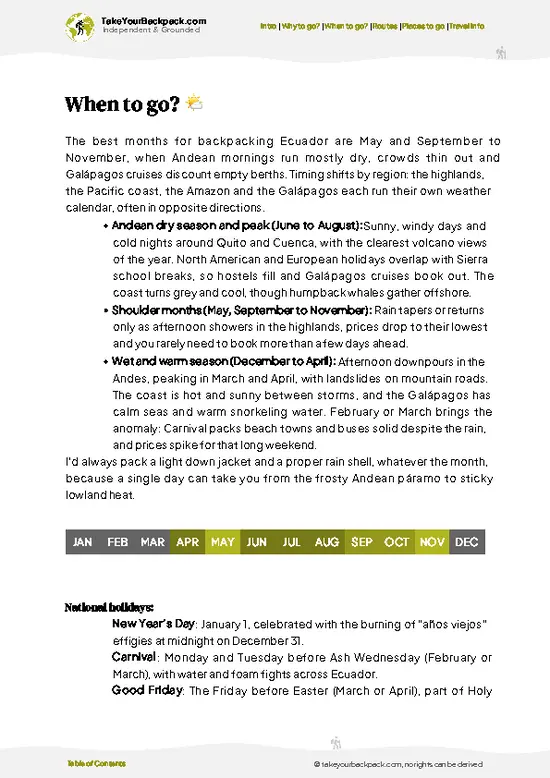
Tena is wet nearly all year, so choose by how much mud and river flow you can handle.
  • Drier Months (December to February): Showers are shorter, highs reach 28 to 31°C (82 to 88°F) and rivers run lower. Ecuadorian holidays bring weekend crowds and slightly higher tour prices.
  • Wettest Months (April to July): Heavy downpours are common, rivers run high and rafting is at its most thrilling, with some trails turning to muck. Lows sit near 19°C (66°F). Prices are lowest and crowds thin.
  • Mid-Year Holidays (July to August): Domestic tourists fill the riverside during the school break.
  • Daylight: Close to 12 hours daily, so start excursions early.
Book rafting the day before and check river levels with the operator, since a swollen river can cancel trips.

source: climatestotravel.comJANJanuary: fair for travelingFEBFebruary: fair for travelingMARMarch: fair for travelingAPRApril: good for travelingMAYMay: highly recommended for travelingJUNJune: excellent for travelingJULJuly: excellent for travelingAUGAugust: excellent for travelingSEPSeptember: excellent for travelingOCTOctober: highly recommended for travelingNOVNovember: good for travelingDECDecember: fair for traveling
when-to-go

✈️ The backpacker research shortcutEcuador Travel Guide

An offline-friendly backpacking guide with optimized travel routes, ranked highlights, transport advice, and the best areas to stay.
example page 0 from our offline Travel Guide for Ecuador
example page 1 from our offline Travel Guide for Ecuador
example page 2 from our offline Travel Guide for Ecuador
example page 3 from our offline Travel Guide for Ecuador
example page 4 from our offline Travel Guide for Ecuador
example page 5 from our offline Travel Guide for Ecuador
example page 6 from our offline Travel Guide for Ecuador
example page 7 from our offline Travel Guide for Ecuador
The digital guide (274 pages) contains:
✅ 87 highlights, ranked by travel appeal
✅ Optimized 5, 10 & 15-day travel routes
✅ Cities, national parks, landmarks, beaches
✅ How to get around
✅ Offline-friendly for travel without Wi-Fi
👉 Click to see all 30+ guide features

📅 Plan smarter in minutes, not weeks
✅ Month by month travel advice
✅ Festivals & national holidays
✅ Budget expectations

🗺️ Go to the right places, skip the overrated ones
✅ Honest pros & cons of destinations
✅ Top hikes, parks & viewpoints
✅ Lesser-known places most travelers miss
✅ Clear “worth it vs skip it” guidance

🛏️ Travel smoothly without rookie mistakes
✅ Best areas to stay
✅ Transport systems explained simply
✅ Common scams & safety advice
✅ SIM cards, money & practical tips

🌍 Understand the country, not just visit it
✅ Culture & traditions
✅ 52 Essential phrases & customs
✅ Festivals worth planning around
✅ Traveler-friendly historical context
✅ Insights that make places more meaningful

📱 Built for real travel conditions
✅ Fully downloadable PDF
✅ Works completely offline
✅ Optimized for phone use
✅ Useful in remote areas & buses
✅ Everything in one place
Stop searching, start planning
Get instant access to your full guide. 30‑day money-back guarantee.
+ Add another guide for just

By proceeding you agree to our terms.
Sent to your inbox immediately after payment • 100% Secure Checkout
Best Backpacking Travel Advisor 2025 tourism awardBest Backpacking
Travel Advisor
2025
What others say about Take Your Backpack Guides:
⭐⭐⭐⭐⭐
Fantastic, amazing amount of information!
⭐⭐⭐⭐⭐
My goodness this is amazing, it's what I've been looking for hats off too you!
⭐⭐⭐⭐⭐
I think this is absolutely BRILLIANT
⭐⭐⭐⭐
Very complete and informative. It's still missing places, but I gotta to commend you
⭐⭐⭐⭐⭐
This is truly amazing, thank you, can't wait to explore it with my kids!
⭐⭐⭐⭐⭐
Awesome resource, thank you!
⭐⭐⭐⭐⭐
This is amazing! Can't wait to explore the ones I haven't seen
⭐⭐⭐⭐
I love this! Well done, great idea.
⭐⭐⭐⭐⭐
Thanks for taking the time to make this gem!
⭐⭐⭐⭐⭐
This might be the best website I've ever seen.
⭐⭐⭐⭐⭐
Congratulations, and thank you so much for your work; it's incredibly valuable.
⭐⭐⭐⭐
In all seriousness I think you did a great job pointing out the important spots
⭐⭐⭐⭐⭐
10/10 very good
⭐⭐⭐⭐⭐
As someone who's only just starting to visit regularly this is awesome, thank you.
⭐⭐⭐⭐
Thank you very much! I'm going to visit my dad, it's going to be very useful!
⭐⭐⭐⭐⭐
This is really cool! We'll be travelling for the first time and this definitely come in handy.
⭐⭐⭐⭐⭐
You are now our minister of culture, congratulations 👨‍💼
⭐⭐⭐⭐⭐
Just wanted to tell you that this is a pearl! Going to follow your recommendations.
⭐⭐⭐⭐⭐
This is so cool. I'll definitely be using the resource for my travels soon.
⭐⭐⭐⭐⭐
This is very impressive! Good work.
⭐⭐⭐⭐⭐
This is an amazing and informative site. Very well done!

🛏️ Where to stay?Best areas and accommodation options

The best budget base in Tena is the central grid around Parque Central and the bus-terminal side, where most dorm beds and cheap private rooms sit within a 10 minute walk of restaurants and tour offices.
Beds here typically run US$8 to 15 for a dorm and US$15 to 30 for a private room, and you can book rafting or jungle tours on foot. Evenings are calm, though rooms near the bar strip on 15 de Noviembre pick up music late on weekends, so ask for a room away from the street.
The second option is the riverside near the Malecón. It is quieter, greener and good for a few nights if you want sound of the … read more 👉
The best budget base in Tena is the central grid around Parque Central and the bus-terminal side, where most dorm beds and cheap private rooms sit within a 10 minute walk of restaurants and tour offices.
Beds here typically run US$8 to 15 for a dorm and US$15 to 30 for a private room, and you can book rafting or jungle tours on foot. Evenings are calm, though rooms near the bar strip on 15 de Noviembre pick up music late on weekends, so ask for a room away from the street.
The second option is the riverside near the Malecón. It is quieter, greener and good for a few nights if you want sound of the river rather than traffic. Choices are fewer, so reserve ahead for holiday weekends. Both areas feel safe after dark, though taking a taxi for the last stretch is smart. Skip staying out toward Puerto Napo unless you have a specific tour there, as buses thin out in the evening and dining options are limited.

🚌 Getting aroundHow to get around Tena

A local bus ride in Tena costs about US$0.30 to 0.35, paid in cash to the driver or conductor, and a short taxi hop is a flat US$1 to 2. Tena is small enough that you will walk most of the time, traffic is light, and buses are frequent if not scheduled to the minute.
  • Walking: The best option. Centro, the Malecón and La Isla sit within 15 minutes of each other. Bring a rain jacket because showers come without warning.
  • Local buses: Cheap and good for Puerto Napo and nearby communities, running roughly 6 am to 7 pm. Ask the driver where to get off, as stops are informal.
  • Taxis and camionetas: White taxis and pickup trucks are fast and plentiful. Agree the fare first, as few use meters. A ride to Puerto Napo is about US$2 to 3. After dark they are the sensible choice.
  • Intercity buses from the terminal:
… read more 👉
A local bus ride in Tena costs about US$0.30 to 0.35, paid in cash to the driver or conductor, and a short taxi hop is a flat US$1 to 2. Tena is small enough that you will walk most of the time, traffic is light, and buses are frequent if not scheduled to the minute.
  • Walking: The best option. Centro, the Malecón and La Isla sit within 15 minutes of each other. Bring a rain jacket because showers come without warning.
  • Local buses: Cheap and good for Puerto Napo and nearby communities, running roughly 6 am to 7 pm. Ask the driver where to get off, as stops are informal.
  • Taxis and camionetas: White taxis and pickup trucks are fast and plentiful. Agree the fare first, as few use meters. A ride to Puerto Napo is about US$2 to 3. After dark they are the sensible choice.
  • Intercity buses from the terminal: Worth it for Quito (about 4.5 to 5 hours, US$6 to 8), Baños (about 3 hours, US$4 to 5) and Puyo. Routes are scenic but winding, so take motion pills if you are prone to sickness.
Skip renting a car. Parking is a hassle, the roads outside town flood, and a taxi plus bus network covers almost everything. For jungle lodge trips, book transport through the operator, because many communities have no public service.

👛 Costs (as of 19 October 2026)Typical daily expenses

Backpacking in Tena costs about US$40 to 55 a day, or roughly US$52 using high-season dorm prices and a few activities.
CategoryBudget RangeLocal Reality
Dorm accommodationUS$9 to 15Hostel dorms in Centro, a private room with fan runs US$18 to 30. Prices rise on holiday weekends. Using US$12.
MealsUS$10 to 18Almuerzo set lunch costs US$2.50 to 4, dinner US$4 to 8. Using US$14.
Local transportUS$1 to 4Buses US$0.30 to 0.35, taxis US$1 to 2 within town. Using US$3.
Basic activities/entry feesUS$5 to 40La Isla park is cheap or free, while half-day rafting costs US$30 to 45. Using US$20.
MiscellaneousUS$2 to 6Snacks, water, a beer at US$1.50 to 2.50. Using US$3.
Total Daily BudgetUS$40 to 55About US$52 on a typical activity day.
Eat your main meal at midday, since the almuerzo is the best value in town.
⚠️ Prices can change and everyone travels differently, so take this as a rough guide. Hope it helps you plan your adventure!

🚌 Day tripsShort trips worth adding

Tena works very well as a base, since rivers, waterfalls and jungle communities sit within an hour and most trips return by evening.
Rafting the Jondachi or Upper Napo:
Whitewater is why many people come. Half-day Class III trips run about US$30 to 45 and full-day Jondachi runs US$60 to 80 including lunch and transfers. Rivers are at their best from April to July. First-timers often book without checking the river level, so ask the operator on the morning of the trip.

Misahuallí:
A small port on the Napo River about 45 minutes by bus (US$1) from Tena, famous for its cheeky monkeys on the plaza. Boat rides to nearby communities cost around US$10 to 20, and you can spot caimans and birds. Hold on to your snacks and sunglasses.

Cascadas de Hollín and Jondachi Caves:
A waterfall and cave day … read more 👉
Tena works very well as a base, since rivers, waterfalls and jungle communities sit within an hour and most trips return by evening.
Rafting the Jondachi or Upper Napo:
Whitewater is why many people come. Half-day Class III trips run about US$30 to 45 and full-day Jondachi runs US$60 to 80 including lunch and transfers. Rivers are at their best from April to July. First-timers often book without checking the river level, so ask the operator on the morning of the trip.

Misahuallí:
A small port on the Napo River about 45 minutes by bus (US$1) from Tena, famous for its cheeky monkeys on the plaza. Boat rides to nearby communities cost around US$10 to 20, and you can spot caimans and birds. Hold on to your snacks and sunglasses.

Cascadas de Hollín and Jondachi Caves:
A waterfall and cave day on the road toward Quito, roughly 1 hour from Tena by bus and taxi. Bring about US$15 to 25 in total, plus headlamp and rubber boots. Dry months are best, and flooded caves can close the trip.

Parque Nacional Sumaco:
A cooler forest day trip via Archidona, about 1 hour away. Expect birdlife and walks, with costs near US$20 to 30 by taxi and entry.
👉 Explore Sumaco Napo-Galeras National Park

🛡️ SafetySafety Tips and Common Scams in Tena

Tena is broadly safe for backpackers, and most problems are petty. The Malecón, Centro and the main streets are fine in the evening, but keep your phone tucked away and avoid walking alone on dark side streets or river paths late at night, taking a taxi instead. Bag snatching and opportunistic theft happen at the bus terminal and market, so keep daypacks in front of you. Weekend nights on the bar strip can get rowdy, and drinks with strangers are best avoided. Tour touts occasionally quote inflated prices, so compare two or three agencies and confirm what is included in writing. River safety matters more than crime: never swim after heavy rain when currents surge, and use licensed rafting operators with helmets and life jackets.

FAQFrequently asked questions about Tena

Tena is worth two or three days rather than a quick stopover, mainly for whitewater rafting on the Jondachi and Upper Napo, jungle walks and cheap eating. Half-day rafting costs around US$30 to 45, and La Isla park and the Malecón are free or nearly so. If you only want a town to pass through, a night is enough, but the surrounding rivers are the real draw.
Plan on 2 to 4 days in Tena. One day covers the Malecón, La Isla and Centro, a second suits rafting or a Misahuallí trip (about 45 minutes by bus, US$1), and a third fits caves and waterfalls. Add a day if you want a community jungle tour or high-water rafting from April to July.
Tena can be done as a long day trip from Quito only if you accept about 4.5 to 5 hours each way by bus (US$6 to 8), which leaves little time on the ground. Baños is closer at roughly 3 hours, but an overnight is far better. Staying at least one night lets you raft in the morning and still catch a late bus.
⚠️ Things can change over time, so always validate details locally before you go.

Other Ecuadorian towns near Tena

Explore more nearby:

  • Puyo—Maito in bijao leaf, Omaere forest park, Puyo riverwalk, Amazon gateway| 59 km away
  • Baños—Thermal pools, bridge swings, Tungurahua views, waterfall road| 81 km away
  • Sangolquí—Sunday hornado market, valley plaza, hacienda lanes, cheap almuerzos| 103 km away

💡 Not sure where to go next?
Create a personalized itinerary for Ecuador including Tena and the places that fit your trip.

Generate my itinerary

👉 Discover all towns

Or checkout all Ecuador has to offer (think cities, towns, villages, national parks, hikes, beaches, festivals)
Country photo of Ecuador

We 💚 feedbackSumming up the experience

Many travelers treat Tena as a quick overnight on the way to Baños and skip the rivers. Give it at least two nights so you can raft and visit a Kichwa community. I would book the rafting early in your stay, in case rain moves your plans.

✈️ When did I visit Ecuador?
Ecuador I visited during my half year trip through South and Central America back in 2003

✍️ Help improve this page!
The information on this page is based on my own backpacking experience in Ecuador, supplemented with up-to-date research and feedback from other travelers. Travel details can change, so if you notice anything outdated or incomplete, feel free to let me know.


🙋‍♂️ Give feedback

👋 Meet the founderWho’s Behind Take Your Backpack?

Johan, backpacker and founder of TakeYourBackpackHi, I’m Johan (Netherlands 🇳🇱), the creator of TakeYourBackpack. Over the past 3 decades, I’ve backpacked through 90+ countries across six continents, gaining extensive experience with independent travel, long-term trips, and overland routes.

This site is built on a combination of firsthand travel experience and carefully curated insights from other backpackers. Many guides are based on places I’ve personally visited, while others bring together tips, observations, and practical advice shared by trusted travelers I’ve met along the way.

The goal is to provide realistic, experience-driven guidance — not generic itineraries — so you can explore destinations with better context, clearer expectations, and more confidence.