×

Ecuador🇪🇨 | townsPuyoMaito in bijao leaf, Omaere forest park, Puyo riverwalk, Amazon gateway | things to do and best time to go

Explore TenaExplore Alausí

Backpacking in Puyo
👀 For curious travelerstown ranked #14
By Johan Kruseman 🇳🇱 | Updated October 19, 2026

Puyo sits in the Amazon basin, yet it is not a jungle lodge town: it is a working provincial capital of Pastaza on the foothills, and the real forest starts a short ride out. Find it in the east of Ecuador, downhill from Baños. Expect a busy, practical grid with few backpackers, so you get the quiet of a place that isn’t built for you. Skip the tour offices and head to the market, where a plate of tilapia grilled in bijao leaf (maito) cost me US$4. Eat first, then spend a day exploring trails, rivers and the riverside park.

Discover everything you want to know in the 📖 Ecuador Travel Guide.


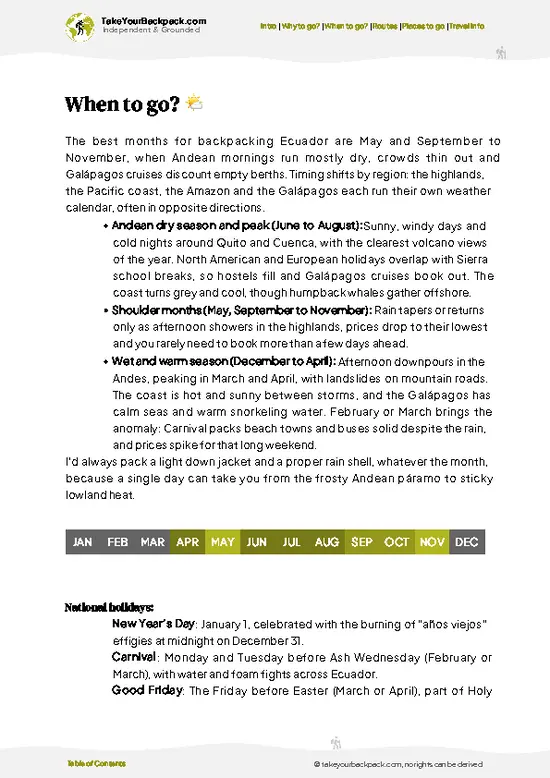
example page 0 from our offline Travel Guide for Ecuador
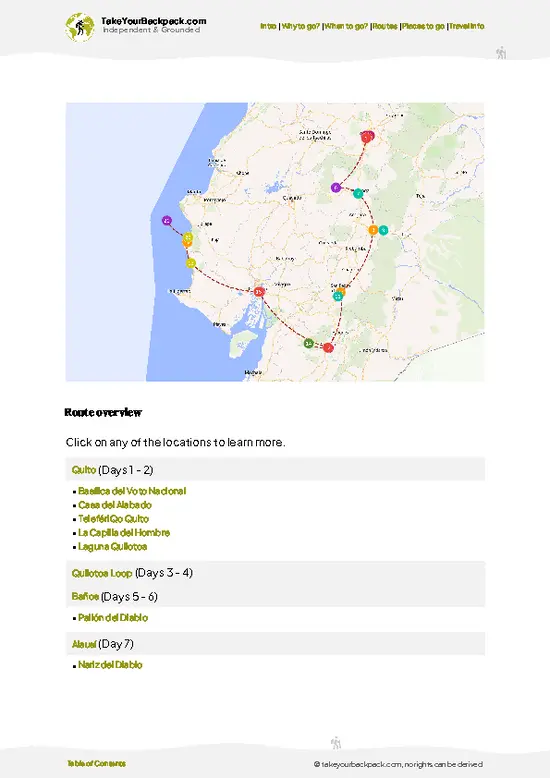
example page 1 from our offline Travel Guide for Ecuador
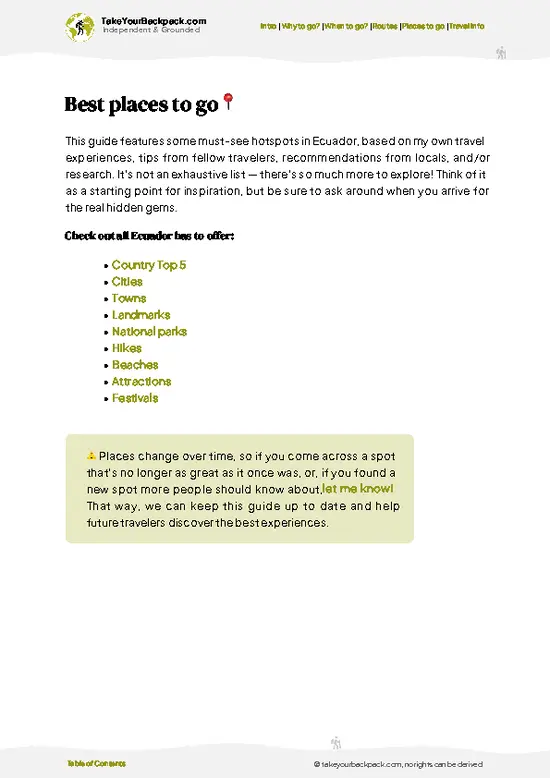
example page 2 from our offline Travel Guide for Ecuador
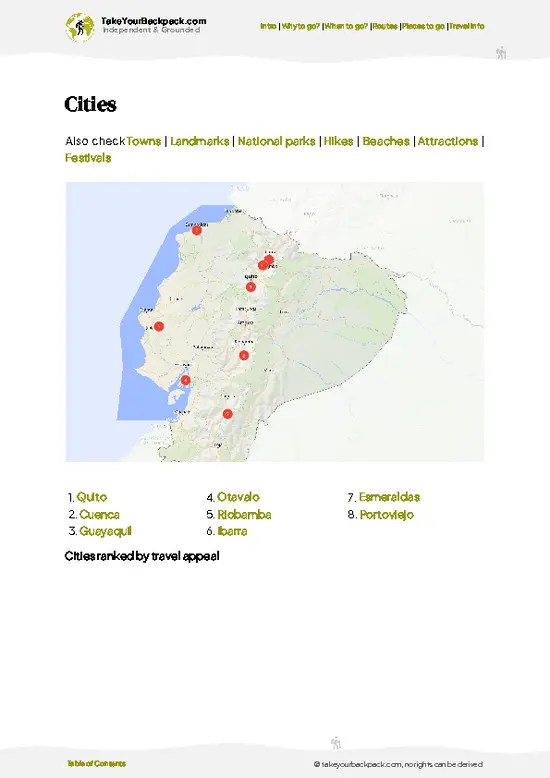
example page 3 from our offline Travel Guide for Ecuador
example page 4 from our offline Travel Guide for Ecuador
example page 5 from our offline Travel Guide for Ecuador
example page 6 from our offline Travel Guide for Ecuador
example page 7 from our offline Travel Guide for Ecuador
Loading the map 🌍
CLICK TO FILTER
cities
towns
landmarks
national parks
hikes
beaches
attractions
festivals
SHOW COUNTRY’S BESTSHOW ALL

✨ Why go?
Ranked #14 town in Ecuador
Why Puyo should be on your travel list

Puyo works as the jumping-off point for the upper Amazon, and that is its real value. Rainforest, river communities and waterfalls sit close enough that you can sleep in a proper bed with hot water and still be among the trees by morning. The town itself is low-key, with a few guesthouses and cafés, so evenings stay slow and you will mostly meet other travelers on trails, not at bars. Visit the Parque Botánico Omaere and the Paseo Turístico del Río Puyo, then try maito at the market. Stays run one to three nights. Hikers, solo travelers and slow travelers who like local places will enjoy it most. If you want nightlife or a polished old center, keep going.

💡 HighlightsWhat this place is best known for

  1. Parque Botánico Omaere: A forest park with medicinal plant trails, a tower and replicas of Indigenous homes. Go in the morning when it is cooler and birds are active. Entry is about US$3 to 5, and a visit takes 2 to 3 hours.
  2. Paseo Turístico del Río Puyo: A riverside walkway with bridges and forest views right in town. Come late afternoon for easy light. It is free and takes about 1 to 2 hours.
  3. Parque Acuático and Mercado Central food stalls: The market is where Puyo eats, with maito, grilled fish, yuca and chicha. Go at lunchtime for the freshest plates. Meals run roughly US$3 to 6, and you need about an hour.
  4. Parque Pedro Vicente Maldonado: The central plaza, where locals gather in the evening around the cathedral. Come at dusk for a free, relaxed hour of people-watching.
For day trips, consider … read more 👉
  1. Parque Botánico Omaere: A forest park with medicinal plant trails, a tower and replicas of Indigenous homes. Go in the morning when it is cooler and birds are active. Entry is about US$3 to 5, and a visit takes 2 to 3 hours.
  2. Paseo Turístico del Río Puyo: A riverside walkway with bridges and forest views right in town. Come late afternoon for easy light. It is free and takes about 1 to 2 hours.
  3. Parque Acuático and Mercado Central food stalls: The market is where Puyo eats, with maito, grilled fish, yuca and chicha. Go at lunchtime for the freshest plates. Meals run roughly US$3 to 6, and you need about an hour.
  4. Parque Pedro Vicente Maldonado: The central plaza, where locals gather in the evening around the cathedral. Come at dusk for a free, relaxed hour of people-watching.
For day trips, consider the Pailón del Diablo waterfall near Baños, the Fátima communities, and Indigenous villages along the Pastaza River. If time is short, skip the central plaza and spend it at Omaere.
Spotted a mistake or missing something? Contact us.

Things to do around Puyo

Ratings based on Tripadvisor reviews. When you book through this link, you support our work at no extra cost to you.

🏘️ NeighborhoodsWhere things are and how it's laid out

Puyo is compact, so you can cover every area below on foot or with a short cab ride, and the smarter move is to match each one to the time of day it works best.
  • Centro and the Malecón: The grid around Parque Central holds the bus-to-bakery errands, ATMs and cheap almuerzos. The riverside Malecón above the Puyo River is where locals stroll at dusk, so go then, when the heat drops and the food carts open. Fully walkable.
  • Paseo Turístico del Río Puyo: A riverside trail with hanging bridges and jungle shade. Start early, since the morning is cooler and quieter, and wear shoes that handle mud.
  • Parque Botánico Las Orquídeas area: A short taxi ride out, with orchids and local plants. Go with a guide, because the labels tell you little.
  • Terminal Terrestre area: Practical, noisy and a 15 to 20 minute walk
… read more 👉
Puyo is compact, so you can cover every area below on foot or with a short cab ride, and the smarter move is to match each one to the time of day it works best.
  • Centro and the Malecón: The grid around Parque Central holds the bus-to-bakery errands, ATMs and cheap almuerzos. The riverside Malecón above the Puyo River is where locals stroll at dusk, so go then, when the heat drops and the food carts open. Fully walkable.
  • Paseo Turístico del Río Puyo: A riverside trail with hanging bridges and jungle shade. Start early, since the morning is cooler and quieter, and wear shoes that handle mud.
  • Parque Botánico Las Orquídeas area: A short taxi ride out, with orchids and local plants. Go with a guide, because the labels tell you little.
  • Terminal Terrestre area: Practical, noisy and a 15 to 20 minute walk from the center. Eat elsewhere, and treat it as a place to pass through.
  • Nightlife: Quiet. Bars cluster around the center and wind down early, so plan on dinner and a drink, then bed.

⌛️ 1 dayWhat you can realistically do in a day

A market morning that rolls into a forest afternoon.
8:00 AM, Mercado Central: Start with a maito plate and fresh juice among the stalls. Locals shop here early, so you see Amazon produce up close. Walk ten minutes to the plaza afterward.
10:00 AM, Parque Pedro Vicente Maldonado: Sit by the cathedral for a quick look at daily life, then follow the main street toward the river.
11:00 AM, Paseo Turístico del Río Puyo: Stroll the riverside path and cross the bridges. It is shaded and calm.
1:00 PM, Lunch near the river: Try grilled tilapia and yuca at a family spot.
2:30 PM, Parque Botánico Omaere: Take a guided walk through the plant gardens and climb the tower.
5:00 PM, Barrio trails by the Puyo River: Few visitors wander the quieter residential edges, where small farms meet forest. Finish with a coffee as the day cools.

🌤️ When to go?Weather, crowds, and seasonal trade-offs

Puyo is wet in every month, so plan around how much rain you can tolerate rather than trying to avoid it.
  • Drier Months (Aug to Feb): Showers ease a little, mainly from December to February, with highs of 24 to 27°C (75 to 81°F) and cooler nights near 16°C (61°F).
  • Wettest Months (Mar to Jul): Downpours are heavy, especially April to June, and rivers rise, which can cancel river tours and muddy trails.
  • Holidays: Carnival and long weekends bring Ecuadorian families, with fuller buses and pricier rooms.
  • Daylight: Roughly 12 hours all year.
Book jungle tours for the morning, because afternoon rain is the pattern in nearly every month.

source: climatestotravel.comJANJanuary: fair for travelingFEBFebruary: fair for travelingMARMarch: fair for travelingAPRApril: fair for travelingMAYMay: fair for travelingJUNJune: highly recommended for travelingJULJuly: highly recommended for travelingAUGAugust: highly recommended for travelingSEPSeptember: excellent for travelingOCTOctober: excellent for travelingNOVNovember: excellent for travelingDECDecember: fair for traveling
when-to-go

✈️ The backpacker research shortcutEcuador Travel Guide

An offline-friendly backpacking guide with optimized travel routes, ranked highlights, transport advice, and the best areas to stay.
example page 0 from our offline Travel Guide for Ecuador
example page 1 from our offline Travel Guide for Ecuador
example page 2 from our offline Travel Guide for Ecuador
example page 3 from our offline Travel Guide for Ecuador
example page 4 from our offline Travel Guide for Ecuador
example page 5 from our offline Travel Guide for Ecuador
example page 6 from our offline Travel Guide for Ecuador
example page 7 from our offline Travel Guide for Ecuador
The digital guide (274 pages) contains:
✅ 87 highlights, ranked by travel appeal
✅ Optimized 5, 10 & 15-day travel routes
✅ Cities, national parks, landmarks, beaches
✅ How to get around
✅ Offline-friendly for travel without Wi-Fi
👉 Click to see all 30+ guide features

📅 Plan smarter in minutes, not weeks
✅ Month by month travel advice
✅ Festivals & national holidays
✅ Budget expectations

🗺️ Go to the right places, skip the overrated ones
✅ Honest pros & cons of destinations
✅ Top hikes, parks & viewpoints
✅ Lesser-known places most travelers miss
✅ Clear “worth it vs skip it” guidance

🛏️ Travel smoothly without rookie mistakes
✅ Best areas to stay
✅ Transport systems explained simply
✅ Common scams & safety advice
✅ SIM cards, money & practical tips

🌍 Understand the country, not just visit it
✅ Culture & traditions
✅ 52 Essential phrases & customs
✅ Festivals worth planning around
✅ Traveler-friendly historical context
✅ Insights that make places more meaningful

📱 Built for real travel conditions
✅ Fully downloadable PDF
✅ Works completely offline
✅ Optimized for phone use
✅ Useful in remote areas & buses
✅ Everything in one place
Stop searching, start planning
Get instant access to your full guide. 30‑day money-back guarantee.
+ Add another guide for just

By proceeding you agree to our terms.
Sent to your inbox immediately after payment • 100% Secure Checkout
Best Backpacking Travel Advisor 2025 tourism awardBest Backpacking
Travel Advisor
2025
What others say about Take Your Backpack Guides:
⭐⭐⭐⭐⭐
Fantastic, amazing amount of information!
⭐⭐⭐⭐⭐
My goodness this is amazing, it's what I've been looking for hats off too you!
⭐⭐⭐⭐⭐
I think this is absolutely BRILLIANT
⭐⭐⭐⭐
Very complete and informative. It's still missing places, but I gotta to commend you
⭐⭐⭐⭐⭐
This is truly amazing, thank you, can't wait to explore it with my kids!
⭐⭐⭐⭐⭐
Awesome resource, thank you!
⭐⭐⭐⭐⭐
This is amazing! Can't wait to explore the ones I haven't seen
⭐⭐⭐⭐
I love this! Well done, great idea.
⭐⭐⭐⭐⭐
Thanks for taking the time to make this gem!
⭐⭐⭐⭐⭐
This might be the best website I've ever seen.
⭐⭐⭐⭐⭐
Congratulations, and thank you so much for your work; it's incredibly valuable.
⭐⭐⭐⭐
In all seriousness I think you did a great job pointing out the important spots
⭐⭐⭐⭐⭐
10/10 very good
⭐⭐⭐⭐⭐
As someone who's only just starting to visit regularly this is awesome, thank you.
⭐⭐⭐⭐
Thank you very much! I'm going to visit my dad, it's going to be very useful!
⭐⭐⭐⭐⭐
This is really cool! We'll be travelling for the first time and this definitely come in handy.
⭐⭐⭐⭐⭐
You are now our minister of culture, congratulations 👨‍💼
⭐⭐⭐⭐⭐
Just wanted to tell you that this is a pearl! Going to follow your recommendations.
⭐⭐⭐⭐⭐
This is so cool. I'll definitely be using the resource for my travels soon.
⭐⭐⭐⭐⭐
This is very impressive! Good work.
⭐⭐⭐⭐⭐
This is an amazing and informative site. Very well done!

🛏️ Where to stay?Best areas and accommodation options

The center near Parque Central is the best base for a budget bed, with a handful of simple hostels and guesthouses within a few blocks of each other, typically US$10 to 20 for a bed or basic private room. It is walkable to restaurants, ATMs and the Malecón, and cabs are easy to flag after dark. Noise from traffic and street life can run late on weekends, so ask for a back room. The area around the bus terminal is the second option if you arrive late or leave early, with cheaper and plainer rooms, though it is a 15 to 20 minute walk from the center and quieter in the evening. Dorms are scarce, so private rooms are the usual budget choice.

🚌 Getting aroundTransportation options and practical tips

Taking a taxi from the bus terminal to everything wastes money, since most of central Puyo is a flat walk of 10 to 20 minutes and rides within town are short. Buses reach the surroundings, but they stop running early evening, so check the last departure before you head out. Energetic walkers get the most from this place.
  • Walking: Free and the fastest way through the center and along the Malecón. Carry a light rain jacket, because showers arrive without warning.
  • Taxis and camionetas: Rides within town cost roughly US$1.50 to 3, and pickups reach farther sites for US$5 to 15. Agree on the fare before you get in, because meters are rare.
  • Local buses: Urban and nearby routes cost about US$0.30 to 1. They run from around 6 am until early evening, so don’t plan to rely on them after dark.
  • Intercity
… read more 👉
Taking a taxi from the bus terminal to everything wastes money, since most of central Puyo is a flat walk of 10 to 20 minutes and rides within town are short. Buses reach the surroundings, but they stop running early evening, so check the last departure before you head out. Energetic walkers get the most from this place.
  • Walking: Free and the fastest way through the center and along the Malecón. Carry a light rain jacket, because showers arrive without warning.
  • Taxis and camionetas: Rides within town cost roughly US$1.50 to 3, and pickups reach farther sites for US$5 to 15. Agree on the fare before you get in, because meters are rare.
  • Local buses: Urban and nearby routes cost about US$0.30 to 1. They run from around 6 am until early evening, so don’t plan to rely on them after dark.
  • Intercity buses: The Terminal Terrestre serves Baños (1.5 to 2 hours, US$2 to 3), Tena (2 to 3 hours, US$3 to 4) and Quito (5 to 6 hours, US$7 to 9). Buy on the day, since departures are frequent and seats rarely sell out.

👛 Costs (as of 19 October 2026)How expensive it really is

Expect to spend about US$38 a day in Puyo on a backpacker budget, with private rooms more common than dorms.
CategoryBudget RangeLocal Reality
Dorm accommodationUS$10 to 15Dorms are rare, so a basic private room is the usual choice. High season runs around US$15.
MealsUS$8 to 14Set almuerzos cost US$2.50 to 4, with dinner at a modest restaurant around US$5 to 8.
Local transportUS$2 to 5Short taxi rides cost US$1.50 to 3, and buses within town about US$0.30.
Basic activities/entry feesUS$3 to 8Park entries and trail fees are small, and guided tours cost more.
MiscellaneousUS$2 to 5Water, snacks and rain gear.
Total Daily BudgetUS$38Based on high season accommodation at about US$15.
Eat the set almuerzo at midday, since it fills you for a fraction of an evening meal.

source: ecuador.travel
⚠️ Prices can change and everyone travels differently, so take this as a rough guide. Hope it helps you plan your adventure!

🚌 Day tripsBest day trips from Puyo

Puyo works well as a base for day trips, since buses and pickups reach several jungle and waterfall spots in under two hours.
Baños:
This adventure town sits 1.5 to 2 hours away by bus (US$2 to 3 each way) with waterfalls, hot springs and the Ruta de las Cascadas. Go early, because afternoon cloud hides the views. First-timers often underestimate how much time the full route takes.
👉 Explore Baños
Tena:
A river town in the Amazon, 2 to 3 hours by bus (US$3 to 4), with rafting and kayaking on nearby rivers. Budget US$30 to 60 for a half-day tour. Dry months give the safest water levels.
👉 Explore Tena
Pastaza River and Shell:
The small town of Shell, about 15 minutes away (US$1 by bus), has a quiet airstrip and local cafes. It is easy for a half day, and a good fallback in rain.

Mera Waterfalls: … read more 👉
Puyo works well as a base for day trips, since buses and pickups reach several jungle and waterfall spots in under two hours.
Baños:
This adventure town sits 1.5 to 2 hours away by bus (US$2 to 3 each way) with waterfalls, hot springs and the Ruta de las Cascadas. Go early, because afternoon cloud hides the views. First-timers often underestimate how much time the full route takes.
👉 Explore Baños
Tena:
A river town in the Amazon, 2 to 3 hours by bus (US$3 to 4), with rafting and kayaking on nearby rivers. Budget US$30 to 60 for a half-day tour. Dry months give the safest water levels.
👉 Explore Tena
Pastaza River and Shell:
The small town of Shell, about 15 minutes away (US$1 by bus), has a quiet airstrip and local cafes. It is easy for a half day, and a good fallback in rain.

Mera Waterfalls:
Mera sits around 25 minutes away by bus (US$1), with easy trails and waterfalls. Wear waterproof shoes, and go before noon.

🛡️ SafetySafety Tips and Common Scams in Puyo

Puyo is broadly calm, and most problems are petty. Keep phones and cameras out of sight on the Malecón at night and in the terminal area, where bag snatching is occasional. Walk main streets after dark, and take a cab for longer distances. Solo travelers, including women, generally manage fine, though quiet side streets late at night are best avoided. Insist on a clear price before boarding pickups, and use licensed jungle guides for river trips. Rain can raise rivers fast, so skip water activities after heavy downpours. Carry insect repellent, since mosquitoes are common.

FAQCommon questions from travelers

Puyo is worth a night or two as a jungle gateway rather than only a stopover. The riverside trail, the Malecón and the orchid park fill a relaxed day, and Baños and Tena sit within about three hours by bus (US$2 to 4). Expect rain and a quiet nightlife.
Plan on two days in Puyo, or three if you add a river tour. One day covers the Malecón, the Paseo Turístico del Río Puyo and the botanical park, and a second day can cover Mera or Shell by bus for US$1 or less. Add a day for Tena or Baños.
Yes, Puyo is an easy day trip from Baños, which is 1.5 to 2 hours away by bus for US$2 to 3 each way. Leaving Baños in the morning gives you time for the riverside trail and lunch before an early evening return. Quito is too far at 5 to 6 hours each way, so stay overnight from there.
⚠️ Things can change over time, so always validate details locally before you go.

Other Ecuadorian towns near Puyo

Explore more nearby:

  • Baños—Thermal pools, bridge swings, Tungurahua views, waterfall road| 48 km away
  • Tena—Jatunyacu rafting, river confluence, island park, Amazon fruit market| 59 km away
  • Alausí—Devil’s Nose switchbacks, gorge-side station, San Pedro lookout| 123 km away

💡 Not sure where to go next?
Create a personalized itinerary for Ecuador including Puyo and the places that fit your trip.

Generate my itinerary

👉 Discover all towns

Or checkout all Ecuador has to offer (think cities, towns, villages, national parks, hikes, beaches, festivals)
Country photo of Ecuador

We 💚 feedbackWhat to keep in mind

Puyo’s small riverside neighborhoods, away from the main plaza, are where the town’s forest edge shows up. Most first-timers rush through to the jungle and miss them. I would give the town one slow afternoon, eat at the market, and bring a light rain jacket.

✈️ When did I visit Ecuador?
Ecuador I visited during my half year trip through South and Central America back in 2003

✍️ Help improve this page!
The information on this page is based on my own backpacking experience in Ecuador, supplemented with up-to-date research and feedback from other travelers. Travel details can change, so if you notice anything outdated or incomplete, feel free to let me know.


🙋‍♂️ Give feedback

👋 Meet the founderWho’s Behind Take Your Backpack?

Johan, backpacker and founder of TakeYourBackpackHi, I’m Johan (Netherlands 🇳🇱), the creator of TakeYourBackpack. Over the past 3 decades, I’ve backpacked through 90+ countries across six continents, gaining extensive experience with independent travel, long-term trips, and overland routes.

This site is built on a combination of firsthand travel experience and carefully curated insights from other backpackers. Many guides are based on places I’ve personally visited, while others bring together tips, observations, and practical advice shared by trusted travelers I’ve met along the way.

The goal is to provide realistic, experience-driven guidance — not generic itineraries — so you can explore destinations with better context, clearer expectations, and more confidence.