×

Egypt🇪🇬 | landmarksAbu Simbel Templescolossal statues, relocated monuments, Nubian sandstone cliffs | things to do and best time to go

Explore Abu MenaExplore Ancient Thebes with its Necropolis

Backpacking in Abu Simbel Temples
🏆 Top pickunique site ranked #2
By Johan Kruseman 🇳🇱 | Updated May 28, 2026

Your shirt clings to your back as you shuffle forward, the sun already a hammer at 8 a.m. Sand crunches underfoot. You squint—hard—because the light bouncing off the stone is blinding, and the faces of Ramses II stare back, impossibly huge, carved with the kind of arrogance only ancient pharaohs could afford. This is Abu Simbel, deep in southern Egypt, almost at the Sudanese border, and it’s not a casual detour—it’s a pilgrimage. Here’s the truth: Abu Simbel is expensive, remote, and yes, you’ll share it with busloads of tourists snapping the same shot. But the scale is so audacious, the engineering so improbable (the whole thing was moved in the 1960s to save it from the Nile), that even the most jaded traveler gets a gut punch of awe. The crowds fade when you stand in the shadow of those colossi, and for a few minutes, you feel the weight of 3,000 years pressing down—no filter needed.

Discover everything you want to know in the 📖 Egypt Travel Guide.


Get your Egypt guide
116 ranked highlights, routes & tips, works offline (438 pages)
Loading the map 🌍
CLICK TO FILTER
cities
towns
landmarks
national parks
hikes
beaches
attractions
festivals
regions
SHOW COUNTRY’S BESTSHOW ALL

✨ Why go?
Ranked #2 unique site in Egypt
What sets this place apart

The Abu Simbel Temples are a must-see for backpackers, and here’s why. First off, let’s address the elephant in the room: the crowds. Yes, they can be overwhelming, especially during peak season. But don’t let that deter you. The sheer scale and craftsmanship of these temples, carved into the mountainside, are jaw-dropping. You’ll feel the weight of history as you stand before the colossal statues of Ramses II.

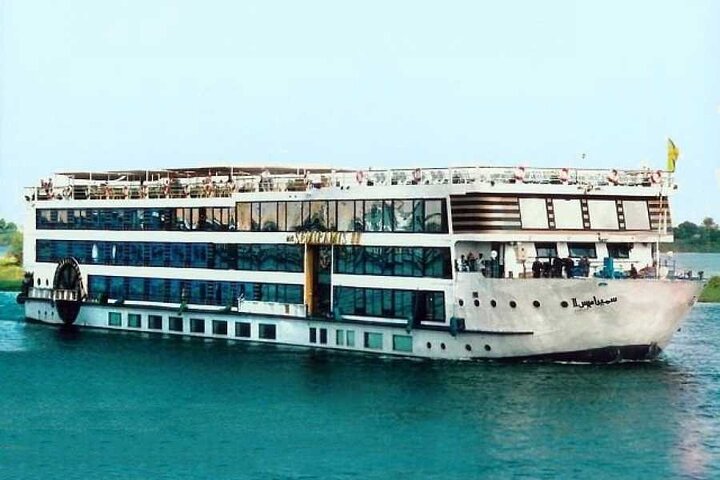
Now, about cost: it’s not a budget buster. Entrance fees are reasonable, and when you consider the cultural significance, it’s worth every penny. Plus, the journey to get there is part of the adventure. Most backpackers combine a trip to Abu Simbel with a cruise on the Nile, making it a natural stop rather than a standalone trek.

What really sets Abu Simbel apart is its uniqueness. … read more 👉
The Abu Simbel Temples are a must-see for backpackers, and here’s why. First off, let’s address the elephant in the room: the crowds. Yes, they can be overwhelming, especially during peak season. But don’t let that deter you. The sheer scale and craftsmanship of these temples, carved into the mountainside, are jaw-dropping. You’ll feel the weight of history as you stand before the colossal statues of Ramses II.

Now, about cost: it’s not a budget buster. Entrance fees are reasonable, and when you consider the cultural significance, it’s worth every penny. Plus, the journey to get there is part of the adventure. Most backpackers combine a trip to Abu Simbel with a cruise on the Nile, making it a natural stop rather than a standalone trek.

What really sets Abu Simbel apart is its uniqueness. Unlike other ancient sites, this one was literally moved to save it from rising waters. That’s a story worth telling. So, pack your bags, embrace the crowds, and soak in the real magic of Abu Simbel. It’s not just a landmark; it’s a testament to human ingenuity and resilience.
Want to include Abu Simbel Temples in your Egypt route?
Create a personalized Egypt itinerary that includes Abu Simbel Temples and the places that fit your trip — based on your travel style, budget, and available time. Get your route in seconds.

Generate my trip

💡 HighlightsKey sights and experiences for travelers

  1. Colossi of Ramses II (Great Temple façade): Four gigantic seated statues guard the entrance — their scale and facial detail hit you in the chest; seeing them up close gives a real sense of imperial showmanship and how ancient rulers used monumentality as propaganda.
  2. Inner sanctuary and the solar alignment: The temple’s innermost chamber holds four seated gods (including a deified Ramses), and twice a year sunlight pierces all the way in to illuminate them — a precise astronomical trick that still stops people in their tracks.
  3. The 1960s relocation — a modern engineering miracle: To save Abu Simbel from the rising Aswan High Dam waters, the whole complex was cut into blocks and rebuilt on higher ground — the salvage itself is a UNESCO-era story of international cooperation and determination.
read more 👉
  1. Colossi of Ramses II (Great Temple façade): Four gigantic seated statues guard the entrance — their scale and facial detail hit you in the chest; seeing them up close gives a real sense of imperial showmanship and how ancient rulers used monumentality as propaganda.
  2. Inner sanctuary and the solar alignment: The temple’s innermost chamber holds four seated gods (including a deified Ramses), and twice a year sunlight pierces all the way in to illuminate them — a precise astronomical trick that still stops people in their tracks.
  3. The 1960s relocation — a modern engineering miracle: To save Abu Simbel from the rising Aswan High Dam waters, the whole complex was cut into blocks and rebuilt on higher ground — the salvage itself is a UNESCO-era story of international cooperation and determination.
  4. Small Temple of Nefertari (Temple of Hathor): A rare ancient temple honoring a queen nearly equal in size to the king’s statues; it’s a striking reminder that Nefertari held exceptional status in Ramses’ propaganda and devotional life.
  5. Bas-reliefs and historical narratives: Walls full of battle scenes (notably Kadesh), tributes, and treaty imagery — the carvings are both artistic and documentary, giving direct insight into New Kingdom politics and royal self-image.
  6. Polychromy and carved detail inside: Many interior reliefs and statuary retain traces of original paint and fine carving — the colors and craftsmanship feel surprisingly immediate compared with the weathered exterior.
  7. Lake Nasser setting and approach: The desert-meets-water backdrop is unexpectedly beautiful; whether you arrive by road or boat, the approach and reflections off the lake add a calm, cinematic layer to the site.
Spotted a mistake or missing something? Contact us.

Things to do around Abu Simbel Temples

Ratings based on Tripadvisor reviews. When you book through this link, you support our work at no extra cost to you.

🌤️ When to go?Seasonal considerations and timing


  • Weather: The desert heat is no joke. From May to September, temperatures soar above 40°C (104°F), making midday exploration brutal. The best window is between October and April when the weather cools to a more manageable 20-30°C (68-86°F).

  • Temperature: Early mornings and evenings can get surprisingly chilly, dipping to around 10°C (50°F) in winter months. Pack layers because the desert swings from hot days to cold nights.

  • Daylight Hours: Expect roughly 11 to 13 hours of daylight year-round. Longer days in summer mean more time to explore but also more sun exposure—plan accordingly.

  • Crowds: Peak season (December to February) brings a flood of tourists, especially around the biannual Sun Festival. If you want fewer people, aim for shoulder months like November or March.

  • Seasonal Activities:
read more 👉

  • Weather: The desert heat is no joke. From May to September, temperatures soar above 40°C (104°F), making midday exploration brutal. The best window is between October and April when the weather cools to a more manageable 20-30°C (68-86°F).

  • Temperature: Early mornings and evenings can get surprisingly chilly, dipping to around 10°C (50°F) in winter months. Pack layers because the desert swings from hot days to cold nights.

  • Daylight Hours: Expect roughly 11 to 13 hours of daylight year-round. Longer days in summer mean more time to explore but also more sun exposure—plan accordingly.

  • Crowds: Peak season (December to February) brings a flood of tourists, especially around the biannual Sun Festival. If you want fewer people, aim for shoulder months like November or March.

  • Seasonal Activities: The Sun Festival in February and October is a spectacle but packs the site with crowds and premium prices. For a quieter, more personal experience, skip these dates.

  • Price Fluctuations: Flights and accommodations spike during peak season and festival times. Booking off-peak can save you a solid chunk of cash, which you can spend on local food or a guided tour instead.


Pro-tip: Visit just before sunrise in the cooler months to catch the temples in soft light with minimal crowds—this is when Abu Simbel’s real magic hits.


source: climatestotravel.comJANJanuary: good for travelingFEBFebruary: fair for travelingMARMarch: highly recommended for travelingAPRApril: highly recommended for travelingMAYMay: below average for travelingJUNJune: below average for travelingJULJuly: below average for travelingAUGAugust: below average for travelingSEPSeptember: fair for travelingOCTOctober: good for travelingNOVNovember: highly recommended for travelingDECDecember: good for traveling
when-to-go

✈️ The backpacker research shortcutEgypt Travel Guide

An offline-friendly backpacking guide with optimized travel routes, ranked highlights, transport advice, and the best areas to stay.
example page 0 from our offline Travel Guide for Egypt
example page 1 from our offline Travel Guide for Egypt
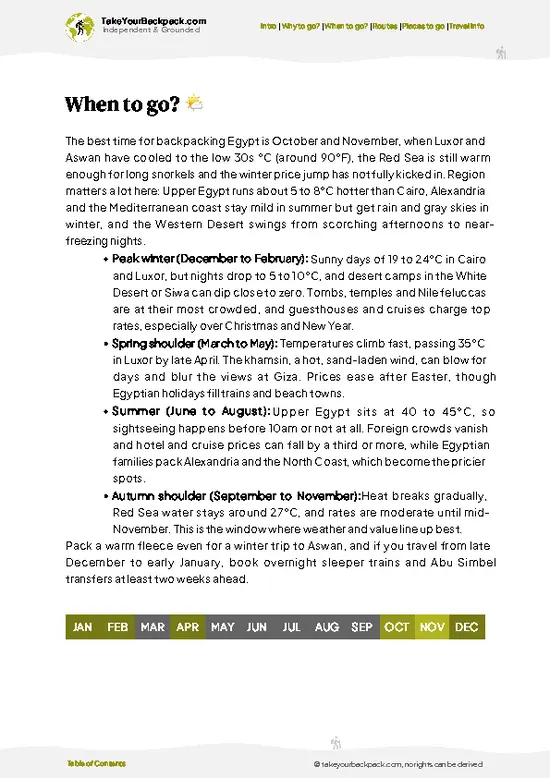
example page 2 from our offline Travel Guide for Egypt
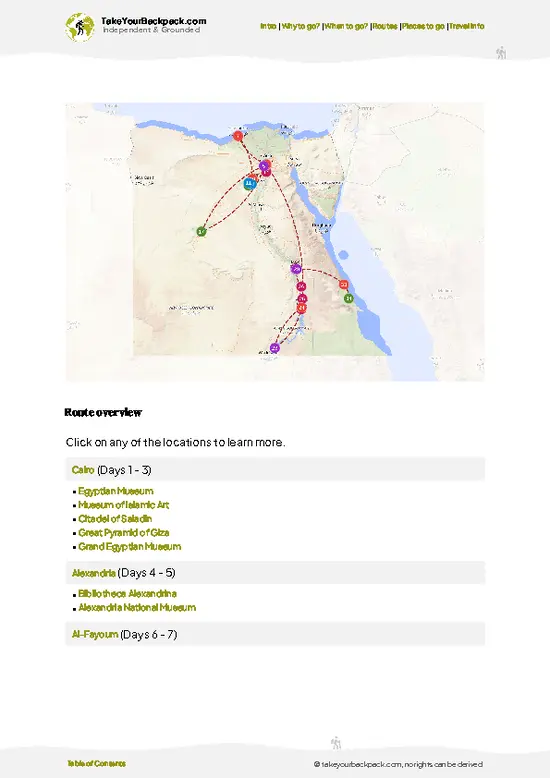
example page 3 from our offline Travel Guide for Egypt
example page 4 from our offline Travel Guide for Egypt
example page 5 from our offline Travel Guide for Egypt
example page 6 from our offline Travel Guide for Egypt
example page 7 from our offline Travel Guide for Egypt
The digital guide (438 pages) contains:
116 highlights, ranked by travel appeal
Optimized 7, 14 & 21-day travel routes
Cities, national parks, landmarks, beaches
How to get around
Offline-friendly for travel without Wi-Fi
👉 Click to see all 30+ guide features

📅 Plan smarter in minutes, not weeks
Month by month travel advice
Festivals & national holidays
Budget expectations

🗺️ Go to the right places, skip the overrated ones
Honest pros & cons of destinations
Top hikes, parks & viewpoints
Lesser-known places most travelers miss
Clear “worth it vs skip it” guidance

🛏️ Travel smoothly without rookie mistakes
Best areas to stay
Transport systems explained simply
Common scams & safety advice
SIM cards, money & practical tips

🌍 Understand the country, not just visit it
Culture & traditions
52 Essential phrases & customs
Festivals worth planning around
Traveler-friendly historical context
Insights that make places more meaningful

📱 Built for real travel conditions
Fully downloadable PDF
Works completely offline
Optimized for phone use
Useful in remote areas & buses
Everything in one place
Save weeks of stressful planning
Get instant access to your full guide. 30‑day money-back guarantee.


By proceeding you agree to our terms.
Sent to your inbox immediately after payment • 100% Secure Checkout
Best Backpacking Travel Advisor 2025 tourism awardBest Backpacking
Travel Advisor
2025
What others say about Take Your Backpack Guides:
⭐⭐⭐⭐⭐
Fantastic, amazing amount of information!
⭐⭐⭐⭐⭐
My goodness this is amazing, it's what I've been looking for hats off too you!
⭐⭐⭐⭐⭐
I think this is absolutely BRILLIANT
⭐⭐⭐⭐
Very complete and informative. It's still missing places, but I gotta to commend you
⭐⭐⭐⭐⭐
This is truly amazing, thank you, can't wait to explore it with my kids!
⭐⭐⭐⭐⭐
Awesome resource, thank you!
⭐⭐⭐⭐⭐
This is amazing! Can't wait to explore the ones I haven't seen
⭐⭐⭐⭐
I love this! Well done, great idea.
⭐⭐⭐⭐⭐
Thanks for taking the time to make this gem!
⭐⭐⭐⭐⭐
This might be the best website I've ever seen.
⭐⭐⭐⭐⭐
Congratulations, and thank you so much for your work; it's incredibly valuable.
⭐⭐⭐⭐
In all seriousness I think you did a great job pointing out the important spots
⭐⭐⭐⭐⭐
10/10 very good
⭐⭐⭐⭐⭐
As someone who's only just starting to visit regularly this is awesome, thank you.
⭐⭐⭐⭐
Thank you very much! I'm going to visit my dad, it's going to be very useful!
⭐⭐⭐⭐⭐
This is really cool! We'll be travelling for the first time and this definitely come in handy.
⭐⭐⭐⭐⭐
You are now our minister of culture, congratulations 👨‍💼
⭐⭐⭐⭐⭐
Just wanted to tell you that this is a pearl! Going to follow your recommendations.
⭐⭐⭐⭐⭐
This is so cool. I'll definitely be using the resource for my travels soon.
⭐⭐⭐⭐⭐
This is very impressive! Good work.
⭐⭐⭐⭐⭐
This is an amazing and informative site. Very well done!

🛏️ Where to stay?Where staying makes the most sense

Staying near the Abu Simbel Temples is all about balancing proximity with the right vibe. First off, you’ll want to look at the town of Abu Simbel itself. It’s small, but it’s where the action is. You’ll find a mix of budget accommodations that cater to backpackers. The atmosphere is friendly, and you’ll likely meet fellow travelers who share your passion for exploration.

Next, consider the area around Lake Nasser. This spot offers some unique views and a chance to escape the crowds. While it’s a bit quieter, you can still find places that welcome solo adventurers. The sunsets over the lake … read more 👉
Staying near the Abu Simbel Temples is all about balancing proximity with the right vibe. First off, you’ll want to look at the town of Abu Simbel itself. It’s small, but it’s where the action is. You’ll find a mix of budget accommodations that cater to backpackers. The atmosphere is friendly, and you’ll likely meet fellow travelers who share your passion for exploration.

Next, consider the area around Lake Nasser. This spot offers some unique views and a chance to escape the crowds. While it’s a bit quieter, you can still find places that welcome solo adventurers. The sunsets over the lake are something you won’t want to miss, and they provide a perfect backdrop for those evening chats with new friends.

Lastly, if you’re feeling adventurous, check out the nearby village of Kasr Ibrim. It’s a bit off the beaten path, but that’s where you’ll find the real Egypt. The locals are warm and welcoming, and you’ll get a taste of authentic life away from the tourist traps. Just be prepared for a more rustic experience, but that’s part of the charm.

In short, whether you choose Abu Simbel or venture a bit further, you’ll find a community that enhances your journey.

👛 Costs (as of 23 January 2026)Travel costs and budget guide for Abu Simbel Temples

Visiting the Abu Simbel Temples is a journey into ancient history, but it comes with its own set of costs that you should be aware of. Here’s the breakdown:
  • Entry Fee: Expect to pay around €10-€15 ($12-$18) for a ticket. This grants you access to both the Great Temple and the smaller Temple of Hathor. It’s worth it for the sheer scale and artistry of these monuments.
  • Transportation: Getting to Abu Simbel can be a bit of a trek. If you’re coming from Aswan, a bus will cost you about €5-€10 ($6-$12). Private taxis or guided tours can run anywhere from €50-€100 ($60-$120), depending on how fancy you want to go. Factor in the time, too; it’s about a three-hour drive.
  • Guided Tours: If you want a deeper understanding of the temples, consider a guided tour. Prices range from €20-€50 ($24-$60) per person.
read more 👉
Visiting the Abu Simbel Temples is a journey into ancient history, but it comes with its own set of costs that you should be aware of. Here’s the breakdown:
  • Entry Fee: Expect to pay around €10-€15 ($12-$18) for a ticket. This grants you access to both the Great Temple and the smaller Temple of Hathor. It’s worth it for the sheer scale and artistry of these monuments.
  • Transportation: Getting to Abu Simbel can be a bit of a trek. If you’re coming from Aswan, a bus will cost you about €5-€10 ($6-$12). Private taxis or guided tours can run anywhere from €50-€100 ($60-$120), depending on how fancy you want to go. Factor in the time, too; it’s about a three-hour drive.
  • Guided Tours: If you want a deeper understanding of the temples, consider a guided tour. Prices range from €20-€50 ($24-$60) per person. A good guide can bring the history to life, making the experience richer.
  • Food and Drink: There are limited options on-site. Budget around €5-€10 ($6-$12) for a meal. Bring your own snacks and water to save money and avoid overpriced options.
  • Accommodation: If you plan to stay overnight, hotels in Abu Simbel can vary widely. Expect to pay €30-€100 ($36-$120) per night, depending on comfort and proximity to the temples. Booking in advance can help you snag better deals.

Be prepared for crowds, especially during peak tourist seasons. The temples are breathtaking, but the experience can feel rushed if you’re surrounded by too many people. Go early in the morning or later in the afternoon for a more intimate experience.


source: egymonuments.gov.eg
⚠️ Prices can change and everyone travels differently, so take this as a rough guide. Hope it helps you plan your adventure!

Other Egyptian landmarks near Abu Simbel Temples

Explore more nearby:


💡 Not sure where to go next?
Create a personalized itinerary for Egypt including Abu Simbel Temples and the places that fit your trip.

Generate my itinerary

👉 Discover all landmarks

Or checkout all Egypt has to offer (think cities, towns, villages, national parks, hikes, beaches, festivals)
Country photo of Egypt

We 💚 feedbackWhat to keep in mind

The Abu Simbel Temples are a spectacle, no doubt. But brace yourself for the crowds—they can be overwhelming, especially at sunrise. The real magic? Standing before those colossal statues, feeling the weight of history. Don’t miss the sound and light show at night; it’s a game-changer. Just remember, the journey there is long and can be pricey, so plan accordingly. If you can, go off-peak for a more intimate experience. Trust me, it’s worth it.

✍️ Help improve this page!
The information on this page is based on in-depth research, insights shared by experienced travelers, and feedback from the local travel community in Egypt. While every effort is made to keep the information accurate and current, conditions can change — so if you spot anything incorrect or outdated, please get in touch.


🙋‍♂️ Give feedback

👋 Meet the founderWho’s Behind Take Your Backpack?

Johan, backpacker and founder of TakeYourBackpackHi, I’m Johan (Netherlands 🇳🇱), the creator of TakeYourBackpack. Over the past decade, I’ve backpacked through 80+ countries across six continents, gaining extensive experience with independent travel, long-term trips, and overland routes.

This site is built on a combination of firsthand travel experience and carefully curated insights from other backpackers. Many guides are based on places I’ve personally visited, while others bring together tips, observations, and practical advice shared by trusted travelers I’ve met along the way.

The goal is to provide realistic, experience-driven guidance — not generic itineraries — so you can explore destinations with better context, clearer expectations, and more confidence.

Get full Egypt guide •
Instant download • 116 highlights • Full Offline guide