v2.webp)
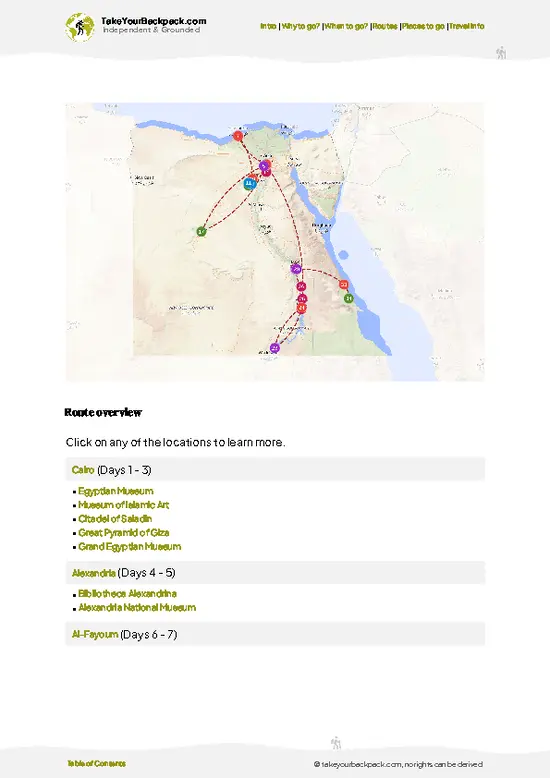
The Main Reading Hall
Forget the Instagram shots of sunbeams and empty desks. The reality: this place is almost always buzzing with students, researchers, and the occasional tourist who wandered in looking for air conditioning. But here’s the kicker—the reading hall is a feat of engineering and ambition. The sloped, disc-shaped roof lets in natural light that actually makes you want to read, not just snap photos. The scale is absurd: 70,000 square meters, room for thousands, and a sense of intellectual energy you can feel in your bones. It’s not quiet, but it’s alive. If you want to feel the pulse of modern Egypt’s academic drive, this is the spot.
The Manuscript Museum
This isn’t some dusty afterthought. The Manuscript Museum is a treasure chest for anyone who gets a thrill from the scent … read more 👉
Forget the Instagram shots of sunbeams and empty desks. The reality: this place is almost always buzzing with students, researchers, and the occasional tourist who wandered in looking for air conditioning. But here’s the kicker—the reading hall is a feat of engineering and ambition. The sloped, disc-shaped roof lets in natural light that actually makes you want to read, not just snap photos. The scale is absurd: 70,000 square meters, room for thousands, and a sense of intellectual energy you can feel in your bones. It’s not quiet, but it’s alive. If you want to feel the pulse of modern Egypt’s academic drive, this is the spot.
The Manuscript Museum
This isn’t some dusty afterthought. The Manuscript Museum is a treasure chest for anyone who gets a thrill from the scent … read more 👉
The Main Reading Hall
Forget the Instagram shots of sunbeams and empty desks. The reality: this place is almost always buzzing with students, researchers, and the occasional tourist who wandered in looking for air conditioning. But here’s the kicker—the reading hall is a feat of engineering and ambition. The sloped, disc-shaped roof lets in natural light that actually makes you want to read, not just snap photos. The scale is absurd: 70,000 square meters, room for thousands, and a sense of intellectual energy you can feel in your bones. It’s not quiet, but it’s alive. If you want to feel the pulse of modern Egypt’s academic drive, this is the spot.
The Manuscript Museum
This isn’t some dusty afterthought. The Manuscript Museum is a treasure chest for anyone who gets a thrill from the scent of old paper and the weight of centuries. You’ll see rare Qur’ans, medieval maps, and scientific texts that make you realize how much of the world’s knowledge once flowed through Alexandria. The displays are well-lit and thoughtfully explained—no endless glass cases of “stuff” with no context. If you’re a history nerd or just want to see proof that the ancient world was more advanced than most people realize, this is your jackpot.
The Antiquities Museum
You’d expect a library to have books. You might not expect it to have a legit archaeological museum. But here you get a compact, high-impact crash course in Egyptian history, with artifacts pulled straight from the Mediterranean seabed and the city’s own soil. There’s a granite statue of Isis, Greco-Roman mosaics, and even pieces from the original ancient Library of Alexandria. It’s not the Egyptian Museum in Cairo, but it’s far more intimate and digestible—no crowds ten deep, no endless corridors. Just the good stuff, up close.
The Planetarium Science Center
This is not just for kids, though you’ll see plenty of school groups. The planetarium’s dome shows are surprisingly slick, and the interactive science exhibits are hands-on enough to keep even adults poking buttons and spinning dials. If you need a break from hieroglyphs and marble, this is where you get to play. The staff actually seem to enjoy science, which is rarer than you’d think.
The Calligraphy Museum
Calligraphy here isn’t just pretty writing—it’s a full-on art form, with roots in Pharaonic, Greek, Coptic, and Islamic traditions. The exhibits are curated to show you the evolution of scripts, with real artifacts and multimedia displays that don’t talk down to you. If you’ve ever wondered why Arabic script looks the way it does, or how writing shapes culture, this is your deep dive.
The Architecture Itself
Let’s be blunt: the outside of the Bibliotheca Alexandrina is divisive. Some love the massive granite wall carved with scripts from every civilization; others think it looks like a spaceship crash-landed on the Corniche. But inside, the design is a masterclass in light, space, and symbolism. The building’s orientation, the slanted roof, the interplay of concrete and glass—it’s all intentional, and it works. Even if you’re not an architecture buff, you’ll feel the ambition. This place was built to resurrect a legend, and it doesn’t shy away from that challenge.
Forget the Instagram shots of sunbeams and empty desks. The reality: this place is almost always buzzing with students, researchers, and the occasional tourist who wandered in looking for air conditioning. But here’s the kicker—the reading hall is a feat of engineering and ambition. The sloped, disc-shaped roof lets in natural light that actually makes you want to read, not just snap photos. The scale is absurd: 70,000 square meters, room for thousands, and a sense of intellectual energy you can feel in your bones. It’s not quiet, but it’s alive. If you want to feel the pulse of modern Egypt’s academic drive, this is the spot.
The Manuscript Museum
This isn’t some dusty afterthought. The Manuscript Museum is a treasure chest for anyone who gets a thrill from the scent of old paper and the weight of centuries. You’ll see rare Qur’ans, medieval maps, and scientific texts that make you realize how much of the world’s knowledge once flowed through Alexandria. The displays are well-lit and thoughtfully explained—no endless glass cases of “stuff” with no context. If you’re a history nerd or just want to see proof that the ancient world was more advanced than most people realize, this is your jackpot.
The Antiquities Museum
You’d expect a library to have books. You might not expect it to have a legit archaeological museum. But here you get a compact, high-impact crash course in Egyptian history, with artifacts pulled straight from the Mediterranean seabed and the city’s own soil. There’s a granite statue of Isis, Greco-Roman mosaics, and even pieces from the original ancient Library of Alexandria. It’s not the Egyptian Museum in Cairo, but it’s far more intimate and digestible—no crowds ten deep, no endless corridors. Just the good stuff, up close.
The Planetarium Science Center
This is not just for kids, though you’ll see plenty of school groups. The planetarium’s dome shows are surprisingly slick, and the interactive science exhibits are hands-on enough to keep even adults poking buttons and spinning dials. If you need a break from hieroglyphs and marble, this is where you get to play. The staff actually seem to enjoy science, which is rarer than you’d think.
The Calligraphy Museum
Calligraphy here isn’t just pretty writing—it’s a full-on art form, with roots in Pharaonic, Greek, Coptic, and Islamic traditions. The exhibits are curated to show you the evolution of scripts, with real artifacts and multimedia displays that don’t talk down to you. If you’ve ever wondered why Arabic script looks the way it does, or how writing shapes culture, this is your deep dive.
The Architecture Itself
Let’s be blunt: the outside of the Bibliotheca Alexandrina is divisive. Some love the massive granite wall carved with scripts from every civilization; others think it looks like a spaceship crash-landed on the Corniche. But inside, the design is a masterclass in light, space, and symbolism. The building’s orientation, the slanted roof, the interplay of concrete and glass—it’s all intentional, and it works. Even if you’re not an architecture buff, you’ll feel the ambition. This place was built to resurrect a legend, and it doesn’t shy away from that challenge.
Spotted a mistake or missing something? Contact us.

Alexandria Full Day Tour

Day Tour in Alexandria from Alexandria Hotels , Airports & Ports

Alexandria Half day Tour

Full Day Private Tour in Museums of Alexandria City in Egypt

Private Tour in Alexandria from Alexandria Port & Hotels

day trip in alexandria

Highlights of Alexandria from Alexandria Hotels

Private Day Tour National Museum & Roman Theater & Catacomb In Alexandria

Highlights Alexandria from Alexandria Hotels


 Best Backpacking
.jpg) Hi, I’m Johan (Netherlands 🇳🇱), the creator of TakeYourBackpack. Over the past 3 decades, I’ve backpacked through 90+ countries across six continents, gaining extensive experience with independent travel, long-term trips, and overland routes.
Hi, I’m Johan (Netherlands 🇳🇱), the creator of TakeYourBackpack. Over the past 3 decades, I’ve backpacked through 90+ countries across six continents, gaining extensive experience with independent travel, long-term trips, and overland routes.