×

Egypt🇪🇬 | attractionsNational Museum of Alexandria’s Underwater Antiquities Collectiosubmerged statues, harbor finds, ancient shipwrecks | things to do and best time to go

Explore Abdeen Palace MuseumExplore Dahab

Backpacking in National Museum of Alexandria’s Underwater Antiquities Collectio
By Johan Kruseman 🇳🇱 | Updated April 16, 2026

You won’t see divers swimming through columns or amphorae in the National Museum of Alexandria’s Underwater Antiquities Collection—most of the treasures fished from the harbor are displayed behind glass, not underwater, and the real shock is how small and quiet the exhibit feels compared to the blockbuster hype online. Tucked inside the National Museum of Alexandria, right in the heart of Egypt’s second city, this collection is a world away from the pyramids’ dust and crowds. Here’s the honest deal: if you’re backpacking Egypt for adrenaline, this isn’t the place. But if you crave the thrill of seeing Cleopatra’s lost city up close—chunks of ancient statues, battered sphinxes, and the eerie, barnacled faces of gods that spent centuries underwater—this is a rare, almost intimate window into a vanished world. It’s cheap, rarely mobbed, and delivers a kind of quiet awe you won’t get elbow-to-elbow at Giza. The vibe is low-key, almost scholarly, but the stories behind the artifacts are wild.

Discover everything you want to know in the 📖 Egypt Travel Guide.


Get your Egypt guide
116 ranked highlights, routes & tips, works offline (438 pages)
Loading the map 🌍
CLICK TO FILTER
cities
towns
landmarks
national parks
hikes
beaches
attractions
festivals
regions
SHOW COUNTRY’S BESTSHOW ALL

✨ Why go?
Ranked #99 attraction in Egypt
The unique appeal for travelers

The National Museum of Alexandria’s Underwater Antiquities Collection isn’t just another stop on Egypt’s tourist circuit—it’s a dive into a submerged world that most travelers overlook. Sure, the crowds can be a grind, especially in peak season, and the entrance fee isn’t pocket change for a backpacker. But here’s the kicker: this museum holds artifacts pulled straight from the Mediterranean’s depths, pieces that survived centuries underwater, telling stories no desert ruin can match.

This isn’t about shiny pyramids or bustling bazaars; it’s about the raw, gritty history of a city that was once the intellectual heartbeat of the ancient world. You’ll find relics from shipwrecks, statues, and everyday objects that reveal Alexandria’s role as a crossroads of cultures and commerce. The adrenaline … read more 👉
The National Museum of Alexandria’s Underwater Antiquities Collection isn’t just another stop on Egypt’s tourist circuit—it’s a dive into a submerged world that most travelers overlook. Sure, the crowds can be a grind, especially in peak season, and the entrance fee isn’t pocket change for a backpacker. But here’s the kicker: this museum holds artifacts pulled straight from the Mediterranean’s depths, pieces that survived centuries underwater, telling stories no desert ruin can match.

This isn’t about shiny pyramids or bustling bazaars; it’s about the raw, gritty history of a city that was once the intellectual heartbeat of the ancient world. You’ll find relics from shipwrecks, statues, and everyday objects that reveal Alexandria’s role as a crossroads of cultures and commerce. The adrenaline comes from standing face-to-face with history that was literally lost to the sea, a reminder of how fragile and fleeting human achievement can be.

For backpackers threading through Egypt, this museum is a milestone—not just for its iconic status but because it offers a rare, tactile connection to the past that’s both humbling and electrifying. It’s a detour worth every minute and every pound spent.
Want to include National Museum of Alexandria’s Underwater Antiquities Collectio in your Egypt route?
Create a personalized Egypt itinerary that includes National Museum of Alexandria’s Underwater Antiquities Collectio and the places that fit your trip — based on your travel style, budget, and available time. Get your route in seconds.

Generate my trip

💡 HighlightsEssential experiences to have while visiting National Museum of Alexandria’s Underwater Antiquities Collectio

The Cleopatra Artifacts: The Real Face of a Legend
Forget the Hollywood Cleopatra. Here, you’re staring down the actual granite sphinxes, statues, and jewelry that once decorated her city. These pieces were dragged up from the harbor floor, not plucked from a movie set. The battered, salt-stained faces of Ptolemaic rulers are a direct line to the chaos and charisma of ancient Alexandria. You can see the scars of centuries underwater—literal erosion, not just the metaphorical kind. It’s history with barnacles, not a sanitized museum fantasy.


The Sunken Temples of Thonis-Heracleion and Canopus
Instagram will show you a diver floating past a statue, but what you don’t see is the scale. These aren’t just a few trinkets; they’re fragments of entire cities that slid into the sea. The museum’s collection … read more 👉
The Cleopatra Artifacts: The Real Face of a Legend
Forget the Hollywood Cleopatra. Here, you’re staring down the actual granite sphinxes, statues, and jewelry that once decorated her city. These pieces were dragged up from the harbor floor, not plucked from a movie set. The battered, salt-stained faces of Ptolemaic rulers are a direct line to the chaos and charisma of ancient Alexandria. You can see the scars of centuries underwater—literal erosion, not just the metaphorical kind. It’s history with barnacles, not a sanitized museum fantasy.


The Sunken Temples of Thonis-Heracleion and Canopus
Instagram will show you a diver floating past a statue, but what you don’t see is the scale. These aren’t just a few trinkets; they’re fragments of entire cities that slid into the sea. The museum’s collection includes colossal statues, temple columns, and everyday objects from these drowned metropolises. You’re looking at the aftermath of earthquakes, tsunamis, and the slow, relentless creep of the Mediterranean. It’s the closest you’ll get to Atlantis without a passport stamp from Plato.


Underwater Archaeology: The Gear, The Grit, The Glory
This isn’t a collection that fell into curators’ laps. The museum pulls back the curtain on the actual process—muddy, dangerous, and wildly ambitious. You’ll see the diving suits, the tools, and the maps used by underwater archaeologists. There’s a raw, DIY energy here: think less Indiana Jones, more “let’s haul a 5-ton statue out of the mud with a winch and a prayer.” The displays make you appreciate the human obsession with chasing the past, even when it’s buried under meters of silt.


Coins, Amulets, and the Everyday Magic of Ancient Alexandria
It’s easy to get swept up in the grandeur, but the real magic is in the details. The museum’s trays of coins, amulets, and household objects are the true time machines. These are the things people actually touched—worn smooth by hands, not by waves. You get a sense of daily life: trade, superstition, and the constant negotiation between Greek, Egyptian, and Roman cultures. It’s not just about kings and gods; it’s about the people who lived, worked, and lost everything when the sea came for their city.


The “Wet Room”: Artifacts Still Soaked in the Sea
Here’s the showstopper: some objects are displayed in tanks of seawater, still in the process of desalination. You’re not just looking at the past; you’re watching it being rescued in real time. It’s a reminder that history isn’t static. The work is ongoing, fragile, and sometimes literally dripping. This is the opposite of a dusty museum case—it’s a living, breathing rescue mission, and you’re in the front row.
Spotted a mistake or missing something? Contact us.

Things to do around National Museum of Alexandria’s Underwater Antiquities Collectio

Ratings based on Tripadvisor reviews. When you book through this link, you support our work at no extra cost to you.

🌤️ When to go?Seasonal considerations and timing


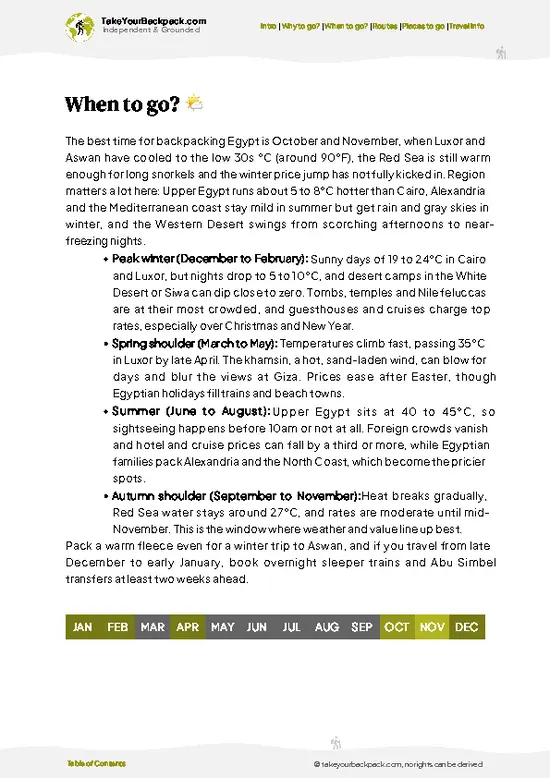
  • Weather: The best time to visit is between October and April when Alexandria enjoys mild, pleasant weather. Summers (May to September) can be brutally hot, with temperatures soaring above 35°C (95°F), making museum visits less comfortable.

  • Temperature: During the cooler months, expect daytime highs around 20-25°C (68-77°F), perfect for exploring without sweating buckets. Nights can dip to 10-15°C (50-59°F), so pack a light jacket.

  • Daylight Hours: From October to April, daylight lasts roughly 10-11 hours, giving you ample time to soak in the museum and nearby sites without rushing.

  • Crowds: The museum sees a spike in visitors during Egyptian school holidays and the peak tourist season in December and January. If you want to dodge the crush, aim for late October or March-April.

  • Seasonal
read more 👉

  • Weather: The best time to visit is between October and April when Alexandria enjoys mild, pleasant weather. Summers (May to September) can be brutally hot, with temperatures soaring above 35°C (95°F), making museum visits less comfortable.

  • Temperature: During the cooler months, expect daytime highs around 20-25°C (68-77°F), perfect for exploring without sweating buckets. Nights can dip to 10-15°C (50-59°F), so pack a light jacket.

  • Daylight Hours: From October to April, daylight lasts roughly 10-11 hours, giving you ample time to soak in the museum and nearby sites without rushing.

  • Crowds: The museum sees a spike in visitors during Egyptian school holidays and the peak tourist season in December and January. If you want to dodge the crush, aim for late October or March-April.

  • Seasonal Activities: Winter months sometimes feature special exhibitions or lectures at the museum, adding depth to your visit beyond the usual displays.

  • Price Fluctuations: Entrance fees remain fairly stable year-round, but accommodation and transport costs can spike during peak season, so plan accordingly.


Pro-tip: Visit in late autumn or early spring to enjoy comfortable weather, fewer crowds, and occasional special events without paying peak-season prices.


source: climatestotravel.comJANJanuary: highly recommended for travelingFEBFebruary: excellent for travelingMARMarch: excellent for travelingAPRApril: excellent for travelingMAYMay: fair for travelingJUNJune: below average for travelingJULJuly: below average for travelingAUGAugust: below average for travelingSEPSeptember: fair for travelingOCTOctober: excellent for travelingNOVNovember: highly recommended for travelingDECDecember: highly recommended for traveling
when-to-go

✈️ The backpacker research shortcutEgypt Travel Guide

An offline-friendly backpacking guide with optimized travel routes, ranked highlights, transport advice, and the best areas to stay.
example page 0 from our offline Travel Guide for Egypt
example page 1 from our offline Travel Guide for Egypt
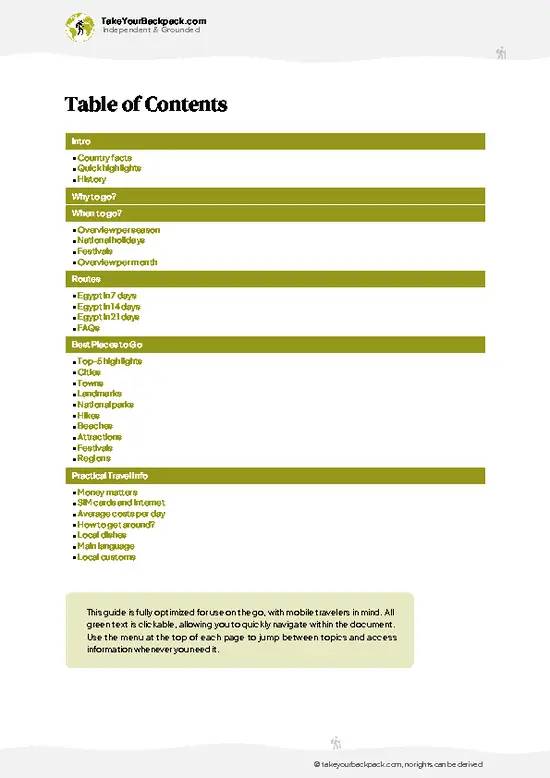
example page 2 from our offline Travel Guide for Egypt
example page 3 from our offline Travel Guide for Egypt
example page 4 from our offline Travel Guide for Egypt
example page 5 from our offline Travel Guide for Egypt
example page 6 from our offline Travel Guide for Egypt
example page 7 from our offline Travel Guide for Egypt
The digital guide (438 pages) contains:
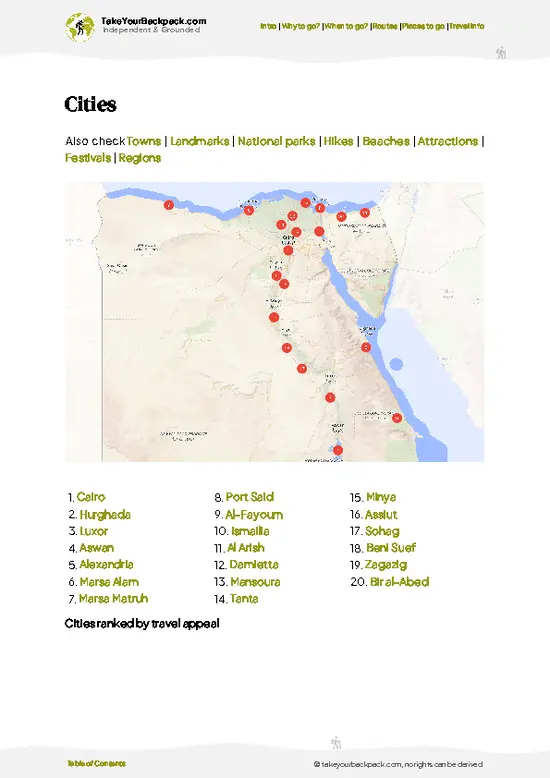
116 highlights, ranked by travel appeal
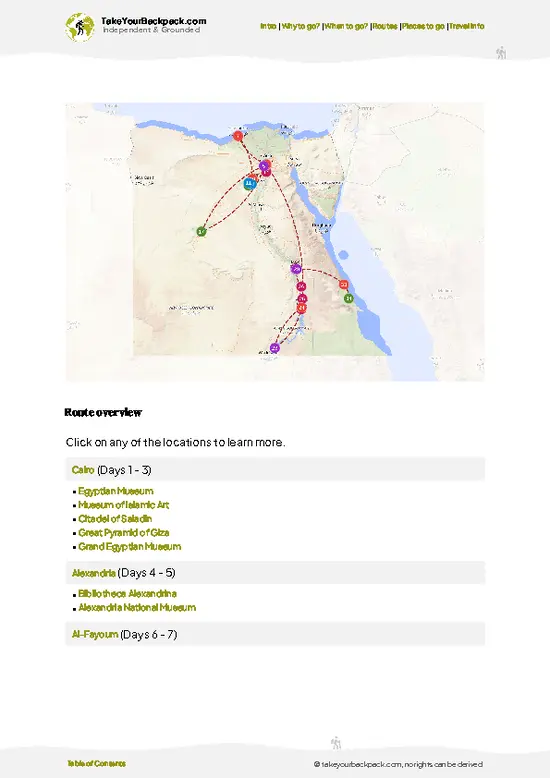
Optimized 7, 14 & 21-day travel routes
Cities, national parks, landmarks, beaches
How to get around
Offline-friendly for travel without Wi-Fi
👉 Click to see all 30+ guide features

📅 Plan smarter in minutes, not weeks
Month by month travel advice
Festivals & national holidays
Budget expectations

🗺️ Go to the right places, skip the overrated ones
Honest pros & cons of destinations
Top hikes, parks & viewpoints
Lesser-known places most travelers miss
Clear “worth it vs skip it” guidance

🛏️ Travel smoothly without rookie mistakes
Best areas to stay
Transport systems explained simply
Common scams & safety advice
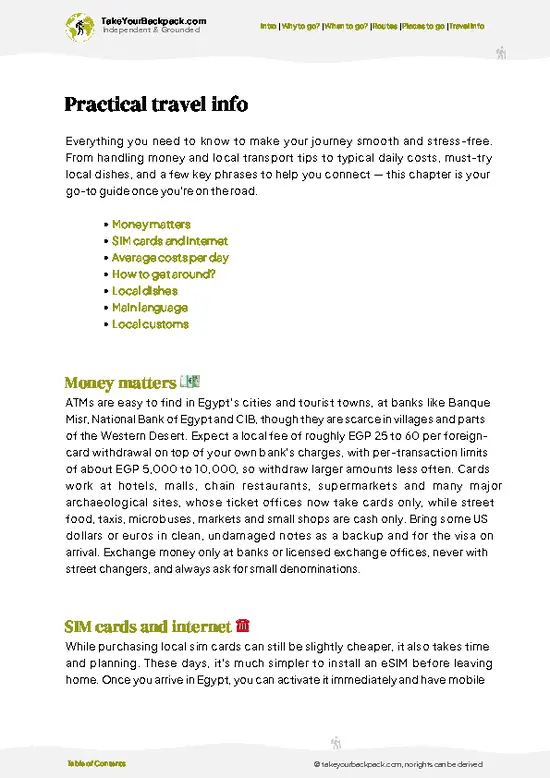
SIM cards, money & practical tips

🌍 Understand the country, not just visit it
Culture & traditions
52 Essential phrases & customs
Festivals worth planning around
Traveler-friendly historical context
Insights that make places more meaningful

📱 Built for real travel conditions
Fully downloadable PDF
Works completely offline
Optimized for phone use
Useful in remote areas & buses
Everything in one place
Save weeks of stressful planning
Get instant access to your full guide. 30‑day money-back guarantee.


By proceeding you agree to our terms.
Sent to your inbox immediately after payment • 100% Secure Checkout
Best Backpacking Travel Advisor 2025 tourism awardBest Backpacking
Travel Advisor
2025
What others say about Take Your Backpack Guides:
⭐⭐⭐⭐⭐
Fantastic, amazing amount of information!
⭐⭐⭐⭐⭐
My goodness this is amazing, it's what I've been looking for hats off too you!
⭐⭐⭐⭐⭐
I think this is absolutely BRILLIANT
⭐⭐⭐⭐
Very complete and informative. It's still missing places, but I gotta to commend you
⭐⭐⭐⭐⭐
This is truly amazing, thank you, can't wait to explore it with my kids!
⭐⭐⭐⭐⭐
Awesome resource, thank you!
⭐⭐⭐⭐⭐
This is amazing! Can't wait to explore the ones I haven't seen
⭐⭐⭐⭐
I love this! Well done, great idea.
⭐⭐⭐⭐⭐
Thanks for taking the time to make this gem!
⭐⭐⭐⭐⭐
This might be the best website I've ever seen.
⭐⭐⭐⭐⭐
Congratulations, and thank you so much for your work; it's incredibly valuable.
⭐⭐⭐⭐
In all seriousness I think you did a great job pointing out the important spots
⭐⭐⭐⭐⭐
10/10 very good
⭐⭐⭐⭐⭐
As someone who's only just starting to visit regularly this is awesome, thank you.
⭐⭐⭐⭐
Thank you very much! I'm going to visit my dad, it's going to be very useful!
⭐⭐⭐⭐⭐
This is really cool! We'll be travelling for the first time and this definitely come in handy.
⭐⭐⭐⭐⭐
You are now our minister of culture, congratulations 👨‍💼
⭐⭐⭐⭐⭐
Just wanted to tell you that this is a pearl! Going to follow your recommendations.
⭐⭐⭐⭐⭐
This is so cool. I'll definitely be using the resource for my travels soon.
⭐⭐⭐⭐⭐
This is very impressive! Good work.
⭐⭐⭐⭐⭐
This is an amazing and informative site. Very well done!

🛏️ Where to stay?Choosing the right base

Forget the postcard-perfect image of Alexandria as a quiet, sun-dappled Mediterranean escape. The reality? It’s a bustling city with a pulse that can overwhelm if you’re not ready. The National Museum of Alexandria’s Underwater Antiquities Collection is a treasure trove, but it’s tucked into a cityscape that’s noisy, crowded, and unapologetically alive. If you want to be close to the museum, you’re looking at staying in neighborhoods that reflect that energy—places where the streets buzz with locals, vendors shout over traffic, and the scent of street food mingles with the sea air.

For backpackers, … read more 👉
Forget the postcard-perfect image of Alexandria as a quiet, sun-dappled Mediterranean escape. The reality? It’s a bustling city with a pulse that can overwhelm if you’re not ready. The National Museum of Alexandria’s Underwater Antiquities Collection is a treasure trove, but it’s tucked into a cityscape that’s noisy, crowded, and unapologetically alive. If you want to be close to the museum, you’re looking at staying in neighborhoods that reflect that energy—places where the streets buzz with locals, vendors shout over traffic, and the scent of street food mingles with the sea air.

For backpackers, the best areas to base yourself are those that balance safety with social opportunities and budget-friendly options. The district around the Corniche, especially near the Eastern Harbor, is a solid pick. It’s where you get the best mix of accessibility to the museum and a lively backpacker scene. You’ll find plenty of guesthouses and budget digs here, and it’s easy to meet other travelers in the cafés and small bars that cater to a younger crowd. The vibe is gritty but genuine—no polished tourist traps, just real city life.

Another solid choice is the area around Mansheya. It’s a bit more local, less polished, but that’s the point. You’re immersed in everyday Alexandrian life, with markets, street food stalls, and a network of cheap transport options. It’s safe enough if you keep your wits about you, and it’s where you’ll find the kind of authentic interactions that make travel memorable.

Both areas put you within walking or a short taxi ride from the museum, so you’re not wasting time or money on transport. The trade-off is embracing the city’s chaos, but that’s where the real magic of Alexandria lives—far from the sanitized Instagram shots.

👛 Costs (as of 9 December 2025)How expensive it really is

As of the most recent estimates, the ticket prices for visiting the National Museum of Alexandria's Underwater Antiquities Collection are as follows: Foreign adult visitors: EGP 200 (approximately €10); Foreign student visitors: EGP 100 (approximately €5); Egyptian adult visitors: EGP 20 (approximately €1); Egyptian student visitors: EGP 5 (approximately €0.25). Additional costs may include an audio tour for EGP 20 (approximately €1). Please note that exchange rates are approximate and may vary.

source: mota.gov.eg
⚠️ Prices can change and everyone travels differently, so take this as a rough guide. Hope it helps you plan your adventure!

Other Egyptian attractions near National Museum of Alexandria’s Underwater Antiquities Collectio

Explore more nearby:


💡 Not sure where to go next?
Create a personalized itinerary for Egypt including National Museum of Alexandria’s Underwater Antiquities Collectio and the places that fit your trip.

Generate my itinerary

👉 Discover all attractions

Or checkout all Egypt has to offer (think cities, towns, villages, national parks, hikes, beaches, festivals)
Country photo of Egypt

We 💚 feedbackSumming up the experience

The National Museum of Alexandria’s Underwater Antiquities Collection isn’t your typical tourist pit stop, and that’s exactly why it’s worth your time. Sure, it’s not packed with flashy crowds or Instagrammable moments, but the vibe is quietly intense—like stepping into a submerged time capsule. The real surprise? Seeing relics pulled straight from the Mediterranean’s depths, each piece whispering stories of ancient trade, shipwrecks, and lost civilizations. Just a heads-up: the lighting is low and the space tight, so come ready to slow down and soak it all in without distractions.

✍️ Help improve this page!
The information on this page is based on in-depth research, insights shared by experienced travelers, and feedback from the local travel community in Egypt. While every effort is made to keep the information accurate and current, conditions can change — so if you spot anything incorrect or outdated, please get in touch.


🙋‍♂️ Give feedback

👋 Meet the founderWho’s Behind Take Your Backpack?

Johan, backpacker and founder of TakeYourBackpackHi, I’m Johan (Netherlands 🇳🇱), the creator of TakeYourBackpack. Over the past decade, I’ve backpacked through 80+ countries across six continents, gaining extensive experience with independent travel, long-term trips, and overland routes.

This site is built on a combination of firsthand travel experience and carefully curated insights from other backpackers. Many guides are based on places I’ve personally visited, while others bring together tips, observations, and practical advice shared by trusted travelers I’ve met along the way.

The goal is to provide realistic, experience-driven guidance — not generic itineraries — so you can explore destinations with better context, clearer expectations, and more confidence.

Get full Egypt guide •
Instant download • 116 highlights • Full Offline guide