v2.webp)
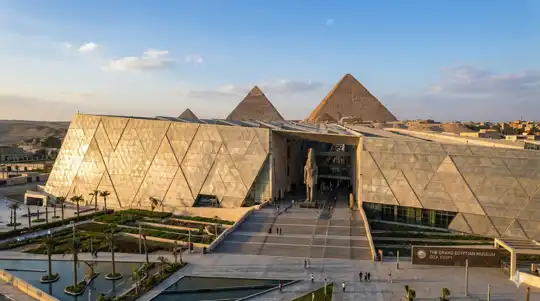



The Grand Staircase
Forget the Instagrammed angles—standing on the Grand Staircase is the closest you’ll get to time travel in a museum. This isn’t just a lobby; it’s a vertical procession of ancient wonders, with colossal statues of pharaohs and gods looming above you like the world’s most intimidating welcoming committee. The scale is humbling, the lighting is theatrical, and the energy is pure anticipation. You feel the weight of 5,000 years pressing down, and for a moment, you’re not a tourist—you’re an intruder in the court of kings.
The Tutankhamun Galleries
Yes, you’ve seen the golden mask a thousand times on postcards, but nothing prepares you for the real thing. The new galleries finally do King Tut justice: his treasures are displayed with space to breathe, and the curation is sharp, … read more 👉
Forget the Instagrammed angles—standing on the Grand Staircase is the closest you’ll get to time travel in a museum. This isn’t just a lobby; it’s a vertical procession of ancient wonders, with colossal statues of pharaohs and gods looming above you like the world’s most intimidating welcoming committee. The scale is humbling, the lighting is theatrical, and the energy is pure anticipation. You feel the weight of 5,000 years pressing down, and for a moment, you’re not a tourist—you’re an intruder in the court of kings.
The Tutankhamun Galleries
Yes, you’ve seen the golden mask a thousand times on postcards, but nothing prepares you for the real thing. The new galleries finally do King Tut justice: his treasures are displayed with space to breathe, and the curation is sharp, … read more 👉
The Grand Staircase
Forget the Instagrammed angles—standing on the Grand Staircase is the closest you’ll get to time travel in a museum. This isn’t just a lobby; it’s a vertical procession of ancient wonders, with colossal statues of pharaohs and gods looming above you like the world’s most intimidating welcoming committee. The scale is humbling, the lighting is theatrical, and the energy is pure anticipation. You feel the weight of 5,000 years pressing down, and for a moment, you’re not a tourist—you’re an intruder in the court of kings.
The Tutankhamun Galleries
Yes, you’ve seen the golden mask a thousand times on postcards, but nothing prepares you for the real thing. The new galleries finally do King Tut justice: his treasures are displayed with space to breathe, and the curation is sharp, not stuffy. You get the full story, from the mundane (linen underwear, anyone?) to the mind-blowing (solid gold beds, ceremonial chariots). The crowds will be thick, but this is one of those rare cases where the hype is justified. If you skip this, you’re missing the main event.
The Hanging Obelisk
This is not a Photoshop trick. The museum’s entrance features a 200-ton obelisk suspended above your head, so close you can almost touch the hieroglyphs. It’s a feat of engineering and a bold statement: Egypt isn’t just about the past, it’s about audacity. Stand underneath and feel the tension—part awe, part “is this thing really safe?” It’s the kind of spectacle that makes you grin like a kid at a magic show.
The Conservation Labs (Visible Storage)
Here’s the backstage pass most museums would never dare offer. Through glass walls, you can watch real archaeologists and conservators at work, cleaning, restoring, and sometimes puzzling over artifacts that haven’t seen daylight in centuries. It’s messy, it’s technical, and it’s absolutely riveting. This is the antidote to the “dead museum” vibe—history is alive, and you’re watching it get a second chance.
The Solar Boat Gallery
Pharaohs didn’t just want to rule the earth—they wanted to cruise into the afterlife in style. The museum’s Solar Boat Gallery houses the full-sized, 4,500-year-old cedar boat of Khufu, reconstructed plank by plank. It’s absurdly large, beautifully preserved, and looks like something out of a fever dream. You can circle it, peer at the joinery, and try to imagine the logistics of moving this thing across the desert. It’s a flex, plain and simple.
The Immersive Digital Displays
This isn’t your grandma’s museum tech. The Grand Egyptian Museum uses projection mapping, interactive screens, and cinematic soundscapes to pull you into the ancient world. You can “walk” through a virtual tomb, zoom in on a sarcophagus, or watch a battle unfold in animated relief. It’s not just bells and whistles—it’s a genuine upgrade to the storytelling, and it keeps even the most museum-averse travelers engaged.
Forget the Instagrammed angles—standing on the Grand Staircase is the closest you’ll get to time travel in a museum. This isn’t just a lobby; it’s a vertical procession of ancient wonders, with colossal statues of pharaohs and gods looming above you like the world’s most intimidating welcoming committee. The scale is humbling, the lighting is theatrical, and the energy is pure anticipation. You feel the weight of 5,000 years pressing down, and for a moment, you’re not a tourist—you’re an intruder in the court of kings.
The Tutankhamun Galleries
Yes, you’ve seen the golden mask a thousand times on postcards, but nothing prepares you for the real thing. The new galleries finally do King Tut justice: his treasures are displayed with space to breathe, and the curation is sharp, not stuffy. You get the full story, from the mundane (linen underwear, anyone?) to the mind-blowing (solid gold beds, ceremonial chariots). The crowds will be thick, but this is one of those rare cases where the hype is justified. If you skip this, you’re missing the main event.
The Hanging Obelisk
This is not a Photoshop trick. The museum’s entrance features a 200-ton obelisk suspended above your head, so close you can almost touch the hieroglyphs. It’s a feat of engineering and a bold statement: Egypt isn’t just about the past, it’s about audacity. Stand underneath and feel the tension—part awe, part “is this thing really safe?” It’s the kind of spectacle that makes you grin like a kid at a magic show.
The Conservation Labs (Visible Storage)
Here’s the backstage pass most museums would never dare offer. Through glass walls, you can watch real archaeologists and conservators at work, cleaning, restoring, and sometimes puzzling over artifacts that haven’t seen daylight in centuries. It’s messy, it’s technical, and it’s absolutely riveting. This is the antidote to the “dead museum” vibe—history is alive, and you’re watching it get a second chance.
The Solar Boat Gallery
Pharaohs didn’t just want to rule the earth—they wanted to cruise into the afterlife in style. The museum’s Solar Boat Gallery houses the full-sized, 4,500-year-old cedar boat of Khufu, reconstructed plank by plank. It’s absurdly large, beautifully preserved, and looks like something out of a fever dream. You can circle it, peer at the joinery, and try to imagine the logistics of moving this thing across the desert. It’s a flex, plain and simple.
The Immersive Digital Displays
This isn’t your grandma’s museum tech. The Grand Egyptian Museum uses projection mapping, interactive screens, and cinematic soundscapes to pull you into the ancient world. You can “walk” through a virtual tomb, zoom in on a sarcophagus, or watch a battle unfold in animated relief. It’s not just bells and whistles—it’s a genuine upgrade to the storytelling, and it keeps even the most museum-averse travelers engaged.
Spotted a mistake or missing something? Contact us.

 Best Backpacking
.jpg) Hi, I’m Johan (Netherlands 🇳🇱), the creator of TakeYourBackpack. Over the past 3 decades, I’ve backpacked through 90+ countries across six continents, gaining extensive experience with independent travel, long-term trips, and overland routes.
Hi, I’m Johan (Netherlands 🇳🇱), the creator of TakeYourBackpack. Over the past 3 decades, I’ve backpacked through 90+ countries across six continents, gaining extensive experience with independent travel, long-term trips, and overland routes.