×

Egypt🇪🇬 | attractionsKarnak Temple Complexhypostyle hall, sacred lake, colossal statues | things to do and best time to go

Explore Grand Egyptian MuseumExplore Luxor Temple

Backpacking in Karnak Temple Complex
🏆 Top pickattraction ranked #3
By Johan Kruseman 🇳🇱 | Updated May 25, 2026

Here’s what nobody tells you until you’re sweating under the Egyptian sun: Karnak opens before most tour buses roll in, and those first golden hours are your ticket to wandering colossal halls almost alone—if you’re willing to wake up early. Karnak Temple Complex sits on the east bank of the Nile in Luxor, and yes, it’s the heavyweight champion of ancient Egyptian sites. For backpackers, Karnak is both a rite of passage and a reality check. The scale is jaw-dropping—hypostyle halls with pillars thick as redwoods, obelisks that dwarf your sense of self, and hieroglyphs that survived millennia of sand and conquest. But the crowds? They’re real, especially after 9 a.m., and the ticket price stings compared to smaller sites. Still, nothing else in Egypt delivers this kind of raw, cinematic grandeur. It’s less intimate than wandering tombs in the Valley of the Kings, but the energy is electric—part ancient wonder, part modern spectacle, and absolutely worth the early alarm.

Discover everything you want to know in the 📖 Egypt Travel Guide.


Get your Egypt guide
116 ranked highlights, routes & tips, works offline (438 pages)
Loading the map 🌍
CLICK TO FILTER
cities
towns
landmarks
national parks
hikes
beaches
attractions
festivals
regions
SHOW COUNTRY’S BESTSHOW ALL

✨ Why go?
Ranked #3 attraction in Egypt
What makes this attraction worth visiting

Karnak Temple Complex is not just another ancient ruin plastered all over Instagram—it’s a heavyweight in Egypt’s cultural and historical arena. Yes, it’s crowded, especially during peak season, and the entrance fee isn’t pocket change for a budget traveler. But here’s the kicker: this place is a colossal time capsule that demands your attention. It’s the largest religious site ever built, sprawling over 100 hectares, and every stone whispers stories of pharaohs, gods, and power plays stretching back over 3,000 years.

Backpackers don’t just come here for the photo ops; they come for the sheer scale and the layers of history that hit you like a punch. Walking through Karnak is like stepping into a living museum where every column, obelisk, and statue is a chapter in Egypt’s epic saga. It’s … read more 👉
Karnak Temple Complex is not just another ancient ruin plastered all over Instagram—it’s a heavyweight in Egypt’s cultural and historical arena. Yes, it’s crowded, especially during peak season, and the entrance fee isn’t pocket change for a budget traveler. But here’s the kicker: this place is a colossal time capsule that demands your attention. It’s the largest religious site ever built, sprawling over 100 hectares, and every stone whispers stories of pharaohs, gods, and power plays stretching back over 3,000 years.

Backpackers don’t just come here for the photo ops; they come for the sheer scale and the layers of history that hit you like a punch. Walking through Karnak is like stepping into a living museum where every column, obelisk, and statue is a chapter in Egypt’s epic saga. It’s a milestone on the classic Nile route, a place where you can feel the pulse of ancient civilization under your boots. The effort to navigate the crowds and the heat pays off with a raw, unfiltered connection to a world that shaped human history. Skip it, and you miss a cornerstone of what makes Egypt unforgettable.
Want to include Karnak Temple Complex in your Egypt route?
Create a personalized Egypt itinerary that includes Karnak Temple Complex and the places that fit your trip — based on your travel style, budget, and available time. Get your route in seconds.

Generate my trip

💡 HighlightsPlaces and moments you shouldn't skip

The Hypostyle Hall
Forget the Instagram shots of a single column—this is a forest of stone, 134 columns rising like petrified papyrus stalks, each one thick enough to swallow a tour group in its shadow. The scale is so outrageous it borders on absurd. Walk through at sunrise, and you’ll see sunlight slicing through the hieroglyphs, making the ancient stories flicker to life. This isn’t just a photo op; it’s a full-body experience in architectural ambition. The crowds will be there, but the sheer size swallows them up. You’ll feel like an ant in a cathedral built for gods, not mortals.

The Sacred Lake
Most people snap a quick picture and move on, but linger here and you’ll get a sense of the temple’s real pulse. This man-made lake wasn’t for show—it was for ritual purification, and it’s still … read more 👉
The Hypostyle Hall
Forget the Instagram shots of a single column—this is a forest of stone, 134 columns rising like petrified papyrus stalks, each one thick enough to swallow a tour group in its shadow. The scale is so outrageous it borders on absurd. Walk through at sunrise, and you’ll see sunlight slicing through the hieroglyphs, making the ancient stories flicker to life. This isn’t just a photo op; it’s a full-body experience in architectural ambition. The crowds will be there, but the sheer size swallows them up. You’ll feel like an ant in a cathedral built for gods, not mortals.

The Sacred Lake
Most people snap a quick picture and move on, but linger here and you’ll get a sense of the temple’s real pulse. This man-made lake wasn’t for show—it was for ritual purification, and it’s still eerily calm, even when the rest of Karnak is buzzing. Stand at the edge at dusk and watch the water mirror the columns and palm trees. If you’re lucky, you’ll catch a breeze that smells faintly of mud and lotus, a reminder that this place was alive long before the tour buses.

The Obelisks of Hatshepsut and Thutmose I
Obelisks are everywhere in Egypt, but Karnak’s are the originals—massive, monolithic, and carved with the kind of precision that makes modern cranes look like toys. Hatshepsut’s obelisk is the tallest surviving one in Egypt, and it’s not just a monument; it’s a power move in stone. Run your hand along the base and you’ll feel the chisel marks. These aren’t just relics—they’re ancient propaganda, still standing after three millennia of sun and sand.

The Festival Hall of Thutmose III (Akhmenu)
This is where the pharaohs threw their biggest parties—think Olympic opening ceremony, but with more incense and less Lycra. The hall is a maze of pillars and side rooms, covered in carvings of exotic animals and tribute-bearers from lands most Egyptians never dreamed of. The sense of movement in the reliefs is wild; you can almost hear the trumpets and the shuffle of sandals. It’s the closest you’ll get to time travel inside Karnak.

The Avenue of Sphinxes
Yes, it’s partly reconstructed, and yes, you’ll be dodging selfie sticks. But walk the avenue at dawn, when the air is cool and the stone lions are still half in shadow, and you’ll understand why ancient processions started here. The alignment is deliberate—this was the ceremonial artery connecting Karnak to Luxor Temple. It’s not about the statues themselves; it’s about the anticipation, the sense of arrival, the feeling that you’re walking in the footsteps of priests and pharaohs.

The Sound and Light Show (with Caveats)
Let’s be blunt: the narration is pure 1970s cheese, and the laser effects are more retro than revolutionary. But if you can tune out the kitsch, the experience of wandering the temple at night—columns lit up in gold and blue, jackals howling in the distance—is genuinely surreal. It’s the only way to see Karnak without the daytime crowds, and the atmosphere is worth the ticket, even if the script makes you roll your eyes.
Spotted a mistake or missing something? Contact us.

Things to do around Karnak Temple Complex

Ratings based on Tripadvisor reviews. When you book through this link, you support our work at no extra cost to you.

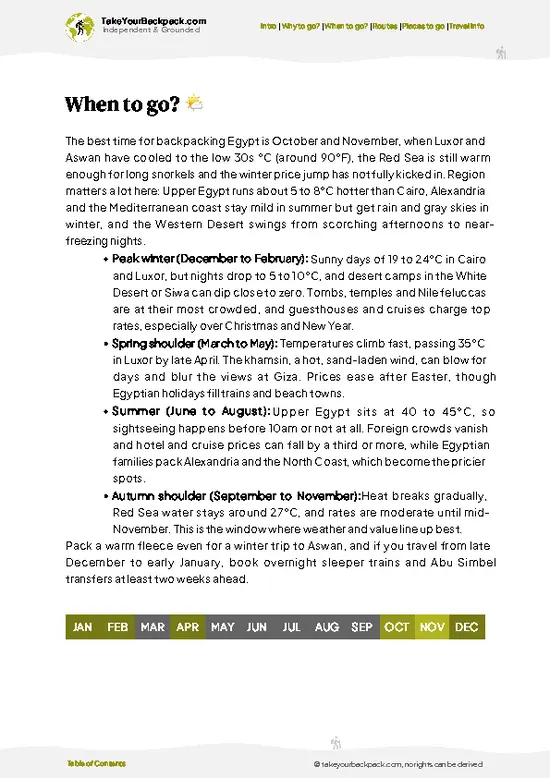
🌤️ When to go?When to go for the best experience


  • Weather: The best weather hits between October and April. Expect dry, pleasant days with highs around 24-28°C (75-82°F). Avoid May to September when temperatures soar past 38°C (100°F), turning exploration into a sweat-drenched slog.

  • Temperature: Winter months (December to February) bring cooler nights dropping to 9-12°C (48-54°F), so pack a light jacket. Daytime temps hover around 20-23°C (68-73°F), perfect for long walks without overheating.

  • Daylight Hours: From October to March, daylight lasts roughly 10-11 hours, enough to soak in the temple’s vastness without rushing. Summer offers longer days but pairs poorly with the heat.

  • Crowds: Peak tourist season is December through February. Expect throngs of tour groups and selfie sticks. For a quieter vibe, aim for late October-November
read more 👉

  • Weather: The best weather hits between October and April. Expect dry, pleasant days with highs around 24-28°C (75-82°F). Avoid May to September when temperatures soar past 38°C (100°F), turning exploration into a sweat-drenched slog.

  • Temperature: Winter months (December to February) bring cooler nights dropping to 9-12°C (48-54°F), so pack a light jacket. Daytime temps hover around 20-23°C (68-73°F), perfect for long walks without overheating.

  • Daylight Hours: From October to March, daylight lasts roughly 10-11 hours, enough to soak in the temple’s vastness without rushing. Summer offers longer days but pairs poorly with the heat.

  • Crowds: Peak tourist season is December through February. Expect throngs of tour groups and selfie sticks. For a quieter vibe, aim for late October-November or March-April when crowds thin but weather stays friendly.

  • Seasonal Activities: The Sound and Light Show runs mainly in cooler months, adding a dramatic layer to the visit. Avoid Ramadan if you want full access and open eateries nearby.

  • Price Fluctuations: Entry fees stay stable year-round, but accommodation and flights spike during peak winter months. Booking off-peak can save you a decent chunk of cash.


Pro-tip: Visit just before or after peak season—late October or early April—to dodge the worst crowds and heat while catching the temple in its most approachable form.


source: climatestotravel.comJANJanuary: good for travelingFEBFebruary: good for travelingMARMarch: highly recommended for travelingAPRApril: highly recommended for travelingMAYMay: below average for travelingJUNJune: below average for travelingJULJuly: below average for travelingAUGAugust: below average for travelingSEPSeptember: fair for travelingOCTOctober: highly recommended for travelingNOVNovember: highly recommended for travelingDECDecember: good for traveling
egypt-attraction-karnak-temple-complex
© Google |

✈️ The backpacker research shortcutEgypt Travel Guide

An offline-friendly backpacking guide with optimized travel routes, ranked highlights, transport advice, and the best areas to stay.
example page 0 from our offline Travel Guide for Egyptexample page 1 from our offline Travel Guide for Egyptexample page 2 from our offline Travel Guide for Egyptexample page 3 from our offline Travel Guide for Egyptexample page 4 from our offline Travel Guide for Egyptexample page 5 from our offline Travel Guide for Egyptexample page 6 from our offline Travel Guide for Egyptexample page 7 from our offline Travel Guide for Egypt
The digital guide (438 pages) contains:
116 highlights, ranked by travel appeal
Optimized 7, 14 & 21-day travel routes
Cities, national parks, landmarks, beaches
How to get around
Offline-friendly for travel without Wi-Fi
👉 Click to see all 30+ guide features

📅 Plan smarter in minutes, not weeks
Month by month travel advice
Festivals & national holidays
Budget expectations

🗺️ Go to the right places, skip the overrated ones
Honest pros & cons of destinations
Top hikes, parks & viewpoints
Lesser-known places most travelers miss
Clear “worth it vs skip it” guidance

🛏️ Travel smoothly without rookie mistakes
Best areas to stay
Transport systems explained simply
Common scams & safety advice
SIM cards, money & practical tips

🌍 Understand the country, not just visit it
Culture & traditions
52 Essential phrases & customs
Festivals worth planning around
Traveler-friendly historical context
Insights that make places more meaningful

📱 Built for real travel conditions
Fully downloadable PDF
Works completely offline
Optimized for phone use
Useful in remote areas & buses
Everything in one place
Save weeks of stressful planning
Get instant access to your full guide. 30‑day money-back guarantee.


By proceeding you agree to our terms.
Sent to your inbox immediately after payment • 100% Secure Checkout
Best Backpacking Travel Advisor 2025 tourism awardBest Backpacking
Travel Advisor
2025
What others say about Take Your Backpack Guides:
⭐⭐⭐⭐⭐
Fantastic, amazing amount of information!
⭐⭐⭐⭐⭐
My goodness this is amazing, it's what I've been looking for hats off too you!
⭐⭐⭐⭐⭐
I think this is absolutely BRILLIANT
⭐⭐⭐⭐
Very complete and informative. It's still missing places, but I gotta to commend you
⭐⭐⭐⭐⭐
This is truly amazing, thank you, can't wait to explore it with my kids!
⭐⭐⭐⭐⭐
Awesome resource, thank you!
⭐⭐⭐⭐⭐
This is amazing! Can't wait to explore the ones I haven't seen
⭐⭐⭐⭐
I love this! Well done, great idea.
⭐⭐⭐⭐⭐
Thanks for taking the time to make this gem!
⭐⭐⭐⭐⭐
This might be the best website I've ever seen.
⭐⭐⭐⭐⭐
Congratulations, and thank you so much for your work; it's incredibly valuable.
⭐⭐⭐⭐
In all seriousness I think you did a great job pointing out the important spots
⭐⭐⭐⭐⭐
10/10 very good
⭐⭐⭐⭐⭐
As someone who's only just starting to visit regularly this is awesome, thank you.
⭐⭐⭐⭐
Thank you very much! I'm going to visit my dad, it's going to be very useful!
⭐⭐⭐⭐⭐
This is really cool! We'll be travelling for the first time and this definitely come in handy.
⭐⭐⭐⭐⭐
You are now our minister of culture, congratulations 👨‍💼
⭐⭐⭐⭐⭐
Just wanted to tell you that this is a pearl! Going to follow your recommendations.
⭐⭐⭐⭐⭐
This is so cool. I'll definitely be using the resource for my travels soon.
⭐⭐⭐⭐⭐
This is very impressive! Good work.
⭐⭐⭐⭐⭐
This is an amazing and informative site. Very well done!

🛏️ Where to stay?Where staying makes the most sense

The Karnak Temple Complex is a heavyweight on Egypt’s tourist circuit, and yes, it gets crowded—especially mid-morning and late afternoon when tour buses roll in like clockwork. The Instagram shots don’t show the throngs of selfie sticks or the hawkers hustling souvenirs, but that’s the reality. Entrance fees aren’t sky-high, but they add up if you’re hopping between Luxor’s big sites. So, budget travelers need a smart base.

Skip the tourist-heavy hotels right at the temple gates—they’re pricey and often isolated. Instead, aim for the East Bank of Luxor, particularly the area around Luxor Temple … read more 👉
The Karnak Temple Complex is a heavyweight on Egypt’s tourist circuit, and yes, it gets crowded—especially mid-morning and late afternoon when tour buses roll in like clockwork. The Instagram shots don’t show the throngs of selfie sticks or the hawkers hustling souvenirs, but that’s the reality. Entrance fees aren’t sky-high, but they add up if you’re hopping between Luxor’s big sites. So, budget travelers need a smart base.

Skip the tourist-heavy hotels right at the temple gates—they’re pricey and often isolated. Instead, aim for the East Bank of Luxor, particularly the area around Luxor Temple and the local markets. This neighborhood is a magnet for solo backpackers and budget travelers because it’s lively, safe, and packed with affordable guesthouses and hostels. You’ll find a social vibe here—think shared rooftop terraces where you swap stories over cheap tea or local brews. It’s also a short tuk-tuk ride or a 20-minute walk to Karnak, so you can beat the crowds by arriving early or late without hassle.

Plus, staying here means you’re immersed in everyday Egyptian life, not just the tourist bubble. Street food stalls, local cafés, and friendly vendors create a gritty, authentic backdrop that no polished resort can match. This is where the real magic of Karnak’s shadow lives—beyond the photos, in the pulse of the city that’s been guarding these ruins for millennia.

👛 Costs (as of 20 January 2026)What things cost and how to budget

As of November 2024, the entrance fee for foreign adults is 600 EGP (approximately €15), and for students with valid ID, it's 300 EGP (approximately €7.50). Additional costs include the Sound and Light Show, priced at 250 EGP (approximately €6.25).

source: mota.gov.eg
⚠️ Prices can change and everyone travels differently, so take this as a rough guide. Hope it helps you plan your adventure!

Other Egyptian attractions near Karnak Temple Complex

Explore more nearby:


💡 Not sure where to go next?
Create a personalized itinerary for Egypt including Karnak Temple Complex and the places that fit your trip.

Generate my itinerary

👉 Discover all attractions

Or checkout all Egypt has to offer (think cities, towns, villages, national parks, hikes, beaches, festivals)
Country photo of Egypt

We 💚 feedbackKey takeaways before you go

Karnak Temple isn’t some quiet, sacred hideaway—expect crowds and a steady stream of tour groups snapping selfies. But here’s the kicker: once you step past the noise, the sheer scale and detail hit you like a punch. The way sunlight slices through those towering columns at midday? That’s the real magic. Don’t rush it. Find a quiet corner, soak in the carvings, and imagine the centuries of hands that built this place. It’s not just a photo op—it’s a raw, living history that grabs you by the gut.

✍️ Help improve this page!
The information on this page is based on in-depth research, insights shared by experienced travelers, and feedback from the local travel community in Egypt. While every effort is made to keep the information accurate and current, conditions can change — so if you spot anything incorrect or outdated, please get in touch.


🙋‍♂️ Give feedback

👋 Meet the founderWho’s Behind Take Your Backpack?

Johan, backpacker and founder of TakeYourBackpackHi, I’m Johan (Netherlands 🇳🇱), the creator of TakeYourBackpack. Over the past decade, I’ve backpacked through 80+ countries across six continents, gaining extensive experience with independent travel, long-term trips, and overland routes.

This site is built on a combination of firsthand travel experience and carefully curated insights from other backpackers. Many guides are based on places I’ve personally visited, while others bring together tips, observations, and practical advice shared by trusted travelers I’ve met along the way.

The goal is to provide realistic, experience-driven guidance — not generic itineraries — so you can explore destinations with better context, clearer expectations, and more confidence.

Get full Egypt guide •
Instant download • 116 highlights • Full Offline guide