×

Egypt🇪🇬 | townsKharga OasisDesert springs, mudbrick forts, date plantations, Roman ruins | things to do and best time to go

Explore Dakhla OasisExplore Kom Ombo

Backpacking in Kharga Oasis
🌟 Highlighttown ranked #5
By Johan Kruseman 🇳🇱 | Updated June 5, 2026

If you crave Egypt’s blockbuster icons—pyramids, Red Sea resorts, or the Instagram parade of Luxor—Kharga Oasis will feel like the wrong movie. There’s no ancient skyline or backpacker bar crawl. But that’s exactly why Kharga rewards the curious. Tucked deep in Egypt’s Western Desert, it’s a living, breathing oasis town where the Nile’s chaos feels a world away. The vibe is low-key, almost conspiratorial: you’re in on a secret most travelers skip. The highlight reel is subtle but rich—crumbling mudbrick forts, the haunting Hibis Temple, and a museum that feels more like a time capsule than a tourist trap. Costs are low, but so is the density of fellow backpackers; you’ll meet more locals than travelers, which is half the point. It’s safe, slow, and stubbornly authentic—less spectacle, more substance. Compared to Bahariya or Siwa, Kharga is quieter, more workaday, and refreshingly unpolished.

Discover everything you want to know in the 📖 Egypt Travel Guide.


Get your Egypt guide
116 ranked highlights, routes & tips, works offline (438 pages)
Loading the map 🌍
CLICK TO FILTER
cities
towns
landmarks
national parks
hikes
beaches
attractions
festivals
regions
SHOW COUNTRY’S BESTSHOW ALL

✨ Why go?
Ranked #5 town in Egypt
The unique appeal for travelers

Kharga Oasis is a strategic stop for backpackers weaving through Egypt. It’s not just about the highlights; it’s about how they fit into your journey. This city offers a solid basecamp for day trips into the surrounding desert, making it easy to explore without the hassle of constant packing. The hostels here are budget-friendly and often buzzing with fellow travelers, creating a sense of community that’s hard to beat.

When it comes to food, you’ll find local eateries serving up hearty meals that won’t break the bank. The city is walkable, allowing you to soak in the atmosphere without relying on transport. While nightlife isn’t wild, there are cozy spots to unwind after a day of exploration. Plus, Kharga’s easy onward travel options mean you can seamlessly continue your adventure, whether … read more 👉
Kharga Oasis is a strategic stop for backpackers weaving through Egypt. It’s not just about the highlights; it’s about how they fit into your journey. This city offers a solid basecamp for day trips into the surrounding desert, making it easy to explore without the hassle of constant packing. The hostels here are budget-friendly and often buzzing with fellow travelers, creating a sense of community that’s hard to beat.

When it comes to food, you’ll find local eateries serving up hearty meals that won’t break the bank. The city is walkable, allowing you to soak in the atmosphere without relying on transport. While nightlife isn’t wild, there are cozy spots to unwind after a day of exploration. Plus, Kharga’s easy onward travel options mean you can seamlessly continue your adventure, whether heading to Luxor or deeper into the Western Desert.

In short, if you’re looking for a place that balances comfort and value, Kharga Oasis is worth considering—especially if you want to enrich your Egyptian experience without sacrificing too much time or money.
Want to include Kharga Oasis in your Egypt route?
Create a personalized Egypt itinerary that includes Kharga Oasis and the places that fit your trip — based on your travel style, budget, and available time. Get your route in seconds.

Generate my trip

💡 HighlightsTop highlights of Kharga Oasis

  1. Hibis Temple — The big draw in town: a surprisingly well-preserved Achaemenid/Pharaonic temple with colorful wall reliefs and inscriptions. It’s atmospheric at quiet hours and gives you a real sense of continuous human habitation out here.
  2. El-Bagawat Christian Cemetery — One of the oldest Christian cemeteries in Egypt, a cluster of mud-brick chapels with fresco fragments. It’s humble but poignant, and standing among those burial chapels tells you a lot about oasis life after antiquity.
  3. Kharga (New Valley) Museum — Small, local museum with artifacts pulled from the oasis: pottery, funerary pieces, and displays that tie the temple and cemetery to local history. Good place to get context before wandering other sites.
  4. Old Quarter (al-Qasr) and Mudbrick Streets — The town’s older neighborhoods
read more 👉
  1. Hibis Temple — The big draw in town: a surprisingly well-preserved Achaemenid/Pharaonic temple with colorful wall reliefs and inscriptions. It’s atmospheric at quiet hours and gives you a real sense of continuous human habitation out here.
  2. El-Bagawat Christian Cemetery — One of the oldest Christian cemeteries in Egypt, a cluster of mud-brick chapels with fresco fragments. It’s humble but poignant, and standing among those burial chapels tells you a lot about oasis life after antiquity.
  3. Kharga (New Valley) Museum — Small, local museum with artifacts pulled from the oasis: pottery, funerary pieces, and displays that tie the temple and cemetery to local history. Good place to get context before wandering other sites.
  4. Old Quarter (al-Qasr) and Mudbrick Streets — The town’s older neighborhoods aren’t a single flashy ruin but a lived-in maze of mudbrick houses, faded doorways and alleyways. Nice to wander, photograph textures, and watch daily life away from the tourist spots.
  5. Kharga Souq (local market) — The real pulse of town: dates piled high, spices, household goods and the kind of small bakeries that serve up fresh flatbreads. Cheap, useful, and culturally rich — you’ll meet locals and taste the oasis economy.
  6. Date Palm Groves and Date Farms — The extensive groves right around town are a defining landscape. Visit a working farm, try different date varieties, and see the irrigation channels that keep the oasis alive — practical, sensory, and surprisingly social.
  7. Traditional Bakeries and Local Eateries — Not glamorous but essential: wood-fired breads, ful and tamiyya stands, and family-run cafés where you can eat cheaply and watch the town wake up. Great for low-budget travel and authentic food.
  8. Local Handicraft & Pottery Workshops — Small artisan spots where you can watch (and sometimes buy) hand-made pottery, simple weaving or date-based products. Interaction with a craftsperson gives a concrete connection to Kharga’s daily traditions.
  9. Friday Mosque and Civic Center Area — The mosque and the civic heart around it are where community life gathers on market days and Fridays. Architecturally modest but culturally central — useful for understanding contemporary Kharga social rhythms.
  10. Remnants of Town Fortifications and Old Administrative Buildings — Scattered, low-key ruins and colonial/mandate-era administrative buildings that hint at Kharga’s layered governance (Pharaonic, Roman, medieval, modern). They’re not blockbuster monuments but rewarding for people who like peeling back history’s layers on foot.
Nearby, easy day trips from Kharga include the Temple of Dush and its surrounding archaeological remains, scattered Roman forts and necropolises in the Kharga Depression, and nearby desert escarpments and fossil beds that give a very different — and very photogenic — perspective on the oasis.
Spotted a mistake or missing something? Contact us.
🏘️ NeighborhoodsHow different areas shape the experience

Kharga Oasis offers a unique blend of history and modernity, making it a fascinating stop for backpackers. Here’s how the neighborhoods stack up:

Downtown Kharga: This is the heart of the oasis. You’ll find local markets, street food, and a lively atmosphere. It’s budget-friendly, with plenty of affordable accommodations. Walkability is high, making it easy to explore on foot. Nightlife is low-key, but you can find cafes buzzing with locals in the evenings. Ideal for short stays where you want to soak in the local culture.

Al-Mahatta: A bit quieter, this area is perfect for those seeking a more relaxed vibe. It’s slightly more upscale, with mid-range hotels and restaurants. While not as walkable, public transport is accessible. This neighborhood is great for longer stays, especially if you … read more 👉
Kharga Oasis offers a unique blend of history and modernity, making it a fascinating stop for backpackers. Here’s how the neighborhoods stack up:

Downtown Kharga: This is the heart of the oasis. You’ll find local markets, street food, and a lively atmosphere. It’s budget-friendly, with plenty of affordable accommodations. Walkability is high, making it easy to explore on foot. Nightlife is low-key, but you can find cafes buzzing with locals in the evenings. Ideal for short stays where you want to soak in the local culture.

Al-Mahatta: A bit quieter, this area is perfect for those seeking a more relaxed vibe. It’s slightly more upscale, with mid-range hotels and restaurants. While not as walkable, public transport is accessible. This neighborhood is great for longer stays, especially if you want to recharge after a day of exploring.

New Kharga: This area is emerging with modern amenities and shopping centers. It’s pricier but offers a comfortable stay with more Western-style conveniences. Walkability is decent, but you’ll likely rely on taxis for longer distances. It’s suitable for those who prefer a blend of comfort and local experience, making it a good choice for both short and extended visits.

Understanding these neighborhoods helps you choose what to prioritize: local immersion, comfort, or convenience.

⌛️ 1 day1-day itinerary for Kharga Oasis

Kharga Oasis, a hidden slice of Egypt, offers a unique blend of history and tranquility. Nestled in the Western Desert, it’s a gateway to ancient wonders and a glimpse into the local way of life. You’ll find a mix of lush palm groves and the stark beauty of the desert, making it a perfect spot for a day of exploration.

Start your morning at the bustling Kharga Market. The vibrant stalls brim with fresh produce, spices, and local crafts. Grab a traditional Egyptian breakfast—think ful medames (fava beans) and fresh bread. This is where you’ll feel the pulse of the city, surrounded by friendly locals who are eager to share a smile or a story.

After fueling up, head to the nearby Temple of Hibis. This ancient site, often overlooked by tourists, showcases stunning hieroglyphics and a serene … read more 👉
Kharga Oasis, a hidden slice of Egypt, offers a unique blend of history and tranquility. Nestled in the Western Desert, it’s a gateway to ancient wonders and a glimpse into the local way of life. You’ll find a mix of lush palm groves and the stark beauty of the desert, making it a perfect spot for a day of exploration.

Start your morning at the bustling Kharga Market. The vibrant stalls brim with fresh produce, spices, and local crafts. Grab a traditional Egyptian breakfast—think ful medames (fava beans) and fresh bread. This is where you’ll feel the pulse of the city, surrounded by friendly locals who are eager to share a smile or a story.

After fueling up, head to the nearby Temple of Hibis. This ancient site, often overlooked by tourists, showcases stunning hieroglyphics and a serene atmosphere. Spend an hour wandering through the ruins, soaking in the history that dates back to the 6th century BC. The quiet here contrasts beautifully with the market’s energy.

In the afternoon, make your way to the Kharga Oasis Museum. It’s a small but insightful place that dives into the region’s rich history, from prehistoric times to the Roman era. The exhibits are well-curated, and you’ll leave with a deeper appreciation for the oasis’s significance.

As evening approaches, stroll through the palm groves just outside the city. The golden light casts long shadows, creating a picturesque backdrop. Find a local café to unwind, sip on mint tea, and reflect on your day.

Kharga Oasis may not be on every traveler’s radar, but it’s a place where you can connect with both the past and the present, making your one-day visit feel rich and rewarding.
Turn your Kharga Oasis visit into an Egypt adventure
Build a complete Egypt route with Kharga Oasis, hidden gems, must-see destinations, and realistic travel times included.

Generate my trip

🌤️ When to go?When to go for the best experience


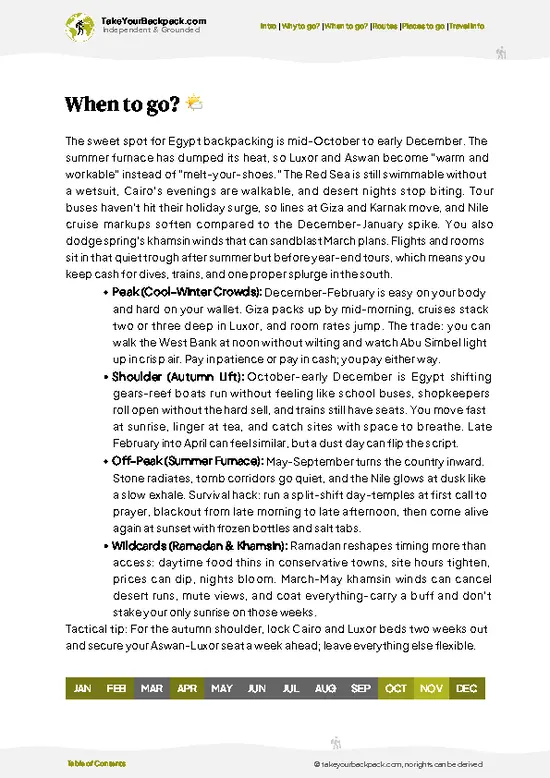
  • Weather: Kharga Oasis bakes under a desert sun most of the year. The best window is from October to April when temperatures drop to a manageable range, avoiding the brutal summer scorch.

  • Temperature: Daytime highs in winter hover around 20-25°C (68-77°F), perfect for trekking without frying your skin. Nights can dip to 5°C (41°F), so pack layers. Summer highs soar past 40°C (104°F), making daytime exploration a sweatbox.

  • Daylight Hours: Winter days are shorter, roughly 10 hours of light, which means planning hikes early and late to maximize cool periods. Summer offers up to 14 hours, but the heat limits midday activity.

  • Crowds: Kharga is off the beaten path, so crowds are minimal year-round. However, winter months attract more travelers seeking desert adventure, so expect a slight
read more 👉

  • Weather: Kharga Oasis bakes under a desert sun most of the year. The best window is from October to April when temperatures drop to a manageable range, avoiding the brutal summer scorch.

  • Temperature: Daytime highs in winter hover around 20-25°C (68-77°F), perfect for trekking without frying your skin. Nights can dip to 5°C (41°F), so pack layers. Summer highs soar past 40°C (104°F), making daytime exploration a sweatbox.

  • Daylight Hours: Winter days are shorter, roughly 10 hours of light, which means planning hikes early and late to maximize cool periods. Summer offers up to 14 hours, but the heat limits midday activity.

  • Crowds: Kharga is off the beaten path, so crowds are minimal year-round. However, winter months attract more travelers seeking desert adventure, so expect a slight bump in visitor numbers.

  • Seasonal Activities: Cooler months enable comfortable visits to archaeological sites and palm groves. Summer’s heat restricts outdoor activities to dawn or dusk, limiting your options.

  • Price Fluctuations: Accommodation and tours peak in winter, reflecting higher demand. Summer sees lower prices but at the cost of extreme discomfort and limited activity windows.


Pro-tip: Aim for late autumn or early spring to balance cool weather, decent daylight, and manageable prices—turning Kharga’s desert challenge into a smart, enjoyable win.


source: climatestotravel.comJANJanuary: excellent for travelingFEBFebruary: excellent for travelingMARMarch: excellent for travelingAPRApril: highly recommended for travelingMAYMay: fair for travelingJUNJune: below average for travelingJULJuly: below average for travelingAUGAugust: below average for travelingSEPSeptember: fair for travelingOCTOctober: highly recommended for travelingNOVNovember: excellent for travelingDECDecember: excellent for traveling
egypt-city-kharga-oasis v1
© Google |

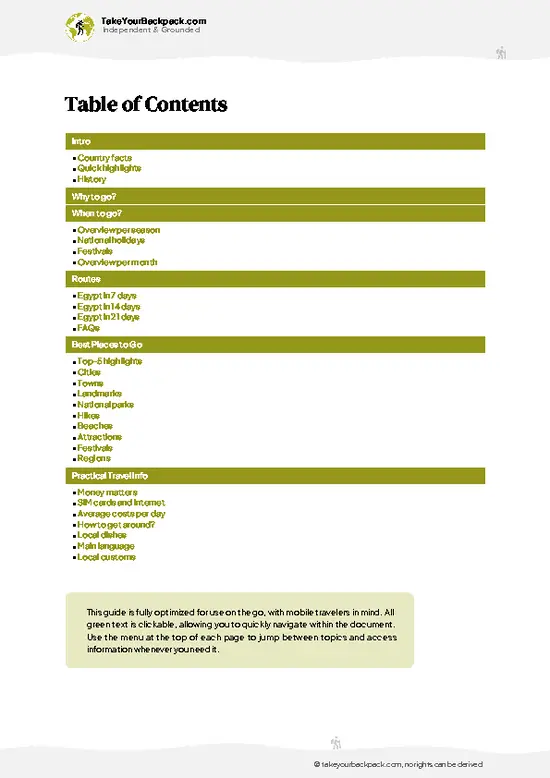
✈️ The backpacker research shortcutEgypt Travel Guide

An offline-friendly backpacking guide with optimized travel routes, ranked highlights, transport advice, and the best areas to stay.
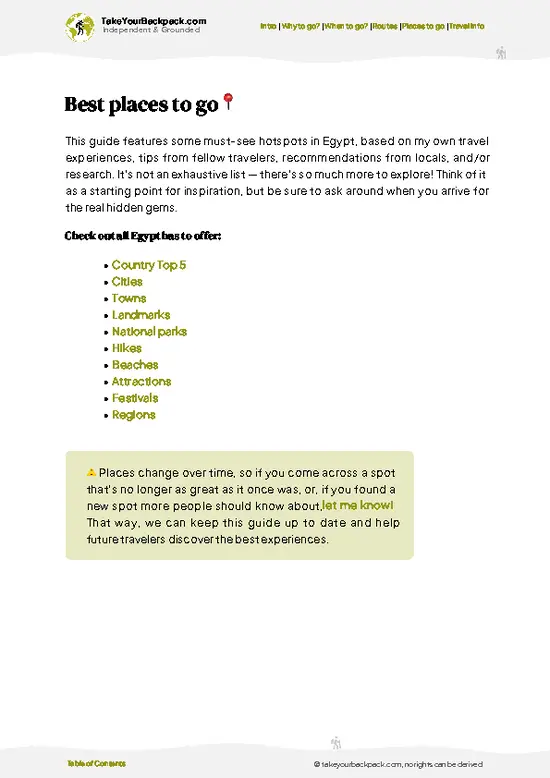
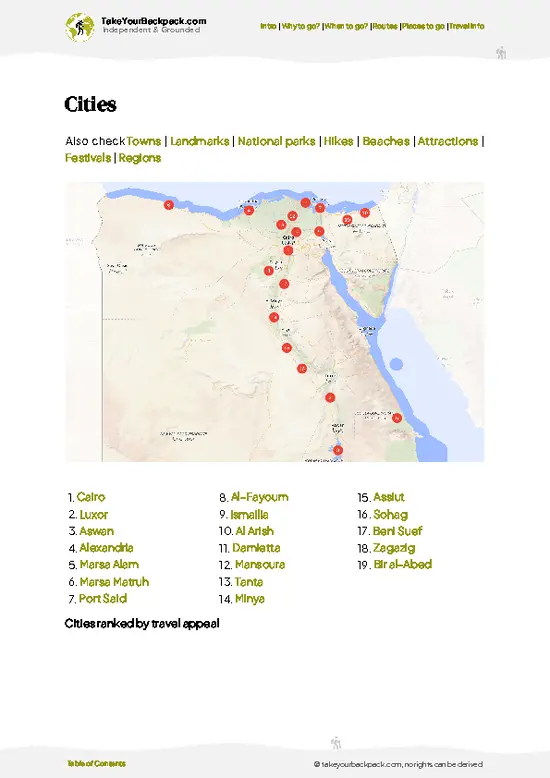
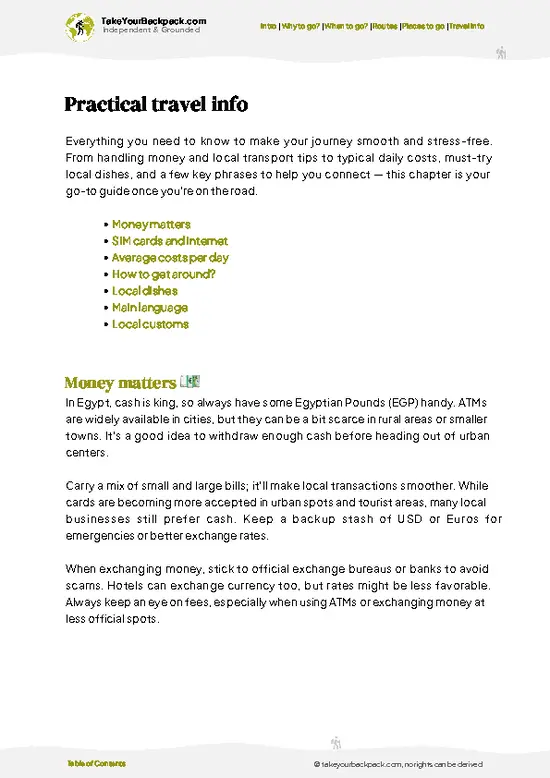
example page 0 from our offline Travel Guide for Egypt
example page 1 from our offline Travel Guide for Egypt
example page 2 from our offline Travel Guide for Egypt
example page 3 from our offline Travel Guide for Egypt
example page 4 from our offline Travel Guide for Egypt
example page 5 from our offline Travel Guide for Egypt
example page 6 from our offline Travel Guide for Egypt
example page 7 from our offline Travel Guide for Egypt
The digital guide (438 pages) contains:
116 highlights, ranked by travel appeal
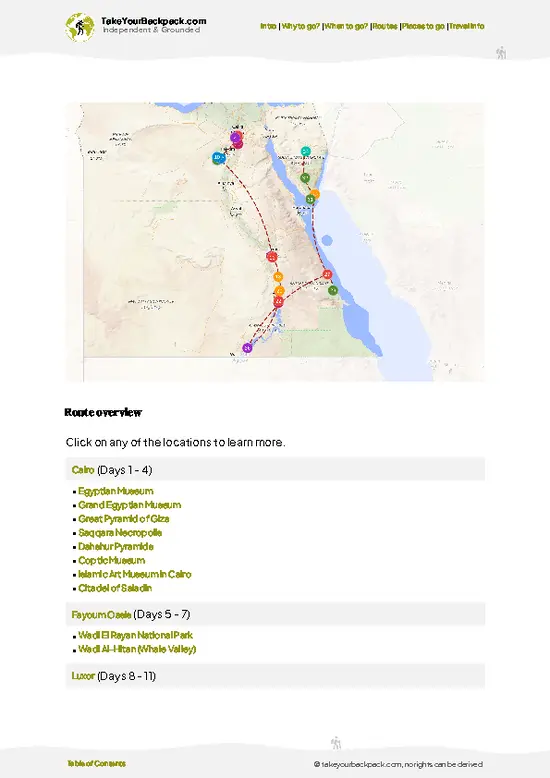
Optimized 7, 14 & 21-day travel routes
Cities, national parks, landmarks, beaches
How to get around
Offline-friendly for travel without Wi-Fi
👉 Click to see all 30+ guide features

📅 Plan smarter in minutes, not weeks
Month by month travel advice
Festivals & national holidays
Budget expectations

🗺️ Go to the right places, skip the overrated ones
Honest pros & cons of destinations
Top hikes, parks & viewpoints
Lesser-known places most travelers miss
Clear “worth it vs skip it” guidance

🛏️ Travel smoothly without rookie mistakes
Best areas to stay
Transport systems explained simply
Common scams & safety advice
SIM cards, money & practical tips

🌍 Understand the country, not just visit it
Culture & traditions
52 Essential phrases & customs
Festivals worth planning around
Traveler-friendly historical context
Insights that make places more meaningful

📱 Built for real travel conditions
Fully downloadable PDF
Works completely offline
Optimized for phone use
Useful in remote areas & buses
Everything in one place
Save weeks of stressful planning
Get instant access to your full guide. 30‑day money-back guarantee.


By proceeding you agree to our terms.
Sent to your inbox immediately after payment • 100% Secure Checkout
Best Backpacking Travel Advisor 2025 tourism awardBest Backpacking
Travel Advisor
2025
What others say about Take Your Backpack Guides:
⭐⭐⭐⭐⭐
Fantastic, amazing amount of information!
⭐⭐⭐⭐⭐
My goodness this is amazing, it's what I've been looking for hats off too you!
⭐⭐⭐⭐⭐
I think this is absolutely BRILLIANT
⭐⭐⭐⭐
Very complete and informative. It's still missing places, but I gotta to commend you
⭐⭐⭐⭐⭐
This is truly amazing, thank you, can't wait to explore it with my kids!
⭐⭐⭐⭐⭐
Awesome resource, thank you!
⭐⭐⭐⭐⭐
This is amazing! Can't wait to explore the ones I haven't seen
⭐⭐⭐⭐
I love this! Well done, great idea.
⭐⭐⭐⭐⭐
Thanks for taking the time to make this gem!
⭐⭐⭐⭐⭐
This might be the best website I've ever seen.
⭐⭐⭐⭐⭐
Congratulations, and thank you so much for your work; it's incredibly valuable.
⭐⭐⭐⭐
In all seriousness I think you did a great job pointing out the important spots
⭐⭐⭐⭐⭐
10/10 very good
⭐⭐⭐⭐⭐
As someone who's only just starting to visit regularly this is awesome, thank you.
⭐⭐⭐⭐
Thank you very much! I'm going to visit my dad, it's going to be very useful!
⭐⭐⭐⭐⭐
This is really cool! We'll be travelling for the first time and this definitely come in handy.
⭐⭐⭐⭐⭐
You are now our minister of culture, congratulations 👨‍💼
⭐⭐⭐⭐⭐
Just wanted to tell you that this is a pearl! Going to follow your recommendations.
⭐⭐⭐⭐⭐
This is so cool. I'll definitely be using the resource for my travels soon.
⭐⭐⭐⭐⭐
This is very impressive! Good work.
⭐⭐⭐⭐⭐
This is an amazing and informative site. Very well done!

🛏️ Where to stay?Best areas to stay in Egypt

In Kharga Oasis, the real backpacker sweet spot is the area around the town center, often called El-Madina. This neighborhood strikes a rare balance: it’s safe, easy to navigate on foot, and has a surprisingly social vibe for a place that’s more desert outpost than bustling city. Budget travelers and solo backpackers gravitate here because it’s where you’ll find the handful of hostels and guesthouses catering to those who want to stretch their pounds without sacrificing basic comfort.

Compared to the outskirts or newer developments, El-Madina offers a more authentic slice of local life. Streets … read more 👉
In Kharga Oasis, the real backpacker sweet spot is the area around the town center, often called El-Madina. This neighborhood strikes a rare balance: it’s safe, easy to navigate on foot, and has a surprisingly social vibe for a place that’s more desert outpost than bustling city. Budget travelers and solo backpackers gravitate here because it’s where you’ll find the handful of hostels and guesthouses catering to those who want to stretch their pounds without sacrificing basic comfort.

Compared to the outskirts or newer developments, El-Madina offers a more authentic slice of local life. Streets hum with small cafes and markets where you can swap stories with fellow travelers or locals over mint tea. It’s not about luxury, but the simplicity of shared spaces and the chance to connect. Other parts of Kharga tend to be quieter, more residential, or geared toward day-trippers, which means fewer social opportunities and less budget accommodation.

Choosing this area means trading a bit of modern convenience for atmosphere and community. It’s the classic backpacker trade-off: less polish, more pulse. If you want to feel like you’re part of the place, this is where you want to drop your pack.

🚌 Getting aroundHow to get around Kharga Oasis

Kharga Oasis doesn’t rush you, but it won’t wait forever either. Time here flows like the desert wind—sometimes steady, sometimes unpredictable. The city’s pulse is a mix of old-world rhythms and modern necessity, where schedules exist but bend to the realities of heat, road conditions, and local customs. You’ll find that your best bet is to master the trade-offs between time, money, and comfort, because each mode of getting around comes with its own set of compromises. Knowing these trade-offs turns travel logistics into a strategic game, where you’re not just moving from point A to B, but choosing how to spend your energy and resources to get the most out of your trip.


  • Walking: The most straightforward and free option. Kharga’s compact center makes walking practical for short distances,
read more 👉
Kharga Oasis doesn’t rush you, but it won’t wait forever either. Time here flows like the desert wind—sometimes steady, sometimes unpredictable. The city’s pulse is a mix of old-world rhythms and modern necessity, where schedules exist but bend to the realities of heat, road conditions, and local customs. You’ll find that your best bet is to master the trade-offs between time, money, and comfort, because each mode of getting around comes with its own set of compromises. Knowing these trade-offs turns travel logistics into a strategic game, where you’re not just moving from point A to B, but choosing how to spend your energy and resources to get the most out of your trip.


  • Walking: The most straightforward and free option. Kharga’s compact center makes walking practical for short distances, especially early morning or late afternoon when the heat is bearable. It’s slow but gives you unmatched freedom and a chance to soak in the local vibe. No schedules, no fares, just your own pace.


  • Local Minibuses: These are the budget traveler’s backbone for longer distances within the oasis and to nearby villages. They run roughly from 7 AM to 6 PM, but don’t expect strict timetables—departures happen when the bus fills up. Tickets cost just a few Egyptian pounds, making them cheap but often crowded and hot. Comfort is minimal, but the price and authentic experience are worth it.


  • Shared Taxis: A step up in speed and comfort compared to minibuses, shared taxis operate on flexible schedules, leaving once full or at agreed times. They cost more—around 20-40 EGP depending on distance—but cut travel time significantly. Expect air conditioning only sporadically, so prepare for heat during peak hours. This option balances time saved against a moderate price increase.


  • Private Taxis: The fastest and most comfortable way to get around, private taxis offer door-to-door service and air conditioning, but at a premium cost—often 5 to 10 times the minibus fare. Ideal if you’re short on time or traveling in a group to split costs. Negotiation skills come into play here; fixed rates aren’t always standard, so be ready to bargain.


  • Bicycles: A niche but rewarding choice for the adventurous. Renting a bike costs little and gives you control over your schedule and route, but the desert heat and dusty roads demand good timing and stamina. Not the fastest, but a unique way to blend exercise with exploration, especially in cooler parts of the day.

👛 Costs (as of 29 January 2026)What things cost and how to budget

Backpacking in Kharga Oasis, Egypt, is a study in balancing essentials with the unique pace of desert life. Here’s how the daily costs break down for an independent traveler navigating this remote spot.
  • Dorm Accommodation (High Season): Expect to pay around $12 to $18 per night. High season sees a slight bump due to limited availability and increased tourist flow, especially in cooler months when the desert is more hospitable.
  • Dorm Accommodation (Off-Season): Prices drop to about $8 to $12. The heat keeps many away, so you can snag a bed for less, but options remain basic and sometimes sparse.
  • Meals: Local eateries offer filling meals for $3 to $6 each. Street food and small cafes serve traditional fare like falafel, lentil soup, and flatbreads, keeping food costs low without sacrificing
read more 👉
Backpacking in Kharga Oasis, Egypt, is a study in balancing essentials with the unique pace of desert life. Here’s how the daily costs break down for an independent traveler navigating this remote spot.
  • Dorm Accommodation (High Season): Expect to pay around $12 to $18 per night. High season sees a slight bump due to limited availability and increased tourist flow, especially in cooler months when the desert is more hospitable.
  • Dorm Accommodation (Off-Season): Prices drop to about $8 to $12. The heat keeps many away, so you can snag a bed for less, but options remain basic and sometimes sparse.
  • Meals: Local eateries offer filling meals for $3 to $6 each. Street food and small cafes serve traditional fare like falafel, lentil soup, and flatbreads, keeping food costs low without sacrificing flavor or authenticity.
  • Local Transport: Getting around Kharga Oasis itself is minimal and often on foot or by shared taxis, costing roughly $1 to $3 per short trip. The oasis is compact, so transport is more about convenience than necessity.
  • City Transport Pass: There’s no formal city transport pass here. Most movement relies on informal shared rides or walking, so no fixed pass cost applies.
  • Basic Activities/Entry Fees: Visiting local archaeological sites or museums typically costs between $2 and $5. These fees support preservation and offer a direct window into the oasis’s millennia-old history.
  • Miscellaneous Expenses: Budget around $2 to $5 for essentials like bottled water, snacks, or small souvenirs. Kharga’s remote nature means some items come at a slight premium, but overall costs stay modest.

All told, a realistic daily budget for backpacking in Kharga Oasis ranges from about $18 on the leanest days in off-season dorms and street food, up to $40 if you opt for more comfort during high season and add a few paid activities. This range lets you decide how much you want to invest in comfort versus stretching your adventure further.


source: egymonuments.gov.eg
⚠️ Prices can change and everyone travels differently, so take this as a rough guide. Hope it helps you plan your adventure!

🚌 Day tripsEasy escapes and nearby places

Kharga Oasis is a fantastic launchpad for exploring the wonders of Egypt’s western desert. With its unique blend of history and natural beauty, you can easily embark on day trips that are both enriching and budget-friendly.

White Desert
A trip to the surreal White Desert is a must. Picture vast, chalky landscapes dotted with bizarre rock formations that look like they belong in a sci-fi movie. The drive takes about 3 hours, and you’ll want to leave early to catch the sunrise. Expect to spend around $30 for transportation and a packed lunch. The best time to visit is between October and April when temperatures are mild. A common mistake? Underestimating the cold at night; pack a warm layer even for a day trip.
👉 Explore White Desert

Temple of Hibis
Just a short 30-minute drive from … read more 👉
Kharga Oasis is a fantastic launchpad for exploring the wonders of Egypt’s western desert. With its unique blend of history and natural beauty, you can easily embark on day trips that are both enriching and budget-friendly.

White Desert
A trip to the surreal White Desert is a must. Picture vast, chalky landscapes dotted with bizarre rock formations that look like they belong in a sci-fi movie. The drive takes about 3 hours, and you’ll want to leave early to catch the sunrise. Expect to spend around $30 for transportation and a packed lunch. The best time to visit is between October and April when temperatures are mild. A common mistake? Underestimating the cold at night; pack a warm layer even for a day trip.
👉 Explore White Desert

Temple of Hibis
Just a short 30-minute drive from Kharga, the Temple of Hibis is a treasure trove of ancient Egyptian history. This temple, dedicated to Amun, is remarkably well-preserved and less crowded than its more famous counterparts. You can explore the intricate carvings and hieroglyphs for just a few dollars. The ideal time to visit is in the morning to avoid the heat. Many first-timers overlook the small museum nearby, which offers fascinating context about the site.


Qasr El Labkha
For a taste of local culture, head to Qasr El Labkha, about an hour away. This ancient fortress offers stunning views of the surrounding landscape and a glimpse into the region’s history. The entry fee is minimal, and you can easily spend a few hours wandering the ruins. Spring and fall are the best seasons to visit, as summer can be sweltering. A common pitfall is not bringing enough water; stay hydrated!


Oasis of Dakhla
Dakhla Oasis is a bit further at around 2.5 hours, but it’s worth every minute. Known for its lush palm groves and charming villages, it feels like stepping back in time. You can explore the local markets and enjoy a traditional meal for about $40 total. The best time to visit is during the cooler months. Many travelers rush through; take your time to soak in the atmosphere.
Want to know what more Egypt offers?
The Egypt Travel Guide describes 116 highlights, from cities to national parks, from beaches to hikes

Get the Travel Guide -

🍲 FoodLocal Flavors for Backpackers

In Kharga Oasis, the food scene is a delightful blend of local flavors and communal experiences. Start with koshari, a hearty mix of rice, lentils, and pasta topped with a spicy tomato sauce. It’s a staple that fills you up without emptying your wallet. Don’t miss foul medames, a savory fava bean dish often enjoyed for breakfast, served with a drizzle of olive oil and a sprinkle of cumin.

Street food stalls are where the magic happens. You’ll find vendors grilling kebabs and serving ta’ameya, the Egyptian version of falafel, made from fava beans. The aroma wafts through the air, drawing you in. Markets buzz with life; grab a fresh sugarcane juice or a cup of mint tea to cool off.

Dining here is casual and communal. Expect to share tables and engage in lively conversations. It’s customary … read more 👉
In Kharga Oasis, the food scene is a delightful blend of local flavors and communal experiences. Start with koshari, a hearty mix of rice, lentils, and pasta topped with a spicy tomato sauce. It’s a staple that fills you up without emptying your wallet. Don’t miss foul medames, a savory fava bean dish often enjoyed for breakfast, served with a drizzle of olive oil and a sprinkle of cumin.

Street food stalls are where the magic happens. You’ll find vendors grilling kebabs and serving ta’ameya, the Egyptian version of falafel, made from fava beans. The aroma wafts through the air, drawing you in. Markets buzz with life; grab a fresh sugarcane juice or a cup of mint tea to cool off.

Dining here is casual and communal. Expect to share tables and engage in lively conversations. It’s customary to greet your fellow diners with a smile and perhaps a friendly nod. Embrace the local pace; meals are often leisurely, allowing you to savor each bite and the vibrant atmosphere. This isn’t just food; it’s a taste of Kharga’s heart and soul.

🛡️ SafetyScams, Hazards, and Annoyances

Kharga Oasis is generally safe for travelers, but a few practical tips can enhance your experience. Stay aware in crowded areas, especially near markets where vendors may be a bit pushy. If you’re solo, avoid wandering too far after dark; stick to well-lit streets and populated areas.

Common scams are rare, but some locals might try to overcharge for services or goods. Always negotiate prices upfront, whether it’s for a ride or a souvenir. A friendly smile and a firm but polite demeanor can go a long way in these interactions.

Annoyances can include persistent touts, especially near tourist sites. A simple “no, thank you” usually suffices. Carry yourself confidently, and you’ll find that most people are genuinely welcoming. Embrace the local culture, and you’ll navigate Kharga with ease.

Other Egyptian towns near Kharga Oasis

Explore more nearby:

  • Dakhla Oasis—Desert villages, ancient tombs, date plantations| 162 km away
  • Nag Hammadi—Sugar refinery, Nile bridge, Coptic manuscripts, rural settlements| 182 km away
  • Edfu—Ptolemaic temple, Nile ferry, market streets| 239 km away

💡 Not sure where to go next?
Create a personalized itinerary for Egypt including Kharga Oasis and the places that fit your trip.

Generate my itinerary

👉 Discover all towns

Or checkout all Egypt has to offer (think cities, towns, villages, national parks, hikes, beaches, festivals)
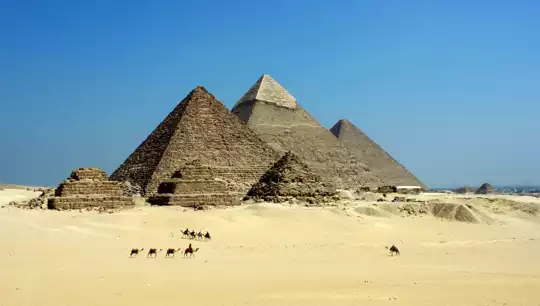
Country photo of Egypt

We 💚 feedbackIs it worth it?

Kharga Oasis is a breath of fresh air in the Egyptian desert. The vibe is laid-back, with friendly locals who genuinely want to share their world. The best surprise? Stumbling upon ancient temples that feel untouched by time. Just a heads-up: the heat can be relentless, so plan your explorations for early morning or late afternoon. Embrace the slower pace here; it’s where you’ll find the real magic. Trust me, it’s worth every moment.

✍️ Help improve this page!
The information on this page is based on in-depth research, insights shared by experienced travelers, and feedback from the local travel community in Egypt. While every effort is made to keep the information accurate and current, conditions can change — so if you spot anything incorrect or outdated, please get in touch.


🙋‍♂️ Give feedback

👋 Meet the founderWho’s Behind Take Your Backpack?

Johan, backpacker and founder of TakeYourBackpackHi, I’m Johan (Netherlands 🇳🇱), the creator of TakeYourBackpack. Over the past decade, I’ve backpacked through 80+ countries across six continents, gaining extensive experience with independent travel, long-term trips, and overland routes.

This site is built on a combination of firsthand travel experience and carefully curated insights from other backpackers. Many guides are based on places I’ve personally visited, while others bring together tips, observations, and practical advice shared by trusted travelers I’ve met along the way.

The goal is to provide realistic, experience-driven guidance — not generic itineraries — so you can explore destinations with better context, clearer expectations, and more confidence.

Get full Egypt guide •
Instant download • 116 highlights • Full Offline guide