×

Egypt🇪🇬 | national parksNile River Islands Protected Areariver islets, papyrus stands, heron rookeries | things to do and best time to go

Explore Lake Burullus Protected AreaExplore Omayed Biosphere Reserve

Backpacking in Nile River Islands Protected Area
👀 For curious travelersnational park ranked #19
By Johan Kruseman 🇳🇱 | Updated May 16, 2026

Most guides gloss over it, but wild camping on the Nile River Islands Protected Area is technically illegal—locals know, rangers enforce, and the fines sting. This string of islands runs from Aswan north toward Cairo, slicing through Egypt’s heart. For backpackers, the islands promise lush riverbank trails, kingfisher flashes, and a rare break from Egypt’s desert monotony, but hiking is limited, and wildlife is shy. Access is tricky—expect to haggle for boats, pay modest entry fees, and find zero hostels. Compared to Wadi El Rayan or Ras Mohamed, the Nile Islands are quieter, greener, but less organized and less forgiving if you wing it.

Discover everything you want to know in the 📖 Egypt Travel Guide.


Get your Egypt guide
116 ranked highlights, routes & tips, works offline (438 pages)
Loading the map 🌍
CLICK TO FILTER
cities
towns
landmarks
national parks
hikes
beaches
attractions
festivals
regions
SHOW COUNTRY’S BESTSHOW ALL

✨ Why go?
Ranked #19 national park in Egypt
Why visitors keep coming back

Backpackers flock to the Nile River Islands Protected Area for its unique blend of independent exploration and budget-friendly options. With camping spots and hostels nearby, you can stretch your budget while soaking in the stunning landscapes. The park offers a variety of trails that cater to different skill levels, making it easy to find your own path. This isn’t just a place for guided tours; it’s perfect for self-guided travelers who want to immerse themselves in nature at their own pace. Just be mindful of the heat and plan your hikes accordingly. The real beauty lies in the freedom to roam, so keep your energy and budget intact for those moments that truly matter.
Want to include Nile River Islands Protected Area in your Egypt route?
Create a personalized Egypt itinerary that includes Nile River Islands Protected Area and the places that fit your trip — based on your travel style, budget, and available time. Get your route in seconds.

Generate my trip

💡 HighlightsKey sights and experiences for travelers

  • River Islands and Papyrus Marshes — the mash-up of small islands, reed beds and flooded channels is what makes this place feel like a secret within the Nile; walk along the shorelines and you’ll see papyrus swaying, muddy shallows full of life, and island groves that change with the seasons.
  • Migratory and Resident Waterbirds — kingfishers, herons, egrets, terns and cormorants are common, and during migration the islands become a loud, colorful stopping point; bring binoculars — the birdlife is the real show here.
  • Sandy Sandbars and Low-Water Walks — when the water drops you can hop between exposed sandbanks and tiny islets; the short hikes are flat and easy but offer close encounters with shorebirds and great reflections for photos.
  • Freshwater Fish and River Ecology — the channels and
read more 👉
  • River Islands and Papyrus Marshes — the mash-up of small islands, reed beds and flooded channels is what makes this place feel like a secret within the Nile; walk along the shorelines and you’ll see papyrus swaying, muddy shallows full of life, and island groves that change with the seasons.
  • Migratory and Resident Waterbirds — kingfishers, herons, egrets, terns and cormorants are common, and during migration the islands become a loud, colorful stopping point; bring binoculars — the birdlife is the real show here.
  • Sandy Sandbars and Low-Water Walks — when the water drops you can hop between exposed sandbanks and tiny islets; the short hikes are flat and easy but offer close encounters with shorebirds and great reflections for photos.
  • Freshwater Fish and River Ecology — the channels and backwaters host Nile tilapia, catfish and other river species; watching local fishermen and seeing the food web in action gives you a practical window into Nile ecology.
  • Reptiles and Riverbank Wildlife — expect to spot Nile monitor lizards, freshwater terrapins and a handful of sunning reptiles along the banks; they’re shy but common if you move slowly and stay quiet.
  • Riparian Vegetation Pockets — little oases of acacia, tamarisk and occasional palm groves punctuate the islands, creating shady spots and seasonal flowers that contrast with the arid landscape beyond the river.
  • Sunset Cruises and Photography Vistas — the light on the Nile is cinematic: low sun, island silhouettes, and glassy water make for easy, dramatic photos; a short boat trip at dusk is one of the simplest, most rewarding things to do.
Spotted a mistake or missing something? Contact us.

Things to do near Nile River Islands Protected Area

Ratings based on Tripadvisor reviews. When you book through this link, you support our work at no extra cost to you.

🌤️ When to go?When to go for the best experience


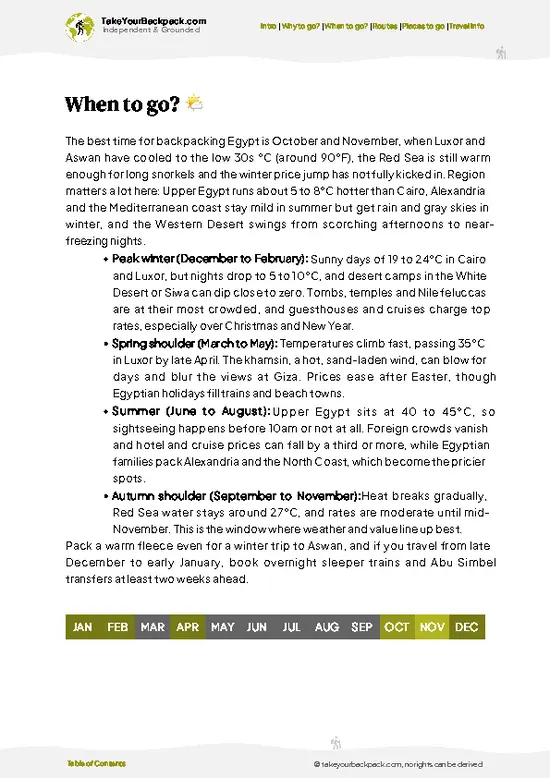
  • Weather: The Nile River Islands Protected Area bakes under intense sun from May to September, with temperatures often soaring above 38°C (100°F). Avoid these months unless you’re prepared for relentless heat and strong sun exposure.

  • Temperature: The sweet spot is between October and April when daytime highs hover around 22-28°C (72-82°F), making hiking and exploring comfortable without overheating.

  • Daylight Hours: Expect roughly 10 to 12 hours of daylight year-round, enough time to cover ground but plan early starts to dodge midday heat in warmer months.

  • Crowds: Peak tourist season aligns with cooler months, especially December to February, so expect more visitors and higher prices then. Shoulder seasons offer quieter trails.

  • Seasonal Activities: Birdwatching peaks in winter when
read more 👉

  • Weather: The Nile River Islands Protected Area bakes under intense sun from May to September, with temperatures often soaring above 38°C (100°F). Avoid these months unless you’re prepared for relentless heat and strong sun exposure.

  • Temperature: The sweet spot is between October and April when daytime highs hover around 22-28°C (72-82°F), making hiking and exploring comfortable without overheating.

  • Daylight Hours: Expect roughly 10 to 12 hours of daylight year-round, enough time to cover ground but plan early starts to dodge midday heat in warmer months.

  • Crowds: Peak tourist season aligns with cooler months, especially December to February, so expect more visitors and higher prices then. Shoulder seasons offer quieter trails.

  • Seasonal Activities: Birdwatching peaks in winter when migratory species arrive, while spring brings blooming desert flora—both worth timing your visit around if these interests matter.

  • Price Fluctuations: Accommodation and guided tours spike in winter; booking ahead can save money. Off-season offers better deals but fewer services.


Pro-tip: Aim for late autumn or early spring to balance weather, crowd size, and cost—giving you energy and budget for the experiences that count.


source: climatestotravel.comJANJanuary: highly recommended for travelingFEBFebruary: highly recommended for travelingMARMarch: excellent for travelingAPRApril: excellent for travelingMAYMay: fair for travelingJUNJune: below average for travelingJULJuly: below average for travelingAUGAugust: below average for travelingSEPSeptember: fair for travelingOCTOctober: excellent for travelingNOVNovember: excellent for travelingDECDecember: highly recommended for traveling
when-to-go

✈️ The backpacker research shortcutEgypt Travel Guide

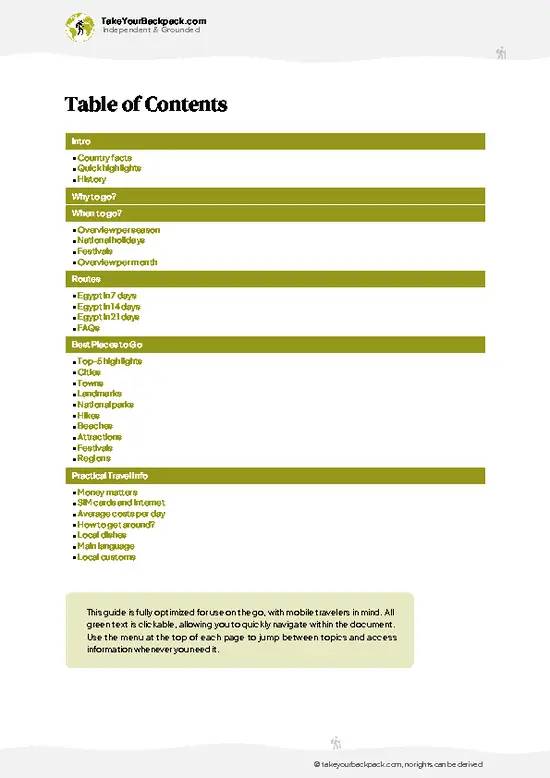
An offline-friendly backpacking guide with optimized travel routes, ranked highlights, transport advice, and the best areas to stay.
example page 0 from our offline Travel Guide for Egypt
example page 1 from our offline Travel Guide for Egypt
example page 2 from our offline Travel Guide for Egypt
example page 3 from our offline Travel Guide for Egypt
example page 4 from our offline Travel Guide for Egypt
example page 5 from our offline Travel Guide for Egypt
example page 6 from our offline Travel Guide for Egypt
example page 7 from our offline Travel Guide for Egypt
The digital guide (438 pages) contains:
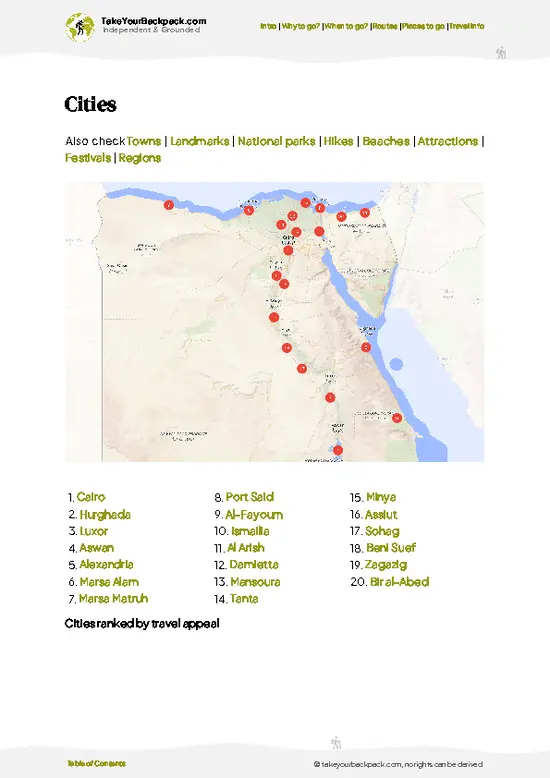
116 highlights, ranked by travel appeal
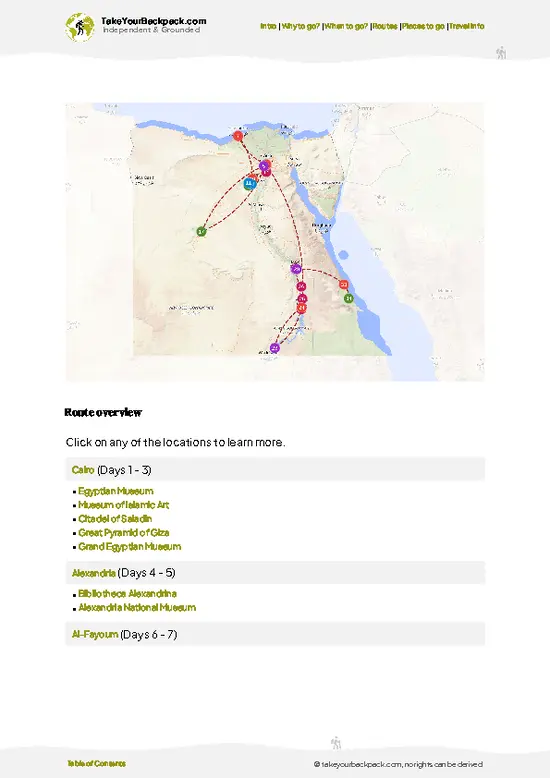
Optimized 7, 14 & 21-day travel routes
Cities, national parks, landmarks, beaches
How to get around
Offline-friendly for travel without Wi-Fi
👉 Click to see all 30+ guide features

📅 Plan smarter in minutes, not weeks
Month by month travel advice
Festivals & national holidays
Budget expectations

🗺️ Go to the right places, skip the overrated ones
Honest pros & cons of destinations
Top hikes, parks & viewpoints
Lesser-known places most travelers miss
Clear “worth it vs skip it” guidance

🛏️ Travel smoothly without rookie mistakes
Best areas to stay
Transport systems explained simply
Common scams & safety advice
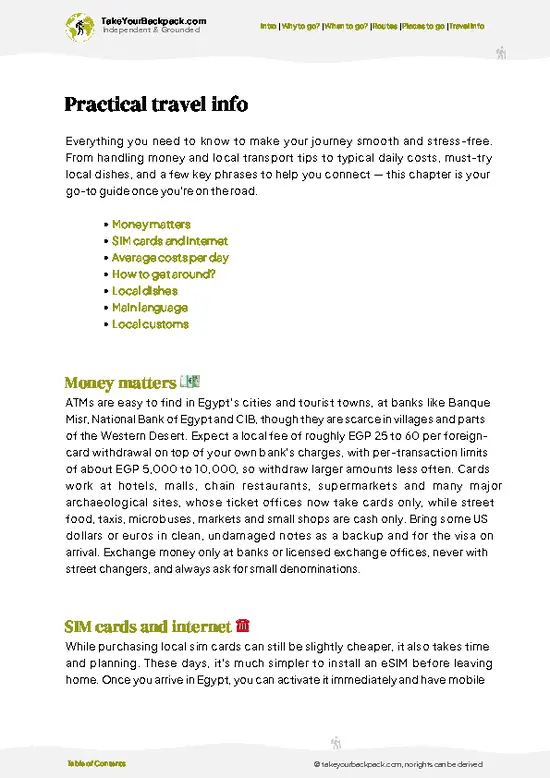
SIM cards, money & practical tips

🌍 Understand the country, not just visit it
Culture & traditions
52 Essential phrases & customs
Festivals worth planning around
Traveler-friendly historical context
Insights that make places more meaningful

📱 Built for real travel conditions
Fully downloadable PDF
Works completely offline
Optimized for phone use
Useful in remote areas & buses
Everything in one place
Save weeks of stressful planning
Get instant access to your full guide. 30‑day money-back guarantee.


By proceeding you agree to our terms.
Sent to your inbox immediately after payment • 100% Secure Checkout
Best Backpacking Travel Advisor 2025 tourism awardBest Backpacking
Travel Advisor
2025
What others say about Take Your Backpack Guides:
⭐⭐⭐⭐⭐
Fantastic, amazing amount of information!
⭐⭐⭐⭐⭐
My goodness this is amazing, it's what I've been looking for hats off too you!
⭐⭐⭐⭐⭐
I think this is absolutely BRILLIANT
⭐⭐⭐⭐
Very complete and informative. It's still missing places, but I gotta to commend you
⭐⭐⭐⭐⭐
This is truly amazing, thank you, can't wait to explore it with my kids!
⭐⭐⭐⭐⭐
Awesome resource, thank you!
⭐⭐⭐⭐⭐
This is amazing! Can't wait to explore the ones I haven't seen
⭐⭐⭐⭐
I love this! Well done, great idea.
⭐⭐⭐⭐⭐
Thanks for taking the time to make this gem!
⭐⭐⭐⭐⭐
This might be the best website I've ever seen.
⭐⭐⭐⭐⭐
Congratulations, and thank you so much for your work; it's incredibly valuable.
⭐⭐⭐⭐
In all seriousness I think you did a great job pointing out the important spots
⭐⭐⭐⭐⭐
10/10 very good
⭐⭐⭐⭐⭐
As someone who's only just starting to visit regularly this is awesome, thank you.
⭐⭐⭐⭐
Thank you very much! I'm going to visit my dad, it's going to be very useful!
⭐⭐⭐⭐⭐
This is really cool! We'll be travelling for the first time and this definitely come in handy.
⭐⭐⭐⭐⭐
You are now our minister of culture, congratulations 👨‍💼
⭐⭐⭐⭐⭐
Just wanted to tell you that this is a pearl! Going to follow your recommendations.
⭐⭐⭐⭐⭐
This is so cool. I'll definitely be using the resource for my travels soon.
⭐⭐⭐⭐⭐
This is very impressive! Good work.
⭐⭐⭐⭐⭐
This is an amazing and informative site. Very well done!

🛏️ Where to stay?Where staying makes the most sense

For backpackers heading to the Nile River Islands Protected Area, options are limited but solid. There aren’t accommodations directly within the park, so your best bet is to stay in nearby towns like Aswan or Kom Ombo.

In Aswan, hostels and budget hotels offer a range of prices. Look for places that provide easy access to the river and local markets. Kom Ombo has a few guesthouses that cater to budget travelers, giving you a chance to experience local life.

Be aware of transportation costs; getting to the park from these towns can add up. Consider using local buses or shared taxis to keep expenses … read more 👉
For backpackers heading to the Nile River Islands Protected Area, options are limited but solid. There aren’t accommodations directly within the park, so your best bet is to stay in nearby towns like Aswan or Kom Ombo.

In Aswan, hostels and budget hotels offer a range of prices. Look for places that provide easy access to the river and local markets. Kom Ombo has a few guesthouses that cater to budget travelers, giving you a chance to experience local life.

Be aware of transportation costs; getting to the park from these towns can add up. Consider using local buses or shared taxis to keep expenses in check. Prioritize your energy and budget for the experiences that matter—like exploring the islands themselves.

👛 Costs (as of 8 January 2026)Money, prices, and spending tips

Visiting the Nile River Islands Protected Area in Egypt can be a rewarding experience, but it’s essential to be aware of the costs involved to avoid surprises.

Entry fees typically range from €5 to €10 (approximately $5 to $11). This fee grants you access to the park and its natural beauty. However, if you plan to participate in guided tours or activities, expect to pay extra. Guided tours can cost anywhere from €20 to €50 ($22 to $55), depending on the length and inclusions.

Transportation is another factor. If you’re traveling from nearby cities like Luxor or Aswan, budget for bus fares or private transfers. Buses might cost around €3 to €10 ($3 to $11), while private taxis can range from €30 to €70 ($33 to $77) for a round trip.

Food and drink prices can vary widely. Local eateries may … read more 👉
Visiting the Nile River Islands Protected Area in Egypt can be a rewarding experience, but it’s essential to be aware of the costs involved to avoid surprises.

Entry fees typically range from €5 to €10 (approximately $5 to $11). This fee grants you access to the park and its natural beauty. However, if you plan to participate in guided tours or activities, expect to pay extra. Guided tours can cost anywhere from €20 to €50 ($22 to $55), depending on the length and inclusions.

Transportation is another factor. If you’re traveling from nearby cities like Luxor or Aswan, budget for bus fares or private transfers. Buses might cost around €3 to €10 ($3 to $11), while private taxis can range from €30 to €70 ($33 to $77) for a round trip.

Food and drink prices can vary widely. Local eateries may charge €3 to €10 ($3 to $11) for a meal, while more upscale options could push that to €15 or more ($17). Always carry some cash, as not all places accept cards.

Lastly, consider any additional costs for equipment rentals if you plan on activities like kayaking or birdwatching. Rentals can add another €10 to €30 ($11 to $33) to your budget.

By keeping these costs in mind, you can focus your energy and resources on enjoying the unique landscapes and wildlife of the Nile River Islands.
⚠️ Prices can change and everyone travels differently, so take this as a rough guide. Hope it helps you plan your adventure!

🥾 TrailsPlan your hike in Nile River Islands Protected Area: routes, terrain, and sights

The Nile River Islands Protected Area offers a unique blend of scenic hiking opportunities, where the lush greenery of the islands contrasts beautifully with the surrounding desert. The terrain varies from sandy paths to rocky outcrops, making for a diverse hiking experience. Wildlife enthusiasts will be thrilled to spot various bird species, especially migratory ones, as well as some small mammals and reptiles.

One notable trail is Island Loop Trail. Here are the details:
  • Category: Length
  • Explanation: Approximately 5 kilometers
  • Category: Estimated Duration
  • Explanation: 2-3 hours
  • Category: Difficulty
read more 👉
The Nile River Islands Protected Area offers a unique blend of scenic hiking opportunities, where the lush greenery of the islands contrasts beautifully with the surrounding desert. The terrain varies from sandy paths to rocky outcrops, making for a diverse hiking experience. Wildlife enthusiasts will be thrilled to spot various bird species, especially migratory ones, as well as some small mammals and reptiles.

One notable trail is Island Loop Trail. Here are the details:
  • Category: Length
  • Explanation: Approximately 5 kilometers
  • Category: Estimated Duration
  • Explanation: 2-3 hours
  • Category: Difficulty Level
  • Explanation: Moderate
  • Category: Key Features
  • Explanation: Scenic views of the Nile, birdwatching opportunities, and unique flora
  • Category: Terrain
  • Explanation: Mix of sandy paths and rocky sections

Reaching the park is fairly straightforward. Public transport options like buses or shared taxis from nearby cities can drop you off at the park entrance. It’s not overly crowded, especially if you visit during the early morning or late afternoon. As for the entrance fee, it’s pretty budget-friendly, but it’s worth checking the latest rates before you go. Just pack plenty of water and maybe a snack or two, and you’re set for a lovely day exploring the islands!
⚠️ Hiking info can sometimes be outdated or inaccurate. Before you hit the trail, check the latest conditions with locals. If you do spot anything that's off, I'd love to hear from you, so I can update it for fellow travelers.

🛡️ SafetyScams, Hazards, and Annoyances

The Nile River Islands Protected Area is generally straightforward for backpackers, but a few realities can help you navigate it smoothly. Weather can shift quickly, especially during the summer months, so pack layers and stay hydrated. The terrain is mostly flat, but some areas may require careful footing, especially near the riverbanks.

Wildlife encounters are rare, but if you spot anything, observe from a distance and avoid feeding animals. Timing your hikes for early morning or late afternoon can help you avoid the heat and crowds. Keep your pace steady, and remember that trail etiquette goes a long way in preserving the park’s tranquility.

Other Egyptian national parks near Nile River Islands Protected Area

Explore more nearby:


💡 Not sure where to go next?
Create a personalized itinerary for Egypt including Nile River Islands Protected Area and the places that fit your trip.

Generate my itinerary

👉 Discover all national parks

Or checkout all Egypt has to offer (think cities, towns, villages, national parks, hikes, beaches, festivals)
Country photo of Egypt

We 💚 feedbackSumming up the experience

The Nile River Islands Protected Area has a laid-back vibe that feels worlds away from the hustle of Cairo. You’ll be surprised by the vibrant birdlife and the tranquility of the islands. Just a heads-up: bring plenty of water and snacks; amenities are sparse. Embrace the simplicity and let the river’s rhythm recharge you.

✍️ Help improve this page!
The information on this page is based on in-depth research, insights shared by experienced travelers, and feedback from the local travel community in Egypt. While every effort is made to keep the information accurate and current, conditions can change — so if you spot anything incorrect or outdated, please get in touch.


🙋‍♂️ Give feedback

👋 Meet the founderWho’s Behind Take Your Backpack?

Johan, backpacker and founder of TakeYourBackpackHi, I’m Johan (Netherlands 🇳🇱), the creator of TakeYourBackpack. Over the past decade, I’ve backpacked through 80+ countries across six continents, gaining extensive experience with independent travel, long-term trips, and overland routes.

This site is built on a combination of firsthand travel experience and carefully curated insights from other backpackers. Many guides are based on places I’ve personally visited, while others bring together tips, observations, and practical advice shared by trusted travelers I’ve met along the way.

The goal is to provide realistic, experience-driven guidance — not generic itineraries — so you can explore destinations with better context, clearer expectations, and more confidence.

Get full Egypt guide •
Instant download • 116 highlights • Full Offline guide