×

Egypt🇪🇬 | attractionsTemple of Kom Ombodual sanctuaries, crocodile mummies, Nile-side setting | things to do and best time to go

Explore Temple of EdfuExplore Saqqara Necropolis

Backpacking in Temple of Kom Ombo
👍 Recommendedattraction ranked #9
By Johan Kruseman 🇳🇱 | Updated May 27, 2026

A breeze off the Nile carries the sharp tang of river mud and incense as you run your fingers over stone grooves carved two thousand years ago—still cool, even under the Egyptian sun. The distant thump of a tourist boat’s generator mixes with the chatter of guides, but for a split second, you’re alone with the crocodile gods.

Temple of Kom Ombo sits on a bend of the Nile, halfway between Aswan and Edfu, and it’s not shy about its quirks. Here’s the straight deal: Kom Ombo is no secret. You’ll share the place with cruise groups and selfie sticks, especially midday. The entry fee isn’t outrageous, but it’s not pocket change either—Egypt’s ancient wonders know their worth. Still, the dual temples (dedicated to Sobek and Haroeris) pack a punch. Reliefs of surgical instruments, mummified crocodiles, and the riverside setting give it a flavor you won’t find at the more polished Karnak or the chaos of Giza. It’s less overwhelming, more approachable, and weirdly intimate—if you time it right.

Discover everything you want to know in the 📖 Egypt Travel Guide.


Get your Egypt guide
116 ranked highlights, routes & tips, works offline (438 pages)
Loading the map 🌍
CLICK TO FILTER
cities
towns
landmarks
national parks
hikes
beaches
attractions
festivals
regions
SHOW COUNTRY’S BESTSHOW ALL

✨ Why go?
Ranked #9 attraction in Egypt
Why Temple of Kom Ombo should be on your travel list

The Temple of Kom Ombo is not just another stop on Egypt’s tourist conveyor belt—it’s a rare blend of spectacle and substance that demands your time. Yes, it gets busy, especially midday when tour buses unload, but that’s part of the deal with any iconic site. What sets Kom Ombo apart is its dual dedication to two gods—Sobek, the crocodile god, and Horus, the falcon-headed deity. This split personality isn’t just a quirky architectural choice; it’s a window into ancient Egyptian religion’s complexity and regional politics. You’ll find reliefs and hieroglyphs here that don’t just decorate—they tell stories of power, medicine, and myth that you won’t get from the usual pyramid tours.

The temple’s location on the Nile’s edge adds a raw, elemental vibe that feels like stepping into a living history … read more 👉
The Temple of Kom Ombo is not just another stop on Egypt’s tourist conveyor belt—it’s a rare blend of spectacle and substance that demands your time. Yes, it gets busy, especially midday when tour buses unload, but that’s part of the deal with any iconic site. What sets Kom Ombo apart is its dual dedication to two gods—Sobek, the crocodile god, and Horus, the falcon-headed deity. This split personality isn’t just a quirky architectural choice; it’s a window into ancient Egyptian religion’s complexity and regional politics. You’ll find reliefs and hieroglyphs here that don’t just decorate—they tell stories of power, medicine, and myth that you won’t get from the usual pyramid tours.

The temple’s location on the Nile’s edge adds a raw, elemental vibe that feels like stepping into a living history book. It’s smaller and less polished than Luxor or Karnak, which means fewer crowds and a more intimate experience. For backpackers, Kom Ombo is a milestone—an adrenaline rush of discovery without the exhaustion of massive crowds or sky-high prices. It’s a place where history hits you in the gut, not just your camera roll. Skip it, and you miss a crucial chapter of Egypt’s layered story.
Want to include Temple of Kom Ombo in your Egypt route?
Create a personalized Egypt itinerary that includes Temple of Kom Ombo and the places that fit your trip — based on your travel style, budget, and available time. Get your route in seconds.

Generate my trip

💡 HighlightsTop highlights of Temple of Kom Ombo

The Double Temple Layout
Forget the Instagram shots of empty columns at sunrise. Kom Ombo is rarely empty—tour buses and Nile cruise groups swarm in waves. But here’s the real kicker: this is the only major temple in Egypt built for two sets of gods, side by side, with twin entrances, twin halls, and even twin sanctuaries. Sobek, the crocodile god, gets one half; Haroeris (Horus the Elder) claims the other. The symmetry is so precise it feels almost mathematical, and the split personality gives the place a weird, electric tension. You’re not just walking through history; you’re walking through a theological debate carved in stone.


The Crocodile Mummies
Yes, you read that right—actual mummified crocodiles. Not a tourist trap, not a sideshow. The on-site Crocodile Museum is small but unforgettable, … read more 👉
The Double Temple Layout
Forget the Instagram shots of empty columns at sunrise. Kom Ombo is rarely empty—tour buses and Nile cruise groups swarm in waves. But here’s the real kicker: this is the only major temple in Egypt built for two sets of gods, side by side, with twin entrances, twin halls, and even twin sanctuaries. Sobek, the crocodile god, gets one half; Haroeris (Horus the Elder) claims the other. The symmetry is so precise it feels almost mathematical, and the split personality gives the place a weird, electric tension. You’re not just walking through history; you’re walking through a theological debate carved in stone.


The Crocodile Mummies
Yes, you read that right—actual mummified crocodiles. Not a tourist trap, not a sideshow. The on-site Crocodile Museum is small but unforgettable, displaying dozens of ancient croc mummies pulled from the riverbanks nearby. These aren’t props; they’re the real deal, and they hammer home just how seriously the ancient Egyptians took their animal gods. It’s one thing to see a statue of Sobek; it’s another to stare into the desiccated grin of a 2,000-year-old predator that was once worshipped.


Medical Relief Carvings
Skip the generic hieroglyph selfies and look for the surgical instruments carved into the temple walls. This is where Kom Ombo quietly flexes its nerd credentials. You’ll spot scalpels, forceps, and even what looks suspiciously like a birthing chair—proof that this was a center for healing, not just ritual. The ancient Egyptians weren’t just praying for health; they were practicing medicine, and they left the receipts right here in stone.


Nilometer
Most visitors breeze past the Nilometer, but it’s worth a pause. This deep, stone-lined shaft was used to measure the Nile’s flood levels—vital for predicting harvests and taxes. It’s a simple, ancient piece of tech, but it’s a direct line to the rhythms that shaped Egyptian civilization. Stand at the edge, peer down, and you’re staring into the country’s original spreadsheet.


Riverbank Setting at Dusk
The temple’s location is not just a backdrop for photos. When the crowds thin and the sun drops, the riverbank comes alive with the sound of frogs and the scent of mud and jasmine. The Nile glows gold, and the temple’s columns cast long, dramatic shadows. This is the moment when Kom Ombo shakes off the bus-tour energy and feels ancient, haunted, and alive. If you want magic, skip the midday rush and linger until the last light.
Spotted a mistake or missing something? Contact us.

Things to do around Temple of Kom Ombo

Ratings based on Tripadvisor reviews. When you book through this link, you support our work at no extra cost to you.

🌤️ When to go?Weather, crowds, and seasonal trade-offs


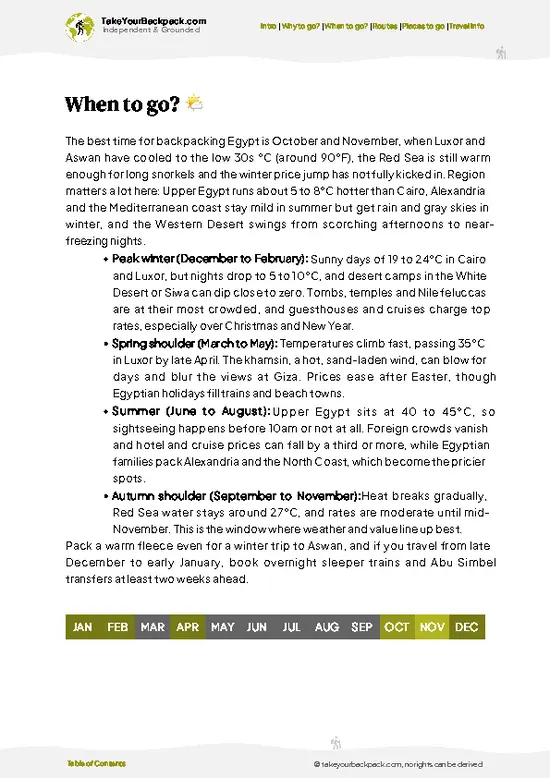
  • Weather: The best weather hits between October and April. Expect dry, pleasant days with temperatures ranging from 20°C to 30°C (68°F to 86°F). Avoid May through September when the heat can soar above 40°C (104°F), turning your visit into a sweaty slog.

  • Temperature: Winter months (December to February) bring cooler nights, sometimes dipping to 10°C (50°F), so pack a light jacket. Daytime temps hover around 22°C to 25°C (72°F to 77°F), perfect for exploring without overheating.

  • Daylight Hours: From October to March, expect about 10 to 11 hours of daylight—enough time to soak in the temple’s details without rushing. Summer days stretch longer but come with punishing heat.

  • Crowds: Peak tourist season is December to February. The temple gets busy, especially mid-morning. Arrive early
read more 👉

  • Weather: The best weather hits between October and April. Expect dry, pleasant days with temperatures ranging from 20°C to 30°C (68°F to 86°F). Avoid May through September when the heat can soar above 40°C (104°F), turning your visit into a sweaty slog.

  • Temperature: Winter months (December to February) bring cooler nights, sometimes dipping to 10°C (50°F), so pack a light jacket. Daytime temps hover around 22°C to 25°C (72°F to 77°F), perfect for exploring without overheating.

  • Daylight Hours: From October to March, expect about 10 to 11 hours of daylight—enough time to soak in the temple’s details without rushing. Summer days stretch longer but come with punishing heat.

  • Crowds: Peak tourist season is December to February. The temple gets busy, especially mid-morning. Arrive early or late afternoon to dodge the crowds and get better photos without a sea of selfie sticks.

  • Seasonal Activities: The Nile’s water levels are more stable in winter, making boat tours around Kom Ombo smoother and more enjoyable. Summer’s heat often cancels or limits these excursions.

  • Price Fluctuations: Entrance fees and local prices spike during peak season (December to February). Visiting shoulder months like October or April can save you a few pounds and still offer great weather.


Pro-tip: Aim for late October or early April—cooler temps, fewer crowds, and better prices combine for a genuinely rewarding visit.


source: climatestotravel.comJANJanuary: highly recommended for travelingFEBFebruary: highly recommended for travelingMARMarch: excellent for travelingAPRApril: excellent for travelingMAYMay: fair for travelingJUNJune: below average for travelingJULJuly: below average for travelingAUGAugust: below average for travelingSEPSeptember: fair for travelingOCTOctober: excellent for travelingNOVNovember: highly recommended for travelingDECDecember: highly recommended for traveling
when-to-go

✈️ The backpacker research shortcutEgypt Travel Guide

An offline-friendly backpacking guide with optimized travel routes, ranked highlights, transport advice, and the best areas to stay.
example page 0 from our offline Travel Guide for Egyptexample page 1 from our offline Travel Guide for Egyptexample page 2 from our offline Travel Guide for Egyptexample page 3 from our offline Travel Guide for Egyptexample page 4 from our offline Travel Guide for Egyptexample page 5 from our offline Travel Guide for Egyptexample page 6 from our offline Travel Guide for Egyptexample page 7 from our offline Travel Guide for Egypt
The digital guide (438 pages) contains:
116 highlights, ranked by travel appeal
Optimized 7, 14 & 21-day travel routes
Cities, national parks, landmarks, beaches
How to get around
Offline-friendly for travel without Wi-Fi
👉 Click to see all 30+ guide features

📅 Plan smarter in minutes, not weeks
Month by month travel advice
Festivals & national holidays
Budget expectations

🗺️ Go to the right places, skip the overrated ones
Honest pros & cons of destinations
Top hikes, parks & viewpoints
Lesser-known places most travelers miss
Clear “worth it vs skip it” guidance

🛏️ Travel smoothly without rookie mistakes
Best areas to stay
Transport systems explained simply
Common scams & safety advice
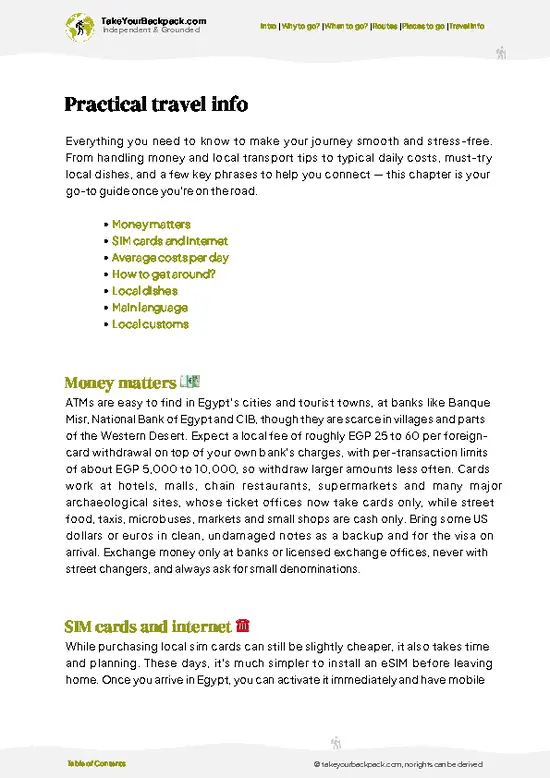
SIM cards, money & practical tips

🌍 Understand the country, not just visit it
Culture & traditions
52 Essential phrases & customs
Festivals worth planning around
Traveler-friendly historical context
Insights that make places more meaningful

📱 Built for real travel conditions
Fully downloadable PDF
Works completely offline
Optimized for phone use
Useful in remote areas & buses
Everything in one place
Save weeks of stressful planning
Get instant access to your full guide. 30‑day money-back guarantee.


By proceeding you agree to our terms.
Sent to your inbox immediately after payment • 100% Secure Checkout
Best Backpacking Travel Advisor 2025 tourism awardBest Backpacking
Travel Advisor
2025
What others say about Take Your Backpack Guides:
⭐⭐⭐⭐⭐
Fantastic, amazing amount of information!
⭐⭐⭐⭐⭐
My goodness this is amazing, it's what I've been looking for hats off too you!
⭐⭐⭐⭐⭐
I think this is absolutely BRILLIANT
⭐⭐⭐⭐
Very complete and informative. It's still missing places, but I gotta to commend you
⭐⭐⭐⭐⭐
This is truly amazing, thank you, can't wait to explore it with my kids!
⭐⭐⭐⭐⭐
Awesome resource, thank you!
⭐⭐⭐⭐⭐
This is amazing! Can't wait to explore the ones I haven't seen
⭐⭐⭐⭐
I love this! Well done, great idea.
⭐⭐⭐⭐⭐
Thanks for taking the time to make this gem!
⭐⭐⭐⭐⭐
This might be the best website I've ever seen.
⭐⭐⭐⭐⭐
Congratulations, and thank you so much for your work; it's incredibly valuable.
⭐⭐⭐⭐
In all seriousness I think you did a great job pointing out the important spots
⭐⭐⭐⭐⭐
10/10 very good
⭐⭐⭐⭐⭐
As someone who's only just starting to visit regularly this is awesome, thank you.
⭐⭐⭐⭐
Thank you very much! I'm going to visit my dad, it's going to be very useful!
⭐⭐⭐⭐⭐
This is really cool! We'll be travelling for the first time and this definitely come in handy.
⭐⭐⭐⭐⭐
You are now our minister of culture, congratulations 👨‍💼
⭐⭐⭐⭐⭐
Just wanted to tell you that this is a pearl! Going to follow your recommendations.
⭐⭐⭐⭐⭐
This is so cool. I'll definitely be using the resource for my travels soon.
⭐⭐⭐⭐⭐
This is very impressive! Good work.
⭐⭐⭐⭐⭐
This is an amazing and informative site. Very well done!

🛏️ Where to stay?Choosing the right base

Forget the postcard-perfect image of the Temple of Kom Ombo as a quiet, mystical escape. The reality? It’s a magnet for day-trippers from Aswan and cruise boats, so the immediate area around the temple can feel like a revolving door of tourists snapping selfies and rushing through. If you’re chasing solitude or a deep dive into ancient vibes, camping right next to the temple ruins isn’t your best bet.

Instead, focus on the nearby town of Kom Ombo itself. It’s a small, working town with a pulse that’s far more authentic and budget-friendly. Here, you’ll find guesthouses and small inns where backpackers … read more 👉
Forget the postcard-perfect image of the Temple of Kom Ombo as a quiet, mystical escape. The reality? It’s a magnet for day-trippers from Aswan and cruise boats, so the immediate area around the temple can feel like a revolving door of tourists snapping selfies and rushing through. If you’re chasing solitude or a deep dive into ancient vibes, camping right next to the temple ruins isn’t your best bet.

Instead, focus on the nearby town of Kom Ombo itself. It’s a small, working town with a pulse that’s far more authentic and budget-friendly. Here, you’ll find guesthouses and small inns where backpackers and solo travelers gather. It’s safe, with a friendly, low-key vibe that encourages interaction without the pressure of tourist traps. The town’s streets hum with local life—markets, street food stalls, and cafes where you can swap stories with other travelers or locals.

Staying in Kom Ombo means you’re a short tuk-tuk or bike ride from the temple, giving you the freedom to visit early morning or late afternoon when the crowds thin out and the light turns golden. Plus, you get a taste of real Egyptian small-town life, which is where the real magic lies—not just in the ruins but in the people and rhythms around them. That’s the kind of experience that sticks with you long after the photos fade.

👛 Costs (as of 23 January 2026)What things cost and how to budget

As of the most recent estimates, the entrance fee for the Temple of Kom Ombo is EGP 450 for adults and EGP 225 for students. The Crocodile Museum is included in the ticket price. Additional costs may include transportation, guide services, and tips.
⚠️ Prices can change and everyone travels differently, so take this as a rough guide. Hope it helps you plan your adventure!

Other Egyptian attractions near Temple of Kom Ombo

Explore more nearby:

  • Nubian Museum—Nubian culture, relocated monuments, ethnographic displays| 42 km away
  • Temple of Philae—island location, Isis cult, relocated monuments| 49 km away
  • Temple of Edfu—Ptolemaic sanctuary, falcon god Horus, carved pylons| 59 km away

💡 Not sure where to go next?
Create a personalized itinerary for Egypt including Temple of Kom Ombo and the places that fit your trip.

Generate my itinerary

👉 Discover all attractions

Or checkout all Egypt has to offer (think cities, towns, villages, national parks, hikes, beaches, festivals)
Country photo of Egypt

We 💚 feedbackSumming up the experience

The Temple of Kom Ombo isn’t some quiet, untouched relic—expect crowds, especially midday, and a steady stream of tour groups. But here’s the kicker: once you step beyond the selfie spots, the dual design of the temple hits you with a rare kind of balance—two gods, two halves, perfectly mirrored. The carvings aren’t just decoration; they tell stories that stick with you. Go early or late to dodge the heat and the noise. It’s not just a photo op—it’s a moment where history feels oddly alive.

✍️ Help improve this page!
The information on this page is based on in-depth research, insights shared by experienced travelers, and feedback from the local travel community in Egypt. While every effort is made to keep the information accurate and current, conditions can change — so if you spot anything incorrect or outdated, please get in touch.


🙋‍♂️ Give feedback

👋 Meet the founderWho’s Behind Take Your Backpack?

Johan, backpacker and founder of TakeYourBackpackHi, I’m Johan (Netherlands 🇳🇱), the creator of TakeYourBackpack. Over the past decade, I’ve backpacked through 80+ countries across six continents, gaining extensive experience with independent travel, long-term trips, and overland routes.

This site is built on a combination of firsthand travel experience and carefully curated insights from other backpackers. Many guides are based on places I’ve personally visited, while others bring together tips, observations, and practical advice shared by trusted travelers I’ve met along the way.

The goal is to provide realistic, experience-driven guidance — not generic itineraries — so you can explore destinations with better context, clearer expectations, and more confidence.

Get full Egypt guide •
Instant download • 116 highlights • Full Offline guide