×

Egypt🇪🇬 | national parksZaranik Protectoratecoastal lagoons, sandbars, migratory stopover | things to do and best time to go

Explore Petrified Forest Protected AreaExplore Ashtum El-Gamil Protectorate

Backpacking in Zaranik Protectorate
👌 Worth visitingnational park ranked #14
By Johan Kruseman 🇳🇱 | Updated May 29, 2026

The first real fork in the road at Zaranik Protectorate is whether you’re coming for the birdlife or the solitude—because you rarely get both at once. Zaranik sits on the northeastern edge of Egypt’s Sinai Peninsula, hugging the Mediterranean, and it’s a magnet for migratory birds and the researchers who chase them. For backpackers, the draw is the raw, wind-battered lagoons and the sense of being far from Egypt’s tourist conveyor belt. Trails are sandy and flat, not dramatic, and wildlife is best in spring and autumn. Access is tricky, public transport is sparse, and fees are low but not always clear. Don’t expect crowds or creature comforts—just a quiet, slightly wild edge. Compared to Ras Mohammed or Wadi El Rayan, Zaranik is less showy, more subtle, and best for those who value space over spectacle.

Discover everything you want to know in the 📖 Egypt Travel Guide.


Get your Egypt guide
116 ranked highlights, routes & tips, works offline (438 pages)
Loading the map 🌍
CLICK TO FILTER
cities
towns
landmarks
national parks
hikes
beaches
attractions
festivals
regions
SHOW COUNTRY’S BESTSHOW ALL

✨ Why go?
Ranked #14 national park in Egypt
Reasons people choose to explore here

Backpackers flock to Zaranik Protectorate for its blend of independent exploration and budget-friendly options. With camping spots and hostels nearby, you can stretch your budget while soaking in the unique landscapes. The trail variety caters to all levels, from easy walks to more challenging routes, allowing you to tailor your adventure. This park is particularly suited for self-guided travelers; the well-marked paths and abundant wildlife make it easy to navigate without a tour. Just be mindful of the weather and supplies—planning ahead preserves your energy and funds for the experiences that truly matter.
Want to include Zaranik Protectorate in your Egypt route?
Create a personalized Egypt itinerary that includes Zaranik Protectorate and the places that fit your trip — based on your travel style, budget, and available time. Get your route in seconds.

Generate my trip

💡 HighlightsEssential experiences to have while exploring Zaranik Protectorate

  • Coastal lagoons and mudflats — Shallow, mirror-like lagoons stretch along the shore, creating dramatic reflections and a constantly changing landscape as tides reveal sandbars and channels. Great for quiet walks and photography at low tide.
  • Migratory bird staging area — Zaranik is a seasonal magnet for migrating birds: think flocks of waders, terns and—often—pink flashes of flamingos. Bring binoculars; spring and autumn are peak times for large concentrations.
  • Salt pans and crystalline flats — White, geometric salt crusts and shimmering flats form otherworldly patterns that change with light. They’re excellent for abstract photos and show how a coastal ecosystem adapts to high salinity.
  • Dune ridges and coastal hiking trails — Narrow trails run along wind-sculpted dunes with wide sea views.
read more 👉
  • Coastal lagoons and mudflats — Shallow, mirror-like lagoons stretch along the shore, creating dramatic reflections and a constantly changing landscape as tides reveal sandbars and channels. Great for quiet walks and photography at low tide.
  • Migratory bird staging area — Zaranik is a seasonal magnet for migrating birds: think flocks of waders, terns and—often—pink flashes of flamingos. Bring binoculars; spring and autumn are peak times for large concentrations.
  • Salt pans and crystalline flats — White, geometric salt crusts and shimmering flats form otherworldly patterns that change with light. They’re excellent for abstract photos and show how a coastal ecosystem adapts to high salinity.
  • Dune ridges and coastal hiking trails — Narrow trails run along wind-sculpted dunes with wide sea views. Short hikes reward you with panoramic overlooks and the satisfying contrast between sand and sea.
  • Salt-marsh vegetation and spring flowers — Tough halophyte plants, tamarisk clumps and bursty wildflowers in wetter seasons colour the margins and support insect life that attracts birds.
  • Intertidal pools and small marine life — At low tide, rock pools reveal crabs, little fish and seaweeds—simple, hands-off snorkeling and tide-pooling that’s surprisingly rich for such a quiet coastline.
  • Sunsets and dark-sky stargazing — With minimal light pollution, sunsets over the Mediterranean turn the salt flats and water into glowing panels, and the night sky opens up for intense stargazing after dusk.
Spotted a mistake or missing something? Contact us.

🌤️ When to go?Weather, crowds, and seasonal trade-offs


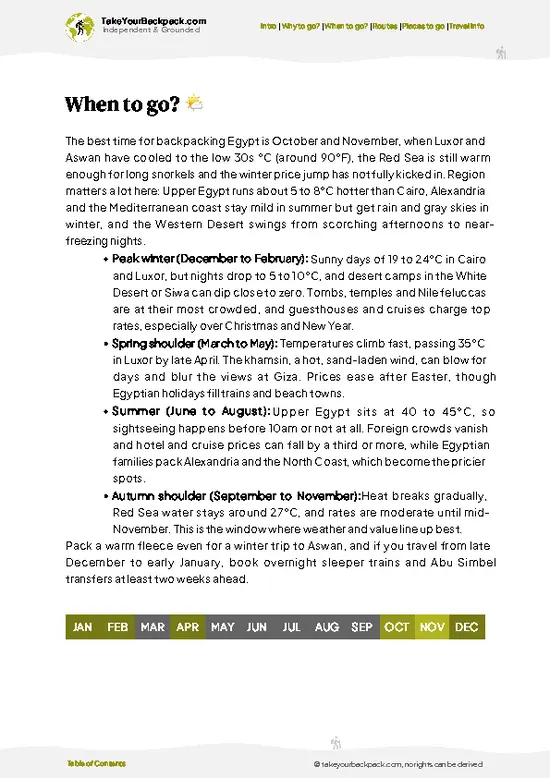
  • Weather: The best window is from October to April when temperatures are mild, ranging from 15°C to 25°C (59°F to 77°F). Summers scorch with highs above 40°C (104°F), making hiking and camping exhausting and risky.

  • Temperature: Nights can get chilly, especially in winter, dropping to around 5°C (41°F). Pack layers to handle this swing between day and night.

  • Daylight Hours: Expect roughly 10 to 12 hours of daylight during the cooler months, enough to cover long treks without rushing but not so much that you burn out.

  • Crowds: Peak season (December to February) draws more tourists, especially around holidays. Visiting shoulder months like October or April means fewer people and a quieter experience.

  • Seasonal Activities: Migratory bird watching peaks in late autumn and early spring.
read more 👉

  • Weather: The best window is from October to April when temperatures are mild, ranging from 15°C to 25°C (59°F to 77°F). Summers scorch with highs above 40°C (104°F), making hiking and camping exhausting and risky.

  • Temperature: Nights can get chilly, especially in winter, dropping to around 5°C (41°F). Pack layers to handle this swing between day and night.

  • Daylight Hours: Expect roughly 10 to 12 hours of daylight during the cooler months, enough to cover long treks without rushing but not so much that you burn out.

  • Crowds: Peak season (December to February) draws more tourists, especially around holidays. Visiting shoulder months like October or April means fewer people and a quieter experience.

  • Seasonal Activities: Migratory bird watching peaks in late autumn and early spring. Desert wildflowers bloom briefly after rare rains in winter, rewarding patient travelers.

  • Price Fluctuations: Accommodation and guided tours spike during peak winter months. Booking in shoulder seasons can save you 20-30% without sacrificing comfort.


Pro-tip: Aim for late October or early April to dodge crowds, avoid extreme heat, and catch seasonal wildlife without paying a premium.


source: climatestotravel.comJANJanuary: highly recommended for travelingFEBFebruary: highly recommended for travelingMARMarch: excellent for travelingAPRApril: excellent for travelingMAYMay: fair for travelingJUNJune: below average for travelingJULJuly: below average for travelingAUGAugust: below average for travelingSEPSeptember: fair for travelingOCTOctober: excellent for travelingNOVNovember: highly recommended for travelingDECDecember: highly recommended for traveling
when-to-go

✈️ The backpacker research shortcutEgypt Travel Guide

An offline-friendly backpacking guide with optimized travel routes, ranked highlights, transport advice, and the best areas to stay.
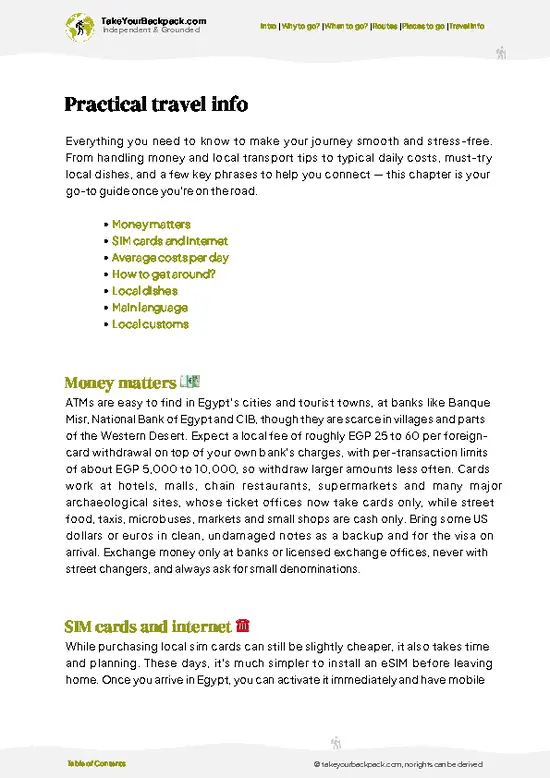
example page 0 from our offline Travel Guide for Egypt
example page 1 from our offline Travel Guide for Egypt
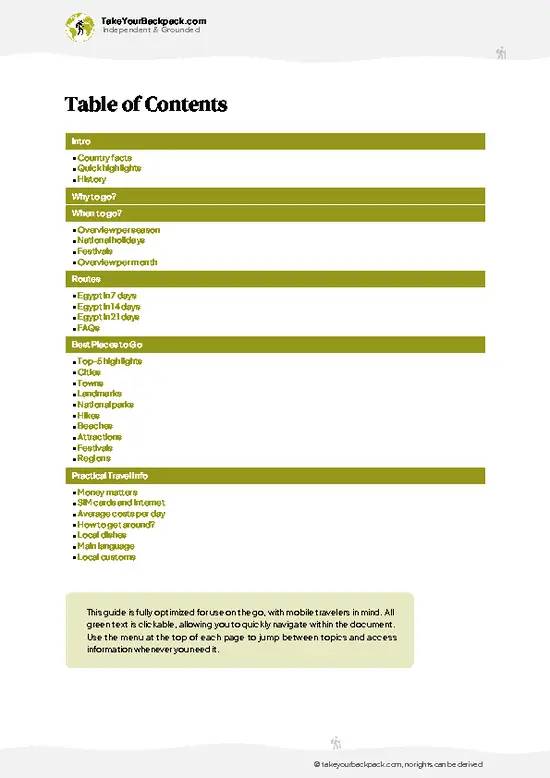
example page 2 from our offline Travel Guide for Egypt
example page 3 from our offline Travel Guide for Egypt
example page 4 from our offline Travel Guide for Egypt
example page 5 from our offline Travel Guide for Egypt
example page 6 from our offline Travel Guide for Egypt
example page 7 from our offline Travel Guide for Egypt
The digital guide (438 pages) contains:
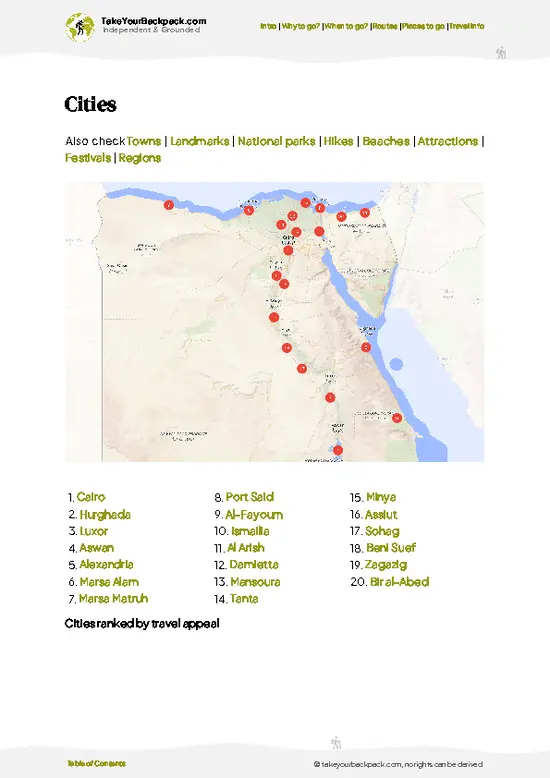
116 highlights, ranked by travel appeal
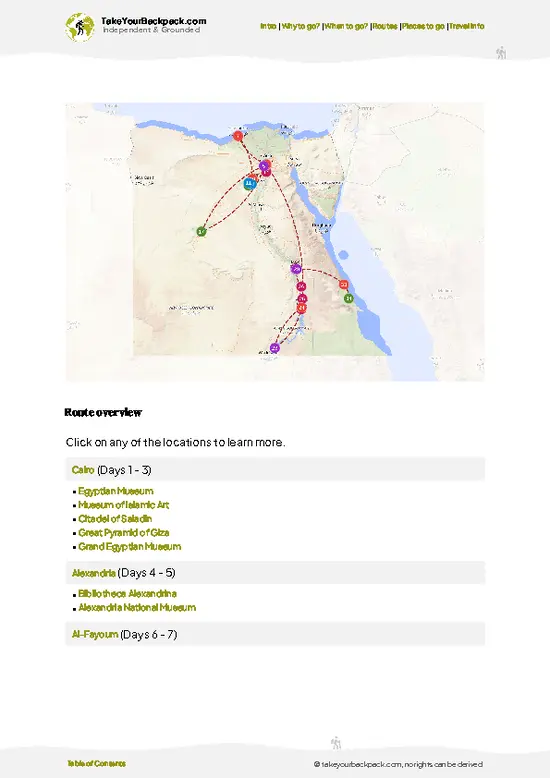
Optimized 7, 14 & 21-day travel routes
Cities, national parks, landmarks, beaches
How to get around
Offline-friendly for travel without Wi-Fi
👉 Click to see all 30+ guide features

📅 Plan smarter in minutes, not weeks
Month by month travel advice
Festivals & national holidays
Budget expectations

🗺️ Go to the right places, skip the overrated ones
Honest pros & cons of destinations
Top hikes, parks & viewpoints
Lesser-known places most travelers miss
Clear “worth it vs skip it” guidance

🛏️ Travel smoothly without rookie mistakes
Best areas to stay
Transport systems explained simply
Common scams & safety advice
SIM cards, money & practical tips

🌍 Understand the country, not just visit it
Culture & traditions
52 Essential phrases & customs
Festivals worth planning around
Traveler-friendly historical context
Insights that make places more meaningful

📱 Built for real travel conditions
Fully downloadable PDF
Works completely offline
Optimized for phone use
Useful in remote areas & buses
Everything in one place
Save weeks of stressful planning
Get instant access to your full guide. 30‑day money-back guarantee.


By proceeding you agree to our terms.
Sent to your inbox immediately after payment • 100% Secure Checkout
Best Backpacking Travel Advisor 2025 tourism awardBest Backpacking
Travel Advisor
2025
What others say about Take Your Backpack Guides:
⭐⭐⭐⭐⭐
Fantastic, amazing amount of information!
⭐⭐⭐⭐⭐
My goodness this is amazing, it's what I've been looking for hats off too you!
⭐⭐⭐⭐⭐
I think this is absolutely BRILLIANT
⭐⭐⭐⭐
Very complete and informative. It's still missing places, but I gotta to commend you
⭐⭐⭐⭐⭐
This is truly amazing, thank you, can't wait to explore it with my kids!
⭐⭐⭐⭐⭐
Awesome resource, thank you!
⭐⭐⭐⭐⭐
This is amazing! Can't wait to explore the ones I haven't seen
⭐⭐⭐⭐
I love this! Well done, great idea.
⭐⭐⭐⭐⭐
Thanks for taking the time to make this gem!
⭐⭐⭐⭐⭐
This might be the best website I've ever seen.
⭐⭐⭐⭐⭐
Congratulations, and thank you so much for your work; it's incredibly valuable.
⭐⭐⭐⭐
In all seriousness I think you did a great job pointing out the important spots
⭐⭐⭐⭐⭐
10/10 very good
⭐⭐⭐⭐⭐
As someone who's only just starting to visit regularly this is awesome, thank you.
⭐⭐⭐⭐
Thank you very much! I'm going to visit my dad, it's going to be very useful!
⭐⭐⭐⭐⭐
This is really cool! We'll be travelling for the first time and this definitely come in handy.
⭐⭐⭐⭐⭐
You are now our minister of culture, congratulations 👨‍💼
⭐⭐⭐⭐⭐
Just wanted to tell you that this is a pearl! Going to follow your recommendations.
⭐⭐⭐⭐⭐
This is so cool. I'll definitely be using the resource for my travels soon.
⭐⭐⭐⭐⭐
This is very impressive! Good work.
⭐⭐⭐⭐⭐
This is an amazing and informative site. Very well done!

🛏️ Where to stay?Where staying makes the most sense

For backpackers heading to Zaranik Protectorate, options are limited but solid. There aren’t accommodations directly inside the park, so your best bet is to stay in nearby towns like Al Arish. Here, you’ll find budget-friendly hotels and hostels that cater to travelers.

Consider the Al Arish Hotel for basic amenities and a central location. It’s a good launchpad for your adventures.

Be mindful of transportation costs; taxis can add up quickly. Stock up on supplies in town before heading into the park. This way, you preserve your energy and budget for the experiences that truly matter—like … read more 👉
For backpackers heading to Zaranik Protectorate, options are limited but solid. There aren’t accommodations directly inside the park, so your best bet is to stay in nearby towns like Al Arish. Here, you’ll find budget-friendly hotels and hostels that cater to travelers.

Consider the Al Arish Hotel for basic amenities and a central location. It’s a good launchpad for your adventures.

Be mindful of transportation costs; taxis can add up quickly. Stock up on supplies in town before heading into the park. This way, you preserve your energy and budget for the experiences that truly matter—like exploring the unique ecosystems and enjoying the tranquility of the protectorate.

👛 Costs (as of 21 January 2026)How expensive it really is

Visiting Zaranik Protectorate in Egypt requires some planning to avoid unexpected costs.

Entrance fees typically range from €5 to €10 (about $5 to $11). This fee grants you access to the park, but keep in mind that it can vary based on the season or any special events.

If you’re considering a guided tour, expect to pay between €30 and €70 ($33 to $77) per person. This often includes transportation and a knowledgeable guide, which can enhance your experience significantly.

Accommodation options nearby can range from budget hostels at around €15 ($16) per night to more comfortable hotels priced at €50 to €100 ($55 to $110). Booking in advance can save you some cash, especially during peak tourist seasons.

Food costs are generally reasonable. Street food or local eateries can cost as little … read more 👉
Visiting Zaranik Protectorate in Egypt requires some planning to avoid unexpected costs.

Entrance fees typically range from €5 to €10 (about $5 to $11). This fee grants you access to the park, but keep in mind that it can vary based on the season or any special events.

If you’re considering a guided tour, expect to pay between €30 and €70 ($33 to $77) per person. This often includes transportation and a knowledgeable guide, which can enhance your experience significantly.

Accommodation options nearby can range from budget hostels at around €15 ($16) per night to more comfortable hotels priced at €50 to €100 ($55 to $110). Booking in advance can save you some cash, especially during peak tourist seasons.

Food costs are generally reasonable. Street food or local eateries can cost as little as €3 to €7 ($3 to $8) per meal. If you prefer dining in restaurants, budget around €10 to €20 ($11 to $22) for a decent meal.

Factor in transportation costs as well. Local taxis or rideshare options may charge €5 to €15 ($5 to $16) for short distances. If you plan to rent a vehicle, daily rates can start at €30 ($33) and go up from there.

Always have some extra cash on hand for unforeseen expenses, like park activities or souvenirs. Being prepared will help you focus on enjoying the natural beauty and unique wildlife of Zaranik without the stress of hidden costs.
⚠️ Prices can change and everyone travels differently, so take this as a rough guide. Hope it helps you plan your adventure!

🥾 TrailsPlan your hike in Zaranik Protectorate: routes, terrain, and sights

The Zaranik Protectorate in Egypt is a hidden gem for hikers looking to explore a unique mix of coastal and desert landscapes. The park features a variety of terrains, from sandy shores along the Mediterranean to rugged hills and wetlands, making it a paradise for nature lovers. The wildlife here is pretty impressive too; you might spot flamingos wading in the lagoons or a variety of migratory birds flitting about.

While it’s not packed with extensive trails like some other national parks, there are a couple of noteworthy routes worth checking out. One of the main trails is Zaranik Coastal Trail. … read more 👉
The Zaranik Protectorate in Egypt is a hidden gem for hikers looking to explore a unique mix of coastal and desert landscapes. The park features a variety of terrains, from sandy shores along the Mediterranean to rugged hills and wetlands, making it a paradise for nature lovers. The wildlife here is pretty impressive too; you might spot flamingos wading in the lagoons or a variety of migratory birds flitting about.

While it’s not packed with extensive trails like some other national parks, there are a couple of noteworthy routes worth checking out. One of the main trails is Zaranik Coastal Trail. Here’s the lowdown:
  • Length: 10 km
  • Estimated Duration: 3-4 hours
  • Difficulty Level: Moderate
  • Key Features: Stunning coastal views, birdwatching opportunities, and unique flora
  • Terrain: Mix of sandy paths and rocky areas

Reaching Zaranik isn’t too tricky; you can hop on a bus from nearby cities like El Arish, and it’s usually a straightforward ride. The park doesn’t see massive crowds, so you can enjoy a bit of solitude while soaking in the scenery. Just keep in mind there might be a small entrance fee, so be prepared for that. All in all, it’s a fantastic spot if you’re looking to escape the hustle and bustle and connect with nature in a less-traveled part of Egypt.
⚠️ Hiking info can sometimes be outdated or inaccurate. Before you hit the trail, check the latest conditions with locals. If you do spot anything that's off, I'd love to hear from you, so I can update it for fellow travelers.

🛡️ SafetyTraveler Safety Guide

Zaranik Protectorate offers a generally straightforward hiking experience, but a few realities can catch you off guard. Weather can shift quickly, so pack layers and be ready for sun or sudden rain. The terrain is mostly flat, but some areas may have loose footing, so good hiking boots are essential.

Wildlife is present, including birds and small mammals; keep a respectful distance and avoid feeding them. Timing your hikes early in the morning helps you dodge the heat and crowds. Stay hydrated and pace yourself, especially if you’re not acclimated to the climate. With a bit of preparation, you’ll enjoy the park’s unique beauty without unnecessary stress.

Other Egyptian national parks near Zaranik Protectorate

Explore more nearby:


💡 Not sure where to go next?
Create a personalized itinerary for Egypt including Zaranik Protectorate and the places that fit your trip.

Generate my itinerary

👉 Discover all national parks

Or checkout all Egypt has to offer (think cities, towns, villages, national parks, hikes, beaches, festivals)
Country photo of Egypt

We 💚 feedbackIs it worth it?

Zaranik Protectorate is a breath of fresh air, where the desert meets the sea. Expect solitude, but don’t underestimate the sun—pack plenty of water and sunscreen. The best surprise? The vibrant birdlife. Just remember, this isn’t a tourist hub; embrace the quiet, and you’ll find its true charm.

✍️ Help improve this page!
The information on this page is based on in-depth research, insights shared by experienced travelers, and feedback from the local travel community in Egypt. While every effort is made to keep the information accurate and current, conditions can change — so if you spot anything incorrect or outdated, please get in touch.


🙋‍♂️ Give feedback

👋 Meet the founderWho’s Behind Take Your Backpack?

Johan, backpacker and founder of TakeYourBackpackHi, I’m Johan (Netherlands 🇳🇱), the creator of TakeYourBackpack. Over the past decade, I’ve backpacked through 80+ countries across six continents, gaining extensive experience with independent travel, long-term trips, and overland routes.

This site is built on a combination of firsthand travel experience and carefully curated insights from other backpackers. Many guides are based on places I’ve personally visited, while others bring together tips, observations, and practical advice shared by trusted travelers I’ve met along the way.

The goal is to provide realistic, experience-driven guidance — not generic itineraries — so you can explore destinations with better context, clearer expectations, and more confidence.

Get full Egypt guide •
Instant download • 116 highlights • Full Offline guide