×

Equatorial Guinea🇬🇶 | townsAconibeforest edge, local markets, river crossing | things to do and best time to go

Explore AnnobónExplore Ebebiyín

Backpacking in Aconibe
👌 Worth visitingtown ranked #11
By Johan Kruseman 🇳🇱 | Updated October 13, 2026

The first real fork in the road at Aconibe is whether to linger or just pass through. That’s not a throwaway decision—Aconibe sits deep in southeastern Equatorial Guinea, a long, humid drive from Bata or Mongomo, and every hour here is a trade-off between rest and momentum. The town itself is small, with a lived-in market and the kind of slow, sticky evenings that make you notice the smell of woodsmoke and the sound of distant radios. For backpackers, Aconibe is more pit stop than destination: a practical base for exploring the surrounding rainforest or breaking up a long haul to the Gabonese border. Don’t expect hostels or a lively café scene; you’ll find basic guesthouses, a few local eateries, and a pace that’s more contemplative than social. Compared to the bustle of Bata or the border energy of Ebebiyin, Aconibe feels quieter, less polished, and more about the journey than the town itself. Transport is mostly by shared taxi or bush minibus—unpredictable, but part of the adventure. Costs are low, safety is typical for rural Equatorial Guinea, and the reward is a rare window into everyday life, if you’re willing to slow down and let the place reveal itself.

Discover everything you want to know in the 📖 Equatorial Guinea Travel Guide.


Loading the map 🌍
CLICK TO FILTER
cities
towns
villages
landmarks
national parks
hikes
beaches
attractions
festivals
regions
SHOW COUNTRY’S BESTSHOW ALL

✨ Why go?
Ranked #11 town in Equatorial Guinea
Reasons people choose to visit here

Backpackers flock to Aconibe for its strategic location as a gateway to stunning hikes and pristine beaches. Nestled between lush hills and the coast, it’s a perfect base for exploring the Monte Alén National Park or lounging on the nearby beaches. The town’s walkable streets invite you to wander, with small-scale guesthouses and hostels offering a cozy, communal vibe. You’ll find friendly locals eager to share their culture, making it easy to dive into authentic local food experiences.

Most travelers tend to stay a few days, soaking in the relaxed atmosphere. It’s ideal for slow travelers and hikers who appreciate a blend of adventure and downtime. While it’s not a nightlife hotspot, the social scene is warm and welcoming, perfect for solo travelers or small groups looking to connect. Aconibe … read more 👉
Backpackers flock to Aconibe for its strategic location as a gateway to stunning hikes and pristine beaches. Nestled between lush hills and the coast, it’s a perfect base for exploring the Monte Alén National Park or lounging on the nearby beaches. The town’s walkable streets invite you to wander, with small-scale guesthouses and hostels offering a cozy, communal vibe. You’ll find friendly locals eager to share their culture, making it easy to dive into authentic local food experiences.

Most travelers tend to stay a few days, soaking in the relaxed atmosphere. It’s ideal for slow travelers and hikers who appreciate a blend of adventure and downtime. While it’s not a nightlife hotspot, the social scene is warm and welcoming, perfect for solo travelers or small groups looking to connect. Aconibe isn’t just a stop; it’s a chance to breathe in the essence of Equatorial Guinea, making the effort to get there feel worthwhile.

💡 HighlightsMust-see experiences and standout moments

    Nearby day trips you can actually visit include Monte Alén National Park for big-forest hikes and wildlife, Bata’s lively waterfront and central market for food and everyday life, and Malabo’s colonial quarter with its cathedral and Spanish-era buildings.
    Spotted a mistake or missing something? Contact us.

    Things to do near Aconibe

    Ratings based on Tripadvisor reviews. When you book through this link, you support our work at no extra cost to you.

    🏘️ NeighborhoodsNeighborhood guide to Aconibe

    Aconibe, a small town in Equatorial Guinea, offers a unique blend of local culture and natural beauty. Here’s how to navigate its neighborhoods for a more enriching experience.

    Centro: This is the heart of Aconibe, where you’ll find bustling markets and local eateries. The vibe is lively, with the scent of grilled fish wafting through the air. It’s walkable, making it easy to explore on foot. Costs here are low, perfect for budget travelers. Nightlife is minimal, but you can enjoy a quiet evening at a local bar. Ideal for short stays to soak in the local atmosphere.

    La Playa: Close to the beach, this area offers a more relaxed vibe. The sound of waves creates a soothing backdrop. It’s a bit pricier, especially for beachfront accommodations, but worth it for the views. Walkability is decent, … read more 👉
    Aconibe, a small town in Equatorial Guinea, offers a unique blend of local culture and natural beauty. Here’s how to navigate its neighborhoods for a more enriching experience.

    Centro: This is the heart of Aconibe, where you’ll find bustling markets and local eateries. The vibe is lively, with the scent of grilled fish wafting through the air. It’s walkable, making it easy to explore on foot. Costs here are low, perfect for budget travelers. Nightlife is minimal, but you can enjoy a quiet evening at a local bar. Ideal for short stays to soak in the local atmosphere.

    La Playa: Close to the beach, this area offers a more relaxed vibe. The sound of waves creates a soothing backdrop. It’s a bit pricier, especially for beachfront accommodations, but worth it for the views. Walkability is decent, though you might want to rent a bike for longer distances. Nightlife is virtually non-existent, making it perfect for those seeking peace. Great for longer stays if you want to unwind.

    El Mercado: This neighborhood is a treasure trove of local crafts and fresh produce. The colors and sounds here are vibrant, pulling you into the daily life of Aconibe. Costs are very low, and it’s highly walkable. While nightlife is limited, the daytime energy is infectious. Suitable for both short and longer stays, especially if you want to immerse yourself in local culture.

    ⌛️ 1 daySeeing the highlights in 24 hours

    Aconibe, a small town in Equatorial Guinea, offers a unique blend of lush landscapes and vibrant local culture. It’s not on every traveler’s radar, but that’s part of its charm. The air is thick with the scent of tropical flora, and the rhythm of daily life unfolds at a pace that invites you to slow down and soak it all in.

    Start your morning at the bustling local market, Mercado de Aconibe. The sounds of vendors calling out their wares mix with the chatter of locals. Here, you can grab a fresh mango or a handful of roasted peanuts. The colors of the fruits and vegetables are a feast for the eyes, and the energy is infectious. Engage with the vendors; they’re often eager to share stories about their goods and the town.

    In the afternoon, take a stroll through the nearby neighborhood of Nkué. … read more 👉
    Aconibe, a small town in Equatorial Guinea, offers a unique blend of lush landscapes and vibrant local culture. It’s not on every traveler’s radar, but that’s part of its charm. The air is thick with the scent of tropical flora, and the rhythm of daily life unfolds at a pace that invites you to slow down and soak it all in.

    Start your morning at the bustling local market, Mercado de Aconibe. The sounds of vendors calling out their wares mix with the chatter of locals. Here, you can grab a fresh mango or a handful of roasted peanuts. The colors of the fruits and vegetables are a feast for the eyes, and the energy is infectious. Engage with the vendors; they’re often eager to share stories about their goods and the town.

    In the afternoon, take a stroll through the nearby neighborhood of Nkué. The streets are lined with simple yet charming homes, and you might catch a glimpse of children playing football or families gathering for lunch. Head towards the riverbank for a peaceful moment. The water reflects the sky, and the gentle sounds of nature create a serene backdrop. This spot isn’t typically on tourist maps, but it’s where you’ll feel the heartbeat of Aconibe.

    As evening approaches, make your way to the local eatery, Restaurante La Paz. The aroma of grilled fish wafts through the air, and the atmosphere is warm and inviting. Enjoy a plate of fresh tilapia, seasoned to perfection, while chatting with locals. The day winds down with laughter and stories shared over a meal, leaving you with a sense of connection to this hidden corner of the world.

    🌤️ When to go?Weather, crowds, and seasonal trade-offs

    • Weather: Aconibe’s climate is equatorial—hot and humid year-round, but the dry season from June to September offers a break from the relentless rain, making trails less slippery and the air easier to breathe.
    • Temperature: Expect highs around 28-32°C (82-90°F) during the dry months, with nights cooling to a comfortable 20-22°C (68-72°F). The wet season can feel hotter and stickier, pushing humidity through the roof.
    • Daylight Hours: Near the equator, daylight stays steady at about 12 hours year-round, so you won’t lose precious hiking time to early sunsets.
    • Crowds: Tourism is low-key here; the dry season sees a slight uptick in visitors, but you’ll rarely feel overwhelmed. The wet season is quieter, perfect if you crave solitude and don’t mind mud.
    • Seasonal Activities: Dry months are ideal
    … read more 👉
    • Weather: Aconibe’s climate is equatorial—hot and humid year-round, but the dry season from June to September offers a break from the relentless rain, making trails less slippery and the air easier to breathe.
    • Temperature: Expect highs around 28-32°C (82-90°F) during the dry months, with nights cooling to a comfortable 20-22°C (68-72°F). The wet season can feel hotter and stickier, pushing humidity through the roof.
    • Daylight Hours: Near the equator, daylight stays steady at about 12 hours year-round, so you won’t lose precious hiking time to early sunsets.
    • Crowds: Tourism is low-key here; the dry season sees a slight uptick in visitors, but you’ll rarely feel overwhelmed. The wet season is quieter, perfect if you crave solitude and don’t mind mud.
    • Seasonal Activities: Dry months are ideal for trekking and wildlife spotting, as animals gather near water sources. The wet season turns the forest lush and alive but can limit access to some trails.
    • Price Fluctuations: Expect modest price hikes during the dry season when demand peaks. Off-season rates drop, but factor in extra costs for waterproof gear and potential transport delays.
    Pro-tip: Aim for the early dry season—June or July—when the forest is still vibrant from recent rains but the trails have dried enough to move freely without slogging through mud.


    source: climatestotravel.comJANJanuary: fair for travelingFEBFebruary: fair for travelingMARMarch: fair for travelingAPRApril: fair for travelingMAYMay: good for travelingJUNJune: excellent for travelingJULJuly: excellent for travelingAUGAugust: highly recommended for travelingSEPSeptember: highly recommended for travelingOCTOctober: good for travelingNOVNovember: fair for travelingDECDecember: fair for traveling
    when-to-go

    ✈️ The backpacker research shortcutEquatorial Guinea Travel Guide

    An offline-friendly backpacking guide with optimized travel routes, ranked highlights, transport advice, and the best areas to stay.
    example page 0 from our offline Travel Guide for Equatorial Guinea
    example page 1 from our offline Travel Guide for Equatorial Guinea
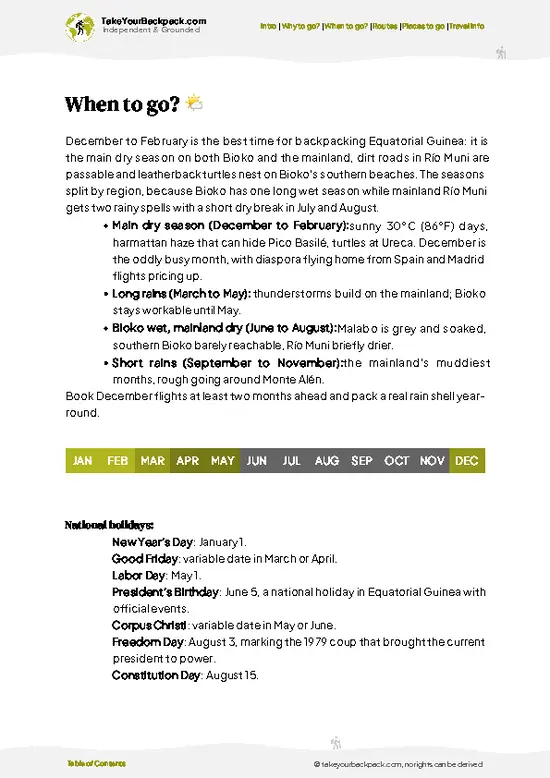
    example page 2 from our offline Travel Guide for Equatorial Guinea
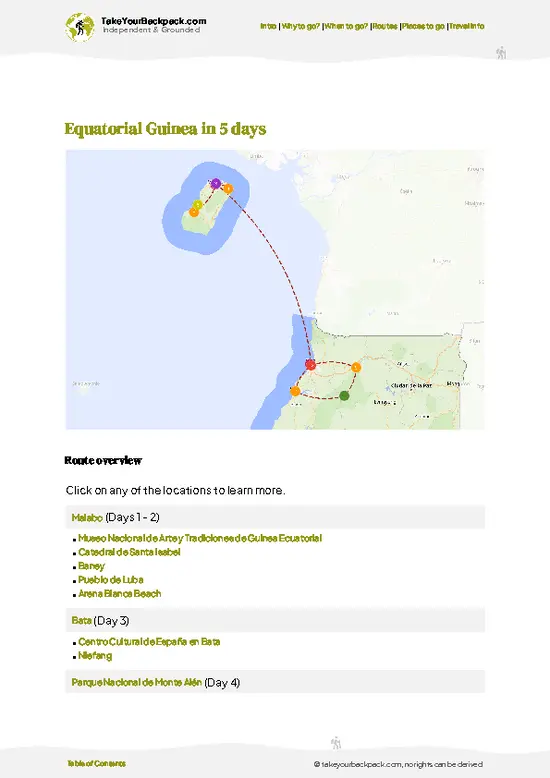
    example page 3 from our offline Travel Guide for Equatorial Guinea
    example page 4 from our offline Travel Guide for Equatorial Guinea
    example page 5 from our offline Travel Guide for Equatorial Guinea
    example page 6 from our offline Travel Guide for Equatorial Guinea
    example page 7 from our offline Travel Guide for Equatorial Guinea
    The digital guide (199 pages) contains:
    ✅ 46 highlights, ranked by travel appeal
    ✅ Optimized 2, 3 & 5-day travel routes
    ✅ Cities, national parks, landmarks, beaches
    ✅ How to get around
    ✅ Offline-friendly for travel without Wi-Fi
    👉 Click to see all 30+ guide features

    📅 Plan smarter in minutes, not weeks
    ✅ Month by month travel advice
    ✅ Festivals & national holidays
    ✅ Budget expectations

    🗺️ Go to the right places, skip the overrated ones
    ✅ Honest pros & cons of destinations
    ✅ Top hikes, parks & viewpoints
    ✅ Lesser-known places most travelers miss
    ✅ Clear “worth it vs skip it” guidance

    🛏️ Travel smoothly without rookie mistakes
    ✅ Best areas to stay
    ✅ Transport systems explained simply
    ✅ Common scams & safety advice
    ✅ SIM cards, money & practical tips

    🌍 Understand the country, not just visit it
    ✅ Culture & traditions
    ✅ 52 Essential phrases & customs
    ✅ Festivals worth planning around
    ✅ Traveler-friendly historical context
    ✅ Insights that make places more meaningful

    📱 Built for real travel conditions
    ✅ Fully downloadable PDF
    ✅ Works completely offline
    ✅ Optimized for phone use
    ✅ Useful in remote areas & buses
    ✅ Everything in one place
    Stop searching, start planning
    Get instant access to your full guide. 30‑day money-back guarantee.
    + Add another guide for just

    By proceeding you agree to our terms.
    Sent to your inbox immediately after payment • 100% Secure Checkout
    Best Backpacking Travel Advisor 2025 tourism awardBest Backpacking
    Travel Advisor
    2025
    What others say about Take Your Backpack Guides:
    ⭐⭐⭐⭐⭐
    Fantastic, amazing amount of information!
    ⭐⭐⭐⭐⭐
    My goodness this is amazing, it's what I've been looking for hats off too you!
    ⭐⭐⭐⭐⭐
    I think this is absolutely BRILLIANT
    ⭐⭐⭐⭐
    Very complete and informative. It's still missing places, but I gotta to commend you
    ⭐⭐⭐⭐⭐
    This is truly amazing, thank you, can't wait to explore it with my kids!
    ⭐⭐⭐⭐⭐
    Awesome resource, thank you!
    ⭐⭐⭐⭐⭐
    This is amazing! Can't wait to explore the ones I haven't seen
    ⭐⭐⭐⭐
    I love this! Well done, great idea.
    ⭐⭐⭐⭐⭐
    Thanks for taking the time to make this gem!
    ⭐⭐⭐⭐⭐
    This might be the best website I've ever seen.
    ⭐⭐⭐⭐⭐
    Congratulations, and thank you so much for your work; it's incredibly valuable.
    ⭐⭐⭐⭐
    In all seriousness I think you did a great job pointing out the important spots
    ⭐⭐⭐⭐⭐
    10/10 very good
    ⭐⭐⭐⭐⭐
    As someone who's only just starting to visit regularly this is awesome, thank you.
    ⭐⭐⭐⭐
    Thank you very much! I'm going to visit my dad, it's going to be very useful!
    ⭐⭐⭐⭐⭐
    This is really cool! We'll be travelling for the first time and this definitely come in handy.
    ⭐⭐⭐⭐⭐
    You are now our minister of culture, congratulations 👨‍💼
    ⭐⭐⭐⭐⭐
    Just wanted to tell you that this is a pearl! Going to follow your recommendations.
    ⭐⭐⭐⭐⭐
    This is so cool. I'll definitely be using the resource for my travels soon.
    ⭐⭐⭐⭐⭐
    This is very impressive! Good work.
    ⭐⭐⭐⭐⭐
    This is an amazing and informative site. Very well done!

    🛏️ Where to stay?Best areas and accommodation options

    In Aconibe, the heartbeat for backpackers pulses strongest in the central district near the market and waterfront. This area hums with life from dawn, the air thick with the scent of fresh fish and spices, making it easy to strike up conversations with locals and fellow travelers alike. It’s where budget stays cluster—simple guesthouses and hostels that prioritize community over luxury. You’ll find the streets safe enough to wander after dark, thanks to the steady flow of people and the watchful eyes of vendors closing shop.

    Compared to the quieter, more residential neighborhoods, this central … read more 👉
    In Aconibe, the heartbeat for backpackers pulses strongest in the central district near the market and waterfront. This area hums with life from dawn, the air thick with the scent of fresh fish and spices, making it easy to strike up conversations with locals and fellow travelers alike. It’s where budget stays cluster—simple guesthouses and hostels that prioritize community over luxury. You’ll find the streets safe enough to wander after dark, thanks to the steady flow of people and the watchful eyes of vendors closing shop.

    Compared to the quieter, more residential neighborhoods, this central zone offers a social atmosphere that’s hard to beat. It’s the place to swap stories over a shared meal or plan your next move with new friends. The vibe is raw and real, not polished for tourists, which means you get the authentic pulse of Aconibe without the inflated prices or isolation of upscale districts. Staying here isn’t just about convenience; it’s about plugging into the city’s rhythm and making your trip feel alive.

    🚌 Getting aroundHow to get around Aconibe

    Aconibe moves at its own rhythm—neither a frantic rush nor a lazy drift, but a pulse that feels like the slow unfolding of a well-worn map. The sun slants through narrow streets, casting long shadows on cracked sidewalks, while the scent of grilled street food mingles with the earthy smell of nearby riverbanks. Time here is elastic. You won’t find rigid timetables or polished transit hubs. Instead, the town’s flow depends on a mix of local intuition and the occasional honk of a shared taxi. Mastering this flow means embracing a bit of unpredictability but also unlocking a smoother, more authentic ride through Aconibe’s heart.
    • Walking: The most reliable and immersive way to get around. Streets are compact, and many key spots are within 20-30 minutes on foot. Walking lets you soak in the textures—the
    … read more 👉
    Aconibe moves at its own rhythm—neither a frantic rush nor a lazy drift, but a pulse that feels like the slow unfolding of a well-worn map. The sun slants through narrow streets, casting long shadows on cracked sidewalks, while the scent of grilled street food mingles with the earthy smell of nearby riverbanks. Time here is elastic. You won’t find rigid timetables or polished transit hubs. Instead, the town’s flow depends on a mix of local intuition and the occasional honk of a shared taxi. Mastering this flow means embracing a bit of unpredictability but also unlocking a smoother, more authentic ride through Aconibe’s heart.
    • Walking: The most reliable and immersive way to get around. Streets are compact, and many key spots are within 20-30 minutes on foot. Walking lets you soak in the textures—the cracked paint on market stalls, the chatter of vendors, and the sudden bursts of tropical fruit aromas.
    • Shared Taxis (Colectivos): These minibuses or vans run on flexible schedules, usually starting around 6:30 AM and tapering off by 7 PM. Fares hover around $0.50-$1. They’re fast compared to walking but expect stops to pick up locals, so the ride can stretch unpredictably. Comfort is basic, but windows down means fresh air and street-level views.
    • Motorcycle Taxis (Motos): Perfect for short hops or navigating narrow alleys where cars can’t fit. They operate from dawn until late evening, charging roughly $0.75-$1.50 depending on distance. The breeze and open-air feel make these rides exhilarating, but hold on tight—roads can be bumpy.
    • Bicycle Rentals: A budget-friendly option if you want to cover more ground on your own schedule. Rentals cost about $5-$7 per day. The terrain is mostly flat with occasional rough patches, so a sturdy bike is key. Early mornings or late afternoons offer the best light and cooler temperatures for cycling.

    👛 Costs (as of 13 October 2026)What things cost and how to budget

    Backpacking in Aconibe, Equatorial Guinea, demands a bit of patience and planning, but the costs remain manageable if you know where to look and how to move.
    • Dorm Accommodation: Dorm-style lodging options are scarce and basic, often found in small guesthouses or local hostels. Expect to pay around €10 to €15 per night. These places usually have simple beds, shared bathrooms, and minimal amenities, but they offer a solid base for exploring the area.
    • Meals: Eating local is both a necessity and a delight here. Street food and small local eateries serve up hearty meals for about €2 to €5. Fresh fish, plantains, and rice dominate menus, and the flavors are straightforward but satisfying. Western-style restaurants are rare and pricier, so sticking to local fare keeps your budget lean.
    • Local Transport:
    … read more 👉
    Backpacking in Aconibe, Equatorial Guinea, demands a bit of patience and planning, but the costs remain manageable if you know where to look and how to move.
    • Dorm Accommodation: Dorm-style lodging options are scarce and basic, often found in small guesthouses or local hostels. Expect to pay around €10 to €15 per night. These places usually have simple beds, shared bathrooms, and minimal amenities, but they offer a solid base for exploring the area.
    • Meals: Eating local is both a necessity and a delight here. Street food and small local eateries serve up hearty meals for about €2 to €5. Fresh fish, plantains, and rice dominate menus, and the flavors are straightforward but satisfying. Western-style restaurants are rare and pricier, so sticking to local fare keeps your budget lean.
    • Local Transport: Transport options are limited and informal. Shared taxis or minibuses are the norm, costing roughly €0.50 to €1 per trip within town. The roads can be rough, so travel times might stretch, but the low cost makes it worth the occasional bump.
    • Basic Activities/Entry Fees: Most natural or cultural sites around Aconibe charge minimal or no entry fees. When fees apply, they hover around €1 to €3. Guided tours are rare and usually arranged locally, often negotiated on the spot, so budgeting a few extra euros for these experiences is wise.
    • Miscellaneous Expenses: This includes bottled water, snacks, phone credit, and occasional small purchases. Plan for about €2 to €4 daily. Bottled water is essential due to limited safe tap water, and phone credit is cheap but necessary for navigation and communication.

    All told, a realistic daily budget for backpacking in Aconibe falls between €15 and €30. This range covers the essentials without cutting corners on safety or comfort, letting you focus on the raw, unfiltered experience of this off-the-beaten-path destination.


    source: guineaecuatorialpress.com
    ⚠️ Prices can change and everyone travels differently, so take this as a rough guide. Hope it helps you plan your adventure!

    🚌 Day tripsWhere to go beyond the main area

    Aconibe, Equatorial Guinea, is a backpacker’s dream base for exploring the lush landscapes and vibrant cultures nearby. With its laid-back vibe, you can easily venture out for unforgettable day trips that blend adventure with authenticity.

    Trip to Monte Alén National Park
    Just a couple of hours from Aconibe, Monte Alén National Park is a treasure trove of biodiversity. The air is thick with the scent of damp earth and rich foliage, and the sounds of wildlife surround you. You’ll hike through dense jungles, spotting monkeys and colorful birds. The park entrance fee is modest, around $5, and you can hire a local guide for about $15, which is worth every cent for their insights. Best visited during the dry season from December to February, this trip is a must for nature lovers. A common mistake? … read more 👉
    Aconibe, Equatorial Guinea, is a backpacker’s dream base for exploring the lush landscapes and vibrant cultures nearby. With its laid-back vibe, you can easily venture out for unforgettable day trips that blend adventure with authenticity.

    Trip to Monte Alén National Park
    Just a couple of hours from Aconibe, Monte Alén National Park is a treasure trove of biodiversity. The air is thick with the scent of damp earth and rich foliage, and the sounds of wildlife surround you. You’ll hike through dense jungles, spotting monkeys and colorful birds. The park entrance fee is modest, around $5, and you can hire a local guide for about $15, which is worth every cent for their insights. Best visited during the dry season from December to February, this trip is a must for nature lovers. A common mistake? Underestimating the trail difficulty; wear sturdy shoes and bring plenty of water.


    Beach Day at Playa de Aconibe
    You don’t have to go far to find paradise. Just a short walk from the town center, Playa de Aconibe offers golden sands and gentle waves. The salty breeze and the sound of surf create a perfect backdrop for relaxation. Grab a local meal from a beach vendor for around $3, and soak in the sun. The best time to visit is early morning or late afternoon to avoid the heat and catch stunning sunsets. First-timers often miss the charm of the local beach culture; take time to chat with fishermen or join a game of beach soccer.


    Exploring the Town of Evinayong
    A 45-minute drive will take you to Evinayong, a bustling town that showcases the heart of Equatorial Guinea. The vibrant markets are filled with the aroma of spices and fresh produce. You can grab a local lunch for about $5 and wander through the streets, soaking in the local life. Weekdays are best to avoid crowds, and don’t skip the chance to try the local dish, “sopa de pescado.” A common pitfall is sticking to the main roads; venture into the alleys for a more authentic experience.
    👉 Explore Evinayong

    Visit the Waterfalls of Nsok Nsok
    About an hour’s journey from Aconibe, the waterfalls at Nsok Nsok are a refreshing escape. The sound of cascading water is music to your ears as you trek through the lush surroundings. Entry is free, but consider a local guide for about $10 to navigate the trails. The best time to visit is during the rainy season when the falls are at their most powerful. Many first-timers forget to bring a swimsuit; you’ll want to take a dip in the cool waters after your hike.

    🛡️ SafetyScams, Hazards, and Annoyances

    In Aconibe, the atmosphere is relaxed, but a few practical tips can enhance your experience. Stick to well-lit areas at night, especially if you’re solo. The streets can feel quiet, and a little caution goes a long way.

    While the town is generally safe, be mindful of your belongings in crowded spots. Keep your bag close and avoid flashy accessories that might draw attention.

    Scams are rare, but some locals may try to overcharge for services or goods. Always agree on a price beforehand, especially with taxis or market vendors. A friendly smile and a firm handshake can often diffuse any awkwardness.

    Embrace the local vibe, but stay aware. Aconibe’s charm lies in its authenticity, and with a little mindfulness, you’ll unlock a richer experience.

    FAQTraveler FAQ

    Aconibe is worth visiting for its natural beauty and wildlife, especially the nearby Monte Alen National Park. It offers a unique experience for nature lovers rather than just being a stopover. The town is small but serves as a gateway to exploring the region's biodiversity.
    You need about 2 to 3 days in Aconibe to fully explore the national park and enjoy local wildlife tours. This allows time for guided hikes and birdwatching without rushing. Staying overnight is recommended to experience the area at different times of day.
    No, Aconibe is not practical as a day trip from nearby cities due to its remote location and limited transport options. The nearest major city, Bata, is about 150 kilometers away, requiring several hours of travel each way. Overnight stays are necessary to make the visit worthwhile.
    ⚠️ Things can change over time, so always validate details locally before you go.

    Other Equatoguinean towns near Aconibe

    Explore more nearby:

    • Evinayong—hilltop setting, administrative center, panoramic views| 44 km away
    • Mongomo—presidential palace, grand cathedral, ceremonial avenues| 55 km away
    • Añisoc—savanna edge, regional market, crossroads town| 65 km away

    💡 Not sure where to go next?
    Create a personalized itinerary for Equatorial Guinea including Aconibe and the places that fit your trip.

    Generate my itinerary

    👉 Discover all towns

    Or checkout all Equatorial Guinea has to offer (think cities, towns, villages, national parks, hikes, beaches, festivals)
    Country photo of Equatorial Guinea

    We 💚 feedbackIs it worth it?

    Aconibe has a raw, unfiltered vibe that feels like stepping into a world untouched by time. The best surprise? The locals’ warmth; they’ll share stories over palm wine that linger long after the last sip. Just a heads-up: the roads can be rough, so don’t rush. Embrace the journey; the scenery transforms from dense jungle to sweeping vistas. It’s all part of the adventure, and trust me, the payoff is worth every bump along the way.

    ✍️ Help improve this page!
    The information on this page is based on in-depth research, insights shared by experienced travelers, and feedback from the local travel community in Equatorial Guinea. While every effort is made to keep the information accurate and current, conditions can change — so if you spot anything incorrect or outdated, please get in touch.


    🙋‍♂️ Give feedback

    👋 Meet the founderWho’s Behind Take Your Backpack?

    Johan, backpacker and founder of TakeYourBackpackHi, I’m Johan (Netherlands 🇳🇱), the creator of TakeYourBackpack. Over the past 3 decades, I’ve backpacked through 90+ countries across six continents, gaining extensive experience with independent travel, long-term trips, and overland routes.

    This site is built on a combination of firsthand travel experience and carefully curated insights from other backpackers. Many guides are based on places I’ve personally visited, while others bring together tips, observations, and practical advice shared by trusted travelers I’ve met along the way.

    The goal is to provide realistic, experience-driven guidance — not generic itineraries — so you can explore destinations with better context, clearer expectations, and more confidence.