×

Equatorial Guinea🇬🇶 | landmarksCatedral de Santa IsabelTwin Neo-Gothic spires, stained glass, Sunday mass, Spanish-era streets | things to do and best time to go

Explore Cascadas de MokaExplore Cerro de la Paz

Backpacking in Catedral de Santa Isabel
🌟 Highlightunique site ranked #3
By Johan Kruseman 🇳🇱 | Updated October 22, 2026

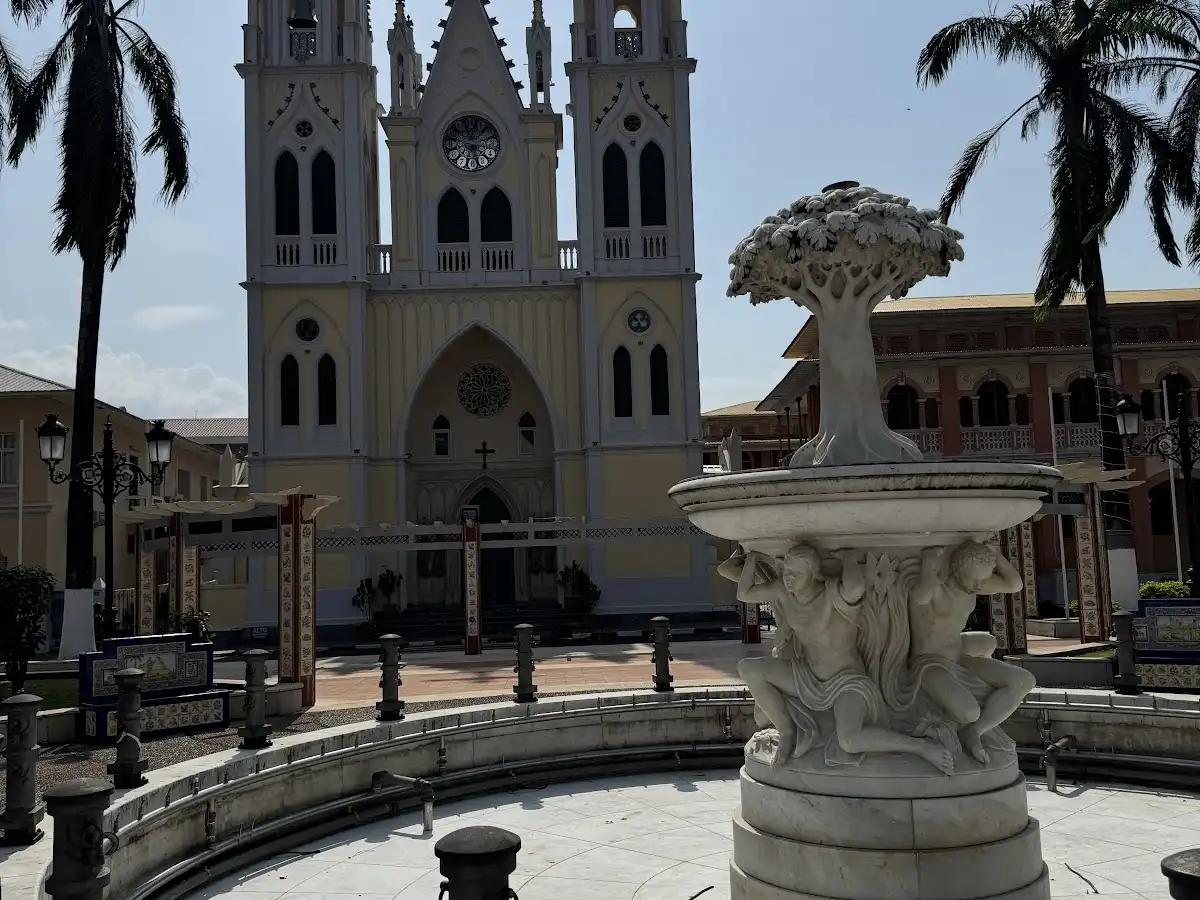
The side door sticks, then gives, and the air inside is cooler than the street, smelling of wax and old timber. A few women in Sunday colors sit in the pews, fanning themselves, while light comes through the stained glass in narrow bands. Catedral de Santa Isabel stands in the old colonial center of Malabo, on Bioko Island in the north of Equatorial Guinea. Its twin Gothic spires rise above the low rooftops and are easy to find on foot. There are no crowds to speak of, and entry costs nothing, though visits depend on mass times and whoever is minding the doors. It is not large by European standards, but the Spanish missionary history, the stonework and the photo angles from the square are the reasons to come. Anyone interested in colonial architecture or in how faith shaped this country will like it. Travelers wanting a major monument will find it small.

Discover everything you want to know in the 📖 Equatorial Guinea Travel Guide.


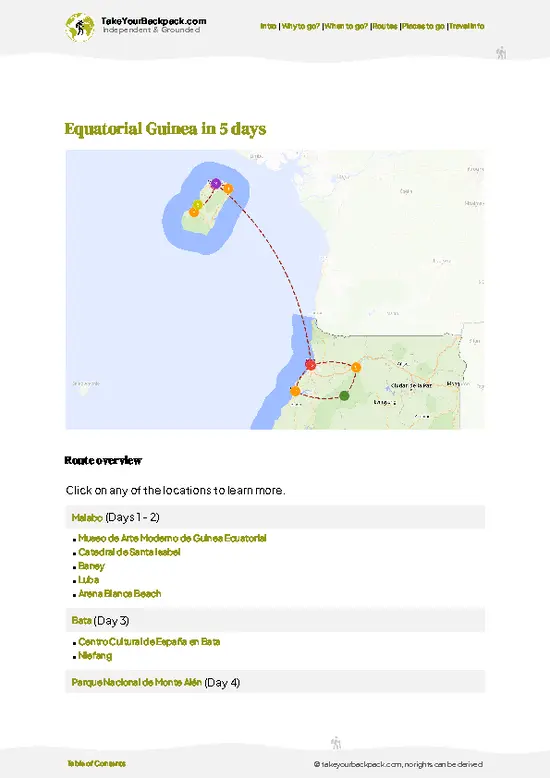
example page 0 from our offline Travel Guide for Equatorial Guinea
example page 1 from our offline Travel Guide for Equatorial Guinea
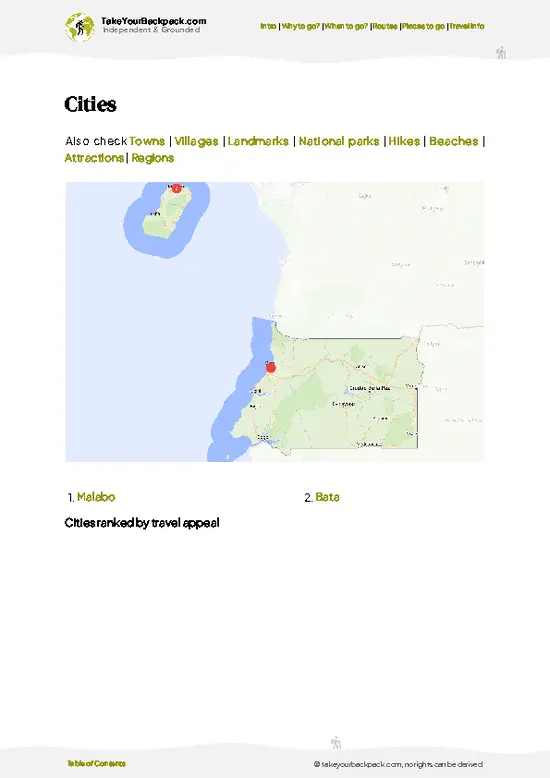
example page 2 from our offline Travel Guide for Equatorial Guinea
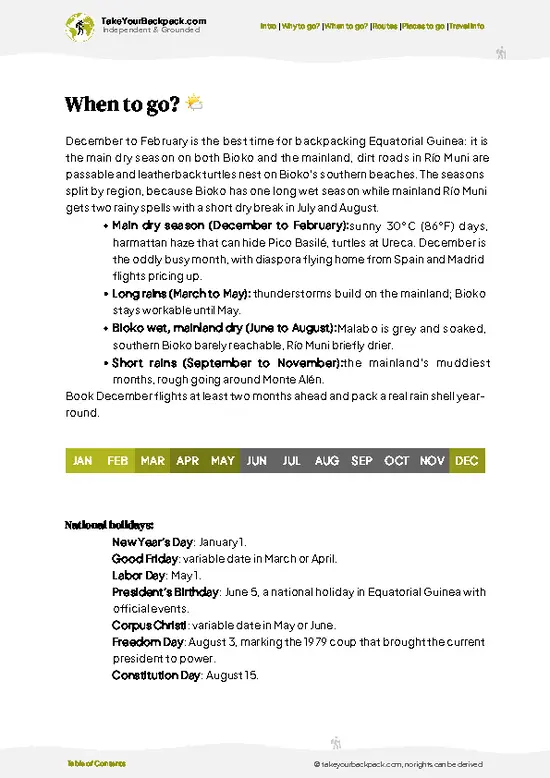
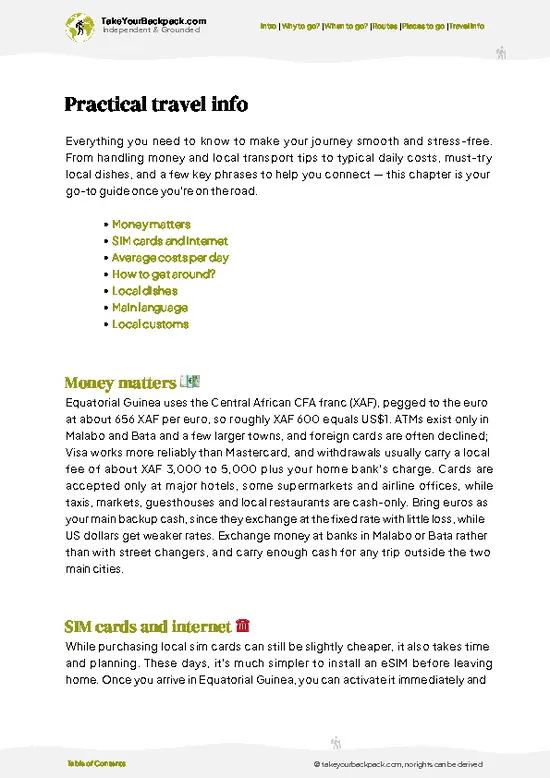
example page 3 from our offline Travel Guide for Equatorial Guinea
example page 4 from our offline Travel Guide for Equatorial Guinea
example page 5 from our offline Travel Guide for Equatorial Guinea
example page 6 from our offline Travel Guide for Equatorial Guinea
example page 7 from our offline Travel Guide for Equatorial Guinea
Loading the map 🌍
CLICK TO FILTER
cities
towns
villages
landmarks
national parks
hikes
beaches
attractions
regions
SHOW COUNTRY’S BESTSHOW ALL

✨ Why go?
Ranked #3 unique site in Equatorial Guinea
Why visitors keep coming back

Catedral de Santa Isabel is the clearest architectural statement of Spanish rule left in Equatorial Guinea, and it is still a working church, which matters more than any plaque. You get a Neo-Gothic building with twin spires standing in a tropical capital, a combination you will not see elsewhere in Central Africa. That contrast alone justifies the walk.

Getting here takes almost no effort once you are in Malabo. The cathedral sits among the old streets, so it pairs easily with a wander past the colonial-era facades and the squares around it, and a visit fits into an hour or two. Entry is free, which suits a country where most things cost more than you expect.

Go for Sunday mass if you can. The congregation, the singing and the dress turn a quiet building into something you can actually feel, … read more 👉
Catedral de Santa Isabel is the clearest architectural statement of Spanish rule left in Equatorial Guinea, and it is still a working church, which matters more than any plaque. You get a Neo-Gothic building with twin spires standing in a tropical capital, a combination you will not see elsewhere in Central Africa. That contrast alone justifies the walk.

Getting here takes almost no effort once you are in Malabo. The cathedral sits among the old streets, so it pairs easily with a wander past the colonial-era facades and the squares around it, and a visit fits into an hour or two. Entry is free, which suits a country where most things cost more than you expect.

Go for Sunday mass if you can. The congregation, the singing and the dress turn a quiet building into something you can actually feel, and it tells you more about local life than any museum would. Treat it as one stop in a wider look at Bioko Island rather than a destination by itself.

💡 HighlightsTop highlights of Catedral de Santa Isabel

  1. The twin spires and facade: This is the sight you search for. The two Neo-Gothic towers, rising roughly 40 meters, dominate the skyline of old Malabo and are visible from several streets away. Pointed arches and pale stonework give the front a decidedly European look against the palms.
  2. The central nave: Inside, tall pointed arches draw the eye toward the altar. The space is calm, cool and lit softly, a real break from the humid streets.
  3. Stained glass windows: Colored panels along the walls throw patches of red, blue and amber across the pews in the morning. They are best photographed from inside with no flash.
  4. The main altar: The sanctuary is the focus of worship for the Archdiocese of Malabo. Statues and carved woodwork here show the Catholic tradition brought by Spanish missionaries.
  5. Sunday
… read more 👉
  1. The twin spires and facade: This is the sight you search for. The two Neo-Gothic towers, rising roughly 40 meters, dominate the skyline of old Malabo and are visible from several streets away. Pointed arches and pale stonework give the front a decidedly European look against the palms.
  2. The central nave: Inside, tall pointed arches draw the eye toward the altar. The space is calm, cool and lit softly, a real break from the humid streets.
  3. Stained glass windows: Colored panels along the walls throw patches of red, blue and amber across the pews in the morning. They are best photographed from inside with no flash.
  4. The main altar: The sanctuary is the focus of worship for the Archdiocese of Malabo. Statues and carved woodwork here show the Catholic tradition brought by Spanish missionaries.
  5. Sunday mass: The pews fill with families in their best clothes, and the music is lively. You can sit quietly at the back as an observer, dressed modestly.
  6. The cathedral square: The open space in front lets you step back and frame the whole facade. Locals pass through, sit in the shade and wait for friends, so you can watch ordinary Malabo life.
  7. The surrounding colonial streets: Walking out from the cathedral, you pass old Spanish-era buildings with weathered balconies and faded paint. The mix of decay and restoration says a lot about the city’s past.
Catedral de Santa Isabel needs no ticket or advance booking, as entry is free and open during daytime hours and services.
Spotted a mistake or missing something? Contact us.
🌤️ When to go?Weather, crowds, and seasonal trade-offs

Late November to February is the easiest window for Catedral de Santa Isabel in Malabo, with the least rain and the clearest light for photographing the twin Gothic spires.
  • Dry Season (December to February): Days run roughly 27 to 31°C (81 to 88°F), nights about 22 to 23°C (72 to 73°F). Harmattan haze sometimes dulls the sky. Daylight lasts close to 12 hours. Flights and rooms cost the most.
  • Wet Season (March to May, September to November): Heavy downpours arrive most afternoons, so plan the cathedral visit for the morning. Temperatures stay similar at 25 to 30°C (77 to 86°F). Crowds are thin and rooms are easier to book.
  • Deepest Rains (June to August): Bioko is cloudy and drizzly, around 24 to 28°C (75 to 82°F). Streets flood in places and the island’s beaches are rough. Prices ease slightly.
… read more 👉
Late November to February is the easiest window for Catedral de Santa Isabel in Malabo, with the least rain and the clearest light for photographing the twin Gothic spires.
  • Dry Season (December to February): Days run roughly 27 to 31°C (81 to 88°F), nights about 22 to 23°C (72 to 73°F). Harmattan haze sometimes dulls the sky. Daylight lasts close to 12 hours. Flights and rooms cost the most.
  • Wet Season (March to May, September to November): Heavy downpours arrive most afternoons, so plan the cathedral visit for the morning. Temperatures stay similar at 25 to 30°C (77 to 86°F). Crowds are thin and rooms are easier to book.
  • Deepest Rains (June to August): Bioko is cloudy and drizzly, around 24 to 28°C (75 to 82°F). Streets flood in places and the island’s beaches are rough. Prices ease slightly.
  • Sunday Mass: Services draw the largest local crowds and give the interior a lively feel, though sightseeing is limited during worship.
Arrive before 10 am whatever the season, since the interior is cooler and the plaza is quiet.


source: climatestotravel.comJANJanuary: fair for travelingFEBFebruary: fair for travelingMARMarch: fair for travelingAPRApril: fair for travelingMAYMay: good for travelingJUNJune: excellent for travelingJULJuly: excellent for travelingAUGAugust: highly recommended for travelingSEPSeptember: highly recommended for travelingOCTOctober: good for travelingNOVNovember: fair for travelingDECDecember: fair for traveling
equatorial-guinea-unique-site-catedral-de-santa-isabel
© Google |

✈️ The backpacker research shortcutEquatorial Guinea Travel Guide

An offline-friendly backpacking guide with optimized travel routes, ranked highlights, transport advice, and the best areas to stay.
example page 0 from our offline Travel Guide for Equatorial Guinea
example page 1 from our offline Travel Guide for Equatorial Guinea
example page 2 from our offline Travel Guide for Equatorial Guinea
example page 3 from our offline Travel Guide for Equatorial Guinea
example page 4 from our offline Travel Guide for Equatorial Guinea
example page 5 from our offline Travel Guide for Equatorial Guinea
example page 6 from our offline Travel Guide for Equatorial Guinea
example page 7 from our offline Travel Guide for Equatorial Guinea
The digital guide (174 pages) contains:
✅ 36 highlights, ranked by travel appeal
✅ Optimized 2, 3 & 5-day travel routes
✅ Cities, national parks, landmarks, beaches
✅ How to get around
✅ Offline-friendly for travel without Wi-Fi
👉 Click to see all 30+ guide features

📅 Plan smarter in minutes, not weeks
✅ Month by month travel advice
✅ Festivals & national holidays
✅ Budget expectations

🗺️ Go to the right places, skip the overrated ones
✅ Honest pros & cons of destinations
✅ Top hikes, parks & viewpoints
✅ Lesser-known places most travelers miss
✅ Clear “worth it vs skip it” guidance

🛏️ Travel smoothly without rookie mistakes
✅ Best areas to stay
✅ Transport systems explained simply
✅ Common scams & safety advice
✅ SIM cards, money & practical tips

🌍 Understand the country, not just visit it
✅ Culture & traditions
✅ 52 Essential phrases & customs
✅ Festivals worth planning around
✅ Traveler-friendly historical context
✅ Insights that make places more meaningful

📱 Built for real travel conditions
✅ Fully downloadable PDF
✅ Works completely offline
✅ Optimized for phone use
✅ Useful in remote areas & buses
✅ Everything in one place
Stop searching, start planning
Get instant access to your full guide. 30‑day money-back guarantee.
+ Add another guide for just

By proceeding you agree to our terms.
Sent to your inbox immediately after payment • 100% Secure Checkout
Best Backpacking Travel Advisor 2025 tourism awardBest Backpacking
Travel Advisor
2025
What others say about Take Your Backpack Guides:
⭐⭐⭐⭐⭐
Fantastic, amazing amount of information!
⭐⭐⭐⭐⭐
My goodness this is amazing, it's what I've been looking for hats off too you!
⭐⭐⭐⭐⭐
I think this is absolutely BRILLIANT
⭐⭐⭐⭐
Very complete and informative. It's still missing places, but I gotta to commend you
⭐⭐⭐⭐⭐
This is truly amazing, thank you, can't wait to explore it with my kids!
⭐⭐⭐⭐⭐
Awesome resource, thank you!
⭐⭐⭐⭐⭐
This is amazing! Can't wait to explore the ones I haven't seen
⭐⭐⭐⭐
I love this! Well done, great idea.
⭐⭐⭐⭐⭐
Thanks for taking the time to make this gem!
⭐⭐⭐⭐⭐
This might be the best website I've ever seen.
⭐⭐⭐⭐⭐
Congratulations, and thank you so much for your work; it's incredibly valuable.
⭐⭐⭐⭐
In all seriousness I think you did a great job pointing out the important spots
⭐⭐⭐⭐⭐
10/10 very good
⭐⭐⭐⭐⭐
As someone who's only just starting to visit regularly this is awesome, thank you.
⭐⭐⭐⭐
Thank you very much! I'm going to visit my dad, it's going to be very useful!
⭐⭐⭐⭐⭐
This is really cool! We'll be travelling for the first time and this definitely come in handy.
⭐⭐⭐⭐⭐
You are now our minister of culture, congratulations 👨‍💼
⭐⭐⭐⭐⭐
Just wanted to tell you that this is a pearl! Going to follow your recommendations.
⭐⭐⭐⭐⭐
This is so cool. I'll definitely be using the resource for my travels soon.
⭐⭐⭐⭐⭐
This is very impressive! Good work.
⭐⭐⭐⭐⭐
This is an amazing and informative site. Very well done!

🛏️ Where to stay?Choosing the right base

The center of Malabo, within walking distance of the cathedral, is the best area for backpackers. Staying around the old colonial core near Plaza de la Independencia puts you a few minutes on foot from the cathedral, the Spanish Cultural Center and the waterfront, so you can walk in daylight without paying for taxis.

The streets just behind the cathedral are the most practical option. Small guesthouses and mid-range budget rooms cluster here, along with cafes, bakeries and money changers. It is also the easiest area to find shared taxis heading elsewhere on Bioko. Evening walks on the main squares … read more 👉
The center of Malabo, within walking distance of the cathedral, is the best area for backpackers. Staying around the old colonial core near Plaza de la Independencia puts you a few minutes on foot from the cathedral, the Spanish Cultural Center and the waterfront, so you can walk in daylight without paying for taxis.

The streets just behind the cathedral are the most practical option. Small guesthouses and mid-range budget rooms cluster here, along with cafes, bakeries and money changers. It is also the easiest area to find shared taxis heading elsewhere on Bioko. Evening walks on the main squares feel fairly relaxed, though keep phones and cameras tucked away after dark and take a taxi for longer distances.

The Paseo Marítimo waterfront area, a short walk east, suits travelers who want sea breezes and restaurants. It is a little quieter and rooms there tend to cost more.

Barrio Ela Nguema and the outlying districts are cheaper but far from the sights and not recommended for first-timers. Equatorial Guinea has very few dedicated hostels, so social contact usually comes from chatting with other travelers and expats at central cafes, and from meeting local guides. Book ahead during the dry season, because central rooms fill with business travelers.

👛 Costs (as of 22 October 2026)Travel costs and budget guide for Catedral de Santa Isabel

Catedral de Santa Isabel costs next to nothing to visit, and a realistic backpacker day in Malabo comes to about €95.
CategoryBudget RangeLocal Reality
Cathedral Entry€0 to 2Free to enter. A small donation is appreciated, and a caretaker may ask for a tip if they open side areas.
Accommodation (high season)€45 to 70Budget rooms are costly for the region. Expect basic rooms in central Malabo, with prices dropping a little in the wet season.
Accommodation (low season)€35 to 55Easier to negotiate when business travel slows.
Food€10 to 20Street grills, bakeries and local restaurants cost less than hotel dining. Imported goods are pricey.
Local Transport€1 to 5Shared taxis charge a flat fare for short hops. Travelers pay in Central African francs, and cash is essential since cards are rarely accepted.
… read more 👉
Catedral de Santa Isabel costs next to nothing to visit, and a realistic backpacker day in Malabo comes to about €95.
CategoryBudget RangeLocal Reality
Cathedral Entry€0 to 2Free to enter. A small donation is appreciated, and a caretaker may ask for a tip if they open side areas.
Accommodation (high season)€45 to 70Budget rooms are costly for the region. Expect basic rooms in central Malabo, with prices dropping a little in the wet season.
Accommodation (low season)€35 to 55Easier to negotiate when business travel slows.
Food€10 to 20Street grills, bakeries and local restaurants cost less than hotel dining. Imported goods are pricey.
Local Transport€1 to 5Shared taxis charge a flat fare for short hops. Travelers pay in Central African francs, and cash is essential since cards are rarely accepted.
Extras€2 to 5Water, SIM data and snacks. A local guide for a city walk may cost more.
Total Daily Budget€95Per person for one day, sleeping in high season.
⚠️ Prices can change and everyone travels differently, so take this as a rough guide. Hope it helps you plan your adventure!

FAQCommon questions from travelers

Catedral de Santa Isabel is the Roman Catholic cathedral of Malabo on Bioko Island, finished in the early 20th century in Neo-Gothic style. Its twin spires, about 40 meters tall, make it the tallest landmark in the old center. It faces Plaza de la Independencia and sits close to the Spanish Cultural Center, and it is free to enter.
Allow 30 to 45 minutes for Catedral de Santa Isabel itself, or a relaxed hour if you sit inside and photograph the exterior. Pair it with a half-day walk through central Malabo, taking in the plaza, the waterfront and the Spanish Cultural Center. A Sunday mass visit can add one to two hours.
Catedral de Santa Isabel is in central Malabo, about 10 to 15 minutes by taxi from Malabo International Airport, usually €5 to 10 for the ride. Most international travelers fly in to Bioko, with flights from Madrid, Addis Ababa, Casablanca and Douala among others. Once in the city center, you can walk to the cathedral from most central guesthouses in 5 to 15 minutes.
⚠️ Things can change over time, so always validate details locally before you go.

Other Equatoguinean landmarks near Catedral de Santa Isabel

Explore more nearby:

  • Pico de Santa Isabel—volcanic peak, cloud forest, challenging ascent| 19 km away
  • Cascadas de Moka—forest trails, volcanic rock pools, misty waterfalls| 51 km away
  • Cerro de la Paz—summit views, Ciudad de la Paz, rainforest interior, panoramic lookout| 333 km away

💡 Not sure where to go next?
Create a personalized itinerary for Equatorial Guinea including Catedral de Santa Isabel and the places that fit your trip.

Generate my itinerary

👉 Discover all landmarks

Or checkout all Equatorial Guinea has to offer (think cities, towns, villages, national parks, hikes, beaches, festivals)
Country photo of Equatorial Guinea

We 💚 feedbackWhat to keep in mind

Catedral de Santa Isabel suits travelers who like quiet buildings, colonial history and watching a community at worship more than ticking off sights. I would go on a Sunday morning, dress modestly and sit near the back. If you want spectacle or a long visit, skip it, because it is a short stop.

✍️ Help improve this page!
The information on this page is based on in-depth research, insights shared by experienced travelers, and feedback from the local travel community in Equatorial Guinea. While every effort is made to keep the information accurate and current, conditions can change — so if you spot anything incorrect or outdated, please get in touch.


🙋‍♂️ Give feedback

👋 Meet the founderWho’s Behind Take Your Backpack?

Johan, backpacker and founder of TakeYourBackpackHi, I’m Johan (Netherlands 🇳🇱), the creator of TakeYourBackpack. Over the past 3 decades, I’ve backpacked through 90+ countries across six continents, gaining extensive experience with independent travel, long-term trips, and overland routes.

This site is built on a combination of firsthand travel experience and carefully curated insights from other backpackers. Many guides are based on places I’ve personally visited, while others bring together tips, observations, and practical advice shared by trusted travelers I’ve met along the way.

The goal is to provide realistic, experience-driven guidance — not generic itineraries — so you can explore destinations with better context, clearer expectations, and more confidence.