×

Equatorial Guinea🇬🇶 | attractionsEstadio de MalaboNzalang Nacional matches, drums and flags, covered grandstand, Cup of Nations venue | things to do and best time to go

Explore Malabo National TheatreExplore Arena Blanca Beach

Backpacking in Estadio de Malabo
👀 For curious travelersattraction ranked #5
By Johan Kruseman 🇳🇱 | Updated October 22, 2026

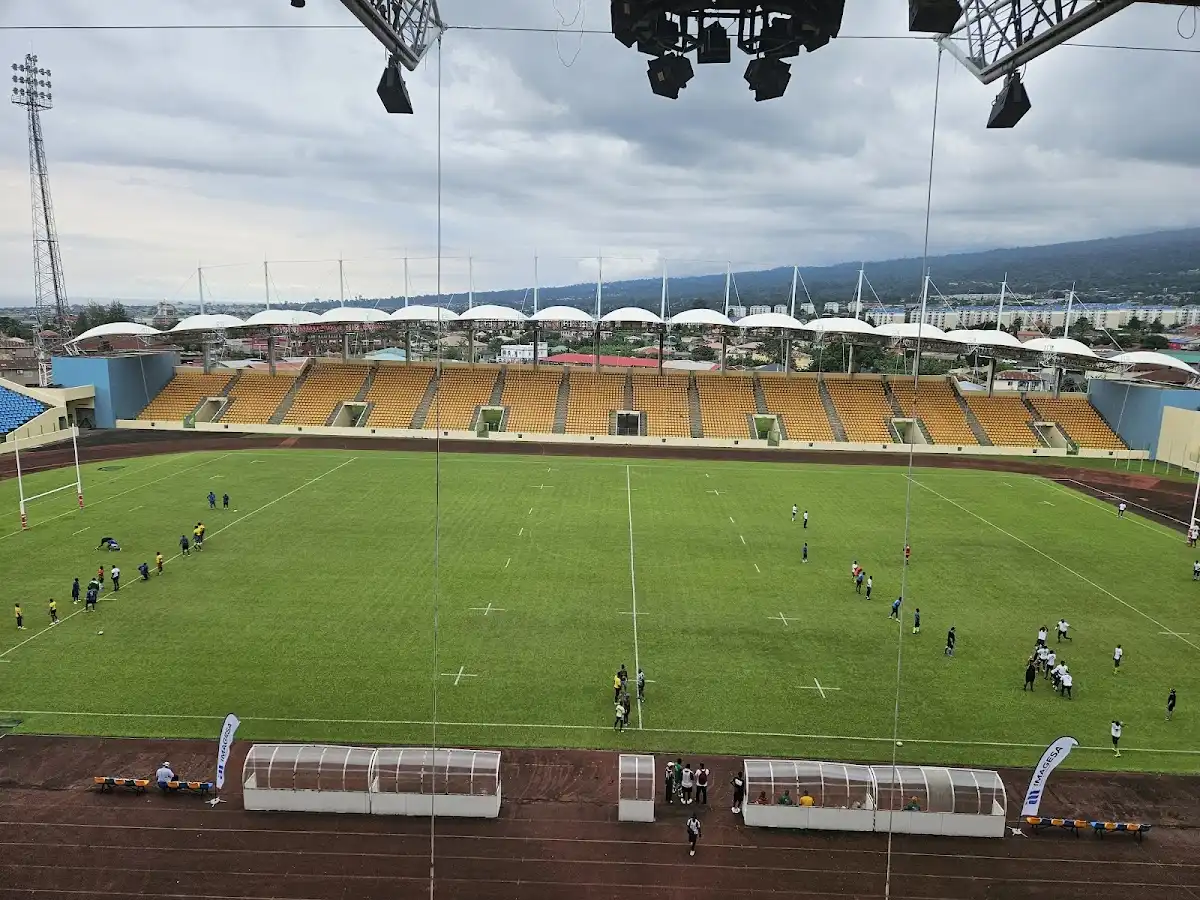
Estadio de Malabo is best known as the venue where Equatorial Guinea’s national team, Nzalang Nacional, plays its home matches, and it staged games at the Africa Cup of Nations in 2012 and 2015. What travelers often overlook is that a match here is one of the few ordinary crowd scenes in a capital with little organized tourism. The stadium sits in Malabo, on Bioko Island in Equatorial Guinea’s north. It isn’t a heritage monument, so expect a modern ground with a lively crowd rather than ruins or museum plaques. Fixtures are irregular because the calendar depends on league and national team schedules, so check dates locally before you plan around one. Without a match, there is little to do inside, so treat the exterior as a short stop. Taxis are the easy way in. Negotiate the fare before you set off, since meters are not used. A good first day: a morning in the old center, then a taxi out for the stadium.

Discover everything you want to know in the 📖 Equatorial Guinea Travel Guide.


example page 0 from our offline Travel Guide for Equatorial Guinea
example page 1 from our offline Travel Guide for Equatorial Guinea
example page 2 from our offline Travel Guide for Equatorial Guinea
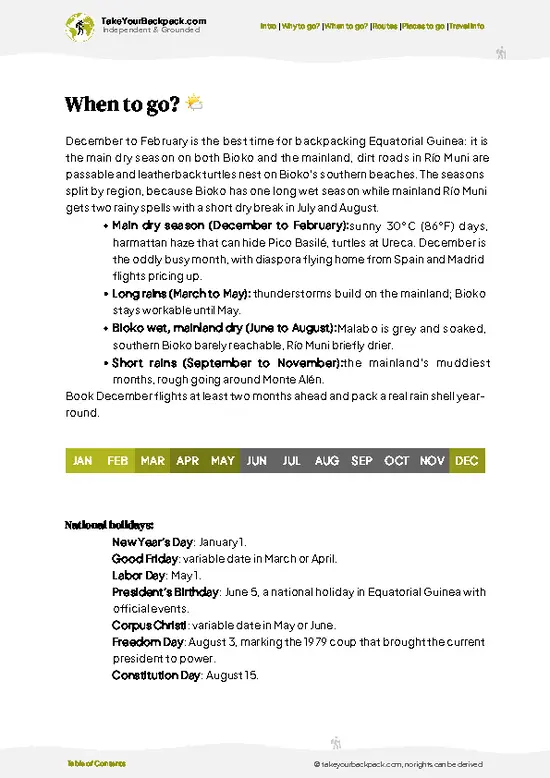
example page 3 from our offline Travel Guide for Equatorial Guinea
example page 4 from our offline Travel Guide for Equatorial Guinea
example page 5 from our offline Travel Guide for Equatorial Guinea
example page 6 from our offline Travel Guide for Equatorial Guinea
example page 7 from our offline Travel Guide for Equatorial Guinea
Loading the map 🌍
CLICK TO FILTER
cities
towns
villages
landmarks
national parks
hikes
beaches
attractions
regions
SHOW COUNTRY’S BESTSHOW ALL

✨ Why go?
Ranked #5 attraction in Equatorial Guinea
The unique appeal for travelers

Estadio de Malabo is where football, the country’s shared passion, meets its capital. The ground has a capacity of about 15,000, which keeps a match close and loud, with the pitch near enough to hear the players call to each other. If a game is on, you sit among locals who follow the team seriously, and that tells you more about daily life in Malabo than a taxi tour of landmarks.

The stadium also carries the memory of the 2012 and 2015 Africa Cup of Nations, when the country co-hosted and then hosted the tournament, putting a small Central African nation in front of the continent. The 2015 semifinal between the hosts and Ghana is a match locals still mention.

For route planning, it fits a Malabo stay well, because it lets you spend an afternoon around something other than colonial architecture and oil-money buildings.

💡 HighlightsMust-see experiences and standout moments

  1. Nzalang Nacional home match: the main draw. National team games bring a full, noisy crowd, drums and flags, and the best look at local football culture.
  2. The main grandstand: the covered seating along the pitch gives the clearest view and some shade from the equatorial sun.
  3. The pitch and running track view: the ground has a standard football layout with an athletics track around it, and the open bowl makes a good photo from the stands.
  4. Domestic league fixtures: club games draw smaller crowds than internationals, but you can often find seats easily, and the atmosphere is more relaxed.
  5. Africa Cup of Nations legacy: the stadium hosted matches in the 2012 and 2015 tournaments, and locals are glad to recount the games they watched here, especially the 2015 semifinal.
  6. The stadium exterior and surrounding
… read more 👉
  1. Nzalang Nacional home match: the main draw. National team games bring a full, noisy crowd, drums and flags, and the best look at local football culture.
  2. The main grandstand: the covered seating along the pitch gives the clearest view and some shade from the equatorial sun.
  3. The pitch and running track view: the ground has a standard football layout with an athletics track around it, and the open bowl makes a good photo from the stands.
  4. Domestic league fixtures: club games draw smaller crowds than internationals, but you can often find seats easily, and the atmosphere is more relaxed.
  5. Africa Cup of Nations legacy: the stadium hosted matches in the 2012 and 2015 tournaments, and locals are glad to recount the games they watched here, especially the 2015 semifinal.
  6. The stadium exterior and surrounding streets: on non-match days, a short walk around the outer wall shows the architecture and the everyday neighborhood around it.
A match at Estadio de Malabo is the only thing that needs a ticket, and you should buy it locally on the day or ahead through a contact, since interior access is otherwise limited.
Spotted a mistake or missing something? Contact us.
🌤️ When to go?Seasonal considerations and timing

  • Dry Season (December to February): The most comfortable stretch for Estadio de Malabo, with less rain on Bioko Island, daytime temperatures of 28 to 31°C (82 to 88°F) and nights near 22°C (72°F). Harmattan haze sometimes dulls the view toward Pico Basile.
  • Wet Season (March to November): Heavy afternoon downpours are common, peaking from June to October when clouds often sit on the island. Expect 25 to 29°C (77 to 84°F), soaked pitches and flooded roadsides around the stadium.
  • Match Days: Fixtures draw the biggest crowds and noise, and the surrounding streets fill with vendors and traffic. Tournament periods push taxi and room prices up, while quiet weeks are cheap.
  • Daylight: Days last about 12 hours all year, so plan outdoor visits for the morning before clouds build.
Book a room early if a national … read more 👉
  • Dry Season (December to February): The most comfortable stretch for Estadio de Malabo, with less rain on Bioko Island, daytime temperatures of 28 to 31°C (82 to 88°F) and nights near 22°C (72°F). Harmattan haze sometimes dulls the view toward Pico Basile.
  • Wet Season (March to November): Heavy afternoon downpours are common, peaking from June to October when clouds often sit on the island. Expect 25 to 29°C (77 to 84°F), soaked pitches and flooded roadsides around the stadium.
  • Match Days: Fixtures draw the biggest crowds and noise, and the surrounding streets fill with vendors and traffic. Tournament periods push taxi and room prices up, while quiet weeks are cheap.
  • Daylight: Days last about 12 hours all year, so plan outdoor visits for the morning before clouds build.
Book a room early if a national team fixture is scheduled, since rooms in Malabo fill fast.


source: climatestotravel.comJANJanuary: excellent for travelingFEBFebruary: excellent for travelingMARMarch: fair for travelingAPRApril: fair for travelingMAYMay: fair for travelingJUNJune: fair for travelingJULJuly: fair for travelingAUGAugust: fair for travelingSEPSeptember: fair for travelingOCTOctober: fair for travelingNOVNovember: good for travelingDECDecember: excellent for traveling
equatorial-guinea-attraction-estadio-de-malabo
© Google |

✈️ The backpacker research shortcutEquatorial Guinea Travel Guide

An offline-friendly backpacking guide with optimized travel routes, ranked highlights, transport advice, and the best areas to stay.
example page 0 from our offline Travel Guide for Equatorial Guinea
example page 1 from our offline Travel Guide for Equatorial Guinea
example page 2 from our offline Travel Guide for Equatorial Guinea
example page 3 from our offline Travel Guide for Equatorial Guinea
example page 4 from our offline Travel Guide for Equatorial Guinea
example page 5 from our offline Travel Guide for Equatorial Guinea
example page 6 from our offline Travel Guide for Equatorial Guinea
example page 7 from our offline Travel Guide for Equatorial Guinea
The digital guide (174 pages) contains:
✅ 36 highlights, ranked by travel appeal
✅ Optimized 2, 3 & 5-day travel routes
✅ Cities, national parks, landmarks, beaches
✅ How to get around
✅ Offline-friendly for travel without Wi-Fi
👉 Click to see all 30+ guide features

📅 Plan smarter in minutes, not weeks
✅ Month by month travel advice
✅ Festivals & national holidays
✅ Budget expectations

🗺️ Go to the right places, skip the overrated ones
✅ Honest pros & cons of destinations
✅ Top hikes, parks & viewpoints
✅ Lesser-known places most travelers miss
✅ Clear “worth it vs skip it” guidance

🛏️ Travel smoothly without rookie mistakes
✅ Best areas to stay
✅ Transport systems explained simply
✅ Common scams & safety advice
✅ SIM cards, money & practical tips

🌍 Understand the country, not just visit it
✅ Culture & traditions
✅ 52 Essential phrases & customs
✅ Festivals worth planning around
✅ Traveler-friendly historical context
✅ Insights that make places more meaningful

📱 Built for real travel conditions
✅ Fully downloadable PDF
✅ Works completely offline
✅ Optimized for phone use
✅ Useful in remote areas & buses
✅ Everything in one place
Stop searching, start planning
Get instant access to your full guide. 30‑day money-back guarantee.
+ Add another guide for just

By proceeding you agree to our terms.
Sent to your inbox immediately after payment • 100% Secure Checkout
Best Backpacking Travel Advisor 2025 tourism awardBest Backpacking
Travel Advisor
2025
What others say about Take Your Backpack Guides:
⭐⭐⭐⭐⭐
Fantastic, amazing amount of information!
⭐⭐⭐⭐⭐
My goodness this is amazing, it's what I've been looking for hats off too you!
⭐⭐⭐⭐⭐
I think this is absolutely BRILLIANT
⭐⭐⭐⭐
Very complete and informative. It's still missing places, but I gotta to commend you
⭐⭐⭐⭐⭐
This is truly amazing, thank you, can't wait to explore it with my kids!
⭐⭐⭐⭐⭐
Awesome resource, thank you!
⭐⭐⭐⭐⭐
This is amazing! Can't wait to explore the ones I haven't seen
⭐⭐⭐⭐
I love this! Well done, great idea.
⭐⭐⭐⭐⭐
Thanks for taking the time to make this gem!
⭐⭐⭐⭐⭐
This might be the best website I've ever seen.
⭐⭐⭐⭐⭐
Congratulations, and thank you so much for your work; it's incredibly valuable.
⭐⭐⭐⭐
In all seriousness I think you did a great job pointing out the important spots
⭐⭐⭐⭐⭐
10/10 very good
⭐⭐⭐⭐⭐
As someone who's only just starting to visit regularly this is awesome, thank you.
⭐⭐⭐⭐
Thank you very much! I'm going to visit my dad, it's going to be very useful!
⭐⭐⭐⭐⭐
This is really cool! We'll be travelling for the first time and this definitely come in handy.
⭐⭐⭐⭐⭐
You are now our minister of culture, congratulations 👨‍💼
⭐⭐⭐⭐⭐
Just wanted to tell you that this is a pearl! Going to follow your recommendations.
⭐⭐⭐⭐⭐
This is so cool. I'll definitely be using the resource for my travels soon.
⭐⭐⭐⭐⭐
This is very impressive! Good work.
⭐⭐⭐⭐⭐
This is an amazing and informative site. Very well done!

🛏️ Where to stay?Best areas to stay in Equatorial Guinea

Central Malabo, around Plaza de la Independencia and the old colonial core, is the best base for backpackers visiting Estadio de Malabo. It sits roughly 10 to 15 minutes by taxi from the stadium, with a cluster of small guesthouses, cafes and the city’s best-lit evening streets, so walking back after dark feels reasonably comfortable.
Barrio Ela Nguema and the districts toward the airport are cheaper but less polished, and they are not ideal for first-timers arriving at night. Stick with the center, where shared taxis run frequently and you can find other travelers at restaurants near the cathedral … read more 👉
Central Malabo, around Plaza de la Independencia and the old colonial core, is the best base for backpackers visiting Estadio de Malabo. It sits roughly 10 to 15 minutes by taxi from the stadium, with a cluster of small guesthouses, cafes and the city’s best-lit evening streets, so walking back after dark feels reasonably comfortable.
Barrio Ela Nguema and the districts toward the airport are cheaper but less polished, and they are not ideal for first-timers arriving at night. Stick with the center, where shared taxis run frequently and you can find other travelers at restaurants near the cathedral and waterfront.
The Paraíso area and the neighborhoods toward the stadium have a few mid-range options with generators and air conditioning, handy if you want to walk to a match. Dorm-style hostels are scarce in Equatorial Guinea, so expect budget private rooms rather than bunk beds, and meeting other solo travelers usually happens through shared taxi rides, expat-frequented cafes or tour contacts. Book ahead and confirm that power and water are working, since outages happen.

👛 Costs (as of 22 October 2026)What things cost and how to budget

Estadio de Malabo costs a backpacker roughly €50 to 90 a day, and the stadium itself is cheap or free outside of match days.
CategoryBudget RangeLocal Reality
Stadium Entry€0 to 8Match tickets vary by fixture; casual visits to the exterior are usually free
Accommodation (low season)€30 to 45Basic private rooms in central Malabo, no dorms
Accommodation (high season)€40 to 60Rises when major matches or conferences are in town
Local Meals€6 to 12Grilled fish, plantain and rice at small local eateries; restaurants cost far more
Taxis€2 to 6Shared city rides are cheap; private hire costs more, and cash is the norm
Water and Snacks€2 to 4Bottled water is widely sold
Total Daily Budget€50 to 90Around €58 with the high-season room
⚠️ Prices can change and everyone travels differently, so take this as a rough guide. Hope it helps you plan your adventure!

FAQCommon questions from travelers

Allow about one to two hours for Estadio de Malabo if you only want to see the exterior and take photos. A match adds around three hours with arrival and departure traffic. Combine it with central Malabo, which is about 10 to 15 minutes away by taxi, for a half day.
Estadio de Malabo is worth it mainly on a match day, when tickets cost roughly €2 to 8 and the atmosphere is loud and local. On a quiet day there is little inside to see, and the exterior is usually free to view. Check fixtures for the national team, Nzalang Nacional, to get the best value.
Take a taxi from central Malabo, which takes about 10 to 15 minutes and costs roughly €2 to 6 depending on bargaining. Shared taxis run along the main roads, and many drivers know the stadium. Malabo airport is about 15 to 25 minutes away by road, so you can reach Estadio de Malabo soon after landing.
⚠️ Things can change over time, so always validate details locally before you go.

Other Equatoguinean attractions near Estadio de Malabo

Explore more nearby:


💡 Not sure where to go next?
Create a personalized itinerary for Equatorial Guinea including Estadio de Malabo and the places that fit your trip.

Generate my itinerary

👉 Discover all attractions

Or checkout all Equatorial Guinea has to offer (think cities, towns, villages, national parks, hikes, beaches, festivals)
Country photo of Equatorial Guinea

We 💚 feedbackIs it worth it?

Estadio de Malabo is often visited on an empty day, and travelers leave with a photo of a closed gate. Get it right by checking the match calendar first, then arrive early on game day, bring small cash for the ticket and a taxi back, and sit in the covered stand to avoid the sun.

✍️ Help improve this page!
The information on this page is based on in-depth research, insights shared by experienced travelers, and feedback from the local travel community in Equatorial Guinea. While every effort is made to keep the information accurate and current, conditions can change — so if you spot anything incorrect or outdated, please get in touch.


🙋‍♂️ Give feedback

👋 Meet the founderWho’s Behind Take Your Backpack?

Johan, backpacker and founder of TakeYourBackpackHi, I’m Johan (Netherlands 🇳🇱), the creator of TakeYourBackpack. Over the past 3 decades, I’ve backpacked through 90+ countries across six continents, gaining extensive experience with independent travel, long-term trips, and overland routes.

This site is built on a combination of firsthand travel experience and carefully curated insights from other backpackers. Many guides are based on places I’ve personally visited, while others bring together tips, observations, and practical advice shared by trusted travelers I’ve met along the way.

The goal is to provide realistic, experience-driven guidance — not generic itineraries — so you can explore destinations with better context, clearer expectations, and more confidence.