×

Equatorial Guinea🇬🇶 | attractionsMuseo de Arte Moderno de Guinea EcuatorialContemporary Guinean art, empty galleries, cooled rooms, central Malabo | things to do and best time to go

Explore Centro Cultural de España en BataExplore Malabo National Theatre

Backpacking in Museo de Arte Moderno de Guinea Ecuatorial
🏆 Top pickattraction ranked #1
By Johan Kruseman 🇳🇱 | Updated October 22, 2026

The street outside is loud with taxis and the wet heat of Bioko Island, and then you step into a quiet gallery where the only sounds are your footsteps and a cooling unit humming. Museo de Arte Moderno de Guinea Ecuatorial sits in Malabo, the capital of Equatorial Guinea, on the northern coast of Bioko. Expect space to yourself. Crowds are rare, and that is both the appeal and the limit: nobody around to ask, and little printed context in some rooms. It will not rival a major European gallery in scale, and it is no spectacle. Its value is seeing how artists from a small, little-visited country look at their own history and landscape. Getting here is simple from anywhere in the city, since Malabo is small. A sensible first day is a slow morning in the galleries, lunch nearby, then a walk through the old colonial center as the afternoon heat drops.

Discover everything you want to know in the 📖 Equatorial Guinea Travel Guide.


example page 0 from our offline Travel Guide for Equatorial Guinea
example page 1 from our offline Travel Guide for Equatorial Guinea
example page 2 from our offline Travel Guide for Equatorial Guinea
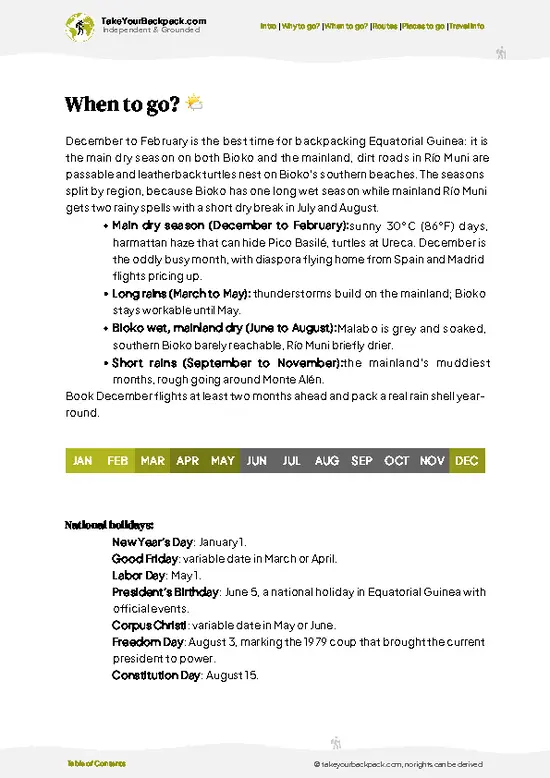
example page 3 from our offline Travel Guide for Equatorial Guinea
example page 4 from our offline Travel Guide for Equatorial Guinea
example page 5 from our offline Travel Guide for Equatorial Guinea
example page 6 from our offline Travel Guide for Equatorial Guinea
example page 7 from our offline Travel Guide for Equatorial Guinea
Loading the map 🌍
CLICK TO FILTER
cities
towns
villages
landmarks
national parks
hikes
beaches
attractions
regions
SHOW COUNTRY’S BESTSHOW ALL

✨ Why go?
Ranked #1 attraction in Equatorial Guinea
Why Museo de Arte Moderno de Guinea Ecuatorial should be on your travel list

Museo de Arte Moderno de Guinea Ecuatorial gives you something few travelers get in Central Africa: a look at contemporary Equatoguinean art on its own terms, away from souvenir stalls and carved masks. Most visitors to the country see oil-era skyscrapers and rainforest. This is where the creative side of the nation speaks.

The second reason is context. Malabo layers Spanish colonial streets, a neo-Gothic cathedral and new government architecture within a few kilometers, and the museum helps you read that mix through local eyes rather than a guidebook's. You leave understanding the city better than before.

It also suits the country's rhythm as a destination. Equatorial Guinea has few headline attractions, so a calm, air-cooled hour or two indoors is a welcome break between island excursions … read more 👉
Museo de Arte Moderno de Guinea Ecuatorial gives you something few travelers get in Central Africa: a look at contemporary Equatoguinean art on its own terms, away from souvenir stalls and carved masks. Most visitors to the country see oil-era skyscrapers and rainforest. This is where the creative side of the nation speaks.

The second reason is context. Malabo layers Spanish colonial streets, a neo-Gothic cathedral and new government architecture within a few kilometers, and the museum helps you read that mix through local eyes rather than a guidebook's. You leave understanding the city better than before.

It also suits the country's rhythm as a destination. Equatorial Guinea has few headline attractions, so a calm, air-cooled hour or two indoors is a welcome break between island excursions and market wandering. Entry is unlikely to strain a budget, and you will rarely queue. If you are building a route around Bioko, this is the stop that adds culture to the nature.

💡 HighlightsMust-see experiences and standout moments

  1. Museo de Arte Moderno de Guinea Ecuatorial: The main draw, a gallery of modern and contemporary work in the capital. Go for the chance to see how local and regional artists treat identity, nature and history, in rooms that are usually nearly empty.
  2. Catedral de Santa Isabel (Malabo Cathedral): A neo-Gothic church completed in the early 20th century, with twin spires that dominate the central skyline. Its pale stone and tall interior make a sharp contrast with the museum's modern rooms.
  3. Centro Cultural de España en Malabo: A cultural center with exhibitions, film and events, often featuring Equatoguinean creators. It is a good place to learn what is on in the local art scene.
  4. Plaza de la Independencia: The central square, lined with government and colonial-era buildings. It is a useful orientation
… read more 👉
  1. Museo de Arte Moderno de Guinea Ecuatorial: The main draw, a gallery of modern and contemporary work in the capital. Go for the chance to see how local and regional artists treat identity, nature and history, in rooms that are usually nearly empty.
  2. Catedral de Santa Isabel (Malabo Cathedral): A neo-Gothic church completed in the early 20th century, with twin spires that dominate the central skyline. Its pale stone and tall interior make a sharp contrast with the museum's modern rooms.
  3. Centro Cultural de España en Malabo: A cultural center with exhibitions, film and events, often featuring Equatoguinean creators. It is a good place to learn what is on in the local art scene.
  4. Plaza de la Independencia: The central square, lined with government and colonial-era buildings. It is a useful orientation point and a decent place to sit in the shade and watch the city at work.
  5. Mercado de Semú: A working market where produce, fabrics and household goods are sold. Go early, when it is busiest and cooler, and bring small notes for purchases.
  6. Paseo Marítimo: The waterfront promenade on the bay, where locals walk in the evening. Container ships and the green slopes of Bioko behind make a plain, honest view of the capital's setting.
The Museo de Arte Moderno de Guinea Ecuatorial combines well with the Centro Cultural de España en Malabo in a single day, since both are indoor, art-focused stops that let you avoid the midday heat.
Spotted a mistake or missing something? Contact us.

🌤️ When to go?When to go for the best experience

  • Dry Season (December to February): This is the easiest window for wandering Malabo on foot between galleries. Expect 24 to 31°C (75 to 88°F), mostly dry afternoons and some Saharan haze that dulls the sky. Prices for rooms are at their highest, since oil-industry travelers also favor these months.
  • Wet Season (March to November): Bioko gets heavy rain, peaking from roughly June to October, with downpours that flood streets and stall taxis for an hour or two. Temperatures hold at 23 to 29°C (73 to 84°F) with humidity that soaks a shirt within minutes. Rooms can be easier to negotiate, and a museum visit is a smart way to wait out a storm.
  • Daylight: The sun rises and sets close to the same hours all year, so a morning visit works in any month and leaves the afternoon free for the waterfront.
  • Crowds:
… read more 👉
  • Dry Season (December to February): This is the easiest window for wandering Malabo on foot between galleries. Expect 24 to 31°C (75 to 88°F), mostly dry afternoons and some Saharan haze that dulls the sky. Prices for rooms are at their highest, since oil-industry travelers also favor these months.
  • Wet Season (March to November): Bioko gets heavy rain, peaking from roughly June to October, with downpours that flood streets and stall taxis for an hour or two. Temperatures hold at 23 to 29°C (73 to 84°F) with humidity that soaks a shirt within minutes. Rooms can be easier to negotiate, and a museum visit is a smart way to wait out a storm.
  • Daylight: The sun rises and sets close to the same hours all year, so a morning visit works in any month and leaves the afternoon free for the waterfront.
  • Crowds: Visitor numbers stay low in every season, so you will usually have the rooms largely to yourself.
Aim for a weekday morning, before midday heat and the afternoon rain build.


source: climatestotravel.comJANJanuary: fair for travelingFEBFebruary: fair for travelingMARMarch: fair for travelingAPRApril: fair for travelingMAYMay: fair for travelingJUNJune: highly recommended for travelingJULJuly: excellent for travelingAUGAugust: highly recommended for travelingSEPSeptember: highly recommended for travelingOCTOctober: fair for travelingNOVNovember: fair for travelingDECDecember: good for traveling
when-to-go

✈️ The backpacker research shortcutEquatorial Guinea Travel Guide

An offline-friendly backpacking guide with optimized travel routes, ranked highlights, transport advice, and the best areas to stay.
example page 0 from our offline Travel Guide for Equatorial Guinea
example page 1 from our offline Travel Guide for Equatorial Guinea
example page 2 from our offline Travel Guide for Equatorial Guinea
example page 3 from our offline Travel Guide for Equatorial Guinea
example page 4 from our offline Travel Guide for Equatorial Guinea
example page 5 from our offline Travel Guide for Equatorial Guinea
example page 6 from our offline Travel Guide for Equatorial Guinea
example page 7 from our offline Travel Guide for Equatorial Guinea
The digital guide (174 pages) contains:
✅ 36 highlights, ranked by travel appeal
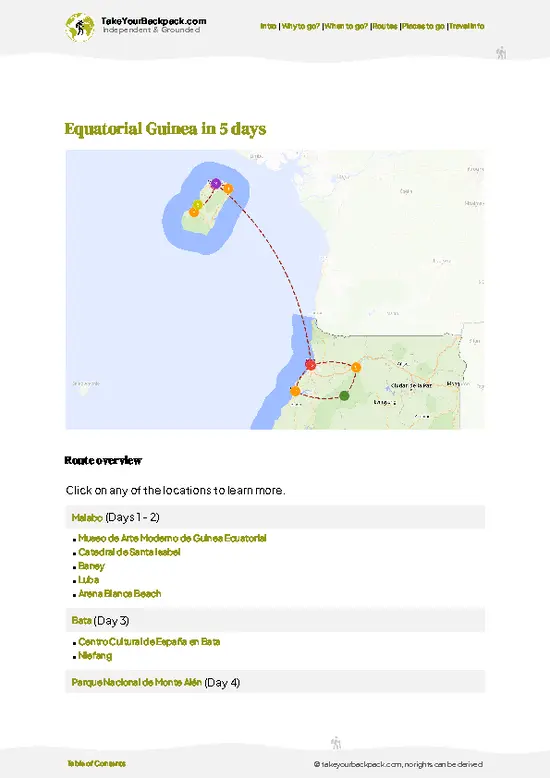
✅ Optimized 2, 3 & 5-day travel routes
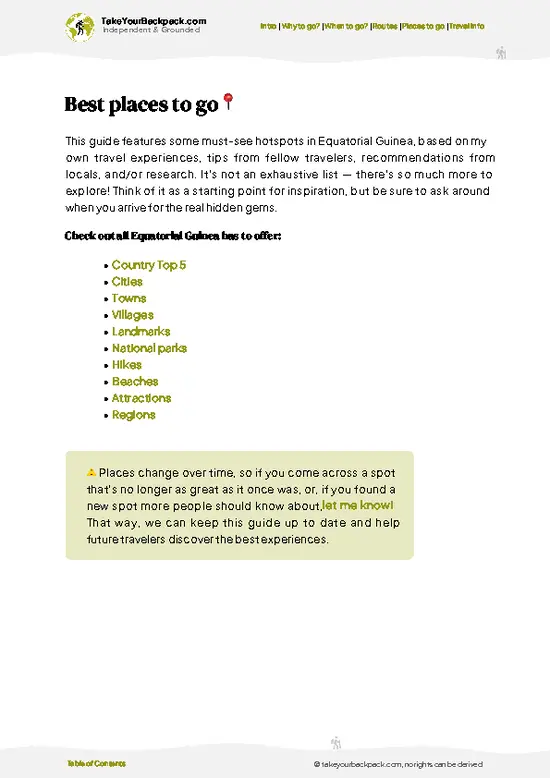
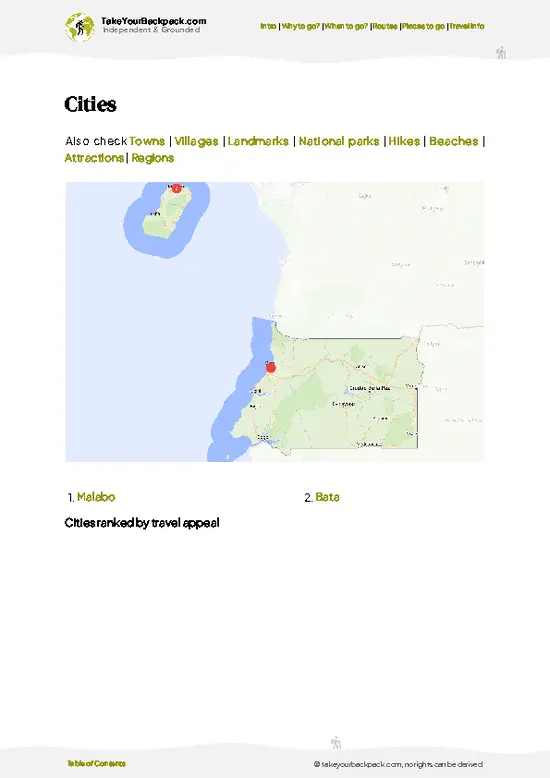
✅ Cities, national parks, landmarks, beaches
✅ How to get around
✅ Offline-friendly for travel without Wi-Fi
👉 Click to see all 30+ guide features

📅 Plan smarter in minutes, not weeks
✅ Month by month travel advice
✅ Festivals & national holidays
✅ Budget expectations

🗺️ Go to the right places, skip the overrated ones
✅ Honest pros & cons of destinations
✅ Top hikes, parks & viewpoints
✅ Lesser-known places most travelers miss
✅ Clear “worth it vs skip it” guidance

🛏️ Travel smoothly without rookie mistakes
✅ Best areas to stay
✅ Transport systems explained simply
✅ Common scams & safety advice
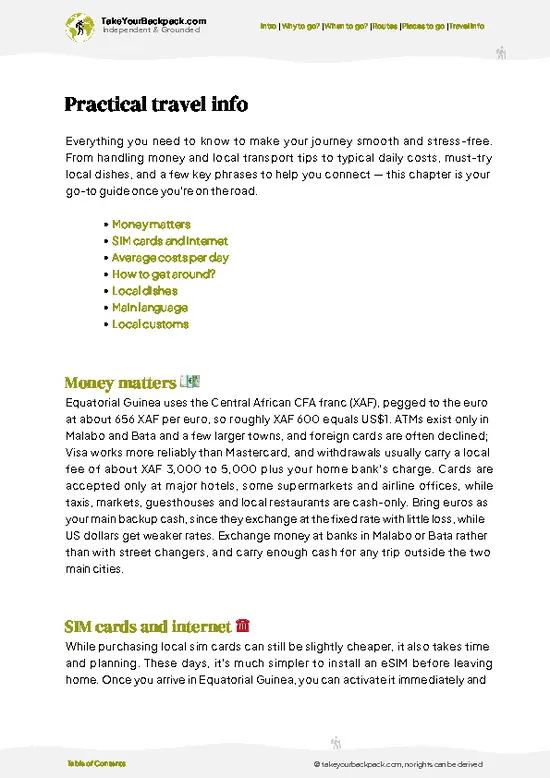
✅ SIM cards, money & practical tips

🌍 Understand the country, not just visit it
✅ Culture & traditions
✅ 52 Essential phrases & customs
✅ Festivals worth planning around
✅ Traveler-friendly historical context
✅ Insights that make places more meaningful

📱 Built for real travel conditions
✅ Fully downloadable PDF
✅ Works completely offline
✅ Optimized for phone use
✅ Useful in remote areas & buses
✅ Everything in one place
Stop searching, start planning
Get instant access to your full guide. 30‑day money-back guarantee.
+ Add another guide for just

By proceeding you agree to our terms.
Sent to your inbox immediately after payment • 100% Secure Checkout
Best Backpacking Travel Advisor 2025 tourism awardBest Backpacking
Travel Advisor
2025
What others say about Take Your Backpack Guides:
⭐⭐⭐⭐⭐
Fantastic, amazing amount of information!
⭐⭐⭐⭐⭐
My goodness this is amazing, it's what I've been looking for hats off too you!
⭐⭐⭐⭐⭐
I think this is absolutely BRILLIANT
⭐⭐⭐⭐
Very complete and informative. It's still missing places, but I gotta to commend you
⭐⭐⭐⭐⭐
This is truly amazing, thank you, can't wait to explore it with my kids!
⭐⭐⭐⭐⭐
Awesome resource, thank you!
⭐⭐⭐⭐⭐
This is amazing! Can't wait to explore the ones I haven't seen
⭐⭐⭐⭐
I love this! Well done, great idea.
⭐⭐⭐⭐⭐
Thanks for taking the time to make this gem!
⭐⭐⭐⭐⭐
This might be the best website I've ever seen.
⭐⭐⭐⭐⭐
Congratulations, and thank you so much for your work; it's incredibly valuable.
⭐⭐⭐⭐
In all seriousness I think you did a great job pointing out the important spots
⭐⭐⭐⭐⭐
10/10 very good
⭐⭐⭐⭐⭐
As someone who's only just starting to visit regularly this is awesome, thank you.
⭐⭐⭐⭐
Thank you very much! I'm going to visit my dad, it's going to be very useful!
⭐⭐⭐⭐⭐
This is really cool! We'll be travelling for the first time and this definitely come in handy.
⭐⭐⭐⭐⭐
You are now our minister of culture, congratulations 👨‍💼
⭐⭐⭐⭐⭐
Just wanted to tell you that this is a pearl! Going to follow your recommendations.
⭐⭐⭐⭐⭐
This is so cool. I'll definitely be using the resource for my travels soon.
⭐⭐⭐⭐⭐
This is very impressive! Good work.
⭐⭐⭐⭐⭐
This is an amazing and informative site. Very well done!

🛏️ Where to stay?Where staying makes the most sense

The most practical base is central Malabo, within a short taxi ride of the museum, because that is where guesthouses, cafés, ATMs and shared taxis cluster. Accommodation here is limited and pricey by backpacker standards, so book ahead and expect basic, mid-range-style rooms rather than dorm culture.

The old colonial center around the cathedral and Plaza de la Independencia is the best pick for solo travelers. You can walk to restaurants, the Spanish-era streets and the waterfront in daylight, and taxis are easy to flag down. Evenings are livelier than elsewhere in town, with open-air bars where … read more 👉
The most practical base is central Malabo, within a short taxi ride of the museum, because that is where guesthouses, cafés, ATMs and shared taxis cluster. Accommodation here is limited and pricey by backpacker standards, so book ahead and expect basic, mid-range-style rooms rather than dorm culture.

The old colonial center around the cathedral and Plaza de la Independencia is the best pick for solo travelers. You can walk to restaurants, the Spanish-era streets and the waterfront in daylight, and taxis are easy to flag down. Evenings are livelier than elsewhere in town, with open-air bars where you can meet expats and locals.

The Paseo Marítimo area along the coast is a calmer second choice. It has sea breezes, better evening strolls and a handful of mid-priced guesthouses, though fewer cheap eats.

Malabo II, the newer district to the east and south, has more residential-style lodging and local food stalls at lower prices. It suits travelers who want to save money and don’t mind relying on taxis after dark.

Sipopo, the resort zone outside town, is quiet and expensive, so skip it on a budget. Wherever you sleep, use taxis at night, carry a photocopy of your passport and keep cash in small notes.

👛 Costs (as of 22 October 2026)Travel costs and budget guide for Museo de Arte Moderno de Guinea Ecuatorial

Museo de Arte Moderno de Guinea Ecuatorial fits into a Malabo day of roughly €94 per person for a budget traveler, with the room being by far the biggest expense. Equatorial Guinea is among the pricier places in Central Africa, and you pay in Central African CFA francs, though many hotels also quote euros.
CategoryBudget RangeLocal Reality
Museum entry€0 to 3Fees are low or nominal, and a small donation or guide tip is common. Bring cash.
Accommodation (high season)€45 to 60Basic guesthouses in central Malabo. Dorms are rare, and prices drop a bit in the wet season.
Accommodation (low season)€35 to 50Room rates are easier to negotiate from June to October.
Food€12 to 20Street grills and local canteens cost €3 to 6 per meal. Restaurants aimed at expats run €12 to 25.
Local transport€4 to 8Shared
… read more 👉
Museo de Arte Moderno de Guinea Ecuatorial fits into a Malabo day of roughly €94 per person for a budget traveler, with the room being by far the biggest expense. Equatorial Guinea is among the pricier places in Central Africa, and you pay in Central African CFA francs, though many hotels also quote euros.
CategoryBudget RangeLocal Reality
Museum entry€0 to 3Fees are low or nominal, and a small donation or guide tip is common. Bring cash.
Accommodation (high season)€45 to 60Basic guesthouses in central Malabo. Dorms are rare, and prices drop a bit in the wet season.
Accommodation (low season)€35 to 50Room rates are easier to negotiate from June to October.
Food€12 to 20Street grills and local canteens cost €3 to 6 per meal. Restaurants aimed at expats run €12 to 25.
Local transport€4 to 8Shared taxis cost about €0.75 to 1.50 per hop. A private taxi between districts costs €3 to 6.
Extras€3 to 6Water, a coffee, a camera permit or phone credit.
Total Daily Budget€94Per person, per day, in high season.
⚠️ Prices can change and everyone travels differently, so take this as a rough guide. Hope it helps you plan your adventure!

FAQCommon questions from travelers

Plan on one to two hours at Museo de Arte Moderno de Guinea Ecuatorial, which is enough to see the galleries at an unhurried pace. Pair it with the nearby colonial streets, the cathedral and the waterfront in the same morning, and you have a comfortable half day in Malabo. Go before midday to avoid the heat and the afternoon rain.
Museo de Arte Moderno de Guinea Ecuatorial is worth a visit because the fee is low, at most about €3, and the collection offers a rare look at contemporary Equatorial Guinean art. It suits travelers who have already seen the cathedral and want a quiet, air-conditioned hour out of the humidity. Bring small cash, since card payment is unreliable.
Reach Museo de Arte Moderno de Guinea Ecuatorial by taxi from anywhere in central Malabo in about 5 to 15 minutes, for €1 to 6 depending on whether the ride is shared or private. From Malabo Airport it is a 10 to 20 minute ride, and you should agree on the fare before getting in. Walking is possible from the colonial center in good weather, but taxis are safer after dark.
⚠️ Things can change over time, so always validate details locally before you go.

Other Equatoguinean attractions near Museo de Arte Moderno de Guinea Ecuatorial

Explore more nearby:


💡 Not sure where to go next?
Create a personalized itinerary for Equatorial Guinea including Museo de Arte Moderno de Guinea Ecuatorial and the places that fit your trip.

Generate my itinerary

👉 Discover all attractions

Or checkout all Equatorial Guinea has to offer (think cities, towns, villages, national parks, hikes, beaches, festivals)
Country photo of Equatorial Guinea

We 💚 feedbackParting advice and final tips

Museo de Arte Moderno de Guinea Ecuatorial suits curious travelers who like quiet galleries, anyone hungry for local culture beyond beaches and rainforest, and people who enjoy cities at a slow pace. If you need big collections or guided tours, skip it. I would go on a hot afternoon, carry a notebook and pair it with the cathedral walk.

✍️ Help improve this page!
The information on this page is based on in-depth research, insights shared by experienced travelers, and feedback from the local travel community in Equatorial Guinea. While every effort is made to keep the information accurate and current, conditions can change — so if you spot anything incorrect or outdated, please get in touch.


🙋‍♂️ Give feedback

👋 Meet the founderWho’s Behind Take Your Backpack?

Johan, backpacker and founder of TakeYourBackpackHi, I’m Johan (Netherlands 🇳🇱), the creator of TakeYourBackpack. Over the past 3 decades, I’ve backpacked through 90+ countries across six continents, gaining extensive experience with independent travel, long-term trips, and overland routes.

This site is built on a combination of firsthand travel experience and carefully curated insights from other backpackers. Many guides are based on places I’ve personally visited, while others bring together tips, observations, and practical advice shared by trusted travelers I’ve met along the way.

The goal is to provide realistic, experience-driven guidance — not generic itineraries — so you can explore destinations with better context, clearer expectations, and more confidence.