×

Equatorial Guinea🇬🇶 | townsMicomesengagricultural zone, cocoa farms, rural landscape | things to do and best time to go

Explore AñisocExplore Niefang

Backpacking in Micomeseng
👀 For curious travelerstown ranked #14
By Johan Kruseman 🇳🇱 | Updated June 6, 2026

Everyone talks about Micomeseng’s proximity to the Ntem River, as if that’s the whole story—but the real pulse of this town is the slow, earthy rhythm of daily life, not any single landmark. Tucked in Equatorial Guinea’s northeast, near the Cameroon border, Micomeseng is less a destination than a crossroads: a practical, sometimes gritty pause between Bata’s bustle and the wild green of Río Campo. For backpackers, it’s a place to catch your breath, maybe swap stories over grilled fish in a smoky roadside eatery, and plot your next move. Don’t expect hostels or nightlife—this is a town where dusk settles quietly and the market’s chatter is your soundtrack. It’s walkable, but distances stretch under the equatorial sun, and local taxis fill the gaps. Costs are modest, safety is average for the region, and you’ll likely be the only foreigner in sight. Compared to Bata, Micomeseng is quieter, less polished, but more honest—worth a stop if you want to feel the real Equatorial Guinea between the headline sights.

Discover everything you want to know in the 📖 Equatorial Guinea Travel Guide.
Loading the map 🌍
CLICK TO FILTER
cities
towns
villages
landmarks
national parks
hikes
beaches
attractions
festivals
regions
SHOW COUNTRY’S BESTSHOW ALL

✨ Why go?
Ranked #14 town in Equatorial Guinea
Reasons people choose to visit here

Micomeseng serves as a gateway for backpackers exploring Equatorial Guinea’s lush landscapes. Its proximity to stunning hikes and pristine beaches makes it a strategic stop. You can easily access trails that wind through dense forests or relax on quiet shores, soaking in the salty air. The local food scene is a treat, with small eateries serving up fresh fish and hearty stews that reflect the region’s flavors. Streets are walkable, allowing for spontaneous interactions with friendly locals. Travelers often linger here for a few days, especially those who appreciate a social atmosphere without the chaos of nightlife. It’s ideal for slow travelers and solo adventurers seeking connection and adventure in a laid-back setting.
Want to include Micomeseng in your Equatorial Guinea route?
Create a personalized Equatorial Guinea itinerary that includes Micomeseng and the places that fit your trip — based on your travel style, budget, and available time. Get your route in seconds.

Generate my trip

💡 HighlightsPlaces and moments you shouldn't skip

  • Central market (mercado) — The real heartbeat of village life: piles of plantains, fresh fish when it’s in season, household goods, and the best place to practice Spanish or pidgin with locals while watching daily trade and bartering.
  • Parish church / mission compound — More than a building: a social anchor. Attend a service or just observe the carved benches, community noticeboard, and the way faith and local life are intertwined here.
  • Chief’s palaver house (traditional meeting hut) — Where elders and leaders gather. Visiting (with permission) gives a window into local governance, stories, and customary dispute resolution—real cultural value you won’t get from a guidebook.
  • Smallholder cocoa/coffee drying yards — Micomeseng’s surrounding farms often bring beans into the village to dry.
read more 👉
  • Central market (mercado) — The real heartbeat of village life: piles of plantains, fresh fish when it’s in season, household goods, and the best place to practice Spanish or pidgin with locals while watching daily trade and bartering.
  • Parish church / mission compound — More than a building: a social anchor. Attend a service or just observe the carved benches, community noticeboard, and the way faith and local life are intertwined here.
  • Chief’s palaver house (traditional meeting hut) — Where elders and leaders gather. Visiting (with permission) gives a window into local governance, stories, and customary dispute resolution—real cultural value you won’t get from a guidebook.
  • Smallholder cocoa/coffee drying yards — Micomeseng’s surrounding farms often bring beans into the village to dry. Watching and talking to producers reveals daily rhythms, traditional processing techniques, and opportunities to buy directly.
  • Village school courtyard — The center of youth life: noisy lessons, midday games, and a spot where you can meet teachers, learn about education challenges, or bring small, useful supplies if you’re so inclined.
  • Traditional healer’s compound and herbal garden — Herbal medicine and spiritual practice remain important. With respect and permission, these compounds offer deep cultural insight into local healing traditions and plant knowledge.
  • Riverside paths and landing — The village’s access to water (a creek or riverbank and small landings) is where laundry, boat traffic, and everyday chores happen. It’s low-key but vivid social anthropology in motion and good for photos at golden hour.
  • Community cemetery and ancestral sites — Visiting local burial grounds—again, respectfully—reveals important family ties, funerary customs, and carved memorials that tell personal histories you won’t find elsewhere.
  • Football pitch (el campo) — A simple mud pitch, but where the whole village assembles on match day. Bring a ball or join a game: nothing breaks barriers faster than local football.
  • Secondary-forest trails and village-edge birding — Short walks from the village quickly reach regrown forest patches. Good for seeing common rainforest birds, learning local plant names, and enjoying quiet immersion in the landscape.
For easy day trips from Micomeseng, check out the regional hub of Bata (seafront and big market), nearby coastal fishing villages and beaches, and the mainland rainforest areas and cocoa-producing countryside that surround the town.
Spotted a mistake or missing something? Contact us.

Things to do near Micomeseng

Ratings based on Tripadvisor reviews. When you book through this link, you support our work at no extra cost to you.

🏘️ NeighborhoodsWhere things are and how it's laid out

Micomeseng offers a unique blend of local culture and practical amenities for backpackers. Here’s a breakdown of its neighborhoods:

Centro: This is the heart of Micomeseng. Vibrant markets and local eateries fill the streets. It’s walkable, with everything you need within a few blocks. Prices are reasonable, making it ideal for budget travelers. The nightlife is lively, with bars that spill onto the streets, perfect for meeting fellow adventurers.

Malabo Road: A bit quieter, this area is great for longer stays. You’ll find guesthouses with kitchen access, allowing you to save on meals. The vibe is relaxed, with fewer tourists. Public transport is accessible, but walking is a pleasant option.

La Playa: If you crave the ocean, head here. The beach atmosphere is laid-back, with stunning sunsets. … read more 👉
Micomeseng offers a unique blend of local culture and practical amenities for backpackers. Here’s a breakdown of its neighborhoods:

Centro: This is the heart of Micomeseng. Vibrant markets and local eateries fill the streets. It’s walkable, with everything you need within a few blocks. Prices are reasonable, making it ideal for budget travelers. The nightlife is lively, with bars that spill onto the streets, perfect for meeting fellow adventurers.

Malabo Road: A bit quieter, this area is great for longer stays. You’ll find guesthouses with kitchen access, allowing you to save on meals. The vibe is relaxed, with fewer tourists. Public transport is accessible, but walking is a pleasant option.

La Playa: If you crave the ocean, head here. The beach atmosphere is laid-back, with stunning sunsets. It’s less crowded, making it perfect for unwinding after a day of exploration. Prices can be higher, but the experience of beachside dining is worth it.

Each area has its charm, so choose based on your mood and travel style.

⌛️ 1 daySeeing the highlights in 24 hours

Micomeseng, a charming town in Equatorial Guinea, offers a slice of authentic life away from the usual tourist trails. The air is thick with the scent of tropical flora, and the vibrant local markets pulse with energy. Start your day early with a stroll through the bustling Mercado Municipal. Here, the colors of fresh produce and handmade crafts create a feast for the senses. Grab a breakfast of sweet plantains and local coffee from a vendor; the warmth of the sun will greet you as you savor each bite.

In the afternoon, head to the nearby Playa de Micomeseng. The golden sands and gentle waves invite you to relax. Bring a book or simply soak in the sun while listening to the rhythmic crash of the surf. If you’re feeling adventurous, take a short hike to the nearby hills for panoramic views … read more 👉
Micomeseng, a charming town in Equatorial Guinea, offers a slice of authentic life away from the usual tourist trails. The air is thick with the scent of tropical flora, and the vibrant local markets pulse with energy. Start your day early with a stroll through the bustling Mercado Municipal. Here, the colors of fresh produce and handmade crafts create a feast for the senses. Grab a breakfast of sweet plantains and local coffee from a vendor; the warmth of the sun will greet you as you savor each bite.

In the afternoon, head to the nearby Playa de Micomeseng. The golden sands and gentle waves invite you to relax. Bring a book or simply soak in the sun while listening to the rhythmic crash of the surf. If you’re feeling adventurous, take a short hike to the nearby hills for panoramic views of the coastline and lush greenery. The climb is worth every step, revealing the town’s beauty from above.

As evening approaches, wander into the heart of the town. The streets come alive with laughter and music. Stop by a local eatery for dinner; try the grilled fish seasoned with spices that dance on your palate. End your day with a stroll through the quieter neighborhoods, where the soft glow of lanterns illuminates the paths, and the warmth of community wraps around you like a comforting blanket. This day in Micomeseng isn’t just about sights; it’s about feeling the pulse of a place that thrives on connection and simplicity.
Turn your Micomeseng visit into an Equatorial Guinea adventure
Build a complete Equatorial Guinea route with Micomeseng, hidden gems, must-see destinations, and realistic travel times included.

Generate my trip

🌤️ When to go?Seasonal considerations and timing


  • Weather: Micomeseng’s climate swings between a wet season from March to November and a dry season from December to February. The wet months bring heavy, humid rains that can turn trails into mud baths, while the dry season offers clearer skies and easier trekking conditions.

  • Temperature: Expect daily highs around 28-32°C (82-90°F) year-round, but humidity spikes during the rainy season, making it feel hotter and stickier. Dry months are more comfortable, with nights cooling to about 20°C (68°F).

  • Daylight Hours: Near the equator, daylight is steady—roughly 12 hours daily year-round—so no need to juggle your schedule for light.

  • Crowds: Micomeseng is off the beaten path, so crowds are minimal anytime. However, local festivals during the dry season can bring a lively buzz worth timing
read more 👉

  • Weather: Micomeseng’s climate swings between a wet season from March to November and a dry season from December to February. The wet months bring heavy, humid rains that can turn trails into mud baths, while the dry season offers clearer skies and easier trekking conditions.

  • Temperature: Expect daily highs around 28-32°C (82-90°F) year-round, but humidity spikes during the rainy season, making it feel hotter and stickier. Dry months are more comfortable, with nights cooling to about 20°C (68°F).

  • Daylight Hours: Near the equator, daylight is steady—roughly 12 hours daily year-round—so no need to juggle your schedule for light.

  • Crowds: Micomeseng is off the beaten path, so crowds are minimal anytime. However, local festivals during the dry season can bring a lively buzz worth timing your visit for.

  • Seasonal Activities: Dry season is prime for exploring forests and villages without the rain’s interruption. Wet season offers lush greenery but can limit access to some trails and remote spots.

  • Price Fluctuations: Prices for lodging and guides tend to dip during the wet season due to lower demand, but the trade-off is dealing with unpredictable weather and muddy conditions.


Pro-tip: Aim for the dry season to enjoy Micomeseng’s natural beauty in full swing—clear trails, manageable humidity, and a chance to catch local cultural events without the hassle of rain.


source: climatestotravel.comJANJanuary: excellent for travelingFEBFebruary: excellent for travelingMARMarch: fair for travelingAPRApril: fair for travelingMAYMay: fair for travelingJUNJune: fair for travelingJULJuly: fair for travelingAUGAugust: fair for travelingSEPSeptember: fair for travelingOCTOctober: fair for travelingNOVNovember: fair for travelingDECDecember: excellent for traveling
when-to-go

✈️ The backpacker research shortcutEquatorial Guinea Travel Guide

An offline-friendly backpacking guide with optimized travel routes, ranked highlights, transport advice, and the best areas to stay.
example page 0 from our offline Travel Guide for Equatorial Guinea
example page 1 from our offline Travel Guide for Equatorial Guinea
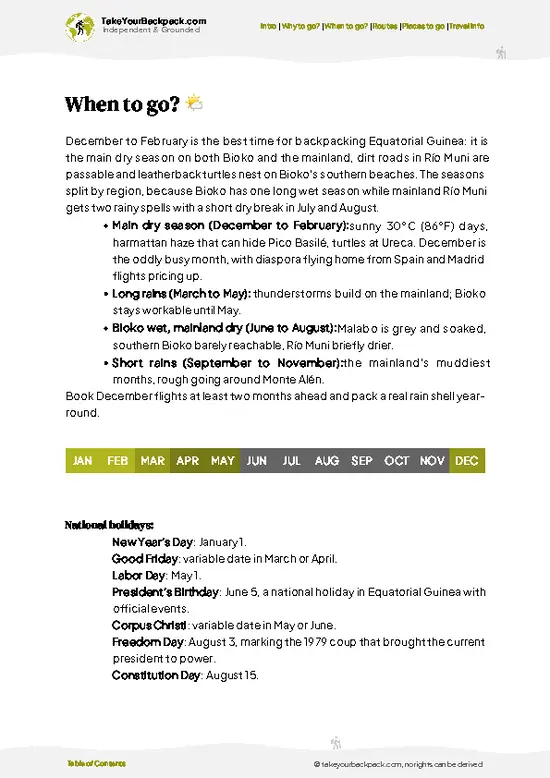
example page 2 from our offline Travel Guide for Equatorial Guinea
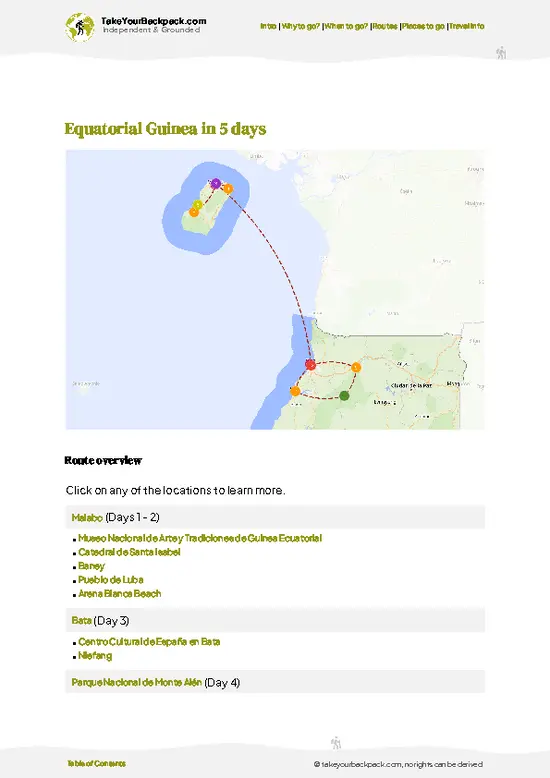
example page 3 from our offline Travel Guide for Equatorial Guinea
example page 4 from our offline Travel Guide for Equatorial Guinea
example page 5 from our offline Travel Guide for Equatorial Guinea
example page 6 from our offline Travel Guide for Equatorial Guinea
example page 7 from our offline Travel Guide for Equatorial Guinea
The digital guide (216 pages) contains:
52 highlights, ranked by travel appeal
Optimized 2, 3 & 5-day travel routes
Cities, national parks, landmarks, beaches
How to get around
Offline-friendly for travel without Wi-Fi
👉 Click to see all 30+ guide features

📅 Plan smarter in minutes, not weeks
Month by month travel advice
Festivals & national holidays
Budget expectations

🗺️ Go to the right places, skip the overrated ones
Honest pros & cons of destinations
Top hikes, parks & viewpoints
Lesser-known places most travelers miss
Clear “worth it vs skip it” guidance

🛏️ Travel smoothly without rookie mistakes
Best areas to stay
Transport systems explained simply
Common scams & safety advice
SIM cards, money & practical tips

🌍 Understand the country, not just visit it
Culture & traditions
52 Essential phrases & customs
Festivals worth planning around
Traveler-friendly historical context
Insights that make places more meaningful

📱 Built for real travel conditions
Fully downloadable PDF
Works completely offline
Optimized for phone use
Useful in remote areas & buses
Everything in one place
Save weeks of stressful planning
Get instant access to your full guide. 30‑day money-back guarantee.


By proceeding you agree to our terms.
Sent to your inbox immediately after payment • 100% Secure Checkout
Best Backpacking Travel Advisor 2025 tourism awardBest Backpacking
Travel Advisor
2025
What others say about Take Your Backpack Guides:
⭐⭐⭐⭐⭐
Fantastic, amazing amount of information!
⭐⭐⭐⭐⭐
My goodness this is amazing, it's what I've been looking for hats off too you!
⭐⭐⭐⭐⭐
I think this is absolutely BRILLIANT
⭐⭐⭐⭐
Very complete and informative. It's still missing places, but I gotta to commend you
⭐⭐⭐⭐⭐
This is truly amazing, thank you, can't wait to explore it with my kids!
⭐⭐⭐⭐⭐
Awesome resource, thank you!
⭐⭐⭐⭐⭐
This is amazing! Can't wait to explore the ones I haven't seen
⭐⭐⭐⭐
I love this! Well done, great idea.
⭐⭐⭐⭐⭐
Thanks for taking the time to make this gem!
⭐⭐⭐⭐⭐
This might be the best website I've ever seen.
⭐⭐⭐⭐⭐
Congratulations, and thank you so much for your work; it's incredibly valuable.
⭐⭐⭐⭐
In all seriousness I think you did a great job pointing out the important spots
⭐⭐⭐⭐⭐
10/10 very good
⭐⭐⭐⭐⭐
As someone who's only just starting to visit regularly this is awesome, thank you.
⭐⭐⭐⭐
Thank you very much! I'm going to visit my dad, it's going to be very useful!
⭐⭐⭐⭐⭐
This is really cool! We'll be travelling for the first time and this definitely come in handy.
⭐⭐⭐⭐⭐
You are now our minister of culture, congratulations 👨‍💼
⭐⭐⭐⭐⭐
Just wanted to tell you that this is a pearl! Going to follow your recommendations.
⭐⭐⭐⭐⭐
This is so cool. I'll definitely be using the resource for my travels soon.
⭐⭐⭐⭐⭐
This is very impressive! Good work.
⭐⭐⭐⭐⭐
This is an amazing and informative site. Very well done!

🛏️ Where to stay?Best areas to stay in Equatorial Guinea

Micomeseng’s heart for backpackers pulses strongest near the central market district. This area hums with life from dawn, the air thick with the scent of fresh cassava and grilled fish, making it a natural magnet for solo travelers craving connection and local flavor. Streets here are compact, easy to navigate on foot, and lined with small eateries and informal stalls where you can snag a meal without breaking the bank. Safety feels tangible—not because it’s sterile, but because locals and travelers mingle openly, creating a watchful, communal vibe.

Compared to the quieter residential zones on … read more 👉
Micomeseng’s heart for backpackers pulses strongest near the central market district. This area hums with life from dawn, the air thick with the scent of fresh cassava and grilled fish, making it a natural magnet for solo travelers craving connection and local flavor. Streets here are compact, easy to navigate on foot, and lined with small eateries and informal stalls where you can snag a meal without breaking the bank. Safety feels tangible—not because it’s sterile, but because locals and travelers mingle openly, creating a watchful, communal vibe.

Compared to the quieter residential zones on the outskirts, this central hub offers a social pulse that’s hard to find elsewhere. Hostels cluster here, modest but welcoming, often doubling as informal meeting points. Staying here means you’re not just passing through Micomeseng—you’re stepping into its daily rhythm, where every corner invites a conversation or a shared laugh under the warm Equatorial sun.

🚌 Getting aroundGetting around like a local

Micomeseng moves at its own rhythm—less a clockwork town and more a place where the sun’s climb and fall dictate the day. The air carries the scent of earth and wood smoke, and the streets pulse with a mix of purposeful strides and casual pauses. You won’t find rigid schedules here; instead, the flow is shaped by local intuition and the ebb and flow of daily life. This means your best bet is to sync with the natural tempo—early mornings and late afternoons bring the most movement, while midday slows to a gentle simmer under the tropical sun.


  • Walking: The heart of Micomeseng is compact enough to explore on foot. Walking lets you soak in the scent of fresh-cut timber and the chatter of market vendors. It’s free, flexible, and perfect for spontaneous detours through narrow alleys and vibrant
read more 👉
Micomeseng moves at its own rhythm—less a clockwork town and more a place where the sun’s climb and fall dictate the day. The air carries the scent of earth and wood smoke, and the streets pulse with a mix of purposeful strides and casual pauses. You won’t find rigid schedules here; instead, the flow is shaped by local intuition and the ebb and flow of daily life. This means your best bet is to sync with the natural tempo—early mornings and late afternoons bring the most movement, while midday slows to a gentle simmer under the tropical sun.


  • Walking: The heart of Micomeseng is compact enough to explore on foot. Walking lets you soak in the scent of fresh-cut timber and the chatter of market vendors. It’s free, flexible, and perfect for spontaneous detours through narrow alleys and vibrant street corners.


  • Shared Taxis: These minibuses or pickup trucks operate on informal routes, leaving when full rather than on a strict timetable. Expect to pay a few dollars for trips to nearby villages or the town center. They’re a bit cramped but offer a fast, authentic way to travel with locals.


  • Motorcycle Taxis (Boda Bodas): For quick hops across town or to less accessible spots, boda bodas are your go-to. Negotiate fares upfront—usually under a dollar for short rides. They dart through traffic with agility, giving you a breeze and a front-row seat to the town’s pulse.


  • Bicycle Rentals: If you want to cover more ground at your own pace, renting a bike is a smart move. It’s cheap, eco-friendly, and lets you glide past the slow-moving crowds while catching the scent of the surrounding forest and farmland.

👛 Costs (as of 22 July 2025)Travel costs and budget guide for Micomeseng

Backpacking in Micomeseng, Equatorial Guinea, demands a clear sense of how your money moves through the town’s modest but essential services. The costs here reflect a place off the typical tourist radar, where infrastructure is basic and prices are tied closely to local standards rather than international tourism.
  • Dorm Accommodation: Options are extremely limited in Micomeseng itself, with no formal hostels or dorm-style lodgings common to backpackers. Budget travelers usually find simple guesthouses or shared rooms in local homes, costing around €10-15 per night. These places offer bare essentials—think a fan, a mosquito net, and a hard mattress—nothing fancy, but enough to rest after a day in the humid, earthy air.
  • Meals: Eating local is the way to go. Street food and small eateries serve
read more 👉
Backpacking in Micomeseng, Equatorial Guinea, demands a clear sense of how your money moves through the town’s modest but essential services. The costs here reflect a place off the typical tourist radar, where infrastructure is basic and prices are tied closely to local standards rather than international tourism.
  • Dorm Accommodation: Options are extremely limited in Micomeseng itself, with no formal hostels or dorm-style lodgings common to backpackers. Budget travelers usually find simple guesthouses or shared rooms in local homes, costing around €10-15 per night. These places offer bare essentials—think a fan, a mosquito net, and a hard mattress—nothing fancy, but enough to rest after a day in the humid, earthy air.
  • Meals: Eating local is the way to go. Street food and small eateries serve up hearty, filling meals for about €2-4 each. Expect staples like rice, beans, grilled fish, or chicken, often accompanied by plantains or cassava. The scent of smoky charcoal and fresh spices fills the air, and meals are simple but satisfying, grounding you in the local rhythm.
  • Local Transport: Micomeseng is small enough that walking covers most needs, but for longer trips or to reach nearby villages, shared taxis or minibuses are the norm. These cost roughly €0.50-1 per ride. The vehicles are often old and crowded, with windows down to catch the warm breeze and the occasional dust cloud from unpaved roads.
  • Basic Activities/Entry Fees: Organized tourist activities are scarce. Visiting local markets, churches, or natural spots usually doesn’t require a fee, but if you hire a local guide for cultural or nature walks, expect to pay around €5-10. This supports the community directly and unlocks stories and access you wouldn’t get solo.
  • Miscellaneous Expenses: This includes bottled water (essential in the tropical heat), snacks, and occasional phone credit or SIM cards. Bottled water costs about €0.50 per liter, and a basic SIM with data runs around €5-7. Small tips or purchases of local crafts might add a few euros here and there.

All told, a realistic daily budget for backpacking in Micomeseng lands between €20 and €35. This range covers the essentials without glossing over the town’s simplicity and the need to adapt to its slower, less tourist-driven pace. The payoff is a raw, grounded experience where every euro spent feels like a direct connection to the place and its people.


source: guineaecuatorialpress.com
⚠️ Prices can change and everyone travels differently, so take this as a rough guide. Hope it helps you plan your adventure!

🚌 Day tripsEasy escapes and nearby places

Micomeseng is a fantastic base for exploring the lush landscapes and vibrant culture of Equatorial Guinea. Here are some day trips that truly capture the essence of this unique region.

Bata Beach Escape
A quick two-hour ride from Micomeseng, Bata Beach offers a slice of coastal paradise. The salty breeze and rhythmic waves create an inviting atmosphere. Spend your day lounging on the golden sands or diving into the warm waters. Grab a fresh coconut from a local vendor for a refreshing treat. The cost is minimal—around $5 for transport and a few dollars for snacks. Aim for the dry season, from December to February, to avoid the rain. First-timers often underestimate the sun; don’t forget sunscreen!


Monte Alén National Park
Just a three-hour journey will take you to Monte Alén National … read more 👉
Micomeseng is a fantastic base for exploring the lush landscapes and vibrant culture of Equatorial Guinea. Here are some day trips that truly capture the essence of this unique region.

Bata Beach Escape
A quick two-hour ride from Micomeseng, Bata Beach offers a slice of coastal paradise. The salty breeze and rhythmic waves create an inviting atmosphere. Spend your day lounging on the golden sands or diving into the warm waters. Grab a fresh coconut from a local vendor for a refreshing treat. The cost is minimal—around $5 for transport and a few dollars for snacks. Aim for the dry season, from December to February, to avoid the rain. First-timers often underestimate the sun; don’t forget sunscreen!


Monte Alén National Park
Just a three-hour journey will take you to Monte Alén National Park, a treasure trove of biodiversity. The air is thick with the scent of damp earth and rich foliage. Hiking through the park reveals stunning waterfalls and the chance to spot rare wildlife. Entry fees are around $10, plus transportation costs. The best time to visit is during the dry season, when trails are more accessible. Many travelers miss the early morning light; starting your hike at dawn rewards you with breathtaking views.


Luba’s Cultural Experience
A short 90-minute trip leads you to Luba, where you can immerse yourself in local culture. The vibrant market buzzes with life, offering everything from handmade crafts to traditional foods. Spend a few hours chatting with locals and sampling street food—budget around $10 for transport and snacks. Visit on a Saturday for the liveliest atmosphere. A common mistake is sticking to the main roads; venture into side alleys for authentic experiences.
Want to know what more Equatorial Guinea offers?
The Equatorial Guinea Travel Guide describes 52 highlights, from cities to national parks, from beaches to hikes

Get the Travel Guide -

🛡️ SafetyStaying Safe: What Travelers Should Know

Micomeseng is generally safe, but awareness is key. Stick to well-lit areas after dark, especially if you’re solo. The streets can feel quiet, so keep your phone handy for navigation and stay alert.

Watch for common scams, like overly friendly locals offering unsolicited help, which can lead to unexpected fees. Politely decline and trust your instincts.

Everyday annoyances include occasional power outages, so a portable charger is a smart companion. Embrace the local pace; it’s slower than you might expect. This isn’t just a trip; it’s a chance to connect with the rhythm of life here.

Other Equatoguinean towns near Micomeseng

Explore more nearby:

  • Añisoc—savanna edge, regional market, crossroads town| 31 km away
  • Niefang—river crossing, gateway town, mixed cultures| 63 km away
  • Ebebiyin—border crossroads, tri-national junction, busy transport hub| 66 km away

💡 Not sure where to go next?
Create a personalized itinerary for Equatorial Guinea including Micomeseng and the places that fit your trip.

Generate my itinerary

👉 Discover all towns

Or checkout all Equatorial Guinea has to offer (think cities, towns, villages, national parks, hikes, beaches, festivals)
Country photo of Equatorial Guinea

We 💚 feedbackKey takeaways before you go

Micomeseng has a raw, electric vibe that pulses with life. The best surprise? The locals’ warmth; they’ll share stories over palm wine that linger long after. Just a heads-up: the roads can be tricky, so embrace the journey. It’s all part of the adventure, leading you to those unforgettable moments.

✍️ Help improve this page!
The information on this page is based on in-depth research, insights shared by experienced travelers, and feedback from the local travel community in Equatorial Guinea. While every effort is made to keep the information accurate and current, conditions can change — so if you spot anything incorrect or outdated, please get in touch.


🙋‍♂️ Give feedback

👋 Meet the founderWho’s Behind Take Your Backpack?

Johan, backpacker and founder of TakeYourBackpackHi, I’m Johan (Netherlands 🇳🇱), the creator of TakeYourBackpack. Over the past decade, I’ve backpacked through 80+ countries across six continents, gaining extensive experience with independent travel, long-term trips, and overland routes.

This site is built on a combination of firsthand travel experience and carefully curated insights from other backpackers. Many guides are based on places I’ve personally visited, while others bring together tips, observations, and practical advice shared by trusted travelers I’ve met along the way.

The goal is to provide realistic, experience-driven guidance — not generic itineraries — so you can explore destinations with better context, clearer expectations, and more confidence.

Get full country guide •
Instant download • 52 highlights • Full Offline guide