×

Equatorial Guinea🇬🇶 | townsNiefangriver crossing, gateway town, mixed cultures | things to do and best time to go

Explore MicomesengExplore Cascadas de Moka

Backpacking in Niefang
👌 Worth visitingtown ranked #11
By Johan Kruseman 🇳🇱 | Updated June 9, 2026

Everyone talks about Niefang as the “gateway to the jungle,” but that’s just the surface. The real reason to stop here isn’t the promise of untouched rainforest—it’s the slow, lived-in rhythm of a town that marks the border between Equatorial Guinea’s coastal world and its wild interior. Niefang sits inland, east of Bata, where the air thickens and the roads start to feel like a handshake with the unknown. For backpackers, it’s less a destination than a hinge: a practical overnight if you’re pushing toward the Río Muni forests, or a place to catch your breath before the next dusty bus ride. The market is small but lively, with grilled fish and plantains perfuming the dusk. Don’t expect hostels or a backpacker scene—this is a town for travelers who can handle quiet, who don’t mind being the only foreigner in a café. It’s cheaper than Bata, safer than the border towns, and easier to navigate on foot than you’d guess from the map. If you want nightlife or colonial architecture, keep moving. If you want a taste of real, unhurried Equatorial Guinea, Niefang is worth the pause.

Discover everything you want to know in the 📖 Equatorial Guinea Travel Guide.
Loading the map 🌍
CLICK TO FILTER
cities
towns
villages
landmarks
national parks
hikes
beaches
attractions
festivals
regions
SHOW COUNTRY’S BESTSHOW ALL

✨ Why go?
Ranked #11 town in Equatorial Guinea
The unique appeal for travelers

Niefang serves as a gateway for backpackers exploring Equatorial Guinea’s lush landscapes. Its proximity to stunning hikes and pristine beaches makes it a strategic stop. You can easily access the Monte Alén National Park for a day trek, where the air is thick with the scent of damp earth and wildflowers. The town’s walkable streets invite you to wander, with small-scale guesthouses offering a cozy place to recharge.

Local food stalls serve up hearty dishes that reflect the region’s flavors, perfect for fueling your next adventure. The atmosphere is friendly and laid-back, ideal for solo travelers or small groups looking to connect. Most backpackers tend to stay a few days, soaking in the local culture and enjoying the slow pace. While nightlife isn’t the highlight, the social vibe is palpable, … read more 👉
Niefang serves as a gateway for backpackers exploring Equatorial Guinea’s lush landscapes. Its proximity to stunning hikes and pristine beaches makes it a strategic stop. You can easily access the Monte Alén National Park for a day trek, where the air is thick with the scent of damp earth and wildflowers. The town’s walkable streets invite you to wander, with small-scale guesthouses offering a cozy place to recharge.

Local food stalls serve up hearty dishes that reflect the region’s flavors, perfect for fueling your next adventure. The atmosphere is friendly and laid-back, ideal for solo travelers or small groups looking to connect. Most backpackers tend to stay a few days, soaking in the local culture and enjoying the slow pace. While nightlife isn’t the highlight, the social vibe is palpable, making it easy to share stories with fellow adventurers. Niefang isn’t just a stop; it’s a meaningful part of your journey.
Want to include Niefang in your Equatorial Guinea route?
Create a personalized Equatorial Guinea itinerary that includes Niefang and the places that fit your trip — based on your travel style, budget, and available time. Get your route in seconds.

Generate my trip

💡 HighlightsEssential experiences to have while visiting Niefang

  • Mercado Central de Niefang — The town’s beating heart: a bustling daily market where you can watch local trade in fresh produce, bushmeat, fish and Fang-made crafts. Great for people-watching and picking up inexpensive snacks or a carved mask.
  • Río Benito riverside — The riverfront and small boat landings are where fishermen, ferries and laundry meet. It’s low-key, photogenic at sunset, and a real slice of local riverine life that shaped the town’s economy.
  • Plaza Mayor / town square — The informal social center where elders gather, kids play and impromptu performances happen. Weekends here give the clearest sense of daily rhythms and local conversation.
  • Main parish church — The Catholic parish in town is worth a quick visit to see local religious life, congregational singing, and modest
read more 👉
  • Mercado Central de Niefang — The town’s beating heart: a bustling daily market where you can watch local trade in fresh produce, bushmeat, fish and Fang-made crafts. Great for people-watching and picking up inexpensive snacks or a carved mask.
  • Río Benito riverside — The riverfront and small boat landings are where fishermen, ferries and laundry meet. It’s low-key, photogenic at sunset, and a real slice of local riverine life that shaped the town’s economy.
  • Plaza Mayor / town square — The informal social center where elders gather, kids play and impromptu performances happen. Weekends here give the clearest sense of daily rhythms and local conversation.
  • Main parish church — The Catholic parish in town is worth a quick visit to see local religious life, congregational singing, and modest colonial-era architecture adapted by the community.
  • Municipal stadium and sports ground — Football (soccer) matches and youth games draw a loud, friendly crowd; catching a match is one of the easiest ways to mingle with locals and feel the town’s energy.
  • Artisan and woodcarver stalls — Small workshops and street stalls where local craftsmen carve masks and figures in the Fang style. They’re informal, real working places — better for authentic purchases than packaged tourist shops.
  • Street-food lanes and palm-wine stalls — Narrow lanes near the market where you’ll find grilled fish, plantain snacks and palm wine served by local vendors. Eating here is an immediate, affordable cultural immersion.
  • Medicinal-plant sellers and traditional healers’ corner — A cluster of vendors and practitioners selling herbal remedies and explaining their uses — a good spot to learn about local healing traditions (ask politely before photographing).
  • Colonial-era avenue and town architecture — A short walk along the main avenue reveals a mix of faded colonial buildings and post-colonial structures; it tells the town’s history more clearly than any plaque will.
  • Local cemetery and memorials — Quiet, weathered graves and small memorials reflect local genealogy and history; visiting respectfully gives perspective on generational ties and the town’s past.
A few real, visitable highlights just outside Niefang that make easy day trips: Monte Alén National Park for rainforest hikes and wildlife, the coastal city of Bata for larger markets and seaside life, and the Mbini/Benito River estuary area for mangrove scenery and boat trips.
Spotted a mistake or missing something? Contact us.

Things to do near Niefang

Ratings based on Tripadvisor reviews. When you book through this link, you support our work at no extra cost to you.

🏘️ NeighborhoodsUnderstanding the local layout

Niefang, a vibrant town in Equatorial Guinea, offers a unique blend of local culture and accessibility for backpackers. Here’s how to navigate its neighborhoods for the best experience.

Centro: This is the heart of Niefang. Bustling markets and street vendors fill the air with the scent of grilled meats and fresh produce. It’s walkable, with plenty of budget-friendly accommodations. The nightlife here is lively, with local bars where you can sip on palm wine and mingle with residents. Perfect for short stays, but longer visits can feel repetitive.

La Playa: A quieter area, La Playa is ideal for those seeking a more laid-back vibe. The beach is a short walk away, offering stunning sunsets and a chance to unwind. Accommodations are slightly pricier, but the tranquility is worth it. This area … read more 👉
Niefang, a vibrant town in Equatorial Guinea, offers a unique blend of local culture and accessibility for backpackers. Here’s how to navigate its neighborhoods for the best experience.

Centro: This is the heart of Niefang. Bustling markets and street vendors fill the air with the scent of grilled meats and fresh produce. It’s walkable, with plenty of budget-friendly accommodations. The nightlife here is lively, with local bars where you can sip on palm wine and mingle with residents. Perfect for short stays, but longer visits can feel repetitive.

La Playa: A quieter area, La Playa is ideal for those seeking a more laid-back vibe. The beach is a short walk away, offering stunning sunsets and a chance to unwind. Accommodations are slightly pricier, but the tranquility is worth it. This area is less about nightlife and more about relaxation, making it suitable for longer stays.

El Mercado: This neighborhood is a must-visit for food lovers. The market is alive with colors and sounds, showcasing local crafts and delicacies. It’s a bit chaotic, but that’s part of its charm. Transport options are abundant, making it easy to explore further afield. Short stays can be exhilarating, while longer ones allow for deeper connections with the local culture.

Navigating these areas will enhance your experience, making every moment in Niefang feel intentional and rewarding.

⌛️ 1 daySeeing the highlights in 24 hours

Niefang, a small town in Equatorial Guinea, pulses with a unique blend of local culture and lush landscapes. It’s not on every traveler’s radar, but that’s part of its charm. The air is thick with the scent of tropical flora, and the vibrant sounds of daily life create a backdrop that’s both lively and inviting.

Start your day early at the bustling market in the heart of Niefang. The sun filters through the colorful awnings, casting playful shadows on the stalls. Here, you can sample fresh fruits like juicy mangoes and sweet pineapples while chatting with local vendors. This is where you’ll get a taste of the community spirit—everyone is friendly, and you’ll leave with a few new phrases in Fang.

After the market, take a stroll through the nearby neighborhoods. The streets are lined with … read more 👉
Niefang, a small town in Equatorial Guinea, pulses with a unique blend of local culture and lush landscapes. It’s not on every traveler’s radar, but that’s part of its charm. The air is thick with the scent of tropical flora, and the vibrant sounds of daily life create a backdrop that’s both lively and inviting.

Start your day early at the bustling market in the heart of Niefang. The sun filters through the colorful awnings, casting playful shadows on the stalls. Here, you can sample fresh fruits like juicy mangoes and sweet pineapples while chatting with local vendors. This is where you’ll get a taste of the community spirit—everyone is friendly, and you’ll leave with a few new phrases in Fang.

After the market, take a stroll through the nearby neighborhoods. The streets are lined with simple yet charming houses, each with its own character. Head towards the outskirts to visit the Niefang River. The gentle flow of water and the rustling leaves create a serene atmosphere. Bring a book or simply sit on the bank, soaking in the tranquility.

As afternoon rolls in, make your way to the local café, where you can enjoy a traditional meal. Try the grilled tilapia, seasoned to perfection, paired with plantains. The café is often filled with locals, making it a perfect spot to observe daily life.

As the sun sets, explore the town’s vibrant nightlife. Head to a local bar where you can sip on palm wine and listen to live music. The energy is infectious, and you’ll find yourself dancing with newfound friends. Niefang may not be on the typical tourist trail, but its warmth and authenticity will leave a lasting impression.
Turn your Niefang visit into an Equatorial Guinea adventure
Build a complete Equatorial Guinea route with Niefang, hidden gems, must-see destinations, and realistic travel times included.

Generate my trip

🌤️ When to go?Weather, crowds, and seasonal trade-offs


  • Weather: Niefang’s climate swings between heavy rains and humidity. The dry season, from June to September, offers clearer skies and less mud, making trails and streets easier to navigate.

  • Temperature: Expect a steady 24-28°C (75-82°F) year-round. The dry season feels less oppressive, with humidity dropping just enough to let you breathe without a constant sweat.

  • Daylight Hours: Daylight stays consistent, roughly 12 hours daily, but the dry season’s clearer mornings and evenings give you more reliable light for exploring.

  • Crowds: Tourist traffic is minimal year-round, but the dry season sees a slight uptick as travelers avoid the relentless rains, so expect a bit more local buzz without losing solitude.

  • Seasonal Activities: Dry months are prime for hiking and river excursions. The
read more 👉

  • Weather: Niefang’s climate swings between heavy rains and humidity. The dry season, from June to September, offers clearer skies and less mud, making trails and streets easier to navigate.

  • Temperature: Expect a steady 24-28°C (75-82°F) year-round. The dry season feels less oppressive, with humidity dropping just enough to let you breathe without a constant sweat.

  • Daylight Hours: Daylight stays consistent, roughly 12 hours daily, but the dry season’s clearer mornings and evenings give you more reliable light for exploring.

  • Crowds: Tourist traffic is minimal year-round, but the dry season sees a slight uptick as travelers avoid the relentless rains, so expect a bit more local buzz without losing solitude.

  • Seasonal Activities: Dry months are prime for hiking and river excursions. The wet season floods trails and slows transport, turning some adventures into slogging exercises.

  • Price Fluctuations: Accommodation and transport costs dip during the wet season due to fewer visitors, but the trade-off is slogging through mud and unpredictable weather.


Pro-tip: Aim for the dry season to unlock smoother logistics and more rewarding daylight, making every step feel earned rather than endured.


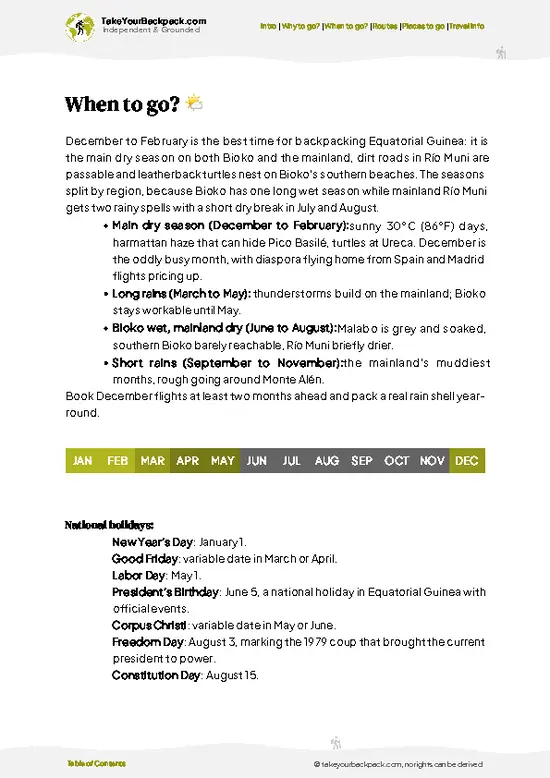
source: climatestotravel.comJANJanuary: fair for travelingFEBFebruary: fair for travelingMARMarch: fair for travelingAPRApril: fair for travelingMAYMay: fair for travelingJUNJune: excellent for travelingJULJuly: excellent for travelingAUGAugust: excellent for travelingSEPSeptember: excellent for travelingOCTOctober: fair for travelingNOVNovember: fair for travelingDECDecember: fair for traveling
when-to-go

✈️ The backpacker research shortcutEquatorial Guinea Travel Guide

An offline-friendly backpacking guide with optimized travel routes, ranked highlights, transport advice, and the best areas to stay.
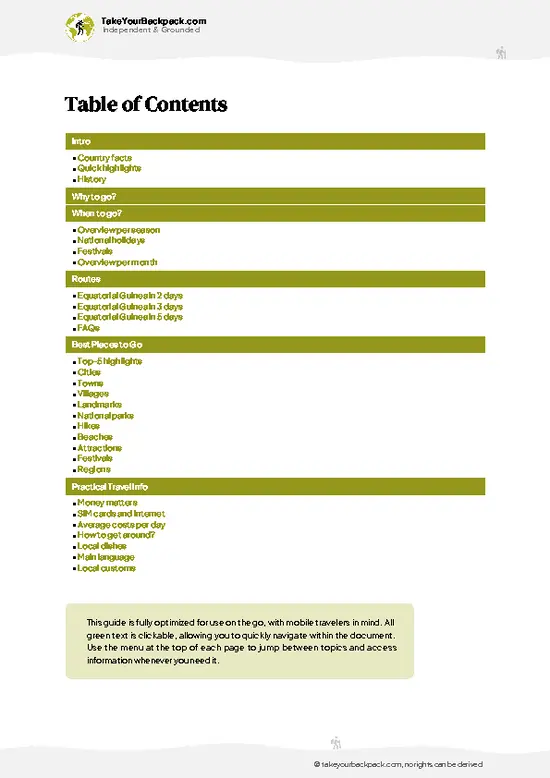
example page 0 from our offline Travel Guide for Equatorial Guinea
example page 1 from our offline Travel Guide for Equatorial Guinea
example page 2 from our offline Travel Guide for Equatorial Guinea
example page 3 from our offline Travel Guide for Equatorial Guinea
example page 4 from our offline Travel Guide for Equatorial Guinea
example page 5 from our offline Travel Guide for Equatorial Guinea
example page 6 from our offline Travel Guide for Equatorial Guinea
example page 7 from our offline Travel Guide for Equatorial Guinea
The digital guide (216 pages) contains:
52 highlights, ranked by travel appeal
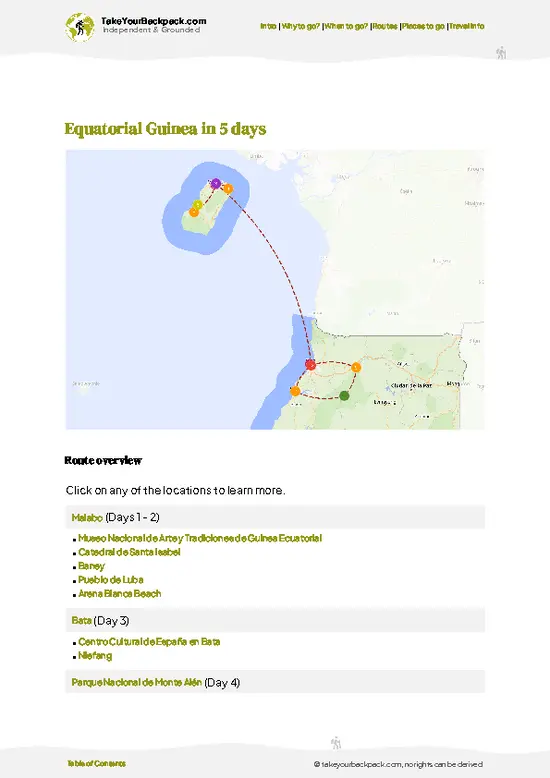
Optimized 2, 3 & 5-day travel routes
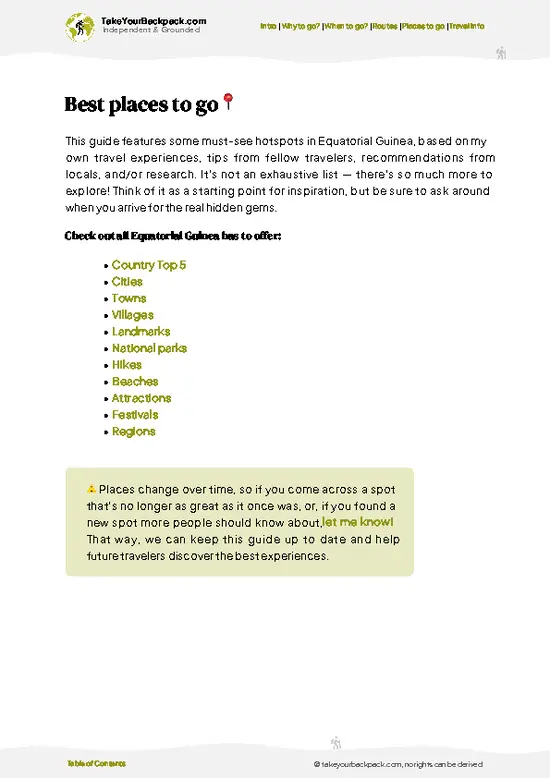
Cities, national parks, landmarks, beaches
How to get around
Offline-friendly for travel without Wi-Fi
👉 Click to see all 30+ guide features

📅 Plan smarter in minutes, not weeks
Month by month travel advice
Festivals & national holidays
Budget expectations

🗺️ Go to the right places, skip the overrated ones
Honest pros & cons of destinations
Top hikes, parks & viewpoints
Lesser-known places most travelers miss
Clear “worth it vs skip it” guidance

🛏️ Travel smoothly without rookie mistakes
Best areas to stay
Transport systems explained simply
Common scams & safety advice
SIM cards, money & practical tips

🌍 Understand the country, not just visit it
Culture & traditions
52 Essential phrases & customs
Festivals worth planning around
Traveler-friendly historical context
Insights that make places more meaningful

📱 Built for real travel conditions
Fully downloadable PDF
Works completely offline
Optimized for phone use
Useful in remote areas & buses
Everything in one place
Save weeks of stressful planning
Get instant access to your full guide. 30‑day money-back guarantee.


By proceeding you agree to our terms.
Sent to your inbox immediately after payment • 100% Secure Checkout
Best Backpacking Travel Advisor 2025 tourism awardBest Backpacking
Travel Advisor
2025
What others say about Take Your Backpack Guides:
⭐⭐⭐⭐⭐
Fantastic, amazing amount of information!
⭐⭐⭐⭐⭐
My goodness this is amazing, it's what I've been looking for hats off too you!
⭐⭐⭐⭐⭐
I think this is absolutely BRILLIANT
⭐⭐⭐⭐
Very complete and informative. It's still missing places, but I gotta to commend you
⭐⭐⭐⭐⭐
This is truly amazing, thank you, can't wait to explore it with my kids!
⭐⭐⭐⭐⭐
Awesome resource, thank you!
⭐⭐⭐⭐⭐
This is amazing! Can't wait to explore the ones I haven't seen
⭐⭐⭐⭐
I love this! Well done, great idea.
⭐⭐⭐⭐⭐
Thanks for taking the time to make this gem!
⭐⭐⭐⭐⭐
This might be the best website I've ever seen.
⭐⭐⭐⭐⭐
Congratulations, and thank you so much for your work; it's incredibly valuable.
⭐⭐⭐⭐
In all seriousness I think you did a great job pointing out the important spots
⭐⭐⭐⭐⭐
10/10 very good
⭐⭐⭐⭐⭐
As someone who's only just starting to visit regularly this is awesome, thank you.
⭐⭐⭐⭐
Thank you very much! I'm going to visit my dad, it's going to be very useful!
⭐⭐⭐⭐⭐
This is really cool! We'll be travelling for the first time and this definitely come in handy.
⭐⭐⭐⭐⭐
You are now our minister of culture, congratulations 👨‍💼
⭐⭐⭐⭐⭐
Just wanted to tell you that this is a pearl! Going to follow your recommendations.
⭐⭐⭐⭐⭐
This is so cool. I'll definitely be using the resource for my travels soon.
⭐⭐⭐⭐⭐
This is very impressive! Good work.
⭐⭐⭐⭐⭐
This is an amazing and informative site. Very well done!

🛏️ Where to stay?Best areas to stay in Equatorial Guinea

In Niefang, the best spot for backpackers is the central district around the main market and town square. This area pulses with local life—vendors shouting over the scent of fresh cassava and grilled fish, kids darting through narrow alleys, and the hum of motorbikes weaving past. It’s where you’ll find the few budget guesthouses and informal hostels that cater to solo travelers and those watching their wallets. Staying here means you’re plugged into the town’s rhythm, with easy access to street food stalls and small cafés where you can swap stories with other travelers or locals.

Compared to … read more 👉
In Niefang, the best spot for backpackers is the central district around the main market and town square. This area pulses with local life—vendors shouting over the scent of fresh cassava and grilled fish, kids darting through narrow alleys, and the hum of motorbikes weaving past. It’s where you’ll find the few budget guesthouses and informal hostels that cater to solo travelers and those watching their wallets. Staying here means you’re plugged into the town’s rhythm, with easy access to street food stalls and small cafés where you can swap stories with other travelers or locals.

Compared to the quieter, more residential outskirts, this central zone feels safer after dark because of the steady foot traffic and informal neighborhood watch of shopkeepers. The vibe is raw and unpolished but honest—no tourist bubble, just real Equatoguinean life. If you want to skip the sterile hotel corridors and dive into the town’s heartbeat, this is your base. It’s not about luxury; it’s about connection and authenticity.

🚌 Getting aroundHow to get from A to B

Niefang moves at its own rhythm—neither a frantic rush nor a lazy drift, but something in between, like the steady pulse of a drum you feel more than hear. The air carries the scent of damp earth and fresh-cut wood, mingling with the distant chatter of market vendors and the occasional hum of engines. Here, time isn’t dictated by strict schedules but by the ebb and flow of daily life. You’ll find that patience and a keen eye for local cues unlock the best ways to get around, turning what might seem chaotic into a smooth, almost intuitive dance.


  • Walking: The heart of Niefang is compact enough to explore on foot. Streets are uneven and often muddy after rain, so sturdy shoes are a must. Walking lets you soak in the smells of street food stalls and the vibrant colors of local crafts, all
read more 👉
Niefang moves at its own rhythm—neither a frantic rush nor a lazy drift, but something in between, like the steady pulse of a drum you feel more than hear. The air carries the scent of damp earth and fresh-cut wood, mingling with the distant chatter of market vendors and the occasional hum of engines. Here, time isn’t dictated by strict schedules but by the ebb and flow of daily life. You’ll find that patience and a keen eye for local cues unlock the best ways to get around, turning what might seem chaotic into a smooth, almost intuitive dance.


  • Walking: The heart of Niefang is compact enough to explore on foot. Streets are uneven and often muddy after rain, so sturdy shoes are a must. Walking lets you soak in the smells of street food stalls and the vibrant colors of local crafts, all at your own pace.

  • Shared Taxis (Taxi Colectivo): These minibuses or cars follow semi-fixed routes but leave only when full, so timing is flexible but unpredictable. Fares are low, usually under $1, and they’re the fastest way to cover longer distances outside the town center. Expect a lively, cramped ride with locals chatting and negotiating stops.

  • Motorbike Taxis (Motos): For quick hops, motos zip through traffic and narrow alleys with ease. They’re cheap and available almost everywhere, but always negotiate the price upfront—typically around $0.50 to $1 for short trips. Helmets are rare, so brace for the wind and the raw city sounds.

  • Bicycle Rentals: If you want more control and a bit of exercise, renting a bike is a solid option. The terrain is mostly flat but watch for potholes and loose gravel. Rentals cost about $3–5 per day, and it’s a great way to explore beyond the main streets without the noise and fumes.

  • Intercity Buses: For trips beyond Niefang, buses depart from the main station early in the morning, usually between 6 a.m. and 9 a.m. Tickets are affordable, around $3–5 depending on the destination, but expect basic comfort and frequent stops. It’s a slow, immersive way to see the countryside unfold.

👛 Costs (as of 25 July 2025)Travel costs and budget guide for Niefang

Backpacking in Niefang, Equatorial Guinea, is a raw, off-the-beaten-path experience where costs reflect the town’s modest infrastructure and local economy. Here’s what you can expect to spend day-to-day.
  • Dorm Accommodation: Niefang doesn’t have a bustling hostel scene like bigger cities. Budget travelers usually find simple guesthouses or shared rooms in local inns. Prices hover around €10-€15 per night. Expect basic facilities—think a fan instead of air conditioning and shared bathrooms.
  • Meals: Eating local is both a necessity and a treat. Street food and small local eateries offer hearty meals for about €2-€5. Staples include grilled fish, plantains, and rice dishes. Western-style restaurants are rare and pricier, so sticking to local fare keeps your budget lean and your taste buds grounded
read more 👉
Backpacking in Niefang, Equatorial Guinea, is a raw, off-the-beaten-path experience where costs reflect the town’s modest infrastructure and local economy. Here’s what you can expect to spend day-to-day.
  • Dorm Accommodation: Niefang doesn’t have a bustling hostel scene like bigger cities. Budget travelers usually find simple guesthouses or shared rooms in local inns. Prices hover around €10-€15 per night. Expect basic facilities—think a fan instead of air conditioning and shared bathrooms.
  • Meals: Eating local is both a necessity and a treat. Street food and small local eateries offer hearty meals for about €2-€5. Staples include grilled fish, plantains, and rice dishes. Western-style restaurants are rare and pricier, so sticking to local fare keeps your budget lean and your taste buds grounded in the region.
  • Local Transport: Getting around Niefang is mostly on foot or by shared taxis (colectivos). A short taxi ride costs roughly €0.50-€1. If you’re moving between nearby villages, expect to pay a bit more, but nothing that breaks the bank. The roads can be rough, so travel times might stretch, but the price stays low.
  • Basic Activities/Entry Fees: Niefang’s attractions are mostly natural and community-based, with minimal or no entry fees. Visiting local markets, walking through town, or exploring nearby forests is free or costs a token amount (€0.50-€2) if a guide is involved. Organized tours are rare and tend to be pricier, so independent exploration is the way to go.
  • Miscellaneous Expenses: This covers essentials like bottled water, snacks, and occasional phone credit. Expect to spend around €1-€3 daily. Keep in mind that reliable ATMs and card facilities are scarce, so carrying cash is crucial.

All told, a realistic daily budget for backpacking in Niefang ranges from about €15 to €25. This keeps you comfortably covered without overspending in a town where simplicity is the norm and every euro stretches far.


source: guineaecuatorialpress.com
⚠️ Prices can change and everyone travels differently, so take this as a rough guide. Hope it helps you plan your adventure!

🚌 Day tripsBest day trips from Niefang

Niefang is a fantastic base for exploring the lush landscapes and vibrant culture of Equatorial Guinea. Here are some day trips that will elevate your experience.

Rio Muni Adventure
Just a short ride from Niefang, the Rio Muni offers a chance to immerse yourself in nature. Picture yourself paddling through mangroves, where the air is thick with the scent of damp earth and the calls of exotic birds echo around you. This trip typically takes about two hours to reach the river, and you can rent a kayak for around $10. The best time to go is during the dry season, from December to February, when the waters are calmer. A common mistake is underestimating the sun; pack plenty of water and sunscreen to stay hydrated and protected.


Bioko Island Day Trip
Catch a ferry from the mainland to … read more 👉
Niefang is a fantastic base for exploring the lush landscapes and vibrant culture of Equatorial Guinea. Here are some day trips that will elevate your experience.

Rio Muni Adventure
Just a short ride from Niefang, the Rio Muni offers a chance to immerse yourself in nature. Picture yourself paddling through mangroves, where the air is thick with the scent of damp earth and the calls of exotic birds echo around you. This trip typically takes about two hours to reach the river, and you can rent a kayak for around $10. The best time to go is during the dry season, from December to February, when the waters are calmer. A common mistake is underestimating the sun; pack plenty of water and sunscreen to stay hydrated and protected.


Bioko Island Day Trip
Catch a ferry from the mainland to Bioko Island for a day filled with adventure. The journey takes about an hour, and once you arrive, the island’s volcanic landscapes and rich biodiversity will captivate you. Expect to spend around $30 for the ferry and local transport. The best time to visit is during the dry season, when the views are crystal clear. Many first-timers miss out on the local markets; don’t skip the chance to taste fresh seafood and local dishes.


Monte Alén National Park
For those craving a bit of hiking, Monte Alén National Park is a must. It’s about a two-hour drive from Niefang, and the entrance fee is around $5. The park is a treasure trove of wildlife and lush vegetation, with trails that lead you through dense forests. The ideal time to visit is early morning when the mist clings to the trees, creating an ethereal atmosphere. A common pitfall is not bringing sturdy shoes; the trails can be muddy and challenging.


Malabo City Exploration
A trip to Malabo, the capital, is an easy day trip that takes about two hours by car. The city buzzes with life, from its colonial architecture to the vibrant street food scene. Expect to spend around $20 for transport and snacks. The best time to visit is late afternoon, when the sun sets over the ocean, painting the sky in hues of orange and pink. Many travelers stick to the tourist spots; venture into local neighborhoods for a more authentic experience.
👉 Explore Malabo
Want to know what more Equatorial Guinea offers?
The Equatorial Guinea Travel Guide describes 52 highlights, from cities to national parks, from beaches to hikes

Get the Travel Guide -

🛡️ SafetySafety Tips and Common Scams in Niefang

Niefang is generally safe, but a few practical tips can enhance your experience. Stay aware in crowded markets; pickpockets can be a nuisance. When wandering solo, especially at night, stick to well-lit areas and avoid empty streets. The local vibe is friendly, but a confident demeanor goes a long way.

Watch for common scams, like inflated taxi fares. Always agree on a price before getting in. Street vendors can be persistent, but a polite “no, thank you” usually does the trick.

Keep your belongings close, especially in busy spots. Use a crossbody bag or a money belt to deter opportunistic thieves. By staying alert and engaging with locals, you’ll navigate Niefang smoothly and soak in its authentic atmosphere.

Other Equatoguinean towns near Niefang

Explore more nearby:

  • Añisoc—savanna edge, regional market, crossroads town| 55 km away
  • Evinayong—hilltop setting, administrative center, panoramic views| 56 km away
  • Micomeseng—agricultural zone, cocoa farms, rural landscape| 63 km away

💡 Not sure where to go next?
Create a personalized itinerary for Equatorial Guinea including Niefang and the places that fit your trip.

Generate my itinerary

👉 Discover all towns

Or checkout all Equatorial Guinea has to offer (think cities, towns, villages, national parks, hikes, beaches, festivals)
Country photo of Equatorial Guinea

We 💚 feedbackKey takeaways before you go

Niefang has a raw, unfiltered vibe that feels like stepping into a different world. The air is thick with the scent of earth after rain, and the laughter of locals fills the streets. The best surprise? The warmth of the community—everyone’s eager to share a story or a meal. Just a heads-up: the roads can be tricky, so take it slow. Embrace the journey; it’s all part of the experience.

✍️ Help improve this page!
The information on this page is based on in-depth research, insights shared by experienced travelers, and feedback from the local travel community in Equatorial Guinea. While every effort is made to keep the information accurate and current, conditions can change — so if you spot anything incorrect or outdated, please get in touch.


🙋‍♂️ Give feedback

👋 Meet the founderWho’s Behind Take Your Backpack?

Johan, backpacker and founder of TakeYourBackpackHi, I’m Johan (Netherlands 🇳🇱), the creator of TakeYourBackpack. Over the past decade, I’ve backpacked through 80+ countries across six continents, gaining extensive experience with independent travel, long-term trips, and overland routes.

This site is built on a combination of firsthand travel experience and carefully curated insights from other backpackers. Many guides are based on places I’ve personally visited, while others bring together tips, observations, and practical advice shared by trusted travelers I’ve met along the way.

The goal is to provide realistic, experience-driven guidance — not generic itineraries — so you can explore destinations with better context, clearer expectations, and more confidence.

Get full country guide •
Instant download • 52 highlights • Full Offline guide