×

Equatorial Guinea🇬🇶 | townsMokacrater lakes, cool climate, highland farming | things to do and best time to go

Explore RebolaExplore Baney

Backpacking in Moka
🏆 Top picktown ranked #2
By Johan Kruseman 🇳🇱 | Updated October 15, 2026

If you crave nightlife, boutique shopping, or a parade of Instagrammable cafés, Moka will leave you restless. But if you’re the kind of backpacker who finds beauty in the hush between cloud-wrapped mountains and the earthy scent of rain on volcanic soil, Moka is a worthy detour. Tucked in the southern highlands of Bioko Island, Equatorial Guinea, this small town is more a launchpad than a destination—think misty mornings, the distant chatter of market stalls, and the slow rhythm of a place that’s never in a hurry. The real draw is what surrounds it: trails that snake through dense forest to waterfalls, the cool air a relief after the sticky coast, and the chance to glimpse Bioko’s rare monkeys if you’re patient. Getting here means a winding drive from Malabo—no trains, just battered minibuses or a hired car, and once you arrive, everything is walkable, though the hills will test your legs. Social life is subdued; you’ll find a handful of guesthouses, maybe a bar with plastic chairs, but don’t expect a hostel scene. Costs are higher than you’d guess for such a sleepy place, and English is rare, so brush up on your Spanish or French. Compared to Malabo’s bustle or Luba’s port-town grit, Moka feels quieter, greener, and more honest—a place where the payoff is the landscape, not the amenities.

Discover everything you want to know in the 📖 Equatorial Guinea Travel Guide.


Loading the map 🌍
CLICK TO FILTER
cities
towns
villages
landmarks
national parks
hikes
beaches
attractions
regions
SHOW COUNTRY’S BESTSHOW ALL

✨ Why go?
Ranked #2 town in Equatorial Guinea
Why Moka should be on your travel list

Moka, in Equatorial Guinea, is a strategic stop for backpackers seeking a blend of adventure and culture. Its proximity to hikes like the lush trails of Monte Alén National Park makes it a launching pad for nature lovers. The walkable streets invite exploration, where you can stumble upon local markets bursting with the scent of grilled fish and fresh produce. Small-scale hostels and guesthouses offer a cozy atmosphere, perfect for solo travelers or small groups looking to connect. While some pass through quickly, many linger to soak in the friendly vibe and savor the local cuisine. This town is ideal for those who appreciate a slower pace, making it a rewarding stopover rather than just a pit stop on the way to the coast or the mountains.

💡 HighlightsTop highlights of Moka

  • Moka Central Market — The town’s busiest hub where fresh fish, local produce, and small stalls selling spices and handcrafted goods give a clear snapshot of daily life and local flavors; great for street-food bites and people-watching.
  • Parish Church (main town church) — A simple, active Catholic parish that anchors community life; attending a service or visiting on a feast day reveals local religious traditions, choirs, and community gatherings.
  • Moka Fishing Wharf — A working jetty where small pirogues land their catch, and you can see fish-processing, nets being mended, and the rhythms of a coastal economy up close.
  • Cocoa and Coffee Smallholdings (surrounding Moka) — Family-run plantations around town that offer insight into traditional crop production, post-harvest processing, and the
… read more 👉
  • Moka Central Market — The town’s busiest hub where fresh fish, local produce, and small stalls selling spices and handcrafted goods give a clear snapshot of daily life and local flavors; great for street-food bites and people-watching.
  • Parish Church (main town church) — A simple, active Catholic parish that anchors community life; attending a service or visiting on a feast day reveals local religious traditions, choirs, and community gatherings.
  • Moka Fishing Wharf — A working jetty where small pirogues land their catch, and you can see fish-processing, nets being mended, and the rhythms of a coastal economy up close.
  • Cocoa and Coffee Smallholdings (surrounding Moka) — Family-run plantations around town that offer insight into traditional crop production, post-harvest processing, and the rural livelihoods that shape the area’s culture and landscape.
  • Municipal Square and Market Streets — The town square and its adjoining streets where vendors, street vendors, and informal workshops cluster; ideal for low-key wandering to absorb local architecture, everyday commerce, and roadside food stalls.
A few real, visitable highlights outside the town that make good day trips are Monte Alén National Park, the coastal city of Bata, and the historic sites around Malabo.
Spotted a mistake or missing something? Contact us.

🏘️ NeighborhoodsUnderstanding the local layout

Moka, a vibrant hub in Equatorial Guinea, offers a unique blend of culture and accessibility for backpackers. Here’s how to navigate its neighborhoods:

Centro de Moka: This is the heart of the town, buzzing with local markets and street vendors. The atmosphere is lively, filled with the scent of grilled fish and fresh produce. It’s walkable, making it easy to explore on foot. Budget-friendly accommodations are plentiful, perfect for short stays. Nightlife is modest but lively, with a few bars where locals gather.

El Barrio de los Trabajadores: Known for its residential vibe, this area is quieter and offers a more authentic experience. It’s less touristy, which means you’ll get a taste of daily life. Transport options are limited, so it’s best for longer stays where you can settle in. Prices … read more 👉
Moka, a vibrant hub in Equatorial Guinea, offers a unique blend of culture and accessibility for backpackers. Here’s how to navigate its neighborhoods:

Centro de Moka: This is the heart of the town, buzzing with local markets and street vendors. The atmosphere is lively, filled with the scent of grilled fish and fresh produce. It’s walkable, making it easy to explore on foot. Budget-friendly accommodations are plentiful, perfect for short stays. Nightlife is modest but lively, with a few bars where locals gather.

El Barrio de los Trabajadores: Known for its residential vibe, this area is quieter and offers a more authentic experience. It’s less touristy, which means you’ll get a taste of daily life. Transport options are limited, so it’s best for longer stays where you can settle in. Prices are lower here, and the community is welcoming.

Playa de Moka: If you crave some beach time, head here. The coastline is stunning, with golden sands and palm trees swaying in the breeze. While it’s a bit farther from the town center, the tranquility makes it worth it. Ideal for those looking to unwind after a few days of exploration, but accommodations can be pricier.

⌛️ 1 dayWhat you can realistically do in a day

Moka, Equatorial Guinea, is a town where the pulse of everyday life meets the lush backdrop of nature. It’s not on every tourist’s radar, but that’s what makes it special. You’ll find vibrant markets, friendly locals, and a sense of authenticity that’s hard to replicate.

Start your morning at the bustling Mercado de Moka. The air is thick with the scent of fresh produce and spices. Grab a cup of locally brewed coffee while you wander through stalls overflowing with colorful fruits and handmade crafts. Engage with vendors; their stories are as rich as the goods they sell. This isn’t just shopping; it’s a cultural immersion.

As the sun climbs higher, head to the nearby Playa de Moka. The beach is a local favorite, often overlooked by tourists. Feel the warm sand beneath your feet and listen … read more 👉
Moka, Equatorial Guinea, is a town where the pulse of everyday life meets the lush backdrop of nature. It’s not on every tourist’s radar, but that’s what makes it special. You’ll find vibrant markets, friendly locals, and a sense of authenticity that’s hard to replicate.

Start your morning at the bustling Mercado de Moka. The air is thick with the scent of fresh produce and spices. Grab a cup of locally brewed coffee while you wander through stalls overflowing with colorful fruits and handmade crafts. Engage with vendors; their stories are as rich as the goods they sell. This isn’t just shopping; it’s a cultural immersion.

As the sun climbs higher, head to the nearby Playa de Moka. The beach is a local favorite, often overlooked by tourists. Feel the warm sand beneath your feet and listen to the gentle waves lapping at the shore. It’s the perfect spot for a leisurely lunch. Try some grilled fish from a beachside vendor, seasoned to perfection with local spices.

In the afternoon, explore the charming streets of the Centro Histórico. The colonial architecture tells tales of the past, and the vibrant murals reflect the town’s artistic spirit. Don’t miss the small art gallery tucked away in a side street; it showcases local talent and offers a glimpse into the community’s creative heart.

As evening approaches, find a cozy spot at a local eatery. Savor a traditional dish while the sun sets, painting the sky in hues of orange and pink. The atmosphere is relaxed, filled with laughter and the sounds of conversation. This day in Moka isn’t just about seeing; it’s about feeling the rhythm of life here, making every moment count.

🌤️ When to go?When to go for the best experience

  • Topic: Weather - Moka’s climate is equatorial, meaning it’s hot and humid year-round, but the heavy rains from March to June can turn trails into slippery mud baths. The drier months from July to September offer clearer skies and easier hiking conditions, making your trek less about battling the elements and more about soaking in the surroundings.
  • Topic: Temperature - Expect daytime highs around 28-32°C (82-90°F) throughout the year, with nights cooling slightly to 22-24°C (72-75°F). The consistent warmth means light clothing is a must, but the humidity can make even these temps feel sticky, so timing your walks for early morning or late afternoon helps avoid the oppressive midday heat.
  • Topic: Daylight Hours - Near the equator, daylight stays steady at about 12 hours daily, roughly from
… read more 👉
  • Topic: Weather - Moka’s climate is equatorial, meaning it’s hot and humid year-round, but the heavy rains from March to June can turn trails into slippery mud baths. The drier months from July to September offer clearer skies and easier hiking conditions, making your trek less about battling the elements and more about soaking in the surroundings.
  • Topic: Temperature - Expect daytime highs around 28-32°C (82-90°F) throughout the year, with nights cooling slightly to 22-24°C (72-75°F). The consistent warmth means light clothing is a must, but the humidity can make even these temps feel sticky, so timing your walks for early morning or late afternoon helps avoid the oppressive midday heat.
  • Topic: Daylight Hours - Near the equator, daylight stays steady at about 12 hours daily, roughly from 6:30 AM to 6:30 PM. This predictability lets you plan full days without worrying about early sunsets cutting your adventures short.
  • Topic: Crowds - Moka isn’t a tourist hotspot, so crowds are minimal year-round. However, local festivals in August can bring a lively buzz, offering a chance to experience authentic culture but also requiring early bookings for accommodation.
  • Topic: Seasonal Activities - The dry season aligns with the best time for trekking and wildlife spotting, as animals gather near water sources. The rainy season, while challenging, transforms the landscape into a lush, green spectacle, rewarding those willing to brave the mud with vibrant flora and fewer travelers.
  • Topic: Price Fluctuations - Prices for lodging and guides tend to dip during the rainy months due to lower demand, but the trade-off is dealing with unpredictable weather. The dry season sees a slight uptick in costs, justified by better conditions and more reliable services.
Pro-tip: Aim for July to September to catch Moka at its most accessible and vibrant, balancing manageable weather with the chance to dive deep into its natural and cultural rhythms without the hassle of crowds or soggy trails.


source: climatestotravel.comJANJanuary: good for travelingFEBFebruary: good for travelingMARMarch: fair for travelingAPRApril: fair for travelingMAYMay: fair for travelingJUNJune: fair for travelingJULJuly: excellent for travelingAUGAugust: excellent for travelingSEPSeptember: excellent for travelingOCTOctober: highly recommended for travelingNOVNovember: good for travelingDECDecember: good for traveling
equatorial-guinea-city-moka
© Google |

✈️ The backpacker research shortcutEquatorial Guinea Travel Guide

An offline-friendly backpacking guide with optimized travel routes, ranked highlights, transport advice, and the best areas to stay.
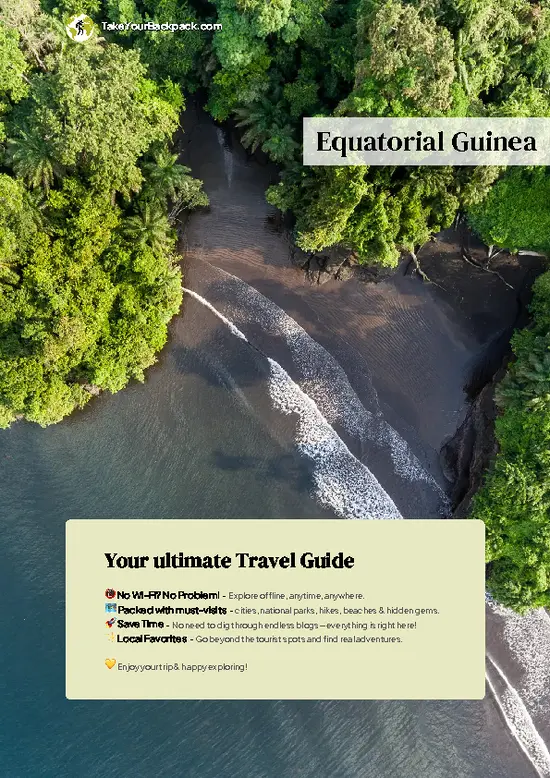
example page 0 from our offline Travel Guide for Equatorial Guinea
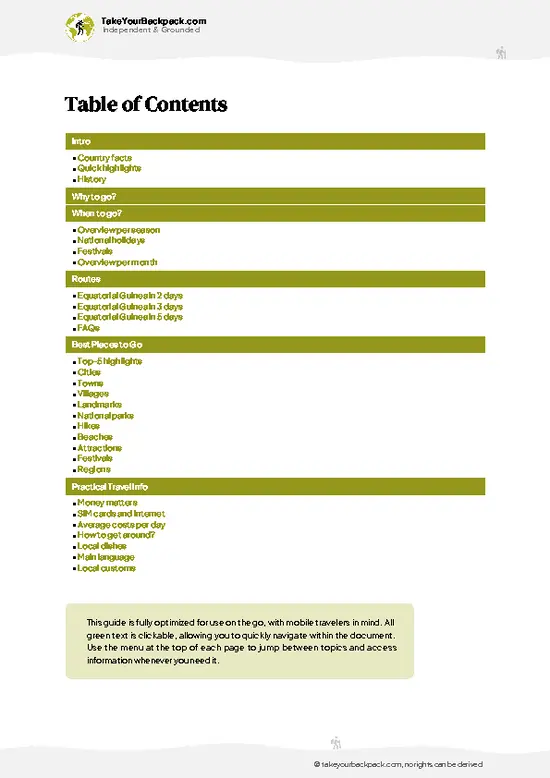
example page 1 from our offline Travel Guide for Equatorial Guinea
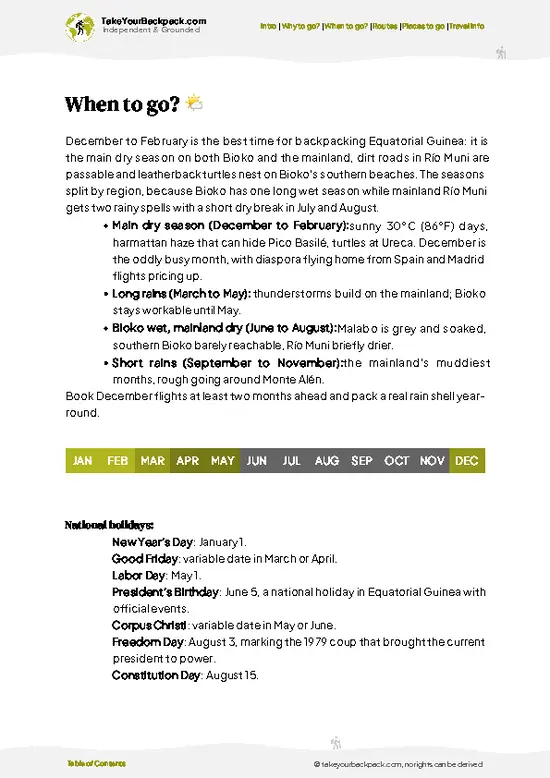
example page 2 from our offline Travel Guide for Equatorial Guinea
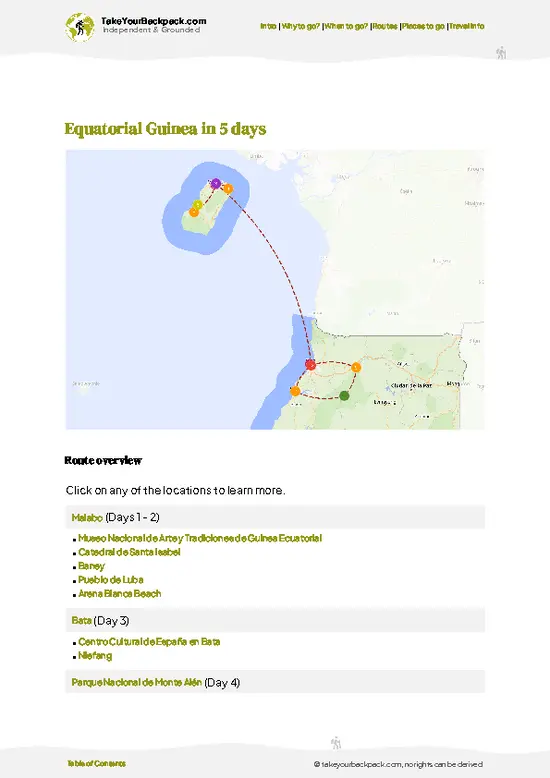
example page 3 from our offline Travel Guide for Equatorial Guinea
example page 4 from our offline Travel Guide for Equatorial Guinea
example page 5 from our offline Travel Guide for Equatorial Guinea
example page 6 from our offline Travel Guide for Equatorial Guinea
example page 7 from our offline Travel Guide for Equatorial Guinea
The digital guide (199 pages) contains:
✅ 36 highlights, ranked by travel appeal
✅ Optimized 2, 3 & 5-day travel routes
✅ Cities, national parks, landmarks, beaches
✅ How to get around
✅ Offline-friendly for travel without Wi-Fi
👉 Click to see all 30+ guide features

📅 Plan smarter in minutes, not weeks
✅ Month by month travel advice
✅ Festivals & national holidays
✅ Budget expectations

🗺️ Go to the right places, skip the overrated ones
✅ Honest pros & cons of destinations
✅ Top hikes, parks & viewpoints
✅ Lesser-known places most travelers miss
✅ Clear “worth it vs skip it” guidance

🛏️ Travel smoothly without rookie mistakes
✅ Best areas to stay
✅ Transport systems explained simply
✅ Common scams & safety advice
✅ SIM cards, money & practical tips

🌍 Understand the country, not just visit it
✅ Culture & traditions
✅ 52 Essential phrases & customs
✅ Festivals worth planning around
✅ Traveler-friendly historical context
✅ Insights that make places more meaningful

📱 Built for real travel conditions
✅ Fully downloadable PDF
✅ Works completely offline
✅ Optimized for phone use
✅ Useful in remote areas & buses
✅ Everything in one place
Stop searching, start planning
Get instant access to your full guide. 30‑day money-back guarantee.
+ Add another guide for just

By proceeding you agree to our terms.
Sent to your inbox immediately after payment • 100% Secure Checkout
Best Backpacking Travel Advisor 2025 tourism awardBest Backpacking
Travel Advisor
2025
What others say about Take Your Backpack Guides:
⭐⭐⭐⭐⭐
Fantastic, amazing amount of information!
⭐⭐⭐⭐⭐
My goodness this is amazing, it's what I've been looking for hats off too you!
⭐⭐⭐⭐⭐
I think this is absolutely BRILLIANT
⭐⭐⭐⭐
Very complete and informative. It's still missing places, but I gotta to commend you
⭐⭐⭐⭐⭐
This is truly amazing, thank you, can't wait to explore it with my kids!
⭐⭐⭐⭐⭐
Awesome resource, thank you!
⭐⭐⭐⭐⭐
This is amazing! Can't wait to explore the ones I haven't seen
⭐⭐⭐⭐
I love this! Well done, great idea.
⭐⭐⭐⭐⭐
Thanks for taking the time to make this gem!
⭐⭐⭐⭐⭐
This might be the best website I've ever seen.
⭐⭐⭐⭐⭐
Congratulations, and thank you so much for your work; it's incredibly valuable.
⭐⭐⭐⭐
In all seriousness I think you did a great job pointing out the important spots
⭐⭐⭐⭐⭐
10/10 very good
⭐⭐⭐⭐⭐
As someone who's only just starting to visit regularly this is awesome, thank you.
⭐⭐⭐⭐
Thank you very much! I'm going to visit my dad, it's going to be very useful!
⭐⭐⭐⭐⭐
This is really cool! We'll be travelling for the first time and this definitely come in handy.
⭐⭐⭐⭐⭐
You are now our minister of culture, congratulations 👨‍💼
⭐⭐⭐⭐⭐
Just wanted to tell you that this is a pearl! Going to follow your recommendations.
⭐⭐⭐⭐⭐
This is so cool. I'll definitely be using the resource for my travels soon.
⭐⭐⭐⭐⭐
This is very impressive! Good work.
⭐⭐⭐⭐⭐
This is an amazing and informative site. Very well done!

🛏️ Where to stay?Where staying makes the most sense

In Moka, the best spot for backpackers is the central district around the main market and the nearby waterfront. This area pulses with life from dawn, when vendors set up stalls heavy with tropical fruits and fresh fish, to dusk, when the scent of grilled street food mingles with the humid ocean breeze. Staying here means you’re never far from the heart of local life, where the chatter of bargaining blends with the occasional call to prayer, grounding you in the rhythm of the town.

This neighborhood is a magnet for budget travelers and solo backpackers because it balances safety with social energy. … read more 👉
In Moka, the best spot for backpackers is the central district around the main market and the nearby waterfront. This area pulses with life from dawn, when vendors set up stalls heavy with tropical fruits and fresh fish, to dusk, when the scent of grilled street food mingles with the humid ocean breeze. Staying here means you’re never far from the heart of local life, where the chatter of bargaining blends with the occasional call to prayer, grounding you in the rhythm of the town.

This neighborhood is a magnet for budget travelers and solo backpackers because it balances safety with social energy. The streets are well-traveled by locals and visitors alike, which naturally deters trouble and invites spontaneous connections. Hostels here tend to be small but welcoming, often run by locals who know the ins and outs of Moka, offering more than just a bed—they provide a gateway to authentic experiences.

Compared to the quieter, more residential outskirts, this central zone keeps you plugged into the city’s pulse without the isolation. It’s where you’ll find the best mix of affordable eats, lively street scenes, and easy access to transport for day trips. The payoff is a stay that feels immersive, not just convenient—a place where the city’s character unfolds around you, not behind locked doors.

🚌 Getting aroundMoving around without the hassle

Moka moves at its own rhythm—less a clock-driven city and more a place where the sun’s angle and the scent of roasting coffee beans set the pace. Streets hum with a casual energy, where schedules blur and intuition rules. You’ll find that the town’s pulse is marked by the chatter of locals, the occasional honk of a moto taxi, and the steady shuffle of feet on cracked sidewalks. It’s not about catching a bus at the exact minute but knowing the flow, reading the crowd, and trusting the informal system that gets you where you need to go without fuss or frenzy. This is a place where patience pays off, and the reward is a slice of authentic Dominican life that no timetable can capture.

Walking: The heart of Moka is compact enough to explore on foot, and this is your best bet for soaking in the … read more 👉
Moka moves at its own rhythm—less a clock-driven city and more a place where the sun’s angle and the scent of roasting coffee beans set the pace. Streets hum with a casual energy, where schedules blur and intuition rules. You’ll find that the town’s pulse is marked by the chatter of locals, the occasional honk of a moto taxi, and the steady shuffle of feet on cracked sidewalks. It’s not about catching a bus at the exact minute but knowing the flow, reading the crowd, and trusting the informal system that gets you where you need to go without fuss or frenzy. This is a place where patience pays off, and the reward is a slice of authentic Dominican life that no timetable can capture.

Walking: The heart of Moka is compact enough to explore on foot, and this is your best bet for soaking in the atmosphere. Sidewalks are uneven, so sturdy shoes are a must. Walking lets you catch the aroma of fresh bread from street vendors and the vibrant chatter spilling from open-air markets. It’s free, flexible, and the perfect way to navigate the town’s core without missing the small details that make Moka tick.

Moto Taxis: These buzzing two-wheelers are the lifeblood of quick, cheap transit. Fares usually hover around 50 to 100 Dominican pesos (about $1 to $2), and you can flag one down almost anywhere. They don’t run on a schedule—just wave your hand and hop on. Expect a bumpy but speedy ride through narrow streets where cars can’t fit. Helmets aren’t always standard, so hold on tight and keep your wits about you.

Public Buses (Guaguas): For longer hauls or trips to nearby towns, guaguas are your go-to. They run roughly from 6 a.m. to 7 p.m., with fares around 30 to 50 pesos. These buses are often crowded and less about comfort, more about getting you there. The stops aren’t always clearly marked, so listen for the conductor’s calls and be ready to jump off when you reach your destination. It’s a budget-friendly option if you’re up for a bit of local hustle.

Shared Vans (Carros Públicos): These vans fill the gap between buses and motos, offering a faster, slightly more comfortable ride to places like Santiago or the airport. They leave when full, so timing is flexible but unpredictable. Expect to pay around 150 to 200 pesos. The ride is smoother than a guagua but still packed with local flavor—windows down, music blaring, and lively conversation filling the air.

Taxi Services: If you want a direct, hassle-free ride, taxis are available but pricier—expect to pay at least 300 pesos for short trips within town. Negotiate the fare upfront. Taxis offer air conditioning and a smoother ride, which can be a welcome break after a day navigating Moka’s lively streets. Use them sparingly if you’re on a budget, but they’re a solid fallback when time or comfort is a priority.

Mastering Moka’s transit means embracing its laid-back, sensory-rich flow. Walk when you want to linger, hop on a moto for speed, or dive into the local rhythm with buses and shared vans. Each mode is a thread in the town’s fabric, weaving together a travel experience that’s as much about the journey as the destination.

👛 Costs (as of 15 October 2026)What things cost and how to budget

Backpacking in Moka, Equatorial Guinea, means navigating a place where costs are modest but the infrastructure is basic, so every euro or dollar stretches differently than you might expect elsewhere.
  • Dorm Accommodation: Options are limited and often informal. Expect to pay around €10-€15 per night for a basic dorm bed or shared room in guesthouses. These places typically have simple amenities—think mosquito nets, a fan, and sometimes inconsistent electricity.
  • Meals: Street food and local eateries dominate. A filling meal of grilled fish or chicken with rice and plantains will cost about €2-€4. If you opt for something more Western or imported, prices can double, but sticking local keeps your wallet happy and your taste buds engaged with authentic flavors.
  • Local Transport: Public transport
… read more 👉
Backpacking in Moka, Equatorial Guinea, means navigating a place where costs are modest but the infrastructure is basic, so every euro or dollar stretches differently than you might expect elsewhere.
  • Dorm Accommodation: Options are limited and often informal. Expect to pay around €10-€15 per night for a basic dorm bed or shared room in guesthouses. These places typically have simple amenities—think mosquito nets, a fan, and sometimes inconsistent electricity.
  • Meals: Street food and local eateries dominate. A filling meal of grilled fish or chicken with rice and plantains will cost about €2-€4. If you opt for something more Western or imported, prices can double, but sticking local keeps your wallet happy and your taste buds engaged with authentic flavors.
  • Local Transport: Public transport is mostly shared taxis or minibuses, which are cheap but can be unpredictable. Budget around €1-€2 per short trip within town. For longer or private rides, prices rise quickly, so plan accordingly if you want to avoid waiting around.
  • Basic Activities/Entry Fees: Moka isn’t a tourist hotspot, so formal entry fees are rare. Visiting local markets, walking around town, or exploring nearby natural spots is mostly free or costs a small tip or donation, usually under €1. Guided tours, if available, might run €10-€20, but these are exceptions rather than the rule.
  • Miscellaneous Expenses: Think bottled water, snacks, and occasional phone credit. Water is essential since tap water isn’t safe to drink, costing about €0.50 per liter. Mobile data packages are affordable, around €5 for a decent chunk of data, enough to keep you connected without breaking the bank.

All told, a realistic daily budget for backpacking in Moka hovers between €15 and €30. This range covers the essentials without luxury but allows for a bit of flexibility. The modest costs reflect the town’s quiet pace and limited tourist infrastructure, so the real value is in the raw, unfiltered experience rather than polished convenience.


source: guineaecuatorialpress.com
⚠️ Prices can change and everyone travels differently, so take this as a rough guide. Hope it helps you plan your adventure!

🚌 Day tripsEasy escapes and nearby places

Moka, Equatorial Guinea, is a backpacker’s dream base for day trips, offering a mix of lush landscapes and cultural experiences that make every outing feel like an adventure.

Monte Alén National Park
Just a couple of hours from Moka, this park is a paradise for nature lovers. The journey takes you through winding roads lined with dense rainforest, where the air is thick with the scent of damp earth and wildflowers. Once inside, you can hike trails that lead to breathtaking waterfalls and spot wildlife like monkeys and exotic birds. Bring sturdy shoes and a good camera; the vibrant greens and the sound of rushing water are worth capturing. Expect to spend around $10 for park entry and transport. The dry season from June to September is ideal, as trails are less muddy. A common mistake? Underestimating … read more 👉
Moka, Equatorial Guinea, is a backpacker’s dream base for day trips, offering a mix of lush landscapes and cultural experiences that make every outing feel like an adventure.

Monte Alén National Park
Just a couple of hours from Moka, this park is a paradise for nature lovers. The journey takes you through winding roads lined with dense rainforest, where the air is thick with the scent of damp earth and wildflowers. Once inside, you can hike trails that lead to breathtaking waterfalls and spot wildlife like monkeys and exotic birds. Bring sturdy shoes and a good camera; the vibrant greens and the sound of rushing water are worth capturing. Expect to spend around $10 for park entry and transport. The dry season from June to September is ideal, as trails are less muddy. A common mistake? Underestimating the park’s size; plan for a full day to explore.


Bioko Island
A ferry ride from Moka will take you to Bioko Island, where you can immerse yourself in local culture and stunning coastal views. The trip takes about an hour, and the salty breeze will invigorate you as you approach the island. Spend your day wandering through the bustling markets of Malabo, tasting fresh seafood, and enjoying the vibrant street life. Budget around $20 for the ferry and meals. The best time to visit is during the dry season, when the weather is perfect for exploring. Many first-timers miss the chance to try the local dishes; don’t skip the grilled fish!


La Cueva de los Tayos
This cave system, a short drive from Moka, offers a glimpse into the region’s geological wonders. The drive is about 45 minutes, and you’ll find yourself surrounded by towering cliffs and the earthy scent of wet stone. Inside, the caves are cool and echo with the sounds of dripping water. Bring a flashlight and sturdy footwear; the paths can be tricky. Expect to spend around $15 for transport and entry. The dry season is best for visiting, as heavy rains can make the area slippery. A common mistake is not allowing enough time to explore; plan for at least half a day.


Río Muni
A day trip to Río Muni offers a chance to experience the lush landscapes and rich biodiversity of the region. The drive takes about an hour, and you’ll be greeted by the sweet scent of tropical foliage. You can kayak or hike along the river, soaking in the tranquility and spotting wildlife. Budget around $25 for transport and rental gear. The best time to visit is during the dry season, when the river is calm. Many backpackers overlook the importance of packing snacks and water; don’t let hunger cut your adventure short!

🛡️ SafetyTraveler Safety Guide

Moka is generally safe, but staying aware is key. The bustling market areas can get crowded, so keep your belongings close. When wandering solo, especially at night, stick to well-lit streets and avoid isolated paths.

Local transport can be a bit chaotic; always confirm fares before hopping in a taxi to dodge misunderstandings. While scams aren’t rampant, be cautious of overly friendly strangers offering unsolicited help—trust your instincts.

Annoyances like persistent vendors can test your patience, but a polite “no, thank you” usually suffices. Embrace the rhythm of the town, and you’ll find that a little awareness goes a long way in enhancing your experience.

FAQTraveler FAQ

Moka is primarily a stopover rather than a destination for extended visits, as it is a small town with limited tourist attractions. It serves mainly as a gateway to nearby natural reserves and rural areas. Visitors often pass through while traveling to more prominent sites in Equatorial Guinea.
One day is generally sufficient to explore Moka, as the town itself is small and activities are limited. Additional days might be spent if using Moka as a base for excursions into surrounding nature or cultural sites. Most travelers spend no more than 1-2 days here.
Yes, Moka can be visited as a day trip from Bata, which is about 70 kilometers away. The journey by road typically takes around 1.5 to 2 hours each way, making it feasible for a day visit. This allows travelers to explore Moka without needing overnight accommodation.
⚠️ Things can change over time, so always validate details locally before you go.

Other Equatoguinean towns near Moka

Explore more nearby:

  • Luba—volcanic hills, colonial relics, black sand beaches| 18 km away
  • Rebola—mountain slopes, Bioko Island villages, traditional homesteads| 46 km away
  • Baney—road junction, local commerce, Bioko highlands| 48 km away

💡 Not sure where to go next?
Create a personalized itinerary for Equatorial Guinea including Moka and the places that fit your trip.

Generate my itinerary

👉 Discover all towns

Or checkout all Equatorial Guinea has to offer (think cities, towns, villages, national parks, hikes, beaches, festivals)
Country photo of Equatorial Guinea

We 💚 feedbackKey takeaways before you go

Moka has a raw, electric vibe that pulses with life. The best surprise? The locals’ warmth; they’ll invite you into their world with open arms. Just be ready for the humidity—it’s a heavy blanket. Embrace it. The lush surroundings and vibrant culture make every drop worth it. This isn’t just a destination; it’s an experience that lingers long after you leave.

✍️ Help improve this page!
The information on this page is based on in-depth research, insights shared by experienced travelers, and feedback from the local travel community in Equatorial Guinea. While every effort is made to keep the information accurate and current, conditions can change — so if you spot anything incorrect or outdated, please get in touch.


🙋‍♂️ Give feedback

👋 Meet the founderWho’s Behind Take Your Backpack?

Johan, backpacker and founder of TakeYourBackpackHi, I’m Johan (Netherlands 🇳🇱), the creator of TakeYourBackpack. Over the past 3 decades, I’ve backpacked through 90+ countries across six continents, gaining extensive experience with independent travel, long-term trips, and overland routes.

This site is built on a combination of firsthand travel experience and carefully curated insights from other backpackers. Many guides are based on places I’ve personally visited, while others bring together tips, observations, and practical advice shared by trusted travelers I’ve met along the way.

The goal is to provide realistic, experience-driven guidance — not generic itineraries — so you can explore destinations with better context, clearer expectations, and more confidence.