×

Equatorial Guinea🇬🇶 | townsRebolamountain slopes, Bioko Island villages, traditional homesteads | things to do and best time to go

Explore CogoExplore Moca

Backpacking in Rebola
👀 For curious travelerstown ranked #13
By Johan Kruseman 🇳🇱 | Updated October 13, 2026

Your boots crunch on red earth as the air thickens with the scent of woodsmoke and papaya—Rebola’s morning soundtrack is a rooster’s call echoing off the green slopes above Malabo. Rebola sits just inland from Equatorial Guinea’s capital, perched on Bioko Island’s shoulder, close enough for city access but a world quieter. This is not a town of grand sights; it’s a lived-in hillside, where the main draw is the slow rhythm and the view down to the Atlantic. Backpackers use Rebola as a base for Bioko’s crater lakes and forest hikes, or as a breather after Malabo’s bustle. Buses are rare, so you’ll rely on shared taxis or your own feet—distances are short, but the hills are real. Nights are slow, with little nightlife and few other travelers, but the market’s fried plantains and the occasional festival drumline give you a taste of local life. Costs are lower than Malabo, but don’t expect hostels or backpacker bars. Compared to the capital, Rebola is more relaxed, less practical, and far less touristic—a place for quiet mornings and honest, unvarnished Equatorial Guinea.

Discover everything you want to know in the 📖 Equatorial Guinea Travel Guide.


Loading the map 🌍
CLICK TO FILTER
cities
towns
villages
landmarks
national parks
hikes
beaches
attractions
festivals
regions
SHOW COUNTRY’S BESTSHOW ALL

✨ Why go?
Ranked #13 town in Equatorial Guinea
The unique appeal for travelers

Rebola serves as a gateway for backpackers exploring Equatorial Guinea. Its proximity to lush hiking trails and pristine beaches makes it a natural stop. You can easily lace up your boots and hit the trails, or stroll to the coast for a refreshing dip. The local guesthouses offer a cozy atmosphere, perfect for solo travelers or small groups looking to connect. You’ll find friendly faces and hearty local cuisine that fuels your adventures. The streets are walkable, allowing you to soak in the vibrant daily life without the hassle of transport. Most travelers stay a few days, enjoying the laid-back vibe that encourages relaxation and exploration. It’s not a party town, but that’s the charm; it’s about the experience rather than the nightlife. If you’re a slow traveler or a hiker, Rebola will … read more 👉
Rebola serves as a gateway for backpackers exploring Equatorial Guinea. Its proximity to lush hiking trails and pristine beaches makes it a natural stop. You can easily lace up your boots and hit the trails, or stroll to the coast for a refreshing dip. The local guesthouses offer a cozy atmosphere, perfect for solo travelers or small groups looking to connect. You’ll find friendly faces and hearty local cuisine that fuels your adventures. The streets are walkable, allowing you to soak in the vibrant daily life without the hassle of transport. Most travelers stay a few days, enjoying the laid-back vibe that encourages relaxation and exploration. It’s not a party town, but that’s the charm; it’s about the experience rather than the nightlife. If you’re a slow traveler or a hiker, Rebola will feel like a comfortable base to recharge before your next adventure.

💡 HighlightsMust-see experiences and standout moments

  • Rebola village market — The local trading hub where fresh fish, local produce and everyday goods are sold; great for watching daily life, tasting street snacks, and buying simple crafts directly from vendors.
  • Rebola fishing shore and landing — A working coastal strip where fishermen land boats and sort their catch; visiting gives a raw, authentic seaside atmosphere and good opportunities for fresh seafood and photos of village maritime life.
  • Rebola parish church — The village’s main Catholic church and community gathering point; visiting during a service or on market day reveals local religious traditions, music, and social rhythms of the town.
  • Outskirts cocoa and banana smallholdings — Small family-run plantations just outside the core village where you can walk simple tracks, see the
… read more 👉
  • Rebola village market — The local trading hub where fresh fish, local produce and everyday goods are sold; great for watching daily life, tasting street snacks, and buying simple crafts directly from vendors.
  • Rebola fishing shore and landing — A working coastal strip where fishermen land boats and sort their catch; visiting gives a raw, authentic seaside atmosphere and good opportunities for fresh seafood and photos of village maritime life.
  • Rebola parish church — The village’s main Catholic church and community gathering point; visiting during a service or on market day reveals local religious traditions, music, and social rhythms of the town.
  • Outskirts cocoa and banana smallholdings — Small family-run plantations just outside the core village where you can walk simple tracks, see the crops and processing by hand, and meet farmers who still use traditional methods.
  • Village streets and traditional houses — Stroll the compact lanes to soak up local architecture, courtyard life and informal neighborhood commerce; it’s the best way to understand day-to-day Rebola beyond any single landmark.
For nearby day trips: Malabo’s colonial center and cathedral, the coastal town of Luba and its beaches, and hikes toward Pico Basilé and the island interior (plus the Ureka beaches and waterfalls) are all real, visitable highlights you can do from Rebola.
Spotted a mistake or missing something? Contact us.
🏘️ NeighborhoodsWhere things are and how it's laid out

Rebola, a small town in Equatorial Guinea, offers a unique blend of local culture and accessibility for backpackers. Here’s how to navigate its neighborhoods:

Centro: This is the heart of Rebola. Vibrant markets and local eateries fill the streets, making it a sensory delight. Prices are reasonable, and you can easily walk to most attractions. The nightlife is lively but not overwhelming, perfect for a short stay to soak in the local vibe.

Playa de Rebola: If you crave a beach escape, this area is your go-to. The salty breeze and sound of waves create a laid-back atmosphere. Accommodations here can be pricier, but the views are worth it. It’s quieter at night, ideal for those looking to unwind after a day of exploration. A good choice for longer stays if you want to relax.

Los Pinos: A … read more 👉
Rebola, a small town in Equatorial Guinea, offers a unique blend of local culture and accessibility for backpackers. Here’s how to navigate its neighborhoods:

Centro: This is the heart of Rebola. Vibrant markets and local eateries fill the streets, making it a sensory delight. Prices are reasonable, and you can easily walk to most attractions. The nightlife is lively but not overwhelming, perfect for a short stay to soak in the local vibe.

Playa de Rebola: If you crave a beach escape, this area is your go-to. The salty breeze and sound of waves create a laid-back atmosphere. Accommodations here can be pricier, but the views are worth it. It’s quieter at night, ideal for those looking to unwind after a day of exploration. A good choice for longer stays if you want to relax.

Los Pinos: A residential area that feels more local. It’s less touristy, offering a genuine glimpse into daily life. Walkability is decent, but you might need to rely on local transport for further excursions. This area is best for longer stays, where you can immerse yourself in the culture without the tourist hustle.

⌛️ 1 dayWhat you can realistically do in a day

Rebola, a small coastal town in Equatorial Guinea, offers a unique blend of vibrant local culture and stunning natural beauty. The air is thick with the scent of salt and tropical flora, creating an atmosphere that invites exploration.

Start your day early at the bustling local market, Mercado de Rebola. The vibrant colors of fresh produce and the lively chatter of vendors set the tone. Grab a breakfast of *pili pili* (spicy pepper sauce) with grilled fish, a local favorite that packs a punch. This meal fuels you for the adventures ahead.

After breakfast, stroll through the nearby neighborhood of Nkoantoma. Here, you’ll find charming streets lined with traditional homes and friendly locals. Don’t miss the chance to visit the small, often-overlooked Rebola Museum. It’s a treasure trove of … read more 👉
Rebola, a small coastal town in Equatorial Guinea, offers a unique blend of vibrant local culture and stunning natural beauty. The air is thick with the scent of salt and tropical flora, creating an atmosphere that invites exploration.

Start your day early at the bustling local market, Mercado de Rebola. The vibrant colors of fresh produce and the lively chatter of vendors set the tone. Grab a breakfast of *pili pili* (spicy pepper sauce) with grilled fish, a local favorite that packs a punch. This meal fuels you for the adventures ahead.

After breakfast, stroll through the nearby neighborhood of Nkoantoma. Here, you’ll find charming streets lined with traditional homes and friendly locals. Don’t miss the chance to visit the small, often-overlooked Rebola Museum. It’s a treasure trove of local history and art, showcasing the rich heritage of the region.

As the sun climbs higher, head to the beach at Playa de Rebola. The golden sands and gentle waves provide a perfect backdrop for relaxation. Swim, sunbathe, or simply enjoy the rhythmic sound of the ocean.

In the evening, make your way to the waterfront for dinner at a local eatery. Savor grilled shrimp seasoned with local spices while watching the sunset paint the sky. The day wraps up with a stroll along the shore, where the cool breeze and distant laughter create a sense of community.

Rebola may be small, but its charm and warmth make every moment feel like a discovery.

🌤️ When to go?When to go for the best experience

  • Weather: Rebola’s climate is hot and humid year-round, but the dry season from June to September offers clearer skies and less oppressive humidity, making trekking and exploring more comfortable.
  • Temperature: Expect daily highs around 28-32°C (82-90°F) during the dry months, while the rainy season (October to May) can feel muggy with temperatures hovering near 30°C (86°F) but drenched in frequent downpours.
  • Daylight Hours: Near the equator, daylight stays steady at about 12 hours year-round, so timing won’t affect how much light you get for hiking or sightseeing.
  • Crowds: Tourist traffic is minimal overall, but the dry season sees a slight bump as regional travelers escape rain elsewhere, so expect a bit more local buzz and activity.
  • Seasonal Activities: The dry months are prime for outdoor
… read more 👉
  • Weather: Rebola’s climate is hot and humid year-round, but the dry season from June to September offers clearer skies and less oppressive humidity, making trekking and exploring more comfortable.
  • Temperature: Expect daily highs around 28-32°C (82-90°F) during the dry months, while the rainy season (October to May) can feel muggy with temperatures hovering near 30°C (86°F) but drenched in frequent downpours.
  • Daylight Hours: Near the equator, daylight stays steady at about 12 hours year-round, so timing won’t affect how much light you get for hiking or sightseeing.
  • Crowds: Tourist traffic is minimal overall, but the dry season sees a slight bump as regional travelers escape rain elsewhere, so expect a bit more local buzz and activity.
  • Seasonal Activities: The dry months are prime for outdoor adventures like forest hikes and beach visits, while the rainy season brings lush greenery but can limit access to trails and rural areas.
  • Price Fluctuations: Accommodation and transport costs dip during the rainy season due to lower demand, but the trade-off is dealing with muddy paths and unpredictable weather.
Pro-tip: Aim for the early dry season (June-July) to catch fresh greenery after rains without the full-on wet season hassle—perfect for vibrant landscapes and manageable humidity.


source: climatestotravel.comJANJanuary: fair for travelingFEBFebruary: fair for travelingMARMarch: fair for travelingAPRApril: fair for travelingMAYMay: fair for travelingJUNJune: excellent for travelingJULJuly: excellent for travelingAUGAugust: highly recommended for travelingSEPSeptember: highly recommended for travelingOCTOctober: fair for travelingNOVNovember: fair for travelingDECDecember: fair for traveling
when-to-go

✈️ The backpacker research shortcutEquatorial Guinea Travel Guide

An offline-friendly backpacking guide with optimized travel routes, ranked highlights, transport advice, and the best areas to stay.
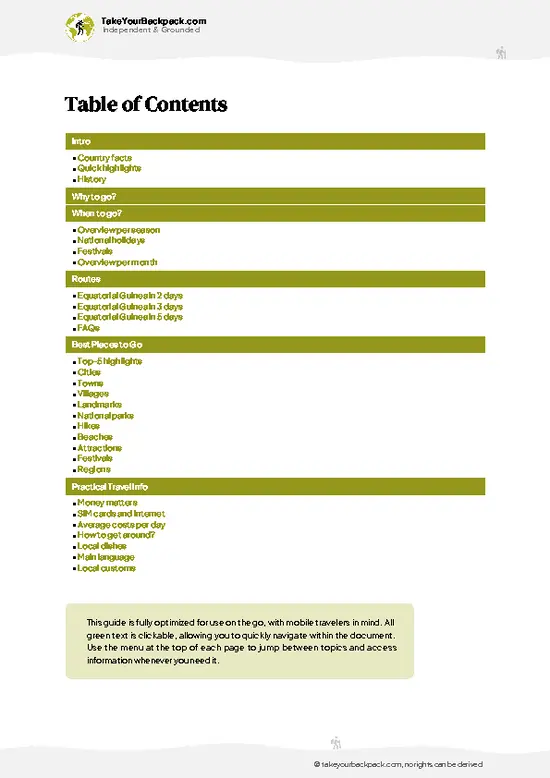
example page 0 from our offline Travel Guide for Equatorial Guinea
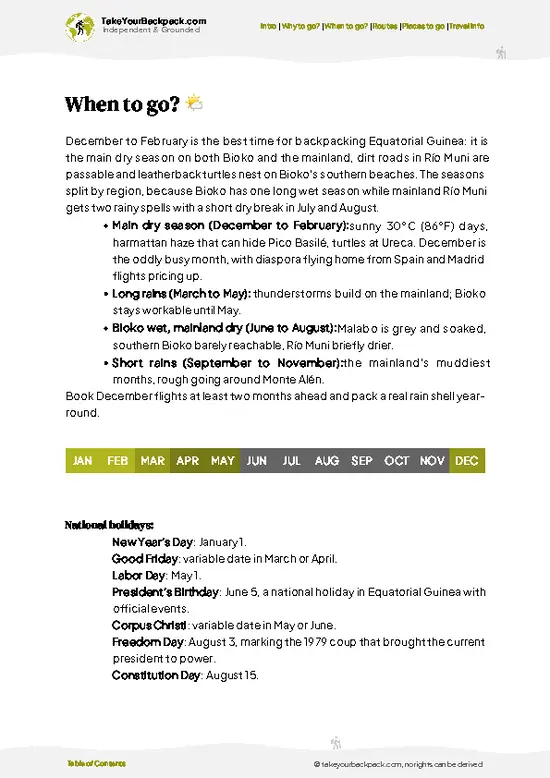
example page 1 from our offline Travel Guide for Equatorial Guinea
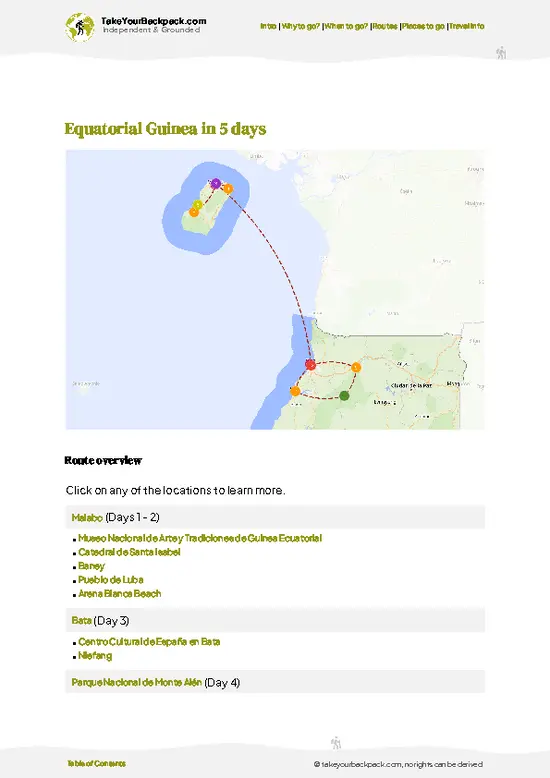
example page 2 from our offline Travel Guide for Equatorial Guinea
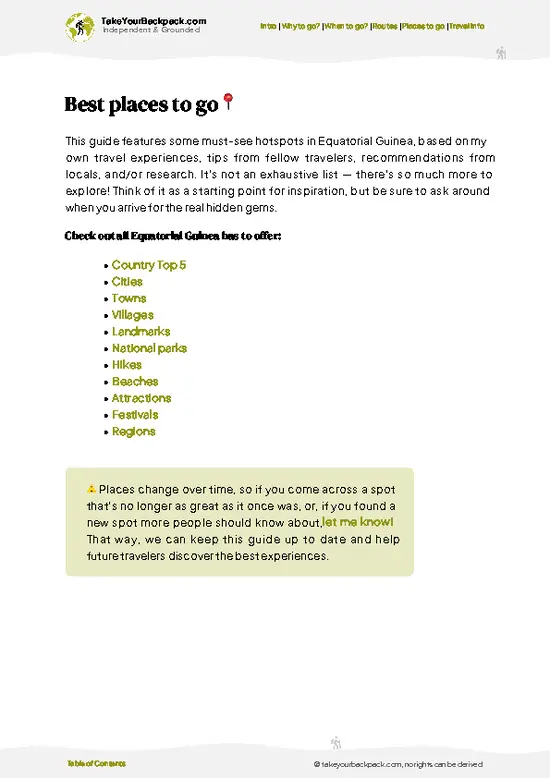
example page 3 from our offline Travel Guide for Equatorial Guinea
example page 4 from our offline Travel Guide for Equatorial Guinea
example page 5 from our offline Travel Guide for Equatorial Guinea
example page 6 from our offline Travel Guide for Equatorial Guinea
example page 7 from our offline Travel Guide for Equatorial Guinea
The digital guide (199 pages) contains:
✅ 48 highlights, ranked by travel appeal
✅ Optimized 2, 3 & 5-day travel routes
✅ Cities, national parks, landmarks, beaches
✅ How to get around
✅ Offline-friendly for travel without Wi-Fi
👉 Click to see all 30+ guide features

📅 Plan smarter in minutes, not weeks
✅ Month by month travel advice
✅ Festivals & national holidays
✅ Budget expectations

🗺️ Go to the right places, skip the overrated ones
✅ Honest pros & cons of destinations
✅ Top hikes, parks & viewpoints
✅ Lesser-known places most travelers miss
✅ Clear “worth it vs skip it” guidance

🛏️ Travel smoothly without rookie mistakes
✅ Best areas to stay
✅ Transport systems explained simply
✅ Common scams & safety advice
✅ SIM cards, money & practical tips

🌍 Understand the country, not just visit it
✅ Culture & traditions
✅ 52 Essential phrases & customs
✅ Festivals worth planning around
✅ Traveler-friendly historical context
✅ Insights that make places more meaningful

📱 Built for real travel conditions
✅ Fully downloadable PDF
✅ Works completely offline
✅ Optimized for phone use
✅ Useful in remote areas & buses
✅ Everything in one place
Stop searching, start planning
Get instant access to your full guide. 30‑day money-back guarantee.
+ Add another guide for just

By proceeding you agree to our terms.
Sent to your inbox immediately after payment • 100% Secure Checkout
Best Backpacking Travel Advisor 2025 tourism awardBest Backpacking
Travel Advisor
2025
What others say about Take Your Backpack Guides:
⭐⭐⭐⭐⭐
Fantastic, amazing amount of information!
⭐⭐⭐⭐⭐
My goodness this is amazing, it's what I've been looking for hats off too you!
⭐⭐⭐⭐⭐
I think this is absolutely BRILLIANT
⭐⭐⭐⭐
Very complete and informative. It's still missing places, but I gotta to commend you
⭐⭐⭐⭐⭐
This is truly amazing, thank you, can't wait to explore it with my kids!
⭐⭐⭐⭐⭐
Awesome resource, thank you!
⭐⭐⭐⭐⭐
This is amazing! Can't wait to explore the ones I haven't seen
⭐⭐⭐⭐
I love this! Well done, great idea.
⭐⭐⭐⭐⭐
Thanks for taking the time to make this gem!
⭐⭐⭐⭐⭐
This might be the best website I've ever seen.
⭐⭐⭐⭐⭐
Congratulations, and thank you so much for your work; it's incredibly valuable.
⭐⭐⭐⭐
In all seriousness I think you did a great job pointing out the important spots
⭐⭐⭐⭐⭐
10/10 very good
⭐⭐⭐⭐⭐
As someone who's only just starting to visit regularly this is awesome, thank you.
⭐⭐⭐⭐
Thank you very much! I'm going to visit my dad, it's going to be very useful!
⭐⭐⭐⭐⭐
This is really cool! We'll be travelling for the first time and this definitely come in handy.
⭐⭐⭐⭐⭐
You are now our minister of culture, congratulations 👨‍💼
⭐⭐⭐⭐⭐
Just wanted to tell you that this is a pearl! Going to follow your recommendations.
⭐⭐⭐⭐⭐
This is so cool. I'll definitely be using the resource for my travels soon.
⭐⭐⭐⭐⭐
This is very impressive! Good work.
⭐⭐⭐⭐⭐
This is an amazing and informative site. Very well done!

🛏️ Where to stay?Best areas and accommodation options

Rebola’s heart for backpackers beats strongest in the central district, where the streets pulse with local life and the air carries the scent of fresh fruit stalls and grilled fish. This area is your best bet for safety and social energy—locals and travelers mingle here, making it easier to strike up conversations or find a walking buddy. Unlike the quieter, more residential outskirts, the center hums with activity well into the evening, offering a natural rhythm for solo adventurers craving connection without sacrificing security.

Hostel options cluster here, often simple but clean, with shared … read more 👉
Rebola’s heart for backpackers beats strongest in the central district, where the streets pulse with local life and the air carries the scent of fresh fruit stalls and grilled fish. This area is your best bet for safety and social energy—locals and travelers mingle here, making it easier to strike up conversations or find a walking buddy. Unlike the quieter, more residential outskirts, the center hums with activity well into the evening, offering a natural rhythm for solo adventurers craving connection without sacrificing security.

Hostel options cluster here, often simple but clean, with shared spaces that invite storytelling over a cold drink. The vibe is unpretentious and welcoming, a stark contrast to the isolated feel of neighborhoods farther out, where transport can be scarce and the atmosphere less inviting. Staying central means you’re steps from markets, eateries, and transport hubs—everything you need to move smoothly through Rebola’s layers without getting stuck or stressed.

🚌 Getting aroundHow to get from A to B

Rebola moves at its own rhythm—less a clockwork town and more a place where the sun’s angle and the scent of saltwater set the pace. The streets don’t hum with strict schedules but pulse with a laid-back, intuitive flow. You’ll find locals weaving through narrow alleys with a casual confidence, and the occasional honk or shout feels less like noise and more like a part of the town’s heartbeat. This isn’t a place to rush; it’s a place to sync with the ebb and flow, where timing is flexible but the connections between spots are surprisingly straightforward once you know the ropes.
  • Walking: The heart of Rebola is compact enough to explore on foot, with cobblestone streets that catch the afternoon light and the salty breeze from the nearby coast. Walking costs nothing and lets you soak in the
… read more 👉
Rebola moves at its own rhythm—less a clockwork town and more a place where the sun’s angle and the scent of saltwater set the pace. The streets don’t hum with strict schedules but pulse with a laid-back, intuitive flow. You’ll find locals weaving through narrow alleys with a casual confidence, and the occasional honk or shout feels less like noise and more like a part of the town’s heartbeat. This isn’t a place to rush; it’s a place to sync with the ebb and flow, where timing is flexible but the connections between spots are surprisingly straightforward once you know the ropes.
  • Walking: The heart of Rebola is compact enough to explore on foot, with cobblestone streets that catch the afternoon light and the salty breeze from the nearby coast. Walking costs nothing and lets you soak in the town’s textures—weathered shutters, street vendors’ calls, and the occasional stray cat lounging in the sun.
  • Shared Taxis (Colectivos): These minibuses run frequently from early morning (around 6:30 AM) until about 9 PM, charging a budget-friendly fare of roughly $0.50 to $1. They’re a bit cramped but fast, darting through the town’s main arteries and connecting you to nearby villages. Expect a lively, social ride where locals chat and negotiate stops on the fly.
  • Motorbike Taxis: For quick hops, motorbike taxis are everywhere and easy to flag down. They’re cheap—usually under $2 for short trips—and perfect when you want to skip the walk or colectivo wait. The trade-off is a bit of wind and dust, but that’s part of the experience here.
  • Bicycle Rentals: Renting a bike is a smart move if you want to cover more ground without losing the freedom of the open air. Rentals run about $5 to $8 per day, and the town’s mostly flat terrain makes pedaling a breeze. Early morning rides catch the soft light and cooler air, making it a sensory highlight.

👛 Costs (as of 13 October 2026)Typical daily expenses

Backpacking in Rebola, Equatorial Guinea, comes with a distinct rhythm shaped by its small-town vibe and limited tourist infrastructure. Understanding the costs here means tuning into the local pace and resources.
  • Dorm Accommodation: Options are scarce and basic, often guesthouses rather than formal hostels. Expect to pay around €10-€15 per night for a shared room. These places are simple, with minimal amenities, but clean enough to rest after a day of exploring.
  • Meals: Food is straightforward and local. Street food or small eateries serve up hearty, filling meals for about €2-€4 each. Fresh fish, plantains, and rice dominate the menu. If you opt for a more formal restaurant, prices can rise to €6-€10 per meal, but the local joints offer the best value and authentic flavors.
  • Local Transport:
… read more 👉
Backpacking in Rebola, Equatorial Guinea, comes with a distinct rhythm shaped by its small-town vibe and limited tourist infrastructure. Understanding the costs here means tuning into the local pace and resources.
  • Dorm Accommodation: Options are scarce and basic, often guesthouses rather than formal hostels. Expect to pay around €10-€15 per night for a shared room. These places are simple, with minimal amenities, but clean enough to rest after a day of exploring.
  • Meals: Food is straightforward and local. Street food or small eateries serve up hearty, filling meals for about €2-€4 each. Fresh fish, plantains, and rice dominate the menu. If you opt for a more formal restaurant, prices can rise to €6-€10 per meal, but the local joints offer the best value and authentic flavors.
  • Local Transport: Public transport is limited and informal. Shared taxis or minibuses are the norm, costing roughly €0.50-€1 per trip within town. For longer distances or private rides, expect to pay closer to €5-€10. Walking is often the best way to soak in the atmosphere and avoid transport hassles.
  • Basic Activities/Entry Fees: Tourist activities are minimal and mostly nature-focused, like visiting nearby beaches or local markets. Entry fees, if any, are usually under €2. Guided tours are rare and can cost around €15-€20, but these are not essential to enjoy the area.
  • Miscellaneous Expenses: Budget for essentials like bottled water (€0.50), occasional snacks, or small souvenirs. These add up to about €2-€4 daily. Internet access can be patchy and might require buying local SIM cards or paying for Wi-Fi in cafes.

Overall, a daily budget in Rebola hovers between €20 and €35. This range covers basic comfort without stretching into luxury, letting you experience the town’s raw charm without surprises. The modest costs reflect the simplicity of life here, where the payoff is in the unfiltered local experience rather than polished tourist amenities.


source: guineaecuatorialpress.com
⚠️ Prices can change and everyone travels differently, so take this as a rough guide. Hope it helps you plan your adventure!

🚌 Day tripsExploring the surroundings

Rebola, Equatorial Guinea, is a backpacker’s dream base for day trips, offering a mix of adventure and cultural immersion. The town itself buzzes with life, from the scent of grilled fish wafting through the market to the vibrant chatter of locals. Here are some day trips that make the effort worthwhile.

Monte Alén National Park
Just a few hours from Rebola, this park is a lush paradise for nature lovers. Picture yourself trekking through dense rainforest, the air thick with humidity and the sounds of wildlife echoing around you. The trails can be challenging, but the payoff is worth it: stunning waterfalls and panoramic views. Expect to spend around $10 on transport and park fees. The best time to visit is during the dry season, from December to February, when trails are more accessible. … read more 👉
Rebola, Equatorial Guinea, is a backpacker’s dream base for day trips, offering a mix of adventure and cultural immersion. The town itself buzzes with life, from the scent of grilled fish wafting through the market to the vibrant chatter of locals. Here are some day trips that make the effort worthwhile.

Monte Alén National Park
Just a few hours from Rebola, this park is a lush paradise for nature lovers. Picture yourself trekking through dense rainforest, the air thick with humidity and the sounds of wildlife echoing around you. The trails can be challenging, but the payoff is worth it: stunning waterfalls and panoramic views. Expect to spend around $10 on transport and park fees. The best time to visit is during the dry season, from December to February, when trails are more accessible. A common mistake? Underestimating the need for sturdy footwear; flip-flops won’t cut it here.


Malabo City
A quick bus ride will take you to the capital, Malabo, where colonial architecture meets modern life. Stroll along the waterfront promenade, soaking in the salty breeze and vibrant street food scene. You can explore the historic cathedral and sample local dishes for about $15 total. Aim for a weekday visit to avoid the weekend crowds. Many first-timers miss the local markets, where you can find unique crafts and fresh produce.


Bioko Island Beaches
Head to the beaches of Bioko Island for a day of sun and surf. The journey takes about an hour by boat, and you’ll find yourself on golden sands with the sound of waves crashing nearby. Bring a picnic and enjoy the laid-back atmosphere. Costs can be around $20 for transport and snacks. The best time to go is during the dry season, when the weather is perfect for lounging. Don’t forget sunscreen; the sun can be relentless.


Aseng Village
Immerse yourself in local culture with a visit to Aseng Village, just a short drive from Rebola. Here, you can engage with the community, learn about traditional crafts, and enjoy a home-cooked meal. The trip costs about $10 and takes roughly 30 minutes. Visiting during the harvest season, from June to August, offers a unique glimpse into local life. Many newcomers overlook the chance to participate in village activities, which can be a highlight of your trip.

🛡️ SafetyStaying Safe: What Travelers Should Know

Rebola is generally safe, but a few practical tips can enhance your experience. Stay alert in crowded markets, where pickpockets might lurk. Keep your belongings close and avoid flashy displays of wealth.

If you’re traveling solo, especially at night, stick to well-lit areas and consider using a local taxi service rather than walking. The streets can feel quiet, and a little caution goes a long way.

Watch for common scams, like overly friendly locals who might offer unsolicited help, expecting a tip. A polite but firm “no, thank you” usually suffices.

Embrace the local atmosphere, but carry yourself with confidence. Being aware and prepared will help you enjoy Rebola’s charm without unnecessary stress.

FAQFrequently asked questions about Rebola

Rebola is primarily a stopover rather than a main destination. It is a small town with limited tourist attractions, mostly serving as a gateway to nearby natural sites. Backpackers usually pass through on their way to Bioko Island's more popular spots.
One day is generally sufficient to explore Rebola. The town is small, and key points of interest, such as local markets and nearby beaches, can be covered within a few hours. Staying longer is only recommended if you plan to use it as a base for excursions.
Yes, Rebola can be visited as a day trip from Malabo, the capital city, which is about 20 kilometers away. Transport options include shared taxis or minibuses, making it feasible to explore Rebola and return to Malabo the same day.
⚠️ Things can change over time, so always validate details locally before you go.

Other Equatoguinean towns near Rebola

Explore more nearby:

  • Baney—road junction, local commerce, Bioko highlands| 9 km away
  • Pueblo de Luba—volcanic hills, colonial relics, black sand beaches| 43 km away
  • Moca—crater lakes, cool climate, highland farming| 46 km away

💡 Not sure where to go next?
Create a personalized itinerary for Equatorial Guinea including Rebola and the places that fit your trip.

Generate my itinerary

👉 Discover all towns

Or checkout all Equatorial Guinea has to offer (think cities, towns, villages, national parks, hikes, beaches, festivals)
Country photo of Equatorial Guinea

We 💚 feedbackKey takeaways before you go

Rebola has a raw, unfiltered vibe that feels like stepping into a living postcard. The scent of fresh seafood mingles with the salty air, and the locals’ laughter is infectious. Don’t miss the beach at sunset; it’s a moment that makes the journey worthwhile. Just be ready for the occasional power outage—embrace it. It’s part of the charm, and it forces you to slow down and soak it all in.

✍️ Help improve this page!
The information on this page is based on in-depth research, insights shared by experienced travelers, and feedback from the local travel community in Equatorial Guinea. While every effort is made to keep the information accurate and current, conditions can change — so if you spot anything incorrect or outdated, please get in touch.


🙋‍♂️ Give feedback

👋 Meet the founderWho’s Behind Take Your Backpack?

Johan, backpacker and founder of TakeYourBackpackHi, I’m Johan (Netherlands 🇳🇱), the creator of TakeYourBackpack. Over the past 3 decades, I’ve backpacked through 90+ countries across six continents, gaining extensive experience with independent travel, long-term trips, and overland routes.

This site is built on a combination of firsthand travel experience and carefully curated insights from other backpackers. Many guides are based on places I’ve personally visited, while others bring together tips, observations, and practical advice shared by trusted travelers I’ve met along the way.

The goal is to provide realistic, experience-driven guidance — not generic itineraries — so you can explore destinations with better context, clearer expectations, and more confidence.