×

Equatorial Guinea🇬🇶 | townsBaneyroad junction, local commerce, Bioko highlands | things to do and best time to go

Explore MocaExplore Añisoc

Backpacking in Baney
👍 Recommendedtown ranked #9
By Johan Kruseman 🇳🇱 | Updated June 11, 2026

Your boots crunch on red earth as the late-afternoon light slants through tangled trees, the air thick with woodsmoke and the distant, sweet tang of fermenting fruit. Baney sits inland on Bioko Island, Equatorial Guinea—about a half-hour’s drive from Malabo, but a world quieter. For backpackers, Baney isn’t a destination that shouts; it’s a pause, a place to catch your breath between the capital’s bustle and the wild, dripping green of the island’s interior. There’s a sleepy market, a few local eateries where you’ll eat what’s cooking, and a sense that time moves at half-speed. Don’t expect hostels or a social backpacker scene—this is more crossroads than hub. Transport is mostly by shared taxi or minibus, and you’ll need patience. Baney is cheaper and more relaxed than Malabo, but less scenic than the coast; it’s a practical stopover for those chasing waterfalls or crater lakes, not a highlight in itself. Safety is solid, but the real reward is the feeling of being somewhere most travelers simply pass by.

Discover everything you want to know in the 📖 Equatorial Guinea Travel Guide.
Loading the map 🌍
CLICK TO FILTER
cities
towns
villages
landmarks
national parks
hikes
beaches
attractions
festivals
regions
SHOW COUNTRY’S BESTSHOW ALL

✨ Why go?
Ranked #9 town in Equatorial Guinea
Why visitors keep coming back

Backpackers flock to Baney for its strategic location as a gateway to stunning hikes and pristine beaches. The nearby trails lead you through lush landscapes, where the air is thick with the scent of damp earth and wildflowers. After a day of trekking, you can unwind at small-scale guesthouses that feel like home, offering local dishes that burst with flavor. The walkable streets invite exploration, making it easy to connect with fellow travelers or locals over a shared meal.

Most visitors stay a few days, soaking in the friendly atmosphere that encourages conversation and camaraderie. This town suits slow travelers and solo adventurers who appreciate a balance of quiet reflection and social interaction. If you’re looking for a quick stop, you might miss the deeper connections that make Baney a worthwhile pause on your journey.
Want to include Baney in your Equatorial Guinea route?
Create a personalized Equatorial Guinea itinerary that includes Baney and the places that fit your trip — based on your travel style, budget, and available time. Get your route in seconds.

Generate my trip

💡 HighlightsWhat this place is best known for

  • Baney Central Market (Mercado de Baney) — The town’s busiest pulse: a compact, colorful market where traders sell fresh fish, local vegetables, spices and street food. Great for watching daily life, picking up cheap snacks, and photographing vendors and produce stalls.
  • Historic Cocoa Haciendas on the town’s outskirts — Old colonial-era cocoa estates that shaped Baney’s economy. Walking around the remaining plantation houses and shaded rows of cocoa trees gives a real sense of the region’s agricultural history and is ideal for low-effort rural hikes and photography.
  • Parish Church of Baney — The town’s main Catholic church where locals gather for services and community events. Visiting during a service or a festival is the easiest way to experience local religious life, listen to choir music,
read more 👉
  • Baney Central Market (Mercado de Baney) — The town’s busiest pulse: a compact, colorful market where traders sell fresh fish, local vegetables, spices and street food. Great for watching daily life, picking up cheap snacks, and photographing vendors and produce stalls.
  • Historic Cocoa Haciendas on the town’s outskirts — Old colonial-era cocoa estates that shaped Baney’s economy. Walking around the remaining plantation houses and shaded rows of cocoa trees gives a real sense of the region’s agricultural history and is ideal for low-effort rural hikes and photography.
  • Parish Church of Baney — The town’s main Catholic church where locals gather for services and community events. Visiting during a service or a festival is the easiest way to experience local religious life, listen to choir music, and see traditional dress.
  • Baney Municipal Plaza and Streetscape — A small central plaza flanked by modest colonial and post-colonial buildings, informal cafés and craft stalls. It’s the best place to soak up Baney’s relaxed tempo, chat with residents, and watch kids play football in the evening.
A few real, visitable highlights just outside Baney that make great day trips are the city of Bata (bustling markets and colonial-era waterfront), the Atlantic beaches and estuaries around Mbini, and the rainforest trails of Monte Alén National Park.
Spotted a mistake or missing something? Contact us.
🏘️ NeighborhoodsKey areas and districts to know

Baney is a vibrant hub in Equatorial Guinea, offering a unique blend of local culture and practical amenities for backpackers. Here’s how to navigate its neighborhoods:

Centro: This is the heart of Baney. You’ll find bustling markets and local eateries. The vibe is lively, perfect for those who thrive on energy. It’s walkable, making it easy to explore on foot. Costs are moderate, with budget-friendly options. Nightlife is low-key, with a few bars where you can mingle with locals. Ideal for short stays.

Playa de Baney: If you’re craving some beach time, this area delivers. The atmosphere is relaxed, with the scent of saltwater in the air. Accommodations range from budget hostels to mid-range hotels. It’s less walkable, so consider renting a bike. Perfect for longer stays, especially if you … read more 👉
Baney is a vibrant hub in Equatorial Guinea, offering a unique blend of local culture and practical amenities for backpackers. Here’s how to navigate its neighborhoods:

Centro: This is the heart of Baney. You’ll find bustling markets and local eateries. The vibe is lively, perfect for those who thrive on energy. It’s walkable, making it easy to explore on foot. Costs are moderate, with budget-friendly options. Nightlife is low-key, with a few bars where you can mingle with locals. Ideal for short stays.

Playa de Baney: If you’re craving some beach time, this area delivers. The atmosphere is relaxed, with the scent of saltwater in the air. Accommodations range from budget hostels to mid-range hotels. It’s less walkable, so consider renting a bike. Perfect for longer stays, especially if you enjoy sunbathing and swimming.

El Barrio: A quieter neighborhood, great for those seeking a peaceful retreat. The streets are lined with trees, and you can hear the distant chatter of families. Costs are lower here, and it’s a short bus ride to the center. Best for longer stays, especially if you want to immerse yourself in local life.

⌛️ 1 dayA smart one-day plan

Baney, a charming town in Equatorial Guinea, offers a slice of authentic life away from the usual tourist paths. The air is thick with the scent of fresh plantains and the sounds of laughter from children playing in the streets. This is a place where you can truly connect with the local culture.

Start your morning at the bustling market in the heart of town. The vibrant colors of fruits and vegetables will catch your eye, while the chatter of vendors fills the air. Grab a breakfast of *fufu*—a starchy staple—and a cup of rich, local coffee. This is where you’ll feel the pulse of Baney.

In the afternoon, take a stroll through the quiet streets of the Elobey neighborhood. The colonial architecture stands as a reminder of the town’s history, and the warm smiles from locals make you feel at … read more 👉
Baney, a charming town in Equatorial Guinea, offers a slice of authentic life away from the usual tourist paths. The air is thick with the scent of fresh plantains and the sounds of laughter from children playing in the streets. This is a place where you can truly connect with the local culture.

Start your morning at the bustling market in the heart of town. The vibrant colors of fruits and vegetables will catch your eye, while the chatter of vendors fills the air. Grab a breakfast of *fufu*—a starchy staple—and a cup of rich, local coffee. This is where you’ll feel the pulse of Baney.

In the afternoon, take a stroll through the quiet streets of the Elobey neighborhood. The colonial architecture stands as a reminder of the town’s history, and the warm smiles from locals make you feel at home. Don’t miss the small, tucked-away art gallery featuring local artists; it’s a hidden treasure that showcases the spirit of the community.

As the sun begins to set, head to the waterfront. The golden light reflecting off the water creates a magical atmosphere. Enjoy a simple dinner at a local eatery, where you can savor grilled fish seasoned with spices that dance on your palate.

End your day with a leisurely walk along the shore, where the sound of waves crashing against the rocks provides a soothing backdrop. In Baney, every moment is a chance to connect, making your visit not just a trip, but a meaningful experience.
Turn your Baney visit into an Equatorial Guinea adventure
Build a complete Equatorial Guinea route with Baney, hidden gems, must-see destinations, and realistic travel times included.

Generate my trip

🌤️ When to go?When to go for the best experience


  • Weather: Baney sits near the equator, so expect a hot, humid climate year-round. The heavy rains from March to June can turn trails into slippery mud baths, making trekking a slog rather than a joy.

  • Temperature: Daytime highs hover around 28-32°C (82-90°F), with nights cooling slightly to 22-24°C (72-75°F). The heat is steady, so pack breathable fabrics and stay hydrated.

  • Daylight Hours: Near the equator, daylight is consistent—about 12 hours daily. This steady rhythm means you can plan hikes and explorations without worrying about shifting sunset times.

  • Crowds: Baney is off the beaten path, so crowds are minimal year-round. The only noticeable uptick is during local festivals, which offer a cultural feast but can bump up accommodation prices.

  • Seasonal Activities: Dry months (July
read more 👉

  • Weather: Baney sits near the equator, so expect a hot, humid climate year-round. The heavy rains from March to June can turn trails into slippery mud baths, making trekking a slog rather than a joy.

  • Temperature: Daytime highs hover around 28-32°C (82-90°F), with nights cooling slightly to 22-24°C (72-75°F). The heat is steady, so pack breathable fabrics and stay hydrated.

  • Daylight Hours: Near the equator, daylight is consistent—about 12 hours daily. This steady rhythm means you can plan hikes and explorations without worrying about shifting sunset times.

  • Crowds: Baney is off the beaten path, so crowds are minimal year-round. The only noticeable uptick is during local festivals, which offer a cultural feast but can bump up accommodation prices.

  • Seasonal Activities: Dry months (July to February) are prime for exploring waterfalls and forests without the constant drizzle. The rainy season floods rivers, limiting some outdoor options but enriching the lush greenery.

  • Price Fluctuations: Expect slightly higher prices during the dry season when access is easier and local events draw visitors. The rainy season offers better deals but comes with travel challenges.


Pro-tip: Aim for the shoulder months of July and February—drier trails, manageable heat, fewer tourists, and better prices. It’s the sweet spot where Baney’s raw beauty feels earned, not just handed to you.


source: climatestotravel.comJANJanuary: highly recommended for travelingFEBFebruary: excellent for travelingMARMarch: fair for travelingAPRApril: fair for travelingMAYMay: fair for travelingJUNJune: fair for travelingJULJuly: excellent for travelingAUGAugust: highly recommended for travelingSEPSeptember: highly recommended for travelingOCTOctober: highly recommended for travelingNOVNovember: good for travelingDECDecember: highly recommended for traveling
when-to-go

✈️ The backpacker research shortcutEquatorial Guinea Travel Guide

An offline-friendly backpacking guide with optimized travel routes, ranked highlights, transport advice, and the best areas to stay.
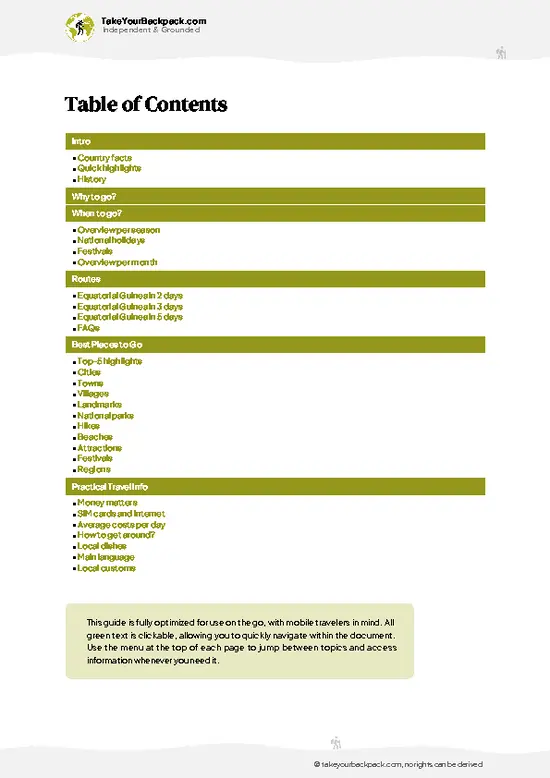
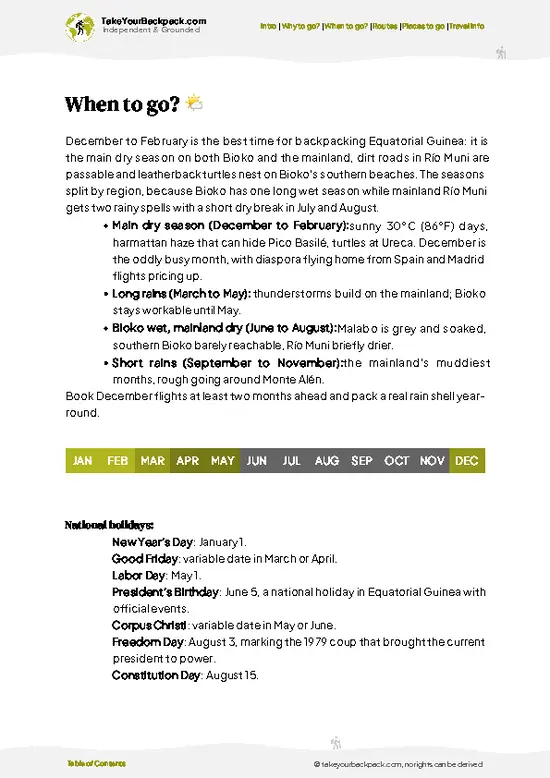
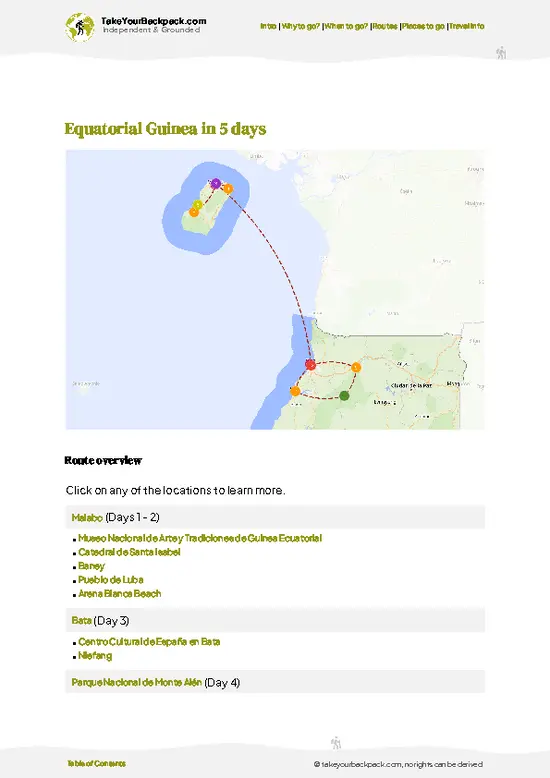
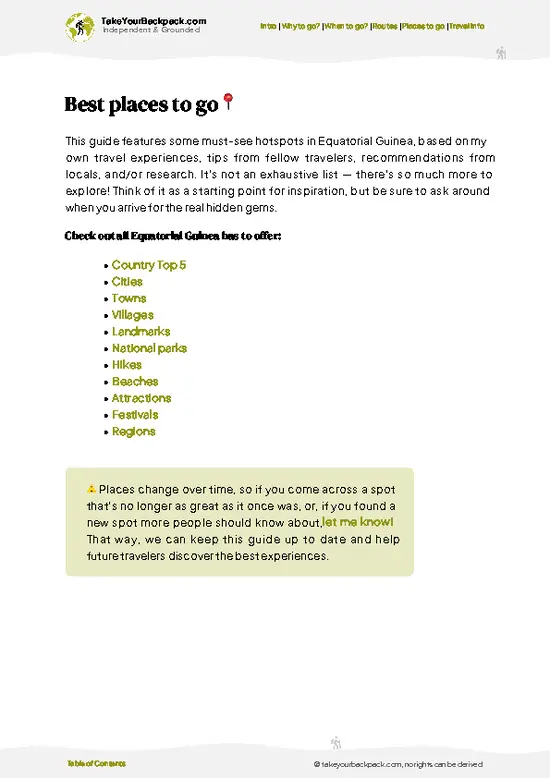
example page 0 from our offline Travel Guide for Equatorial Guinea
example page 1 from our offline Travel Guide for Equatorial Guinea
example page 2 from our offline Travel Guide for Equatorial Guinea
example page 3 from our offline Travel Guide for Equatorial Guinea
example page 4 from our offline Travel Guide for Equatorial Guinea
example page 5 from our offline Travel Guide for Equatorial Guinea
example page 6 from our offline Travel Guide for Equatorial Guinea
example page 7 from our offline Travel Guide for Equatorial Guinea
The digital guide (216 pages) contains:
52 highlights, ranked by travel appeal
Optimized 2, 3 & 5-day travel routes
Cities, national parks, landmarks, beaches
How to get around
Offline-friendly for travel without Wi-Fi
👉 Click to see all 30+ guide features

📅 Plan smarter in minutes, not weeks
Month by month travel advice
Festivals & national holidays
Budget expectations

🗺️ Go to the right places, skip the overrated ones
Honest pros & cons of destinations
Top hikes, parks & viewpoints
Lesser-known places most travelers miss
Clear “worth it vs skip it” guidance

🛏️ Travel smoothly without rookie mistakes
Best areas to stay
Transport systems explained simply
Common scams & safety advice
SIM cards, money & practical tips

🌍 Understand the country, not just visit it
Culture & traditions
52 Essential phrases & customs
Festivals worth planning around
Traveler-friendly historical context
Insights that make places more meaningful

📱 Built for real travel conditions
Fully downloadable PDF
Works completely offline
Optimized for phone use
Useful in remote areas & buses
Everything in one place
Save weeks of stressful planning
Get instant access to your full guide. 30‑day money-back guarantee.


By proceeding you agree to our terms.
Sent to your inbox immediately after payment • 100% Secure Checkout
Best Backpacking Travel Advisor 2025 tourism awardBest Backpacking
Travel Advisor
2025
What others say about Take Your Backpack Guides:
⭐⭐⭐⭐⭐
Fantastic, amazing amount of information!
⭐⭐⭐⭐⭐
My goodness this is amazing, it's what I've been looking for hats off too you!
⭐⭐⭐⭐⭐
I think this is absolutely BRILLIANT
⭐⭐⭐⭐
Very complete and informative. It's still missing places, but I gotta to commend you
⭐⭐⭐⭐⭐
This is truly amazing, thank you, can't wait to explore it with my kids!
⭐⭐⭐⭐⭐
Awesome resource, thank you!
⭐⭐⭐⭐⭐
This is amazing! Can't wait to explore the ones I haven't seen
⭐⭐⭐⭐
I love this! Well done, great idea.
⭐⭐⭐⭐⭐
Thanks for taking the time to make this gem!
⭐⭐⭐⭐⭐
This might be the best website I've ever seen.
⭐⭐⭐⭐⭐
Congratulations, and thank you so much for your work; it's incredibly valuable.
⭐⭐⭐⭐
In all seriousness I think you did a great job pointing out the important spots
⭐⭐⭐⭐⭐
10/10 very good
⭐⭐⭐⭐⭐
As someone who's only just starting to visit regularly this is awesome, thank you.
⭐⭐⭐⭐
Thank you very much! I'm going to visit my dad, it's going to be very useful!
⭐⭐⭐⭐⭐
This is really cool! We'll be travelling for the first time and this definitely come in handy.
⭐⭐⭐⭐⭐
You are now our minister of culture, congratulations 👨‍💼
⭐⭐⭐⭐⭐
Just wanted to tell you that this is a pearl! Going to follow your recommendations.
⭐⭐⭐⭐⭐
This is so cool. I'll definitely be using the resource for my travels soon.
⭐⭐⭐⭐⭐
This is very impressive! Good work.
⭐⭐⭐⭐⭐
This is an amazing and informative site. Very well done!

🛏️ Where to stay?Best areas and accommodation options

Baney’s heart for backpackers pulses strongest in its central district, where the streets hum with local life and the air carries the scent of fresh fruit markets and grilled street food. This area is your best bet—not just for safety but for connection. It’s where you’ll find the few budget hostels that cater to solo travelers, offering a chance to swap stories over shared meals or late-night beers. The vibe here is relaxed but lively, a mix of locals and travelers who appreciate the town’s unpolished charm.

Venture outside this core, and the city’s rhythm shifts. Residential neighborhoods can … read more 👉
Baney’s heart for backpackers pulses strongest in its central district, where the streets hum with local life and the air carries the scent of fresh fruit markets and grilled street food. This area is your best bet—not just for safety but for connection. It’s where you’ll find the few budget hostels that cater to solo travelers, offering a chance to swap stories over shared meals or late-night beers. The vibe here is relaxed but lively, a mix of locals and travelers who appreciate the town’s unpolished charm.

Venture outside this core, and the city’s rhythm shifts. Residential neighborhoods can feel quieter but less welcoming to outsiders, with fewer communal spaces and almost no budget lodging. The outskirts might offer peace, but they lack the social pulse that makes backpacking rewarding. Staying central means you’re steps from the bus routes, markets, and informal hangouts—everything you need to dive into Baney’s daily life without the hassle of long commutes or feeling isolated. It’s the practical choice that unlocks the city’s real character.

🚌 Getting aroundHow to get around Baney

Baney moves at its own rhythm—less a strict timetable and more a pulse you catch by tuning in. The streets hum with the shuffle of locals balancing errands, chatter spilling from open windows, and the occasional honk slicing through the warm, humid air. This isn’t a place where you’ll find neat schedules posted on every corner. Instead, you learn to read the flow: minibuses fill up until they burst, motorbikes dart through gaps like water, and the sun’s angle tells you when the market will start to wind down. The scent of frying plantains and fresh coffee hangs heavy, a reminder that patience here is rewarded with authentic moments. If you want to move smartly through Baney, you’ll need to blend a bit of local intuition with practical transit know-how.


  • Walking: The heart of Baney is compact
read more 👉
Baney moves at its own rhythm—less a strict timetable and more a pulse you catch by tuning in. The streets hum with the shuffle of locals balancing errands, chatter spilling from open windows, and the occasional honk slicing through the warm, humid air. This isn’t a place where you’ll find neat schedules posted on every corner. Instead, you learn to read the flow: minibuses fill up until they burst, motorbikes dart through gaps like water, and the sun’s angle tells you when the market will start to wind down. The scent of frying plantains and fresh coffee hangs heavy, a reminder that patience here is rewarded with authentic moments. If you want to move smartly through Baney, you’ll need to blend a bit of local intuition with practical transit know-how.


  • Walking: The heart of Baney is compact enough to explore on foot. Streets are uneven but navigable, and walking lets you soak in the scents of street food stalls and the vibrant chatter of vendors. It’s free, flexible, and the best way to catch the town’s texture up close.


  • Minibuses (Colectivos): These shared vans are the lifeblood of local transit. They don’t run on a strict schedule—expect them to leave when full, which can mean waiting 10 minutes or 30. Fares hover around a few hundred CFA francs, making them the cheapest option for longer hops. They’re cramped but fast, weaving through traffic with practiced ease.


  • Motorbike Taxis (Okadas): When time is tight, these buzzing motorbikes cut through Baney’s narrow alleys and congested streets. Prices are negotiable but generally affordable for short trips. Helmets aren’t always standard, so hold on tight and prepare for a jolt of adrenaline mixed with the scent of exhaust and tropical humidity.


  • Shared Taxis: Slightly pricier than minibuses but more direct, shared taxis run fixed routes between Baney and nearby towns. They leave once full, usually from central hubs, and offer a bit more comfort with cushioned seats and less crowding. Ideal if you’re carrying gear or want a smoother ride without breaking the bank.

👛 Costs (as of 27 July 2025)What things cost and how to budget

Backpacking in Baney, Equatorial Guinea, demands a practical approach to budgeting, as the town offers basic but essential services at modest prices, reflecting its developing infrastructure and local economy.
  • Dorm Accommodation: Expect to pay around €10 to €15 per night for a bed in a simple guesthouse or hostel dorm. Options are limited and often very basic, with minimal amenities, but clean enough for a good rest after a day of exploring.
  • Meals: Local eateries serve hearty meals for about €3 to €6. Street food is your best bet for authentic flavors and budget-friendly prices—think grilled fish or chicken with rice and plantains, fresh but straightforward. Western-style restaurants are rare and pricier.
  • Local Transport: Getting around Baney usually means hopping on shared taxis or minibuses,
read more 👉
Backpacking in Baney, Equatorial Guinea, demands a practical approach to budgeting, as the town offers basic but essential services at modest prices, reflecting its developing infrastructure and local economy.
  • Dorm Accommodation: Expect to pay around €10 to €15 per night for a bed in a simple guesthouse or hostel dorm. Options are limited and often very basic, with minimal amenities, but clean enough for a good rest after a day of exploring.
  • Meals: Local eateries serve hearty meals for about €3 to €6. Street food is your best bet for authentic flavors and budget-friendly prices—think grilled fish or chicken with rice and plantains, fresh but straightforward. Western-style restaurants are rare and pricier.
  • Local Transport: Getting around Baney usually means hopping on shared taxis or minibuses, which cost roughly €0.50 to €1 per trip. The roads can be rough, so expect a bumpy ride, but it’s the most efficient way to navigate the town and nearby villages.
  • Basic Activities/Entry Fees: Baney’s attractions are mostly natural and community-based, with entry fees typically under €5. Visiting local markets, small museums, or natural sites like nearby waterfalls involves minimal costs but offers rich cultural insight.
  • Miscellaneous Expenses: Budget around €2 to €4 daily for essentials like bottled water, snacks, or occasional phone credit. Internet access is patchy and often expensive, so plan accordingly if you need connectivity.

Overall, a realistic daily budget for backpacking in Baney falls between €20 and €30. This range covers basic comfort without luxury, letting you experience the town’s raw, unpolished charm while staying mindful of local prices and infrastructure limits.


source: guineaecuatorialpress.com
⚠️ Prices can change and everyone travels differently, so take this as a rough guide. Hope it helps you plan your adventure!

🚌 Day tripsEasy escapes and nearby places

Baney, Equatorial Guinea, is a fantastic launchpad for day trips that reveal the country’s rich tapestry of culture and nature. The vibrant atmosphere of the town itself is just the beginning. Here are some standout excursions that will elevate your experience.

Monte Alén National Park
A trek into Monte Alén is like stepping into a living postcard. Dense rainforest envelops you, and the air is thick with the scent of damp earth and wild orchids. The park is about a two-hour drive from Baney, and the entrance fee is minimal—around $5. You’ll want to go during the dry season (June to September) to avoid muddy trails. Many first-timers underestimate the park’s size; don’t rush. Take your time to soak in the sounds of howler monkeys and the rustle of leaves.


Río Campo
Just a short 45-minute … read more 👉
Baney, Equatorial Guinea, is a fantastic launchpad for day trips that reveal the country’s rich tapestry of culture and nature. The vibrant atmosphere of the town itself is just the beginning. Here are some standout excursions that will elevate your experience.

Monte Alén National Park
A trek into Monte Alén is like stepping into a living postcard. Dense rainforest envelops you, and the air is thick with the scent of damp earth and wild orchids. The park is about a two-hour drive from Baney, and the entrance fee is minimal—around $5. You’ll want to go during the dry season (June to September) to avoid muddy trails. Many first-timers underestimate the park’s size; don’t rush. Take your time to soak in the sounds of howler monkeys and the rustle of leaves.


Río Campo
Just a short 45-minute drive from Baney, Río Campo offers a refreshing escape. The river’s crystal-clear waters are perfect for a swim, and the surrounding area is dotted with local fishing villages. Bring a packed lunch to enjoy by the water, and don’t forget your camera—the light filtering through the trees creates a magical atmosphere. A common mistake is to overlook the local guides; they can share stories that enrich your visit. Expect to spend around $10 for transport and snacks.


Malabo
A day trip to Malabo, the capital, is a must. It’s about a two-hour drive, and the vibrant markets and colonial architecture are worth every minute. The seafood here is fresh and delicious; try the local dish, “sopa de pescado.” Budget around $15 for transport and meals. Many travelers miss the chance to explore the local art scene; take a stroll through the streets to find murals that tell the story of the city.
👉 Explore Malabo

Bioko Island
If you’re feeling adventurous, hop on a ferry to Bioko Island. The ride takes about an hour, and the island is a treasure trove of biodiversity. Explore the volcanic landscapes and lush plantations. The ferry costs around $20, and it’s best to go early in the morning to maximize your time. A common pitfall is not checking the ferry schedule; they can be sporadic. Plan ahead to avoid disappointment.
Want to know what more Equatorial Guinea offers?
The Equatorial Guinea Travel Guide describes 52 highlights, from cities to national parks, from beaches to hikes

Get the Travel Guide -

🛡️ SafetyScams, Hazards, and Annoyances

In Baney, safety is generally good, but a few practical tips can enhance your experience. Stay aware in crowded markets; pickpockets can be a nuisance. If you’re wandering solo at night, stick to well-lit areas and avoid empty streets. The atmosphere shifts after dark, so it’s wise to plan your return before sunset.

Scams are rare, but be cautious with unofficial taxi drivers. Always negotiate fares beforehand to avoid surprises. Locals are friendly, but some may approach you with offers that seem too good to be true. A polite smile and a firm “no, thank you” usually do the trick. Carry yourself confidently, and you’ll blend in seamlessly.

Other Equatoguinean towns near Baney

Explore more nearby:

  • Rebola—mountain slopes, Bioko Island villages, traditional homesteads| 9 km away
  • Pueblo de Luba—volcanic hills, colonial relics, black sand beaches| 48 km away
  • Moca—crater lakes, cool climate, highland farming| 48 km away

💡 Not sure where to go next?
Create a personalized itinerary for Equatorial Guinea including Baney and the places that fit your trip.

Generate my itinerary

👉 Discover all towns

Or checkout all Equatorial Guinea has to offer (think cities, towns, villages, national parks, hikes, beaches, festivals)
Country photo of Equatorial Guinea

We 💚 feedbackWhat to keep in mind

Baney has a raw, electric vibe that feels alive. The scent of grilled fish wafts through the air as locals gather, laughter echoing off the vibrant market stalls. Don’t miss the beach at sunset; it’s a stunning show of colors. Just be mindful of the tides—some spots can be tricky. Embrace the chaos; it’s part of the charm.

✍️ Help improve this page!
The information on this page is based on in-depth research, insights shared by experienced travelers, and feedback from the local travel community in Equatorial Guinea. While every effort is made to keep the information accurate and current, conditions can change — so if you spot anything incorrect or outdated, please get in touch.


🙋‍♂️ Give feedback

👋 Meet the founderWho’s Behind Take Your Backpack?

Johan, backpacker and founder of TakeYourBackpackHi, I’m Johan (Netherlands 🇳🇱), the creator of TakeYourBackpack. Over the past decade, I’ve backpacked through 80+ countries across six continents, gaining extensive experience with independent travel, long-term trips, and overland routes.

This site is built on a combination of firsthand travel experience and carefully curated insights from other backpackers. Many guides are based on places I’ve personally visited, while others bring together tips, observations, and practical advice shared by trusted travelers I’ve met along the way.

The goal is to provide realistic, experience-driven guidance — not generic itineraries — so you can explore destinations with better context, clearer expectations, and more confidence.

Get full country guide •
Instant download • 52 highlights • Full Offline guide