×

Eritrea🇪🇷 | festivalsEritrean Orthodox ChristmasGenna, Ge’ez chanting, white netsela, doro wat | things to do and best time to go

Explore Sawa FestivalExplore Meskel

Backpacking in Eritrean Orthodox Christmas
👍 Recommendedfestival ranked #3
By Johan Kruseman 🇳🇱 | Updated October 22, 2026

Eritrean Orthodox Christmas suits travelers who like to watch ritual up close and don’t need a program, a stage or a ticket. It is less rewarding if you want nightlife, souvenirs or anything built for visitors, because this is a family and church occasion. The celebration, known locally as Genna, falls on January 7, and Eritrea’s Orthodox community marks it across the country, including the highlands around Asmara and the town of Keren, which sits north-west of the capital. Expect it to run a single day, preceded by a fast. On the ground, that means quiet streets on Christmas Eve, then white cotton shawls (netsela) drifting toward churches at dawn, where incense and Ge’ez chanting carry across the courtyard. You stand at the edge, and you get a rare look at one of the oldest Christian traditions in Africa. By midday the smell of spiced stew and fresh injera drifts from open doorways, and neighbors invite each other in.

Discover everything you want to know in the 📖 Eritrea Travel Guide.


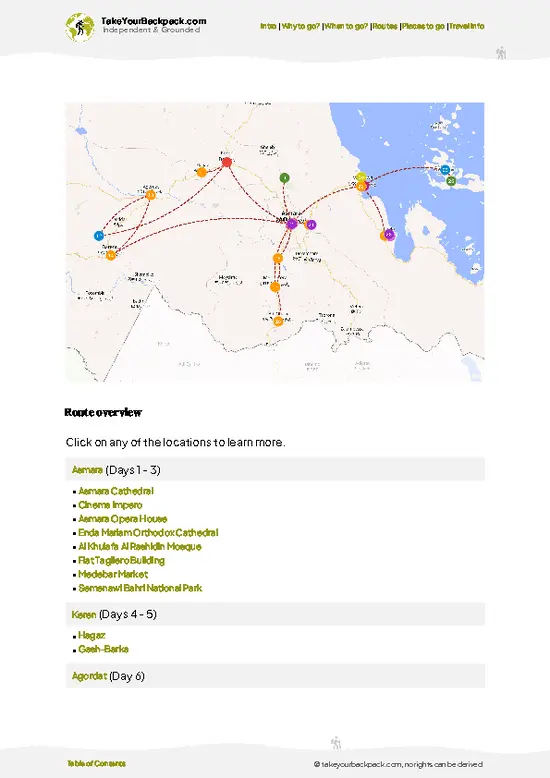
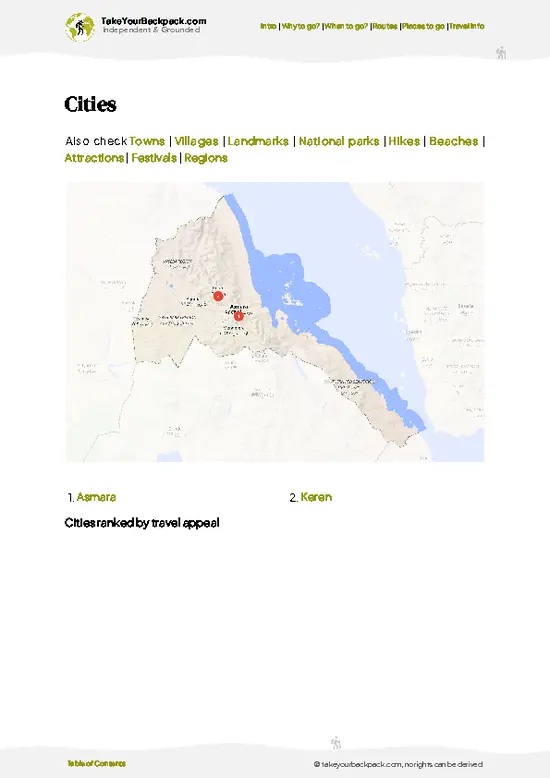
example page 0 from our offline Travel Guide for Eritrea
example page 1 from our offline Travel Guide for Eritrea
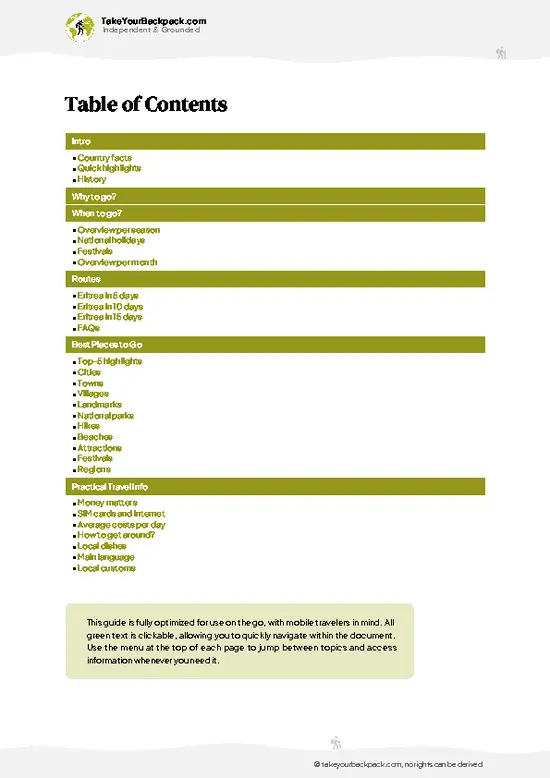
example page 2 from our offline Travel Guide for Eritrea
example page 3 from our offline Travel Guide for Eritrea
example page 4 from our offline Travel Guide for Eritrea
example page 5 from our offline Travel Guide for Eritrea
example page 6 from our offline Travel Guide for Eritrea
example page 7 from our offline Travel Guide for Eritrea
Loading the map 🌍
CLICK TO FILTER
cities
towns
villages
landmarks
national parks
hikes
beaches
attractions
festivals
regions
SHOW COUNTRY’S BESTSHOW ALL

✨ Why go?
Ranked #3 festival in Eritrea
What sets this place apart

Eritrean Orthodox Christmas pulls travelers into a one-day calendar fixed at January 7, which makes it easy to plan around and impossible to fake. There is no festival ground to enter. The community itself is the event, so you share space with families walking to church in white, then with neighbors greeting one another with “Melkam Genna” or the Tigrinya equivalent. That closeness is the draw.

The religious setting is the second reason. Eritrean Orthodox practice descends from the early Aksumite church, and the liturgy is sung in Ge’ez, a language no longer spoken in daily life. Hearing it in a courtyard, with priests in embroidered robes and processional crosses, tells you more about the highlands than a museum label could.

It also fits a longer route well. Many travelers pair it with … read more 👉
Eritrean Orthodox Christmas pulls travelers into a one-day calendar fixed at January 7, which makes it easy to plan around and impossible to fake. There is no festival ground to enter. The community itself is the event, so you share space with families walking to church in white, then with neighbors greeting one another with “Melkam Genna” or the Tigrinya equivalent. That closeness is the draw.

The religious setting is the second reason. Eritrean Orthodox practice descends from the early Aksumite church, and the liturgy is sung in Ge’ez, a language no longer spoken in daily life. Hearing it in a courtyard, with priests in embroidered robes and processional crosses, tells you more about the highlands than a museum label could.

It also fits a longer route well. Many travelers pair it with time in Asmara, whose Art Deco streets are quiet and walkable on a holiday, or with the highland towns. Because the day is domestic, meals are shared, and a polite visitor may be offered a seat, a coffee ceremony and a plate of doro wat.

💡 HighlightsKey sights and experiences for travelers

  1. Dawn liturgy at an Orthodox church. The central event is the Christmas Eve vigil and morning service, with chanting in Ge’ez, drums, sistra and long prayer staffs. Worshippers stand for hours in the courtyard, and visitors who keep a respectful distance and dress modestly are generally tolerated.
  2. Netsela and white clothing. Almost everyone wears white cotton, and women often wear the finely bordered netsela. Seeing a church yard fill with white at first light is the most photographed, and most affecting, moment of the day.
  3. Doro wat and injera feast. After the Advent fast, households serve chicken stew with boiled eggs, spiced with berbere, alongside injera and sometimes sowa, a homemade barley beer. Invitations from neighbors are common, so a meal can happen without planning.
  4. The coffee ceremony.
… read more 👉
  1. Dawn liturgy at an Orthodox church. The central event is the Christmas Eve vigil and morning service, with chanting in Ge’ez, drums, sistra and long prayer staffs. Worshippers stand for hours in the courtyard, and visitors who keep a respectful distance and dress modestly are generally tolerated.
  2. Netsela and white clothing. Almost everyone wears white cotton, and women often wear the finely bordered netsela. Seeing a church yard fill with white at first light is the most photographed, and most affecting, moment of the day.
  3. Doro wat and injera feast. After the Advent fast, households serve chicken stew with boiled eggs, spiced with berbere, alongside injera and sometimes sowa, a homemade barley beer. Invitations from neighbors are common, so a meal can happen without planning.
  4. The coffee ceremony. Beans are roasted on a charcoal stove, the smoke is wafted toward guests, and three rounds are poured from a clay jebena. Hosts take it seriously. Accepting at least the first cup is polite and gives you a seat in someone’s front room.
  5. Asmara’s cathedral quarter on the holiday. The capital’s Orthodox church grounds fill with worshippers while the surrounding Art Deco avenues sit unusually calm. It is an easy place to combine ritual with a walk past the modernist buildings that define the city.
For a first visit, the dawn liturgy at a church is the one to prioritize, because everything else on Eritrean Orthodox Christmas follows from it.
Spotted a mistake or missing something? Contact us.

Things to do near Eritrean Orthodox Christmas

Ratings based on Tripadvisor reviews. When you book through this link, you support our work at no extra cost to you.

🌤️ When to go?When is the celebration of Eritrean Orthodox Christmas?

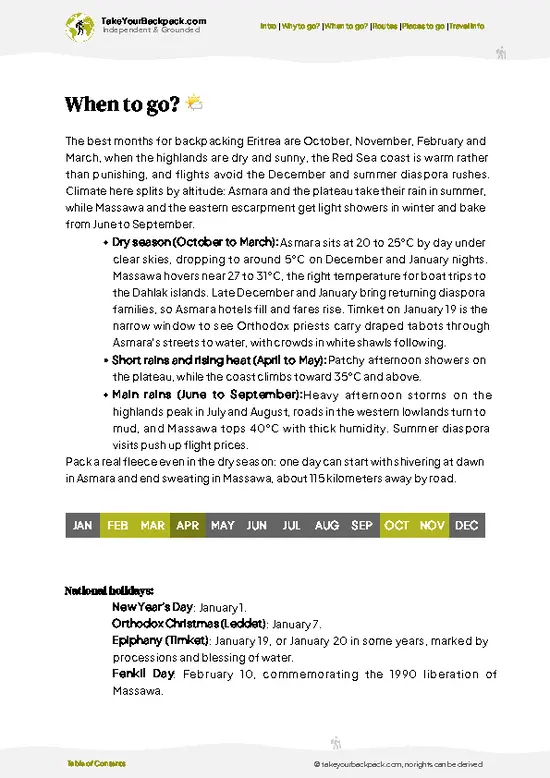
Eritrean Orthodox Christmas (Genna) falls on January 7, a single day of celebration, with the main services held in Asmara, the capital, and around its Orthodox cathedral and churches. In the Orthodox calendar the date is fixed, and it follows a long fast that ends the night before.
  • Best part: The night of January 6 is the one to catch. Worshippers in white shammas gather for the vigil, with chanting and incense that runs until dawn, and the January 7 morning has the feasting.
  • Weather: Asmara sits at about 2,300 m (7,500 ft). Days are dry and sunny at roughly 22 to 25°C (72 to 77°F), but nights drop to around 5 to 8°C (41 to 46°F). Bring a warm layer for the vigil, a scarf and sun protection.
  • Booking: Reserve a bed 3 to 4 weeks ahead, since diaspora relatives fill rooms. Expect prices 20 to 40
… read more 👉
Eritrean Orthodox Christmas (Genna) falls on January 7, a single day of celebration, with the main services held in Asmara, the capital, and around its Orthodox cathedral and churches. In the Orthodox calendar the date is fixed, and it follows a long fast that ends the night before.
  • Best part: The night of January 6 is the one to catch. Worshippers in white shammas gather for the vigil, with chanting and incense that runs until dawn, and the January 7 morning has the feasting.
  • Weather: Asmara sits at about 2,300 m (7,500 ft). Days are dry and sunny at roughly 22 to 25°C (72 to 77°F), but nights drop to around 5 to 8°C (41 to 46°F). Bring a warm layer for the vigil, a scarf and sun protection.
  • Booking: Reserve a bed 3 to 4 weeks ahead, since diaspora relatives fill rooms. Expect prices 20 to 40 percent above normal.
  • Transport: Buses and shared taxis are packed on January 5 and 6 and again on January 8. Travel on the 7th itself is slow, as many services run less often.
Arrive in Asmara by January 5 so you can settle in before the vigil, and walk to the church rather than hunting for a taxi.


source: climatestotravel.comJANJanuary: excellent for travelingFEBFebruary: not recommended for travelingMARMarch: not recommended for travelingAPRApril: not recommended for travelingMAYMay: not recommended for travelingJUNJune: not recommended for travelingJULJuly: not recommended for travelingAUGAugust: not recommended for travelingSEPSeptember: not recommended for travelingOCTOctober: not recommended for travelingNOVNovember: not recommended for travelingDECDecember: not recommended for traveling

✈️ The backpacker research shortcutEritrea Travel Guide

An offline-friendly backpacking guide with optimized travel routes, ranked highlights, transport advice, and the best areas to stay.
example page 0 from our offline Travel Guide for Eritrea
example page 1 from our offline Travel Guide for Eritrea
example page 2 from our offline Travel Guide for Eritrea
example page 3 from our offline Travel Guide for Eritrea
example page 4 from our offline Travel Guide for Eritrea
example page 5 from our offline Travel Guide for Eritrea
example page 6 from our offline Travel Guide for Eritrea
example page 7 from our offline Travel Guide for Eritrea
The digital guide (245 pages) contains:
✅ 56 highlights, ranked by travel appeal
✅ Optimized 5, 10 & 15-day travel routes
✅ Cities, national parks, landmarks, beaches
✅ How to get around
✅ Offline-friendly for travel without Wi-Fi
👉 Click to see all 30+ guide features

📅 Plan smarter in minutes, not weeks
✅ Month by month travel advice
✅ Festivals & national holidays
✅ Budget expectations

🗺️ Go to the right places, skip the overrated ones
✅ Honest pros & cons of destinations
✅ Top hikes, parks & viewpoints
✅ Lesser-known places most travelers miss
✅ Clear “worth it vs skip it” guidance

🛏️ Travel smoothly without rookie mistakes
✅ Best areas to stay
✅ Transport systems explained simply
✅ Common scams & safety advice
✅ SIM cards, money & practical tips

🌍 Understand the country, not just visit it
✅ Culture & traditions
✅ 52 Essential phrases & customs
✅ Festivals worth planning around
✅ Traveler-friendly historical context
✅ Insights that make places more meaningful

📱 Built for real travel conditions
✅ Fully downloadable PDF
✅ Works completely offline
✅ Optimized for phone use
✅ Useful in remote areas & buses
✅ Everything in one place
Stop searching, start planning
Get instant access to your full guide. 30‑day money-back guarantee.
+ Add another guide for just

By proceeding you agree to our terms.
Sent to your inbox immediately after payment • 100% Secure Checkout
Best Backpacking Travel Advisor 2025 tourism awardBest Backpacking
Travel Advisor
2025
What others say about Take Your Backpack Guides:
⭐⭐⭐⭐⭐
Fantastic, amazing amount of information!
⭐⭐⭐⭐⭐
My goodness this is amazing, it's what I've been looking for hats off too you!
⭐⭐⭐⭐⭐
I think this is absolutely BRILLIANT
⭐⭐⭐⭐
Very complete and informative. It's still missing places, but I gotta to commend you
⭐⭐⭐⭐⭐
This is truly amazing, thank you, can't wait to explore it with my kids!
⭐⭐⭐⭐⭐
Awesome resource, thank you!
⭐⭐⭐⭐⭐
This is amazing! Can't wait to explore the ones I haven't seen
⭐⭐⭐⭐
I love this! Well done, great idea.
⭐⭐⭐⭐⭐
Thanks for taking the time to make this gem!
⭐⭐⭐⭐⭐
This might be the best website I've ever seen.
⭐⭐⭐⭐⭐
Congratulations, and thank you so much for your work; it's incredibly valuable.
⭐⭐⭐⭐
In all seriousness I think you did a great job pointing out the important spots
⭐⭐⭐⭐⭐
10/10 very good
⭐⭐⭐⭐⭐
As someone who's only just starting to visit regularly this is awesome, thank you.
⭐⭐⭐⭐
Thank you very much! I'm going to visit my dad, it's going to be very useful!
⭐⭐⭐⭐⭐
This is really cool! We'll be travelling for the first time and this definitely come in handy.
⭐⭐⭐⭐⭐
You are now our minister of culture, congratulations 👨‍💼
⭐⭐⭐⭐⭐
Just wanted to tell you that this is a pearl! Going to follow your recommendations.
⭐⭐⭐⭐⭐
This is so cool. I'll definitely be using the resource for my travels soon.
⭐⭐⭐⭐⭐
This is very impressive! Good work.
⭐⭐⭐⭐⭐
This is an amazing and informative site. Very well done!

🛏️ Where to stay?Best areas to stay in Eritrea

Central Asmara is where you should sleep, ideally within walking distance of Harnet Avenue and the cathedral district. The vigil ends before dawn and local transport is scarce at night, so being able to walk home safely matters more than any amenity. The city is known for being calm after dark, and the compact center is easy to cover on foot.
The streets around Harnet Avenue and the Cathedral are the most practical choice. You are close to the main services, cafes open early on the morning of January 7, and you will meet other travelers over coffee. Budget guesthouses and small family-run lodgings … read more 👉
Central Asmara is where you should sleep, ideally within walking distance of Harnet Avenue and the cathedral district. The vigil ends before dawn and local transport is scarce at night, so being able to walk home safely matters more than any amenity. The city is known for being calm after dark, and the compact center is easy to cover on foot.
The streets around Harnet Avenue and the Cathedral are the most practical choice. You are close to the main services, cafes open early on the morning of January 7, and you will meet other travelers over coffee. Budget guesthouses and small family-run lodgings here tend to cluster around the old Italian-era blocks, and the owners often invite guests to share the holiday meal.
The quarter around Sematat Avenue and the neighborhoods toward the Medeber market is quieter and cheaper, with more residential energy and slightly more local company. It suits solo travelers who prefer a calm base, though you will walk ten to twenty minutes to the main churches.
Book early, because Asmara has a limited number of beds and the festival draws returning Eritreans. Staying outside the center, such as on the road toward the airport, saves little and leaves you stranded at the hours that count.

👛 Costs (as of 22 October 2026)What things cost and how to budget

Eritrean Orthodox Christmas costs most backpackers about US$45 to 75 a day in Asmara, a total of roughly US$60 for a typical day in high season. There is no ticket, since the celebrations are religious and open to all.
CategoryBudget RangeLocal Reality
Festival ticketsUS$0Church services and street gatherings are free. Dress modestly and remove shoes at church doors.
AccommodationUS$25 to 45 (high season)Simple guesthouses in central Asmara. Prices rise 20 to 40 percent around January 7 and rooms sell out, so book ahead.
Local transportUS$2 to 8The center is walkable. Local buses cost very little, and a taxi across town runs a few dollars, with fewer cars on the holiday.
Food & drinksUS$8 to 15Injera meals in restaurants, coffee and a beer. Many places shut on the 7th, so hosts and family meals
… read more 👉
Eritrean Orthodox Christmas costs most backpackers about US$45 to 75 a day in Asmara, a total of roughly US$60 for a typical day in high season. There is no ticket, since the celebrations are religious and open to all.
CategoryBudget RangeLocal Reality
Festival ticketsUS$0Church services and street gatherings are free. Dress modestly and remove shoes at church doors.
AccommodationUS$25 to 45 (high season)Simple guesthouses in central Asmara. Prices rise 20 to 40 percent around January 7 and rooms sell out, so book ahead.
Local transportUS$2 to 8The center is walkable. Local buses cost very little, and a taxi across town runs a few dollars, with fewer cars on the holiday.
Food & drinksUS$8 to 15Injera meals in restaurants, coffee and a beer. Many places shut on the 7th, so hosts and family meals fill the gap.
MiscellaneousUS$3 to 10Small tips for church helpers, candles, incense and a few gifts for hosts. Cash is needed, as cards rarely work.
Total Daily BudgetUS$45 to 75Around US$60 for a mid-range budget day with a shared bed or simple private room.
⚠️ Prices can change and everyone travels differently, so take this as a rough guide. Hope it helps you plan your adventure!

🍲 FoodWhat to Eat & Drink

The Christmas table is built around injera, the spongy sourdough flatbread, piled with zigni, a spicy red berbere stew, usually of beef or goat. After the long fast that precedes Genna, the meat is the point. Families often slaughter a goat or sheep, and a bowl of tsebhi derho, chicken stew with a hard-boiled egg, is the classic holiday dish.
If you are invited into a home, say yes. Eating is done from a shared platter with your right hand, and hosts may feed you a gursha, a rolled mouthful placed in your mouth. Accept it, and do not refuse seconds too quickly, because the host will insist.
Drinks matter as much. Look for sewa, the home-brewed barley beer, and mies, a honey mead, both served in the home rather than at stalls. The coffee ceremony follows the meal, with beans roasted on the spot, … read more 👉
The Christmas table is built around injera, the spongy sourdough flatbread, piled with zigni, a spicy red berbere stew, usually of beef or goat. After the long fast that precedes Genna, the meat is the point. Families often slaughter a goat or sheep, and a bowl of tsebhi derho, chicken stew with a hard-boiled egg, is the classic holiday dish.
If you are invited into a home, say yes. Eating is done from a shared platter with your right hand, and hosts may feed you a gursha, a rolled mouthful placed in your mouth. Accept it, and do not refuse seconds too quickly, because the host will insist.
Drinks matter as much. Look for sewa, the home-brewed barley beer, and mies, a honey mead, both served in the home rather than at stalls. The coffee ceremony follows the meal, with beans roasted on the spot, incense burning and three rounds poured, so plan to sit for an hour or more.
Cafes in Asmara serve macchiato and pastries, a reminder of the Italian past, but many close or open late on the holiday. Carry cash in nakfa, since cards are rarely accepted, and buy bread and snacks on January 6 when shops are open.

FAQCommon questions from travelers

Eritrean Orthodox Christmas takes place every year on January 7, with the main vigil the night before on January 6. Services run through the night in Asmara, and the feasting continues through the day of the 7th. Arrive by January 5 to secure a bed and transport.
Attending Eritrean Orthodox Christmas costs nothing in entry fees, since church services and gatherings are open to the public. A typical backpacker day in Asmara runs about US$45 to 75, mostly for a guesthouse bed at US$25 to 45 and meals at US$8 to 15. Rooms rise 20 to 40 percent in price around January 7.
No tickets are needed for Eritrean Orthodox Christmas, because the services and street celebrations are free and open to all. What you do need in advance is a bed, ideally booked 3 to 4 weeks ahead since returning families fill Asmara. Travelers also need a valid travel permit for any trips outside the capital, so arrange it before January.
⚠️ Things can change over time, so always validate details locally before you go.

Other Eritrean festivals near Eritrean Orthodox Christmas

Explore more nearby:


💡 Not sure where to go next?
Create a personalized itinerary for Eritrea including Eritrean Orthodox Christmas and the places that fit your trip.

Generate my itinerary

👉 Discover all festivals

Or checkout all Eritrea has to offer (think cities, towns, villages, national parks, hikes, beaches, festivals)
Country photo of Eritrea

We 💚 feedbackIs it worth it?

Eritrean Orthodox Christmas works best as one anchor in a longer highland loop, so I would pair it with a few unhurried days in Asmara and a side trip to Keren or the Red Sea coast at Massawa. Bring modest clothes, carry cash, and book travel permits early, since movement outside the capital needs paperwork.

✍️ Help improve this page!
The information on this page is based on in-depth research, insights shared by experienced travelers, and feedback from the local travel community in Eritrea. While every effort is made to keep the information accurate and current, conditions can change — so if you spot anything incorrect or outdated, please get in touch.


🙋‍♂️ Give feedback

👋 Meet the founderWho’s Behind Take Your Backpack?

Johan, backpacker and founder of TakeYourBackpackHi, I’m Johan (Netherlands 🇳🇱), the creator of TakeYourBackpack. Over the past 3 decades, I’ve backpacked through 90+ countries across six continents, gaining extensive experience with independent travel, long-term trips, and overland routes.

This site is built on a combination of firsthand travel experience and carefully curated insights from other backpackers. Many guides are based on places I’ve personally visited, while others bring together tips, observations, and practical advice shared by trusted travelers I’ve met along the way.

The goal is to provide realistic, experience-driven guidance — not generic itineraries — so you can explore destinations with better context, clearer expectations, and more confidence.