×

Eritrea🇪🇷 | festivalsSawa FestivalSawa training center, youth marches, folk troupes, Gash-Barka heat | things to do and best time to go

Explore Eritrean National Book FairExplore Eritrean Orthodox Christmas

Backpacking in Sawa
👀 For curious travelersfestival ranked #6
By Johan Kruseman 🇳🇱 | Updated October 22, 2026

Sawa Festival is not a music-festival weekend that anyone can buy a ticket for; it is a state-run celebration tied to the national service training center, and access for foreign visitors depends on official permission. It takes place at Sawa in the Gash-Barka lowlands, in the west of Eritrea, a hot, flat region of scrub and sorghum fields toward the Sudan border. The program centers on youth, with marches, cultural troupes, folk dance, and patriotic songs, and the crowd is mostly Eritrean students, families, and officials. The mood is formal, orderly, and proud rather than loose. Expect a program, not a party. Travelers need a permit for travel outside Asmara and should arrange it early. It differs from Festival Eritrea in Asmara, which is a public summer fair with food stalls, concerts, and open grounds that welcome diaspora and foreign visitors.

Discover everything you want to know in the 📖 Eritrea Travel Guide.


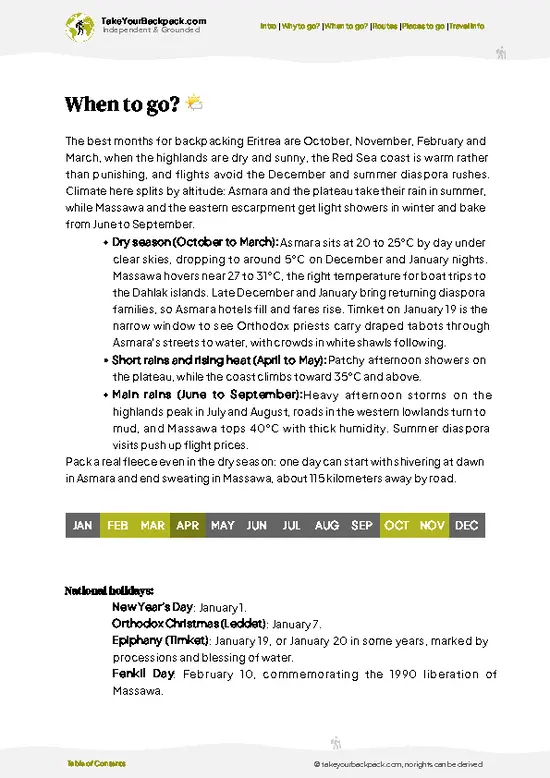
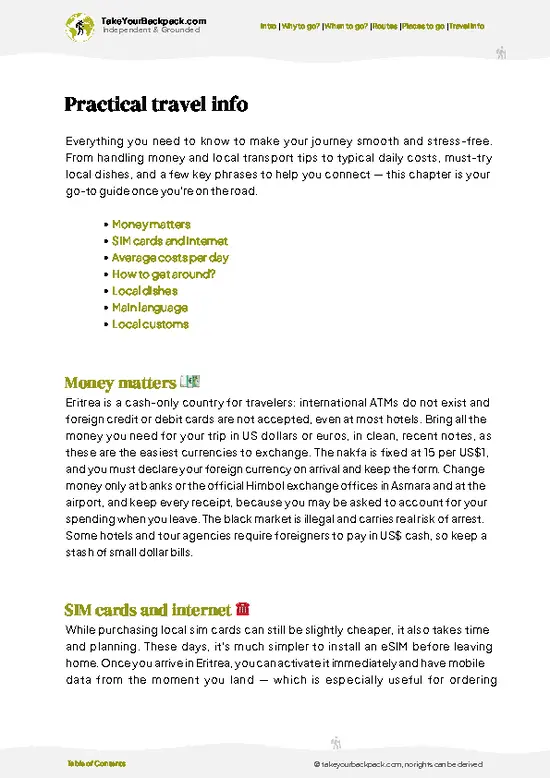
example page 0 from our offline Travel Guide for Eritrea
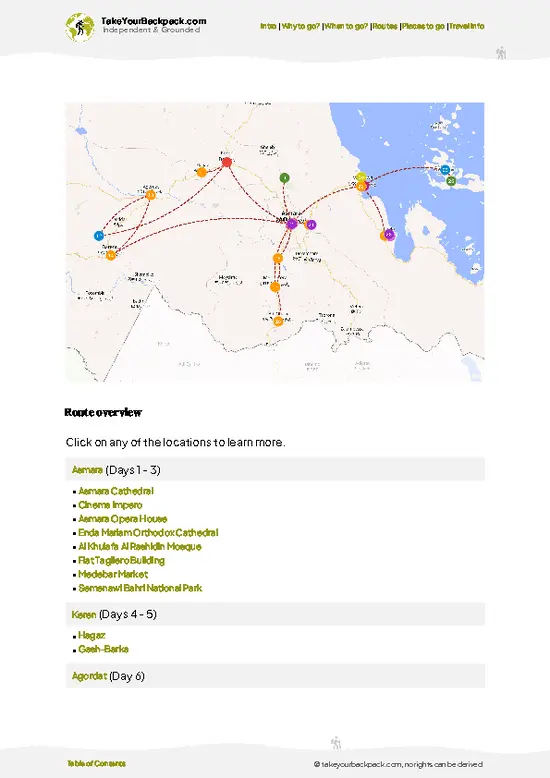
example page 1 from our offline Travel Guide for Eritrea
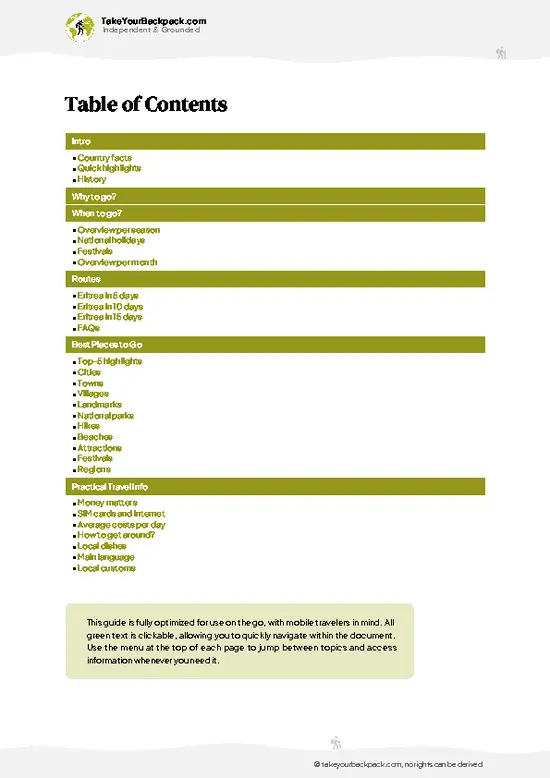
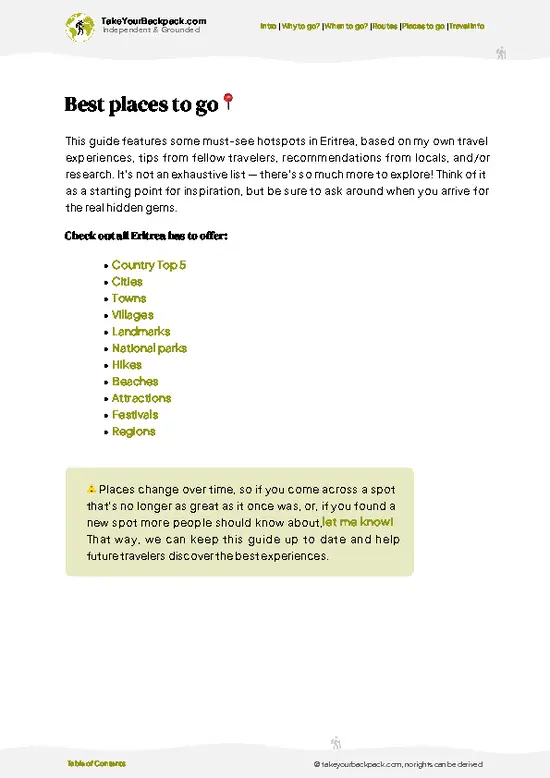
example page 2 from our offline Travel Guide for Eritrea
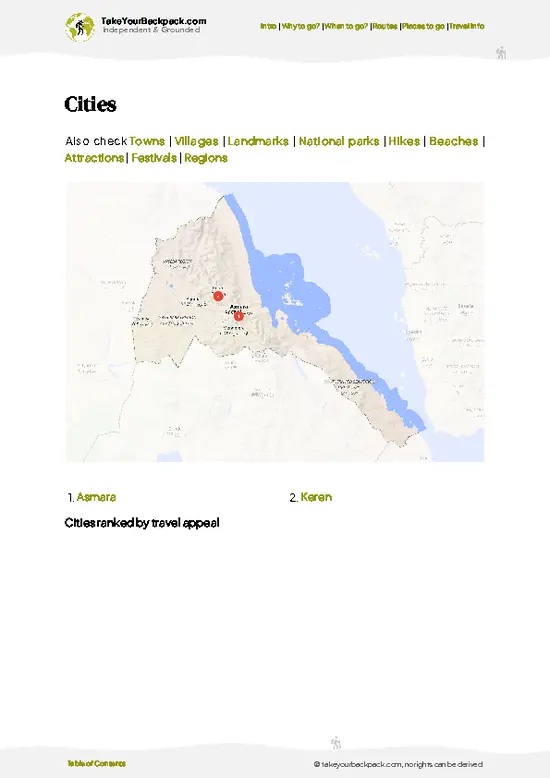
example page 3 from our offline Travel Guide for Eritrea
example page 4 from our offline Travel Guide for Eritrea
example page 5 from our offline Travel Guide for Eritrea
example page 6 from our offline Travel Guide for Eritrea
example page 7 from our offline Travel Guide for Eritrea
Loading the map 🌍
CLICK TO FILTER
cities
towns
villages
landmarks
national parks
hikes
beaches
attractions
festivals
regions
SHOW COUNTRY’S BESTSHOW ALL

✨ Why go?
Ranked #6 festival in Eritrea
Why Sawa should be on your travel list

Sawa Festival draws the rare backpacker who plans a route around Eritrea’s western lowlands, because almost nothing else gathers so many young Eritreans in one place. Its value is cultural access. You watch the dances of the country’s nine ethnic groups performed by young people from every region, in the setting where they spend their final school year, and you hear Tigrinya, Tigre, Kunama, and other languages in a single afternoon. That kind of cross-section is hard to find in Asmara alone. The second reason is route fit. The festival sits in Gash-Barka, so it pairs with Keren and the western towns, and with a permit in hand it turns a capital-only trip into a real loop across the country. Do not expect hostels, nightlife, or a campsite crowd. The social energy is Eritrean, and you are a guest at it.

💡 HighlightsThe experiences that define the visit

  1. Opening Parade and Ceremony: Columns of students in formation, flags, and speeches open the program. It is the clearest view of what Sawa means to the national story, and it is orderly, loud, and very photogenic.
  2. Ethnic Folk Dance Performances: Troupes present the dances of Eritrea’s nine ethnic groups, from the shoulder-driven eskista of the highlands to Kunama and Afar styles. Costumes and drumming change from one group to the next.
  3. Live Eritrean Music: Krar and kebero accompany Tigrinya pop and traditional songs, and the audience sings along. You do not need the language to follow the rhythm.
  4. Traditional Coffee Ceremony: Families and vendors roast beans over charcoal, burn frankincense, and pour small cups in sequence. If you are invited to sit, accept at least the first round.
  5. Gash-Barka Lowland
… read more 👉
  1. Opening Parade and Ceremony: Columns of students in formation, flags, and speeches open the program. It is the clearest view of what Sawa means to the national story, and it is orderly, loud, and very photogenic.
  2. Ethnic Folk Dance Performances: Troupes present the dances of Eritrea’s nine ethnic groups, from the shoulder-driven eskista of the highlands to Kunama and Afar styles. Costumes and drumming change from one group to the next.
  3. Live Eritrean Music: Krar and kebero accompany Tigrinya pop and traditional songs, and the audience sings along. You do not need the language to follow the rhythm.
  4. Traditional Coffee Ceremony: Families and vendors roast beans over charcoal, burn frankincense, and pour small cups in sequence. If you are invited to sit, accept at least the first round.
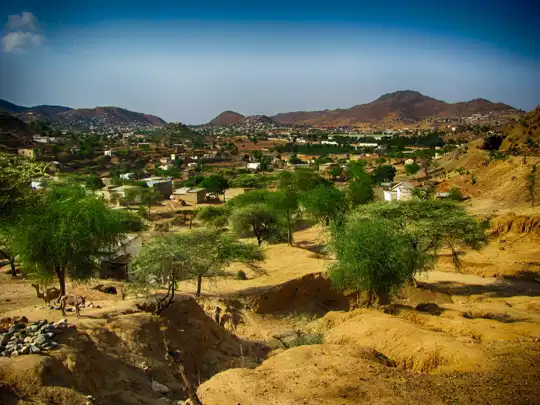
  5. Gash-Barka Lowland Landscape: Around the festival grounds you see wide plains, acacia scrub, and farmland in a heat quite unlike the cool highlands. The hot, dusty open country explains why the region is Eritrea’s breadbasket.
Sawa Festival can be covered in one full day on site, though the permit and the road leg make it a multi-day commitment.
Spotted a mistake or missing something? Contact us.

🌤️ When to go?When is the celebration of Sawa Festival?

Sawa Festival is held at the Sawa military training center near Sawa in the Gash-Barka region, with the festival-style events around the end of the training round, typically in July and into early August, and exact dates are announced locally each year.
  • Best day: The closing parade and graduation ceremony is the main event, with the largest crowds, music, and cultural performances.
  • Weather: The lowlands are very hot, about 38 to 43°C (100 to 109°F), with occasional heavy rain showers in the summer. Bring a hat, a light long-sleeved shirt, a rain layer, and at least 2 liters of water.
  • Booking: Rooms in Barentu and Agordat fill up and prices can climb by 20 to 50 percent, so arrange a bed and transport a week or more ahead.
  • Roads: Roads from Asmara and Keren jam up on the day before and after the
… read more 👉
Sawa Festival is held at the Sawa military training center near Sawa in the Gash-Barka region, with the festival-style events around the end of the training round, typically in July and into early August, and exact dates are announced locally each year.
  • Best day: The closing parade and graduation ceremony is the main event, with the largest crowds, music, and cultural performances.
  • Weather: The lowlands are very hot, about 38 to 43°C (100 to 109°F), with occasional heavy rain showers in the summer. Bring a hat, a light long-sleeved shirt, a rain layer, and at least 2 liters of water.
  • Booking: Rooms in Barentu and Agordat fill up and prices can climb by 20 to 50 percent, so arrange a bed and transport a week or more ahead.
  • Roads: Roads from Asmara and Keren jam up on the day before and after the main ceremony. Travel early in the morning and leave the grounds well ahead of the final crowd.
Arrive the day before the main ceremony so you are not stuck in the heat on the road.


source: climatestotravel.comJANJanuary: excellent for travelingFEBFebruary: not recommended for travelingMARMarch: not recommended for travelingAPRApril: not recommended for travelingMAYMay: not recommended for travelingJUNJune: not recommended for travelingJULJuly: not recommended for travelingAUGAugust: not recommended for travelingSEPSeptember: not recommended for travelingOCTOctober: not recommended for travelingNOVNovember: not recommended for travelingDECDecember: not recommended for traveling

✈️ The backpacker research shortcutEritrea Travel Guide

An offline-friendly backpacking guide with optimized travel routes, ranked highlights, transport advice, and the best areas to stay.
example page 0 from our offline Travel Guide for Eritrea
example page 1 from our offline Travel Guide for Eritrea
example page 2 from our offline Travel Guide for Eritrea
example page 3 from our offline Travel Guide for Eritrea
example page 4 from our offline Travel Guide for Eritrea
example page 5 from our offline Travel Guide for Eritrea
example page 6 from our offline Travel Guide for Eritrea
example page 7 from our offline Travel Guide for Eritrea
The digital guide (245 pages) contains:
✅ 56 highlights, ranked by travel appeal
✅ Optimized 5, 10 & 15-day travel routes
✅ Cities, national parks, landmarks, beaches
✅ How to get around
✅ Offline-friendly for travel without Wi-Fi
👉 Click to see all 30+ guide features

📅 Plan smarter in minutes, not weeks
✅ Month by month travel advice
✅ Festivals & national holidays
✅ Budget expectations

🗺️ Go to the right places, skip the overrated ones
✅ Honest pros & cons of destinations
✅ Top hikes, parks & viewpoints
✅ Lesser-known places most travelers miss
✅ Clear “worth it vs skip it” guidance

🛏️ Travel smoothly without rookie mistakes
✅ Best areas to stay
✅ Transport systems explained simply
✅ Common scams & safety advice
✅ SIM cards, money & practical tips

🌍 Understand the country, not just visit it
✅ Culture & traditions
✅ 52 Essential phrases & customs
✅ Festivals worth planning around
✅ Traveler-friendly historical context
✅ Insights that make places more meaningful

📱 Built for real travel conditions
✅ Fully downloadable PDF
✅ Works completely offline
✅ Optimized for phone use
✅ Useful in remote areas & buses
✅ Everything in one place
Stop searching, start planning
Get instant access to your full guide. 30‑day money-back guarantee.
+ Add another guide for just

By proceeding you agree to our terms.
Sent to your inbox immediately after payment • 100% Secure Checkout
Best Backpacking Travel Advisor 2025 tourism awardBest Backpacking
Travel Advisor
2025
What others say about Take Your Backpack Guides:
⭐⭐⭐⭐⭐
Fantastic, amazing amount of information!
⭐⭐⭐⭐⭐
My goodness this is amazing, it's what I've been looking for hats off too you!
⭐⭐⭐⭐⭐
I think this is absolutely BRILLIANT
⭐⭐⭐⭐
Very complete and informative. It's still missing places, but I gotta to commend you
⭐⭐⭐⭐⭐
This is truly amazing, thank you, can't wait to explore it with my kids!
⭐⭐⭐⭐⭐
Awesome resource, thank you!
⭐⭐⭐⭐⭐
This is amazing! Can't wait to explore the ones I haven't seen
⭐⭐⭐⭐
I love this! Well done, great idea.
⭐⭐⭐⭐⭐
Thanks for taking the time to make this gem!
⭐⭐⭐⭐⭐
This might be the best website I've ever seen.
⭐⭐⭐⭐⭐
Congratulations, and thank you so much for your work; it's incredibly valuable.
⭐⭐⭐⭐
In all seriousness I think you did a great job pointing out the important spots
⭐⭐⭐⭐⭐
10/10 very good
⭐⭐⭐⭐⭐
As someone who's only just starting to visit regularly this is awesome, thank you.
⭐⭐⭐⭐
Thank you very much! I'm going to visit my dad, it's going to be very useful!
⭐⭐⭐⭐⭐
This is really cool! We'll be travelling for the first time and this definitely come in handy.
⭐⭐⭐⭐⭐
You are now our minister of culture, congratulations 👨‍💼
⭐⭐⭐⭐⭐
Just wanted to tell you that this is a pearl! Going to follow your recommendations.
⭐⭐⭐⭐⭐
This is so cool. I'll definitely be using the resource for my travels soon.
⭐⭐⭐⭐⭐
This is very impressive! Good work.
⭐⭐⭐⭐⭐
This is an amazing and informative site. Very well done!

🛏️ Where to stay?Best areas and accommodation options

Barentu is the most practical area to stay for Sawa Festival, and it is the largest town in the Gash-Barka region, roughly an hour or so from the Sawa grounds by road. It has simple guesthouses, small restaurants, and tea shops where travelers and local families mingle, which makes it the easiest place to meet people and arrange shared rides to the festival. Streets are generally calm and safe in the evening, and the market area is easy to walk around.

Keren is the other sensible option, especially if you are traveling from Asmara. It is cooler than the lowlands, has a lively Monday livestock … read more 👉
Barentu is the most practical area to stay for Sawa Festival, and it is the largest town in the Gash-Barka region, roughly an hour or so from the Sawa grounds by road. It has simple guesthouses, small restaurants, and tea shops where travelers and local families mingle, which makes it the easiest place to meet people and arrange shared rides to the festival. Streets are generally calm and safe in the evening, and the market area is easy to walk around.

Keren is the other sensible option, especially if you are traveling from Asmara. It is cooler than the lowlands, has a lively Monday livestock and general market, and its central guesthouse streets are walkable and relaxed. You can break the long journey here and continue west the next morning.

Agordat is a quieter, hotter alternative closer to the western lowlands, with a handful of basic lodgings and a small-town feel. It suits you if you prefer fewer crowds.

Book early, because rooms near the festival fill fast. Camping on the festival grounds is not something to count on, and travel permits are required for moving beyond Asmara, so arrange them before you head out.

👛 Costs (as of 22 October 2026)Money, prices, and spending tips

Sawa Festival costs most backpackers about US$38 to 85 a day, and the table below uses a total of US$68 for one day in high season.
CategoryBudget RangeLocal Reality
Festival ticketsUS$0 to 5Public events are generally free or very cheap, though access is controlled and permits may be needed.
AccommodationUS$15 to 35Basic guesthouse rooms in Barentu or Keren, with higher prices around the main ceremony.
Local transportUS$10 to 20Shared minibuses and buses from Asmara or Keren, plus a short hire ride to the grounds.
Food & drinksUS$8 to 15Injera and stew meals cost a few dollars, and water and tea are inexpensive.
Miscellaneous expensesUS$5 to 10Travel permit costs, small tips, sun protection, and extra water.
Total Daily BudgetUS$38 to 85About US$68 a day with a mid-range guesthouse.
⚠️ Prices can change and everyone travels differently, so take this as a rough guide. Hope it helps you plan your adventure!

🍲 FoodLocal Cuisine & Drinks

Food at Sawa Festival is simple and filling, built around the staples of the Eritrean lowlands. Expect injera with spicy tsebhi stews, including lamb or goat, lentils (birsen), and shiro, a chickpea stew that is the dependable vegetarian pick. Vendors and family groups also serve kitcha fit-fit, shredded flatbread tossed in butter and berbere, which makes a good quick breakfast.

For drinks, the heat makes bottled water and soft drinks your best friends. Look for Asmara beer and the local Melotti in towns, and sweet shai (spiced tea) from roadside stalls. The coffee ceremony is worth sitting through if you are invited, with roasted beans, incense, and small cups poured three times.

Try the grilled meat if you see it sizzling, and eat it fresh and hot. Stick to cooked food and sealed bottles … read more 👉
Food at Sawa Festival is simple and filling, built around the staples of the Eritrean lowlands. Expect injera with spicy tsebhi stews, including lamb or goat, lentils (birsen), and shiro, a chickpea stew that is the dependable vegetarian pick. Vendors and family groups also serve kitcha fit-fit, shredded flatbread tossed in butter and berbere, which makes a good quick breakfast.

For drinks, the heat makes bottled water and soft drinks your best friends. Look for Asmara beer and the local Melotti in towns, and sweet shai (spiced tea) from roadside stalls. The coffee ceremony is worth sitting through if you are invited, with roasted beans, incense, and small cups poured three times.

Try the grilled meat if you see it sizzling, and eat it fresh and hot. Stick to cooked food and sealed bottles in the heat.

A few quirks help. Food is often eaten from a shared platter with your right hand, so wait for your host to start. Pay in cash, since cards are not used at stalls, and carry small notes in nakfa. Bring your own water supply because stocks can run low by afternoon.

FAQTraveler FAQ

Sawa Festival is usually held around July and into early August at the Sawa training center in the Gash-Barka region, near the end of the training round. The main event is the closing ceremony, and the exact date is announced locally each year. It lies about 6 to 8 hours by road west of Asmara, so plan to arrive a day early.
Attending Sawa Festival costs little at the gate, usually US$0 to 5, and most of your money goes to travel and a bed. Expect about US$15 to 35 a night in Barentu or Keren and US$10 to 20 for transport. A realistic total is US$45 to 85 a day.
Sawa Festival generally does not sell tickets in advance for the public events, but access to the grounds is controlled, and travel permits are required for foreigners moving outside Asmara. Arrange permits through the relevant offices in Asmara several days ahead. Book your guesthouse in Barentu or Keren at least a week early, since beds fill up near the main ceremony.
⚠️ Things can change over time, so always validate details locally before you go.

Other Eritrean festivals near Sawa

Explore more nearby:


💡 Not sure where to go next?
Create a personalized itinerary for Eritrea including Sawa and the places that fit your trip.

Generate my itinerary

👉 Discover all festivals

Or checkout all Eritrea has to offer (think cities, towns, villages, national parks, hikes, beaches, festivals)
Country photo of Eritrea

We 💚 feedbackSumming up the experience

Sawa Festival suits travelers who already love Eritrea’s history and want to see its younger generation on its own stage, and people with patience for paperwork. It will frustrate anyone after a party. I would bring a wide hat, plenty of water, and printed copies of every permit, and I would go with a local guide.

✍️ Help improve this page!
The information on this page is based on in-depth research, insights shared by experienced travelers, and feedback from the local travel community in Eritrea. While every effort is made to keep the information accurate and current, conditions can change — so if you spot anything incorrect or outdated, please get in touch.


🙋‍♂️ Give feedback

👋 Meet the founderWho’s Behind Take Your Backpack?

Johan, backpacker and founder of TakeYourBackpackHi, I’m Johan (Netherlands 🇳🇱), the creator of TakeYourBackpack. Over the past 3 decades, I’ve backpacked through 90+ countries across six continents, gaining extensive experience with independent travel, long-term trips, and overland routes.

This site is built on a combination of firsthand travel experience and carefully curated insights from other backpackers. Many guides are based on places I’ve personally visited, while others bring together tips, observations, and practical advice shared by trusted travelers I’ve met along the way.

The goal is to provide realistic, experience-driven guidance — not generic itineraries — so you can explore destinations with better context, clearer expectations, and more confidence.