×

Eritrea🇪🇷 | attractionsMedebar MarketOil-drum stoves, tin coffee pots, tire sandals, hammering sheds | things to do and best time to go

Explore Fiat Tagliero BuildingExplore Enda Mariam Orthodox Cathedral

Backpacking in Medebar Market
👌 Worth visitingattraction ranked #9
By Johan Kruseman 🇳🇱 | Updated October 22, 2026

Medebar Market is best known for its rows of metalworkers who beat flattened oil drums, scrap sheet and old tin cans into stoves, buckets, cooking pots and charcoal burners. It sits on the western side of Asmara, Eritrea’s capital, within walking distance of the center. Work happens outdoors and in open-fronted sheds, so hammering starts early and the noise peaks in the morning. Go then, because many workshops slow down by afternoon. Ask before photographing a craftsman, since he is working and the stall is his livelihood, and a nod usually settles it. Prices are rarely marked because many items are made to order, so compare two stalls and pay in nakfa. A hand-riveted tin coffee pot is worth looking for.

Discover everything you want to know in the 📖 Eritrea Travel Guide.


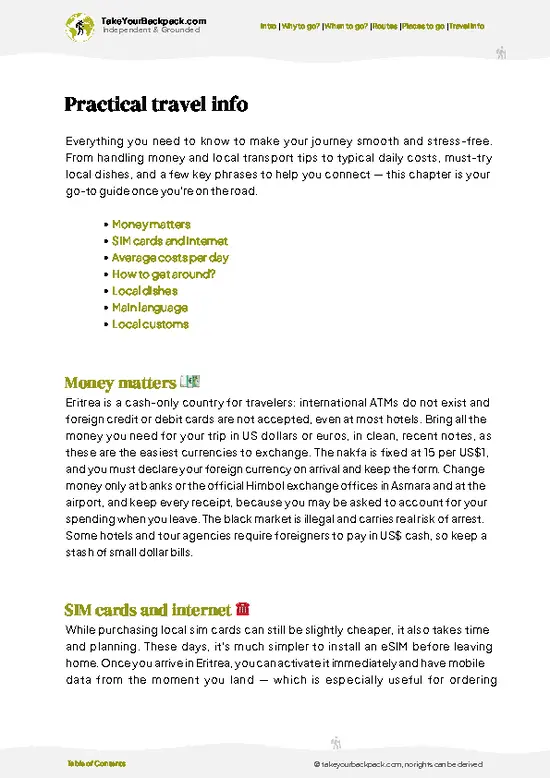
example page 0 from our offline Travel Guide for Eritrea
example page 1 from our offline Travel Guide for Eritrea
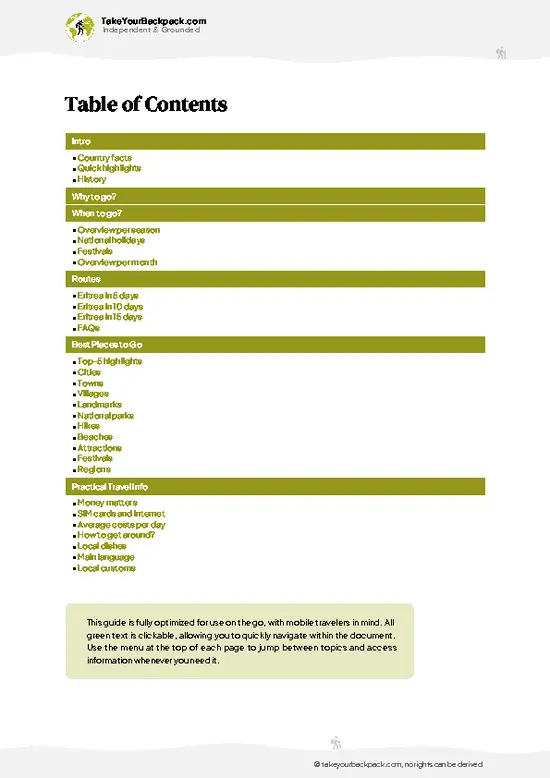
example page 2 from our offline Travel Guide for Eritrea
example page 3 from our offline Travel Guide for Eritrea
example page 4 from our offline Travel Guide for Eritrea
example page 5 from our offline Travel Guide for Eritrea
example page 6 from our offline Travel Guide for Eritrea
example page 7 from our offline Travel Guide for Eritrea
Loading the map 🌍
CLICK TO FILTER
cities
towns
villages
landmarks
national parks
hikes
beaches
attractions
festivals
regions
SHOW COUNTRY’S BESTSHOW ALL

✨ Why go?
Ranked #9 attraction in Eritrea
Why visitors keep coming back

Medebar Market shows you how Eritrea makes things when imports are scarce, and that is the main reason to come. Almost nothing here is wasted: flattened oil drums become stoves, trunks and cooking vessels, and worn tires turn up as sandal soles. You watch the whole process at arm’s length, from cutting sheet metal to the last rivet, which is rare in a country where factory goods are limited.

It also sits well on an Asmara route. After the Art Deco boulevards and the cafes of the center, this is the working side of the capital, where residents buy practical goods for their own kitchens. Few tourists appear, so conversations with makers are easy and unhurried.

The third draw is the sound and texture. The constant hammering of metal on metal, the smell of hot solder and charcoal, and the corrugated-iron … read more 👉
Medebar Market shows you how Eritrea makes things when imports are scarce, and that is the main reason to come. Almost nothing here is wasted: flattened oil drums become stoves, trunks and cooking vessels, and worn tires turn up as sandal soles. You watch the whole process at arm’s length, from cutting sheet metal to the last rivet, which is rare in a country where factory goods are limited.

It also sits well on an Asmara route. After the Art Deco boulevards and the cafes of the center, this is the working side of the capital, where residents buy practical goods for their own kitchens. Few tourists appear, so conversations with makers are easy and unhurried.

The third draw is the sound and texture. The constant hammering of metal on metal, the smell of hot solder and charcoal, and the corrugated-iron sheds make this a very different morning from the colonial-era streets nearby.

💡 HighlightsEssential experiences to have while visiting Medebar Market

  1. Metalworking lanes: The core of Medebar Market, where rows of open sheds hold craftsmen hammering and cutting sheet metal. You can stand beside a bench and watch a stove take shape in a few minutes.
  2. Oil-drum stoves and charcoal burners: Drums are cut, flattened and shaped into the cooking stoves many households use. Each maker has a slightly different design, and finished stacks line the pavement.
  3. Tin pots, buckets and trunks: Hand-riveted pots, buckets and storage trunks made from scrap sheet. They are sturdy, plain and sold at bargaining prices, and a small pot makes a practical keepsake.
  4. Tire-rubber sandals: Cobblers cut soles from used tires and fit straps by hand. They are hard-wearing, and you can have a pair adjusted on the spot.
  5. Woodworking and furniture stalls: Carpenters work alongside
… read more 👉
  1. Metalworking lanes: The core of Medebar Market, where rows of open sheds hold craftsmen hammering and cutting sheet metal. You can stand beside a bench and watch a stove take shape in a few minutes.
  2. Oil-drum stoves and charcoal burners: Drums are cut, flattened and shaped into the cooking stoves many households use. Each maker has a slightly different design, and finished stacks line the pavement.
  3. Tin pots, buckets and trunks: Hand-riveted pots, buckets and storage trunks made from scrap sheet. They are sturdy, plain and sold at bargaining prices, and a small pot makes a practical keepsake.
  4. Tire-rubber sandals: Cobblers cut soles from used tires and fit straps by hand. They are hard-wearing, and you can have a pair adjusted on the spot.
  5. Woodworking and furniture stalls: Carpenters work alongside the metalworkers, producing simple chairs, tables and frames. The sawdust and hand tools make a useful contrast to the metal sheds.
  6. Street life on Asmara’s western side: Around the workshops, residents shop for household goods, mend tools and take tea breaks. Walk the side lanes to see how a working neighborhood of the capital operates.
Start with the metalworking lanes at Medebar Market in the morning, when the hammering is at full strength and the makers are most willing to talk.
Spotted a mistake or missing something? Contact us.

Things to do near Medebar Market

Ratings based on Tripadvisor reviews. When you book through this link, you support our work at no extra cost to you.

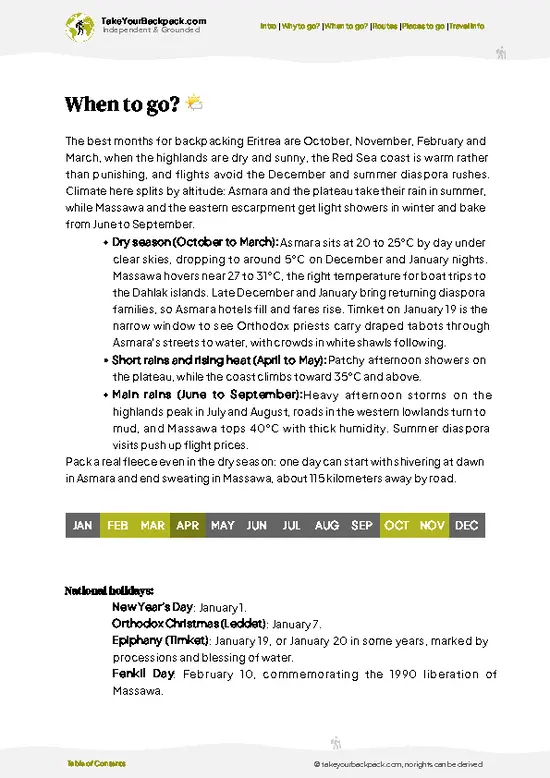
🌤️ When to go?Best time to visit Medebar Market

  • Cool dry months (November to February): Mornings at this highland site sit around 8 to 12°C (46 to 54°F) and afternoons reach 22 to 26°C (72 to 79°F), with sharp light and almost no rain. Days run roughly 11.5 to 12 hours.
  • Hot spring (March to May): Afternoons climb to 28 to 32°C (82 to 90°F), dust builds, and haggling feels slower in the heat.
  • Summer rains (June to September): Short, heavy downpours hit most afternoons, turning dirt lanes to mud, with highs of 24 to 28°C (75 to 82°F). Prices for rooms and rides stay flat, though road delays are more common.
  • Market days and holidays: Weekend mornings and the weeks around Eritrean Christmas in January and Orthodox Easter draw the biggest crowds and the best produce. Diaspora visitors can push up shared-taxi fares.
Arrive before 9 am, when stalls are fully set up and the air is still cool.

source: climatestotravel.comJANJanuary: highly recommended for travelingFEBFebruary: highly recommended for travelingMARMarch: highly recommended for travelingAPRApril: highly recommended for travelingMAYMay: fair for travelingJUNJune: fair for travelingJULJuly: below average for travelingAUGAugust: below average for travelingSEPSeptember: fair for travelingOCTOctober: excellent for travelingNOVNovember: excellent for travelingDECDecember: good for traveling
when-to-go

✈️ The backpacker research shortcutEritrea Travel Guide

An offline-friendly backpacking guide with optimized travel routes, ranked highlights, transport advice, and the best areas to stay.
example page 0 from our offline Travel Guide for Eritrea
example page 1 from our offline Travel Guide for Eritrea
example page 2 from our offline Travel Guide for Eritrea
example page 3 from our offline Travel Guide for Eritrea
example page 4 from our offline Travel Guide for Eritrea
example page 5 from our offline Travel Guide for Eritrea
example page 6 from our offline Travel Guide for Eritrea
example page 7 from our offline Travel Guide for Eritrea
The digital guide (245 pages) contains:
✅ 56 highlights, ranked by travel appeal
✅ Optimized 5, 10 & 15-day travel routes
✅ Cities, national parks, landmarks, beaches
✅ How to get around
✅ Offline-friendly for travel without Wi-Fi
👉 Click to see all 30+ guide features

📅 Plan smarter in minutes, not weeks
✅ Month by month travel advice
✅ Festivals & national holidays
✅ Budget expectations

🗺️ Go to the right places, skip the overrated ones
✅ Honest pros & cons of destinations
✅ Top hikes, parks & viewpoints
✅ Lesser-known places most travelers miss
✅ Clear “worth it vs skip it” guidance

🛏️ Travel smoothly without rookie mistakes
✅ Best areas to stay
✅ Transport systems explained simply
✅ Common scams & safety advice
✅ SIM cards, money & practical tips

🌍 Understand the country, not just visit it
✅ Culture & traditions
✅ 52 Essential phrases & customs
✅ Festivals worth planning around
✅ Traveler-friendly historical context
✅ Insights that make places more meaningful

📱 Built for real travel conditions
✅ Fully downloadable PDF
✅ Works completely offline
✅ Optimized for phone use
✅ Useful in remote areas & buses
✅ Everything in one place
Stop searching, start planning
Get instant access to your full guide. 30‑day money-back guarantee.
+ Add another guide for just

By proceeding you agree to our terms.
Sent to your inbox immediately after payment • 100% Secure Checkout
Best Backpacking Travel Advisor 2025 tourism awardBest Backpacking
Travel Advisor
2025
What others say about Take Your Backpack Guides:
⭐⭐⭐⭐⭐
Fantastic, amazing amount of information!
⭐⭐⭐⭐⭐
My goodness this is amazing, it's what I've been looking for hats off too you!
⭐⭐⭐⭐⭐
I think this is absolutely BRILLIANT
⭐⭐⭐⭐
Very complete and informative. It's still missing places, but I gotta to commend you
⭐⭐⭐⭐⭐
This is truly amazing, thank you, can't wait to explore it with my kids!
⭐⭐⭐⭐⭐
Awesome resource, thank you!
⭐⭐⭐⭐⭐
This is amazing! Can't wait to explore the ones I haven't seen
⭐⭐⭐⭐
I love this! Well done, great idea.
⭐⭐⭐⭐⭐
Thanks for taking the time to make this gem!
⭐⭐⭐⭐⭐
This might be the best website I've ever seen.
⭐⭐⭐⭐⭐
Congratulations, and thank you so much for your work; it's incredibly valuable.
⭐⭐⭐⭐
In all seriousness I think you did a great job pointing out the important spots
⭐⭐⭐⭐⭐
10/10 very good
⭐⭐⭐⭐⭐
As someone who's only just starting to visit regularly this is awesome, thank you.
⭐⭐⭐⭐
Thank you very much! I'm going to visit my dad, it's going to be very useful!
⭐⭐⭐⭐⭐
This is really cool! We'll be travelling for the first time and this definitely come in handy.
⭐⭐⭐⭐⭐
You are now our minister of culture, congratulations 👨‍💼
⭐⭐⭐⭐⭐
Just wanted to tell you that this is a pearl! Going to follow your recommendations.
⭐⭐⭐⭐⭐
This is so cool. I'll definitely be using the resource for my travels soon.
⭐⭐⭐⭐⭐
This is very impressive! Good work.
⭐⭐⭐⭐⭐
This is an amazing and informative site. Very well done!

🛏️ Where to stay?Best areas and accommodation options

The most practical base is Asmara, about 1 to 1.5 hours away by road, and it is the only place with a real choice of budget beds. Medebar Market has no backpacker scene of its own, so you sleep in the capital and go out early.
Central Asmara around Harnet Avenue: This is the safest, most walkable area, with small guesthouses and pensions at roughly US$15 to 30 a night. Cafes serve cappuccino and pastries until evening, and you can meet other travelers over a slow dinner. Minibus and shared-taxi stops are a short walk away.
Area near the Medeber bus station: Cheaper rooms (about US$10 to 20) and … read more 👉
The most practical base is Asmara, about 1 to 1.5 hours away by road, and it is the only place with a real choice of budget beds. Medebar Market has no backpacker scene of its own, so you sleep in the capital and go out early.
Central Asmara around Harnet Avenue: This is the safest, most walkable area, with small guesthouses and pensions at roughly US$15 to 30 a night. Cafes serve cappuccino and pastries until evening, and you can meet other travelers over a slow dinner. Minibus and shared-taxi stops are a short walk away.
Area near the Medeber bus station: Cheaper rooms (about US$10 to 20) and an easy morning departure, but it is rougher at night and quieter for socializing. It suits you if you leave at dawn.
The two areas are close enough that you can switch if one disappoints. Bring cash, since card payments rarely work.

👛 Costs (as of 22 October 2026)How expensive it really is

Medebar Market costs a backpacker about US$38 to 60 a day, including a bed in Asmara and transport. The market itself charges no entry fee.
CategoryBudget RangeLocal Reality
EntryFreeOpen to anyone, no ticket booth.
Accommodation (high season)US$15 to 30Basic guesthouse in central Asmara; low season often US$10 to 20.
TransportUS$3 to 10Shared minibus or taxi from the city, with a return trip; private taxis cost more.
FoodUS$6 to 12Injera with stew, fresh bread, tea and fruit from stalls.
Shopping and extrasUS$3 to 10Spices, baskets, cloth and small goods; bargaining is normal.
Travel permitUS$0 to 3Travel outside Asmara may need paperwork, arranged in advance.
Total Daily BudgetUS$38 to 60Cash only, so carry small notes.
⚠️ Prices can change and everyone travels differently, so take this as a rough guide. Hope it helps you plan your adventure!

FAQTraveler FAQ

Half a day is enough for Medebar Market, roughly 2 to 4 hours of wandering the stalls. Go in the morning, when produce is freshest and the temperature is mild. Add a full day if you travel from Asmara, since the road trip takes 1 to 1.5 hours each way.
Yes, because Medebar Market has no entry fee, so you only spend on what you buy. A morning of tea, fresh bread and a few spices usually costs US$5 to 12. You get a look at everyday trade that tourist sites rarely show.
Most travelers start from Asmara and take a shared minibus or taxi, a trip of about 1 to 1.5 hours. Expect to pay roughly US$3 to 10 each way, or more for a private car. Travel outside the capital can require a permit, so arrange it a few days ahead and leave early to be back before dark.
⚠️ Things can change over time, so always validate details locally before you go.

Other Eritrean attractions near Medebar Market

Explore more nearby:


💡 Not sure where to go next?
Create a personalized itinerary for Eritrea including Medebar Market and the places that fit your trip.

Generate my itinerary

👉 Discover all attractions

Or checkout all Eritrea has to offer (think cities, towns, villages, national parks, hikes, beaches, festivals)
Country photo of Eritrea

We 💚 feedbackWhat to keep in mind

Medebar Market needs one good morning, two hours if you linger at the benches, and no more. Come early, bring small notes for a pot or a pair of sandals, and wear closed shoes because the ground is strewn with metal offcuts. Pair it with an afternoon in central Asmara.

✍️ Help improve this page!
The information on this page is based on in-depth research, insights shared by experienced travelers, and feedback from the local travel community in Eritrea. While every effort is made to keep the information accurate and current, conditions can change — so if you spot anything incorrect or outdated, please get in touch.


🙋‍♂️ Give feedback

👋 Meet the founderWho’s Behind Take Your Backpack?

Johan, backpacker and founder of TakeYourBackpackHi, I’m Johan (Netherlands 🇳🇱), the creator of TakeYourBackpack. Over the past 3 decades, I’ve backpacked through 90+ countries across six continents, gaining extensive experience with independent travel, long-term trips, and overland routes.

This site is built on a combination of firsthand travel experience and carefully curated insights from other backpackers. Many guides are based on places I’ve personally visited, while others bring together tips, observations, and practical advice shared by trusted travelers I’ve met along the way.

The goal is to provide realistic, experience-driven guidance — not generic itineraries — so you can explore destinations with better context, clearer expectations, and more confidence.