×

Eritrea🇪🇷 | townsNefasitWrecked tanks, escarpment railway, cloud-filled valleys | things to do and best time to go

Explore NakfaExplore Sembel

Backpacking in Nefasit
👍 Recommendedtown ranked #12
By Johan Kruseman 🇳🇱 | Updated October 22, 2026

Nefasit sits on the cool, often cloudy escarpment, not on the hot coast, and travelers who plan for Red Sea heat arrive underdressed. The village is in the north of Eritrea, on the road that drops from the highlands toward the Red Sea. It is tiny, with a handful of tea houses, a few stone buildings and an old railway line. Nights are quiet and other backpackers are rare, so expect conversation with locals, not a hostel scene. Buses between the two cities pass through, so stop in daylight and sort out your onward ride before settling in. Compared with nearby Ghinda, Nefasit is smaller, cooler and has fewer shops.

Discover everything you want to know in the 📖 Eritrea Travel Guide.


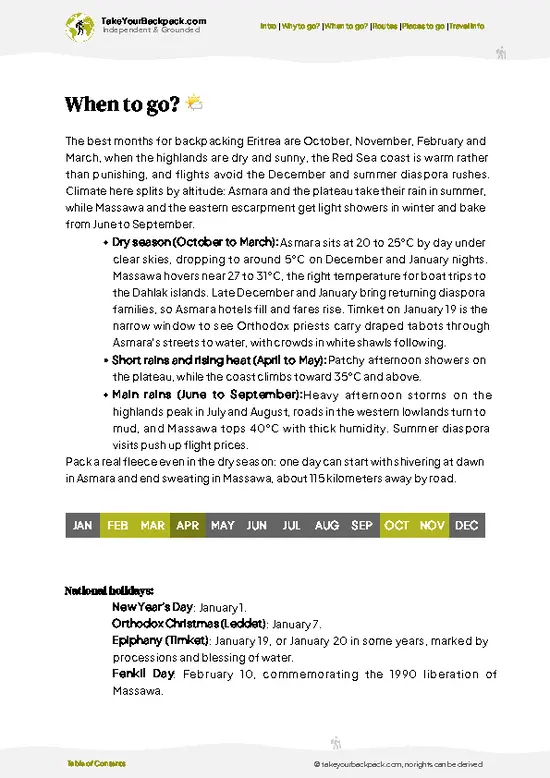
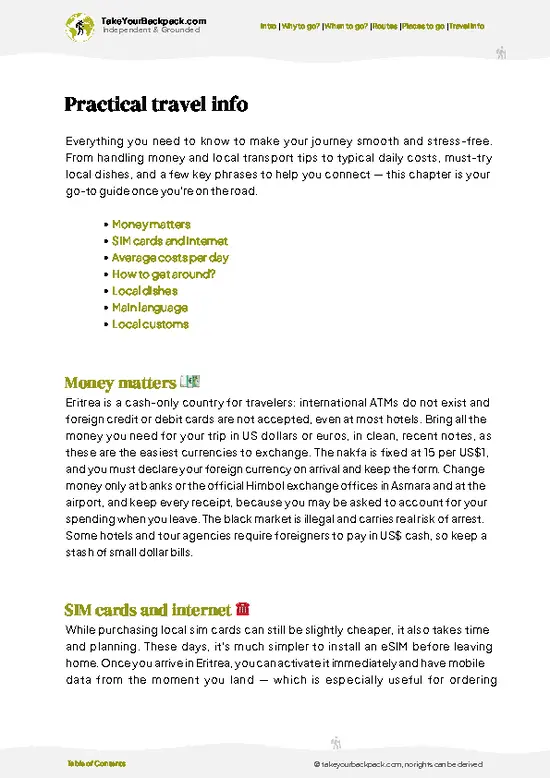
example page 0 from our offline Travel Guide for Eritrea
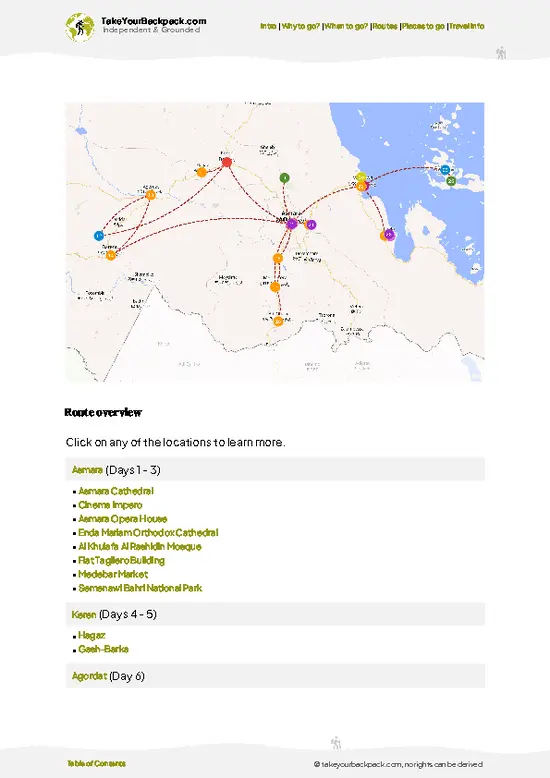
example page 1 from our offline Travel Guide for Eritrea
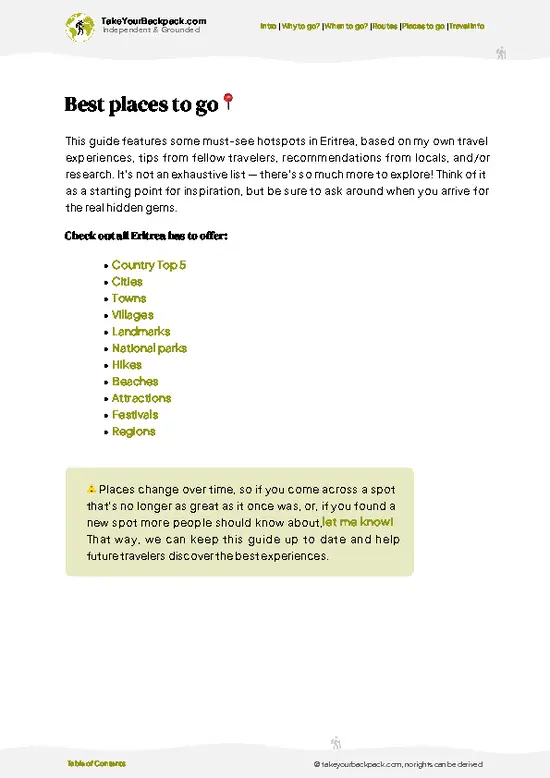
example page 2 from our offline Travel Guide for Eritrea
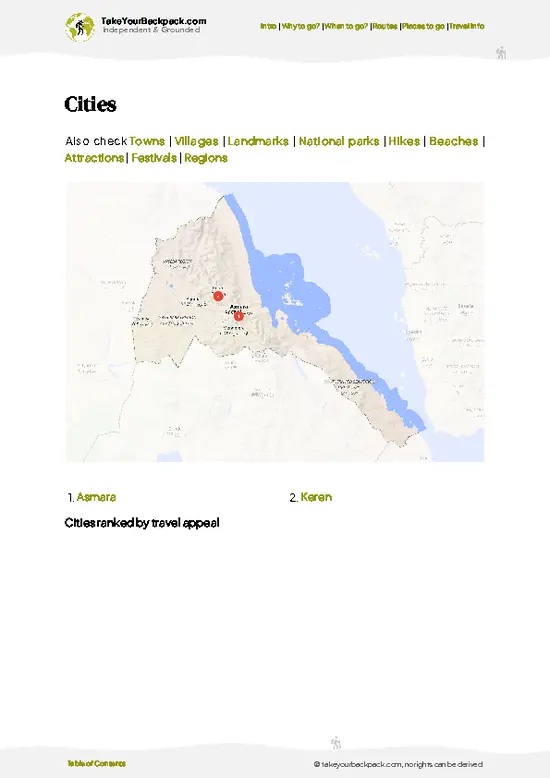
example page 3 from our offline Travel Guide for Eritrea
example page 4 from our offline Travel Guide for Eritrea
example page 5 from our offline Travel Guide for Eritrea
example page 6 from our offline Travel Guide for Eritrea
example page 7 from our offline Travel Guide for Eritrea
Loading the map 🌍
CLICK TO FILTER
cities
towns
villages
landmarks
national parks
hikes
beaches
attractions
festivals
regions
SHOW COUNTRY’S BESTSHOW ALL

✨ Why go?
Ranked #12 town in Eritrea
Why visitors keep coming back

Nefasit is worth a stop because it is the usual starting point for the climb to Debre Bizen, a mountaintop monastery that dominates the skyline. Hikers and slow travelers get the most from it: you can leave early, walk in cool air, and return to a village where nobody is selling anything. The road and rail line built by the Italians pass right through, so the engineering itself is a reason to look around. There is also the 1990 battle site, where wrecked tanks still stand as a reminder of the independence war. Most people stay one night, a few linger two. Facilities are basic, so go if you like quiet and simple meals, and skip it if you need nightlife or variety.

💡 HighlightsMust-see experiences and standout moments

  1. War memorial and tank remains: Wrecked armor from the 1990 fighting for the escarpment lies around the village, and it is the sight people most often ask about. Go in morning light, allow 30 to 45 minutes, and expect it to be free.
  2. Nefasit railway station: The Italian-built station on the Asmara to Massawa line shows how the railway was cut into the slope. Early morning is quiet, and 20 to 30 minutes is plenty. Entry is free.
  3. Escarpment road viewpoints: The curving road above and below the village gives views over folded ridges, with cloud often filling the valleys. Late afternoon is clearest, and a relaxed walk takes 1 to 2 hours. Free.
  4. Village tea houses: Sit down for a macchiato or spiced tea and watch the road traffic. Mornings are liveliest, and a stop takes 30 to 60 minutes. A drink costs
… read more 👉
  1. War memorial and tank remains: Wrecked armor from the 1990 fighting for the escarpment lies around the village, and it is the sight people most often ask about. Go in morning light, allow 30 to 45 minutes, and expect it to be free.
  2. Nefasit railway station: The Italian-built station on the Asmara to Massawa line shows how the railway was cut into the slope. Early morning is quiet, and 20 to 30 minutes is plenty. Entry is free.
  3. Escarpment road viewpoints: The curving road above and below the village gives views over folded ridges, with cloud often filling the valleys. Late afternoon is clearest, and a relaxed walk takes 1 to 2 hours. Free.
  4. Village tea houses: Sit down for a macchiato or spiced tea and watch the road traffic. Mornings are liveliest, and a stop takes 30 to 60 minutes. A drink costs under US$1.
  5. Trailhead to Debre Bizen: The path starts from the village and gives a feel for the ascent even if you walk only the first stretch. Start at dawn, and give it 1 to 2 hours for a partial walk. Free.
Nefasit also makes a base for outings to Debre Bizen monastery, the market town of Ghinda, the port of Massawa and the capital, Asmara. Most of the village sights cost nothing, and a tea is the only likely expense.
Spotted a mistake or missing something? Contact us.

Things to do near Nefasit

Ratings based on Tripadvisor reviews. When you book through this link, you support our work at no extra cost to you.

🏘️ NeighborhoodsUnderstanding the local layout

Nefasit is a small mountain village strung along the old Asmara to Massawa road, so its areas are few and all on foot, though the slopes are steep. Each part works differently, and it helps to know why.
  • Roadside Strip: Cafes, small shops and the bus stopping point sit along the main road because that is where traffic passes. Expect tea, coffee and simple injera or pasta plates. Go here first to get your bearings, and eat here rather than hunting uphill.
  • Saint Mariam Debre Sina Monastery Slope: The monastery sits on a hill above the village, founded in the 13th century. Visitors climb a steep path with steps, so go in the morning when it is cooler. Dress modestly and ask before photographing inside, since it is an active religious site.
  • Old Railway and Bridge Corner: Stone viaducts and tunnels
… read more 👉
Nefasit is a small mountain village strung along the old Asmara to Massawa road, so its areas are few and all on foot, though the slopes are steep. Each part works differently, and it helps to know why.
  • Roadside Strip: Cafes, small shops and the bus stopping point sit along the main road because that is where traffic passes. Expect tea, coffee and simple injera or pasta plates. Go here first to get your bearings, and eat here rather than hunting uphill.
  • Saint Mariam Debre Sina Monastery Slope: The monastery sits on a hill above the village, founded in the 13th century. Visitors climb a steep path with steps, so go in the morning when it is cooler. Dress modestly and ask before photographing inside, since it is an active religious site.
  • Old Railway and Bridge Corner: Stone viaducts and tunnels of the Italian-built Asmara to Massawa line run through the hills here. Walk along them slowly, since the ground is uneven. Watch for the occasional baboon.
  • Upper Houses: Quiet stone homes and terraces with long views toward the escarpment. There is no nightlife, so evenings are silent and early. Greet people, and ask before walking onto private land.

⌛️ 1 daySeeing the highlights in 24 hours

A quiet escarpment day, spent mostly on foot and over tea.
7:00 AM: Tea house. Start with sweet tea or a macchiato while the village wakes up and cloud still sits low. Ask about the trail conditions before leaving.
8:00 AM: Debre Bizen trailhead. Walk the first stretch of the path uphill, taking it slowly in cool air. The monastery looms above, and the views widen quickly. Turn back at a comfortable point, since the full climb needs a longer day.
11:00 AM: War memorial and tank remains. Walk back down and look over the wrecked armor from the 1990 battle. Read the slopes around you and you can see why this ground mattered.
12:30 PM: Railway station. Stroll along the Italian-built line and look at the stonework and tunnels. It is short and easy.
2:00 PM: Back lanes behind the main road. Few visitors … read more 👉
A quiet escarpment day, spent mostly on foot and over tea.
7:00 AM: Tea house. Start with sweet tea or a macchiato while the village wakes up and cloud still sits low. Ask about the trail conditions before leaving.
8:00 AM: Debre Bizen trailhead. Walk the first stretch of the path uphill, taking it slowly in cool air. The monastery looms above, and the views widen quickly. Turn back at a comfortable point, since the full climb needs a longer day.
11:00 AM: War memorial and tank remains. Walk back down and look over the wrecked armor from the 1990 battle. Read the slopes around you and you can see why this ground mattered.
12:30 PM: Railway station. Stroll along the Italian-built line and look at the stonework and tunnels. It is short and easy.
2:00 PM: Back lanes behind the main road. Few visitors wander here. Greet people, look at the stone houses and gardens, and let the afternoon go slowly.
4:30 PM: Road viewpoint. Finish at a curve of the escarpment road, where the valleys open out and the evening traffic thins.

🌤️ When to go?Choosing the right time of year

  • Cool Dry Months (October to February): Mist is possible at this altitude of roughly 2,000 meters, with days of 20 to 25°C (68 to 77°F) and nights near 8 to 12°C (46 to 54°F). Hiking is most comfortable, and rooms stay cheap.
  • Warm Spring (March to May): Days reach 24 to 29°C (75 to 84°F), clear and dry, with fewer clouds on the ridge.
  • Main Rains (June to September): Afternoon storms and fog are common, with highs of 18 to 24°C (64 to 75°F). Trails turn slippery and views vanish, though the hills are green.
  • Crowds and Prices: Visitors are few in any month, and prices barely shift, except around Eritrean Independence Day in May and Meskel in September, when buses fill.
Aim for mornings, as cloud tends to build by afternoon.

source: climatestotravel.comJANJanuary: excellent for travelingFEBFebruary: excellent for travelingMARMarch: excellent for travelingAPRApril: excellent for travelingMAYMay: fair for travelingJUNJune: fair for travelingJULJuly: below average for travelingAUGAugust: below average for travelingSEPSeptember: fair for travelingOCTOctober: highly recommended for travelingNOVNovember: highly recommended for travelingDECDecember: excellent for traveling
when-to-go

✈️ The backpacker research shortcutEritrea Travel Guide

An offline-friendly backpacking guide with optimized travel routes, ranked highlights, transport advice, and the best areas to stay.
example page 0 from our offline Travel Guide for Eritrea
example page 1 from our offline Travel Guide for Eritrea
example page 2 from our offline Travel Guide for Eritrea
example page 3 from our offline Travel Guide for Eritrea
example page 4 from our offline Travel Guide for Eritrea
example page 5 from our offline Travel Guide for Eritrea
example page 6 from our offline Travel Guide for Eritrea
example page 7 from our offline Travel Guide for Eritrea
The digital guide (245 pages) contains:
✅ 56 highlights, ranked by travel appeal
✅ Optimized 5, 10 & 15-day travel routes
✅ Cities, national parks, landmarks, beaches
✅ How to get around
✅ Offline-friendly for travel without Wi-Fi
👉 Click to see all 30+ guide features

📅 Plan smarter in minutes, not weeks
✅ Month by month travel advice
✅ Festivals & national holidays
✅ Budget expectations

🗺️ Go to the right places, skip the overrated ones
✅ Honest pros & cons of destinations
✅ Top hikes, parks & viewpoints
✅ Lesser-known places most travelers miss
✅ Clear “worth it vs skip it” guidance

🛏️ Travel smoothly without rookie mistakes
✅ Best areas to stay
✅ Transport systems explained simply
✅ Common scams & safety advice
✅ SIM cards, money & practical tips

🌍 Understand the country, not just visit it
✅ Culture & traditions
✅ 52 Essential phrases & customs
✅ Festivals worth planning around
✅ Traveler-friendly historical context
✅ Insights that make places more meaningful

📱 Built for real travel conditions
✅ Fully downloadable PDF
✅ Works completely offline
✅ Optimized for phone use
✅ Useful in remote areas & buses
✅ Everything in one place
Stop searching, start planning
Get instant access to your full guide. 30‑day money-back guarantee.
+ Add another guide for just

By proceeding you agree to our terms.
Sent to your inbox immediately after payment • 100% Secure Checkout
Best Backpacking Travel Advisor 2025 tourism awardBest Backpacking
Travel Advisor
2025
What others say about Take Your Backpack Guides:
⭐⭐⭐⭐⭐
Fantastic, amazing amount of information!
⭐⭐⭐⭐⭐
My goodness this is amazing, it's what I've been looking for hats off too you!
⭐⭐⭐⭐⭐
I think this is absolutely BRILLIANT
⭐⭐⭐⭐
Very complete and informative. It's still missing places, but I gotta to commend you
⭐⭐⭐⭐⭐
This is truly amazing, thank you, can't wait to explore it with my kids!
⭐⭐⭐⭐⭐
Awesome resource, thank you!
⭐⭐⭐⭐⭐
This is amazing! Can't wait to explore the ones I haven't seen
⭐⭐⭐⭐
I love this! Well done, great idea.
⭐⭐⭐⭐⭐
Thanks for taking the time to make this gem!
⭐⭐⭐⭐⭐
This might be the best website I've ever seen.
⭐⭐⭐⭐⭐
Congratulations, and thank you so much for your work; it's incredibly valuable.
⭐⭐⭐⭐
In all seriousness I think you did a great job pointing out the important spots
⭐⭐⭐⭐⭐
10/10 very good
⭐⭐⭐⭐⭐
As someone who's only just starting to visit regularly this is awesome, thank you.
⭐⭐⭐⭐
Thank you very much! I'm going to visit my dad, it's going to be very useful!
⭐⭐⭐⭐⭐
This is really cool! We'll be travelling for the first time and this definitely come in handy.
⭐⭐⭐⭐⭐
You are now our minister of culture, congratulations 👨‍💼
⭐⭐⭐⭐⭐
Just wanted to tell you that this is a pearl! Going to follow your recommendations.
⭐⭐⭐⭐⭐
This is so cool. I'll definitely be using the resource for my travels soon.
⭐⭐⭐⭐⭐
This is very impressive! Good work.
⭐⭐⭐⭐⭐
This is an amazing and informative site. Very well done!

🛏️ Where to stay?Where staying makes the most sense

Nefasit has almost no formal budget beds, so the best base is Asmara, with an overnight stay in the village only if a simple guesthouse has space. Asmara has dorms and cheap rooms near the center around Harnet Avenue, from about US$10 to 25, and it is lit and walkable at night, with evening foot traffic until about 10 pm. Buses to Nefasit depart from the city's bus stations, and the trip takes about 1.5 hours, which suits a day outing. The other option is Massawa on the coast, lower and hotter, with a few budget rooms on the old island and mainland. It is quieter and more humid, with a long ride … read more 👉
Nefasit has almost no formal budget beds, so the best base is Asmara, with an overnight stay in the village only if a simple guesthouse has space. Asmara has dorms and cheap rooms near the center around Harnet Avenue, from about US$10 to 25, and it is lit and walkable at night, with evening foot traffic until about 10 pm. Buses to Nefasit depart from the city's bus stations, and the trip takes about 1.5 hours, which suits a day outing. The other option is Massawa on the coast, lower and hotter, with a few budget rooms on the old island and mainland. It is quieter and more humid, with a long ride back up the escarpment of about 2.5 hours. Pick Asmara for the best choice of beds and easiest connections.

🚌 Getting aroundTransportation options and practical tips

Nefasit is small enough to cross on foot in about ten minutes, but walking stops making sense once you head for the monastery climb or the rail sections farther down the hill. Traffic is light and mostly trucks on the main road. Public buses are cheap yet infrequent, so plan around them, since fuel shortages limit private vehicles.
  • Walking: Free, and the best way to see the village, monastery and railway cuttings. Paths are steep and stony, so wear proper shoes and carry water.
  • Intercity Bus: Buses between Asmara and Massawa pass along the road and can drop you at Nefasit for about US$1 to 2. Take the early morning service from Asmara, since afternoon seats are scarce, and tell the driver your stop. The trip from Asmara takes about 1.5 hours.
  • Shared Minibus: Minibuses run when full on the same
… read more 👉
Nefasit is small enough to cross on foot in about ten minutes, but walking stops making sense once you head for the monastery climb or the rail sections farther down the hill. Traffic is light and mostly trucks on the main road. Public buses are cheap yet infrequent, so plan around them, since fuel shortages limit private vehicles.
  • Walking: Free, and the best way to see the village, monastery and railway cuttings. Paths are steep and stony, so wear proper shoes and carry water.
  • Intercity Bus: Buses between Asmara and Massawa pass along the road and can drop you at Nefasit for about US$1 to 2. Take the early morning service from Asmara, since afternoon seats are scarce, and tell the driver your stop. The trip from Asmara takes about 1.5 hours.
  • Shared Minibus: Minibuses run when full on the same corridor for roughly US$1 to 3. They leave when seats fill, so arrive early, and last runs finish by mid-afternoon.
  • Hired Taxi or Private Car: A taxi from Asmara costs about US$30 to 60 round trip, depending on waiting time. Because fuel is rationed, negotiate the price before getting in. Travel permits may be needed outside Asmara, so sort that in town first.
  • Railway Excursion: Heritage steam trains on the Asmara to Massawa line run occasionally for chartered groups, costing from US$300 for the group. Ask in Asmara for schedules.

👛 Costs (as of 22 October 2026)Money, prices, and spending tips

Nefasit costs a backpacker about US$27 to 54 a day when based in Asmara, with the high-season total at US$50. Prices are modest, but cash is the norm, so carry US dollars to change.
CategoryBudget RangeLocal Reality
Dorm accommodationUS$10 to 20Few dorms exist; cheap rooms in Asmara are the usual base, with a slight rise in high season.
MealsUS$8 to 15Injera with stew, pasta, tea and coffee at roadside cafes.
Local transportUS$4 to 8Bus or minibus fares from Asmara, plus an occasional taxi.
Basic activities/entry feesUS$2 to 5Walking is free; a small donation at the monastery is common.
Miscellaneous expensesUS$3 to 6Water, snacks, and a permit-related cost if needed.
Total Daily BudgetUS$27 to 54About US$50 in high season.
Save money by taking early buses rather than a private taxi, since seats cost a fraction of a hired car.
⚠️ Prices can change and everyone travels differently, so take this as a rough guide. Hope it helps you plan your adventure!

🚌 Day tripsExploring the surroundings

Nefasit sits on the road between Asmara and Massawa, so day trips are easy, though permits for travel outside Asmara are needed and transport runs thin after mid-afternoon.Asmara: The capital has Art Deco and modernist buildings, cafes and markets. Buses take about 1.5 hours and cost US$1 to 2. A full day costs about US$15 to 25 with food. Go earlier than midday for the best light on the streets.
👉 Explore AsmaraMassawa: The Red Sea port has coral stone buildings, ferries and seafood. Take a bus for about 1 to 2 hours and US$2 to 4. October to March avoids the worst heat, which can exceed 35°C (95°F). First-timers often underestimate the heat and humidity, so carry water.
👉 Explore MassawaGhinda: A green town on the escarpment known for its markets and cafes. Allow about 45 minutes by bus for … read more 👉
Nefasit sits on the road between Asmara and Massawa, so day trips are easy, though permits for travel outside Asmara are needed and transport runs thin after mid-afternoon.Asmara: The capital has Art Deco and modernist buildings, cafes and markets. Buses take about 1.5 hours and cost US$1 to 2. A full day costs about US$15 to 25 with food. Go earlier than midday for the best light on the streets.
👉 Explore AsmaraMassawa: The Red Sea port has coral stone buildings, ferries and seafood. Take a bus for about 1 to 2 hours and US$2 to 4. October to March avoids the worst heat, which can exceed 35°C (95°F). First-timers often underestimate the heat and humidity, so carry water.
👉 Explore MassawaGhinda: A green town on the escarpment known for its markets and cafes. Allow about 45 minutes by bus for US$1 to 2. Cooler months suit it best, and you can combine it with Nefasit by flagging down passing buses.

🛡️ SafetyTraveler Safety Guide

Nefasit is quiet and safe, and local people are welcoming, so everyday common sense is enough. The main issues are practical. Photography near military sites, bridges and railway infrastructure is restricted, so ask before pointing a camera anywhere official. Carry your travel permit and passport copy, since checkpoints on the Massawa road are routine and polite. Solo travelers, including women, usually find the village calm, but after dark lighting is poor and the steep paths are uneven, so finish hikes before evening. Baboons around the railway cuttings can grab food, so keep snacks zipped away. Scams are rare, and agreeing on taxi prices beforehand avoids disputes.

FAQFrequently asked questions about Nefasit

Nefasit is worth a half-day stop rather than a long stay. The 13th-century Saint Mariam Debre Sina monastery and the Italian railway viaducts on the Asmara to Massawa line are the main draws, and the climate is cooler than the coast at about 2,000 meters. Buses from Asmara cost around US$1 to 2.
Nefasit needs half a day to one full day. A morning is enough to climb to the monastery and walk the railway cuttings, while a full day lets you add a long lunch and slower hikes. Staying overnight is rarely needed since Asmara is about 1.5 hours away.
Nefasit works very well as a day trip from Asmara, about 1.5 hours by bus for roughly US$1 to 2 each way. Leave early so you can return before the afternoon services thin out, and a travel permit for leaving the capital is generally needed. Massawa is another base, about 1 to 2 hours away.
⚠️ Things can change over time, so always validate details locally before you go.

Other Eritrean towns near Nefasit

Explore more nearby:

  • Sembel—archaeological site, Asmara suburb, ancient burial mounds| 17 km away
  • Dekemhare—Italian-era buildings, highland agriculture, local bakeries| 29 km away
  • Segeneiti—fruit orchards, river valley, roadside markets| 33 km away

💡 Not sure where to go next?
Create a personalized itinerary for Eritrea including Nefasit and the places that fit your trip.

Generate my itinerary

👉 Discover all towns

Or checkout all Eritrea has to offer (think cities, towns, villages, national parks, hikes, beaches, festivals)
Country photo of Eritrea

We 💚 feedbackParting advice and final tips

Nefasit is best in the early morning, when cloud still fills the valleys and the trail up toward Debre Bizen is cool and empty. I would plan to sleep here and walk at dawn. Bring a warm layer, because the highland evenings feel colder than you expect.

✍️ Help improve this page!
The information on this page is based on in-depth research, insights shared by experienced travelers, and feedback from the local travel community in Eritrea. While every effort is made to keep the information accurate and current, conditions can change — so if you spot anything incorrect or outdated, please get in touch.


🙋‍♂️ Give feedback

👋 Meet the founderWho’s Behind Take Your Backpack?

Johan, backpacker and founder of TakeYourBackpackHi, I’m Johan (Netherlands 🇳🇱), the creator of TakeYourBackpack. Over the past 3 decades, I’ve backpacked through 90+ countries across six continents, gaining extensive experience with independent travel, long-term trips, and overland routes.

This site is built on a combination of firsthand travel experience and carefully curated insights from other backpackers. Many guides are based on places I’ve personally visited, while others bring together tips, observations, and practical advice shared by trusted travelers I’ve met along the way.

The goal is to provide realistic, experience-driven guidance — not generic itineraries — so you can explore destinations with better context, clearer expectations, and more confidence.