×

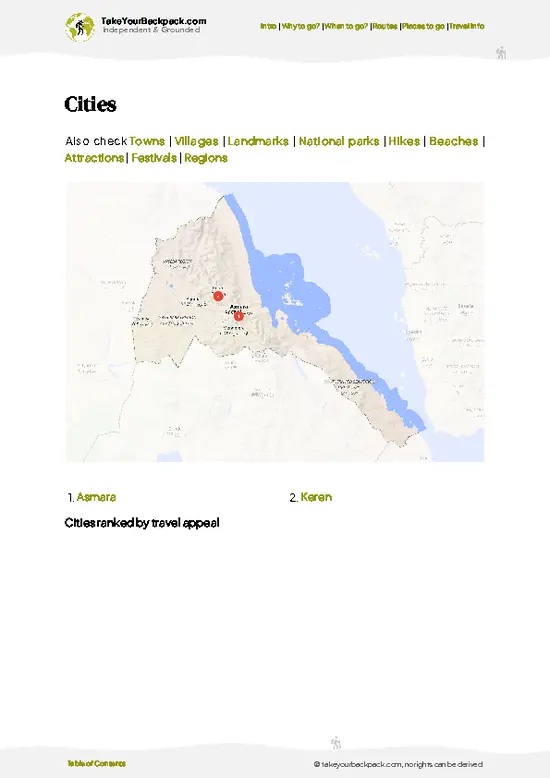
Eritrea🇪🇷 | citiesAsmaraModernist avenues, Fiat Tagliero wings, Italian-era cafés, Medebar metalwork | things to do and best time to go

Explore Gurgusum BeachExplore Keren

Backpacking in Asmara
🏆 Top pickcity ranked #1
By Johan Kruseman 🇳🇱 | Updated October 24, 2026

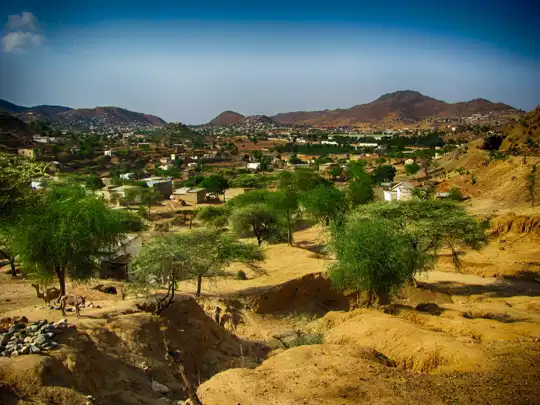
Decades ago Asmara was known mostly for war, closed borders and a collapsed economy, and few outsiders saw it. Today travelers find a quiet, walkable highland capital of wide palm-lined avenues, Italian-era cafés and a pace that feels like the 1950s. It sits in Eritrea’s central highlands, at roughly 2,300 meters, so the air is thin and mornings are cool. The center is the reason to come: the modernist buildings along Harnet Avenue and the streets around them deserve at least two full days, as do the cafés and the Medebar market. The outskirts offer little beyond the tank graveyard. Nightlife is low-key, and tourist infrastructure is thin, with few signs in English and patchy internet. It suits travelers who like observing and talking with people, and it will frustrate anyone who wants a packed activity list or a spontaneous itinerary. Before you go, arrange your visa and plan to carry enough cash, because cards rarely work and you need a separate travel permit for any trip beyond the city.

Discover everything you want to know in the 📖 Eritrea Travel Guide.


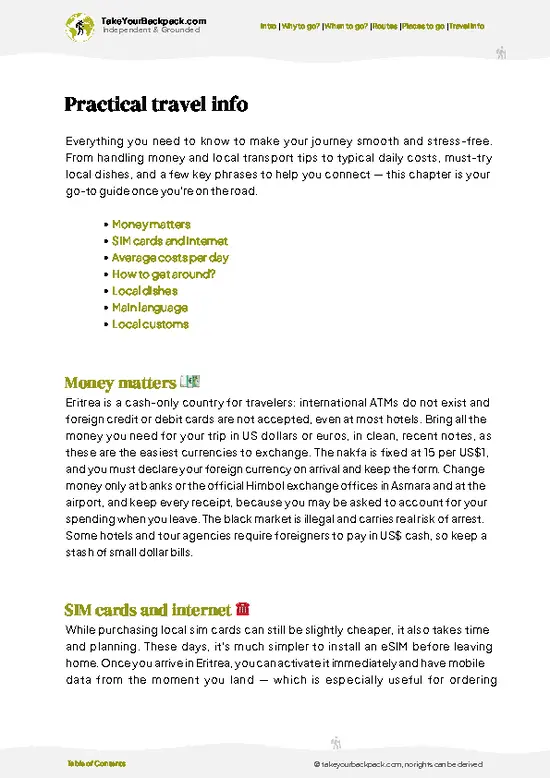
example page 0 from our offline Travel Guide for Eritrea
example page 1 from our offline Travel Guide for Eritrea
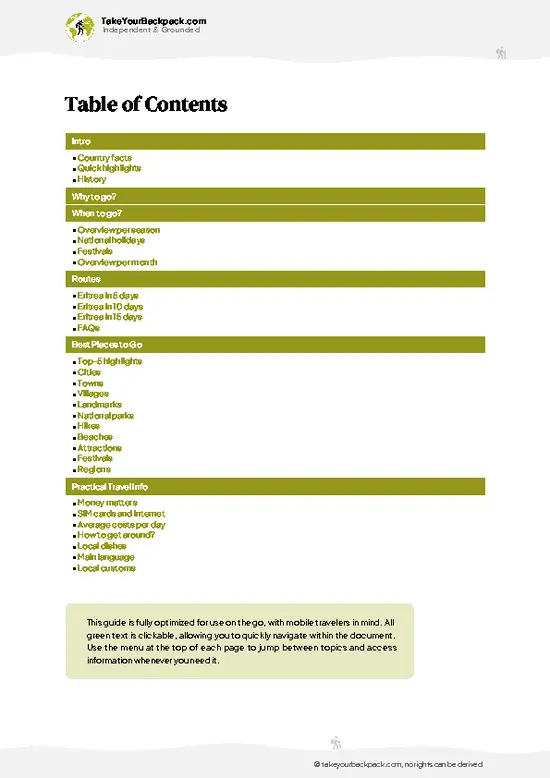
example page 2 from our offline Travel Guide for Eritrea
example page 3 from our offline Travel Guide for Eritrea
example page 4 from our offline Travel Guide for Eritrea
example page 5 from our offline Travel Guide for Eritrea
example page 6 from our offline Travel Guide for Eritrea
example page 7 from our offline Travel Guide for Eritrea
Loading the map 🌍
CLICK TO FILTER
cities
towns
villages
landmarks
national parks
hikes
beaches
attractions
festivals
regions
SHOW COUNTRY’S BESTSHOW ALL

✨ Why go?
Ranked #1 city in Eritrea
What sets this place apart

Asmara works as a backpacking stop because the whole center is a compact grid you can cover on foot, and because it is the only practical starting point for the rest of the country. Every route to the coast, the western lowlands or the southern highlands begins here, and the permit office for those trips is in town. The building count is the draw: the city holds more than 4,000 modernist and Art Deco structures, and the central area is a UNESCO World Heritage site, so a day of wandering never repeats itself. Evenings revolve around espresso bars, aperitivo-style drinks and early dinners, not clubs, which suits slow travelers and bores party seekers. Accommodation is limited to a handful of guesthouses and small hotels, with no real hostel scene, so you meet people in cafés instead of dorms. … read more 👉
Asmara works as a backpacking stop because the whole center is a compact grid you can cover on foot, and because it is the only practical starting point for the rest of the country. Every route to the coast, the western lowlands or the southern highlands begins here, and the permit office for those trips is in town. The building count is the draw: the city holds more than 4,000 modernist and Art Deco structures, and the central area is a UNESCO World Heritage site, so a day of wandering never repeats itself. Evenings revolve around espresso bars, aperitivo-style drinks and early dinners, not clubs, which suits slow travelers and bores party seekers. Accommodation is limited to a handful of guesthouses and small hotels, with no real hostel scene, so you meet people in cafés instead of dorms. Use Asmara for three to four days, mixing city walks with permit-based excursions, and treat it as the calm hub of an Eritrea loop rather than a place to rush through.

💡 HighlightsTop highlights of Asmara

  1. Fiat Tagliero Building: The 1938 service station by Giuseppe Pettazzi is the icon of the city, with concrete wings that cantilever about 15 meters each without visible support. Go in the morning, when the light is soft and traffic is light. Admission is free from outside, and 20 to 30 minutes covers photos and a look around.
  2. Cinema Impero: This 1937 Art Deco cinema still has its original facade, curved lines and period interior. Come in the afternoon, and if a screening is on, ticket prices are usually under US$2. Allow 30 to 45 minutes.
  3. Asmara Cathedral (Church of Our Lady of the Rosary): A brick Lombard Romanesque church from the 1920s with a tall bell tower on Harnet Avenue. Visit in the morning, outside mass times, for a free look inside in about 20 minutes.
  4. Great Mosque (Al Khulafa Al Rashidin):
… read more 👉
  1. Fiat Tagliero Building: The 1938 service station by Giuseppe Pettazzi is the icon of the city, with concrete wings that cantilever about 15 meters each without visible support. Go in the morning, when the light is soft and traffic is light. Admission is free from outside, and 20 to 30 minutes covers photos and a look around.
  2. Cinema Impero: This 1937 Art Deco cinema still has its original facade, curved lines and period interior. Come in the afternoon, and if a screening is on, ticket prices are usually under US$2. Allow 30 to 45 minutes.
  3. Asmara Cathedral (Church of Our Lady of the Rosary): A brick Lombard Romanesque church from the 1920s with a tall bell tower on Harnet Avenue. Visit in the morning, outside mass times, for a free look inside in about 20 minutes.
  4. Great Mosque (Al Khulafa Al Rashidin): Built in 1938 with a striking minaret, this mosque stands in the old market quarter. Visit between prayer times and dress modestly. It is free to look from outside, and 20 to 30 minutes is plenty.
  5. Medebar Market: A sprawling open-air market where metalworkers hammer scrap into stoves, buckets and utensils. Mornings are busiest. It costs nothing to wander and only a few dollars for a souvenir, and you could spend 1 to 2 hours here.
  6. Eritrean National Museum: A modest collection covering archaeology, ethnography and colonial history, a good introduction to the country’s nine ethnic groups. Plan 1 to 1.5 hours, with an entry fee around US$2 to 5.
  7. Enda Mariam Orthodox Cathedral: An Orthodox church whose design mixes traditional Tigrinya style with a modern touch. Early morning services bring worshippers in white shawls. Entry is free, and a visit takes around 20 to 30 minutes.
  8. Tank Graveyard: A field on the edge of town where wrecks from the independence war lie rusting. Go in the afternoon when the light flatters the metal. It is free to see from the road, and 30 to 45 minutes is enough.
Asmara also makes an easy base for excursions to Massawa on the Red Sea, the market town of Keren, and the ruins of Qohaito and Adi Keyh in the south. The tank graveyard, the cathedrals and the market cost nothing at all, making them the cheapest stops on this list.
Spotted a mistake or missing something? Contact us.

Things to do near Asmara

Ratings based on Tripadvisor reviews. When you book through this link, you support our work at no extra cost to you.

🏘️ NeighborhoodsHow different areas shape the experience

Asmara’s center is compact, and nearly everything a visitor wants sits within a 30-minute walk of Harnet Avenue. The areas below are ordered by how much time they deserve.
  • Harnet Avenue and the Central Core: This is the main reason to come. The boulevard of palms runs past the Catholic cathedral, the opera house, the Cinema Impero and the Fiat Tagliero garage in the Modernist style. Walk it in the late afternoon when the evening passeggiata fills the pavement. Cafés serve macchiato and pastries, and the pace is unhurried. Give it a full day, since the side streets hold the best facades.
  • Medeber Market: The city’s large trading district, in the west of the center, is worth a morning. Metalworkers hammer out stoves and lamps, and spice and grain stalls fill the lanes. It is crowded and loud by
… read more 👉
Asmara’s center is compact, and nearly everything a visitor wants sits within a 30-minute walk of Harnet Avenue. The areas below are ordered by how much time they deserve.
  • Harnet Avenue and the Central Core: This is the main reason to come. The boulevard of palms runs past the Catholic cathedral, the opera house, the Cinema Impero and the Fiat Tagliero garage in the Modernist style. Walk it in the late afternoon when the evening passeggiata fills the pavement. Cafés serve macchiato and pastries, and the pace is unhurried. Give it a full day, since the side streets hold the best facades.
  • Medeber Market: The city’s large trading district, in the west of the center, is worth a morning. Metalworkers hammer out stoves and lamps, and spice and grain stalls fill the lanes. It is crowded and loud by Asmara standards, but easy on foot. Keep your phone and wallet in front pockets.
  • Gejeret: The old Eritrean quarter, close to the Great Mosque and the Kidane Mehret church area, has narrow lanes and home-style eateries. Few tourists come here, so a short wander gives a quieter look at daily life. Skip it after dark, when the streets are unlit.
  • Edaga Arbi: This neighborhood around the Tuesday-to-Saturday style produce market is useful for cheap lunches of injera and stews. There is little to photograph, so a stop of an hour suffices.
  • Godaif and Sembel: These are residential and industrial districts to the south and east, with few sights. Visit only if you have a specific reason, such as the Sembel area’s ordinary local restaurants.
Nightlife is modest everywhere. A few bars near the center stay open late, but most of the city is quiet by 10 pm.

⌛️ 1 dayWhat you can realistically do in a day

8:00 AM: Fiat Tagliero. Start at the service station with the winged roof, which is the best stop in the city and looks its best in early light. Walk for a few minutes toward the center afterward.
9:00 AM: Medebar Market. Spend a couple of hours in the metalworking quarter, where scrap becomes stoves and lanterns. Few tourists come here, and you can watch artisans work for free.
11:30 AM: Great Mosque and Enda Mariam. Walk through the old market streets to the mosque, then continue to the Orthodox cathedral. Both are quick, free visits that show the city’s religious mix.
1:00 PM: Lunch at a local café. Stop at one of the Italian-era bars on Harnet Avenue for pasta or a plate of injera, followed by a macchiato. It is a good time to rest from the altitude.
2:30 PM: Cinema Impero and Asmara Cathedral. … read more 👉
8:00 AM: Fiat Tagliero. Start at the service station with the winged roof, which is the best stop in the city and looks its best in early light. Walk for a few minutes toward the center afterward.
9:00 AM: Medebar Market. Spend a couple of hours in the metalworking quarter, where scrap becomes stoves and lanterns. Few tourists come here, and you can watch artisans work for free.
11:30 AM: Great Mosque and Enda Mariam. Walk through the old market streets to the mosque, then continue to the Orthodox cathedral. Both are quick, free visits that show the city’s religious mix.
1:00 PM: Lunch at a local café. Stop at one of the Italian-era bars on Harnet Avenue for pasta or a plate of injera, followed by a macchiato. It is a good time to rest from the altitude.
2:30 PM: Cinema Impero and Asmara Cathedral. Walk along the avenue past the 1937 cinema, then to the brick cathedral and its tower. The light is good for photographs here in the afternoon.
4:00 PM: National Museum. Spend an hour with the collection for context on the country’s peoples and history.
5:30 PM: Tank Graveyard. Take a taxi to the edge of town, off the usual route, where independence-war wrecks sit in a field. Go before dusk so you can still see the details, and ask the driver to wait.
7:00 PM: Dinner and passeggiata. Return to the center as locals stroll Harnet Avenue. Finish with a drink at a bar in the old quarter.

🌤️ When to go?Weather, crowds, and seasonal trade-offs

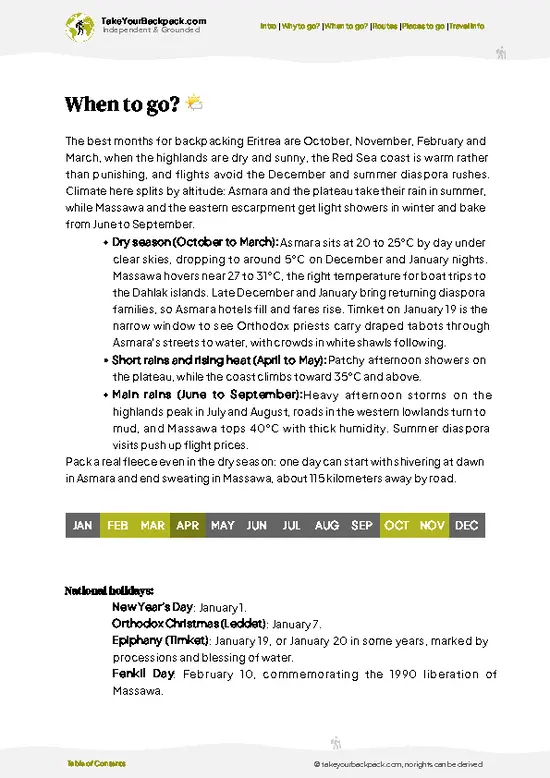
Asmara sits at about 2,300 meters, so the weather is mild and dry for much of the year, and the altitude keeps even summer pleasant.
  • Cool dry season (October to February): Days run roughly 20 to 25°C (68 to 77°F) with crisp, cold nights that can drop to 5°C (41°F). Skies are blue and the light is long and clean. This is the easiest season for walking.
  • Hot spell (March to May): Daytime climbs to 25 to 28°C (77 to 82°F), with dry heat and small showers building toward the end. Crowds stay thin.
  • Main rains (June to September): Afternoon downpours are usual, with highs of 20 to 24°C (68 to 75°F) and cloudy streets. Mornings are often clear. Rain fills the countryside with green, which helps on day trips.
  • Festivals: Independence Day on May 24 and Fenkil Day in February bring events, and prices for
… read more 👉
Asmara sits at about 2,300 meters, so the weather is mild and dry for much of the year, and the altitude keeps even summer pleasant.
  • Cool dry season (October to February): Days run roughly 20 to 25°C (68 to 77°F) with crisp, cold nights that can drop to 5°C (41°F). Skies are blue and the light is long and clean. This is the easiest season for walking.
  • Hot spell (March to May): Daytime climbs to 25 to 28°C (77 to 82°F), with dry heat and small showers building toward the end. Crowds stay thin.
  • Main rains (June to September): Afternoon downpours are usual, with highs of 20 to 24°C (68 to 75°F) and cloudy streets. Mornings are often clear. Rain fills the countryside with green, which helps on day trips.
  • Festivals: Independence Day on May 24 and Fenkil Day in February bring events, and prices for rooms and transport rise slightly. The Orthodox Meskel festival in late September draws crowds and bonfires.
Pack a warm layer year-round, and plan any trip to the coast outside the summer heat of June to August.


source: climatestotravel.comJANJanuary: highly recommended for travelingFEBFebruary: highly recommended for travelingMARMarch: excellent for travelingAPRApril: excellent for travelingMAYMay: excellent for travelingJUNJune: fair for travelingJULJuly: fair for travelingAUGAugust: fair for travelingSEPSeptember: fair for travelingOCTOctober: excellent for travelingNOVNovember: excellent for travelingDECDecember: highly recommended for traveling
when-to-go

✈️ The backpacker research shortcutEritrea Travel Guide

An offline-friendly backpacking guide with optimized travel routes, ranked highlights, transport advice, and the best areas to stay.
example page 0 from our offline Travel Guide for Eritrea
example page 1 from our offline Travel Guide for Eritrea
example page 2 from our offline Travel Guide for Eritrea
example page 3 from our offline Travel Guide for Eritrea
example page 4 from our offline Travel Guide for Eritrea
example page 5 from our offline Travel Guide for Eritrea
example page 6 from our offline Travel Guide for Eritrea
example page 7 from our offline Travel Guide for Eritrea
The digital guide (245 pages) contains:
✅ 56 highlights, ranked by travel appeal
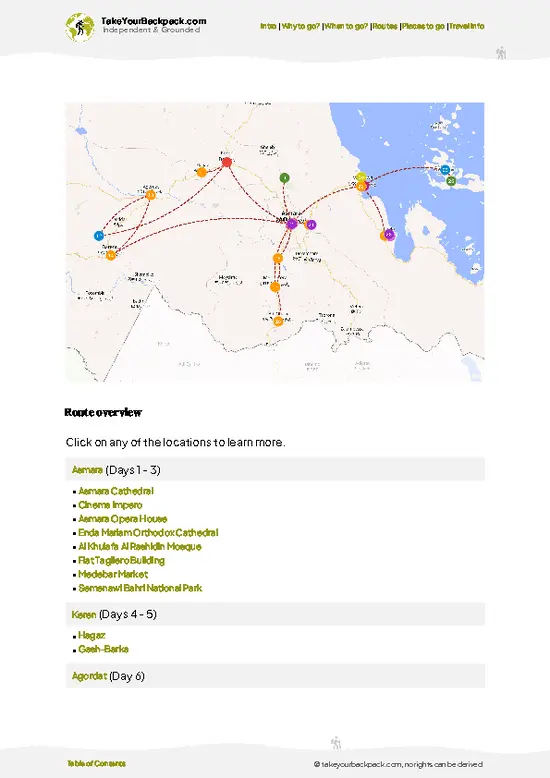
✅ Optimized 5, 10 & 15-day travel routes
✅ Cities, national parks, landmarks, beaches
✅ How to get around
✅ Offline-friendly for travel without Wi-Fi
👉 Click to see all 30+ guide features

📅 Plan smarter in minutes, not weeks
✅ Month by month travel advice
✅ Festivals & national holidays
✅ Budget expectations

🗺️ Go to the right places, skip the overrated ones
✅ Honest pros & cons of destinations
✅ Top hikes, parks & viewpoints
✅ Lesser-known places most travelers miss
✅ Clear “worth it vs skip it” guidance

🛏️ Travel smoothly without rookie mistakes
✅ Best areas to stay
✅ Transport systems explained simply
✅ Common scams & safety advice
✅ SIM cards, money & practical tips

🌍 Understand the country, not just visit it
✅ Culture & traditions
✅ 52 Essential phrases & customs
✅ Festivals worth planning around
✅ Traveler-friendly historical context
✅ Insights that make places more meaningful

📱 Built for real travel conditions
✅ Fully downloadable PDF
✅ Works completely offline
✅ Optimized for phone use
✅ Useful in remote areas & buses
✅ Everything in one place
Stop searching, start planning
Get instant access to your full guide. 30‑day money-back guarantee.
+ Add another guide for just

By proceeding you agree to our terms.
Sent to your inbox immediately after payment • 100% Secure Checkout
Best Backpacking Travel Advisor 2025 tourism awardBest Backpacking
Travel Advisor
2025
What others say about Take Your Backpack Guides:
⭐⭐⭐⭐⭐
Fantastic, amazing amount of information!
⭐⭐⭐⭐⭐
My goodness this is amazing, it's what I've been looking for hats off too you!
⭐⭐⭐⭐⭐
I think this is absolutely BRILLIANT
⭐⭐⭐⭐
Very complete and informative. It's still missing places, but I gotta to commend you
⭐⭐⭐⭐⭐
This is truly amazing, thank you, can't wait to explore it with my kids!
⭐⭐⭐⭐⭐
Awesome resource, thank you!
⭐⭐⭐⭐⭐
This is amazing! Can't wait to explore the ones I haven't seen
⭐⭐⭐⭐
I love this! Well done, great idea.
⭐⭐⭐⭐⭐
Thanks for taking the time to make this gem!
⭐⭐⭐⭐⭐
This might be the best website I've ever seen.
⭐⭐⭐⭐⭐
Congratulations, and thank you so much for your work; it's incredibly valuable.
⭐⭐⭐⭐
In all seriousness I think you did a great job pointing out the important spots
⭐⭐⭐⭐⭐
10/10 very good
⭐⭐⭐⭐⭐
As someone who's only just starting to visit regularly this is awesome, thank you.
⭐⭐⭐⭐
Thank you very much! I'm going to visit my dad, it's going to be very useful!
⭐⭐⭐⭐⭐
This is really cool! We'll be travelling for the first time and this definitely come in handy.
⭐⭐⭐⭐⭐
You are now our minister of culture, congratulations 👨‍💼
⭐⭐⭐⭐⭐
Just wanted to tell you that this is a pearl! Going to follow your recommendations.
⭐⭐⭐⭐⭐
This is so cool. I'll definitely be using the resource for my travels soon.
⭐⭐⭐⭐⭐
This is very impressive! Good work.
⭐⭐⭐⭐⭐
This is an amazing and informative site. Very well done!

🛏️ Where to stay?Best areas to stay in Eritrea

The best areas for a budget bed in Asmara are the streets around Harnet Avenue and the lanes just south of the Cathedral, both within a ten minute walk of the main sights. Choices are limited, as Eritrea receives few independent travelers, so book ahead in high season and expect a handful of guesthouses and small family-run places rather than a hostel scene. Expect simple rooms, often with shared bathrooms, and dorm beds are rare.

The Harnet Avenue area is the easiest base. Cafés, money exchange, shops and the main bus stops sit within a few blocks, and the street is well lit and busy into the … read more 👉
The best areas for a budget bed in Asmara are the streets around Harnet Avenue and the lanes just south of the Cathedral, both within a ten minute walk of the main sights. Choices are limited, as Eritrea receives few independent travelers, so book ahead in high season and expect a handful of guesthouses and small family-run places rather than a hostel scene. Expect simple rooms, often with shared bathrooms, and dorm beds are rare.

The Harnet Avenue area is the easiest base. Cafés, money exchange, shops and the main bus stops sit within a few blocks, and the street is well lit and busy into the evening. It is quiet after about 10 pm, as the city has little nightlife, so noise is rarely a problem. Walking back at night is comfortable, and the area is reliably calm.

The streets south of the Cathedral, toward Fiat Tagliero, are a little cheaper and quieter. Fewer shops are open late, and you will walk further for dinner, but the area is residential and safe. Transport links are good: intercity buses depart from the bus stations a short taxi ride away, and local buses run along the main roads. Aim for rooms with hot water, as nights are cold at this altitude, and confirm that there is a heater or extra blankets.

🚌 Getting aroundHow to get from A to B

Asmara is walkable and small, yet many visitors lose time and money by hiring private taxis for trips that a shared one or a short walk covers. The center spans only about two kilometers, and the main sights sit within a 20 minute stroll of each other. Traffic is light by regional standards, and fuel shortages have kept private cars limited. Public transport exists but runs on set routes and schedules that you will need to ask locals about.
  • Walking: Free and the best option for the center, Harnet Avenue and the modernist districts. The city is on a plateau, with gentle slopes, so it is easy going. Carry water, because the altitude catches newcomers.
  • City buses: Cheap, at roughly US$0.10 to 0.30 per ride, and crowded at peak hours. Routes link the center with Medeber, Edaga Arbi and outer neighborhoods.
… read more 👉
Asmara is walkable and small, yet many visitors lose time and money by hiring private taxis for trips that a shared one or a short walk covers. The center spans only about two kilometers, and the main sights sit within a 20 minute stroll of each other. Traffic is light by regional standards, and fuel shortages have kept private cars limited. Public transport exists but runs on set routes and schedules that you will need to ask locals about.
  • Walking: Free and the best option for the center, Harnet Avenue and the modernist districts. The city is on a plateau, with gentle slopes, so it is easy going. Carry water, because the altitude catches newcomers.
  • City buses: Cheap, at roughly US$0.10 to 0.30 per ride, and crowded at peak hours. Routes link the center with Medeber, Edaga Arbi and outer neighborhoods. They generally run from early morning until about early evening. Handy, though you will need patience.
  • Taxis: Short rides in town usually cost US$2 to 5, and prices are agreed in advance as there are no meters. Shared taxis on fixed routes are cheaper, at around US$0.50 to 1. Expect fewer taxis at night.
  • Intercity buses: Buses run from Asmara to Massawa (about 3 to 4 hours, US$2 to 4) and to Keren (about 2 hours, US$2 to 3), with services leaving mostly in the morning. The ride down to Massawa is one of the most scenic in the country, and the buses are worth taking over a private car for the price.
Travel outside Asmara requires a travel permit from the Ministry of Tourism, so arrange it early, and check which routes are open before buying any ticket. Keep your passport and permit with you on all intercity journeys.

👛 Costs (as of 24 October 2026)How expensive it really is

Asmara costs about US$38 a day for a backpacker in high season, and prices are steady because the economy is tightly controlled.
CategoryBudget RangeLocal Reality
Dorm accommodation (high season)US$15 to 25Dorms are scarce, so most travelers take a simple private room in a guesthouse.
Dorm accommodation (off-season)US$10 to 18Rates ease slightly in the rainy months, though choice stays small.
MealsUS$6 to 12Cafe breakfast, a local lunch of injera or pasta, and a simple dinner.
Local transportUS$1 to 4City buses are cheap, while short taxi rides cost more.
City transport passNot availableBuses charge per ride, so there is no pass to buy.
Basic activities and entry feesUS$2 to 6Museums and churches charge small fees, and walking the architecture is free.
MiscellaneousUS$3 to 6Water, coffee, a SIM or
… read more 👉
Asmara costs about US$38 a day for a backpacker in high season, and prices are steady because the economy is tightly controlled.
CategoryBudget RangeLocal Reality
Dorm accommodation (high season)US$15 to 25Dorms are scarce, so most travelers take a simple private room in a guesthouse.
Dorm accommodation (off-season)US$10 to 18Rates ease slightly in the rainy months, though choice stays small.
MealsUS$6 to 12Cafe breakfast, a local lunch of injera or pasta, and a simple dinner.
Local transportUS$1 to 4City buses are cheap, while short taxi rides cost more.
City transport passNot availableBuses charge per ride, so there is no pass to buy.
Basic activities and entry feesUS$2 to 6Museums and churches charge small fees, and walking the architecture is free.
MiscellaneousUS$3 to 6Water, coffee, a SIM or snacks.
Total Daily BudgetUS$38Comfortable for one person, excluding permits and day trips.
Bring cash in US dollars, and exchange only what you need at official rates to avoid carrying large amounts of local money.
⚠️ Prices can change and everyone travels differently, so take this as a rough guide. Hope it helps you plan your adventure!

🚌 Day tripsWhere to go beyond the main area

Asmara works well as a base for day trips to the coast, the escarpment and nearby towns, though all outside travel requires a permit that you must arrange in the city first.
Massawa:
The Red Sea port is about 3 to 4 hours by bus down a dramatic escarpment road, with fog and hairpins in the morning and sea heat at the bottom. It is a long day, with a return trip by late afternoon. Budget US$10 to 20 for transport, food and a ferry or boat if you want to reach Massawa’s old island district. Go between October and March, when the coast is bearable. First-timers often start too late and miss the last bus back.
👉 Explore Massawa
Keren:
A market town of about two hours by bus northwest of Asmara, with a Monday and Friday camel and livestock market and a Sunday visit to the Mariam Dearit shrine. Costs … read more 👉
Asmara works well as a base for day trips to the coast, the escarpment and nearby towns, though all outside travel requires a permit that you must arrange in the city first.
Massawa:
The Red Sea port is about 3 to 4 hours by bus down a dramatic escarpment road, with fog and hairpins in the morning and sea heat at the bottom. It is a long day, with a return trip by late afternoon. Budget US$10 to 20 for transport, food and a ferry or boat if you want to reach Massawa’s old island district. Go between October and March, when the coast is bearable. First-timers often start too late and miss the last bus back.
👉 Explore Massawa
Keren:
A market town of about two hours by bus northwest of Asmara, with a Monday and Friday camel and livestock market and a Sunday visit to the Mariam Dearit shrine. Costs run to about US$8 to 15 with lunch. Tea sellers and shaded streets make it easy to enjoy. Visit between October and February.
👉 Explore Keren
Debre Bizen Monastery:
The cliff-top Orthodox monastery sits at about 2,500 meters and takes roughly 2 to 3 hours to reach by road. Women are not permitted inside. It requires a car or tour and a permit, so expect US$40 to 80 shared. Go in dry months, as the track is rough.
👉 Explore Debre Bizen Monastery
Qohaito:
An ancient town on a high plateau with ruins, a cliff edge looking over a deep gorge, and the old Aksumite-era remains. It is about 3 to 4 hours south, so the day is long. Hire a vehicle and guide in Asmara for roughly US$60 to 100 split between passengers, and bring your own food.
👉 Explore Qohaito

🍲 FoodWhat to Eat & Drink

Asmara’s food leans on Italian influence, which sets it apart from the rest of Eritrea. Start the day at a café with a cappuccino and a pastry, drunk standing or at an old marble table. Across the city, pasta al forno, lasagna and fresh pizza appear on the same menus as zigni (spiced meat stew) and injera. Fresh fuul with bread is a cheap breakfast, often under US$2.

For drinks, Asmara beer is the local lager, light and cold, and usually costs US$1 to 2 in a bar. Suwa, a homemade grain beer, is found in smaller homes and local spots. Mies honey wine is sweet and stronger than it looks.

Backpackers eat mostly in the cafés and small restaurants on and around Harnet Avenue, where a meal runs US$3 to 7. Medeber Market has stalls for fried fish, roasted corn and spiced tea. A local custom is … read more 👉
Asmara’s food leans on Italian influence, which sets it apart from the rest of Eritrea. Start the day at a café with a cappuccino and a pastry, drunk standing or at an old marble table. Across the city, pasta al forno, lasagna and fresh pizza appear on the same menus as zigni (spiced meat stew) and injera. Fresh fuul with bread is a cheap breakfast, often under US$2.

For drinks, Asmara beer is the local lager, light and cold, and usually costs US$1 to 2 in a bar. Suwa, a homemade grain beer, is found in smaller homes and local spots. Mies honey wine is sweet and stronger than it looks.

Backpackers eat mostly in the cafés and small restaurants on and around Harnet Avenue, where a meal runs US$3 to 7. Medeber Market has stalls for fried fish, roasted corn and spiced tea. A local custom is the evening passeggiata, when the avenue fills with people strolling and stopping for a drink at around dusk. Meat is often served in fasting season only on certain days, so expect vegetarian dishes on Wednesdays and Fridays.

🛡️ SafetyStaying Safe: What Travelers Should Know

Asmara is among the calmest capitals in Africa, with very little street crime, and walking in the center at night is generally comfortable. Pickpocketing is rare, but keep your wallet in a front pocket in Medeber and Edaga Arbi, where crowds are thick. Solo travelers, including women, report few problems beyond curiosity and invitations for coffee, which are usually friendly and can be declined with a smile. The main annoyance is bureaucratic. You need a permit for every trip outside the city, and checkpoints on roads will ask to see it along with your passport. Photographing military sites, government buildings and police is prohibited, so ask before aiming a camera at anything official. Money changers on the street offer better rates than banks, but dealing with them is illegal, and you … read more 👉
Asmara is among the calmest capitals in Africa, with very little street crime, and walking in the center at night is generally comfortable. Pickpocketing is rare, but keep your wallet in a front pocket in Medeber and Edaga Arbi, where crowds are thick. Solo travelers, including women, report few problems beyond curiosity and invitations for coffee, which are usually friendly and can be declined with a smile. The main annoyance is bureaucratic. You need a permit for every trip outside the city, and checkpoints on roads will ask to see it along with your passport. Photographing military sites, government buildings and police is prohibited, so ask before aiming a camera at anything official. Money changers on the street offer better rates than banks, but dealing with them is illegal, and you should avoid it. Carry cash in US dollars, as international cards do not work. Streets are dim outside Harnet Avenue, so a small flashlight helps.

FAQCommon questions from travelers

Two to three days is enough for Asmara itself. One day covers Harnet Avenue, the Cathedral and the Fiat Tagliero building, and another covers Medeber Market and the modernist districts. Add two more days if you want to reach Massawa (3 to 4 hours by bus) or Keren (about 2 hours), as both need a travel permit.
Yes, Asmara is among the safer capitals for solo backpackers, including women, with little street crime and calm streets in the center after dark. Pickpocketing is rare, though crowded markets like Medeber call for a closed bag. The main hassle is paperwork: you need a permit for travel beyond the city, and checkpoints ask for it with your passport.
Asmara is known for its Art Deco, Futurist and Rationalist architecture from the 1930s, which earned it UNESCO World Heritage status in 2017. Landmarks include the Fiat Tagliero service station, the Cathedral and Harnet Avenue. It is also known for Italian-style cafés with espresso, a high-altitude climate at 2,300 meters and a clean, calm street life.
⚠️ Things can change over time, so always validate details locally before you go.

More places to explore across Eritrea

Asmara isn’t the only highlight in Eritrea. Explore all what Eritrea has to offer.
Country photo of Eritrea

We 💚 feedbackFinal thoughts on visiting Asmara

Asmara pairs best with a permit-based loop toward Massawa on the coast and Keren in the west, so you see modernist streets first and then the lowlands. Give the city its slow pace and stay at least three nights. I would bring plenty of small-denomination cash and a power bank, and skip any plan that depends on fast internet.

✍️ Help improve this page!
The information on this page is based on in-depth research, insights shared by experienced travelers, and feedback from the local travel community in Eritrea. While every effort is made to keep the information accurate and current, conditions can change — so if you spot anything incorrect or outdated, please get in touch.


🙋‍♂️ Give feedback

👋 Meet the founderWho’s Behind Take Your Backpack?

Johan, backpacker and founder of TakeYourBackpackHi, I’m Johan (Netherlands 🇳🇱), the creator of TakeYourBackpack. Over the past 3 decades, I’ve backpacked through 90+ countries across six continents, gaining extensive experience with independent travel, long-term trips, and overland routes.

This site is built on a combination of firsthand travel experience and carefully curated insights from other backpackers. Many guides are based on places I’ve personally visited, while others bring together tips, observations, and practical advice shared by trusted travelers I’ve met along the way.

The goal is to provide realistic, experience-driven guidance — not generic itineraries — so you can explore destinations with better context, clearer expectations, and more confidence.