×

Eritrea🇪🇷 | townsMassawaCoral-stone island, war-scarred palace, grilled fish | things to do and best time to go

Explore HagazExplore Mendefera

Backpacking in Massawa
🏆 Top picktown ranked #1
By Johan Kruseman 🇳🇱 | Updated October 22, 2026

Massawa puts a walkable Red Sea old town within one compact island, so you can cover its core on foot in a morning without arranging a single ride. It sits on the coast in the east of Eritrea, linked by causeways to the mainland and to Taulud island. The heat is heavy and humid because the town is at sea level, so do your walking early and late and rest through midday, as locals do. Foreigners need a travel permit for the coast, issued through the government in Asmara, so arrange it in the capital before heading down. Ottoman coral-stone houses stand beside war-damaged Italian blocks, and many ruins remain from the fighting of 1990. Hostels barely exist and evenings are quiet, with tea, grilled fish and conversation at cafés, so meeting other travelers takes luck. Unlike Asmara, which is cool, intact and organized around its modernist avenues, Massawa is hot, salt-stained and half ruined, and far more atmospheric for it.

Discover everything you want to know in the 📖 Eritrea Travel Guide.


example page 0 from our offline Travel Guide for Eritrea
example page 1 from our offline Travel Guide for Eritrea
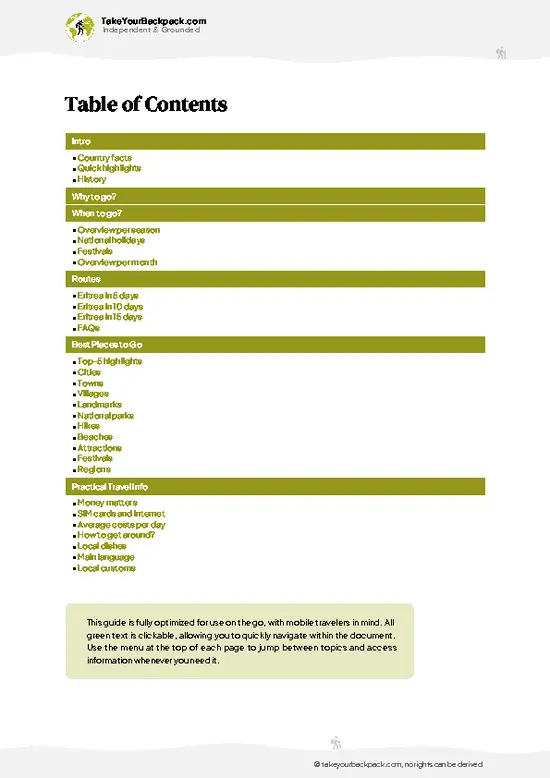
example page 2 from our offline Travel Guide for Eritrea
example page 3 from our offline Travel Guide for Eritrea
example page 4 from our offline Travel Guide for Eritrea
example page 5 from our offline Travel Guide for Eritrea
example page 6 from our offline Travel Guide for Eritrea
example page 7 from our offline Travel Guide for Eritrea
Loading the map 🌍
CLICK TO FILTER
cities
towns
villages
landmarks
national parks
hikes
beaches
attractions
festivals
regions
SHOW COUNTRY’S BESTSHOW ALL

✨ Why go?
Ranked #1 town in Eritrea
What makes this town worth visiting

Massawa is where an Eritrea trip turns from highland city to Red Sea coast, and the contrast is the reason to come. The old town on Batsi island is small enough to walk in an hour yet layered enough to fill a day, with carved wooden balconies, mosques and churches within a few minutes of each other. Most travelers stay two nights, which gives you one slow day in town and a second for the beaches or the sea beyond. The town suits slow travelers, photographers and anyone curious about architecture and recent history. The Dahlak Archipelago lies offshore and is the draw for divers and island hunters, though it needs permits and planning. Food is the other pull: fish grilled fresh, spiced coffee and sweet tea in the shade. Social life is gentle, built around waterfront cafés rather than bars, … read more 👉
Massawa is where an Eritrea trip turns from highland city to Red Sea coast, and the contrast is the reason to come. The old town on Batsi island is small enough to walk in an hour yet layered enough to fill a day, with carved wooden balconies, mosques and churches within a few minutes of each other. Most travelers stay two nights, which gives you one slow day in town and a second for the beaches or the sea beyond. The town suits slow travelers, photographers and anyone curious about architecture and recent history. The Dahlak Archipelago lies offshore and is the draw for divers and island hunters, though it needs permits and planning. Food is the other pull: fish grilled fresh, spiced coffee and sweet tea in the shade. Social life is gentle, built around waterfront cafés rather than bars, so solo travelers will find locals curious and talkative, and the pace suits people who like to sit and watch. If you need hostels, nightlife or a crowd of backpackers, Massawa is better as a short stop, but anyone willing to trade comfort for character will find it rewarding.

💡 HighlightsEssential experiences to have while visiting Massawa

  1. Batsi Island Old Town. This is the historic heart of Massawa, with Ottoman and Egyptian-era coral-stone houses, shuttered balconies and narrow lanes, some restored and some still holed by shelling. Walk it in the early morning or late afternoon when the light is soft and the heat bearable. Free, and allow 2 to 3 hours.
  2. Sahaba Mosque. One of the oldest mosques in the country, with a simple whitewashed form, slender minaret and a quiet courtyard that feels cool compared with the street. Dress modestly, remove your shoes and avoid prayer times. Free, with a small donation appreciated. Plan on 20 to 30 minutes.
  3. Enda Mariam Church. A small Orthodox church on the island, useful for seeing the Christian side of a mostly Muslim port. Morning is best. Entry is free, a donation of about US$1 to 2 is polite,
… read more 👉
  1. Batsi Island Old Town. This is the historic heart of Massawa, with Ottoman and Egyptian-era coral-stone houses, shuttered balconies and narrow lanes, some restored and some still holed by shelling. Walk it in the early morning or late afternoon when the light is soft and the heat bearable. Free, and allow 2 to 3 hours.
  2. Sahaba Mosque. One of the oldest mosques in the country, with a simple whitewashed form, slender minaret and a quiet courtyard that feels cool compared with the street. Dress modestly, remove your shoes and avoid prayer times. Free, with a small donation appreciated. Plan on 20 to 30 minutes.
  3. Enda Mariam Church. A small Orthodox church on the island, useful for seeing the Christian side of a mostly Muslim port. Morning is best. Entry is free, a donation of about US$1 to 2 is polite, and 20 to 30 minutes is enough.
  4. Imperial Palace on Taulud Island. Once used by Ethiopia’s emperor Haile Selassie, this large Italian-era palace was badly damaged in the fighting, and its broken arches and sea views make it the most dramatic ruin in town. Visit in late afternoon. Viewing from outside is typically free, and 30 to 45 minutes is plenty. Photography near government buildings can draw attention, so ask first.
  5. Massawa Fish Market. A morning scene of boats landing the catch, gutting on the quay and cats waiting under the tables. Go early, as it thins out by late morning. Free to wander, and buying a fish to be grilled nearby costs roughly US$3 to 8. Allow about an hour.
Beyond town, Gurgussum beach, the Dogali monument and the Dahlak islands make good excursions, while the mountain road toward Ghinda is a scenic outing. Pair the old town walk with the fish market in one morning, since both sit on the island and are best before the heat builds.
Spotted a mistake or missing something? Contact us.

Things to do near Massawa

Ratings based on Tripadvisor reviews. When you book through this link, you support our work at no extra cost to you.

🏘️ NeighborhoodsWhere things are and how it's laid out

Massawa splits into three zones, and the split explains how you spend your time: two coral islands joined by causeways, and a mainland strip. Everything worth seeing is within a short walk of each other, so you need legs more than wheels.
  • Massawa Island (Old Town): The historic core, with Ottoman and Egyptian coral-stone houses, Italian-era arcades and the Sheikh Hanafi mosque. Many buildings were damaged in the 1990 fighting and the 1921 earthquake, and some still stand propped or half ruined, so walk the lanes in daylight and look up at the balconies rather than lean on them. Small cafes serve strong coffee and fresh fish, and it is quiet after dark. Fully walkable in two to three hours.
  • Taulud Island: Reached by the causeway, this is the administrative side, with the old governor’s palace,
… read more 👉
Massawa splits into three zones, and the split explains how you spend your time: two coral islands joined by causeways, and a mainland strip. Everything worth seeing is within a short walk of each other, so you need legs more than wheels.
  • Massawa Island (Old Town): The historic core, with Ottoman and Egyptian coral-stone houses, Italian-era arcades and the Sheikh Hanafi mosque. Many buildings were damaged in the 1990 fighting and the 1921 earthquake, and some still stand propped or half ruined, so walk the lanes in daylight and look up at the balconies rather than lean on them. Small cafes serve strong coffee and fresh fish, and it is quiet after dark. Fully walkable in two to three hours.
  • Taulud Island: Reached by the causeway, this is the administrative side, with the old governor’s palace, the Imperial Palace ruins and shaded streets. It is calmer and greener than the old town. The seafront has the best evening strolls, and a few bars and restaurants stay open late, though by Eritrean standards late means around 10 pm. Walkable, but spread out, so allow a slow hour or two.
  • Mainland (Edaga Berai): The working district, with the market, bus links and daily-life shops. Food is plain and cheap: stews with injera, grilled fish and fresh juice. Hot and dusty by midday, so go early. A short bajaj or minibus ride from the islands covers the distance if the heat makes walking unwise.

⌛️ 1 day1-day itinerary for Massawa

7:00 AM, Batsi Island fish market
Start at the causeway end of Massawa's old island, where boats land the morning catch and buyers argue prices over tuna, kingfish and sometimes lobster. Go early, before the heat builds and the best fish is gone. Then walk a few minutes into the old streets.

8:30 AM, Old Town on Batsi
Wander the coral-stone buildings with carved wooden balconies and arcades. Many are cracked, shuttered or propped up, and that is part of the interest: you see Ottoman and Italian-era facades in their real, weathered state. Look for the Imperial Palace ruins and the Sheikh Hanafi mosque, one of the older mosques in town. Photograph buildings freely, but ask before pointing a camera at anything that looks official or military.

10:30 AM, Coffee break at a seafront café
Sit for a … read more 👉
7:00 AM, Batsi Island fish market
Start at the causeway end of Massawa's old island, where boats land the morning catch and buyers argue prices over tuna, kingfish and sometimes lobster. Go early, before the heat builds and the best fish is gone. Then walk a few minutes into the old streets.

8:30 AM, Old Town on Batsi
Wander the coral-stone buildings with carved wooden balconies and arcades. Many are cracked, shuttered or propped up, and that is part of the interest: you see Ottoman and Italian-era facades in their real, weathered state. Look for the Imperial Palace ruins and the Sheikh Hanafi mosque, one of the older mosques in town. Photograph buildings freely, but ask before pointing a camera at anything that looks official or military.

10:30 AM, Coffee break at a seafront café
Sit for a small cup of strong Eritrean coffee or a macchiato, a habit from the Italian years. This is the slow part of the day, and the shade matters. Order water too. Afterward, cross the causeway toward Taulud Island.

12:00 PM, Taulud Island
Walk past the grand old government buildings and the shoreline. The island is quieter than Batsi, with wide streets and faded villas, and it gives you a sense of how the port was once laid out. Keep to public paths.

1:30 PM, Lunch of grilled fish
Back on Batsi or the mainland side, choose a simple place serving whole grilled fish with bread, lemon and hot sauce. Eat unhurried through the hottest hours.

3:30 PM, Ottoman cisterns and the quiet mainland edge
Take a short ride toward the mainland district of Edaga Berai, where fewer travelers wander. Look for the old water cisterns and the plain neighborhood streets, where daily life goes on without any tourist angle. Chat with locals if invited; many speak some Italian or English.

5:30 PM, Waterfront walk
Return to the harbor as the heat eases and fishermen mend nets. Walk the shore until the light softens, then finish with tea or a cold drink as the evening settles over the bay.

🌤️ When to go?Choosing the right time of year

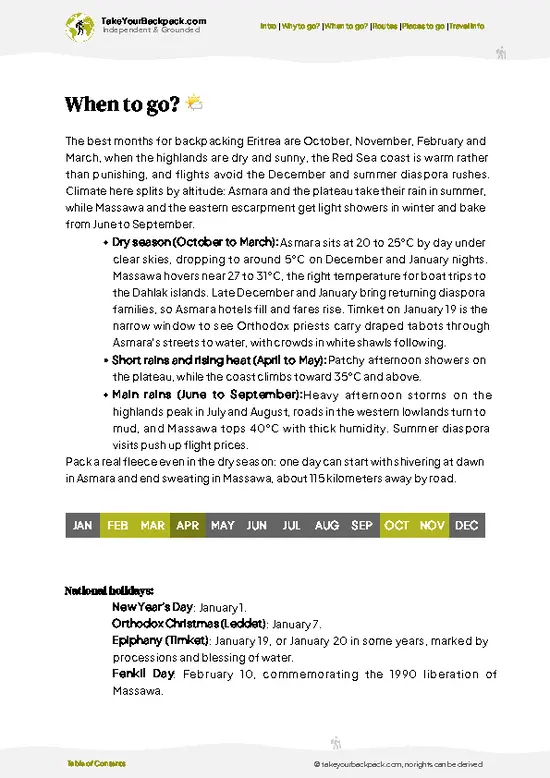
  • Winter (November to March): The comfortable window, with highs of 28 to 32°C (82 to 90°F) and lows near 22 to 25°C (72 to 77°F). Daylight runs roughly 11 to 12 hours. Humidity is manageable and sea swims are pleasant. Expect the most visitors and slightly firmer prices for islands and boat trips.
  • Summer (June to September): Brutal. Highs reach 38 to 42°C (100 to 108°F) and humidity is heavy, with nights barely dropping below 30°C (86°F). Few tourists show up, and walking midday is hard. Rain is scarce, but the highlands behind the coast get seasonal downpours that can cloud the sky.
  • Shoulder months (April to May, October): Heat builds quickly, with highs of 33 to 37°C (91 to 99°F). Crowds are thin, boat operators are more flexible on price, and diving visibility is generally good.
Plan sightseeing … read more 👉
  • Winter (November to March): The comfortable window, with highs of 28 to 32°C (82 to 90°F) and lows near 22 to 25°C (72 to 77°F). Daylight runs roughly 11 to 12 hours. Humidity is manageable and sea swims are pleasant. Expect the most visitors and slightly firmer prices for islands and boat trips.
  • Summer (June to September): Brutal. Highs reach 38 to 42°C (100 to 108°F) and humidity is heavy, with nights barely dropping below 30°C (86°F). Few tourists show up, and walking midday is hard. Rain is scarce, but the highlands behind the coast get seasonal downpours that can cloud the sky.
  • Shoulder months (April to May, October): Heat builds quickly, with highs of 33 to 37°C (91 to 99°F). Crowds are thin, boat operators are more flexible on price, and diving visibility is generally good.
Plan sightseeing for early morning and late afternoon whatever the month, and save the midday hours for shade and cold drinks.


source: climatestotravel.comJANJanuary: excellent for travelingFEBFebruary: excellent for travelingMARMarch: good for travelingAPRApril: fair for travelingMAYMay: fair for travelingJUNJune: fair for travelingJULJuly: below average for travelingAUGAugust: below average for travelingSEPSeptember: below average for travelingOCTOctober: fair for travelingNOVNovember: highly recommended for travelingDECDecember: excellent for traveling
when-to-go

✈️ The backpacker research shortcutEritrea Travel Guide

An offline-friendly backpacking guide with optimized travel routes, ranked highlights, transport advice, and the best areas to stay.
example page 0 from our offline Travel Guide for Eritrea
example page 1 from our offline Travel Guide for Eritrea
example page 2 from our offline Travel Guide for Eritrea
example page 3 from our offline Travel Guide for Eritrea
example page 4 from our offline Travel Guide for Eritrea
example page 5 from our offline Travel Guide for Eritrea
example page 6 from our offline Travel Guide for Eritrea
example page 7 from our offline Travel Guide for Eritrea
The digital guide (245 pages) contains:
✅ 56 highlights, ranked by travel appeal
✅ Optimized 5, 10 & 15-day travel routes
✅ Cities, national parks, landmarks, beaches
✅ How to get around
✅ Offline-friendly for travel without Wi-Fi
👉 Click to see all 30+ guide features

📅 Plan smarter in minutes, not weeks
✅ Month by month travel advice
✅ Festivals & national holidays
✅ Budget expectations

🗺️ Go to the right places, skip the overrated ones
✅ Honest pros & cons of destinations
✅ Top hikes, parks & viewpoints
✅ Lesser-known places most travelers miss
✅ Clear “worth it vs skip it” guidance

🛏️ Travel smoothly without rookie mistakes
✅ Best areas to stay
✅ Transport systems explained simply
✅ Common scams & safety advice
✅ SIM cards, money & practical tips

🌍 Understand the country, not just visit it
✅ Culture & traditions
✅ 52 Essential phrases & customs
✅ Festivals worth planning around
✅ Traveler-friendly historical context
✅ Insights that make places more meaningful

📱 Built for real travel conditions
✅ Fully downloadable PDF
✅ Works completely offline
✅ Optimized for phone use
✅ Useful in remote areas & buses
✅ Everything in one place
Stop searching, start planning
Get instant access to your full guide. 30‑day money-back guarantee.
+ Add another guide for just

By proceeding you agree to our terms.
Sent to your inbox immediately after payment • 100% Secure Checkout
Best Backpacking Travel Advisor 2025 tourism awardBest Backpacking
Travel Advisor
2025
What others say about Take Your Backpack Guides:
⭐⭐⭐⭐⭐
Fantastic, amazing amount of information!
⭐⭐⭐⭐⭐
My goodness this is amazing, it's what I've been looking for hats off too you!
⭐⭐⭐⭐⭐
I think this is absolutely BRILLIANT
⭐⭐⭐⭐
Very complete and informative. It's still missing places, but I gotta to commend you
⭐⭐⭐⭐⭐
This is truly amazing, thank you, can't wait to explore it with my kids!
⭐⭐⭐⭐⭐
Awesome resource, thank you!
⭐⭐⭐⭐⭐
This is amazing! Can't wait to explore the ones I haven't seen
⭐⭐⭐⭐
I love this! Well done, great idea.
⭐⭐⭐⭐⭐
Thanks for taking the time to make this gem!
⭐⭐⭐⭐⭐
This might be the best website I've ever seen.
⭐⭐⭐⭐⭐
Congratulations, and thank you so much for your work; it's incredibly valuable.
⭐⭐⭐⭐
In all seriousness I think you did a great job pointing out the important spots
⭐⭐⭐⭐⭐
10/10 very good
⭐⭐⭐⭐⭐
As someone who's only just starting to visit regularly this is awesome, thank you.
⭐⭐⭐⭐
Thank you very much! I'm going to visit my dad, it's going to be very useful!
⭐⭐⭐⭐⭐
This is really cool! We'll be travelling for the first time and this definitely come in handy.
⭐⭐⭐⭐⭐
You are now our minister of culture, congratulations 👨‍💼
⭐⭐⭐⭐⭐
Just wanted to tell you that this is a pearl! Going to follow your recommendations.
⭐⭐⭐⭐⭐
This is so cool. I'll definitely be using the resource for my travels soon.
⭐⭐⭐⭐⭐
This is very impressive! Good work.
⭐⭐⭐⭐⭐
This is an amazing and informative site. Very well done!

🛏️ Where to stay?Best areas to stay in Eritrea

The best area for a budget bed is Massawa Island (the Old Town), with a second option on Taulud Island. Eritrea has no real hostel scene, so budget travelers use small guesthouses and basic hotels, typically US$15 to 40 a night for a simple room. Dorm beds essentially do not exist, which makes sharing a room the main way to split costs.

Old Town places put you within walking distance of the restaurants, the market end of the causeway and the sea breeze that makes nights bearable. Streets are quiet after dark, with little traffic and a low level of street crime, and the main noise is the call … read more 👉
The best area for a budget bed is Massawa Island (the Old Town), with a second option on Taulud Island. Eritrea has no real hostel scene, so budget travelers use small guesthouses and basic hotels, typically US$15 to 40 a night for a simple room. Dorm beds essentially do not exist, which makes sharing a room the main way to split costs.

Old Town places put you within walking distance of the restaurants, the market end of the causeway and the sea breeze that makes nights bearable. Streets are quiet after dark, with little traffic and a low level of street crime, and the main noise is the call to prayer at dawn and the occasional generator. Rooms in coral-stone buildings can hold heat, so ask for a fan or air conditioning, and check that the power backup works, as outages happen.

Taulud is greener and calmer, with more space and some sea-facing rooms. It is a longer walk to the old town lanes, though bajaj taxis cover it cheaply. Transport links are limited everywhere in Massawa, so staying on an island matters more than which one, since the mainland side adds a ride to every outing. In winter, book ahead, because the small supply of rooms fills with tour groups and visitors from Asmara.

🚌 Getting aroundMoving around without the hassle

From the mainland bus stop, the old town is a short ride or about a 30 to 40 minute walk across the causeways, and most backpackers take a bajaj or shared minibus for the first leg. Massawa is small and flat, so almost everything on the islands is reachable on foot. Traffic is light and public transport is basic but predictable. Foreign travelers within Eritrea need a travel permit for areas outside the main towns, so check what your permit covers before heading further along the coast.
  • Walking: The islands are compact. Old Town to Taulud is about 15 to 20 minutes via the causeway. Go early or after 4 pm, because midday heat can reach 38°C (100°F) in summer.
  • Bajaj (three-wheeled taxis): The standard short hop, about US$1 to 3 per trip, and fares are agreed before you get in. Fuel is rationed
… read more 👉
From the mainland bus stop, the old town is a short ride or about a 30 to 40 minute walk across the causeways, and most backpackers take a bajaj or shared minibus for the first leg. Massawa is small and flat, so almost everything on the islands is reachable on foot. Traffic is light and public transport is basic but predictable. Foreign travelers within Eritrea need a travel permit for areas outside the main towns, so check what your permit covers before heading further along the coast.
  • Walking: The islands are compact. Old Town to Taulud is about 15 to 20 minutes via the causeway. Go early or after 4 pm, because midday heat can reach 38°C (100°F) in summer.
  • Bajaj (three-wheeled taxis): The standard short hop, about US$1 to 3 per trip, and fares are agreed before you get in. Fuel is rationed in Eritrea, so drivers are limited in how far they can run, and availability drops after dark. Settle the price first and carry small notes.
  • Shared minibus: Runs between the mainland and the causeway areas for well under US$1. Vehicles leave when full, usually from morning until around early evening. They are crowded, but cheap and straightforward.
  • Bus to and from Asmara: The road drops from about 2,300 m to sea level and takes 3 to 4 hours, with fares around US$3 to 6. Buses leave Asmara in the morning and are often full, so buy a ticket a day ahead. The route is scenic, and the old railway line is still visible in places.
  • Boat: Local boats to the Dahlak Archipelago are arranged through approved agents and cost significantly more, typically US$80 to 200 per person for a day trip depending on group size. Permits are required, so organize them in advance in Asmara or through your guide.

👛 Costs (as of 22 October 2026)How expensive it really is

Massawa costs most backpackers about US$35 to 100 a day, with lodging taking the largest share. Prices are paid in cash, and card payments and ATMs are not reliable for foreigners, so carry US dollars or euros and change at official rates only.
CategoryBudget RangeLocal Reality
Dorm accommodationUS$15 to 40 (high season)No true dorms. A basic double in a guesthouse is the cheapest bed, and prices drop slightly in summer to around US$12 to 30.
MealsUS$8 to 20Grilled fish, injera with stews and fresh juice at local cafes. Restaurants with seafood cost more.
Local transportUS$2 to 8Bajaj hops cost US$1 to 3. Minibuses are well under US$1.
Basic activities/entry feesUS$5 to 20Old Town walking is free. Small entry or guide fees for sites, plus local boat trips if you join a group.
Miscellaneous expensesUS$5
… read more 👉
Massawa costs most backpackers about US$35 to 100 a day, with lodging taking the largest share. Prices are paid in cash, and card payments and ATMs are not reliable for foreigners, so carry US dollars or euros and change at official rates only.
CategoryBudget RangeLocal Reality
Dorm accommodationUS$15 to 40 (high season)No true dorms. A basic double in a guesthouse is the cheapest bed, and prices drop slightly in summer to around US$12 to 30.
MealsUS$8 to 20Grilled fish, injera with stews and fresh juice at local cafes. Restaurants with seafood cost more.
Local transportUS$2 to 8Bajaj hops cost US$1 to 3. Minibuses are well under US$1.
Basic activities/entry feesUS$5 to 20Old Town walking is free. Small entry or guide fees for sites, plus local boat trips if you join a group.
Miscellaneous expensesUS$5 to 12Water, snacks, sun protection and the occasional coffee.
Total Daily BudgetUS$35 to 100About US$75 on a typical day without island excursions.
Eating where locals do, at the fish and stew counters near the market, cuts food costs by half compared with seafront restaurants.
⚠️ Prices can change and everyone travels differently, so take this as a rough guide. Hope it helps you plan your adventure!

🚌 Day tripsShort trips worth adding

Massawa works well as a base for short outings, though anything beyond town depends on permits and agent arrangements. Distances are small, but organizing transport takes effort.
Dahlak Kebir and the Dahlak Archipelago: Dahlak Kebir has ancient cisterns, old mosques and Red Sea beaches, and the boat ride is the draw. Expect about 2 to 4 hours each way by boat, so a day trip is tight. Budget US$100 to 200 per person through an authorized agent, with the cost falling in bigger groups. Go between November and March, when the sea is calmer. First-timers often arrive without the required permits and lose the day.

Gurgusum Beach: Gurgusum Beach is a local swimming spot a short drive north of town, with shallow water and little development. A bajaj or shared taxi costs US$5 to 15 round trip, and … read more 👉
Massawa works well as a base for short outings, though anything beyond town depends on permits and agent arrangements. Distances are small, but organizing transport takes effort.
Dahlak Kebir and the Dahlak Archipelago: Dahlak Kebir has ancient cisterns, old mosques and Red Sea beaches, and the boat ride is the draw. Expect about 2 to 4 hours each way by boat, so a day trip is tight. Budget US$100 to 200 per person through an authorized agent, with the cost falling in bigger groups. Go between November and March, when the sea is calmer. First-timers often arrive without the required permits and lose the day.

Gurgusum Beach: Gurgusum Beach is a local swimming spot a short drive north of town, with shallow water and little development. A bajaj or shared taxi costs US$5 to 15 round trip, and you should bring your own water and food. Go early in winter, since midday summer heat makes shade scarce. Check beforehand where swimming is permitted.
👉 Explore Gurgusum Beach
Asmara: Asmara sits at about 2,300 m and feels dramatically cooler, with Art Deco buildings and cafes. The bus takes 3 to 4 hours each way and costs US$3 to 6, so it is a long day but doable if you leave early. Many travelers prefer to stay overnight, but a day return is possible. The bus ride along the escarpment is the main reason to go.
👉 Explore Asmara
Dissei Island: Dissei Island is a small, low island just offshore used by locals for relaxation. Local boats from Massawa take about 20 to 40 minutes and cost US$10 to 30 round trip if you agree the price beforehand. It is quiet and suited to swimming between November and March. Take sun protection, because there is almost no shade.

🛡️ SafetyStaying Safe: What Travelers Should Know

Massawa is a calm town, and violent crime against visitors is rare. The main issues are officialdom and heat rather than street danger. Carry your passport and travel permit, as police and military checkpoints are routine on roads and sometimes in town, and photographing government buildings, ports, military sites and uniformed personnel can cause trouble. Ask before pointing a camera at anyone, and skip the harbor area. Solo travelers, including women, generally report few problems, and after dark the streets are quiet, so walk with purpose and use a bajaj for longer returns. Scams are uncommon, though guides and boat operators may quote inflated prices, so agree costs first. Heat is the real hazard: summer temperatures exceed 40°C (104°F), so drink steadily, cover up, and avoid midday exertion. … read more 👉
Massawa is a calm town, and violent crime against visitors is rare. The main issues are officialdom and heat rather than street danger. Carry your passport and travel permit, as police and military checkpoints are routine on roads and sometimes in town, and photographing government buildings, ports, military sites and uniformed personnel can cause trouble. Ask before pointing a camera at anyone, and skip the harbor area. Solo travelers, including women, generally report few problems, and after dark the streets are quiet, so walk with purpose and use a bajaj for longer returns. Scams are uncommon, though guides and boat operators may quote inflated prices, so agree costs first. Heat is the real hazard: summer temperatures exceed 40°C (104°F), so drink steadily, cover up, and avoid midday exertion. Crumbling coral-stone buildings can be unstable, so avoid entering damaged structures.

FAQFrequently asked questions about Massawa

Massawa is worth a proper visit rather than a quick stop, mainly for its coral-stone Old Town and the Red Sea setting. The Old Town and Taulud Island can be covered in a day, while the Dahlak Archipelago adds a boat trip at roughly US$100 to 200. It also offers a hot, humid contrast to Asmara, which sits 3 to 4 hours away by road.
Two days is enough for Massawa itself, giving you time for the Old Town, Taulud Island and a seafront evening. Add a third day if you want a boat trip to Dissei Island or the Dahlak islands, which needs advance permits. In summer, heat above 38°C (100°F) makes shorter, morning-focused days more comfortable.
Yes, Massawa can be done as a long day return from Asmara, though it is tiring. Buses take about 3 to 4 hours each way and cost roughly US$3 to 6, so you would have about 5 to 6 hours in town. Staying one night is far more comfortable, and you should confirm your travel permit covers the route beforehand.
⚠️ Things can change over time, so always validate details locally before you go.

Other Eritrean towns near Massawa

Explore more nearby:

  • Foro—Adulis ruins, Gulf of Zula shore, coastal plain| 44 km away
  • Nefasit—Wrecked tanks, escarpment railway, cloud-filled valleys| 52 km away
  • Sembel—Asmara suburb, residential blocks, coffee stands| 67 km away

💡 Not sure where to go next?
Create a personalized itinerary for Eritrea including Massawa and the places that fit your trip.

Generate my itinerary

👉 Discover all towns

Or checkout all Eritrea has to offer (think cities, towns, villages, national parks, hikes, beaches, festivals)
Country photo of Eritrea

We 💚 feedbackKey takeaways before you go

Give Massawa two nights. One day covers the old town properly at the pace the heat allows, and the second lets you reach a beach or arrange a boat trip without rushing. A single night feels like a checklist, while a fourth night leaves little new to see unless you are heading to the islands. I would bring a hat, a light long-sleeved shirt and plenty of water, and carry a copy of your permit.

✍️ Help improve this page!
The information on this page is based on in-depth research, insights shared by experienced travelers, and feedback from the local travel community in Eritrea. While every effort is made to keep the information accurate and current, conditions can change — so if you spot anything incorrect or outdated, please get in touch.


🙋‍♂️ Give feedback

👋 Meet the founderWho’s Behind Take Your Backpack?

Johan, backpacker and founder of TakeYourBackpackHi, I’m Johan (Netherlands 🇳🇱), the creator of TakeYourBackpack. Over the past 3 decades, I’ve backpacked through 90+ countries across six continents, gaining extensive experience with independent travel, long-term trips, and overland routes.

This site is built on a combination of firsthand travel experience and carefully curated insights from other backpackers. Many guides are based on places I’ve personally visited, while others bring together tips, observations, and practical advice shared by trusted travelers I’ve met along the way.

The goal is to provide realistic, experience-driven guidance — not generic itineraries — so you can explore destinations with better context, clearer expectations, and more confidence.