v2.webp)
- Teseney Central Market: The town’s main draw, where farmers, Kunama and Tigre traders and herders sell grain, produce, spices and household goods. Go early, from 7 to 10 am, before the heat. Entry is free and an hour or two is plenty.
- Gash River Banks: The seasonal river shapes everything here. In the rainy months it runs full, and in the dry season you can walk the sandy bed and watch farmers tend plots. Late afternoon is best. Free, about an hour.
- Irrigated Farmland Edge: Fields of banana, sesame and sorghum on the outskirts show why this area is Eritrea’s agricultural lowland. Walk a short loop in the morning. Free, one to two hours.
- Tea House Streets: Spend an evening at the small cafés where locals drink sweet tea and strong coffee. Expect to pay under US$1 for a cup. One hour is enough.
- Teseney Central Market: The town’s main draw, where farmers, Kunama and Tigre traders and herders sell grain, produce, spices and household goods. Go early, from 7 to 10 am, before the heat. Entry is free and an hour or two is plenty.
- Gash River Banks: The seasonal river shapes everything here. In the rainy months it runs full, and in the dry season you can walk the sandy bed and watch farmers tend plots. Late afternoon is best. Free, about an hour.
- Irrigated Farmland Edge: Fields of banana, sesame and sorghum on the outskirts show why this area is Eritrea’s agricultural lowland. Walk a short loop in the morning. Free, one to two hours.
- Tea House Streets: Spend an evening at the small cafés where locals drink sweet tea and strong coffee. Expect to pay under US$1 for a cup. One hour is enough.
- Old Town Buildings: Scattered low colonial-era structures and the main street give a sense of the town’s history as a trading post. Best in the cooler early evening. Free, 45 minutes.
Spotted a mistake or missing something? Contact us.

 Best Backpacking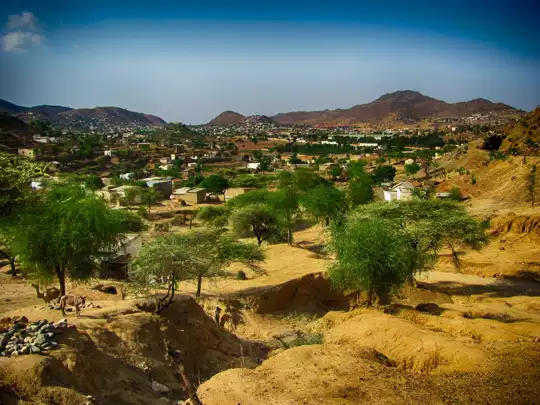
.jpg) Hi, I’m Johan (Netherlands 🇳🇱), the creator of TakeYourBackpack. Over the past 3 decades, I’ve backpacked through 90+ countries across six continents, gaining extensive experience with independent travel, long-term trips, and overland routes.
Hi, I’m Johan (Netherlands 🇳🇱), the creator of TakeYourBackpack. Over the past 3 decades, I’ve backpacked through 90+ countries across six continents, gaining extensive experience with independent travel, long-term trips, and overland routes.