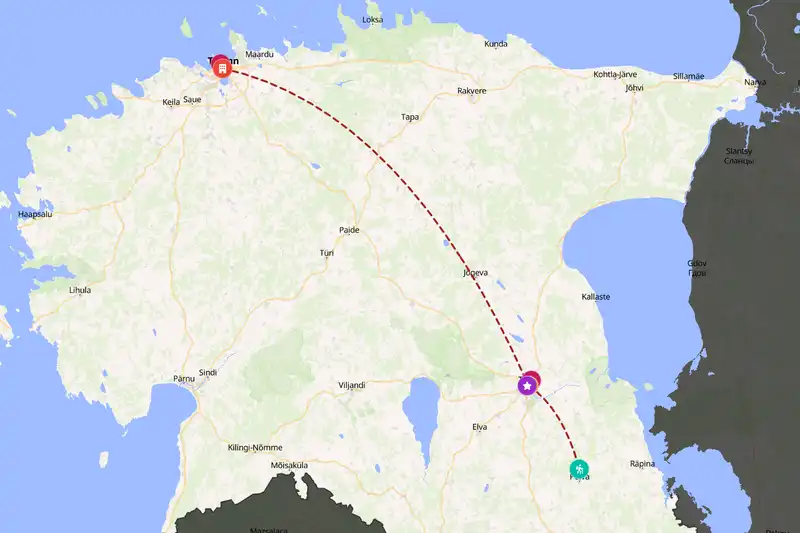
Yes, Estonia is one of the easiest countries in Europe to backpack on your own: distances are short, younger locals speak good English and buses and trains run on time with tickets sold online.
Dorm beds cost about €15 to 30 in
Tallinn and €15 to 25 in
Tartu or
Pärnu. The train from Tallinn to Tartu takes about 2 hours for €10 to 14, and the bus to Pärnu about 2 hours for €8 to 15. Cards are accepted almost everywhere, even at market stalls. Plan on €45 to 70 a day for a hostel, public transport and simple meals.
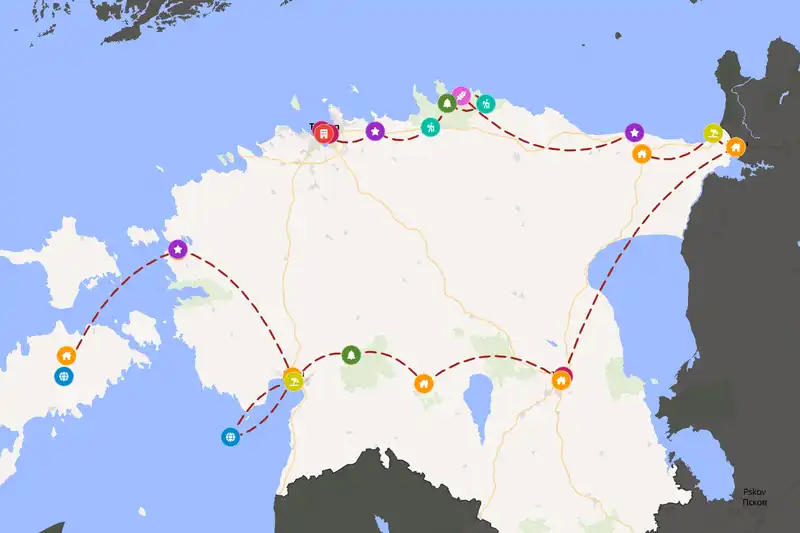
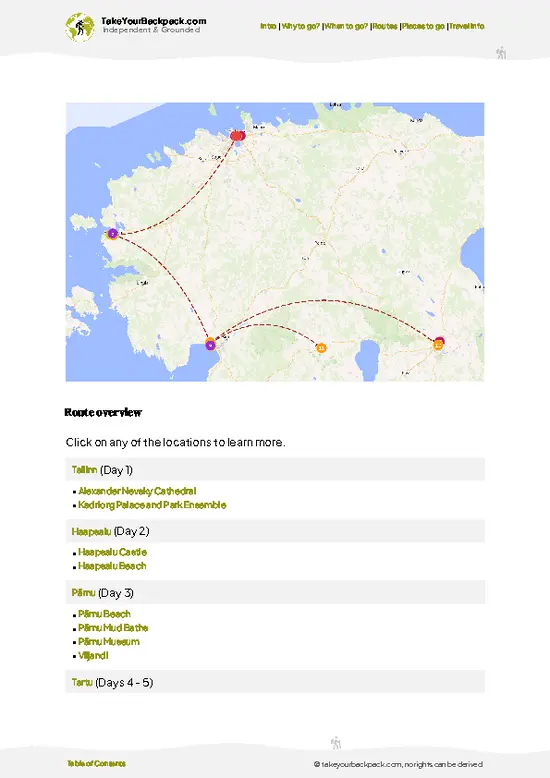
Five to seven days covers Estonia’s mainland highlights at a comfortable pace, while ten to fourteen days lets you add the islands and national parks.
A solid week looks like 2 days in
Tallinn, 2 in
Tartu, 1 or 2 in
Pärnu and a day trip to
Lahemaa National Park or the
Viru Bog Trail. Add 3 to 4 days for
Saaremaa Island, where the Tallinn to Kuressaare bus takes about 4 hours including the ferry and costs roughly €15 to 25. With two weeks, you can also fit in
Soomaa National Park,
Kihnu island and the Russian-speaking northeast around
Narva.
Yes, you can see most of Estonia without a car, because trains and long-distance buses link every town of any size.
Key runs: Tallinn to
Tartu by train in about 2 hours (€10 to 14), Tallinn to
Pärnu by bus in about 2 hours (€8 to 15), Tallinn to
Narva by train in 2.5 to 3 hours, and Tallinn to
Kuressaare on Saaremaa in about 4 hours with the ferry included. Nature is harder. The
Viru Bog Trail works by bus, but rural services to
Käsmu Village in Lahemaa run only a few times a day, and
Soomaa National Park is realistically reached by tour or car.
The places in Estonia most worth your time are
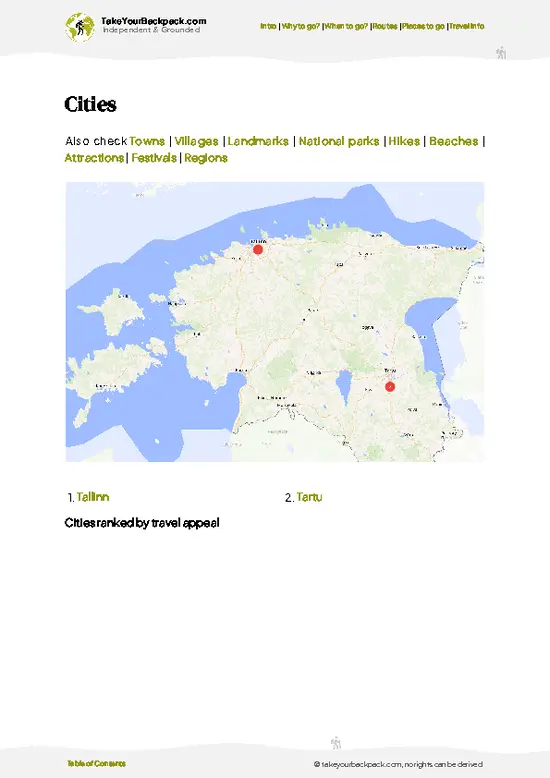
Tallinn’s Old Town, the university city of
Tartu,
Saaremaa Island and the bogs and coast of
Lahemaa National Park.
Give Tallinn 2 days for Toompea,
Kadriorg Palace and Park Ensemble and
Lennusadam Seaplane Harbour. Tartu needs 1 to 2 days, mostly for the
Estonian National Museum. The
Viru Bog Trail is a roughly 3.5 km boardwalk loop about an hour’s drive from the capital. In summer, add
Pärnu Beach (2 hours from Tallinn by bus), and on Saaremaa spend 2 to 3 days among windmills, juniper and the coast around Kuressaare.
If you are short on time in Estonia, skip the Soviet-era industrial towns and the far northeast, and put those days into Tallinn, Tartu and one stretch of coast.
Paldiski,
Sillamäe and
Kiviõli are interesting for Soviet history fans but thin on sights for a first trip.
Narva sits 2.5 to 3 hours from Tallinn each way, so it only makes sense with a week or more.
Valga,
Paide and
Rapla are pleasant but ordinary small towns. On Saaremaa,
Kuressaare Beach is a nice extra rather than a reason to go, while
Pärnu Beach covers the seaside on a shorter itinerary.
Yes, our itinerary-planner does exactly that. Set your trip length in days, give your interests and travel style, optionally give start- and end location and/or some mandatory stops you would like to include and the itinerary planner creates your personalized routes for Estonia in seconds. Try it out!
Try the itinerary plannerv2.webp)
 Best Backpacking