×

Estonia🇪🇪 | attractionsKumu Art Museummodern galleries, Estonian art, sculptural architecture | things to do and best time to go

Explore Seaplane HarbourExplore Estonian Open Air Museum

Backpacking in Kumu Art Museum
🌟 Highlightattraction ranked #3
By Johan Kruseman 🇳🇱 | Updated October 15, 2026

Here’s the curveball: Kumu Art Museum isn’t just a shrine to Estonian painting—it’s also one of the best places in Tallinn to escape the tourist gridlock and actually *think*. Forget the Instagram feeds showing empty, echoing galleries; on weekends, you’ll dodge school groups and selfie sticks, but on weekday mornings, you can have entire wings to yourself. Kumu sits on the edge of Kadriorg Park, a short tram ride from Tallinn’s Old Town, but it feels like a different universe—sleek, modern, and defiantly un-Old-Europe. For backpackers, the price tag is higher than most museums in Estonia, but you get a crash course in the country’s wild, weird, and sometimes dark history, all told through art that’s more punk than postcard. It’s not adrenaline-pumping, but the emotional punch is real. Compared to Estonia’s medieval towers and bog hikes, Kumu is the country’s brain—challenging, surprising, and absolutely worth the detour if you want more than just pretty pictures.

Discover everything you want to know in the 📖 Estonia Travel Guide.


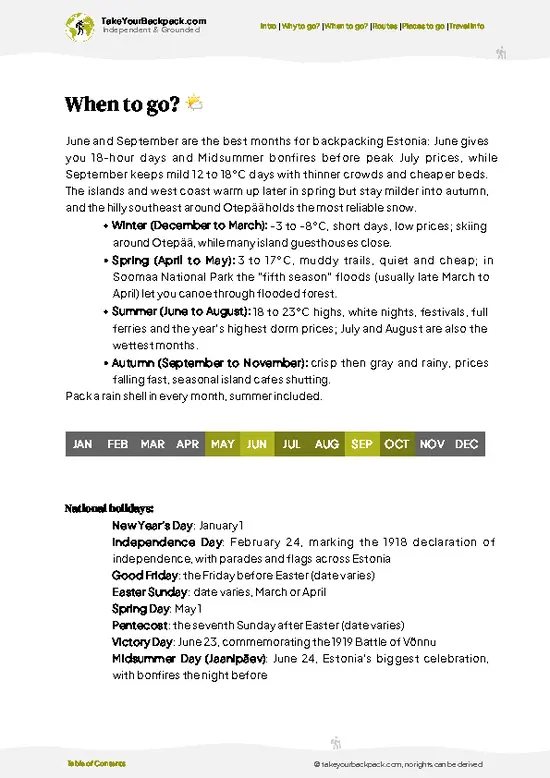
example page 0 from our offline Travel Guide for Estonia
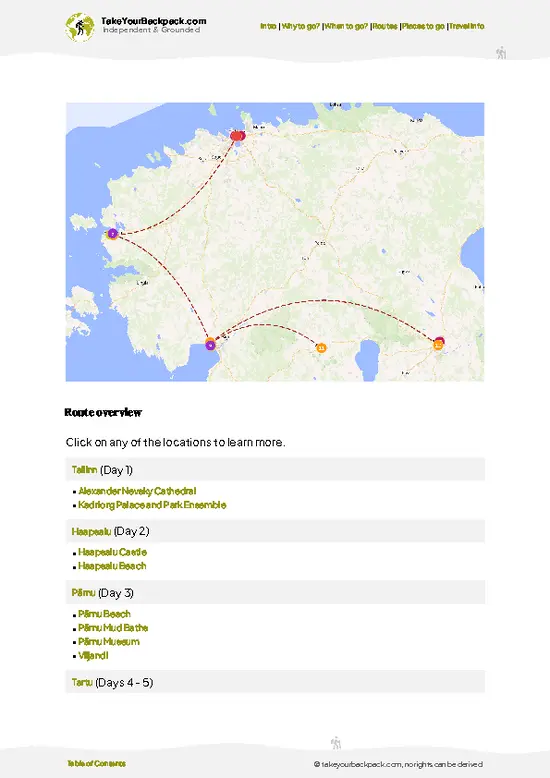
example page 1 from our offline Travel Guide for Estonia
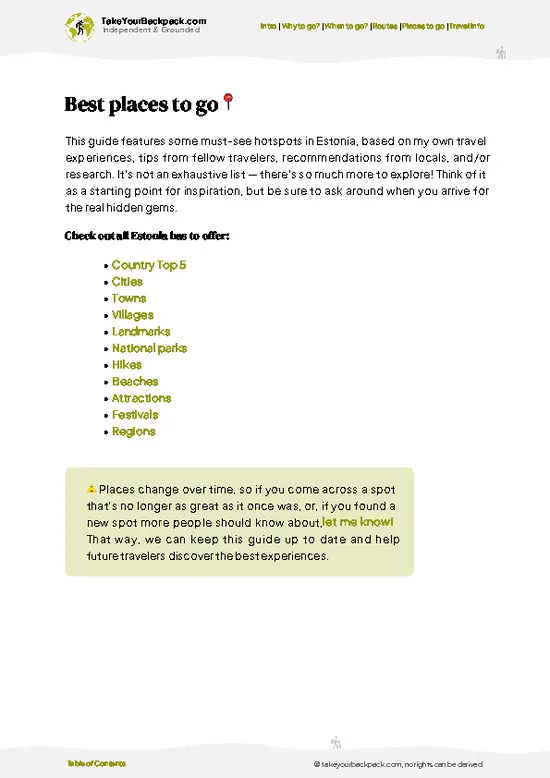
example page 2 from our offline Travel Guide for Estonia
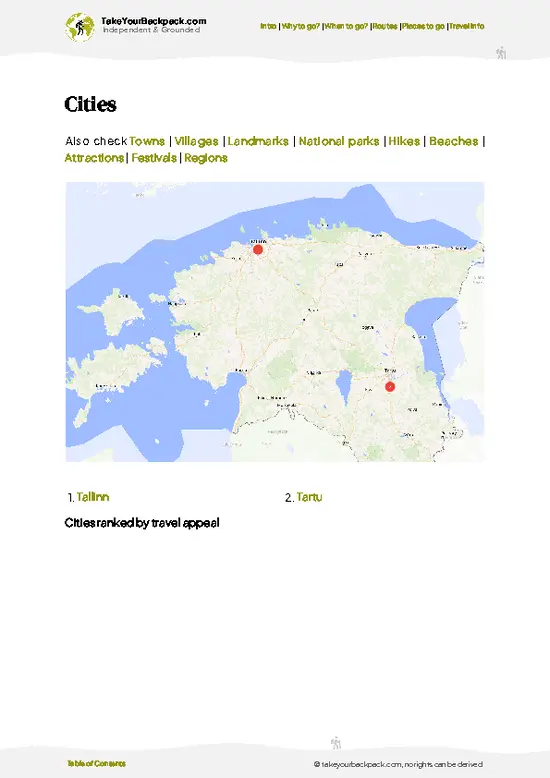
example page 3 from our offline Travel Guide for Estonia
example page 4 from our offline Travel Guide for Estonia
example page 5 from our offline Travel Guide for Estonia
example page 6 from our offline Travel Guide for Estonia
example page 7 from our offline Travel Guide for Estonia
Loading the map 🌍
CLICK TO FILTER
cities
towns
villages
landmarks
national parks
hikes
beaches
attractions
festivals
regions
SHOW COUNTRY’S BESTSHOW ALL

✨ Why go?
Ranked #3 attraction in Estonia
The unique appeal for travelers

The Kumu Art Museum in Estonia isn’t just another stop on the tourist checklist—it’s a hard-earned milestone for anyone serious about understanding this country’s soul. Sure, it’s not a secret; crowds can swell, especially in summer, and the entry fee isn’t pocket change for a backpacker. But here’s the kicker: Kumu delivers a cultural punch that no Instagram snapshot can capture. This place is the beating heart of Estonian art, tracing the nation’s turbulent history through paintings, sculptures, and installations that refuse to be background noise. You get the full spectrum—from Soviet-era resistance art to contemporary voices that challenge and provoke. It’s not just about looking; it’s about feeling the weight of history and the spark of creative rebellion. For backpackers threading their … read more 👉
The Kumu Art Museum in Estonia isn’t just another stop on the tourist checklist—it’s a hard-earned milestone for anyone serious about understanding this country’s soul. Sure, it’s not a secret; crowds can swell, especially in summer, and the entry fee isn’t pocket change for a backpacker. But here’s the kicker: Kumu delivers a cultural punch that no Instagram snapshot can capture. This place is the beating heart of Estonian art, tracing the nation’s turbulent history through paintings, sculptures, and installations that refuse to be background noise. You get the full spectrum—from Soviet-era resistance art to contemporary voices that challenge and provoke. It’s not just about looking; it’s about feeling the weight of history and the spark of creative rebellion. For backpackers threading their way through Estonia, Kumu is a checkpoint where you pause, absorb, and recalibrate your understanding of the Baltic’s complex identity. The effort to get here—whether navigating Tallinn’s cityscape or budgeting for the ticket—pays off in a way that cheap thrills never will. This museum isn’t a tourist trap; it’s a cultural crucible, and skipping it means missing the real Estonia behind the postcards.

💡 HighlightsMust-see experiences and standout moments

The Permanent Collection: Estonia’s Visual Time Machine
Forget the generic “art through the ages” spiel. Kumu’s permanent collection is a crash course in Estonia’s soul, told through paint, sculpture, and a few wild surprises. You’ll see how Estonia’s artists wrestled with identity under Russian Empire rule, then Soviet occupation, then independence—sometimes with sly rebellion, sometimes with raw honesty. The Soviet-era rooms are a gut punch: propaganda posters, bleak industrial scenes, and the kind of coded resistance you only spot if you’re paying attention. This isn’t just art; it’s a survival manual in oil and canvas.


The Modern and Contemporary Galleries: Estonia Gets Weird (in a Good Way)
Kumu doesn’t play it safe. The upper floors are where Estonia’s avant-garde lets loose—think video … read more 👉
The Permanent Collection: Estonia’s Visual Time Machine
Forget the generic “art through the ages” spiel. Kumu’s permanent collection is a crash course in Estonia’s soul, told through paint, sculpture, and a few wild surprises. You’ll see how Estonia’s artists wrestled with identity under Russian Empire rule, then Soviet occupation, then independence—sometimes with sly rebellion, sometimes with raw honesty. The Soviet-era rooms are a gut punch: propaganda posters, bleak industrial scenes, and the kind of coded resistance you only spot if you’re paying attention. This isn’t just art; it’s a survival manual in oil and canvas.


The Modern and Contemporary Galleries: Estonia Gets Weird (in a Good Way)
Kumu doesn’t play it safe. The upper floors are where Estonia’s avant-garde lets loose—think video installations, conceptual art, and the kind of pieces that make you tilt your head and mutter, “What…?” But here’s the kicker: it’s not weird for weird’s sake. The work is sharp, political, and often darkly funny. You’ll find yourself grinning at a sculpture made from Soviet-era junk, then pausing at a video piece that nails the anxiety of living in a tiny country with big neighbors. If you want to see how a nation reinvents itself through art, this is your front-row seat.


The Building Itself: Concrete, Glass, and Baltic Attitude
Kumu is a bunker and a beacon. The building is a slab of modernist ambition—curved concrete, glass walls, and a hillside location that feels both defiant and inviting. It’s not “pretty” in the Instagram sense, but it’s a statement: Estonia is done hiding. The architecture is part of the experience. Walk the spiraling ramps, peer through the glass at the forest, and you’ll get why locals are proud of this place. It’s a museum that refuses to be background noise.


The Temporary Exhibitions: No Tourist Filler
Kumu’s rotating exhibitions are where the curators flex their muscles. They don’t pander to easy crowd-pleasers. Instead, you get deep dives into Baltic art history, provocative shows on censorship, or collaborations with international artists who actually have something to say. If you catch a temporary show, expect to be challenged, not coddled. This is where you’ll see the museum’s real personality—bold, a little rebellious, and never boring.


The Café: Not Just a Pit Stop
Most museum cafés are where good coffee goes to die. Not here. Kumu’s café is a local favorite, with proper coffee, Estonian pastries, and a view that’s all green treetops and city skyline. It’s the kind of place where you’ll see artists sketching, students arguing about Kandinsky, and the occasional politician ducking in for a quiet lunch. It’s a slice of Tallinn life, not just a place to refuel.


The Sculpture Garden: Art Meets Forest
Step outside and you’re in a patch of woodland dotted with contemporary sculptures. It’s not manicured or precious—just art and nature, side by side. In summer, it’s a quiet escape from the crowds. In winter, it’s stark and a little haunting. Either way, it’s a reminder that Kumu isn’t just about what’s on the walls. It’s about Estonia’s relationship with the land, the seasons, and the freedom to create.
Spotted a mistake or missing something? Contact us.

Things to do around Kumu Art Museum

Ratings based on Tripadvisor reviews. When you book through this link, you support our work at no extra cost to you.

🌤️ When to go?Choosing the right time of year

  • Weather: Tallinn’s climate swings sharply. From November to March, expect cold, damp days with temperatures often below freezing (0°C/32°F). April through October offers milder weather, but July and August can be surprisingly warm, hitting 20-25°C (68-77°F), perfect for wandering the museum without freezing or sweating buckets.
  • Daylight Hours: Winters are brutal on daylight—December sees as little as 6 hours, making museum visits feel rushed or gloomy. From May to August, you get up to 18 hours of light, letting you soak in the art and the city’s vibe without racing the clock.
  • Crowds: Summer (June to August) is peak tourist season, so expect more noise and longer lines. If you want a quieter, more contemplative experience, aim for shoulder seasons like late April or September when locals
… read more 👉
  • Weather: Tallinn’s climate swings sharply. From November to March, expect cold, damp days with temperatures often below freezing (0°C/32°F). April through October offers milder weather, but July and August can be surprisingly warm, hitting 20-25°C (68-77°F), perfect for wandering the museum without freezing or sweating buckets.
  • Daylight Hours: Winters are brutal on daylight—December sees as little as 6 hours, making museum visits feel rushed or gloomy. From May to August, you get up to 18 hours of light, letting you soak in the art and the city’s vibe without racing the clock.
  • Crowds: Summer (June to August) is peak tourist season, so expect more noise and longer lines. If you want a quieter, more contemplative experience, aim for shoulder seasons like late April or September when locals outnumber tourists.
  • Seasonal Activities: The museum hosts special exhibitions and events mostly in spring and fall, avoiding the dead winter months. Visiting during these times means catching fresh, cutting-edge art without the summer crush.
  • Price Fluctuations: Entrance fees stay fairly stable year-round, but accommodation and flights spike in summer. Visiting in late spring or early fall can save you serious cash, letting you spend more on art books or a killer Estonian meal instead.
Pro-tip: Hit Kumu in late April or September—weather’s decent, crowds thin, and you’ll catch the museum’s freshest exhibits without the tourist circus.


source: climatestotravel.comJANJanuary: below average for travelingFEBFebruary: below average for travelingMARMarch: fair for travelingAPRApril: highly recommended for travelingMAYMay: highly recommended for travelingJUNJune: good for travelingJULJuly: good for travelingAUGAugust: good for travelingSEPSeptember: highly recommended for travelingOCTOctober: highly recommended for travelingNOVNovember: fair for travelingDECDecember: below average for traveling
estonia-attraction-kumu-art-museum
© Google |

✈️ The backpacker research shortcutEstonia Travel Guide

An offline-friendly backpacking guide with optimized travel routes, ranked highlights, transport advice, and the best areas to stay.
example page 0 from our offline Travel Guide for Estonia
example page 1 from our offline Travel Guide for Estonia
example page 2 from our offline Travel Guide for Estonia
example page 3 from our offline Travel Guide for Estonia
example page 4 from our offline Travel Guide for Estonia
example page 5 from our offline Travel Guide for Estonia
example page 6 from our offline Travel Guide for Estonia
example page 7 from our offline Travel Guide for Estonia
The digital guide (267 pages) contains:
✅ 70 highlights, ranked by travel appeal
✅ Optimized 2, 3 & 5-day travel routes
✅ Cities, national parks, landmarks, beaches
✅ How to get around
✅ Offline-friendly for travel without Wi-Fi
👉 Click to see all 30+ guide features

📅 Plan smarter in minutes, not weeks
✅ Month by month travel advice
✅ Festivals & national holidays
✅ Budget expectations

🗺️ Go to the right places, skip the overrated ones
✅ Honest pros & cons of destinations
✅ Top hikes, parks & viewpoints
✅ Lesser-known places most travelers miss
✅ Clear “worth it vs skip it” guidance

🛏️ Travel smoothly without rookie mistakes
✅ Best areas to stay
✅ Transport systems explained simply
✅ Common scams & safety advice
✅ SIM cards, money & practical tips

🌍 Understand the country, not just visit it
✅ Culture & traditions
✅ 52 Essential phrases & customs
✅ Festivals worth planning around
✅ Traveler-friendly historical context
✅ Insights that make places more meaningful

📱 Built for real travel conditions
✅ Fully downloadable PDF
✅ Works completely offline
✅ Optimized for phone use
✅ Useful in remote areas & buses
✅ Everything in one place
Stop searching, start planning
Get instant access to your full guide. 30‑day money-back guarantee.
+ Add another guide for just

By proceeding you agree to our terms.
Sent to your inbox immediately after payment • 100% Secure Checkout
Best Backpacking Travel Advisor 2025 tourism awardBest Backpacking
Travel Advisor
2025
What others say about Take Your Backpack Guides:
⭐⭐⭐⭐⭐
Fantastic, amazing amount of information!
⭐⭐⭐⭐⭐
My goodness this is amazing, it's what I've been looking for hats off too you!
⭐⭐⭐⭐⭐
I think this is absolutely BRILLIANT
⭐⭐⭐⭐
Very complete and informative. It's still missing places, but I gotta to commend you
⭐⭐⭐⭐⭐
This is truly amazing, thank you, can't wait to explore it with my kids!
⭐⭐⭐⭐⭐
Awesome resource, thank you!
⭐⭐⭐⭐⭐
This is amazing! Can't wait to explore the ones I haven't seen
⭐⭐⭐⭐
I love this! Well done, great idea.
⭐⭐⭐⭐⭐
Thanks for taking the time to make this gem!
⭐⭐⭐⭐⭐
This might be the best website I've ever seen.
⭐⭐⭐⭐⭐
Congratulations, and thank you so much for your work; it's incredibly valuable.
⭐⭐⭐⭐
In all seriousness I think you did a great job pointing out the important spots
⭐⭐⭐⭐⭐
10/10 very good
⭐⭐⭐⭐⭐
As someone who's only just starting to visit regularly this is awesome, thank you.
⭐⭐⭐⭐
Thank you very much! I'm going to visit my dad, it's going to be very useful!
⭐⭐⭐⭐⭐
This is really cool! We'll be travelling for the first time and this definitely come in handy.
⭐⭐⭐⭐⭐
You are now our minister of culture, congratulations 👨‍💼
⭐⭐⭐⭐⭐
Just wanted to tell you that this is a pearl! Going to follow your recommendations.
⭐⭐⭐⭐⭐
This is so cool. I'll definitely be using the resource for my travels soon.
⭐⭐⭐⭐⭐
This is very impressive! Good work.
⭐⭐⭐⭐⭐
This is an amazing and informative site. Very well done!

🛏️ Where to stay?Where staying makes the most sense

If you’re aiming to soak in the Kumu Art Museum without getting swallowed by tourist traps or overpriced digs, your best bet is to base yourself in Kalamaja or the nearby Telliskivi district. These neighborhoods aren’t just close—they’re where the real pulse of Tallinn’s creative scene beats. Forget the polished, sanitized city center; here you’ll find a gritty charm that’s both safe and buzzing with energy.

Kalamaja is a magnet for solo travelers and budget backpackers because it offers a mix of affordable guesthouses and hostels that encourage socializing. The vibe is laid-back but lively, … read more 👉
If you’re aiming to soak in the Kumu Art Museum without getting swallowed by tourist traps or overpriced digs, your best bet is to base yourself in Kalamaja or the nearby Telliskivi district. These neighborhoods aren’t just close—they’re where the real pulse of Tallinn’s creative scene beats. Forget the polished, sanitized city center; here you’ll find a gritty charm that’s both safe and buzzing with energy.

Kalamaja is a magnet for solo travelers and budget backpackers because it offers a mix of affordable guesthouses and hostels that encourage socializing. The vibe is laid-back but lively, with plenty of cafés and bars where you can swap stories with fellow adventurers. It’s a neighborhood that feels lived-in, not staged for Instagram, with wooden houses and street art that tell a story of Tallinn’s working-class roots and its artistic rebirth.

Telliskivi, just a short walk away, is a converted industrial zone turned cultural hub. It’s packed with creative spaces, markets, and eateries that cater to the budget-conscious without skimping on character. Staying here means you’re steps away from the Kumu Art Museum but also plugged into a community that values authenticity over flash.

Both areas offer a safe, social atmosphere that’s perfect for backpackers who want more than just a place to crash—they want to connect, explore, and experience Tallinn beyond the postcard.

👛 Costs (as of 15 October 2026)Travel costs and budget guide for Kumu Art Museum

As of the most recent estimates, the Kumu Art Museum in Tallinn, Estonia, offers the following ticket options: €16 for adults, €9 for discounted tickets (students, seniors, conscripts, members of the Estonian Artists’ Association, members of the Estonian Society of Art Historians and Curators, holders of ISIC and ITIC cards, and European Youth Card holders), and €32 for family tickets, which admit up to two adults and their underage children. Additional experiences, such as visits to the roof terrace, may have separate fees.

source: kunstimuuseum.ekm.ee
⚠️ Prices can change and everyone travels differently, so take this as a rough guide. Hope it helps you plan your adventure!

FAQCommon questions from travelers

2 to 3 hours is sufficient to explore Kumu Art Museum thoroughly, including its permanent collections and temporary exhibitions. Allocate extra time if you want to attend special events or visit the café and museum shop.
Yes, Kumu Art Museum is worth the entrance fee, which is around 8 euros for adults. It offers a comprehensive overview of Estonian art from the 18th century to contemporary works, housed in a modern, architecturally impressive building.
Take tram number 3 or 4 from Tallinn city center to the Kadriorg stop, then walk about 10 minutes to the museum. Alternatively, buses 5, 8, or 18 also serve the Kadriorg area, making it easily accessible from most parts of Tallinn.
⚠️ Things can change over time, so always validate details locally before you go.

Other Estonian attractions near Kumu Art Museum

Explore more nearby:


💡 Not sure where to go next?
Create a personalized itinerary for Estonia including Kumu Art Museum and the places that fit your trip.

Generate my itinerary

👉 Discover all attractions

Or checkout all Estonia has to offer (think cities, towns, villages, national parks, hikes, beaches, festivals)
Country photo of Estonia

We 💚 feedbackParting advice and final tips

The Kumu Art Museum isn’t your typical white-walled gallery where you nod politely and rush out. It’s big, yes, and can feel a bit like a cultural theme park on busy days, but that’s where the surprise kicks in: the way Estonian art wrestles with history and identity hits you unexpectedly hard. Don’t come expecting just pretty pictures—come ready to be challenged, moved, and maybe even a little unsettled. If you want the quietest experience, hit it early or late in the day. This place sticks with you longer than your average museum visit.

✍️ Help improve this page!
The information on this page is based on in-depth research, insights shared by experienced travelers, and feedback from the local travel community in Estonia. While every effort is made to keep the information accurate and current, conditions can change — so if you spot anything incorrect or outdated, please get in touch.


🙋‍♂️ Give feedback

👋 Meet the founderWho’s Behind Take Your Backpack?

Johan, backpacker and founder of TakeYourBackpackHi, I’m Johan (Netherlands 🇳🇱), the creator of TakeYourBackpack. Over the past 3 decades, I’ve backpacked through 90+ countries across six continents, gaining extensive experience with independent travel, long-term trips, and overland routes.

This site is built on a combination of firsthand travel experience and carefully curated insights from other backpackers. Many guides are based on places I’ve personally visited, while others bring together tips, observations, and practical advice shared by trusted travelers I’ve met along the way.

The goal is to provide realistic, experience-driven guidance — not generic itineraries — so you can explore destinations with better context, clearer expectations, and more confidence.