×

Eswatini🇸🇿 | landmarksMaguga Dampanoramic reservoir, engineering landmark, granite hills, birdlife | things to do and best time to go

Explore Ngwenya Glass VillageExplore Swazi Candles Centre

Backpacking in Maguga Dam
👍 Recommendedunique site ranked #2
By Johan Kruseman 🇳🇱 | Updated June 8, 2026

Forget the Instagram illusion: Maguga Dam is not a turquoise oasis with infinity-pool serenity or a secret waterfall paradise. It’s a massive, concrete arc holding back the Komati River in the northwest of Eswatini, about 20 kilometers south of Piggs Peak. Here’s the real deal—Maguga Dam is impressive, but not in the way travel brochures want you to believe. The wow-factor comes from sheer scale and the raw, engineered power of the place, not from postcard-perfect scenery or bustling activity. You’ll rarely fight crowds; most days, it’s you, the wind, and the occasional fisherman. Costs are low—no ticket booths, no tourist traps, just the open road and a few local vendors if you’re lucky. Accessibility is decent if you have your own wheels, but public transport is patchy. The dam’s story is tangled up with local history and water politics, not ancient legend. Photos? Expect dramatic, moody landscapes, not tropical paradise. The vibe is quiet, utilitarian, and oddly peaceful—a place for real travelers, not selfie-chasers.

Discover everything you want to know in the 📖 Eswatini Travel Guide.


Get your Eswatini guide
46 ranked highlights, routes & tips, works offline (202 pages)
Loading the map 🌍
CLICK TO FILTER
cities
towns
landmarks
national parks
hikes
attractions
festivals
regions
SHOW COUNTRY’S BESTSHOW ALL

✨ Why go?
Ranked #2 unique site in Eswatini
What sets this place apart

The Maguga Dam in Eswatini is often overshadowed by flashier attractions, but that’s where its charm lies. Sure, you’ll encounter crowds, especially during peak season, but don’t let that deter you. The real magic happens when you step back and soak in the stunning views of the surrounding mountains and the shimmering water.

This isn’t just a dam; it’s a gateway to understanding Eswatini’s commitment to sustainability and community. The cost to visit is minimal, making it an easy addition to your itinerary. You can hike the trails nearby or simply enjoy a picnic while watching the sun dip below the horizon.

What makes Maguga truly special is how it fits into a broader route. If you’re exploring the Kingdom of Eswatini, it’s a natural stop between Mbabane and Piggs Peak. Pair it with a … read more 👉
The Maguga Dam in Eswatini is often overshadowed by flashier attractions, but that’s where its charm lies. Sure, you’ll encounter crowds, especially during peak season, but don’t let that deter you. The real magic happens when you step back and soak in the stunning views of the surrounding mountains and the shimmering water.

This isn’t just a dam; it’s a gateway to understanding Eswatini’s commitment to sustainability and community. The cost to visit is minimal, making it an easy addition to your itinerary. You can hike the trails nearby or simply enjoy a picnic while watching the sun dip below the horizon.

What makes Maguga truly special is how it fits into a broader route. If you’re exploring the Kingdom of Eswatini, it’s a natural stop between Mbabane and Piggs Peak. Pair it with a visit to local markets or cultural sites, and you’ll get a taste of authentic Swazi life.

So, while it may not be the Instagram darling, the effort-to-reward ratio here is solid. Embrace the experience, and you’ll find that Maguga Dam is a piece of Eswatini’s heart worth your time.
Want to include Maguga Dam in your Eswatini route?
Create a personalized Eswatini itinerary that includes Maguga Dam and the places that fit your trip — based on your travel style, budget, and available time. Get your route in seconds.

Generate my trip

💡 HighlightsThe experiences that define the visit

  • The dam wall & viewing platforms — The concrete wall is the focal point: walk up to the viewpoints and you get a satisfying mash-up of human engineering and raw landscape. It’s easy to picture the scale from close up, and the platforms make for great photos without any special gear.
  • Wide-open reservoir panoramas — The lake spreads across a series of inlets and hills, so you’ll find calm coves and long reflective stretches. Sunsets here are properly big; bring a jacket for the cooling breeze and a thermos if you want to linger.
  • Birdwatching and shoreline wildlife — Reed beds and sheltered bays attract herons, kingfishers and other waterbirds. Even if you’re not a twitcher, there’s a steady parade of wildlife along the shallows that’s entertaining with or without binoculars.
  • Boating and
read more 👉
  • The dam wall & viewing platforms — The concrete wall is the focal point: walk up to the viewpoints and you get a satisfying mash-up of human engineering and raw landscape. It’s easy to picture the scale from close up, and the platforms make for great photos without any special gear.
  • Wide-open reservoir panoramas — The lake spreads across a series of inlets and hills, so you’ll find calm coves and long reflective stretches. Sunsets here are properly big; bring a jacket for the cooling breeze and a thermos if you want to linger.
  • Birdwatching and shoreline wildlife — Reed beds and sheltered bays attract herons, kingfishers and other waterbirds. Even if you’re not a twitcher, there’s a steady parade of wildlife along the shallows that’s entertaining with or without binoculars.
  • Boating and fishing opportunities — Local operators run basic boat trips and anglers come for tilapia and bass — not competitive tournament stuff, but perfect for a slow morning on the water. Renting a small boat or joining a group trip is the easiest way to explore hidden coves.
  • Picnic, camping and simple resort facilities — There are picnic shelters, braai spots and budget-friendly chalets nearby, so you can turn a day visit into an overnight without blowing the wallet. It’s a practical setup: bring food, charcoal and a mosquito repellent.
  • Short hikes and cliff viewpoints — Trails around the reservoir aren’t Everest, but they deliver good views and a chance to stretch your legs away from the crowds. Hike a short ridge for a different perspective on the water and surrounding farmland.
  • Local communities and market visits — The area around the dam is braided with small towns and markets where you can pick up fresh produce, crafts or a plate of local food. It’s an easy, low-cost way to meet people and get a taste of daily life outside the tourist spots.
Spotted a mistake or missing something? Contact us.

🌤️ When to go?Choosing the right time of year


  • Weather: The best time to visit Maguga Dam is during the dry season, from May to September. Expect clear skies and minimal rain, perfect for hiking and fishing. Avoid the wet season (October to April) when heavy rains can make trails slippery and the dam’s water levels unpredictable.

  • Temperature: Dry season temperatures hover around 15-25°C (59-77°F), offering cool mornings and warm afternoons. The wet season heats up to 25-35°C (77-95°F), which can be uncomfortable for strenuous outdoor activities.

  • Daylight Hours: Daylight is fairly consistent year-round, with roughly 11-12 hours of light. Longer evenings in the dry season give you more time to explore without rushing.

  • Crowds: Maguga Dam isn’t a tourist magnet, but weekends and local holidays bring a spike in visitors. For a quieter
read more 👉

  • Weather: The best time to visit Maguga Dam is during the dry season, from May to September. Expect clear skies and minimal rain, perfect for hiking and fishing. Avoid the wet season (October to April) when heavy rains can make trails slippery and the dam’s water levels unpredictable.

  • Temperature: Dry season temperatures hover around 15-25°C (59-77°F), offering cool mornings and warm afternoons. The wet season heats up to 25-35°C (77-95°F), which can be uncomfortable for strenuous outdoor activities.

  • Daylight Hours: Daylight is fairly consistent year-round, with roughly 11-12 hours of light. Longer evenings in the dry season give you more time to explore without rushing.

  • Crowds: Maguga Dam isn’t a tourist magnet, but weekends and local holidays bring a spike in visitors. For a quieter experience, aim for weekdays during the dry season.

  • Seasonal Activities: Dry months are ideal for fishing, boating, and hiking. The wet season brings lush greenery but also mosquitoes and muddy paths, which can dampen your adventure.

  • Price Fluctuations: Prices for local accommodations and activities stay relatively stable year-round, but booking during the dry season can be slightly pricier due to demand.


Pro-tip: Visit just after the rainy season ends (May) to catch the dam full, trails dry, and crowds low—prime conditions for backpackers who want the real deal without the hassle.


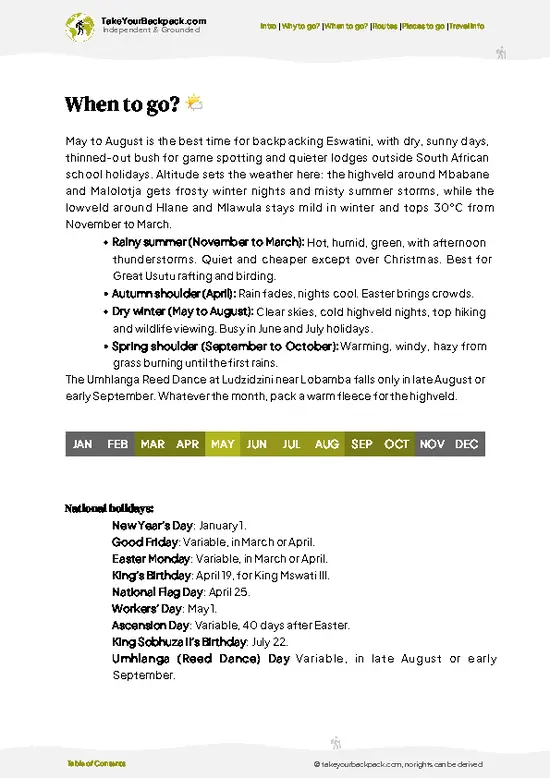
source: climatestotravel.comJANJanuary: below average for travelingFEBFebruary: below average for travelingMARMarch: below average for travelingAPRApril: fair for travelingMAYMay: excellent for travelingJUNJune: excellent for travelingJULJuly: excellent for travelingAUGAugust: excellent for travelingSEPSeptember: excellent for travelingOCTOctober: fair for travelingNOVNovember: below average for travelingDECDecember: below average for traveling
eswatini-unique-site-maguga-dam v1
© Google |

✈️ The backpacker research shortcutEswatini Travel Guide

An offline-friendly backpacking guide with optimized travel routes, ranked highlights, transport advice, and the best areas to stay.
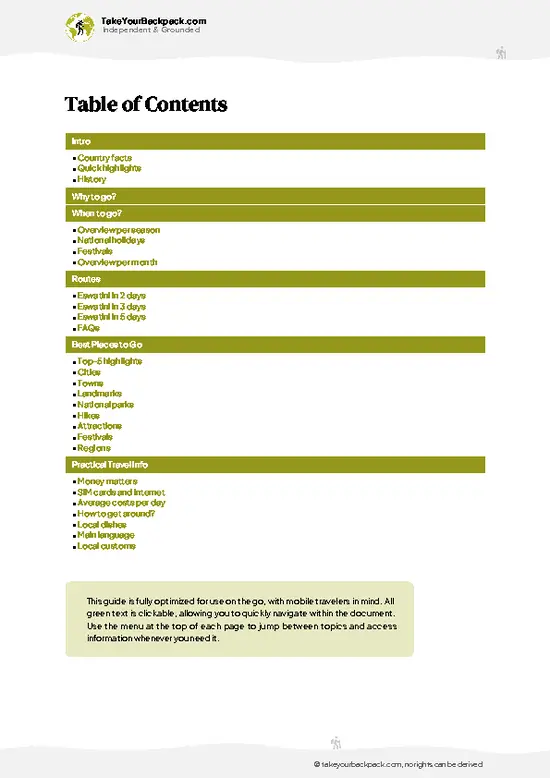
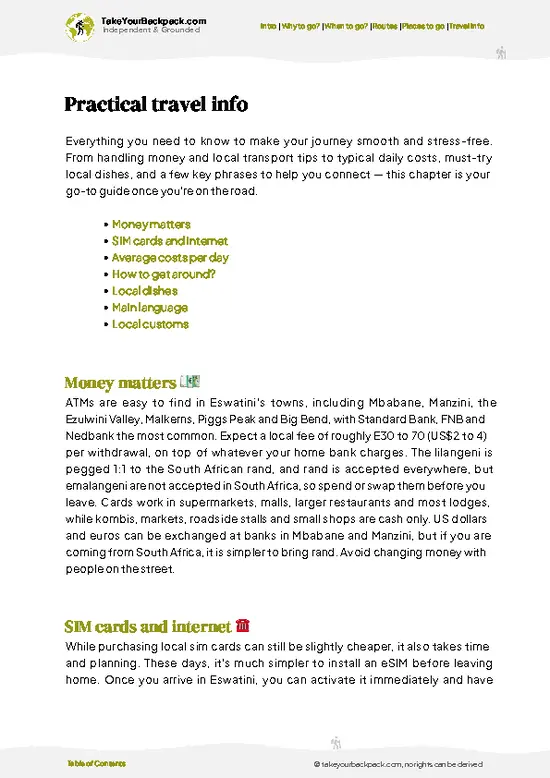
example page 0 from our offline Travel Guide for Eswatini
example page 1 from our offline Travel Guide for Eswatini
example page 2 from our offline Travel Guide for Eswatini
example page 3 from our offline Travel Guide for Eswatini
example page 4 from our offline Travel Guide for Eswatini
example page 5 from our offline Travel Guide for Eswatini
example page 6 from our offline Travel Guide for Eswatini
example page 7 from our offline Travel Guide for Eswatini
The digital guide (202 pages) contains:
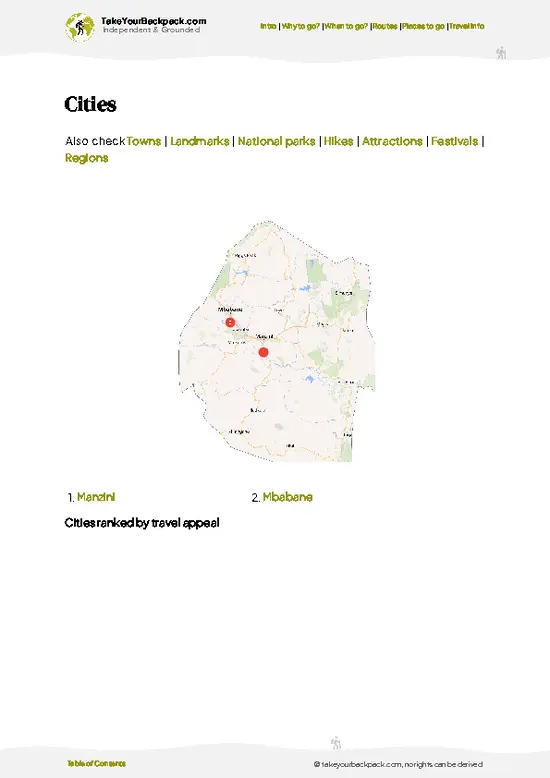
46 highlights, ranked by travel appeal
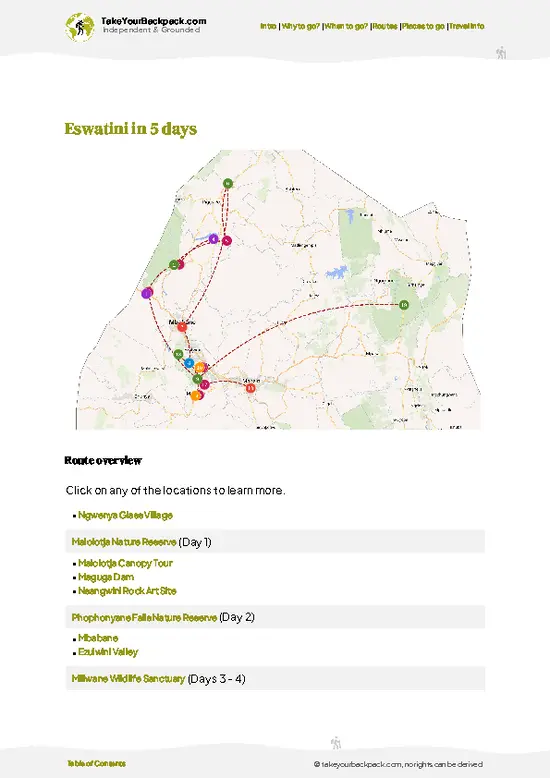
Optimized 2, 3 & 5-day travel routes
Cities, national parks, landmarks, beaches
How to get around
Offline-friendly for travel without Wi-Fi
👉 Click to see all 30+ guide features

📅 Plan smarter in minutes, not weeks
Month by month travel advice
Festivals & national holidays
Budget expectations

🗺️ Go to the right places, skip the overrated ones
Honest pros & cons of destinations
Top hikes, parks & viewpoints
Lesser-known places most travelers miss
Clear “worth it vs skip it” guidance

🛏️ Travel smoothly without rookie mistakes
Best areas to stay
Transport systems explained simply
Common scams & safety advice
SIM cards, money & practical tips

🌍 Understand the country, not just visit it
Culture & traditions
52 Essential phrases & customs
Festivals worth planning around
Traveler-friendly historical context
Insights that make places more meaningful

📱 Built for real travel conditions
Fully downloadable PDF
Works completely offline
Optimized for phone use
Useful in remote areas & buses
Everything in one place
Save weeks of stressful planning
Get instant access to your full guide. 30‑day money-back guarantee.


By proceeding you agree to our terms.
Sent to your inbox immediately after payment • 100% Secure Checkout
Best Backpacking Travel Advisor 2025 tourism awardBest Backpacking
Travel Advisor
2025
What others say about Take Your Backpack Guides:
⭐⭐⭐⭐⭐
Fantastic, amazing amount of information!
⭐⭐⭐⭐⭐
My goodness this is amazing, it's what I've been looking for hats off too you!
⭐⭐⭐⭐⭐
I think this is absolutely BRILLIANT
⭐⭐⭐⭐
Very complete and informative. It's still missing places, but I gotta to commend you
⭐⭐⭐⭐⭐
This is truly amazing, thank you, can't wait to explore it with my kids!
⭐⭐⭐⭐⭐
Awesome resource, thank you!
⭐⭐⭐⭐⭐
This is amazing! Can't wait to explore the ones I haven't seen
⭐⭐⭐⭐
I love this! Well done, great idea.
⭐⭐⭐⭐⭐
Thanks for taking the time to make this gem!
⭐⭐⭐⭐⭐
This might be the best website I've ever seen.
⭐⭐⭐⭐⭐
Congratulations, and thank you so much for your work; it's incredibly valuable.
⭐⭐⭐⭐
In all seriousness I think you did a great job pointing out the important spots
⭐⭐⭐⭐⭐
10/10 very good
⭐⭐⭐⭐⭐
As someone who's only just starting to visit regularly this is awesome, thank you.
⭐⭐⭐⭐
Thank you very much! I'm going to visit my dad, it's going to be very useful!
⭐⭐⭐⭐⭐
This is really cool! We'll be travelling for the first time and this definitely come in handy.
⭐⭐⭐⭐⭐
You are now our minister of culture, congratulations 👨‍💼
⭐⭐⭐⭐⭐
Just wanted to tell you that this is a pearl! Going to follow your recommendations.
⭐⭐⭐⭐⭐
This is so cool. I'll definitely be using the resource for my travels soon.
⭐⭐⭐⭐⭐
This is very impressive! Good work.
⭐⭐⭐⭐⭐
This is an amazing and informative site. Very well done!

🛏️ Where to stay?Best areas to stay in Eswatini

When you’re near Maguga Dam in Eswatini, the first thing to know is that the area can get crowded, especially during peak tourist seasons. But don’t let that deter you; there’s real magic waiting if you know where to look.

Start with the town of Piggs Peak. It’s a hub for backpackers and offers a range of budget-friendly accommodations. The vibe here is relaxed, and you’ll find plenty of fellow travelers to swap stories with over a beer. The local markets are a treasure trove of authentic crafts and food, giving you a taste of Eswatini’s culture without the touristy fluff.

Another option is … read more 👉
When you’re near Maguga Dam in Eswatini, the first thing to know is that the area can get crowded, especially during peak tourist seasons. But don’t let that deter you; there’s real magic waiting if you know where to look.

Start with the town of Piggs Peak. It’s a hub for backpackers and offers a range of budget-friendly accommodations. The vibe here is relaxed, and you’ll find plenty of fellow travelers to swap stories with over a beer. The local markets are a treasure trove of authentic crafts and food, giving you a taste of Eswatini’s culture without the touristy fluff.

Another option is the area around the dam itself. While it can be a bit quieter, there are spots that cater to adventurous souls. Look for campsites or lodges that offer communal spaces. You’ll get to connect with other backpackers while soaking in stunning views of the dam and surrounding mountains.

Lastly, don’t overlook the nearby hiking trails. They’re not just for the views; they’re a chance to meet locals and learn about the region’s history. The real charm of Maguga Dam isn’t just in the scenery; it’s in the connections you make and the stories you gather along the way.

👛 Costs (as of 4 May 2026)How expensive it really is

Visiting Maguga Dam in Eswatini offers a unique experience, but it’s essential to know what you’re getting into financially.
  • Entrance Fees: Expect to pay around $5 to $10 per person. This fee grants you access to the dam area and its surrounding attractions. It’s a small price for the views and the chance to explore the site.
  • Accommodation: Options range from budget lodges at about $30 per night to more upscale hotels that can go up to $100 or more. If you’re looking for a local experience, consider staying in a guesthouse, which can be both affordable and enriching.
  • Food and Drink: Meals can cost anywhere from $5 to $20, depending on whether you’re grabbing street food or dining at a restaurant. Local eateries often serve hearty meals at lower prices, giving you a taste of authentic Swazi cuisine.
read more 👉
Visiting Maguga Dam in Eswatini offers a unique experience, but it’s essential to know what you’re getting into financially.
  • Entrance Fees: Expect to pay around $5 to $10 per person. This fee grants you access to the dam area and its surrounding attractions. It’s a small price for the views and the chance to explore the site.
  • Accommodation: Options range from budget lodges at about $30 per night to more upscale hotels that can go up to $100 or more. If you’re looking for a local experience, consider staying in a guesthouse, which can be both affordable and enriching.
  • Food and Drink: Meals can cost anywhere from $5 to $20, depending on whether you’re grabbing street food or dining at a restaurant. Local eateries often serve hearty meals at lower prices, giving you a taste of authentic Swazi cuisine.
  • Transportation: If you’re traveling from Mbabane, expect to spend around $10 to $20 on a taxi or shuttle. Renting a car can be more convenient, with prices starting at about $30 per day, plus fuel costs.
  • Activities: Guided tours or activities like fishing or boat rides may add another $10 to $50 to your budget. These experiences can deepen your connection to the area and provide insights you might miss on your own.

Be prepared for crowds, especially during peak seasons. The dam is popular, and while it’s beautiful, the experience can feel diluted by the number of visitors. However, the real magic lies in the surrounding landscapes and the local culture. Embrace the authentic moments that often go unshared on social media.


source: thekingdomofeswatini.com
⚠️ Prices can change and everyone travels differently, so take this as a rough guide. Hope it helps you plan your adventure!

Where to go next

Maguga Dam isn’t the only highlight in Eswatini. Explore all what Eswatini has to offer.
Country photo of Eswatini

We 💚 feedbackIs it worth it?

Maguga Dam isn’t just a pretty picture; it’s a slice of real life in Eswatini. Expect crowds, especially on weekends, but don’t let that deter you. The best surprise? The local vibe—fishermen casting lines, families picnicking, and the occasional traditional dance that pops up. Just be ready for the heat; it can be relentless. Bring plenty of water and a sense of adventure. This place isn’t about the Instagram likes; it’s about soaking in the authentic rhythm of Swazi life.

✍️ Help improve this page!
The information on this page is based on in-depth research, insights shared by experienced travelers, and feedback from the local travel community in Eswatini. While every effort is made to keep the information accurate and current, conditions can change — so if you spot anything incorrect or outdated, please get in touch.


🙋‍♂️ Give feedback

👋 Meet the founderWho’s Behind Take Your Backpack?

Johan, backpacker and founder of TakeYourBackpackHi, I’m Johan (Netherlands 🇳🇱), the creator of TakeYourBackpack. Over the past decade, I’ve backpacked through 80+ countries across six continents, gaining extensive experience with independent travel, long-term trips, and overland routes.

This site is built on a combination of firsthand travel experience and carefully curated insights from other backpackers. Many guides are based on places I’ve personally visited, while others bring together tips, observations, and practical advice shared by trusted travelers I’ve met along the way.

The goal is to provide realistic, experience-driven guidance — not generic itineraries — so you can explore destinations with better context, clearer expectations, and more confidence.

Get full Eswatini guide •
Instant download • 46 highlights • Full Offline guide