×

Eswatini🇸🇿 | attractionsMantenga Cultural VillageBeehive huts, Swazi dance arena, guided homestead, Mantenga Falls | things to do and best time to go

Explore Maguga DamExplore Swazi Candles Centre

Backpacking in Mantenga Cultural Village
👍 Recommendedattraction ranked #6
By Johan Kruseman 🇳🇱 | Updated October 22, 2026

The beehive huts at Mantenga are thatched with dry grass lashed over a frame of flexible saplings, and the low doorway at the back of the main hut is deliberately small, so you stoop to enter. Mantenga Cultural Village sits in the Ezulwini Valley in the west-central part of Eswatini, a short drive from Mbabane and Manzini, below Execution Rock. It is a reconstruction of a traditional Swazi homestead, run as a living museum with a guided tour and a dance performance. The dance is the part worth your time, as are the guides who explain homestead layout and customs. The walk to Mantenga Falls is pleasant but short. The tour is brisk and the souvenir stalls are repetitive. Best for first-timers to Eswatini and anyone curious about Swazi customs. Less suited to travelers wanting wilderness or a long day out.

Discover everything you want to know in the 📖 Eswatini Travel Guide.


example page 0 from our offline Travel Guide for Eswatini
example page 1 from our offline Travel Guide for Eswatini
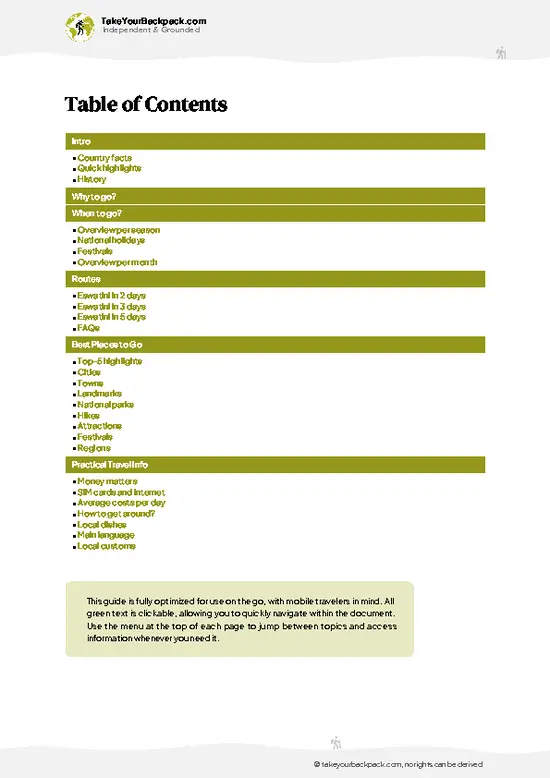
example page 2 from our offline Travel Guide for Eswatini
example page 3 from our offline Travel Guide for Eswatini
example page 4 from our offline Travel Guide for Eswatini
example page 5 from our offline Travel Guide for Eswatini
example page 6 from our offline Travel Guide for Eswatini
example page 7 from our offline Travel Guide for Eswatini
Loading the map 🌍
CLICK TO FILTER
cities
towns
landmarks
national parks
hikes
attractions
festivals
regions
SHOW COUNTRY’S BESTSHOW ALL

✨ Why go?
Ranked #6 attraction in Eswatini
Why Mantenga Cultural Village should be on your travel list

Mantenga Cultural Village gives you a structured, guided introduction to Swazi life that is hard to piece together from the road alone. Guides walk you through a homestead built to the old pattern: the beehive huts, the cattle byre at the center, and the separate quarters for the head of the family and his wives. You learn how the layout expresses rank and kinship, and why certain areas are closed to outsiders.

The second reason is the traditional dance performance. Men and women in regalia stamp, sing and kick high in rhythms you will hear again at festivals, and seeing it here, close up and explained, makes those later encounters make sense.

It also works as an early milestone on a route through the country. The Ezulwini Valley setting puts it among the craft markets and trails, so a half … read more 👉
Mantenga Cultural Village gives you a structured, guided introduction to Swazi life that is hard to piece together from the road alone. Guides walk you through a homestead built to the old pattern: the beehive huts, the cattle byre at the center, and the separate quarters for the head of the family and his wives. You learn how the layout expresses rank and kinship, and why certain areas are closed to outsiders.

The second reason is the traditional dance performance. Men and women in regalia stamp, sing and kick high in rhythms you will hear again at festivals, and seeing it here, close up and explained, makes those later encounters make sense.

It also works as an early milestone on a route through the country. The Ezulwini Valley setting puts it among the craft markets and trails, so a half day here sets context for everything else you see.

💡 HighlightsPlaces and moments you shouldn't skip

  1. Traditional Swazi dance performance: The headline act, held in an arena within the village. Dancers in beaded and skin regalia sing in harmony, stamp and high-kick, and the guides explain what each routine marks.
  2. Beehive huts: Dome-shaped homesteads of grass thatch over a sapling frame. You can duck inside and see sleeping mats, utensils and the layout of a family compound.
  3. The guided homestead tour: Guides explain the roles of the head of the household, wives and children, and how the compound is organized around the central cattle enclosure.
  4. Mantenga Falls: A short walk from the village leads to a viewpoint over the falls, which drop around 45 meters and run strongest after summer rain. Paths here are easy underfoot.
  5. Demonstrations of daily crafts: Staff show grinding of grain, weaving and traditional
… read more 👉
  1. Traditional Swazi dance performance: The headline act, held in an arena within the village. Dancers in beaded and skin regalia sing in harmony, stamp and high-kick, and the guides explain what each routine marks.
  2. Beehive huts: Dome-shaped homesteads of grass thatch over a sapling frame. You can duck inside and see sleeping mats, utensils and the layout of a family compound.
  3. The guided homestead tour: Guides explain the roles of the head of the household, wives and children, and how the compound is organized around the central cattle enclosure.
  4. Mantenga Falls: A short walk from the village leads to a viewpoint over the falls, which drop around 45 meters and run strongest after summer rain. Paths here are easy underfoot.
  5. Demonstrations of daily crafts: Staff show grinding of grain, weaving and traditional food preparation, giving the buildings a working context rather than leaving them as empty displays.
  6. Execution Rock views: The rock rises above the valley behind the village, and guides tell the story of its role in the kingdom's past. It is seen as part of the setting, not a climb on the standard visit.
  7. Mantenga Nature Reserve trails: Gentle walking paths in the surrounding reserve, where you may spot small antelope, birds and sometimes monkeys.
Mantenga Cultural Village charges an entry fee that includes the guided tour, and the dance is staged at set times, so check the schedule on arrival or by calling ahead if you are in a group.
Spotted a mistake or missing something? Contact us.

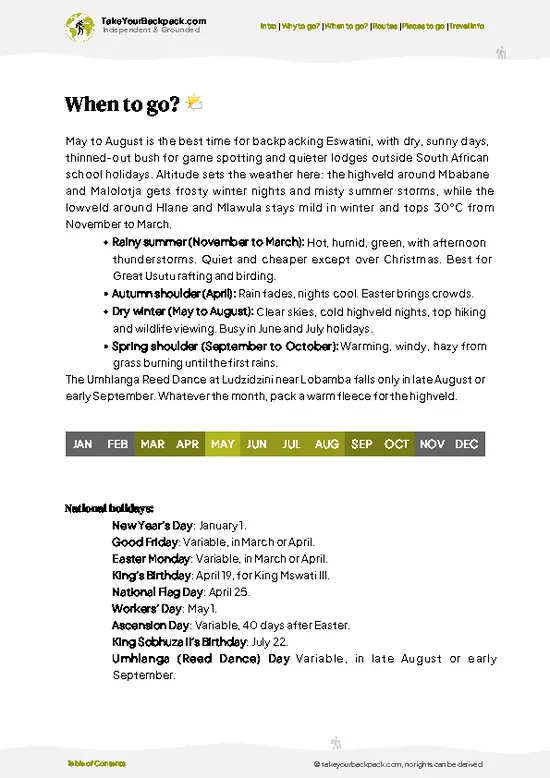
🌤️ When to go?Best time to visit Mantenga Cultural Village

  • Winter (May to August): Dry, sunny days of 20 to 25°C (68 to 77°F) suit the Execution Rock and waterfall walks, but nights in the Ezulwini Valley can drop to 3 to 8°C (37 to 46°F). The aloes flower around June and July. Daylight runs about 10.5 to 11 hours.
  • Spring (September to November): Warm days of 22 to 30°C (72 to 86°F) and the first storms. The waterfall starts to pick up again. Tour groups are thin on weekdays.
  • Summer (December to February): Hot and humid at 28 to 33°C (82 to 91°F), with afternoon thunderstorms. The Mantenga Falls run strongest and the hills turn green. Daylight stretches to about 14 hours, so there is time for a morning visit and a storm break.
  • Autumn (March to April): Mild at 20 to 28°C (68 to 82°F), with falling rain and clear air.
  • Culture Calendar: Late August or early
… read more 👉
  • Winter (May to August): Dry, sunny days of 20 to 25°C (68 to 77°F) suit the Execution Rock and waterfall walks, but nights in the Ezulwini Valley can drop to 3 to 8°C (37 to 46°F). The aloes flower around June and July. Daylight runs about 10.5 to 11 hours.
  • Spring (September to November): Warm days of 22 to 30°C (72 to 86°F) and the first storms. The waterfall starts to pick up again. Tour groups are thin on weekdays.
  • Summer (December to February): Hot and humid at 28 to 33°C (82 to 91°F), with afternoon thunderstorms. The Mantenga Falls run strongest and the hills turn green. Daylight stretches to about 14 hours, so there is time for a morning visit and a storm break.
  • Autumn (March to April): Mild at 20 to 28°C (68 to 82°F), with falling rain and clear air.
  • Culture Calendar: Late August or early September brings the Umhlanga Reed Dance nearby, and rooms in the valley fill and cost more. The Mantenga dance show runs daily at around 11:30 and 15:30 in high season.
Book a morning slot on a weekday to avoid tour buses and catch cooler air for the falls walk.


source: climatestotravel.comJANJanuary: not recommended for travelingFEBFebruary: not recommended for travelingMARMarch: not recommended for travelingAPRApril: not recommended for travelingMAYMay: excellent for travelingJUNJune: not recommended for travelingJULJuly: not recommended for travelingAUGAugust: not recommended for travelingSEPSeptember: not recommended for travelingOCTOctober: not recommended for travelingNOVNovember: not recommended for travelingDECDecember: not recommended for traveling
when-to-go

✈️ The backpacker research shortcutEswatini Travel Guide

An offline-friendly backpacking guide with optimized travel routes, ranked highlights, transport advice, and the best areas to stay.
example page 0 from our offline Travel Guide for Eswatini
example page 1 from our offline Travel Guide for Eswatini
example page 2 from our offline Travel Guide for Eswatini
example page 3 from our offline Travel Guide for Eswatini
example page 4 from our offline Travel Guide for Eswatini
example page 5 from our offline Travel Guide for Eswatini
example page 6 from our offline Travel Guide for Eswatini
example page 7 from our offline Travel Guide for Eswatini
The digital guide (151 pages) contains:
✅ 33 highlights, ranked by travel appeal
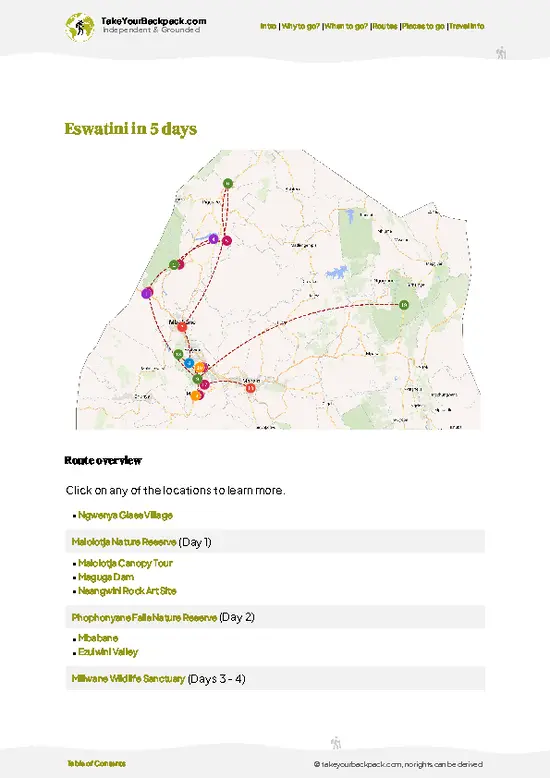
✅ Optimized 2, 3 & 5-day travel routes
✅ Cities, national parks, landmarks, beaches
✅ How to get around
✅ Offline-friendly for travel without Wi-Fi
👉 Click to see all 30+ guide features

📅 Plan smarter in minutes, not weeks
✅ Month by month travel advice
✅ Festivals & national holidays
✅ Budget expectations

🗺️ Go to the right places, skip the overrated ones
✅ Honest pros & cons of destinations
✅ Top hikes, parks & viewpoints
✅ Lesser-known places most travelers miss
✅ Clear “worth it vs skip it” guidance

🛏️ Travel smoothly without rookie mistakes
✅ Best areas to stay
✅ Transport systems explained simply
✅ Common scams & safety advice
✅ SIM cards, money & practical tips

🌍 Understand the country, not just visit it
✅ Culture & traditions
✅ 52 Essential phrases & customs
✅ Festivals worth planning around
✅ Traveler-friendly historical context
✅ Insights that make places more meaningful

📱 Built for real travel conditions
✅ Fully downloadable PDF
✅ Works completely offline
✅ Optimized for phone use
✅ Useful in remote areas & buses
✅ Everything in one place
Stop searching, start planning
Get instant access to your full guide. 30‑day money-back guarantee.
+ Add another guide for just

By proceeding you agree to our terms.
Sent to your inbox immediately after payment • 100% Secure Checkout
Best Backpacking Travel Advisor 2025 tourism awardBest Backpacking
Travel Advisor
2025
What others say about Take Your Backpack Guides:
⭐⭐⭐⭐⭐
Fantastic, amazing amount of information!
⭐⭐⭐⭐⭐
My goodness this is amazing, it's what I've been looking for hats off too you!
⭐⭐⭐⭐⭐
I think this is absolutely BRILLIANT
⭐⭐⭐⭐
Very complete and informative. It's still missing places, but I gotta to commend you
⭐⭐⭐⭐⭐
This is truly amazing, thank you, can't wait to explore it with my kids!
⭐⭐⭐⭐⭐
Awesome resource, thank you!
⭐⭐⭐⭐⭐
This is amazing! Can't wait to explore the ones I haven't seen
⭐⭐⭐⭐
I love this! Well done, great idea.
⭐⭐⭐⭐⭐
Thanks for taking the time to make this gem!
⭐⭐⭐⭐⭐
This might be the best website I've ever seen.
⭐⭐⭐⭐⭐
Congratulations, and thank you so much for your work; it's incredibly valuable.
⭐⭐⭐⭐
In all seriousness I think you did a great job pointing out the important spots
⭐⭐⭐⭐⭐
10/10 very good
⭐⭐⭐⭐⭐
As someone who's only just starting to visit regularly this is awesome, thank you.
⭐⭐⭐⭐
Thank you very much! I'm going to visit my dad, it's going to be very useful!
⭐⭐⭐⭐⭐
This is really cool! We'll be travelling for the first time and this definitely come in handy.
⭐⭐⭐⭐⭐
You are now our minister of culture, congratulations 👨‍💼
⭐⭐⭐⭐⭐
Just wanted to tell you that this is a pearl! Going to follow your recommendations.
⭐⭐⭐⭐⭐
This is so cool. I'll definitely be using the resource for my travels soon.
⭐⭐⭐⭐⭐
This is very impressive! Good work.
⭐⭐⭐⭐⭐
This is an amazing and informative site. Very well done!

🛏️ Where to stay?Best areas to stay in Eswatini

The Ezulwini Valley is the best base for Mantenga Cultural Village, because the village sits at its southern end and the main road is lined with budget beds. Most backpacker lodges here are a short minibus or taxi ride from the entrance, and a few are walkable if you don’t mind a 3 to 5 km stretch of roadside. Expect dorm beds at about US$12 to 20 and basic private rooms from US$30 to 50.
The valley is the social hub for budget travelers. Lodges tend to have shared kitchens, a bar, and a noticeboard where you can find people to split transport costs to Hlane or Malolotja. Safety is good by regional … read more 👉
The Ezulwini Valley is the best base for Mantenga Cultural Village, because the village sits at its southern end and the main road is lined with budget beds. Most backpacker lodges here are a short minibus or taxi ride from the entrance, and a few are walkable if you don’t mind a 3 to 5 km stretch of roadside. Expect dorm beds at about US$12 to 20 and basic private rooms from US$30 to 50.
The valley is the social hub for budget travelers. Lodges tend to have shared kitchens, a bar, and a noticeboard where you can find people to split transport costs to Hlane or Malolotja. Safety is good by regional standards, though you should avoid walking the highway after dark and use a pre-arranged ride between lodges and restaurants.
Mbabane, about 20 minutes away by road, is cheaper and has more shops, banks and food stalls, but fewer backpacker-focused places. It works if you want to stock up on supplies and don’t mind a longer trip to the village, with minibuses running frequently along the main road until early evening.
Lobamba, near the royal sites and the national museum, has a few quiet guesthouses and suits travelers who want a calmer, more local feel.

👛 Costs (as of 22 October 2026)Money, prices, and spending tips

A day at Mantenga Cultural Village costs roughly US$55 to 85 for a backpacker, including entry, a dance show and transport from the Ezulwini Valley.
CategoryBudget RangeLocal Reality
Entry fee (foreign adult)US$8 to 12Covers the grounds, beehive huts and the guided tour; payable at the gate in the local currency or by card.
Dance showUS$0 to 6Often included in the entry ticket, with the performance running once or twice daily.
Waterfall walkUS$0The short trail to Mantenga Falls is part of the ticket, with no extra guide required.
Accommodation (high season)US$15 to 30A dorm bed in the Ezulwini Valley; low season often drops US$3 to 5.
Food and drinkUS$8 to 15Café meals in the valley cost more than street food in Mbabane or Manzini.
TransportUS$5 to 15Minibuses along the valley road cost under US$1
… read more 👉
A day at Mantenga Cultural Village costs roughly US$55 to 85 for a backpacker, including entry, a dance show and transport from the Ezulwini Valley.
CategoryBudget RangeLocal Reality
Entry fee (foreign adult)US$8 to 12Covers the grounds, beehive huts and the guided tour; payable at the gate in the local currency or by card.
Dance showUS$0 to 6Often included in the entry ticket, with the performance running once or twice daily.
Waterfall walkUS$0The short trail to Mantenga Falls is part of the ticket, with no extra guide required.
Accommodation (high season)US$15 to 30A dorm bed in the Ezulwini Valley; low season often drops US$3 to 5.
Food and drinkUS$8 to 15Café meals in the valley cost more than street food in Mbabane or Manzini.
TransportUS$5 to 15Minibuses along the valley road cost under US$1 to 2, while a private taxi from lodges is pricier.
Total Daily BudgetUS$55 to 85Based on one high-season dorm bed, entry, meals and local transport.
⚠️ Prices can change and everyone travels differently, so take this as a rough guide. Hope it helps you plan your adventure!

🍲 FoodLocal Flavors for Backpackers

At the Mantenga Cultural Village Festival, food and drink are as vibrant as the performances. Dive into local specialties like sishwala, a hearty maize porridge, or umncweba, a rich meat stew that warms you from the inside out. Festival stalls burst with flavors, offering braai (grilled meats) that sizzle and smoke, filling the air with mouthwatering aromas.

Don’t miss the chance to sip on eswatini beer, a traditional brew that’s both refreshing and a perfect companion to your meal. For something sweeter, try ginger beer—it’s zesty and invigorating, ideal for the warm festival days.

Embrace the sharing culture here; locals often invite you to taste their dishes. It’s a way to connect, so don’t hesitate to join in. Be prepared for lines—they can get long, but the anticipation only heightens … read more 👉
At the Mantenga Cultural Village Festival, food and drink are as vibrant as the performances. Dive into local specialties like sishwala, a hearty maize porridge, or umncweba, a rich meat stew that warms you from the inside out. Festival stalls burst with flavors, offering braai (grilled meats) that sizzle and smoke, filling the air with mouthwatering aromas.

Don’t miss the chance to sip on eswatini beer, a traditional brew that’s both refreshing and a perfect companion to your meal. For something sweeter, try ginger beer—it’s zesty and invigorating, ideal for the warm festival days.

Embrace the sharing culture here; locals often invite you to taste their dishes. It’s a way to connect, so don’t hesitate to join in. Be prepared for lines—they can get long, but the anticipation only heightens the experience. Bring cash; while some stalls might accept cards, many prefer the simplicity of cash transactions. Serving sizes can be generous, so pace yourself; you’ll want to sample everything. This festival isn’t just about eating; it’s about savoring the essence of Eswatini.

FAQCommon questions from travelers

Plan on 2 to 3 hours at Mantenga Cultural Village, which covers the guided homestead tour, one dance show and the short walk to Mantenga Falls. Shows usually run at about 11:30 and 15:30, so arriving by 10:30 lets you fit everything in. Add another hour if you want to linger at the craft stalls or the nearby Mantenga Nature Reserve trails.
For most backpackers, Mantenga Cultural Village is good value at roughly US$8 to 12. The ticket includes a guided tour of traditional beehive huts and a dance performance, plus access to the waterfall walk. It is one of the few places in Eswatini where the culture is explained clearly, so it is a strong first stop before heading to Lobamba or the royal sites.
Mantenga Cultural Village lies about 20 to 30 minutes by road from Mbabane, in the Ezulwini Valley. Take a minibus from Mbabane or Manzini bus ranks heading along the valley road (under US$2) and ask to be dropped at the Mantenga turnoff, then walk or take a short taxi ride. A private taxi from Mbabane costs about US$15 to 25 one way.
⚠️ Things can change over time, so always validate details locally before you go.

Other Swazi attractions near Mantenga Cultural Village

Explore more nearby:


💡 Not sure where to go next?
Create a personalized itinerary for Eswatini including Mantenga Cultural Village and the places that fit your trip.

Generate my itinerary

👉 Discover all attractions

Or checkout all Eswatini has to offer (think cities, towns, villages, national parks, hikes, beaches, festivals)
Country photo of Eswatini

We 💚 feedbackWhat to keep in mind

Mantenga Cultural Village rewards people who arrive in time for the dance performance, yet many travelers turn up late afternoon and catch only the empty beehive huts. Go in the morning, check the show time at the gate, and walk the village before the drums start. Skip the souvenir stalls unless you want carved wood or woven grass, and leave extra time for the Mantenga Falls viewpoint nearby.

✍️ Help improve this page!
The information on this page is based on in-depth research, insights shared by experienced travelers, and feedback from the local travel community in Eswatini. While every effort is made to keep the information accurate and current, conditions can change — so if you spot anything incorrect or outdated, please get in touch.


🙋‍♂️ Give feedback

👋 Meet the founderWho’s Behind Take Your Backpack?

Johan, backpacker and founder of TakeYourBackpackHi, I’m Johan (Netherlands 🇳🇱), the creator of TakeYourBackpack. Over the past 3 decades, I’ve backpacked through 90+ countries across six continents, gaining extensive experience with independent travel, long-term trips, and overland routes.

This site is built on a combination of firsthand travel experience and carefully curated insights from other backpackers. Many guides are based on places I’ve personally visited, while others bring together tips, observations, and practical advice shared by trusted travelers I’ve met along the way.

The goal is to provide realistic, experience-driven guidance — not generic itineraries — so you can explore destinations with better context, clearer expectations, and more confidence.