×

Eswatini🇸🇿 | national parksMalolotja Nature ReserveHighland grassland, 100 meter falls, ancient ochre mine, backcountry camps | things to do and best time to go

Explore Hlane Royal National ParkExplore Mantenga Nature Reserve

Backpacking in Malolotja Nature Reserve
🌟 Highlightnational park ranked #4
By Johan Kruseman 🇳🇱 | Updated October 22, 2026

Malolotja’s Ngwenya Mine, the oldest known mine in the world, dates back some 43,000 years, and you can reach the lion-cave-shaped diggings at Lion Cavern on the Ngwenya side of the border region. Malolotja Nature Reserve is best known for its high, empty grassland and its steep valleys. It lies in the northwest of Eswatini, close to the South African border, and the Komati River drops through it. Trails cross open ridges where blue wildebeest, zebra and eland graze, and the Malolotja Falls, among the highest in southern Africa, reward a long walk with a view down a sheer gorge. Birders find blue swallows and bald ibis. Roads inside are rough gravel, and you will mostly have the paths to yourself, which is the appeal and the challenge: no crowds, but little help nearby. Bring all your food and a full water supply before you arrive.

Discover everything you want to know in the 📖 Eswatini Travel Guide.


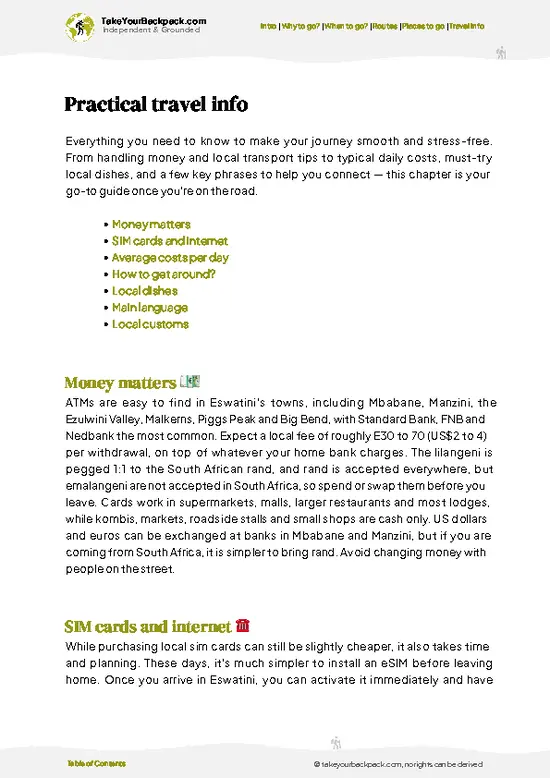
example page 0 from our offline Travel Guide for Eswatini
example page 1 from our offline Travel Guide for Eswatini
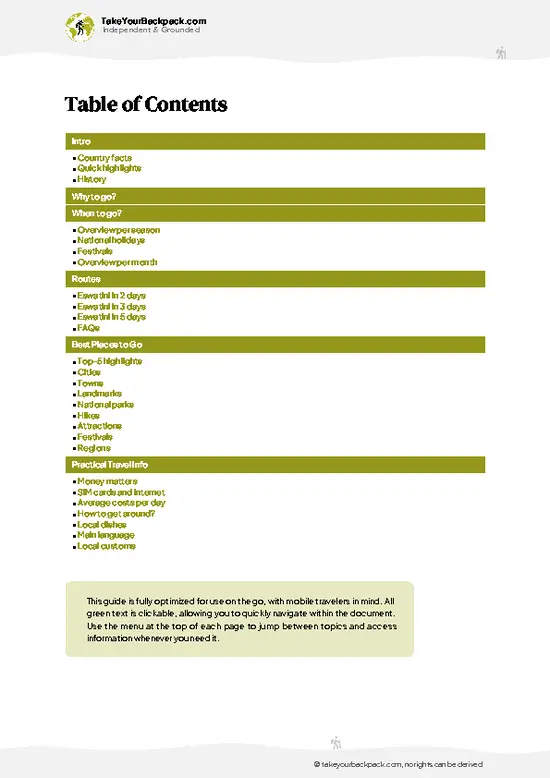
example page 2 from our offline Travel Guide for Eswatini
example page 3 from our offline Travel Guide for Eswatini
example page 4 from our offline Travel Guide for Eswatini
example page 5 from our offline Travel Guide for Eswatini
example page 6 from our offline Travel Guide for Eswatini
example page 7 from our offline Travel Guide for Eswatini
Loading the map 🌍
CLICK TO FILTER
cities
towns
landmarks
national parks
hikes
attractions
festivals
regions
SHOW COUNTRY’S BESTSHOW ALL

✨ Why go?
Ranked #4 national park in Eswatini
What makes this national park worth exploring

Malolotja Nature Reserve suits backpackers who want to plan their own days, because the real draw is walking, and it is done independently with a map rather than a guide. The reserve has a network of trails that run from short morning loops to multi-day routes, and backcountry campsites let you string them together, carrying everything on your back. That kind of freedom is rare in Eswatini, where most reserves push you toward vehicle safaris. The scenery changes with every climb, from Malolotja Falls to the grassy ridges of the Silotfwane area and the forested slopes above the Komati River. Wildlife is part of it. You walk among zebra, wildebeest and the occasional hartebeest, with no fence between you and them, and without a jeep humming alongside. If you like quiet places and trail-finding, … read more 👉
Malolotja Nature Reserve suits backpackers who want to plan their own days, because the real draw is walking, and it is done independently with a map rather than a guide. The reserve has a network of trails that run from short morning loops to multi-day routes, and backcountry campsites let you string them together, carrying everything on your back. That kind of freedom is rare in Eswatini, where most reserves push you toward vehicle safaris. The scenery changes with every climb, from Malolotja Falls to the grassy ridges of the Silotfwane area and the forested slopes above the Komati River. Wildlife is part of it. You walk among zebra, wildebeest and the occasional hartebeest, with no fence between you and them, and without a jeep humming alongside. If you like quiet places and trail-finding, the reserve rewards the effort. A tour is not needed, and rangers will happily point you toward the right path.

💡 HighlightsThe experiences that define the visit

  1. Malolotja Falls: The reserve’s signature sight, a drop of roughly 100 meters into a deep gorge, reached by a trail and viewed from an overlook above the valley.
  2. Ngwenya Mine and Lion Cavern: Close by, the ancient mine where people dug ochre and iron-rich minerals tens of thousands of years ago, with a guided visit to the old diggings.
  3. Komati River Gorge: A deep cut through the northern part of the reserve, with steep sides, rock pools and a feeling of real remoteness.
  4. Silotfwane Waterfall Area: Smaller cascades and grassy slopes where you walk among blue wildebeest and zebra.
  5. Mountain Zebra and Wildebeest Plains: The open highland grasslands where large herds graze in the open, easy to watch on foot from a distance.
  6. Birdwatching on the Ridges: Blue swallows nest here in summer, bald ibis and black
… read more 👉
  1. Malolotja Falls: The reserve’s signature sight, a drop of roughly 100 meters into a deep gorge, reached by a trail and viewed from an overlook above the valley.
  2. Ngwenya Mine and Lion Cavern: Close by, the ancient mine where people dug ochre and iron-rich minerals tens of thousands of years ago, with a guided visit to the old diggings.
  3. Komati River Gorge: A deep cut through the northern part of the reserve, with steep sides, rock pools and a feeling of real remoteness.
  4. Silotfwane Waterfall Area: Smaller cascades and grassy slopes where you walk among blue wildebeest and zebra.
  5. Mountain Zebra and Wildebeest Plains: The open highland grasslands where large herds graze in the open, easy to watch on foot from a distance.
  6. Birdwatching on the Ridges: Blue swallows nest here in summer, bald ibis and black eagles work the cliffs, and the reserve lists well over 280 species.
  7. Backcountry Campsites: Remote camps by streams, where the night sky is dark and the only sound is wind and water.
  8. Mhlambanyatsi Highland Views: Ridgeline lookouts with long views over the valleys and the far plains.
Malolotja Nature Reserve charges a daily entry fee at the gate, and the backcountry campsites should be reserved ahead through the reserve office.
Spotted a mistake or missing something? Contact us.

🌤️ When to go?Choosing the right time of year

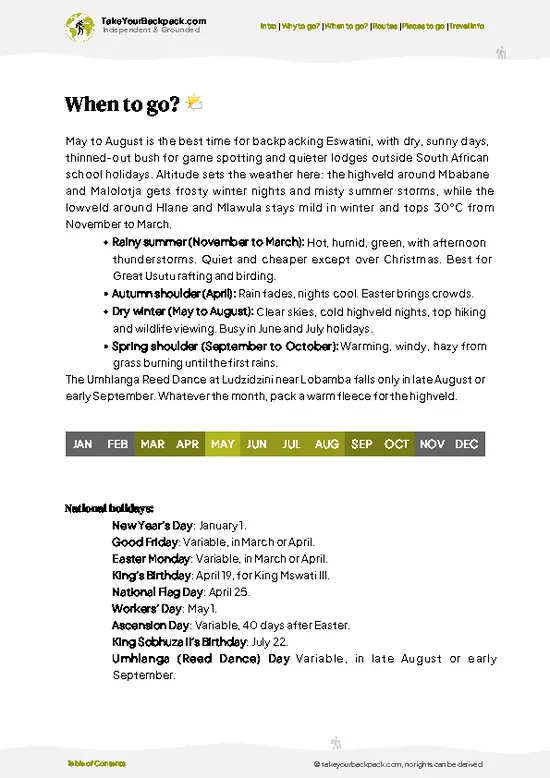
  • Winter (May to August): Dry, sunny days of 15 to 22°C (59 to 72°F) turn to frosty nights that can fall to 0°C (32°F) or below on the high plateau. Daylight runs roughly 11 hours. Trails are firm and views carry far over the Nkomati valley.
  • Spring (September to November): Days warm to 20 to 27°C (68 to 81°F), wildflowers appear and the first storms arrive late in the season. Daylight stretches toward 13 hours. Crowds stay thin.
  • Summer (December to February): Hot, humid, 22 to 30°C (72 to 86°F), with afternoon thunderstorms, mist and slippery paths. Days are about 14 hours long. Waterfalls run strongest, and prices stay flat because the reserve sees few visitors.
  • Autumn (March to April): Stable weather of 18 to 25°C (64 to 77°F), clear air and green hillsides, with long daylight hours fading toward
… read more 👉
  • Winter (May to August): Dry, sunny days of 15 to 22°C (59 to 72°F) turn to frosty nights that can fall to 0°C (32°F) or below on the high plateau. Daylight runs roughly 11 hours. Trails are firm and views carry far over the Nkomati valley.
  • Spring (September to November): Days warm to 20 to 27°C (68 to 81°F), wildflowers appear and the first storms arrive late in the season. Daylight stretches toward 13 hours. Crowds stay thin.
  • Summer (December to February): Hot, humid, 22 to 30°C (72 to 86°F), with afternoon thunderstorms, mist and slippery paths. Days are about 14 hours long. Waterfalls run strongest, and prices stay flat because the reserve sees few visitors.
  • Autumn (March to April): Stable weather of 18 to 25°C (64 to 77°F), clear air and green hillsides, with long daylight hours fading toward 11.5 hours.
Aim for April or September, and start hikes early to finish before afternoon storms build.


source: climatestotravel.comJANJanuary: fair for travelingFEBFebruary: fair for travelingMARMarch: fair for travelingAPRApril: fair for travelingMAYMay: highly recommended for travelingJUNJune: excellent for travelingJULJuly: excellent for travelingAUGAugust: excellent for travelingSEPSeptember: excellent for travelingOCTOctober: fair for travelingNOVNovember: fair for travelingDECDecember: fair for traveling
when-to-go

✈️ The backpacker research shortcutEswatini Travel Guide

An offline-friendly backpacking guide with optimized travel routes, ranked highlights, transport advice, and the best areas to stay.
example page 0 from our offline Travel Guide for Eswatini
example page 1 from our offline Travel Guide for Eswatini
example page 2 from our offline Travel Guide for Eswatini
example page 3 from our offline Travel Guide for Eswatini
example page 4 from our offline Travel Guide for Eswatini
example page 5 from our offline Travel Guide for Eswatini
example page 6 from our offline Travel Guide for Eswatini
example page 7 from our offline Travel Guide for Eswatini
The digital guide (151 pages) contains:
✅ 33 highlights, ranked by travel appeal
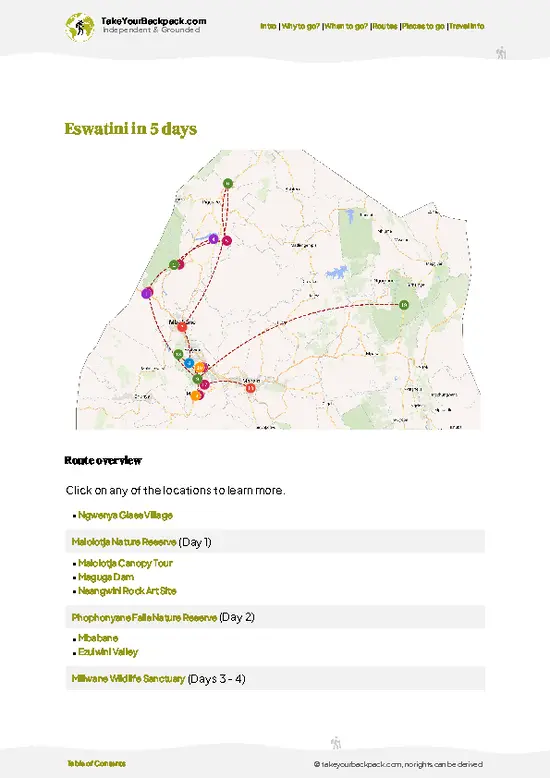
✅ Optimized 2, 3 & 5-day travel routes
✅ Cities, national parks, landmarks, beaches
✅ How to get around
✅ Offline-friendly for travel without Wi-Fi
👉 Click to see all 30+ guide features

📅 Plan smarter in minutes, not weeks
✅ Month by month travel advice
✅ Festivals & national holidays
✅ Budget expectations

🗺️ Go to the right places, skip the overrated ones
✅ Honest pros & cons of destinations
✅ Top hikes, parks & viewpoints
✅ Lesser-known places most travelers miss
✅ Clear “worth it vs skip it” guidance

🛏️ Travel smoothly without rookie mistakes
✅ Best areas to stay
✅ Transport systems explained simply
✅ Common scams & safety advice
✅ SIM cards, money & practical tips

🌍 Understand the country, not just visit it
✅ Culture & traditions
✅ 52 Essential phrases & customs
✅ Festivals worth planning around
✅ Traveler-friendly historical context
✅ Insights that make places more meaningful

📱 Built for real travel conditions
✅ Fully downloadable PDF
✅ Works completely offline
✅ Optimized for phone use
✅ Useful in remote areas & buses
✅ Everything in one place
Stop searching, start planning
Get instant access to your full guide. 30‑day money-back guarantee.
+ Add another guide for just

By proceeding you agree to our terms.
Sent to your inbox immediately after payment • 100% Secure Checkout
Best Backpacking Travel Advisor 2025 tourism awardBest Backpacking
Travel Advisor
2025
What others say about Take Your Backpack Guides:
⭐⭐⭐⭐⭐
Fantastic, amazing amount of information!
⭐⭐⭐⭐⭐
My goodness this is amazing, it's what I've been looking for hats off too you!
⭐⭐⭐⭐⭐
I think this is absolutely BRILLIANT
⭐⭐⭐⭐
Very complete and informative. It's still missing places, but I gotta to commend you
⭐⭐⭐⭐⭐
This is truly amazing, thank you, can't wait to explore it with my kids!
⭐⭐⭐⭐⭐
Awesome resource, thank you!
⭐⭐⭐⭐⭐
This is amazing! Can't wait to explore the ones I haven't seen
⭐⭐⭐⭐
I love this! Well done, great idea.
⭐⭐⭐⭐⭐
Thanks for taking the time to make this gem!
⭐⭐⭐⭐⭐
This might be the best website I've ever seen.
⭐⭐⭐⭐⭐
Congratulations, and thank you so much for your work; it's incredibly valuable.
⭐⭐⭐⭐
In all seriousness I think you did a great job pointing out the important spots
⭐⭐⭐⭐⭐
10/10 very good
⭐⭐⭐⭐⭐
As someone who's only just starting to visit regularly this is awesome, thank you.
⭐⭐⭐⭐
Thank you very much! I'm going to visit my dad, it's going to be very useful!
⭐⭐⭐⭐⭐
This is really cool! We'll be travelling for the first time and this definitely come in handy.
⭐⭐⭐⭐⭐
You are now our minister of culture, congratulations 👨‍💼
⭐⭐⭐⭐⭐
Just wanted to tell you that this is a pearl! Going to follow your recommendations.
⭐⭐⭐⭐⭐
This is so cool. I'll definitely be using the resource for my travels soon.
⭐⭐⭐⭐⭐
This is very impressive! Good work.
⭐⭐⭐⭐⭐
This is an amazing and informative site. Very well done!

🛏️ Where to stay?How to pick the right area

Sleep inside Malolotja Nature Reserve if you can, because trailheads, waterfalls and the Ngwenya Mine are right there. Camping is the backpacker staple, with sites at Malolotja Campsite near the main gate and basic sites along the trails. Facilities at the main camp include ablutions and braai spots, and you bring everything else, including food and a good sleeping bag for cold nights. Self-catering cabins near the entrance sleep several people and work well when split among a group; some have electricity and kitchen gear. Remote trail camps have no services, so plan on carrying water treatment. … read more 👉
Sleep inside Malolotja Nature Reserve if you can, because trailheads, waterfalls and the Ngwenya Mine are right there. Camping is the backpacker staple, with sites at Malolotja Campsite near the main gate and basic sites along the trails. Facilities at the main camp include ablutions and braai spots, and you bring everything else, including food and a good sleeping bag for cold nights. Self-catering cabins near the entrance sleep several people and work well when split among a group; some have electricity and kitchen gear. Remote trail camps have no services, so plan on carrying water treatment. Outside the reserve, the closest base is Piggs Peak, roughly 30 minutes away, with guesthouses and a small grocery for restocking. Mbabane, about an hour away by road, has more hostels, lodges, ATMs and larger supermarkets. Ngwenya, closer to the Mbabane side and the Ngwenya Glass studio, has a few guesthouses on the way. Book cabins ahead for school holidays and long weekends. Campers can usually turn up unannounced, but call the reserve office before a long trek to confirm site availability.

👛 Costs (as of 22 October 2026)Typical daily expenses

Malolotja Nature Reserve costs a backpacker roughly US$35 to 60 a day when camping and self-catering. Travelers pay in Eswatini’s local currency, though rand are widely accepted.
CategoryBudget RangeLocal Reality
Entrance feeUS$3 to 6Charged per person per day for foreign visitors, with an extra fee per vehicle.
CampingUS$8 to 15Per person at the main campsite with ablutions; remote sites are cheaper.
Cabins (high season)US$25 to 50Per person in shared self-catering units; cheaper if you fill the sleeps.
Local transportUS$4 to 12Minibus from Mbabane to Piggs Peak, then onward to the gate by lift or hired transport.
Food and suppliesUS$8 to 15Stock up in Mbabane or Piggs Peak; there is no shop in the reserve.
Total Daily BudgetUS$48Based on a cabin bed, supplies, transport and the entrance fee.


source: thekingdomofeswatini.com
⚠️ Prices can change and everyone travels differently, so take this as a rough guide. Hope it helps you plan your adventure!

🥾 TrailsExploring Malolotja Nature Reserve: trails, terrain, and views

Malolotja Nature Reserve has over 200 kilometers of hiking paths, and rangers can supply a map at the gate. The terrain is steep and often rocky, with open grassland on top and forested folds in the valleys. Wildlife sightings are routine: zebra, wildebeest and eland on the plateau, and birds along the cliffs.
  • Malolotja Falls Trail: About 6 to 8 kilometers return, 2 to 3 hours, moderate. A grassy path leads to an overlook above the high drop, with views down the gorge.
  • Silotfwane Loop: Roughly 10 kilometers, 3 to 4 hours, moderate to hard. It passes small cascades and open grassland, with plenty
… read more 👉
Malolotja Nature Reserve has over 200 kilometers of hiking paths, and rangers can supply a map at the gate. The terrain is steep and often rocky, with open grassland on top and forested folds in the valleys. Wildlife sightings are routine: zebra, wildebeest and eland on the plateau, and birds along the cliffs.
  • Malolotja Falls Trail: About 6 to 8 kilometers return, 2 to 3 hours, moderate. A grassy path leads to an overlook above the high drop, with views down the gorge.
  • Silotfwane Loop: Roughly 10 kilometers, 3 to 4 hours, moderate to hard. It passes small cascades and open grassland, with plenty of game on the way.
  • Komati River Gorge Route: Around 12 to 15 kilometers, 5 to 6 hours, hard. A steep descent leads to river pools, then a tough climb back out.
  • Multi-day Backcountry Trail: Two to four days linking remote campsites, hard, with full self-sufficiency and basic camps.
Getting to Malolotja Nature Reserve without a car is difficult. Minibuses run along the main road from Mbabane toward the border, but the last stretch to the gate is gravel and you may need to walk or arrange a lift. The reserve is quiet, even in peak season, so you can walk for hours without meeting anyone. There is a daily entrance fee, paid at the gate in local currency, and cash helps. Pack warm layers, since the highlands turn cold at night and mist rolls in quickly.
⚠️ Hiking info can sometimes be outdated or inaccurate. Before you hit the trail, check the latest conditions with locals. If you do spot anything that's off, I'd love to hear from you, so I can update it for fellow travelers.

🛡️ SafetySafety Tips and Common Scams in Malolotja Nature Reserve

Malolotja is a quiet, well-managed reserve where the main challenges are weather and distance rather than danger. Afternoon storms in summer bring lightning and slick, muddy tracks, while winter nights on the plateau drop to freezing, so pack a proper warm layer. Trails are marked but long, with steep drops into river valleys and stretches with no shade, so carry at least 3 liters of water and sun protection. Some paths are faint after rain, so carry a map and tell the office your route. Wildlife includes zebra, blue wildebeest and various antelope that keep their distance. Give animals space, never feed them and avoid walking at dusk. Snakes are present in warm months, so watch where you step. Mobile signal is patchy, so do not rely on your phone. Start early and keep a steady pace.

FAQFrequently asked questions about Malolotja Nature Reserve

Two to three days is ideal for Malolotja Nature Reserve. One day covers the Malolotja Falls viewpoint and a short hike, while a second and third day let you do the Silotfwane or Mjindini trails and sleep at a campsite. Bring food for the whole stay, because there is nothing to buy inside.
Visiting Malolotja Nature Reserve without a car is difficult but possible. Minibuses run from Mbabane to Piggs Peak (about 1 hour, US$2 to 4), and from there you need a lift or private transport for the remaining distance to the gate. Many backpackers rent a car in Mbabane or arrange a driver, since trails start far from the main gate.
Yes, Malolotja Nature Reserve charges a daily entrance fee, roughly US$3 to 6 per foreign adult, plus a small vehicle fee. Overnight stays cost extra, with camping about US$8 to 15 per person. Overnight hikers should register at the gate and book backcountry sites with the office in advance.
⚠️ Things can change over time, so always validate details locally before you go.

Other Swazi national parks near Malolotja Nature Reserve

Explore more nearby:


💡 Not sure where to go next?
Create a personalized itinerary for Eswatini including Malolotja Nature Reserve and the places that fit your trip.

Generate my itinerary

👉 Discover all national parks

Or checkout all Eswatini has to offer (think cities, towns, villages, national parks, hikes, beaches, festivals)
Country photo of Eswatini

We 💚 feedbackIs it worth it?

Malolotja Nature Reserve is at its best in the early morning, when the grassland is quiet and the animals are close to the trails. Aim for the dry winter months for clear views and easier walking. I would bring a warm layer and start walks early, because afternoon cloud can close the views.

✍️ Help improve this page!
The information on this page is based on in-depth research, insights shared by experienced travelers, and feedback from the local travel community in Eswatini. While every effort is made to keep the information accurate and current, conditions can change — so if you spot anything incorrect or outdated, please get in touch.


🙋‍♂️ Give feedback

👋 Meet the founderWho’s Behind Take Your Backpack?

Johan, backpacker and founder of TakeYourBackpackHi, I’m Johan (Netherlands 🇳🇱), the creator of TakeYourBackpack. Over the past 3 decades, I’ve backpacked through 90+ countries across six continents, gaining extensive experience with independent travel, long-term trips, and overland routes.

This site is built on a combination of firsthand travel experience and carefully curated insights from other backpackers. Many guides are based on places I’ve personally visited, while others bring together tips, observations, and practical advice shared by trusted travelers I’ve met along the way.

The goal is to provide realistic, experience-driven guidance — not generic itineraries — so you can explore destinations with better context, clearer expectations, and more confidence.