How many to visit: Plan on
two or three parks in a week. The country is small, but each stop takes a day to get to, enter and appreciate, and a third visit adds cost without much variety. Combine
one lowveld game reserve for large animals with
one highveld or middleveld reserve for walking and cooler air.
Choosing by travel style: Budget walkers should favor reserves with
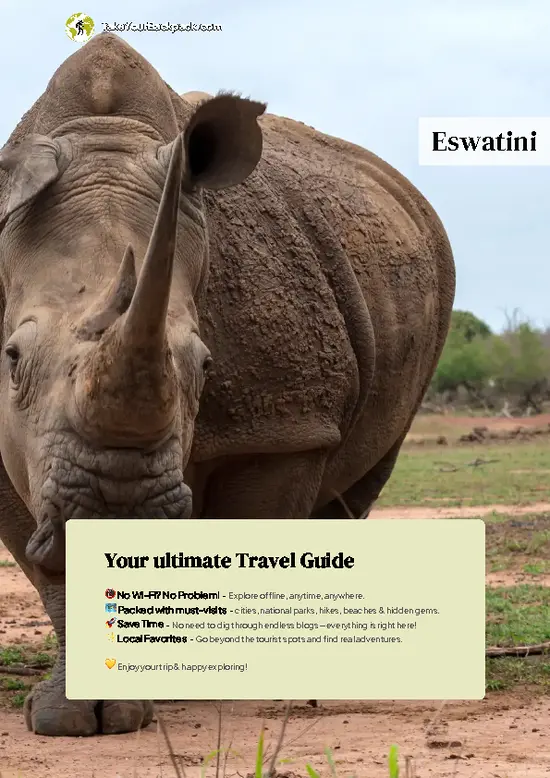
self-guided trails and basic camping. Wildlife seekers should prioritize a lowveld reserve, where rhinos and elephants are the draw, and accept higher fees. If time is short, pick the park closest to Mbabane or Manzini, since transfers eat budget.
Costs: Expect
US$35 to 70 a day for a backpacker visiting parks, including camping or a dorm bed (US$10 to 25), food, and local transport. Entry typically costs about E50 to E250 …
read more 👉 How many to visit: Plan on
two or three parks in a week. The country is small, but each stop takes a day to get to, enter and appreciate, and a third visit adds cost without much variety. Combine
one lowveld game reserve for large animals with
one highveld or middleveld reserve for walking and cooler air.
Choosing by travel style: Budget walkers should favor reserves with
self-guided trails and basic camping. Wildlife seekers should prioritize a lowveld reserve, where rhinos and elephants are the draw, and accept higher fees. If time is short, pick the park closest to Mbabane or Manzini, since transfers eat budget.
Costs: Expect
US$35 to 70 a day for a backpacker visiting parks, including camping or a dorm bed (US$10 to 25), food, and local transport. Entry typically costs about E50 to E250 (US$3 to 14) per person for most reserves, with vehicle fees extra. Guided game drives or walks usually run E300 to E900 (US$17 to 50) per person. Minibus legs cost about E20 to E60 (US$1 to 3.50), but a taxi to a remote gate can add US$10 to 30. Carry emalangeni in cash, since card machines at gates are unreliable. Eswatini’s currency, the lilangeni, is pegged one to one with the South African rand.
Safety and etiquette: Wildlife is real:
stay in your vehicle or with a guide in big game areas, and keep distance from hippos and elephants. Rhino protection means some areas have
armed ranger patrols, so follow instructions and do not wander off-trail. Malaria risk is low to moderate in the lowveld, so ask a travel clinic about prophylaxis. Walk or hitch only in daylight. Culturally,
dress modestly when passing homesteads, ask before photographing people, and do not photograph the royal family or palaces. Many reserves sit beside communities, so buying crafts or meals locally helps.
v2.webp)

 Best Backpacking
.jpg) Hi, I’m Johan (Netherlands 🇳🇱), the creator of TakeYourBackpack. Over the past 3 decades, I’ve backpacked through 90+ countries across six continents, gaining extensive experience with independent travel, long-term trips, and overland routes.
Hi, I’m Johan (Netherlands 🇳🇱), the creator of TakeYourBackpack. Over the past 3 decades, I’ve backpacked through 90+ countries across six continents, gaining extensive experience with independent travel, long-term trips, and overland routes.