×

Ethiopia🇪🇹 | national parksAlatish National ParkSudan border woodland, river buffalo, seasonal elephants, scout-led walks | things to do and best time to go

Explore Yangudi Rassa National ParkExplore Chebera Churchura National Park

Backpacking in Alatish
👌 Worth visitingnational park ranked #17
By Johan Kruseman 🇳🇱 | Updated October 22, 2026

Alatish National Park sits in Ethiopia’s northwest Amhara region, on the Sudan border near Metema, and it is a lowland park of dry woodland, not a highland one. Roads are rough, the park is almost empty and its facilities are minimal. Hire a 4x4 and a scout in Metema before you go, because nothing can be arranged inside. Carry cash and enough water. A ranger there once told me, “Wait by the river and the buffalo will come to you.” Cracked mud, buzzing cicadas and woodsmoke marked the Alatish riverbank.

Discover everything you want to know in the 📖 Ethiopia Travel Guide.
Safety warning

The current risk level for Ethiopia is high. Check the advice before going.


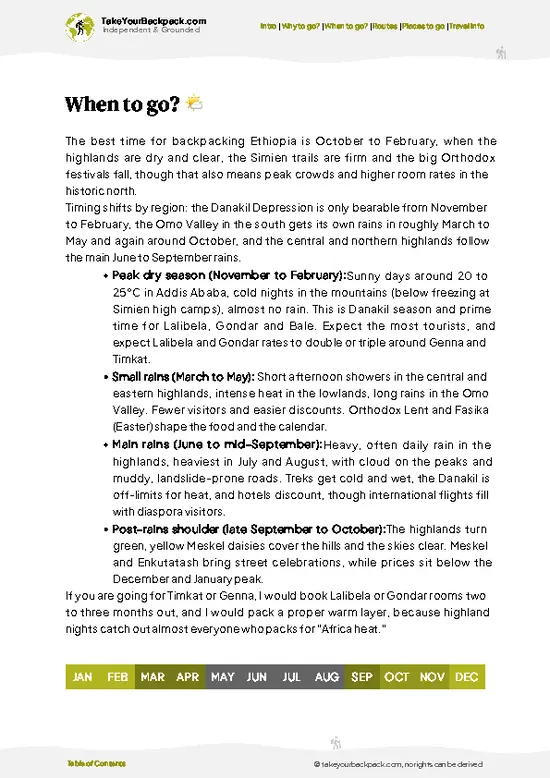
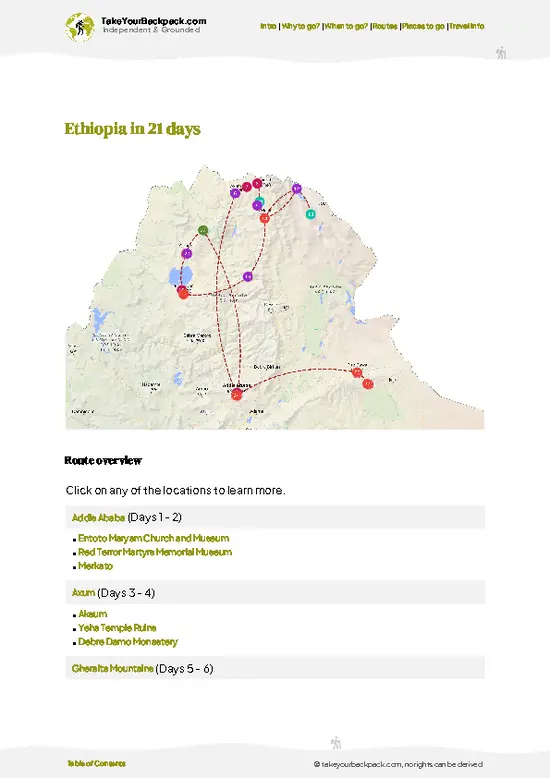
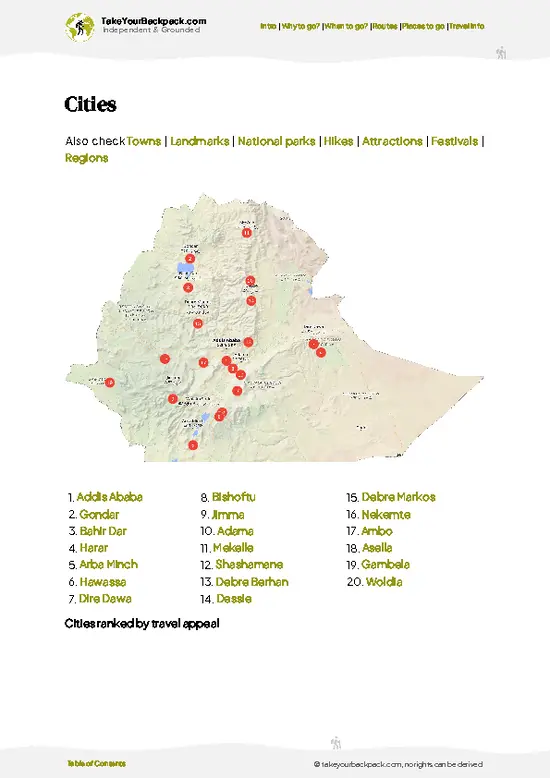
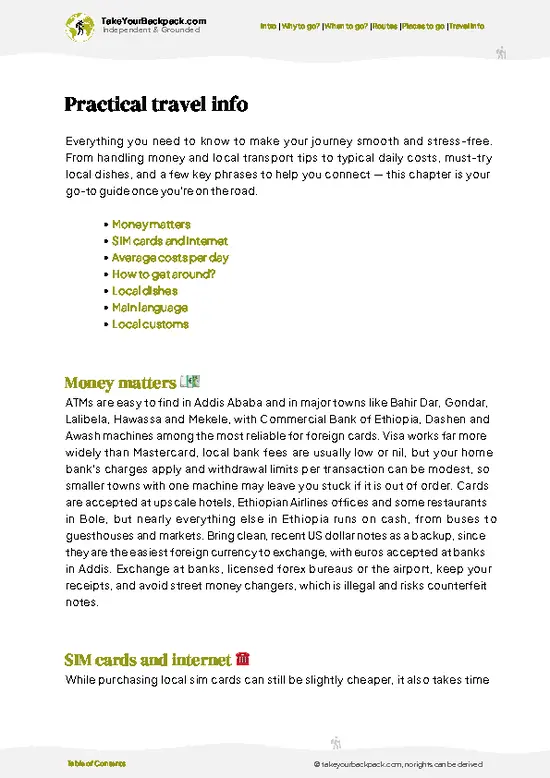
example page 0 from our offline Travel Guide for Ethiopia
example page 1 from our offline Travel Guide for Ethiopia
example page 2 from our offline Travel Guide for Ethiopia
example page 3 from our offline Travel Guide for Ethiopia
example page 4 from our offline Travel Guide for Ethiopia
example page 5 from our offline Travel Guide for Ethiopia
example page 6 from our offline Travel Guide for Ethiopia
example page 7 from our offline Travel Guide for Ethiopia
Loading the map 🌍
CLICK TO FILTER
cities
towns
landmarks
national parks
hikes
attractions
festivals
regions
SHOW COUNTRY’S BESTSHOW ALL

✨ Why go?
Ranked #17 national park in Ethiopia
The unique appeal for travelers

Alatish National Park suits backpackers who want wild Ethiopia without a single tour bus. It protects some of the country’s last lowland woodland and holds lions, leopards and Nile buffalo alongside elephants that cross from Sudan. You will pay little attention to crowds, because there are none. Exploration is self-directed, with local scouts guiding walks through the Alatish River valley. Camping is basic, so you carry your own food and gear. Pair it with a visit to Metema, the border town, for supplies. The effort is high, but you will almost certainly have the place to yourself.

💡 HighlightsPlaces and moments you shouldn't skip

  1. Alatish River: The park’s main watercourse, lined with tall trees and the best place for spotting buffalo and birds at dusk.
  2. Lion and leopard country: Big cats live in the woodland here, though sightings are rare and tracks are the more usual find.
  3. Elephant movements: Herds cross seasonally from Sudan, leaving broken branches and dung piles on the trails.
  4. Nile buffalo herds: Large groups gather near water in the dry months, easy to hear before you see them.
  5. Bird watching: Hornbills, bee-eaters and raptors fill the lowland canopy, especially early in the morning.
  6. Metema border market: Busy with Sudanese traders, selling sesame, fruit and basic supplies before the drive into the park.
  7. Dry woodland walks: Scout-led walks through bamboo and acacia, with baobabs standing out on the plain.
Alatish National … read more 👉
  1. Alatish River: The park’s main watercourse, lined with tall trees and the best place for spotting buffalo and birds at dusk.
  2. Lion and leopard country: Big cats live in the woodland here, though sightings are rare and tracks are the more usual find.
  3. Elephant movements: Herds cross seasonally from Sudan, leaving broken branches and dung piles on the trails.
  4. Nile buffalo herds: Large groups gather near water in the dry months, easy to hear before you see them.
  5. Bird watching: Hornbills, bee-eaters and raptors fill the lowland canopy, especially early in the morning.
  6. Metema border market: Busy with Sudanese traders, selling sesame, fruit and basic supplies before the drive into the park.
  7. Dry woodland walks: Scout-led walks through bamboo and acacia, with baobabs standing out on the plain.
Alatish National Park costs little to enter at the market stage, because the Metema border market is free to wander.
Spotted a mistake or missing something? Contact us.

🌤️ When to go?Weather, crowds, and seasonal trade-offs

  • Dry Season (November to March): Trails are firm and the grass is golden. Days reach 30 to 36°C (86 to 97°F), mornings start near 18°C (64°F). This is the main window for wildlife viewing and the only time most camps run.
  • Early Rains (April to May): Heat builds toward 38°C (100°F), and the first storms turn dirt tracks slick.
  • Wet Season (June to September): Heavy rain floods rivers and cuts roads. Park access is often impossible, and most lodging closes.
  • Late Rains (October): Greenery is lush, and tracks begin drying.
Arrive in December or January for the best mix of access and wildlife, and book transport ahead since few vehicles serve the area.

source: climatestotravel.comJANJanuary: highly recommended for travelingFEBFebruary: excellent for travelingMARMarch: excellent for travelingAPRApril: highly recommended for travelingMAYMay: good for travelingJUNJune: fair for travelingJULJuly: below average for travelingAUGAugust: below average for travelingSEPSeptember: fair for travelingOCTOctober: highly recommended for travelingNOVNovember: highly recommended for travelingDECDecember: highly recommended for traveling
when-to-go

✈️ The backpacker research shortcutEthiopia Travel Guide

An offline-friendly backpacking guide with optimized travel routes, ranked highlights, transport advice, and the best areas to stay.
example page 0 from our offline Travel Guide for Ethiopia
example page 1 from our offline Travel Guide for Ethiopia
example page 2 from our offline Travel Guide for Ethiopia
example page 3 from our offline Travel Guide for Ethiopia
example page 4 from our offline Travel Guide for Ethiopia
example page 5 from our offline Travel Guide for Ethiopia
example page 6 from our offline Travel Guide for Ethiopia
example page 7 from our offline Travel Guide for Ethiopia
The digital guide (380 pages) contains:
✅ 98 highlights, ranked by travel appeal
✅ Optimized 7, 14 & 21-day travel routes
✅ Cities, national parks, landmarks, beaches
✅ How to get around
✅ Offline-friendly for travel without Wi-Fi
👉 Click to see all 30+ guide features

📅 Plan smarter in minutes, not weeks
✅ Month by month travel advice
✅ Festivals & national holidays
✅ Budget expectations

🗺️ Go to the right places, skip the overrated ones
✅ Honest pros & cons of destinations
✅ Top hikes, parks & viewpoints
✅ Lesser-known places most travelers miss
✅ Clear “worth it vs skip it” guidance

🛏️ Travel smoothly without rookie mistakes
✅ Best areas to stay
✅ Transport systems explained simply
✅ Common scams & safety advice
✅ SIM cards, money & practical tips

🌍 Understand the country, not just visit it
✅ Culture & traditions
✅ 52 Essential phrases & customs
✅ Festivals worth planning around
✅ Traveler-friendly historical context
✅ Insights that make places more meaningful

📱 Built for real travel conditions
✅ Fully downloadable PDF
✅ Works completely offline
✅ Optimized for phone use
✅ Useful in remote areas & buses
✅ Everything in one place
Stop searching, start planning
Get instant access to your full guide. 30‑day money-back guarantee.
+ Add another guide for just

By proceeding you agree to our terms.
Sent to your inbox immediately after payment • 100% Secure Checkout
Best Backpacking Travel Advisor 2025 tourism awardBest Backpacking
Travel Advisor
2025
What others say about Take Your Backpack Guides:
⭐⭐⭐⭐⭐
Fantastic, amazing amount of information!
⭐⭐⭐⭐⭐
My goodness this is amazing, it's what I've been looking for hats off too you!
⭐⭐⭐⭐⭐
I think this is absolutely BRILLIANT
⭐⭐⭐⭐
Very complete and informative. It's still missing places, but I gotta to commend you
⭐⭐⭐⭐⭐
This is truly amazing, thank you, can't wait to explore it with my kids!
⭐⭐⭐⭐⭐
Awesome resource, thank you!
⭐⭐⭐⭐⭐
This is amazing! Can't wait to explore the ones I haven't seen
⭐⭐⭐⭐
I love this! Well done, great idea.
⭐⭐⭐⭐⭐
Thanks for taking the time to make this gem!
⭐⭐⭐⭐⭐
This might be the best website I've ever seen.
⭐⭐⭐⭐⭐
Congratulations, and thank you so much for your work; it's incredibly valuable.
⭐⭐⭐⭐
In all seriousness I think you did a great job pointing out the important spots
⭐⭐⭐⭐⭐
10/10 very good
⭐⭐⭐⭐⭐
As someone who's only just starting to visit regularly this is awesome, thank you.
⭐⭐⭐⭐
Thank you very much! I'm going to visit my dad, it's going to be very useful!
⭐⭐⭐⭐⭐
This is really cool! We'll be travelling for the first time and this definitely come in handy.
⭐⭐⭐⭐⭐
You are now our minister of culture, congratulations 👨‍💼
⭐⭐⭐⭐⭐
Just wanted to tell you that this is a pearl! Going to follow your recommendations.
⭐⭐⭐⭐⭐
This is so cool. I'll definitely be using the resource for my travels soon.
⭐⭐⭐⭐⭐
This is very impressive! Good work.
⭐⭐⭐⭐⭐
This is an amazing and informative site. Very well done!

🛏️ Where to stay?Choosing the right base

Alatish has no lodges inside, so most visitors sleep in a tent. Rangers at the park headquarters can point you to basic camping spots, but bring your own tent, sleeping bag, food and water treatment. Most travelers arrange camping through a Gondar-based tour operator who supplies gear, a cook, scouts and a 4x4.

The nearest town with beds is Metema, on the Sudan border, where simple guesthouses cost about US$8 to 20 a night. Gallabat-side lodging is limited and basic. Gondar, a long day’s drive away, has far better choices, from hostels at US$10 to 15 to mid-range hotels at US$40 to 70, and it is the practical base for organizing everything.

👛 Costs (as of 22 October 2026)Travel costs and budget guide for Alatish

Alatish National Park costs roughly US$95 to 160 per day for a backpacker, since the park is remote and mostly needs a guided arrangement. The figures below are estimates and include a share of a guide and vehicle.
CategoryBudget RangeLocal Reality
Entrance FeeUS$5 to 10Per person per day, paid at the park office; vehicle and camping fees are extra.
Camping/AccommodationUS$5 to 20Basic camping or Metema guesthouses outside the park.
Scouts and GuideUS$20 to 35Armed scout and guide are required for walks.
Local TransportUS$50 to 80Shared 4x4 hire from Gondar or Metema; costs drop when split among several people.
Food and SuppliesUS$10 to 20Stock up in Gondar or Metema; nothing is sold inside the park.
Total Daily BudgetUS$100Based on high-season camping and a shared vehicle.
⚠️ Prices can change and everyone travels differently, so take this as a rough guide. Hope it helps you plan your adventure!

🥾 TrailsTrail guide for Alatish national park

Alatish National Park has no marked, named trails, so walking means following a local scout from the ranger post along river banks and game tracks. Most outings are short morning or late-afternoon walks of two to four hours, when animals are active.
  • River walks: Flat, sandy and shaded in places, following the Alatish River for buffalo, baboons and birds.
  • Woodland loops: Gentle, dry terrain through acacia and bamboo, with thorny undergrowth and tsetse flies in places.
  • Difficulty: Easy gradients, but heat, sun and distance from help make these moderate in practice.
Reaching Alatish National Park means … read more 👉
Alatish National Park has no marked, named trails, so walking means following a local scout from the ranger post along river banks and game tracks. Most outings are short morning or late-afternoon walks of two to four hours, when animals are active.
  • River walks: Flat, sandy and shaded in places, following the Alatish River for buffalo, baboons and birds.
  • Woodland loops: Gentle, dry terrain through acacia and bamboo, with thorny undergrowth and tsetse flies in places.
  • Difficulty: Easy gradients, but heat, sun and distance from help make these moderate in practice.
Reaching Alatish National Park means taking a bus to Metema, then a 4x4 on rough tracks, so public transport alone will not get you inside. The park is almost empty, and there is an entrance fee payable to rangers in cash. A scout is required for walks. Go in the dry months, as tracks turn impassable when rains arrive.
⚠️ Hiking info can sometimes be outdated or inaccurate. Before you hit the trail, check the latest conditions with locals. If you do spot anything that's off, I'd love to hear from you, so I can update it for fellow travelers.

🛡️ SafetyScams, Hazards, and Annoyances

Alatish is remote wilderness, so self-sufficiency matters more than trail difficulty. Daytime heat often passes 35°C (95°F), so carry plenty of water and walk early and late. Elephants, buffalo, lions and leopards live here, which is why armed scouts accompany every walk. Follow their pace and instructions, keep quiet, and never approach animals. Malaria is present, so use prophylaxis and repellent. The Sudan border lies close, so check current advice for the region and avoid wandering near it. Bring a first-aid kit and a satellite communicator, since phone signal is patchy.

FAQCommon questions from travelers

Plan on 3 to 4 days for Alatish National Park, including travel. The drive from Gondar to Metema takes most of a day, and you need at least two full days inside for dawn and dusk game drives and a scout-led walk. Add a day if you want to see the Dinder-side landscapes and the Atbara river area.
Visiting Alatish National Park without your own vehicle is difficult, since public transport only reaches Metema, the nearest town. From Gondar buses take roughly 6 to 8 hours to Metema, then you need to hire a 4x4 for the rough tracks inside. Most backpackers book a Gondar tour operator, splitting a vehicle at about US$50 to 80 a day.
Yes, Alatish National Park charges a small daily entrance fee of roughly US$5 to 10 per person, plus fees for vehicles and camping. Armed scouts are mandatory for walking and cost around US$10 to 20 a day. Pay at the park headquarters in cash, and ask your operator to arrange any permit paperwork in Gondar beforehand.
⚠️ Things can change over time, so always validate details locally before you go.

Other Ethiopian national parks near Alatish

Explore more nearby:


💡 Not sure where to go next?
Create a personalized itinerary for Ethiopia including Alatish and the places that fit your trip.

Generate my itinerary

👉 Discover all national parks

Or checkout all Ethiopia has to offer (think cities, towns, villages, national parks, hikes, beaches, festivals)
Country photo of Ethiopia

We 💚 feedbackKey takeaways before you go

Alatish National Park trips fail when travelers arrive without a vehicle, cash or a scout arranged in Metema. I would sort all three the day before, bring double the water you think you need, and treat any big-cat sighting as a bonus.

✈️ When did I visit Ethiopia?
Ethiopia I visited back in October 2017. I combined the trip with a visit to Sudan. Ethiopia was a pure surprise with the magical scenery like the Danakil Depression and the Simien Mountains.

✍️ Help improve this page!
The information on this page is based on my own backpacking experience in Ethiopia, supplemented with up-to-date research and feedback from other travelers. Travel details can change, so if you notice anything outdated or incomplete, feel free to let me know.


🙋‍♂️ Give feedback

👋 Meet the founderWho’s Behind Take Your Backpack?

Johan, backpacker and founder of TakeYourBackpackHi, I’m Johan (Netherlands 🇳🇱), the creator of TakeYourBackpack. Over the past 3 decades, I’ve backpacked through 90+ countries across six continents, gaining extensive experience with independent travel, long-term trips, and overland routes.

This site is built on a combination of firsthand travel experience and carefully curated insights from other backpackers. Many guides are based on places I’ve personally visited, while others bring together tips, observations, and practical advice shared by trusted travelers I’ve met along the way.

The goal is to provide realistic, experience-driven guidance — not generic itineraries — so you can explore destinations with better context, clearer expectations, and more confidence.