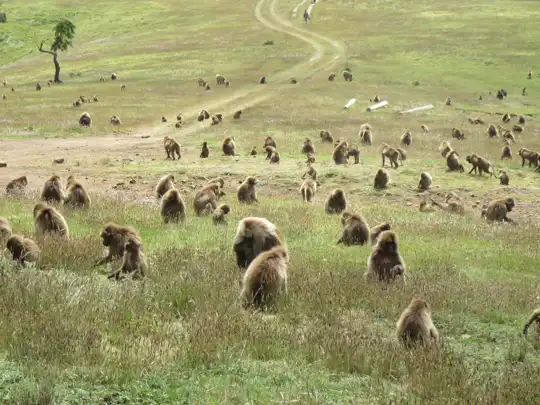
How many parks to visit: Two or three parks is the right number for most backpackers, with one highland park and one Rift Valley or lowland park making the best pairing. Ethiopia’s roads are slow, fees stack up, and each stop needs a day or two of arranging scouts, guides and rides. Beyond three, you spend more time in the back of a minibus than on a trail. Two well-chosen parks give you the cold, endemic-rich heights and the hot, dry, wide-open lowlands, and each one leaves you with a clear picture of how different the country feels from one altitude to the next.
Which kind suits you: If you walk well and like cheap, flexible travel, put the
highland parks first. You hike with a guide and a scout, sleep in basic lodges or tents, and spend your days on escarpment edges with wind in your ears …
read more 👉 How many parks to visit: Two or three parks is the right number for most backpackers, with one highland park and one Rift Valley or lowland park making the best pairing. Ethiopia’s roads are slow, fees stack up, and each stop needs a day or two of arranging scouts, guides and rides. Beyond three, you spend more time in the back of a minibus than on a trail. Two well-chosen parks give you the cold, endemic-rich heights and the hot, dry, wide-open lowlands, and each one leaves you with a clear picture of how different the country feels from one altitude to the next.Which kind suits you: If you walk well and like cheap, flexible travel, put the highland parks first. You hike with a guide and a scout, sleep in basic lodges or tents, and spend your days on escarpment edges with wind in your ears and the smell of woodsmoke and thyme-like moorland plants. The reward is views that run 50 kilometers or more into the haze. If you want wildlife and cultural contact, add a lowland or Rift Valley park, but accept that you will pay for a vehicle, usually a shared or private 4x4, and sleep somewhere hot. The pay-off there is open savanna, hot springs, birds at dawn and long horizons with almost no other tourists. Travelers on tight budgets should skip the remote southern parks, where costs per person can triple unless you split a vehicle.What it costs: Plan on US$30 to 60 a day in the highlands and US$80 to 200 a day in the southern lowlands. Park entry for foreigners generally runs about US$3 to 10 per day, with a separate vehicle fee of a similar size. Mandatory scouts cost around US$5 to 10 a day and guides US$20 to 35, both usually per group rather than per person. A full multi-day highland trek with guide, scout, cook and pack animals typically totals US$50 to 90 per person per day for a solo traveler and less when shared. Camping fees are small, around US$3 to 8, and basic lodges are US$10 to 40 a night. A hired 4x4 with driver for the southern parks costs US$120 to 250 a day plus fuel, so it is much cheaper split across four. Pay in cash, since cards rarely work outside Addis, and carry small birr notes for tips, which scouts and guides expect at the end.Safety and manners: Check current security before you book. Parts of the north have seen armed conflict, and some areas close to borders are risky, so ask your embassy and local operators in Gondar or Addis. Altitude is the daily health issue. Above 3,500 meters, ascend slowly, drink plenty of water and carry a warm layer, because the first night can bring headaches and shivering. Lowland parks bring heat, tsetse flies and malaria risk, so bring repellent and prophylaxis. Take the scout seriously. They carry a rifle mostly as a formality, but they know the ground and keep the local relationship smooth.
On culture, people living around the parks are farmers and herders, and the land is theirs too. Ask before photographing anyone. Some communities in the south expect payment for portraits, and a fair, agreed price avoids rows. Dress modestly in villages, keep to trails across crops, and buy tea or injera from local households when offered, since that money lands directly in the community and gives you a conversation you will not get from the trail.



 Best Backpacking
 Hi, I’m Johan (Netherlands 🇳🇱), the creator of TakeYourBackpack. Over the past 3 decades, I’ve backpacked through 90+ countries across six continents, gaining extensive experience with independent travel, long-term trips, and overland routes.