×

Ethiopia🇪🇹 | national parksDati Wolel National Parkmontane forest, bamboo thickets, endemic primates, highland streams | things to do and best time to go

Explore Loka Abaya National ParkExplore Harenna Forest

Backpacking in Dati Wolel
👀 For curious travelersnational park ranked #21
By Johan Kruseman 🇳🇱 | Updated May 27, 2026

The first real fork in the road at Dati Wolel National Park is whether to attempt it independently or pay for a local guide—skip the latter and you risk missing both the best trails and the only reliable way to avoid surprise fees. Dati Wolel sits in western Ethiopia, far from the tourist conveyor belt. It’s raw: think muddy tracks, dense forest, and wildlife you’ll actually have to look for. Hiking is wild and rewarding, but access is rough, signage is rare, and accommodation is basic at best—don’t expect the lodge comforts of Bale or Simien. Fewer crowds mean more solitude, but also less infrastructure. If you want a national park that feels like a secret, and you’re willing to work for it, Dati Wolel delivers—just don’t come expecting easy wins.

Discover everything you want to know in the 📖 Ethiopia Travel Guide.
Safety warning

The current risk level for Ethiopia is high. Check the advice before going.


Get your Ethiopia guide
101 ranked highlights, routes & tips, works offline (395 pages)
Loading the map 🌍
CLICK TO FILTER
cities
towns
landmarks
national parks
hikes
attractions
festivals
regions
SHOW COUNTRY’S BESTSHOW ALL

✨ Why go?
Ranked #21 national park in Ethiopia
What makes it a must-see national park

Dati Wolel National Park attracts backpackers for its independent exploration opportunities. The park’s layout allows for self-guided hikes, making it ideal for those who prefer to set their own pace. You can choose from a variety of trails, ranging from easy walks to more challenging treks, catering to different skill levels.

Budget-conscious travelers appreciate the camping options and nearby hostels, which keep costs low without sacrificing comfort. This flexibility means you can spend more on experiences that matter, like local cuisine or guided wildlife spotting.

While tours are available, many find that the park’s accessibility makes it easy to navigate solo. Just remember to carry enough water and snacks; the remote trails can be more demanding than they appear.
Want to include Dati Wolel National Park in your Ethiopia route?
Create a personalized Ethiopia itinerary that includes Dati Wolel National Park and the places that fit your trip — based on your travel style, budget, and available time. Get your route in seconds.

Generate my trip

💡 HighlightsEssential experiences to have while exploring Dati Wolel

  • Quick note on sources — Dati Wolel isn’t well-documented in international guides, so this list mixes local reports and what you’d expect from parks in that part of Ethiopia (river gorges, riparian forest, mixed woodland/savanna). Treat specifics as a roadmap for what to look for rather than a spot-by-spot guarantee.
  • River gorges and lookout points — Deep, sculpted river valleys cut through the park and make for dramatic viewpoints at sunrise and sunset. The sheer walls and layered rock give great photo angles and short, steep hikes to rewarding panoramas.
  • Riparian forest and waterfalls — Thick green corridors along the rivers host shady walks and small waterfalls or plunge pools. They feel unexpectedly lush compared with surrounding dry country and are cool refuges on hot days.
  • Birdwatching
read more 👉
  • Quick note on sources — Dati Wolel isn’t well-documented in international guides, so this list mixes local reports and what you’d expect from parks in that part of Ethiopia (river gorges, riparian forest, mixed woodland/savanna). Treat specifics as a roadmap for what to look for rather than a spot-by-spot guarantee.
  • River gorges and lookout points — Deep, sculpted river valleys cut through the park and make for dramatic viewpoints at sunrise and sunset. The sheer walls and layered rock give great photo angles and short, steep hikes to rewarding panoramas.
  • Riparian forest and waterfalls — Thick green corridors along the rivers host shady walks and small waterfalls or plunge pools. They feel unexpectedly lush compared with surrounding dry country and are cool refuges on hot days.
  • Birdwatching hotspots — Expect a mix of riverine and woodland species; local watchers report plentiful kingfishers, weavers, and migrant passerines. The park’s relative remoteness means quieter birding than busier parks, so you’ll often get good looks without crowds.
  • Wildlife viewing (antelopes, primates, river life) — You’ll likely see groups of small to medium antelope, troops of baboons or monkeys, and signs of larger mammals along game trails and waterholes. Rivers also attract hippo/crocodile activity where appropriate — always keep a safe distance and ask local guides.
  • Ridge hikes and plateaus (my personal favorite) — Long ridgelines that run through the park give continuous walking country with sweeping views, wildflowers in season, and excellent solo camping spots. It’s the kind of trail that feels remote in the best way: quiet, open, and rewarding after a long climb.
  • Seasonal wetlands and floodplains — During the rains, low areas turn into teeming wetlands that attract waterbirds, grazing herds, and dramatic temporary landscapes — great if you time your visit for wet-season color and wildlife density.
  • Local villages and cultural stops — Small settlements around the park offer markets, coffee rituals, and a chance to learn about land use and pastoral rhythms. Cultural interactions here aren’t staged for tourists, so respectful visits give real insight into life on the park’s edge.
Spotted a mistake or missing something? Contact us.

🌤️ When to go?Best time to explore Dati Wolel


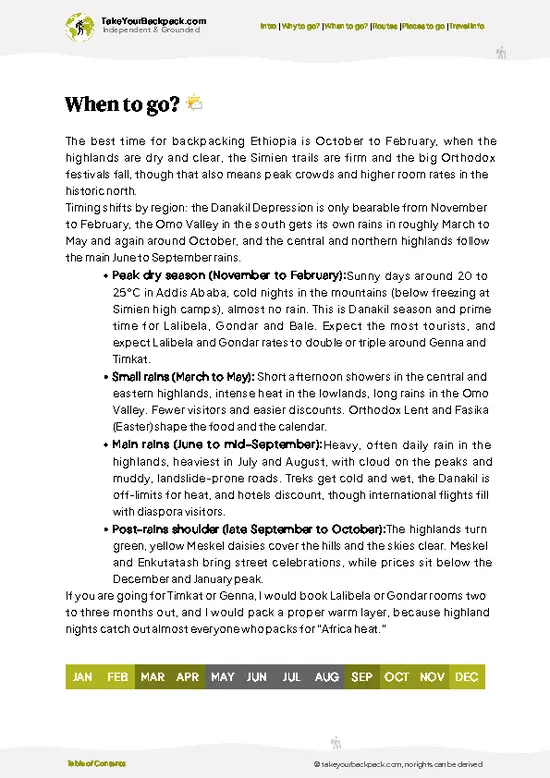
  • Weather: The dry season from October to February offers the most reliable conditions. Rainfall drops sharply, reducing muddy trails and leech encounters.

  • Temperature: Daytime highs hover around 20-25°C (68-77°F), comfortable for hiking. Nights can dip to 5-10°C (41-50°F), so pack layers.

  • Daylight Hours: Roughly 11-12 hours of daylight year-round, but the dry season’s clearer skies mean better visibility for wildlife spotting.

  • Crowds: Visitor numbers peak during the dry season, especially December and January. Expect more guides and slightly higher prices.

  • Seasonal Activities: Dry months are best for game viewing and birdwatching. The wet season brings lush greenery but limits access to some trails.

  • Price Fluctuations: Accommodation and guide fees rise 20-30% in peak months. Booking
read more 👉

  • Weather: The dry season from October to February offers the most reliable conditions. Rainfall drops sharply, reducing muddy trails and leech encounters.

  • Temperature: Daytime highs hover around 20-25°C (68-77°F), comfortable for hiking. Nights can dip to 5-10°C (41-50°F), so pack layers.

  • Daylight Hours: Roughly 11-12 hours of daylight year-round, but the dry season’s clearer skies mean better visibility for wildlife spotting.

  • Crowds: Visitor numbers peak during the dry season, especially December and January. Expect more guides and slightly higher prices.

  • Seasonal Activities: Dry months are best for game viewing and birdwatching. The wet season brings lush greenery but limits access to some trails.

  • Price Fluctuations: Accommodation and guide fees rise 20-30% in peak months. Booking ahead can lock in better rates.


Pro-tip: Aim for late October or early February to dodge crowds and enjoy stable weather without paying peak-season premiums.


source: climatestotravel.comJANJanuary: highly recommended for travelingFEBFebruary: excellent for travelingMARMarch: fair for travelingAPRApril: fair for travelingMAYMay: fair for travelingJUNJune: fair for travelingJULJuly: fair for travelingAUGAugust: fair for travelingSEPSeptember: good for travelingOCTOctober: excellent for travelingNOVNovember: highly recommended for travelingDECDecember: highly recommended for traveling
when-to-go

✈️ The backpacker research shortcutEthiopia Travel Guide

An offline-friendly backpacking guide with optimized travel routes, ranked highlights, transport advice, and the best areas to stay.
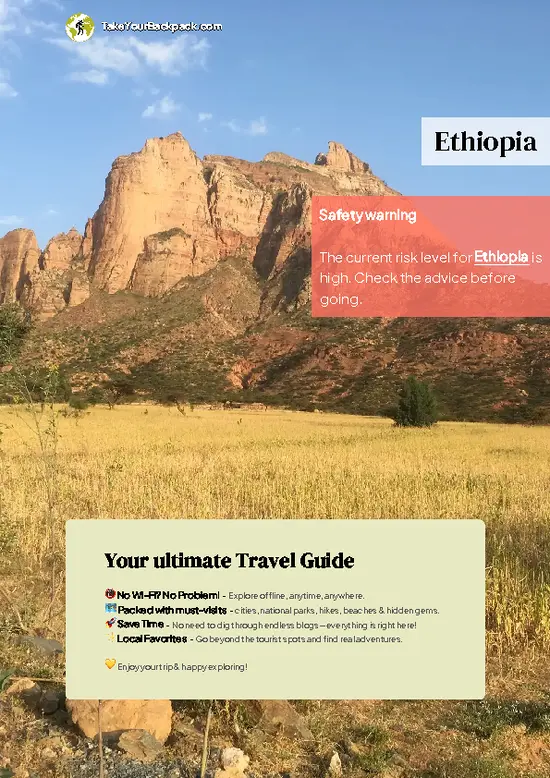
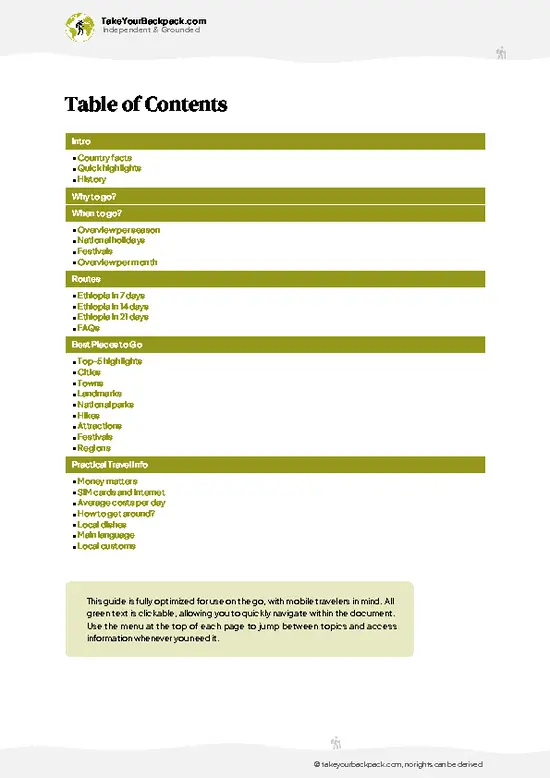
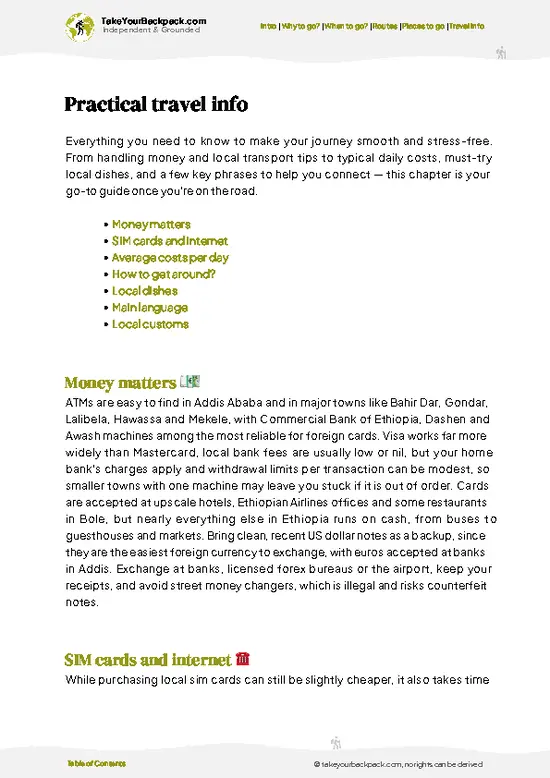
example page 0 from our offline Travel Guide for Ethiopia
example page 1 from our offline Travel Guide for Ethiopia
example page 2 from our offline Travel Guide for Ethiopia
example page 3 from our offline Travel Guide for Ethiopia
example page 4 from our offline Travel Guide for Ethiopia
example page 5 from our offline Travel Guide for Ethiopia
example page 6 from our offline Travel Guide for Ethiopia
example page 7 from our offline Travel Guide for Ethiopia
The digital guide (395 pages) contains:
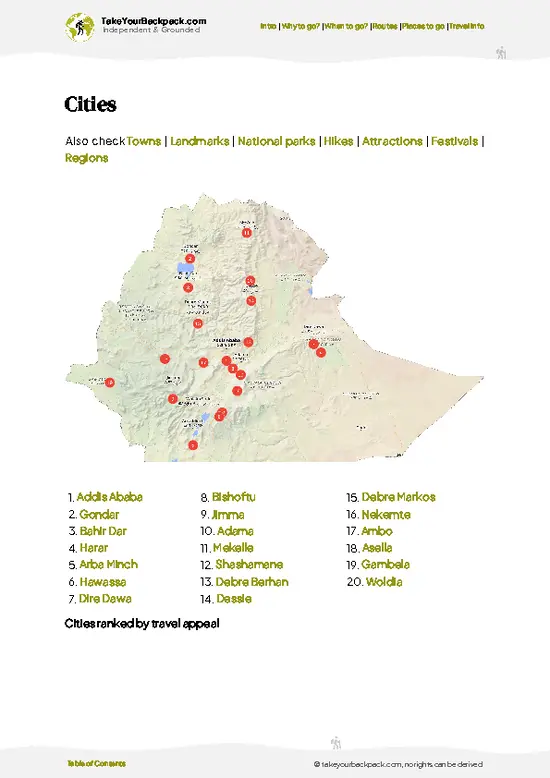
101 highlights, ranked by travel appeal
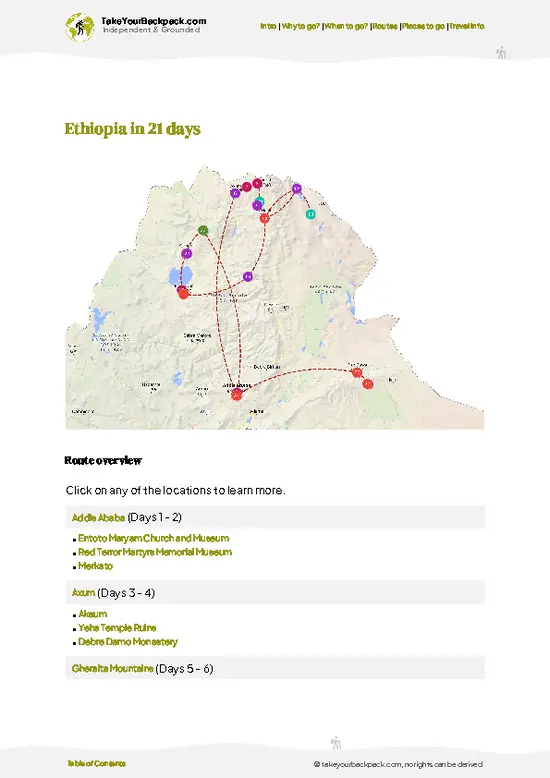
Optimized 7, 14 & 21-day travel routes
Cities, national parks, landmarks, beaches
How to get around
Offline-friendly for travel without Wi-Fi
👉 Click to see all 30+ guide features

📅 Plan smarter in minutes, not weeks
Month by month travel advice
Festivals & national holidays
Budget expectations

🗺️ Go to the right places, skip the overrated ones
Honest pros & cons of destinations
Top hikes, parks & viewpoints
Lesser-known places most travelers miss
Clear “worth it vs skip it” guidance

🛏️ Travel smoothly without rookie mistakes
Best areas to stay
Transport systems explained simply
Common scams & safety advice
SIM cards, money & practical tips

🌍 Understand the country, not just visit it
Culture & traditions
52 Essential phrases & customs
Festivals worth planning around
Traveler-friendly historical context
Insights that make places more meaningful

📱 Built for real travel conditions
Fully downloadable PDF
Works completely offline
Optimized for phone use
Useful in remote areas & buses
Everything in one place
Save weeks of stressful planning
Get instant access to your full guide. 30‑day money-back guarantee.


By proceeding you agree to our terms.
Sent to your inbox immediately after payment • 100% Secure Checkout
Best Backpacking Travel Advisor 2025 tourism awardBest Backpacking
Travel Advisor
2025
What others say about Take Your Backpack Guides:
⭐⭐⭐⭐⭐
Fantastic, amazing amount of information!
⭐⭐⭐⭐⭐
My goodness this is amazing, it's what I've been looking for hats off too you!
⭐⭐⭐⭐⭐
I think this is absolutely BRILLIANT
⭐⭐⭐⭐
Very complete and informative. It's still missing places, but I gotta to commend you
⭐⭐⭐⭐⭐
This is truly amazing, thank you, can't wait to explore it with my kids!
⭐⭐⭐⭐⭐
Awesome resource, thank you!
⭐⭐⭐⭐⭐
This is amazing! Can't wait to explore the ones I haven't seen
⭐⭐⭐⭐
I love this! Well done, great idea.
⭐⭐⭐⭐⭐
Thanks for taking the time to make this gem!
⭐⭐⭐⭐⭐
This might be the best website I've ever seen.
⭐⭐⭐⭐⭐
Congratulations, and thank you so much for your work; it's incredibly valuable.
⭐⭐⭐⭐
In all seriousness I think you did a great job pointing out the important spots
⭐⭐⭐⭐⭐
10/10 very good
⭐⭐⭐⭐⭐
As someone who's only just starting to visit regularly this is awesome, thank you.
⭐⭐⭐⭐
Thank you very much! I'm going to visit my dad, it's going to be very useful!
⭐⭐⭐⭐⭐
This is really cool! We'll be travelling for the first time and this definitely come in handy.
⭐⭐⭐⭐⭐
You are now our minister of culture, congratulations 👨‍💼
⭐⭐⭐⭐⭐
Just wanted to tell you that this is a pearl! Going to follow your recommendations.
⭐⭐⭐⭐⭐
This is so cool. I'll definitely be using the resource for my travels soon.
⭐⭐⭐⭐⭐
This is very impressive! Good work.
⭐⭐⭐⭐⭐
This is an amazing and informative site. Very well done!

🛏️ Where to stay?Best areas and accommodation options

Dati Wolel National Park is a treasure for backpackers, but accommodation options are limited. Inside the park, there are no formal lodges or hotels. Instead, you’ll find basic camping facilities. Bring your own gear and be prepared for a rugged experience. This is where the wild truly feels wild.

For more comfort, head to nearby towns like Asella or Adama. Asella offers budget-friendly guesthouses, while Adama has a few mid-range hotels. Both towns provide a good base for day trips into the park.

Keep in mind that transportation can be tricky. Public transport is available, but it’s often … read more 👉
Dati Wolel National Park is a treasure for backpackers, but accommodation options are limited. Inside the park, there are no formal lodges or hotels. Instead, you’ll find basic camping facilities. Bring your own gear and be prepared for a rugged experience. This is where the wild truly feels wild.

For more comfort, head to nearby towns like Asella or Adama. Asella offers budget-friendly guesthouses, while Adama has a few mid-range hotels. Both towns provide a good base for day trips into the park.

Keep in mind that transportation can be tricky. Public transport is available, but it’s often unreliable. Renting a car or arranging a local guide can save you time and energy, allowing you to focus on the stunning landscapes and wildlife. Prioritize your logistics to maximize your adventure without draining your budget.

👛 Costs (as of 6 June 2026)How expensive it really is

Visiting Dati Wolel National Park in Ethiopia requires some planning to avoid unexpected costs. Entrance fees typically range from $5 to $10 per person. This is a small price for access to the park’s diverse wildlife and stunning landscapes.

Guided tours are highly recommended. They can cost between $50 and $150, depending on the length and inclusivity of the tour. A full-day tour often includes transportation, meals, and a knowledgeable guide. This investment enhances your experience and ensures you don’t miss key sights.

Accommodation options vary. Basic lodges start around $20 per night, while more comfortable options can go up to $70. Booking in advance can help secure better rates and availability.

Transportation to the park can be tricky. If you’re coming from Addis Ababa, expect … read more 👉
Visiting Dati Wolel National Park in Ethiopia requires some planning to avoid unexpected costs. Entrance fees typically range from $5 to $10 per person. This is a small price for access to the park’s diverse wildlife and stunning landscapes.

Guided tours are highly recommended. They can cost between $50 and $150, depending on the length and inclusivity of the tour. A full-day tour often includes transportation, meals, and a knowledgeable guide. This investment enhances your experience and ensures you don’t miss key sights.

Accommodation options vary. Basic lodges start around $20 per night, while more comfortable options can go up to $70. Booking in advance can help secure better rates and availability.

Transportation to the park can be tricky. If you’re coming from Addis Ababa, expect to pay around $100 for a private taxi. Public transport is cheaper but less reliable. Factor in extra time if you choose that route.

Food costs are generally low. Local meals can be found for $5 to $10. However, dining in more tourist-oriented spots may push prices up to $20 or more.

Plan for additional costs like park activities or equipment rentals. These can add up, so budget accordingly. Keeping these details in mind will help you preserve your energy and budget for the experiences that truly matter.
⚠️ Prices can change and everyone travels differently, so take this as a rough guide. Hope it helps you plan your adventure!

🥾 TrailsScenic routes and wildlife spotting in Dati Wolel

Dati Wolel National Park in Ethiopia offers some stunning hiking opportunities that can really make your trip memorable. The park is known for its diverse landscapes, from lush forests to rolling hills, and it’s a great spot for spotting wildlife like baboons and various bird species. The terrain can be a bit rugged, so prepare for some ups and downs, but the views are totally worth it.

One of the standout trails is the Wolel Mountain Trail. Here are the details:
  • Length: 10 km
  • Estimated Duration: 4-5 hours
  • Difficulty Level: Moderate
  • Key Features: Panoramic views, unique flora, and fauna
  • Terrain:
read more 👉
Dati Wolel National Park in Ethiopia offers some stunning hiking opportunities that can really make your trip memorable. The park is known for its diverse landscapes, from lush forests to rolling hills, and it’s a great spot for spotting wildlife like baboons and various bird species. The terrain can be a bit rugged, so prepare for some ups and downs, but the views are totally worth it.

One of the standout trails is the Wolel Mountain Trail. Here are the details:
  • Length: 10 km
  • Estimated Duration: 4-5 hours
  • Difficulty Level: Moderate
  • Key Features: Panoramic views, unique flora, and fauna
  • Terrain: Mixed, with rocky sections and forested areas

Getting to the park isn’t too tricky. You can hop on a bus from Addis Ababa to nearby towns, and then catch a local taxi or even a motorbike to the park entrance. Just keep an eye on your belongings, as public transport can get a bit crowded. As for the crowds, it’s generally not too busy, especially compared to some of the more famous parks in Ethiopia. Entrance fees are usually pretty reasonable, but it’s always a good idea to check ahead, as prices can change.
⚠️ Hiking info can sometimes be outdated or inaccurate. Before you hit the trail, check the latest conditions with locals. If you do spot anything that's off, I'd love to hear from you, so I can update it for fellow travelers.

🛡️ SafetyStaying Safe: What Travelers Should Know

Dati Wolel National Park offers a rewarding experience, but a few practical considerations can enhance your adventure. Weather can shift quickly, so pack layers and be ready for rain, especially during the wet season. The terrain varies; some trails are steep and rocky, requiring good footwear and careful navigation.

Wildlife encounters are possible, but most animals tend to avoid humans. If you spot something, keep your distance and observe quietly.

First-timers often underestimate the altitude; acclimatization is key. Pace yourself, especially on ascents. Lastly, ensure you have a reliable map or GPS, as trail markers can be sparse. With these tips, you’ll preserve your energy and budget for the moments that truly matter.

Other Ethiopian national parks near Dati Wolel

Explore more nearby:


💡 Not sure where to go next?
Create a personalized itinerary for Ethiopia including Dati Wolel and the places that fit your trip.

Generate my itinerary

👉 Discover all national parks

Or checkout all Ethiopia has to offer (think cities, towns, villages, national parks, hikes, beaches, festivals)
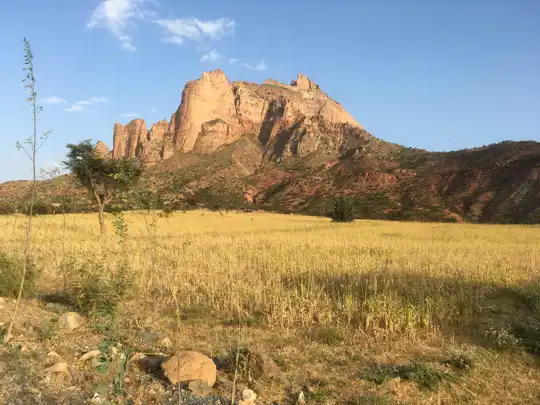
Country photo of Ethiopia

We 💚 feedbackWhat to keep in mind

Dati Wolel National Park is a treasure for those who crave solitude and the chance to spot rare wildlife. The lush landscapes and unique ecosystems are a photographer’s dream. However, be prepared for limited infrastructure; basic accommodations can be a letdown. Embrace the simplicity, and you’ll find the park’s true charm in its raw beauty.

✈️ When did I visit Ethiopia?
Ethiopia I visited back in October 2017. I combined the trip with a visit to Sudan. Ethiopia was a pure suprise with the magical scenery like the Danikal Depression and the Simien Mountains.

✍️ Help improve this page!
The information on this page is based on my own backpacking experience in Ethiopia, supplemented with up-to-date research and feedback from other travelers. Travel details can change, so if you notice anything outdated or incomplete, feel free to let me know.


🙋‍♂️ Give feedback

👋 Meet the founderWho’s Behind Take Your Backpack?

Johan, backpacker and founder of TakeYourBackpackHi, I’m Johan (Netherlands 🇳🇱), the creator of TakeYourBackpack. Over the past decade, I’ve backpacked through 80+ countries across six continents, gaining extensive experience with independent travel, long-term trips, and overland routes.

This site is built on a combination of firsthand travel experience and carefully curated insights from other backpackers. Many guides are based on places I’ve personally visited, while others bring together tips, observations, and practical advice shared by trusted travelers I’ve met along the way.

The goal is to provide realistic, experience-driven guidance — not generic itineraries — so you can explore destinations with better context, clearer expectations, and more confidence.

Get full Ethiopia guide •
Instant download • 101 highlights • Full Offline guide