×

Ethiopia🇪🇹 | national parksBale MountainsSanetti Plateau, Ethiopian wolf, Harenna escarpment, alpine moorland | things to do and best time to go

Explore AwashExplore Kafa Biosphere Reserve

Backpacking in Bale Mountains
UNESCO World Heritage site
🏆 Top picknational park ranked #2
By Johan Kruseman 🇳🇱 | Updated June 3, 2026

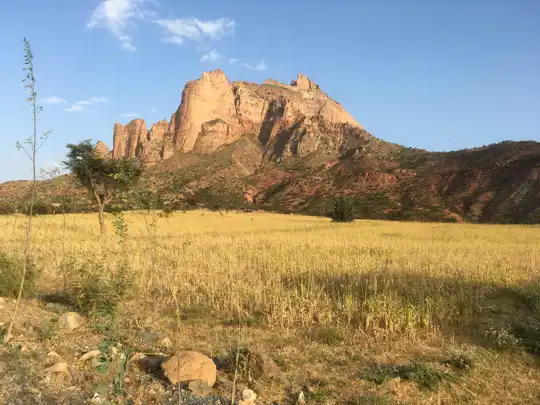
Most travelers assume the Bale Mountains are just a colder, quieter version of the Simien Mountains—wrong. Bale is its own beast, tucked in Ethiopia’s southeast, far from the usual tourist drag. The park sprawls across moorlands, cloud forests, and volcanic ridges, with trails that feel like they belong in another hemisphere. You’ll see Ethiopian wolves if you’re lucky, but you’ll definitely see more warthogs than people. Hiking here is wild and raw, with routes ranging from easy day walks to multi-day treks that test your legs and your patience with the weather. The scenery is stark, not postcard-pretty, but it grows on you—especially when the mist rolls in and you realize you haven’t heard a car in days. Getting here is a hassle: long bus rides, rough roads, and a park entrance fee that’s not cheap by Ethiopian standards. Accommodation is basic—think chilly tents or government-run lodges with more character than comfort. Compared to Simien or Awash, Bale is lonelier, less dramatic, but more honest. If you want crowds, go elsewhere. If you want space and silence, this is your park.

Discover everything you want to know in the 📖 Ethiopia Travel Guide.
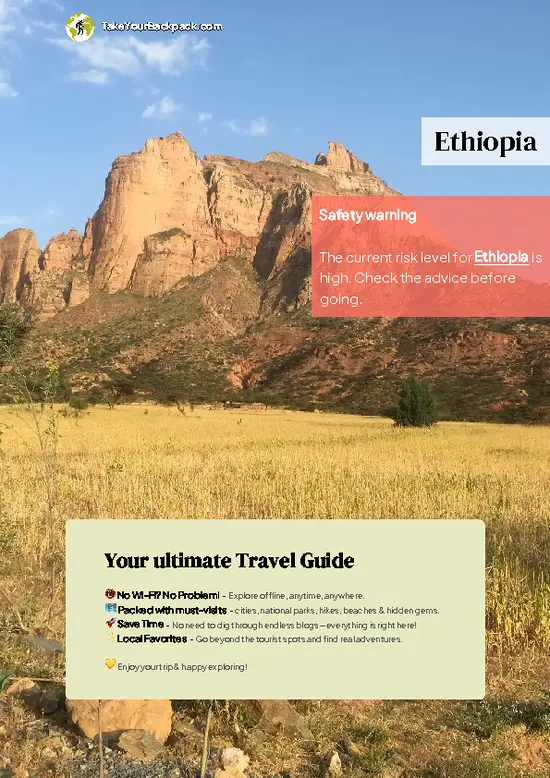
Safety warning

The current risk level for Ethiopia is high. Check the advice before going.


Get your Ethiopia guide
101 ranked highlights, routes & tips, works offline (398 pages)
Loading the map 🌍
CLICK TO FILTER
cities
towns
landmarks
national parks
hikes
attractions
festivals
regions
SHOW COUNTRY’S BESTSHOW ALL

✨ Why go?
Ranked #2 national park in Ethiopia
The unique appeal for travelers

Backpackers flock to the Bale Mountains for a blend of independent exploration and stunning landscapes. This park offers a rare chance to roam freely, making it ideal for those who prefer to set their own pace. With a variety of trails, from easy walks to challenging hikes, you can tailor your experience to your skill level.

Budget-conscious travelers will appreciate the camping options and nearby hostels that keep costs down without sacrificing comfort. Many sites allow you to pitch a tent, giving you the chance to sleep under the stars while soaking in the park’s natural beauty.

While guided tours are available, the park is well-suited for self-guided travelers. Clear signage and well-marked paths make navigation straightforward, allowing you to dive into the experience without feeling … read more 👉
Backpackers flock to the Bale Mountains for a blend of independent exploration and stunning landscapes. This park offers a rare chance to roam freely, making it ideal for those who prefer to set their own pace. With a variety of trails, from easy walks to challenging hikes, you can tailor your experience to your skill level.

Budget-conscious travelers will appreciate the camping options and nearby hostels that keep costs down without sacrificing comfort. Many sites allow you to pitch a tent, giving you the chance to sleep under the stars while soaking in the park’s natural beauty.

While guided tours are available, the park is well-suited for self-guided travelers. Clear signage and well-marked paths make navigation straightforward, allowing you to dive into the experience without feeling tethered to a group. Just be mindful of the altitude and weather changes; preparation is key.

In short, the Bale Mountains offer a unique mix of freedom, affordability, and diverse trails, making it a top choice for backpackers looking to connect with nature on their own terms.
Want to include Bale Mountains in your Ethiopia route?
Create a personalized Ethiopia itinerary that includes Bale Mountains and the places that fit your trip — based on your travel style, budget, and available time. Get your route in seconds.

Generate my trip

💡 HighlightsKey sights and experiences for travelers

  • Sanetti Plateau — A high-altitude moorland that feels lunar: sweeping grasslands, weird rock formations and miles of visibility. Great for long, easy walks and sunrises that light up the giant lobelias and ridgelines.
  • Ethiopian wolf habitat — Bale is one of the best places on earth to see the endangered Ethiopian wolf. Early mornings on the plateau can reward you with groups of these rare, fox-like predators hunting rodents.
  • Giant lobelia fields — Towering, prehistoric-looking plants scattered across the afro-alpine zone. They’re photogenic, oddly sculptural, and a signature of Bale’s high moor ecosystem.
  • Tullu Dimtu (peak hikes) — The park’s highest reaches with panoramic views that sweep to the Rift escarpment on clear days. You can hike or drive parts of it; altitude makes it demanding
read more 👉
  • Sanetti Plateau — A high-altitude moorland that feels lunar: sweeping grasslands, weird rock formations and miles of visibility. Great for long, easy walks and sunrises that light up the giant lobelias and ridgelines.
  • Ethiopian wolf habitat — Bale is one of the best places on earth to see the endangered Ethiopian wolf. Early mornings on the plateau can reward you with groups of these rare, fox-like predators hunting rodents.
  • Giant lobelia fields — Towering, prehistoric-looking plants scattered across the afro-alpine zone. They’re photogenic, oddly sculptural, and a signature of Bale’s high moor ecosystem.
  • Tullu Dimtu (peak hikes) — The park’s highest reaches with panoramic views that sweep to the Rift escarpment on clear days. You can hike or drive parts of it; altitude makes it demanding but worth the view.
  • Harenna Forest — A lush, mossy cloud forest on the southern slopes and my personal favorite — the contrast to the plateau is striking. Narrow trails, waterfalls, and dense birdlife make it feel like a whole different world.
  • Mountain nyala sightings — An endemic and very shy antelope, rare outside protected areas. Spotting one requires patience (and a local guide), but seeing its spiral horns is a real highlight.
  • Dinsho and the juniper woodlands — The park’s service center and a good base for short walks among ancient junipers, easy wildlife viewing, and meeting local guides. Practical for arranging treks and getting the lay of the land.
Spotted a mistake or missing something? Contact us.
🌤️ When to go?Seasonal considerations and timing


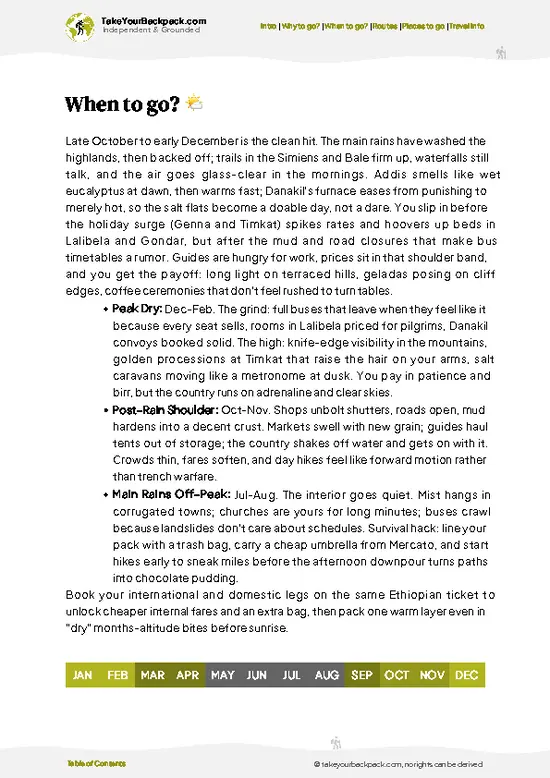
  • Weather: The Bale Mountains experience a distinct wet season from June to September, making trails muddy and visibility poor. The dry season, from October to May, offers clearer skies and more stable conditions, ideal for trekking.

  • Temperature: Daytime temperatures in the dry season hover around 15-20°C (59-68°F), but nights can drop sharply to near freezing, especially at higher elevations. Prepare for cold mornings and evenings even in the warmer months.

  • Daylight Hours: Daylight remains fairly consistent year-round, roughly 12 hours per day, but starting hikes early is crucial to avoid afternoon clouds and maximize wildlife spotting.

  • Crowds: Visitor numbers peak during the dry season, especially December to February, coinciding with holiday travel. Expect quieter trails in shoulder
read more 👉

  • Weather: The Bale Mountains experience a distinct wet season from June to September, making trails muddy and visibility poor. The dry season, from October to May, offers clearer skies and more stable conditions, ideal for trekking.

  • Temperature: Daytime temperatures in the dry season hover around 15-20°C (59-68°F), but nights can drop sharply to near freezing, especially at higher elevations. Prepare for cold mornings and evenings even in the warmer months.

  • Daylight Hours: Daylight remains fairly consistent year-round, roughly 12 hours per day, but starting hikes early is crucial to avoid afternoon clouds and maximize wildlife spotting.

  • Crowds: Visitor numbers peak during the dry season, especially December to February, coinciding with holiday travel. Expect quieter trails in shoulder months like October and May.

  • Seasonal Activities: The dry season is best for hiking and wildlife viewing, including spotting the rare Ethiopian wolf. The wet season brings lush landscapes but limits access to some areas due to slippery paths.

  • Price Fluctuations: Accommodation and guide fees tend to rise in peak months (December-February). Booking in shoulder seasons can save money without sacrificing much in terms of experience.


Pro-tip: Aim for late October or early May to balance good weather, fewer crowds, and better prices—your energy and budget will thank you.


source: climatestotravel.comJANJanuary: highly recommended for travelingFEBFebruary: highly recommended for travelingMARMarch: excellent for travelingAPRApril: excellent for travelingMAYMay: highly recommended for travelingJUNJune: fair for travelingJULJuly: fair for travelingAUGAugust: fair for travelingSEPSeptember: fair for travelingOCTOctober: highly recommended for travelingNOVNovember: excellent for travelingDECDecember: highly recommended for traveling
when-to-go

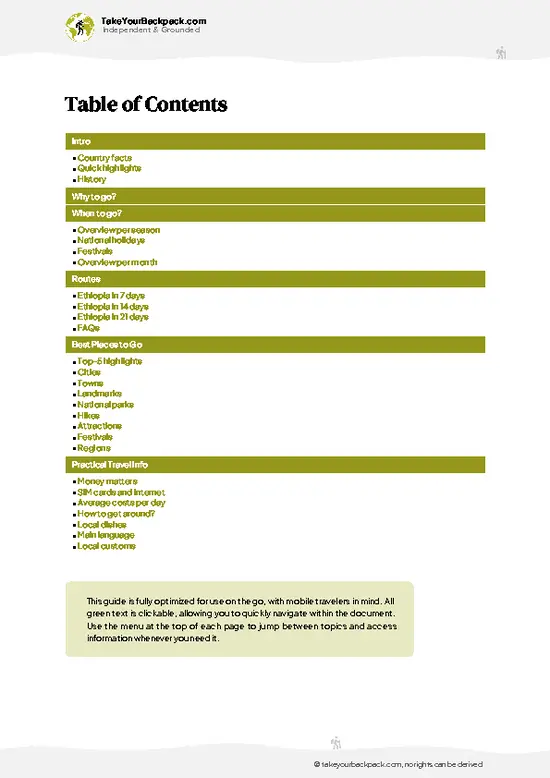
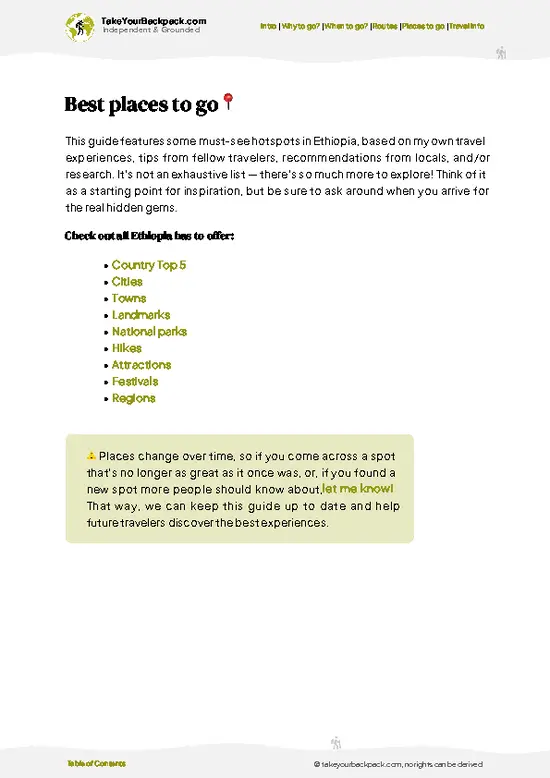
✈️ The backpacker research shortcutEthiopia Travel Guide

An offline-friendly backpacking guide with optimized travel routes, ranked highlights, transport advice, and the best areas to stay.
example page 0 from our offline Travel Guide for Ethiopia
example page 1 from our offline Travel Guide for Ethiopia
example page 2 from our offline Travel Guide for Ethiopia
example page 3 from our offline Travel Guide for Ethiopia
example page 4 from our offline Travel Guide for Ethiopia
example page 5 from our offline Travel Guide for Ethiopia
example page 6 from our offline Travel Guide for Ethiopia
example page 7 from our offline Travel Guide for Ethiopia
The digital guide (398 pages) contains:
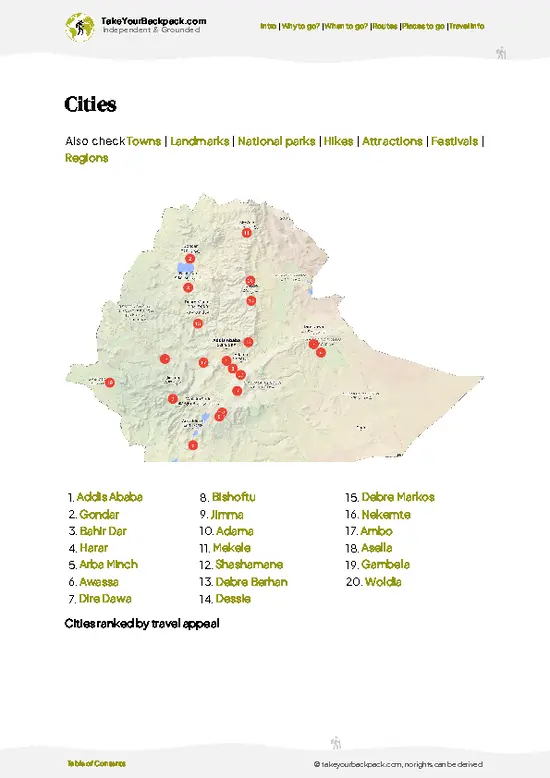
101 highlights, ranked by travel appeal
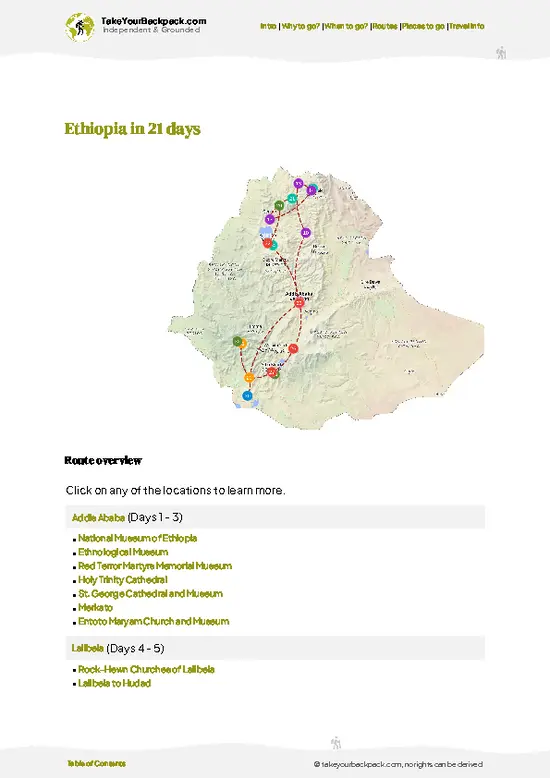
Optimized 7, 14 & 21-day travel routes
Cities, national parks, landmarks, beaches
How to get around
Offline-friendly for travel without Wi-Fi
👉 Click to see all 30+ guide features

📅 Plan smarter in minutes, not weeks
Month by month travel advice
Festivals & national holidays
Budget expectations

🗺️ Go to the right places, skip the overrated ones
Honest pros & cons of destinations
Top hikes, parks & viewpoints
Lesser-known places most travelers miss
Clear “worth it vs skip it” guidance

🛏️ Travel smoothly without rookie mistakes
Best areas to stay
Transport systems explained simply
Common scams & safety advice
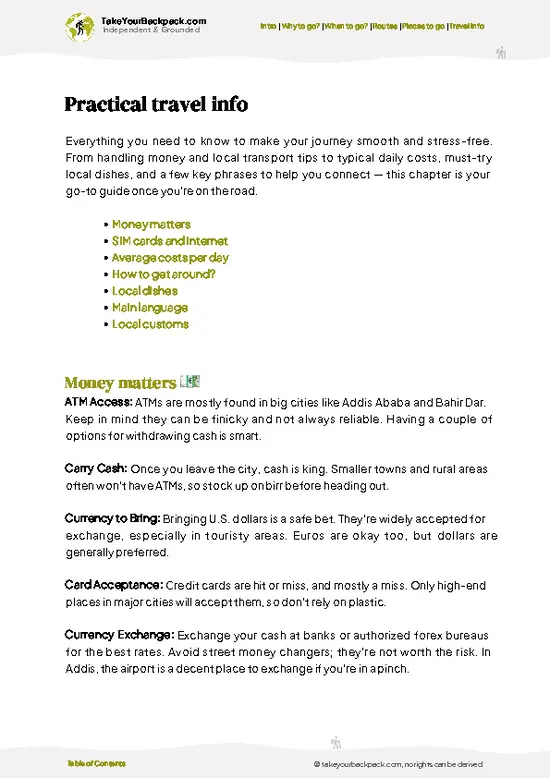
SIM cards, money & practical tips

🌍 Understand the country, not just visit it
Culture & traditions
52 Essential phrases & customs
Festivals worth planning around
Traveler-friendly historical context
Insights that make places more meaningful

📱 Built for real travel conditions
Fully downloadable PDF
Works completely offline
Optimized for phone use
Useful in remote areas & buses
Everything in one place
Save weeks of stressful planning
Get instant access to your full guide. 30‑day money-back guarantee.


By proceeding you agree to our terms.
Sent to your inbox immediately after payment • 100% Secure Checkout
Best Backpacking Travel Advisor 2025 tourism awardBest Backpacking
Travel Advisor
2025
What others say about Take Your Backpack Guides:
⭐⭐⭐⭐⭐
Fantastic, amazing amount of information!
⭐⭐⭐⭐⭐
My goodness this is amazing, it's what I've been looking for hats off too you!
⭐⭐⭐⭐⭐
I think this is absolutely BRILLIANT
⭐⭐⭐⭐
Very complete and informative. It's still missing places, but I gotta to commend you
⭐⭐⭐⭐⭐
This is truly amazing, thank you, can't wait to explore it with my kids!
⭐⭐⭐⭐⭐
Awesome resource, thank you!
⭐⭐⭐⭐⭐
This is amazing! Can't wait to explore the ones I haven't seen
⭐⭐⭐⭐
I love this! Well done, great idea.
⭐⭐⭐⭐⭐
Thanks for taking the time to make this gem!
⭐⭐⭐⭐⭐
This might be the best website I've ever seen.
⭐⭐⭐⭐⭐
Congratulations, and thank you so much for your work; it's incredibly valuable.
⭐⭐⭐⭐
In all seriousness I think you did a great job pointing out the important spots
⭐⭐⭐⭐⭐
10/10 very good
⭐⭐⭐⭐⭐
As someone who's only just starting to visit regularly this is awesome, thank you.
⭐⭐⭐⭐
Thank you very much! I'm going to visit my dad, it's going to be very useful!
⭐⭐⭐⭐⭐
This is really cool! We'll be travelling for the first time and this definitely come in handy.
⭐⭐⭐⭐⭐
You are now our minister of culture, congratulations 👨‍💼
⭐⭐⭐⭐⭐
Just wanted to tell you that this is a pearl! Going to follow your recommendations.
⭐⭐⭐⭐⭐
This is so cool. I'll definitely be using the resource for my travels soon.
⭐⭐⭐⭐⭐
This is very impressive! Good work.
⭐⭐⭐⭐⭐
This is an amazing and informative site. Very well done!

🛏️ Where to stay?How to pick the right area

The Bale Mountains National Park offers a few solid options for backpackers, but you need to plan wisely. Inside the park, the choices are limited. The Bale Mountain Lodge is a standout, providing comfortable accommodations with a focus on sustainability. It’s a bit of a splurge, but the access to trails and local guides can make it worth it.

If you’re looking for something more budget-friendly, consider staying in the nearby town of Dinsho. There are basic guesthouses that cater to backpackers, like the Dinsho Lodge. It’s simple but offers a cozy atmosphere and a chance to connect with fellow … read more 👉
The Bale Mountains National Park offers a few solid options for backpackers, but you need to plan wisely. Inside the park, the choices are limited. The Bale Mountain Lodge is a standout, providing comfortable accommodations with a focus on sustainability. It’s a bit of a splurge, but the access to trails and local guides can make it worth it.

If you’re looking for something more budget-friendly, consider staying in the nearby town of Dinsho. There are basic guesthouses that cater to backpackers, like the Dinsho Lodge. It’s simple but offers a cozy atmosphere and a chance to connect with fellow travelers. Plus, you can easily arrange park entry and guides from here.

Another option is Goba, about an hour from the park entrance. It has a few hotels and guesthouses that are more affordable. Staying here gives you a taste of local life, but it’s a longer trek to the park each day.

Be mindful of transportation costs and time. Public transport can be unpredictable, so factor in extra time for travel. Prioritize your energy and budget for the experiences that matter—like trekking through the stunning landscapes and spotting the unique wildlife.

👛 Costs (as of 16 June 2026)What things cost and how to budget

Visiting Bale Mountains National Park in Ethiopia can be a rewarding experience, but it’s essential to be aware of the costs involved to avoid surprises.

Entry fees for the park typically range from €5 to €10 per person per day. This fee grants you access to the stunning landscapes and diverse wildlife. However, if you plan to camp or stay overnight, expect to pay an additional €10 to €20 for camping permits.

Guided tours are highly recommended for a deeper understanding of the area. Prices for local guides can vary, generally falling between €30 and €50 per day. This cost often includes their expertise and sometimes equipment, but confirm specifics beforehand.

Transportation to the park can be another significant expense. If you’re traveling from Addis Ababa, budget around €50 to €100 … read more 👉
Visiting Bale Mountains National Park in Ethiopia can be a rewarding experience, but it’s essential to be aware of the costs involved to avoid surprises.

Entry fees for the park typically range from €5 to €10 per person per day. This fee grants you access to the stunning landscapes and diverse wildlife. However, if you plan to camp or stay overnight, expect to pay an additional €10 to €20 for camping permits.

Guided tours are highly recommended for a deeper understanding of the area. Prices for local guides can vary, generally falling between €30 and €50 per day. This cost often includes their expertise and sometimes equipment, but confirm specifics beforehand.

Transportation to the park can be another significant expense. If you’re traveling from Addis Ababa, budget around €50 to €100 for a private taxi or shared minibus. The journey takes about 6 to 8 hours, so factor in comfort and time.

Accommodations near the park range from basic lodges to more comfortable options. Expect to pay between €20 and €80 per night, depending on the level of comfort you seek. Booking in advance can save you some hassle and ensure availability.

Food costs are relatively low. Meals at local restaurants can range from €3 to €10. If you’re self-catering, grocery prices are reasonable, but be prepared for limited options in remote areas.

In summary, a budget of around €100 to €200 per day should cover entry fees, guiding services, transportation, accommodation, and meals. This range allows for flexibility while ensuring you can enjoy the park without financial stress.
⚠️ Prices can change and everyone travels differently, so take this as a rough guide. Hope it helps you plan your adventure!

🥾 TrailsHiking Bale Mountains national park: highlights and difficulty

The Bale Mountains in Ethiopia are a hiker’s dream, offering a mix of stunning landscapes, diverse wildlife, and a bit of a challenge that keeps things interesting. Picture rolling grasslands, jagged peaks, and deep valleys, all under a sky that seems to stretch forever. The terrain can range from smooth trails to rocky paths, so be ready for a workout. You might spot some rare Ethiopian wolves or even the majestic mountain nyala if you’re lucky.

One of the standout trails is the Sanetti Plateau Trail. Here are some details:
  • Length: 15 km
  • Estimated duration: 5-7 hours
  • Difficulty level: Moderate
  • Key
read more 👉
The Bale Mountains in Ethiopia are a hiker’s dream, offering a mix of stunning landscapes, diverse wildlife, and a bit of a challenge that keeps things interesting. Picture rolling grasslands, jagged peaks, and deep valleys, all under a sky that seems to stretch forever. The terrain can range from smooth trails to rocky paths, so be ready for a workout. You might spot some rare Ethiopian wolves or even the majestic mountain nyala if you’re lucky.

One of the standout trails is the Sanetti Plateau Trail. Here are some details:
  • Length: 15 km
  • Estimated duration: 5-7 hours
  • Difficulty level: Moderate
  • Key features: Breathtaking views, unique wildlife, and the chance to see the stunning Harenna Forest
  • Terrain: A mix of grassy plains and rocky sections, with some elevation gain

Getting to the park is pretty straightforward. You can catch a bus from Addis Ababa to Goba, which takes about 10-12 hours. From Goba, it’s a short drive to the park entrance. Don’t expect massive crowds; the park sees its fair share of visitors, but it’s not overrun, so you can enjoy the peace of nature. As for the entrance fee, it’s quite reasonable, making it budget-friendly for travelers. Just be sure to check if you need a guide, as some areas might require one. Happy hiking!
⚠️ Hiking info can sometimes be outdated or inaccurate. Before you hit the trail, check the latest conditions with locals. If you do spot anything that's off, I'd love to hear from you, so I can update it for fellow travelers.

🛡️ SafetyStaying Safe: What Travelers Should Know

Bale Mountains National Park offers a rewarding experience, but it’s essential to be prepared. Weather can shift quickly; sunny skies can turn to rain or fog in a heartbeat. Layer your clothing and carry a waterproof jacket to stay comfortable.

The terrain varies significantly. Some trails are steep and rocky, requiring careful footing. Navigation can be tricky, especially in low visibility, so a good map and compass—or a GPS device—are invaluable. River crossings may also be necessary, so waterproof footwear is a smart choice.

Wildlife encounters are part of the charm here. You might spot the rare Ethiopian wolf or a troop of baboons. Keep your distance; observe quietly, and never feed the animals.

First-time visitors often underestimate altitude. The park’s elevation can lead to fatigue, … read more 👉
Bale Mountains National Park offers a rewarding experience, but it’s essential to be prepared. Weather can shift quickly; sunny skies can turn to rain or fog in a heartbeat. Layer your clothing and carry a waterproof jacket to stay comfortable.

The terrain varies significantly. Some trails are steep and rocky, requiring careful footing. Navigation can be tricky, especially in low visibility, so a good map and compass—or a GPS device—are invaluable. River crossings may also be necessary, so waterproof footwear is a smart choice.

Wildlife encounters are part of the charm here. You might spot the rare Ethiopian wolf or a troop of baboons. Keep your distance; observe quietly, and never feed the animals.

First-time visitors often underestimate altitude. The park’s elevation can lead to fatigue, so pace yourself and stay hydrated. Respect trail etiquette by yielding to those climbing uphill. With these practical tips, you’ll preserve your energy and budget for the moments that truly matter.

Other Ethiopian national parks near Bale Mountains

Explore more nearby:


💡 Not sure where to go next?
Create a personalized itinerary for Ethiopia including Bale Mountains and the places that fit your trip.

Generate my itinerary

👉 Discover all national parks

Or checkout all Ethiopia has to offer (think cities, towns, villages, national parks, hikes, beaches, festivals)
Country photo of Ethiopia

We 💚 feedbackParting advice and final tips

The Bale Mountains are a treasure for those who crave wild landscapes and unique wildlife, like the elusive Ethiopian wolf. But be prepared: the altitude can hit hard, and the weather shifts quickly. Bring layers and stay hydrated. It’s not just about the views; it’s about respecting the environment and your own limits. Embrace the challenge, and you’ll find the rewards are worth every step.

✈️ When did I visit Ethiopia?
Ethiopia I visited back in October 2017. I combined the trip with a visit to Sudan. Ethiopia was a pure suprise with the magical scenery like the Danikal Depression and the Simien Mountains.

✍️ Help improve this page!
The information on this page is based on my own backpacking experience in Ethiopia, supplemented with up-to-date research and feedback from other travelers. Travel details can change, so if you notice anything outdated or incomplete, feel free to let me know.


🙋‍♂️ Give feedback

👋 Meet the founderWho’s Behind Take Your Backpack?

Johan, backpacker and founder of TakeYourBackpackHi, I’m Johan (Netherlands 🇳🇱), the creator of TakeYourBackpack. Over the past decade, I’ve backpacked through 80+ countries across six continents, gaining extensive experience with independent travel, long-term trips, and overland routes.

This site is built on a combination of firsthand travel experience and carefully curated insights from other backpackers. Many guides are based on places I’ve personally visited, while others bring together tips, observations, and practical advice shared by trusted travelers I’ve met along the way.

The goal is to provide realistic, experience-driven guidance — not generic itineraries — so you can explore destinations with better context, clearer expectations, and more confidence.

Get full Ethiopia guide •
Instant download • 101 highlights • Full Offline guide