×

Ethiopia🇪🇹 | national parksKafa Biosphere ReserveWild Arabica, Bonga forest, log beehives, village paths | things to do and best time to go

Explore Bale Mountains National ParkExplore Mago National Park

Backpacking in Kafa Biosphere Reserve
👍 Recommendednational park ranked #10
By Johan Kruseman 🇳🇱 | Updated October 22, 2026

The first thing you notice in the forest above Bonga is the sound: a wet, cracking snap as someone splits a ripe coffee cherry, then the muffled drip of canopy water on broad leaves. Kafa Biosphere Reserve sits in southwestern Ethiopia, in the Kaffa highlands, the birthplace of wild Arabica coffee. Hiking here means local guides and village paths, not marked national park circuits, because the forest is farmed and lived in. Take a guide: trails fork constantly and signs barely exist. Wildlife is shy (colobus monkeys, hornbills, the odd bushbuck), and mud slows everything in the rains. Roads are long and rough, so you get quiet. You'll love it if you like coffee, birds and unhurried forest walking. You'll hate it if you want big viewpoints or tidy trail maps.

Discover everything you want to know in the 📖 Ethiopia Travel Guide.
Safety warning

The current risk level for Ethiopia is high. Check the advice before going.


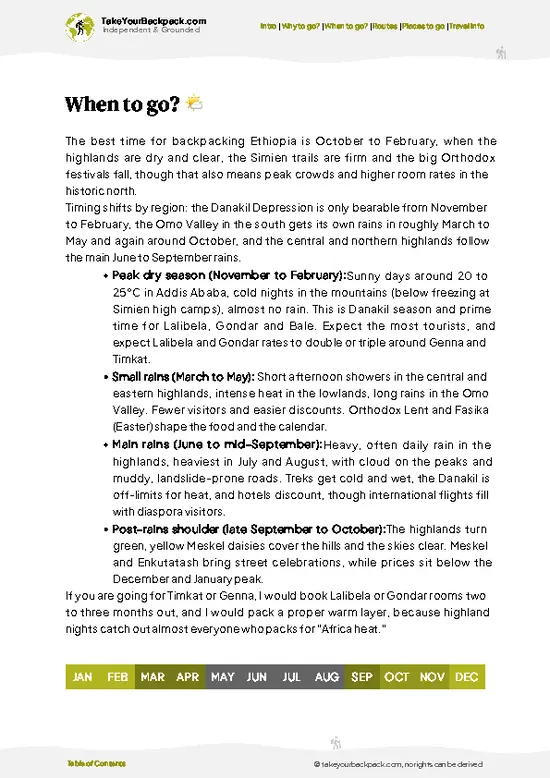
example page 0 from our offline Travel Guide for Ethiopia
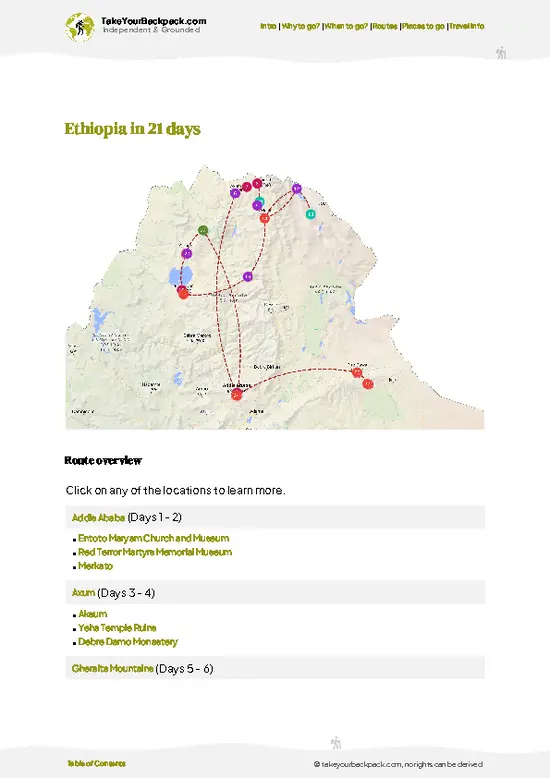
example page 1 from our offline Travel Guide for Ethiopia
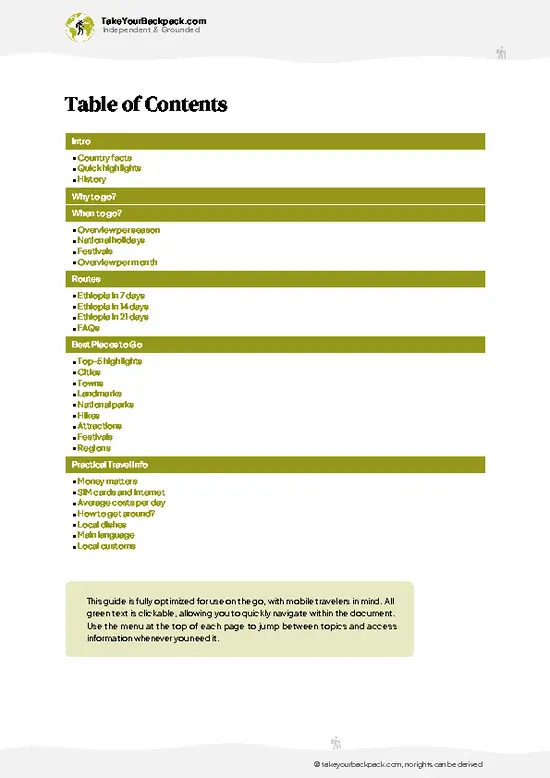
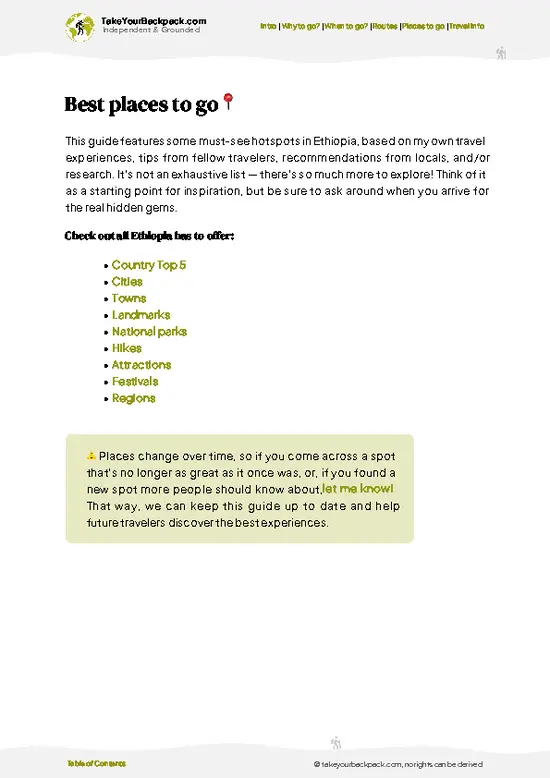
example page 2 from our offline Travel Guide for Ethiopia
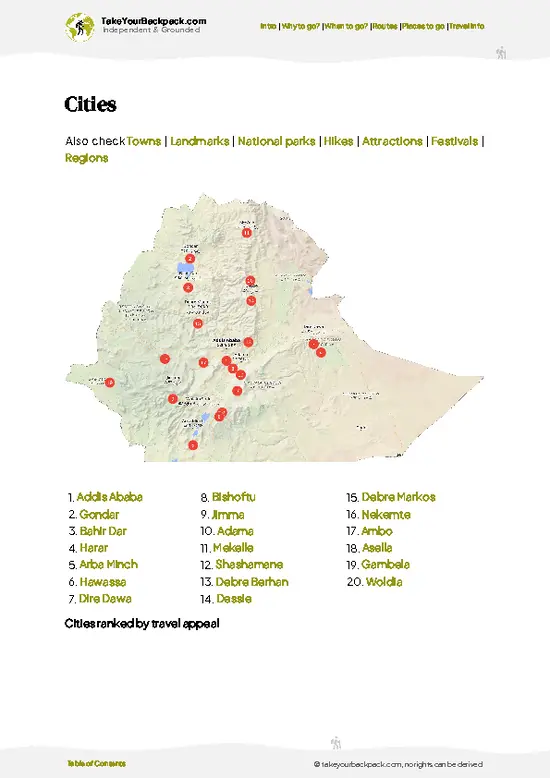
example page 3 from our offline Travel Guide for Ethiopia
example page 4 from our offline Travel Guide for Ethiopia
example page 5 from our offline Travel Guide for Ethiopia
example page 6 from our offline Travel Guide for Ethiopia
example page 7 from our offline Travel Guide for Ethiopia
Loading the map 🌍
CLICK TO FILTER
cities
towns
landmarks
national parks
hikes
attractions
festivals
regions
SHOW COUNTRY’S BESTSHOW ALL

✨ Why go?
Ranked #10 national park in Ethiopia
What sets this place apart

Kafa Biosphere Reserve suits independent travelers who want a landscape with a story, not a checklist of famous peaks. The big draw is wild Arabica coffee forest, where you can walk beneath the very shrubs the world's coffee descends from, with local farmers who harvest from them. Guides come cheap and arrange village-based walks, so you skip organized tour packages entirely and decide your own pace. Bonga, the nearest base, has simple hotels and a handful of cafés, which makes a self-guided approach practical. The second reason is Boginda and Mankira forest areas, where birders can chase Abyssinian ground hornbills, turacos and other forest species far from tour buses. Expect real quiet, wet earth underfoot, and a chance to see how coffee, honey and forest conservation actually fit together in daily life.

💡 HighlightsEssential experiences to have while exploring Kafa Biosphere Reserve

  1. Wild coffee forest walks: Shaded paths through the forest where Arabica grows wild, with guides explaining harvesting and the Kafa coffee story.
  2. Bonga coffee forest and Kafa coffee museum area: Short outings from Bonga that show how Kafa farmers manage and process coffee, and where roasting ceremonies are done fresh.
  3. Mankira Forest: Dense, humid forest with big old trees, vines, and a good chance of colobus monkeys and forest birds.
  4. Boginda Forest: A quieter patch with narrow tracks, wild coffee understory, and plenty of birdsong early in the day.
  5. Traditional honey harvest: Beekeepers hang log hives high in forest trees, and you can taste the dark local honey and see how it is collected.
  6. Birdwatching: Hornbills, turacos, and endemic highland species show up in the canopy, best at dawn when the
… read more 👉
  1. Wild coffee forest walks: Shaded paths through the forest where Arabica grows wild, with guides explaining harvesting and the Kafa coffee story.
  2. Bonga coffee forest and Kafa coffee museum area: Short outings from Bonga that show how Kafa farmers manage and process coffee, and where roasting ceremonies are done fresh.
  3. Mankira Forest: Dense, humid forest with big old trees, vines, and a good chance of colobus monkeys and forest birds.
  4. Boginda Forest: A quieter patch with narrow tracks, wild coffee understory, and plenty of birdsong early in the day.
  5. Traditional honey harvest: Beekeepers hang log hives high in forest trees, and you can taste the dark local honey and see how it is collected.
  6. Birdwatching: Hornbills, turacos, and endemic highland species show up in the canopy, best at dawn when the forest is loudest.
  7. Kafa village visits: Farm compounds with enset gardens, mud-and-thatch houses, and the unhurried routine of coffee ceremonies.
Kafa Biosphere Reserve has no fixed ticket booths for these sights, but forest guides are best arranged a day ahead in Bonga.
Spotted a mistake or missing something? Contact us.

🌤️ When to go?Best time to explore Kafa Biosphere Reserve

  • Dry Season (November to February): Mornings run 10 to 15°C (50 to 59°F), afternoons reach 24 to 28°C (75 to 82°F). Trails around Bonga and the Kafa forests are firm, and coffee harvest is underway, so this is the busiest window, though crowds are still tiny.
  • Short Warm Spell (March to April): Heat builds to about 28 to 30°C (82 to 86°F) and the first showers arrive. Forest stays green and walking is pleasant before the main rains.
  • Wet Season (May to September): Rain falls most days, cloud sits low, and temperatures settle at 16 to 24°C (61 to 75°F). Tracks turn to slick red mud, leeches and slow vehicles are common, but lodging prices drop and the forest is at its lushest.
  • Shoulder (October): Rains fade and wildflowers peak, with fewer visitors than December.
Daylight stays close to 12 hours all … read more 👉
  • Dry Season (November to February): Mornings run 10 to 15°C (50 to 59°F), afternoons reach 24 to 28°C (75 to 82°F). Trails around Bonga and the Kafa forests are firm, and coffee harvest is underway, so this is the busiest window, though crowds are still tiny.
  • Short Warm Spell (March to April): Heat builds to about 28 to 30°C (82 to 86°F) and the first showers arrive. Forest stays green and walking is pleasant before the main rains.
  • Wet Season (May to September): Rain falls most days, cloud sits low, and temperatures settle at 16 to 24°C (61 to 75°F). Tracks turn to slick red mud, leeches and slow vehicles are common, but lodging prices drop and the forest is at its lushest.
  • Shoulder (October): Rains fade and wildflowers peak, with fewer visitors than December.
Daylight stays close to 12 hours all year, so start walks early to finish before afternoon cloud rolls in.


source: climatestotravel.comJANJanuary: excellent for travelingFEBFebruary: excellent for travelingMARMarch: highly recommended for travelingAPRApril: good for travelingMAYMay: fair for travelingJUNJune: below average for travelingJULJuly: below average for travelingAUGAugust: below average for travelingSEPSeptember: fair for travelingOCTOctober: highly recommended for travelingNOVNovember: excellent for travelingDECDecember: excellent for traveling
when-to-go

✈️ The backpacker research shortcutEthiopia Travel Guide

An offline-friendly backpacking guide with optimized travel routes, ranked highlights, transport advice, and the best areas to stay.
example page 0 from our offline Travel Guide for Ethiopia
example page 1 from our offline Travel Guide for Ethiopia
example page 2 from our offline Travel Guide for Ethiopia
example page 3 from our offline Travel Guide for Ethiopia
example page 4 from our offline Travel Guide for Ethiopia
example page 5 from our offline Travel Guide for Ethiopia
example page 6 from our offline Travel Guide for Ethiopia
example page 7 from our offline Travel Guide for Ethiopia
The digital guide (380 pages) contains:
✅ 98 highlights, ranked by travel appeal
✅ Optimized 7, 14 & 21-day travel routes
✅ Cities, national parks, landmarks, beaches
✅ How to get around
✅ Offline-friendly for travel without Wi-Fi
👉 Click to see all 30+ guide features

📅 Plan smarter in minutes, not weeks
✅ Month by month travel advice
✅ Festivals & national holidays
✅ Budget expectations

🗺️ Go to the right places, skip the overrated ones
✅ Honest pros & cons of destinations
✅ Top hikes, parks & viewpoints
✅ Lesser-known places most travelers miss
✅ Clear “worth it vs skip it” guidance

🛏️ Travel smoothly without rookie mistakes
✅ Best areas to stay
✅ Transport systems explained simply
✅ Common scams & safety advice
✅ SIM cards, money & practical tips

🌍 Understand the country, not just visit it
✅ Culture & traditions
✅ 52 Essential phrases & customs
✅ Festivals worth planning around
✅ Traveler-friendly historical context
✅ Insights that make places more meaningful

📱 Built for real travel conditions
✅ Fully downloadable PDF
✅ Works completely offline
✅ Optimized for phone use
✅ Useful in remote areas & buses
✅ Everything in one place
Stop searching, start planning
Get instant access to your full guide. 30‑day money-back guarantee.
+ Add another guide for just

By proceeding you agree to our terms.
Sent to your inbox immediately after payment • 100% Secure Checkout
Best Backpacking Travel Advisor 2025 tourism awardBest Backpacking
Travel Advisor
2025
What others say about Take Your Backpack Guides:
⭐⭐⭐⭐⭐
Fantastic, amazing amount of information!
⭐⭐⭐⭐⭐
My goodness this is amazing, it's what I've been looking for hats off too you!
⭐⭐⭐⭐⭐
I think this is absolutely BRILLIANT
⭐⭐⭐⭐
Very complete and informative. It's still missing places, but I gotta to commend you
⭐⭐⭐⭐⭐
This is truly amazing, thank you, can't wait to explore it with my kids!
⭐⭐⭐⭐⭐
Awesome resource, thank you!
⭐⭐⭐⭐⭐
This is amazing! Can't wait to explore the ones I haven't seen
⭐⭐⭐⭐
I love this! Well done, great idea.
⭐⭐⭐⭐⭐
Thanks for taking the time to make this gem!
⭐⭐⭐⭐⭐
This might be the best website I've ever seen.
⭐⭐⭐⭐⭐
Congratulations, and thank you so much for your work; it's incredibly valuable.
⭐⭐⭐⭐
In all seriousness I think you did a great job pointing out the important spots
⭐⭐⭐⭐⭐
10/10 very good
⭐⭐⭐⭐⭐
As someone who's only just starting to visit regularly this is awesome, thank you.
⭐⭐⭐⭐
Thank you very much! I'm going to visit my dad, it's going to be very useful!
⭐⭐⭐⭐⭐
This is really cool! We'll be travelling for the first time and this definitely come in handy.
⭐⭐⭐⭐⭐
You are now our minister of culture, congratulations 👨‍💼
⭐⭐⭐⭐⭐
Just wanted to tell you that this is a pearl! Going to follow your recommendations.
⭐⭐⭐⭐⭐
This is so cool. I'll definitely be using the resource for my travels soon.
⭐⭐⭐⭐⭐
This is very impressive! Good work.
⭐⭐⭐⭐⭐
This is an amazing and informative site. Very well done!

🛏️ Where to stay?Choosing the right base

Bonga, the zonal capital, is the practical place to sleep, with no formal lodging in most of the reserve. Expect basic guesthouses and small hotels at roughly US$8 to 25 a night, usually with hot water that comes and goes. A few mid-range options with private bathrooms and a restaurant run about US$30 to 50. Bonga also has the banks, ATMs, markets and minibus connections you will want before heading out.

For villages closer to the forest, community-run ecotourism sites near Choche and Boginda offer simple tukul huts or tent camping, typically US$5 to 15 per person, arranged through the local … read more 👉
Bonga, the zonal capital, is the practical place to sleep, with no formal lodging in most of the reserve. Expect basic guesthouses and small hotels at roughly US$8 to 25 a night, usually with hot water that comes and goes. A few mid-range options with private bathrooms and a restaurant run about US$30 to 50. Bonga also has the banks, ATMs, markets and minibus connections you will want before heading out.

For villages closer to the forest, community-run ecotourism sites near Choche and Boginda offer simple tukul huts or tent camping, typically US$5 to 15 per person, arranged through the local tourism office in Bonga. Staying there puts you among coffee gardens and within reach of guided forest walks at dawn. Bring a sleeping bag, because nights at altitude get cold and damp.

Jimma, a long drive to the northeast, has a wider choice of hotels and works as a stopover on the way in. Book ahead around the November to February harvest, when rooms fill with buyers and researchers.

👛 Costs (as of 22 October 2026)Typical daily expenses

Kafa Biosphere Reserve costs a backpacker about US$40 to 55 a day, with a total of US$48 using guesthouse beds and local food. Most spending goes on guides and getting around, because the forest has few formal facilities.
CategoryBudget RangeLocal Reality
Entrance and guideUS$8 to 15Community guides charge per day, and fees are paid in cash at local tourism offices.
Accommodation (high season)US$10 to 18Basic guesthouse in Bonga or a community hut; prices dip in the rainy months.
Local transportUS$2 to 6Minibuses and three-wheeled bajaj around Bonga; hiring a vehicle to remote sites costs more.
Food and drinkUS$6 to 10Local restaurants serve injera platters, fasting dishes and fresh Kafa coffee for very little.
Supplies and extrasUS$2 to 4Water, snacks, rain poncho and small tips for hosts.
Total
… read more 👉
Kafa Biosphere Reserve costs a backpacker about US$40 to 55 a day, with a total of US$48 using guesthouse beds and local food. Most spending goes on guides and getting around, because the forest has few formal facilities.
CategoryBudget RangeLocal Reality
Entrance and guideUS$8 to 15Community guides charge per day, and fees are paid in cash at local tourism offices.
Accommodation (high season)US$10 to 18Basic guesthouse in Bonga or a community hut; prices dip in the rainy months.
Local transportUS$2 to 6Minibuses and three-wheeled bajaj around Bonga; hiring a vehicle to remote sites costs more.
Food and drinkUS$6 to 10Local restaurants serve injera platters, fasting dishes and fresh Kafa coffee for very little.
Supplies and extrasUS$2 to 4Water, snacks, rain poncho and small tips for hosts.
Total Daily BudgetUS$48Splurge on a private room and extra guided days to reach US$70 or more.
⚠️ Prices can change and everyone travels differently, so take this as a rough guide. Hope it helps you plan your adventure!

🥾 TrailsScenic routes and wildlife spotting in Kafa Biosphere Reserve

Kafa Biosphere Reserve has few signed trails, so most walks are guide-led routes from villages and forest edges. Terrain is rolling forest, red clay and mud, often slick after rain, with some steep, muddy stretches.
  • Mankira Forest walk: Half a day, easy to moderate, shaded paths through wild coffee, big trees and likely colobus monkeys.
  • Boginda Forest loop: Two to four hours, easy, narrow trails with birdlife and coffee understory.
  • Village and honey route: Two to three hours, easy, passing farms, enset gardens and forest hives.
  • Longer forest day: Five to six hours, moderate, linking forest patches
… read more 👉
Kafa Biosphere Reserve has few signed trails, so most walks are guide-led routes from villages and forest edges. Terrain is rolling forest, red clay and mud, often slick after rain, with some steep, muddy stretches.
  • Mankira Forest walk: Half a day, easy to moderate, shaded paths through wild coffee, big trees and likely colobus monkeys.
  • Boginda Forest loop: Two to four hours, easy, narrow trails with birdlife and coffee understory.
  • Village and honey route: Two to three hours, easy, passing farms, enset gardens and forest hives.
  • Longer forest day: Five to six hours, moderate, linking forest patches and villages with a guide.
Wildlife is mostly heard before seen: colobus monkeys, hornbills, turacos and smaller forest mammals. Bring waterproofs, boots with grip and insect repellent. Reaching Kafa Biosphere Reserve is done by road to Bonga, with buses and minibuses from larger towns, and the final stretch to trailheads is by local transport or hired vehicle. Crowds are almost nonexistent. There is no big entrance gate, but guides and local community fees are normal, so carry small cash.
⚠️ Hiking info can sometimes be outdated or inaccurate. Before you hit the trail, check the latest conditions with locals. If you do spot anything that's off, I'd love to hear from you, so I can update it for fellow travelers.

🛡️ SafetySafety Tips and Common Scams in Kafa Biosphere Reserve

Kafa is a calm, low-key destination where the main challenges are mud, rain and distance from help. In wet months, red clay trails turn slick and steep, so wear boots with real tread and carry trekking poles. Mist and dense canopy make navigation confusing, and trails are not well signed, so hire a local guide through the Bonga tourism office. Cell signal drops once you leave town. Wildlife is mostly shy: monkeys, bushbuck and the occasional forest buffalo or leopard keep clear of walkers, and you should keep your distance and never feed anything. Insects are more of a nuisance than big animals, so bring repellent and rain gear. Boil or filter stream water, and carry cash in small bills, since there are few places to withdraw it.

FAQTraveler FAQ

Plan on three to four days for Kafa Biosphere Reserve. That gives you a day for the Bonga forest and coffee villages, a day around Choche or Boginda, and time to absorb the slow pace. Add a day if you want a multi-day forest trek with a guide, or if rain slows the roads.
Yes, Kafa Biosphere Reserve is workable without a car, but slower. Buses run from Addis Ababa to Bonga in about 10 to 12 hours, often via Jimma, and minibuses and bajaj cover local hops for US$1 to 3. Reaching remote forest sites usually means hiring a driver or walking with a guide.
Yes, Kafa Biosphere Reserve has small fees. Expect to pay roughly US$2 to 5 for access in forest areas and US$8 to 15 a day for a mandatory or strongly recommended local guide, in cash. Arrange both at the tourism office in Bonga, which can also organize community camping and village visits.
⚠️ Things can change over time, so always validate details locally before you go.

Other Ethiopian national parks near Kafa Biosphere Reserve

Explore more nearby:


💡 Not sure where to go next?
Create a personalized itinerary for Ethiopia including Kafa Biosphere Reserve and the places that fit your trip.

Generate my itinerary

👉 Discover all national parks

Or checkout all Ethiopia has to offer (think cities, towns, villages, national parks, hikes, beaches, festivals)
Country photo of Ethiopia

We 💚 feedbackWhat to keep in mind

Most first-timers rush the forest and miss the coffee ceremony afterward in a village home. Kafa Biosphere Reserve makes most sense when you sit for that slow roasting. I would book a local guide for a morning walk, then spend the afternoon drinking coffee with the family hosting you.

✈️ When did I visit Ethiopia?
Ethiopia I visited back in October 2017. I combined the trip with a visit to Sudan. Ethiopia was a pure surprise with the magical scenery like the Danakil Depression and the Simien Mountains.

✍️ Help improve this page!
The information on this page is based on my own backpacking experience in Ethiopia, supplemented with up-to-date research and feedback from other travelers. Travel details can change, so if you notice anything outdated or incomplete, feel free to let me know.


🙋‍♂️ Give feedback

👋 Meet the founderWho’s Behind Take Your Backpack?

Johan, backpacker and founder of TakeYourBackpackHi, I’m Johan (Netherlands 🇳🇱), the creator of TakeYourBackpack. Over the past 3 decades, I’ve backpacked through 90+ countries across six continents, gaining extensive experience with independent travel, long-term trips, and overland routes.

This site is built on a combination of firsthand travel experience and carefully curated insights from other backpackers. Many guides are based on places I’ve personally visited, while others bring together tips, observations, and practical advice shared by trusted travelers I’ve met along the way.

The goal is to provide realistic, experience-driven guidance — not generic itineraries — so you can explore destinations with better context, clearer expectations, and more confidence.