×

Ethiopia🇪🇹 | national parksLoka Abaya National ParkSwayne’s hartebeest, Abaya shore, hot springs, Guge backdrop | things to do and best time to go

Explore Kafta Sheraro National ParkExplore Dati Wolel National Park

Backpacking in Loka Abaya
👌 Worth visitingnational park ranked #15
By Johan Kruseman 🇳🇱 | Updated October 22, 2026

Most travelers decide whether to hire a guide and scout from Hawassa or push on to Dila-side roads on their own, and the lack of marked trails tips it toward a local scout. Loka Abaya National Park sits in southern Ethiopia, in the Sidama region, on the western shore of Lake Abaya. Mixed savanna and hot springs make for scrubby, dusty walks that end in sightings of Swayne’s hartebeest. The park is quiet and rough, with little infrastructure. I rode a minibus along the lake road, and a boy offered me a roasted corn cob through the window, still smoky and sweet. Adventurers and birders will love it; comfort seekers won’t.

Discover everything you want to know in the 📖 Ethiopia Travel Guide.
Safety warning

The current risk level for Ethiopia is high. Check the advice before going.


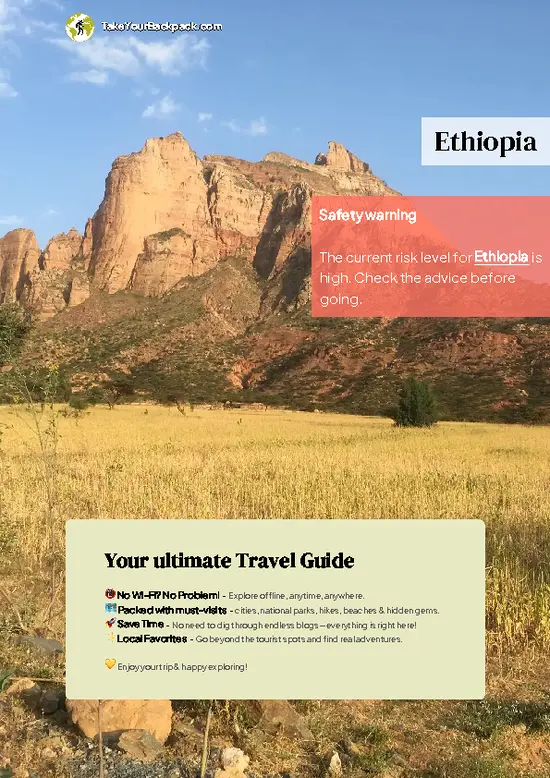
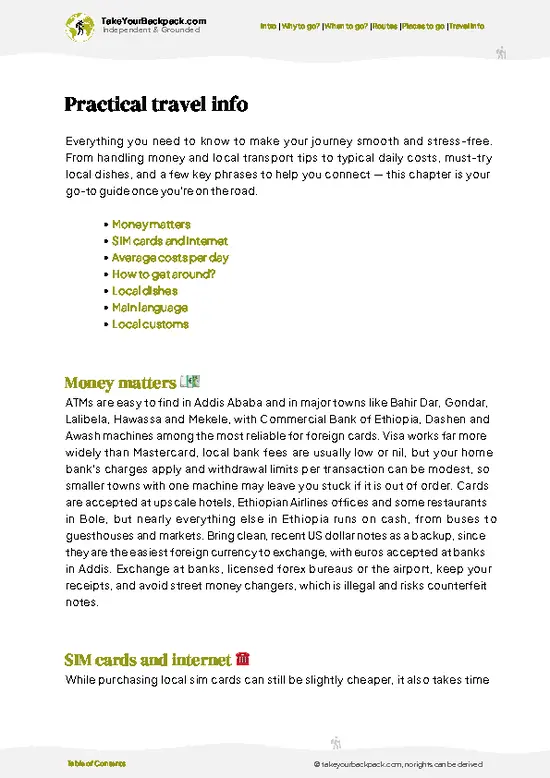
example page 0 from our offline Travel Guide for Ethiopia
example page 1 from our offline Travel Guide for Ethiopia
example page 2 from our offline Travel Guide for Ethiopia
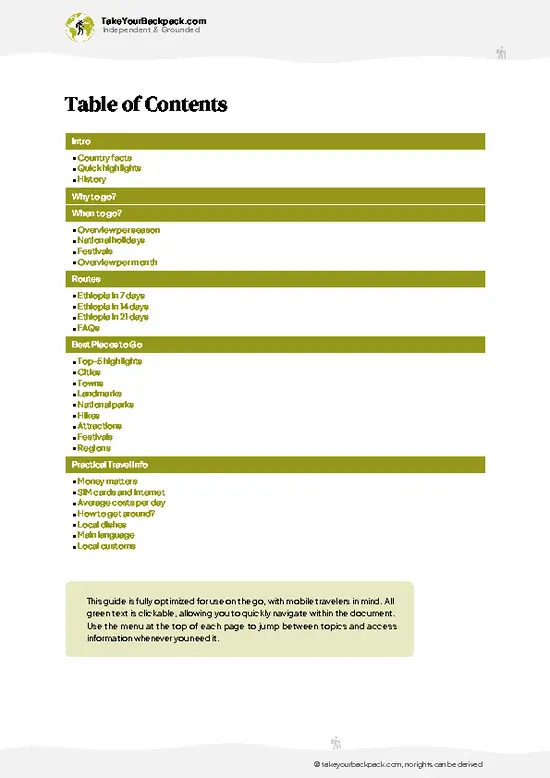
example page 3 from our offline Travel Guide for Ethiopia
example page 4 from our offline Travel Guide for Ethiopia
example page 5 from our offline Travel Guide for Ethiopia
example page 6 from our offline Travel Guide for Ethiopia
example page 7 from our offline Travel Guide for Ethiopia
Loading the map 🌍
CLICK TO FILTER
cities
towns
landmarks
national parks
hikes
attractions
festivals
regions
SHOW COUNTRY’S BESTSHOW ALL

✨ Why go?
Ranked #15 national park in Ethiopia
The unique appeal for travelers

Loka Abaya National Park suits backpackers who like to improvise. With almost no tourist infrastructure, you hire a local scout and set the pace yourself, and there are no tour crowds to fit around. The park protects the rare Swayne’s hartebeest, a reason in itself for wildlife lovers, and its grassland, acacia and hot springs near Lake Abaya give a walk more variety than the dry look from the road suggests. Because Hawassa is close, you can leave gear in town and use the park as a day outing, then continue south toward the Omo Valley. Expect rough tracks and a lot of figuring things out.

💡 HighlightsEssential experiences to have while exploring Loka Abaya

  1. Swayne’s hartebeest: The park’s signature animal, a rust-colored antelope with a lyre-shaped horn that grazes the open plains, best spotted early with a scout.
  2. Lake Abaya shoreline: Reddish water colored by sediment, with hippos and crocodiles in the lake and fishermen working from the banks.
  3. Hot springs: Natural thermal pools in the park area where steam rises from the ground and locals bathe.
  4. Acacia savanna walks: Open woodland where you may meet greater kudu, warthogs and baboons on foot.
  5. Birdwatching: Waterbirds along the lake edge, plus raptors and ground birds in the grassland.
  6. Guge Mountains view: Far-off blue ridges that give the flat plain a dramatic backdrop on clear mornings.
The hartebeest plains and the lake shoreline combine well in one day, with wildlife in the cool morning and the water in the afternoon.
Spotted a mistake or missing something? Contact us.

Things to do near Loka Abaya National Park

Ratings based on Tripadvisor reviews. When you book through this link, you support our work at no extra cost to you.

🌤️ When to go?Weather, crowds, and seasonal trade-offs

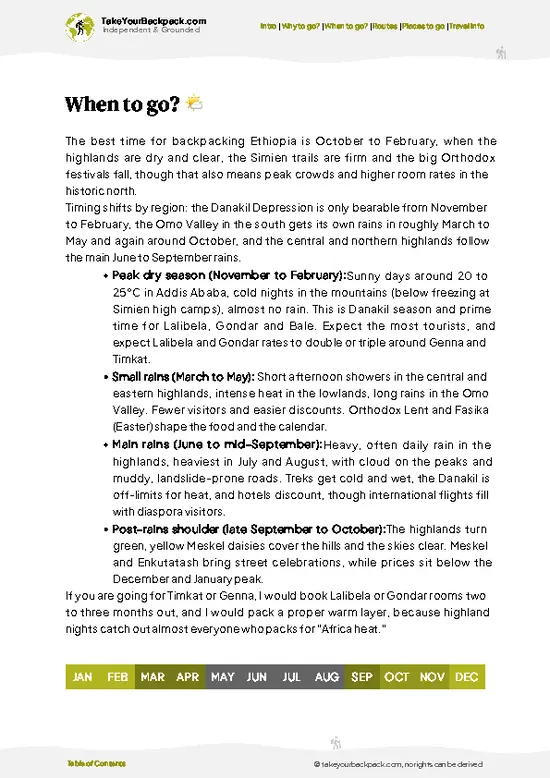
  • Main Dry Season (December to February): Mornings run 12-16°C (54-61°F), afternoons 26-30°C (79-86°F). Trails are firm, the Bilate River is low, and you get the most daylight hiking. Expect more visitors and the highest lodge rates in Hawassa.
  • Short Dry Spell (September to November, after the rains ease): Highs of 24-28°C (75-82°F), green forest and fewer people. Showers still come in the afternoon.
  • Big Rains (March to May): Warm, 22-27°C (72-81°F), with muddy tracks and swollen streams. Prices drop, but access roads turn slick.
  • Midyear Rains (June to August): Cooler and cloudy at 20-25°C (68-77°F), with bargains on beds and few other hikers.
Aim for January, when forest paths are dry and bird activity peaks, and book Hawassa rooms early.

source: climatestotravel.comJANJanuary: excellent for travelingFEBFebruary: highly recommended for travelingMARMarch: fair for travelingAPRApril: fair for travelingMAYMay: fair for travelingJUNJune: below average for travelingJULJuly: below average for travelingAUGAugust: below average for travelingSEPSeptember: fair for travelingOCTOctober: highly recommended for travelingNOVNovember: good for travelingDECDecember: excellent for traveling
when-to-go

✈️ The backpacker research shortcutEthiopia Travel Guide

An offline-friendly backpacking guide with optimized travel routes, ranked highlights, transport advice, and the best areas to stay.
example page 0 from our offline Travel Guide for Ethiopia
example page 1 from our offline Travel Guide for Ethiopia
example page 2 from our offline Travel Guide for Ethiopia
example page 3 from our offline Travel Guide for Ethiopia
example page 4 from our offline Travel Guide for Ethiopia
example page 5 from our offline Travel Guide for Ethiopia
example page 6 from our offline Travel Guide for Ethiopia
example page 7 from our offline Travel Guide for Ethiopia
The digital guide (380 pages) contains:
✅ 98 highlights, ranked by travel appeal
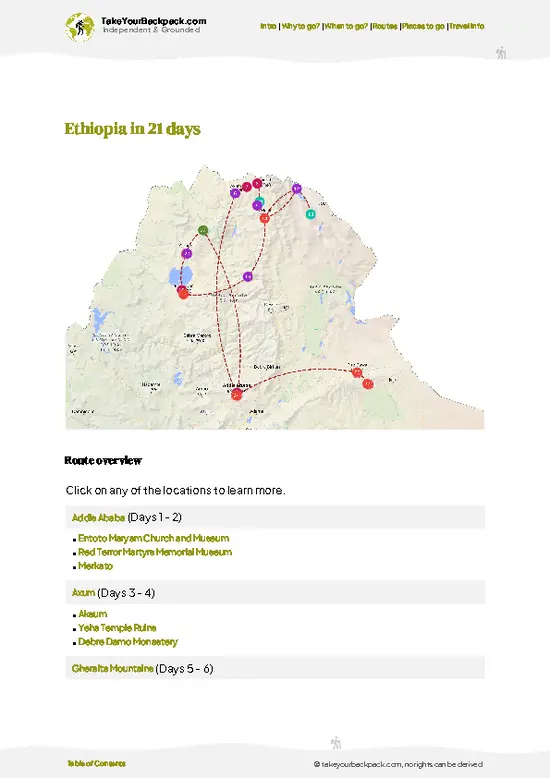
✅ Optimized 7, 14 & 21-day travel routes
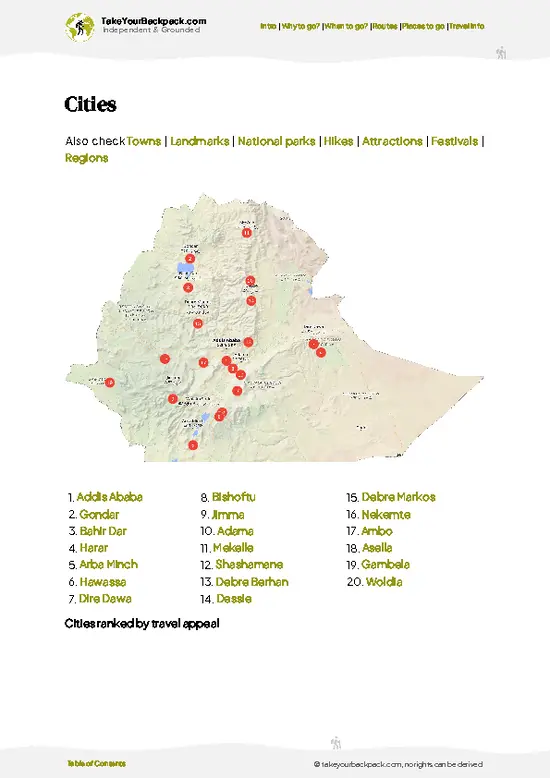
✅ Cities, national parks, landmarks, beaches
✅ How to get around
✅ Offline-friendly for travel without Wi-Fi
👉 Click to see all 30+ guide features

📅 Plan smarter in minutes, not weeks
✅ Month by month travel advice
✅ Festivals & national holidays
✅ Budget expectations

🗺️ Go to the right places, skip the overrated ones
✅ Honest pros & cons of destinations
✅ Top hikes, parks & viewpoints
✅ Lesser-known places most travelers miss
✅ Clear “worth it vs skip it” guidance

🛏️ Travel smoothly without rookie mistakes
✅ Best areas to stay
✅ Transport systems explained simply
✅ Common scams & safety advice
✅ SIM cards, money & practical tips

🌍 Understand the country, not just visit it
✅ Culture & traditions
✅ 52 Essential phrases & customs
✅ Festivals worth planning around
✅ Traveler-friendly historical context
✅ Insights that make places more meaningful

📱 Built for real travel conditions
✅ Fully downloadable PDF
✅ Works completely offline
✅ Optimized for phone use
✅ Useful in remote areas & buses
✅ Everything in one place
Stop searching, start planning
Get instant access to your full guide. 30‑day money-back guarantee.
+ Add another guide for just

By proceeding you agree to our terms.
Sent to your inbox immediately after payment • 100% Secure Checkout
Best Backpacking Travel Advisor 2025 tourism awardBest Backpacking
Travel Advisor
2025
What others say about Take Your Backpack Guides:
⭐⭐⭐⭐⭐
Fantastic, amazing amount of information!
⭐⭐⭐⭐⭐
My goodness this is amazing, it's what I've been looking for hats off too you!
⭐⭐⭐⭐⭐
I think this is absolutely BRILLIANT
⭐⭐⭐⭐
Very complete and informative. It's still missing places, but I gotta to commend you
⭐⭐⭐⭐⭐
This is truly amazing, thank you, can't wait to explore it with my kids!
⭐⭐⭐⭐⭐
Awesome resource, thank you!
⭐⭐⭐⭐⭐
This is amazing! Can't wait to explore the ones I haven't seen
⭐⭐⭐⭐
I love this! Well done, great idea.
⭐⭐⭐⭐⭐
Thanks for taking the time to make this gem!
⭐⭐⭐⭐⭐
This might be the best website I've ever seen.
⭐⭐⭐⭐⭐
Congratulations, and thank you so much for your work; it's incredibly valuable.
⭐⭐⭐⭐
In all seriousness I think you did a great job pointing out the important spots
⭐⭐⭐⭐⭐
10/10 very good
⭐⭐⭐⭐⭐
As someone who's only just starting to visit regularly this is awesome, thank you.
⭐⭐⭐⭐
Thank you very much! I'm going to visit my dad, it's going to be very useful!
⭐⭐⭐⭐⭐
This is really cool! We'll be travelling for the first time and this definitely come in handy.
⭐⭐⭐⭐⭐
You are now our minister of culture, congratulations 👨‍💼
⭐⭐⭐⭐⭐
Just wanted to tell you that this is a pearl! Going to follow your recommendations.
⭐⭐⭐⭐⭐
This is so cool. I'll definitely be using the resource for my travels soon.
⭐⭐⭐⭐⭐
This is very impressive! Good work.
⭐⭐⭐⭐⭐
This is an amazing and informative site. Very well done!

🛏️ Where to stay?Best areas to stay in Ethiopia

Hawassa is where almost every backpacker sleeps, about 60 to 90 minutes by road from the park's lake and forest areas on a good day. Budget guesthouses and basic hotels near the lakeside and the Piazza area run US$8 to 20 a night for a private room with a hot-ish shower. Mid-range lakeside resorts cost US$40 to 90 and have gardens full of marabou storks and monkeys. Inside Loka Abaya National Park there are no proper lodgings, so the realistic options are a ranger-approved tent near the park office or a simple room in a small town such as Yirgalem or Dilla, both useful if you are heading further … read more 👉
Hawassa is where almost every backpacker sleeps, about 60 to 90 minutes by road from the park's lake and forest areas on a good day. Budget guesthouses and basic hotels near the lakeside and the Piazza area run US$8 to 20 a night for a private room with a hot-ish shower. Mid-range lakeside resorts cost US$40 to 90 and have gardens full of marabou storks and monkeys. Inside Loka Abaya National Park there are no proper lodgings, so the realistic options are a ranger-approved tent near the park office or a simple room in a small town such as Yirgalem or Dilla, both useful if you are heading further along the Sidama highlands route. Bring a tent and food if you plan to camp, since shops are scarce near the boundary.

👛 Costs (as of 22 October 2026)How expensive it really is

A day at Loka Abaya National Park costs roughly US$50 to 70 for a backpacker, with a guide and transport from Hawassa making up most of it.
CategoryBudget RangeLocal Reality
Entrance feeUS$3 to 8Charged per person per day, with extra fees for a vehicle and a scout. Paid in birr at the park office.
Accommodation (high season)US$10 to 20Basic Hawassa guesthouse. Low season rooms drop to US$8 to 15.
Local transportUS$15 to 25Minibus to the nearest town plus a shared or hired bajaj or car for the final stretch.
Guide/scoutUS$10 to 15Often required for walks, and useful for finding faint tracks.
Food and suppliesUS$6 to 10Local meals cost US$2 to 4. Buy water and snacks in town before you enter.
Total Daily BudgetUS$50 to 70Splitting transport and guide costs with others lowers it noticeably.


source: ethiopia.travel
⚠️ Prices can change and everyone travels differently, so take this as a rough guide. Hope it helps you plan your adventure!

🥾 TrailsHiking Loka Abaya national park: highlights and difficulty

Loka Abaya National Park has no formal, signed trail network, so walks follow animal paths and dirt tracks with a local scout from the park office.
  • Savanna loop: A walk of roughly 2 to 4 hours across flat grassland and acacia scrub, easy underfoot but exposed, for hartebeest and warthog.
  • Lakeshore stroll: A short, easy walk along the Abaya shore, about 1 to 2 hours, for birds, hippos at a distance and fishermen.
  • Hot spring detour: A brief walk to the thermal area, easy but muddy after rain.
Terrain is mostly level, with a few gentle rises and thorny brush, so long trousers and sturdy shoes help. Difficulty … read more 👉
Loka Abaya National Park has no formal, signed trail network, so walks follow animal paths and dirt tracks with a local scout from the park office.
  • Savanna loop: A walk of roughly 2 to 4 hours across flat grassland and acacia scrub, easy underfoot but exposed, for hartebeest and warthog.
  • Lakeshore stroll: A short, easy walk along the Abaya shore, about 1 to 2 hours, for birds, hippos at a distance and fishermen.
  • Hot spring detour: A brief walk to the thermal area, easy but muddy after rain.
Terrain is mostly level, with a few gentle rises and thorny brush, so long trousers and sturdy shoes help. Difficulty is low, but shade is scarce and water must be carried. Wildlife is thin compared with Ethiopia’s famous parks, so go for the quiet and the rare antelope. Getting here is by minibus from Hawassa toward the lake road, then a local ride or walk to the entrance. Visitors are very few. An entrance fee applies, paid in birr along with scout fees, and costs are modest.
⚠️ Hiking info can sometimes be outdated or inaccurate. Before you hit the trail, check the latest conditions with locals. If you do spot anything that's off, I'd love to hear from you, so I can update it for fellow travelers.

🛡️ SafetyTraveler Safety Guide

Loka Abaya National Park is quiet and lightly visited, so the main issues are logistical. Heat builds quickly on the open lowland sections, so start early, carry at least 3 liters of water, and wear a hat. Paths can be faint, which makes a local guide or scout worth hiring for navigation. Wet season mud and flooded streams slow progress, so shorten your plan. Wildlife such as baboons, warthogs and the occasional hippo near water is best watched from a distance; keep food sealed and never approach the shoreline at dusk. Malaria exists at lower elevations, so carry repellent and ask your doctor about prophylaxis. Tell your hotel where you are going.

FAQFrequently asked questions about Loka Abaya

Plan on 1 to 2 days. A single long day trip from Hawassa covers the main forest and lake areas, while a second day lets you add a longer walk with a scout or a night camping. Allow 60 to 90 minutes each way by road.
Yes, but expect it to take longer and cost more than a rental car. Take a minibus from Hawassa toward the Sidama highlands, then hire a bajaj or a local driver for the last stretch, usually US$15 to 25 for the day. Hawassa is the realistic starting point, and you should arrange your return ride before heading in.
Yes, Loka Abaya National Park charges a small daily entrance fee, typically around US$3 to 8 per person, plus separate fees for a vehicle and a required scout or guide of roughly US$10 to 15. No special hiking permit is normally needed beyond paying at the park office. Carry cash in birr, because card payment is not available.
⚠️ Things can change over time, so always validate details locally before you go.

Other Ethiopian national parks near Loka Abaya

Explore more nearby:


💡 Not sure where to go next?
Create a personalized itinerary for Ethiopia including Loka Abaya and the places that fit your trip.

Generate my itinerary

👉 Discover all national parks

Or checkout all Ethiopia has to offer (think cities, towns, villages, national parks, hikes, beaches, festivals)
Country photo of Ethiopia

We 💚 feedbackParting advice and final tips

Loka Abaya National Park disappoints people who arrive midday expecting herds on show. Go early, hire a scout at the gate, and walk the plain while the animals are still out grazing. Carry more water than seems sensible, and keep your expectations modest and your curiosity high.

✈️ When did I visit Ethiopia?
Ethiopia I visited back in October 2017. I combined the trip with a visit to Sudan. Ethiopia was a pure surprise with the magical scenery like the Danakil Depression and the Simien Mountains.

✍️ Help improve this page!
The information on this page is based on my own backpacking experience in Ethiopia, supplemented with up-to-date research and feedback from other travelers. Travel details can change, so if you notice anything outdated or incomplete, feel free to let me know.


🙋‍♂️ Give feedback

👋 Meet the founderWho’s Behind Take Your Backpack?

Johan, backpacker and founder of TakeYourBackpackHi, I’m Johan (Netherlands 🇳🇱), the creator of TakeYourBackpack. Over the past 3 decades, I’ve backpacked through 90+ countries across six continents, gaining extensive experience with independent travel, long-term trips, and overland routes.

This site is built on a combination of firsthand travel experience and carefully curated insights from other backpackers. Many guides are based on places I’ve personally visited, while others bring together tips, observations, and practical advice shared by trusted travelers I’ve met along the way.

The goal is to provide realistic, experience-driven guidance — not generic itineraries — so you can explore destinations with better context, clearer expectations, and more confidence.