×

Falkland Islands🇫🇰 | villagesHill CoveWest Falkland sheep farm, shearing shed, gravel airstrip, empty north coast | things to do and best time to go

Explore Goose GreenExplore Historic Dockyard Museum

Backpacking in Hill Cove
👍 Recommendedvillage ranked #3
By Johan Kruseman 🇳🇱 | Updated October 19, 2026

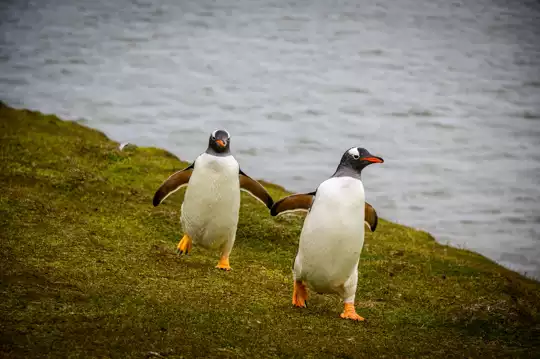
Hill Cove is a settlement on West Falkland, not a town with shops, a pub or a hotel, and that shapes everything about a visit. It sits on the north coast of West Falkland in the Falkland Islands, a long way by gravel road from Port Howard and the Stanley flights. Hill Cove is a sheep farming community of a handful of households, and visitors stay in farm self-catering or at a few guest cottages. The upside is empty coastline, penguin and cormorant colonies within reach, and farmers who know every track. The downside is plain: no cafe, no nightlife, patchy mobile signal, and food you must arrange or bring. Evenings are quiet, with a meal at your cottage and an early night. Meeting other backpackers is unlikely, since the people you meet are mostly locals. A first day could go like this: settle in, ask the farm about permissions, then walk the shoreline to the nearby penguin rookery and watch the light fade over the sound.

Discover everything you want to know in the 📖 Falkland Islands Travel Guide.


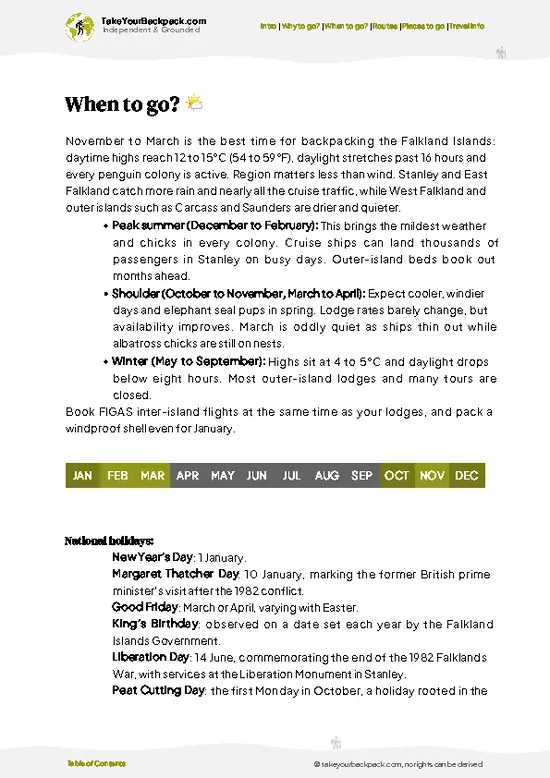
example page 0 from our offline Travel Guide for Falkland Islands
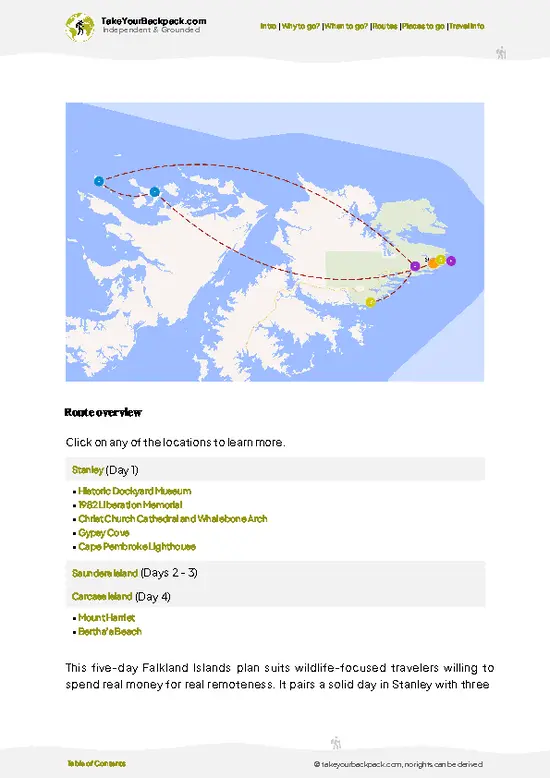
example page 1 from our offline Travel Guide for Falkland Islands
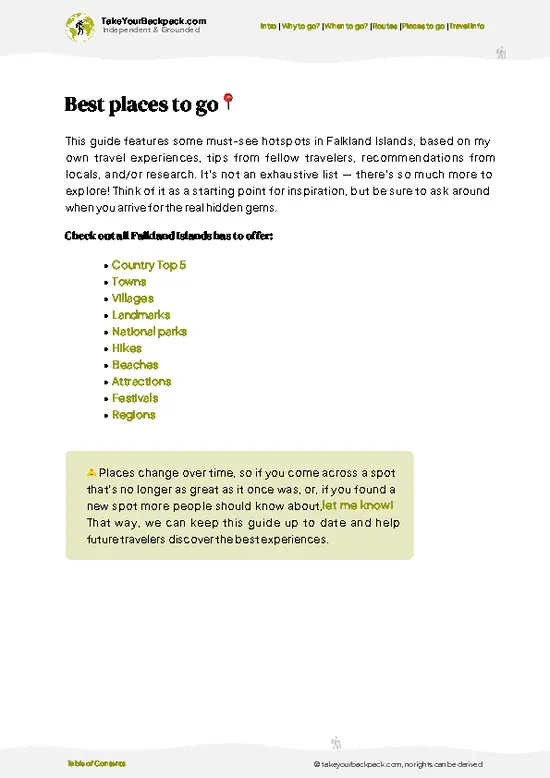
example page 2 from our offline Travel Guide for Falkland Islands
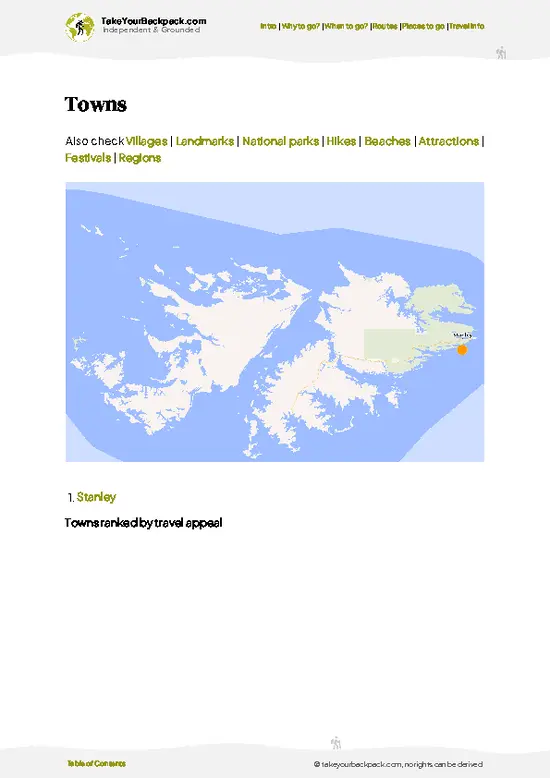
example page 3 from our offline Travel Guide for Falkland Islands
example page 4 from our offline Travel Guide for Falkland Islands
example page 5 from our offline Travel Guide for Falkland Islands
example page 6 from our offline Travel Guide for Falkland Islands
example page 7 from our offline Travel Guide for Falkland Islands
Loading the map 🌍
CLICK TO FILTER
towns
villages
landmarks
national parks
hikes
beaches
attractions
festivals
regions
SHOW COUNTRY’S BESTSHOW ALL

✨ Why go?
Ranked #3 village in Falkland Islands
What makes this village worth visiting

Hill Cove suits travelers who want the Falklands as farm country rather than a wildlife checklist. The settlement lies on the north coast of West Falkland, far from the cruise-ship routes around Stanley, so you share the shore with sheep, geese and kelp gulls instead of tour groups. The reason to come is the working farm life around you. In shearing season you can often watch the shearing shed in action if the farm agrees, and talking with the people who live here teaches you more about island life than any sign could. The second reason is walking. With no marked trails, you follow fence lines, beach and open camp, which suits confident hikers who carry a map and a windproof shell. Most people stay one or two nights, because the settlement is small and the pace slow. It works well as a pause … read more 👉
Hill Cove suits travelers who want the Falklands as farm country rather than a wildlife checklist. The settlement lies on the north coast of West Falkland, far from the cruise-ship routes around Stanley, so you share the shore with sheep, geese and kelp gulls instead of tour groups. The reason to come is the working farm life around you. In shearing season you can often watch the shearing shed in action if the farm agrees, and talking with the people who live here teaches you more about island life than any sign could. The second reason is walking. With no marked trails, you follow fence lines, beach and open camp, which suits confident hikers who carry a map and a windproof shell. Most people stay one or two nights, because the settlement is small and the pace slow. It works well as a pause between Stanley and the remote west, and it pays off for solo travelers, couples and slow travelers who like quiet. If you need nightlife, shops or company your own age, it is best as a short stop.

💡 HighlightsMust-see experiences and standout moments

  1. Hill Cove Farm and Settlement: The heart of the place, a long-established sheep farm with its houses, outbuildings and shearing shed. Shearing runs roughly November to February, and that is the best time to see the shed working. Walking through is free, but ask at the farm first because it is private land. Allow 1 to 2 hours.
  2. Hill Cove Shoreline and Beach: A long open stretch of coast beside the settlement, good for shorebirds, upland geese, kelp gulls and the occasional seal or dolphin offshore. Calm mornings in summer give the best light and the least wind. It is free and you can spend 1 to 3 hours on the sand and rocks.
  3. Hill Cove Airstrip and Coast Walk: The small gravel airstrip is the settlement’s lifeline to Stanley, and the paths and tracks beyond it lead into open camp with wide views
… read more 👉
  1. Hill Cove Farm and Settlement: The heart of the place, a long-established sheep farm with its houses, outbuildings and shearing shed. Shearing runs roughly November to February, and that is the best time to see the shed working. Walking through is free, but ask at the farm first because it is private land. Allow 1 to 2 hours.
  2. Hill Cove Shoreline and Beach: A long open stretch of coast beside the settlement, good for shorebirds, upland geese, kelp gulls and the occasional seal or dolphin offshore. Calm mornings in summer give the best light and the least wind. It is free and you can spend 1 to 3 hours on the sand and rocks.
  3. Hill Cove Airstrip and Coast Walk: The small gravel airstrip is the settlement’s lifeline to Stanley, and the paths and tracks beyond it lead into open camp with wide views over the bay. Pick a clear afternoon, wear windproof layers and expect wet ground. Free to walk with farm permission, 2 to 4 hours for a loop at an easy pace.
Close to Hill Cove, further out by farm track or air, you can arrange day trips to the neighboring settlements of Port Howard and Chartres, and to the wild coast around Byron Sound, though all need a local driver or a flight. Altogether, the three stops fill about half a day to a full day at a relaxed pace.
Spotted a mistake or missing something? Contact us.

🌤️ When to go?Seasonal considerations and timing

November to March is the best window for Hill Cove, when penguins are ashore and the light lasts far into the evening.
  • Summer (December to February): Highs of 12 to 15°C (54 to 59°F), lows around 5°C (41°F), and roughly 16 hours of daylight. Magellanic and gentoo penguins are raising chicks, and flight seats and farm beds fill first.
  • Spring (October to November): Highs of 8 to 11°C (46 to 52°F). Birds return to nest, wind is frequent, and beds are easier to book.
  • Autumn (March to April): Highs of 8 to 12°C (46 to 54°F), cooler nights, and fewer visitors. Chicks are fledging and the colonies empty out by April.
  • Winter (June to August): Highs of 2 to 6°C (36 to 43°F), about 8 hours of daylight, and sleet or frost. Walking is limited, wildlife is scarce, and few visitors come.
Book flights and accommodation … read more 👉
November to March is the best window for Hill Cove, when penguins are ashore and the light lasts far into the evening.
  • Summer (December to February): Highs of 12 to 15°C (54 to 59°F), lows around 5°C (41°F), and roughly 16 hours of daylight. Magellanic and gentoo penguins are raising chicks, and flight seats and farm beds fill first.
  • Spring (October to November): Highs of 8 to 11°C (46 to 52°F). Birds return to nest, wind is frequent, and beds are easier to book.
  • Autumn (March to April): Highs of 8 to 12°C (46 to 54°F), cooler nights, and fewer visitors. Chicks are fledging and the colonies empty out by April.
  • Winter (June to August): Highs of 2 to 6°C (36 to 43°F), about 8 hours of daylight, and sleet or frost. Walking is limited, wildlife is scarce, and few visitors come.
Book flights and accommodation several months ahead for December and January.


source: climatestotravel.comJANJanuary: excellent for travelingFEBFebruary: excellent for travelingMARMarch: highly recommended for travelingAPRApril: good for travelingMAYMay: fair for travelingJUNJune: below average for travelingJULJuly: below average for travelingAUGAugust: below average for travelingSEPSeptember: fair for travelingOCTOctober: good for travelingNOVNovember: highly recommended for travelingDECDecember: excellent for traveling
when-to-go

✈️ The backpacker research shortcutFalkland Islands Travel Guide

An offline-friendly backpacking guide with optimized travel routes, ranked highlights, transport advice, and the best areas to stay.
example page 0 from our offline Travel Guide for Falkland Islands
example page 1 from our offline Travel Guide for Falkland Islands
example page 2 from our offline Travel Guide for Falkland Islands
example page 3 from our offline Travel Guide for Falkland Islands
example page 4 from our offline Travel Guide for Falkland Islands
example page 5 from our offline Travel Guide for Falkland Islands
example page 6 from our offline Travel Guide for Falkland Islands
example page 7 from our offline Travel Guide for Falkland Islands
The digital guide (108 pages) contains:
✅ 25 highlights, ranked by travel appeal
✅ Optimized 2, 3 & 5-day travel routes
✅ Cities, national parks, landmarks, beaches
✅ How to get around
✅ Offline-friendly for travel without Wi-Fi
👉 Click to see all 30+ guide features

📅 Plan smarter in minutes, not weeks
✅ Month by month travel advice
✅ Festivals & national holidays
✅ Budget expectations

🗺️ Go to the right places, skip the overrated ones
✅ Honest pros & cons of destinations
✅ Top hikes, parks & viewpoints
✅ Lesser-known places most travelers miss
✅ Clear “worth it vs skip it” guidance

🛏️ Travel smoothly without rookie mistakes
✅ Best areas to stay
✅ Transport systems explained simply
✅ Common scams & safety advice
✅ SIM cards, money & practical tips

🌍 Understand the country, not just visit it
✅ Culture & traditions
✅ Local customs
✅ Festivals worth planning around
✅ Traveler-friendly historical context
✅ Insights that make places more meaningful

📱 Built for real travel conditions
✅ Fully downloadable PDF
✅ Works completely offline
✅ Optimized for phone use
✅ Useful in remote areas & buses
✅ Everything in one place
Stop searching, start planning
Get instant access to your full guide. 30‑day money-back guarantee.
+ Add another guide for just

By proceeding you agree to our terms.
Sent to your inbox immediately after payment • 100% Secure Checkout
Best Backpacking Travel Advisor 2025 tourism awardBest Backpacking
Travel Advisor
2025
What others say about Take Your Backpack Guides:
⭐⭐⭐⭐⭐
Fantastic, amazing amount of information!
⭐⭐⭐⭐⭐
My goodness this is amazing, it's what I've been looking for hats off too you!
⭐⭐⭐⭐⭐
I think this is absolutely BRILLIANT
⭐⭐⭐⭐
Very complete and informative. It's still missing places, but I gotta to commend you
⭐⭐⭐⭐⭐
This is truly amazing, thank you, can't wait to explore it with my kids!
⭐⭐⭐⭐⭐
Awesome resource, thank you!
⭐⭐⭐⭐⭐
This is amazing! Can't wait to explore the ones I haven't seen
⭐⭐⭐⭐
I love this! Well done, great idea.
⭐⭐⭐⭐⭐
Thanks for taking the time to make this gem!
⭐⭐⭐⭐⭐
This might be the best website I've ever seen.
⭐⭐⭐⭐⭐
Congratulations, and thank you so much for your work; it's incredibly valuable.
⭐⭐⭐⭐
In all seriousness I think you did a great job pointing out the important spots
⭐⭐⭐⭐⭐
10/10 very good
⭐⭐⭐⭐⭐
As someone who's only just starting to visit regularly this is awesome, thank you.
⭐⭐⭐⭐
Thank you very much! I'm going to visit my dad, it's going to be very useful!
⭐⭐⭐⭐⭐
This is really cool! We'll be travelling for the first time and this definitely come in handy.
⭐⭐⭐⭐⭐
You are now our minister of culture, congratulations 👨‍💼
⭐⭐⭐⭐⭐
Just wanted to tell you that this is a pearl! Going to follow your recommendations.
⭐⭐⭐⭐⭐
This is so cool. I'll definitely be using the resource for my travels soon.
⭐⭐⭐⭐⭐
This is very impressive! Good work.
⭐⭐⭐⭐⭐
This is an amazing and informative site. Very well done!

🛏️ Where to stay?Where staying makes the most sense

Hill Cove is a working sheep farm settlement, so you stay in farm accommodation rather than a hostel, and you should arrange everything before you fly in.
The usual choice is self-catering, with a cottage or farm house run by the settlement. Expect to pay roughly US$45 to 90 per person a night, and you bring or buy your own food. Stock up in Stanley beforehand, because there is no shop to rely on and supplies are limited. Some stays offer full board for more, which saves you carrying groceries onto a small plane with a baggage limit.
Camping is possible for the self-sufficient, but only with the … read more 👉
Hill Cove is a working sheep farm settlement, so you stay in farm accommodation rather than a hostel, and you should arrange everything before you fly in.
The usual choice is self-catering, with a cottage or farm house run by the settlement. Expect to pay roughly US$45 to 90 per person a night, and you bring or buy your own food. Stock up in Stanley beforehand, because there is no shop to rely on and supplies are limited. Some stays offer full board for more, which saves you carrying groceries onto a small plane with a baggage limit.
Camping is possible for the self-sufficient, but only with the farm’s permission, since all the land is private working pasture. Pitch where you are told, leave gates as you found them, and keep clear of lambing paddocks in spring. A sturdy, wind-rated tent matters here, as gusts on this coast can flatten a flimsy one overnight.
Message the farm well ahead, especially from December to February, and confirm how you will be collected from the airstrip. Bring cash for the farm, as card machines cannot be counted on. All prices are charged in Falkland pounds.

🚌 Day tripsBest day trips from Hill Cove

Hill Cove works as a quiet base for walking day trips, but not for much else, because there is little public transport and every destination is on private farmland.Hill Cove Shoreline Penguin Walk: Walk the coast from the settlement to look for Magellanic penguins at their burrows and gentoos on the beach. It takes two to four hours round trip and costs nothing beyond your stay. October to March is best. First-timers often walk right up to burrows, which can collapse and spook nesting birds, so keep your distance.
Hill Cove Mountain Ridge: The hills behind the settlement, below Mount Adam, give wide views across Byron Sound toward Saunders Island on a clear day. Allow three to five hours for the climb and return over tussocky ground, with no cost. Go on a still morning, because the exposed … read more 👉
Hill Cove works as a quiet base for walking day trips, but not for much else, because there is little public transport and every destination is on private farmland.Hill Cove Shoreline Penguin Walk: Walk the coast from the settlement to look for Magellanic penguins at their burrows and gentoos on the beach. It takes two to four hours round trip and costs nothing beyond your stay. October to March is best. First-timers often walk right up to burrows, which can collapse and spook nesting birds, so keep your distance.
Hill Cove Mountain Ridge: The hills behind the settlement, below Mount Adam, give wide views across Byron Sound toward Saunders Island on a clear day. Allow three to five hours for the climb and return over tussocky ground, with no cost. Go on a still morning, because the exposed ridge is nasty in a westerly. Wear waterproof boots, as the peat bogs soak ordinary shoes within minutes.
Byron Sound Coastline Beyond Hill Cove: A longer hike along the headlands lets you spot Commerson’s dolphins, kelp geese and sea lions, usually in summer. Plan five to seven hours and carry food and water, as there are no shops on the route. Many people underestimate daylight and wind, so start early and tell your hosts your route and expected return time.

FAQTraveler FAQ

Fly with the Falkland Islands Government Air Service (FIGAS) from Stanley to the Hill Cove airstrip, a trip of about 40 to 60 minutes on a small plane that costs roughly US$100 to 140 each way. Seats go quickly in December and January, so reserve weeks ahead. Road access is by farm tracks and needs a 4x4 plus permission from the landowner, so most backpackers fly.
Yes, if you want a quiet working-farm settlement on West Falkland with Magellanic and gentoo penguins and coastal walks, rather than a list of sights. Plan two to three nights from October to March, and expect to spend roughly US$45 to 90 a night on self-catering lodging plus your flights. Hill Cove has almost no services, so it suits you only if you are happy with simple self-catering and long walks.
Not realistically, because the small FIGAS planes do not suit a same-day return from Stanley and the flight schedule rarely lines up with it. Hill Cove works better with at least one night, which lets you walk the coast to the penguin colonies in daylight. With a farm stay at roughly US$45 to 90 a night, two nights gives you a full day on the trails.
⚠️ Things can change over time, so always validate details locally before you go.

Ideas for continuing your journey

Hill Cove isn’t the only highlight in Falkland Islands. Explore all what Falkland Islands has to offer.
Country photo of Falkland Islands

We 💚 feedbackKey takeaways before you go

Hill Cove works best as a slow stop between Stanley and the farther settlements of West Falkland, joined with Port Howard or Chartres if you can arrange the transport. I would plan at least two nights, bring a proper windproof shell and boots that tolerate bog, and book everything through the farm well ahead of arrival.

✍️ Help improve this page!
The information on this page is based on in-depth research, insights shared by experienced travelers, and feedback from the local travel community in Falkland Islands. While every effort is made to keep the information accurate and current, conditions can change — so if you spot anything incorrect or outdated, please get in touch.


🙋‍♂️ Give feedback

👋 Meet the founderWho’s Behind Take Your Backpack?

Johan, backpacker and founder of TakeYourBackpackHi, I’m Johan (Netherlands 🇳🇱), the creator of TakeYourBackpack. Over the past 3 decades, I’ve backpacked through 90+ countries across six continents, gaining extensive experience with independent travel, long-term trips, and overland routes.

This site is built on a combination of firsthand travel experience and carefully curated insights from other backpackers. Many guides are based on places I’ve personally visited, while others bring together tips, observations, and practical advice shared by trusted travelers I’ve met along the way.

The goal is to provide realistic, experience-driven guidance — not generic itineraries — so you can explore destinations with better context, clearer expectations, and more confidence.