
×

Falkland Islands🇫🇰 | attractionsHistoric Dockyard MuseumCape Horn wrecks, peat-cutting tools, dockyard timbers | things to do and best time to go

Explore Hill CoveExplore 1982 Liberation Memorial

Backpacking in Historic Dockyard Museum
🏆 Top pickattraction ranked #1
By Johan Kruseman 🇳🇱 | Updated October 19, 2026

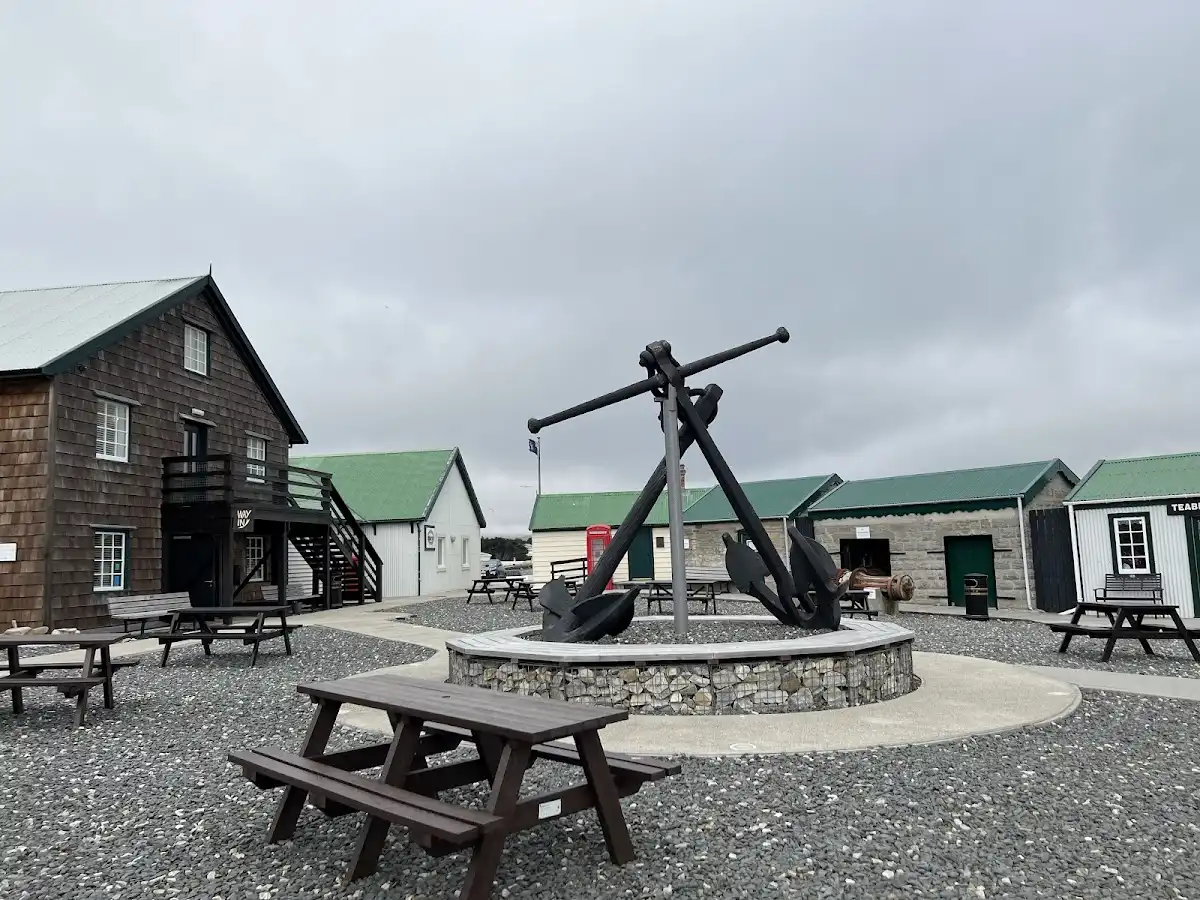
The floorboards creak, the air smells of old rope and varnish, and a ship’s wheel sits a few feet from a case of peat-cutting tools. The Historic Dockyard Museum stands on the waterfront in central Stanley, the capital of the Falkland Islands, in former dockyard buildings that look onto the harbor. It is small, and it is the best single hour you can spend indoors on the islands. The maritime rooms are the strongest: Cape Horn wrecks, hulks and the pioneers who settled here. The 1982 conflict display is sober and personal, and the natural history cases are tidy but familiar if you have already seen the real birds. Crowds are thin except when a cruise ship is in. It is flat, walkable from any Stanley bed, and fair value. Unlike the Jane Cameron National Archives, which serves researchers with documents, this is a place for walk-in visitors with objects to look at.

Discover everything you want to know in the 📖 Falkland Islands Travel Guide.


example page 0 from our offline Travel Guide for Falkland Islands
example page 1 from our offline Travel Guide for Falkland Islands
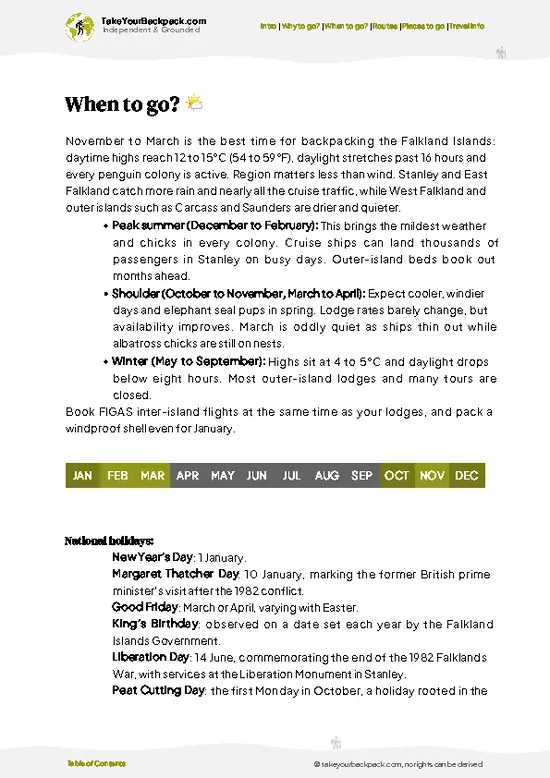
example page 2 from our offline Travel Guide for Falkland Islands
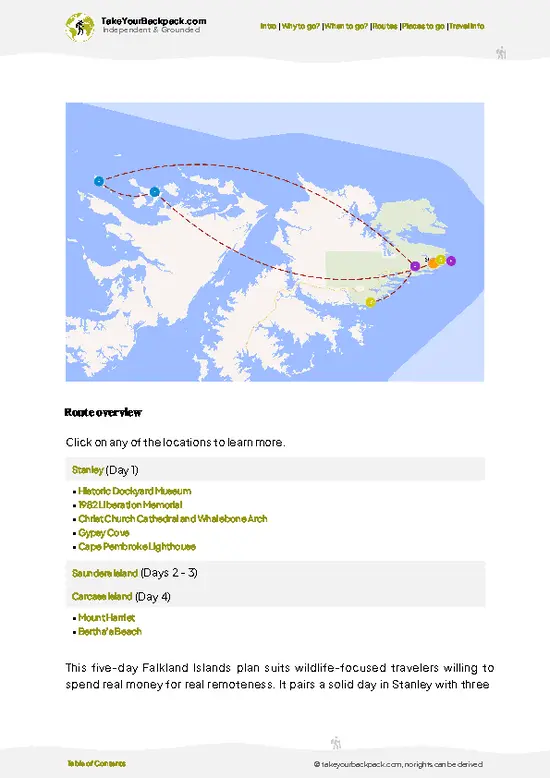
example page 3 from our offline Travel Guide for Falkland Islands
example page 4 from our offline Travel Guide for Falkland Islands
example page 5 from our offline Travel Guide for Falkland Islands
example page 6 from our offline Travel Guide for Falkland Islands
example page 7 from our offline Travel Guide for Falkland Islands
Loading the map 🌍
CLICK TO FILTER
towns
villages
landmarks
national parks
hikes
beaches
attractions
festivals
regions
SHOW COUNTRY’S BESTSHOW ALL

✨ Why go?
Ranked #1 attraction in Falkland Islands
What makes this attraction worth visiting

Historic Dockyard Museum is the quickest way to understand why anyone lives 8,000 miles from Britain on a windswept archipelago. Before you head out to the camp, the displays give you context. You learn how sheep farming, sealing and ships in trouble off Cape Horn built Stanley, and why the harbor still holds rusting hulls. The islands’ famous iron-hulled Brunel ship, the SS Great Britain, spent decades here as a storage hulk before going home in 1970, and that story alone reframes the harbor view. The museum also handles the 1982 war with restraint, through uniforms, letters and islanders’ own accounts rather than slogans. For a backpacker on a short Stanley stay, it fills a wet or windy afternoon when the penguin colonies are out of reach, and it makes every farm name and shipwreck you pass later mean something.

💡 HighlightsDon't-miss highlights and experiences

  1. Maritime and shipwreck gallery. The core of the collection covers vessels that limped into Stanley after storms off Cape Horn. Models, figureheads and salvage show why so many hulks still sit in the harbor.
  2. The SS Great Britain story. Brunel’s ship ended up in the Falklands as a hulk, and the display explains its long afterlife here and its tow home in 1970.
  3. 1982 conflict collection. Personal items, uniforms and civilian recollections give the occupation and liberation a human scale. It is quiet, factual and worth slow reading.
  4. Settler and camp life rooms. Peat-cutting tools, wool-shed gear, kitchen items and early photographs show how families lived on remote farms with no roads.
  5. Natural history displays. Mounted birds and marine life help you tell penguin species and sea birds apart before you
… read more 👉
  1. Maritime and shipwreck gallery. The core of the collection covers vessels that limped into Stanley after storms off Cape Horn. Models, figureheads and salvage show why so many hulks still sit in the harbor.
  2. The SS Great Britain story. Brunel’s ship ended up in the Falklands as a hulk, and the display explains its long afterlife here and its tow home in 1970.
  3. 1982 conflict collection. Personal items, uniforms and civilian recollections give the occupation and liberation a human scale. It is quiet, factual and worth slow reading.
  4. Settler and camp life rooms. Peat-cutting tools, wool-shed gear, kitchen items and early photographs show how families lived on remote farms with no roads.
  5. Natural history displays. Mounted birds and marine life help you tell penguin species and sea birds apart before you meet them live.
  6. The dockyard buildings themselves. Timber, stone and iron fittings from the working waterfront are part of the exhibit. Look at the structure as well as the cases.
  7. Harbor views from the grounds. Outside, the waterfront on Ross Road gives a clear look across Stanley Harbour, with wrecks, cormorants and the occasional ship at anchor.
Allow about 1.5 to 2 hours for everything, a little less if you skim the natural history room.
Spotted a mistake or missing something? Contact us.
🌤️ When to go?Seasonal considerations and timing

  • Summer (November to March): Highs of 11 to 15°C (52 to 59°F), lows around 5 to 7°C (41 to 45°F). Daylight runs about 16 to 17 hours in December, so you can walk the Stanley waterfront and the museum area late into the evening. Cruise ships call from October to March, and on those days the museum and nearby shops fill up quickly. Flights and guesthouse beds cost the most now.
  • Autumn (April to May): Highs of 8 to 11°C (46 to 52°F). Crowds thin out, the wind often drops, and rooms get easier to book.
  • Winter (June to August): Highs of 3 to 6°C (37 to 43°F), lows near freezing, with occasional snow. Daylight shrinks to roughly 8 hours. You will often have the exhibits to yourself, and rates are lowest, though some tours and businesses cut their hours.
  • Spring (September to October): Highs of 6 to 10°C
… read more 👉
  • Summer (November to March): Highs of 11 to 15°C (52 to 59°F), lows around 5 to 7°C (41 to 45°F). Daylight runs about 16 to 17 hours in December, so you can walk the Stanley waterfront and the museum area late into the evening. Cruise ships call from October to March, and on those days the museum and nearby shops fill up quickly. Flights and guesthouse beds cost the most now.
  • Autumn (April to May): Highs of 8 to 11°C (46 to 52°F). Crowds thin out, the wind often drops, and rooms get easier to book.
  • Winter (June to August): Highs of 3 to 6°C (37 to 43°F), lows near freezing, with occasional snow. Daylight shrinks to roughly 8 hours. You will often have the exhibits to yourself, and rates are lowest, though some tours and businesses cut their hours.
  • Spring (September to October): Highs of 6 to 10°C (43 to 50°F), with lengthening days and few visitors.
Aim for a cruise-free day by checking the port schedule, since the museum is quietest when no ship is in.


source: climatestotravel.comJANJanuary: highly recommended for travelingFEBFebruary: highly recommended for travelingMARMarch: highly recommended for travelingAPRApril: fair for travelingMAYMay: fair for travelingJUNJune: below average for travelingJULJuly: below average for travelingAUGAugust: below average for travelingSEPSeptember: fair for travelingOCTOctober: good for travelingNOVNovember: highly recommended for travelingDECDecember: highly recommended for traveling
falkland-islands-attraction-historic-dockyard-museum
© Google |

✈️ The backpacker research shortcutFalkland Islands Travel Guide

An offline-friendly backpacking guide with optimized travel routes, ranked highlights, transport advice, and the best areas to stay.
example page 0 from our offline Travel Guide for Falkland Islands
example page 1 from our offline Travel Guide for Falkland Islands
example page 2 from our offline Travel Guide for Falkland Islands
example page 3 from our offline Travel Guide for Falkland Islands
example page 4 from our offline Travel Guide for Falkland Islands
example page 5 from our offline Travel Guide for Falkland Islands
example page 6 from our offline Travel Guide for Falkland Islands
example page 7 from our offline Travel Guide for Falkland Islands
The digital guide (108 pages) contains:
✅ 25 highlights, ranked by travel appeal
✅ Optimized 2, 3 & 5-day travel routes
✅ Cities, national parks, landmarks, beaches
✅ How to get around
✅ Offline-friendly for travel without Wi-Fi
👉 Click to see all 30+ guide features

📅 Plan smarter in minutes, not weeks
✅ Month by month travel advice
✅ Festivals & national holidays
✅ Budget expectations

🗺️ Go to the right places, skip the overrated ones
✅ Honest pros & cons of destinations
✅ Top hikes, parks & viewpoints
✅ Lesser-known places most travelers miss
✅ Clear “worth it vs skip it” guidance

🛏️ Travel smoothly without rookie mistakes
✅ Best areas to stay
✅ Transport systems explained simply
✅ Common scams & safety advice
✅ SIM cards, money & practical tips

🌍 Understand the country, not just visit it
✅ Culture & traditions
✅ Local customs
✅ Festivals worth planning around
✅ Traveler-friendly historical context
✅ Insights that make places more meaningful

📱 Built for real travel conditions
✅ Fully downloadable PDF
✅ Works completely offline
✅ Optimized for phone use
✅ Useful in remote areas & buses
✅ Everything in one place
Stop searching, start planning
Get instant access to your full guide. 30‑day money-back guarantee.
+ Add another guide for just

By proceeding you agree to our terms.
Sent to your inbox immediately after payment • 100% Secure Checkout
Best Backpacking Travel Advisor 2025 tourism awardBest Backpacking
Travel Advisor
2025
What others say about Take Your Backpack Guides:
⭐⭐⭐⭐⭐
Fantastic, amazing amount of information!
⭐⭐⭐⭐⭐
My goodness this is amazing, it's what I've been looking for hats off too you!
⭐⭐⭐⭐⭐
I think this is absolutely BRILLIANT
⭐⭐⭐⭐
Very complete and informative. It's still missing places, but I gotta to commend you
⭐⭐⭐⭐⭐
This is truly amazing, thank you, can't wait to explore it with my kids!
⭐⭐⭐⭐⭐
Awesome resource, thank you!
⭐⭐⭐⭐⭐
This is amazing! Can't wait to explore the ones I haven't seen
⭐⭐⭐⭐
I love this! Well done, great idea.
⭐⭐⭐⭐⭐
Thanks for taking the time to make this gem!
⭐⭐⭐⭐⭐
This might be the best website I've ever seen.
⭐⭐⭐⭐⭐
Congratulations, and thank you so much for your work; it's incredibly valuable.
⭐⭐⭐⭐
In all seriousness I think you did a great job pointing out the important spots
⭐⭐⭐⭐⭐
10/10 very good
⭐⭐⭐⭐⭐
As someone who's only just starting to visit regularly this is awesome, thank you.
⭐⭐⭐⭐
Thank you very much! I'm going to visit my dad, it's going to be very useful!
⭐⭐⭐⭐⭐
This is really cool! We'll be travelling for the first time and this definitely come in handy.
⭐⭐⭐⭐⭐
You are now our minister of culture, congratulations 👨‍💼
⭐⭐⭐⭐⭐
Just wanted to tell you that this is a pearl! Going to follow your recommendations.
⭐⭐⭐⭐⭐
This is so cool. I'll definitely be using the resource for my travels soon.
⭐⭐⭐⭐⭐
This is very impressive! Good work.
⭐⭐⭐⭐⭐
This is an amazing and informative site. Very well done!

🛏️ Where to stay?Best areas to stay in Falkland Islands

Stay in Stanley itself, because the museum sits on the central harbor front and everything else is within a 15 minute walk. This is the only real option for backpackers, as the Falklands have no hostel scene on the scale of mainland South America.

The central streets around Ross Road and Philomel Street are the best base. You will be steps from the museum, the supermarket, the cafés, and the pubs where locals, military staff, and visitors mix. Evenings are social, and you can strike up a conversation at the bar in minutes. Stanley is very safe, so walking back after dark is easy, though wind … read more 👉
Stay in Stanley itself, because the museum sits on the central harbor front and everything else is within a 15 minute walk. This is the only real option for backpackers, as the Falklands have no hostel scene on the scale of mainland South America.

The central streets around Ross Road and Philomel Street are the best base. You will be steps from the museum, the supermarket, the cafés, and the pubs where locals, military staff, and visitors mix. Evenings are social, and you can strike up a conversation at the bar in minutes. Stanley is very safe, so walking back after dark is easy, though wind and cold are the real hazards.

The west end toward the cathedral and Victory Green is quieter, with a mix of guesthouses and self-catering rooms. It suits you if you want a kitchen to save money, and the walk to the museum along the waterfront takes 10 to 15 minutes. Budget beds are limited, so book months ahead for the summer season. Camping outside town is possible with landowner permission, but it is exposed and far from the museum.

Self-catering rentals and B&B rooms are the practical way to keep costs down, especially if you are splitting with other travelers.

👛 Costs (as of 19 October 2026)Money, prices, and spending tips

A day around the Historic Dockyard Museum costs roughly US$123 to 191 for a backpacker in high season, mostly because of Stanley’s accommodation and food prices. The museum itself is a small part of that. Travelers pay in Falkland Islands pounds, though British pounds and sometimes US dollars are also accepted in Stanley.
CategoryBudget RangeLocal Reality
Museum entryUS$8 to 11A small adult fee; children pay less, and the ticket covers the dockyard exhibits.
Accommodation (high season)US$70 to 100Guesthouse or B&B room, or a self-catering unit; dorm-style beds are scarce.
Accommodation (low season)US$55 to 80Slightly cheaper from May to September.
FoodUS$35 to 50Supermarket groceries keep this down; a café lunch runs US$13 to 20, and a pub dinner US$20 to 30.
Local transportUS$0 to 10The museum
… read more 👉
A day around the Historic Dockyard Museum costs roughly US$123 to 191 for a backpacker in high season, mostly because of Stanley’s accommodation and food prices. The museum itself is a small part of that. Travelers pay in Falkland Islands pounds, though British pounds and sometimes US dollars are also accepted in Stanley.
CategoryBudget RangeLocal Reality
Museum entryUS$8 to 11A small adult fee; children pay less, and the ticket covers the dockyard exhibits.
Accommodation (high season)US$70 to 100Guesthouse or B&B room, or a self-catering unit; dorm-style beds are scarce.
Accommodation (low season)US$55 to 80Slightly cheaper from May to September.
FoodUS$35 to 50Supermarket groceries keep this down; a café lunch runs US$13 to 20, and a pub dinner US$20 to 30.
Local transportUS$0 to 10The museum is walkable from anywhere in Stanley; a taxi across town is a few dollars.
ExtrasUS$10 to 20Coffee, souvenirs, or a drink at the pub; a harbor or wildlife tour is extra.
Total Daily BudgetUS$123 to 191Counting high-season accommodation, with about US$155 as a realistic midpoint.
⚠️ Prices can change and everyone travels differently, so take this as a rough guide. Hope it helps you plan your adventure!

FAQFrequently asked questions about Historic Dockyard Museum

Plan on 1.5 to 2 hours at the Historic Dockyard Museum, which is enough to see the maritime, natural history, and settler displays in the dockyard buildings. Add another 30 minutes if you want to look over the outdoor boats and wrecks nearby. Many visitors combine it with a walk through Stanley, which takes the rest of a half day.
Yes for most travelers, since the entry fee is around US$8 to 11 and the museum is the best single introduction to Falklands history. The exhibits cover the 1982 conflict, shipwrecks around Cape Horn, and farming life on the islands, which makes the rest of your trip easier to understand. Check cruise ship days and visit outside them for a quieter experience.
Fly to Mount Pleasant Airport, about 55 km (34 miles) from Stanley, with flights from the UK via Ascension (the Brize Norton service) or from Chile via Punta Arenas on a weekly LATAM service. From the airport, a shuttle or taxi to Stanley takes about 45 minutes and costs roughly US$30 to 40. The museum is on the central waterfront, a flat 10 to 15 minute walk from the town center.
⚠️ Things can change over time, so always validate details locally before you go.

Other Falkland Islander attractions near Historic Dockyard Museum

Explore more nearby:


💡 Not sure where to go next?
Create a personalized itinerary for Falkland Islands including Historic Dockyard Museum and the places that fit your trip.

Generate my itinerary

👉 Discover all attractions

Or checkout all Falkland Islands has to offer (think cities, towns, villages, national parks, hikes, beaches, festivals)
Country photo of Falkland Islands

We 💚 feedbackParting advice and final tips

Historic Dockyard Museum gets squeezed into a rushed twenty minutes by people sprinting from a ship tender or a tight tour schedule. Give it a full hour, ideally on your first morning in Stanley, then walk the Ross Road waterfront afterward. The wrecks and buildings will make far more sense, and the 1982 room deserves your unhurried attention.

✍️ Help improve this page!
The information on this page is based on in-depth research, insights shared by experienced travelers, and feedback from the local travel community in Falkland Islands. While every effort is made to keep the information accurate and current, conditions can change — so if you spot anything incorrect or outdated, please get in touch.


🙋‍♂️ Give feedback

👋 Meet the founderWho’s Behind Take Your Backpack?

Johan, backpacker and founder of TakeYourBackpackHi, I’m Johan (Netherlands 🇳🇱), the creator of TakeYourBackpack. Over the past 3 decades, I’ve backpacked through 90+ countries across six continents, gaining extensive experience with independent travel, long-term trips, and overland routes.

This site is built on a combination of firsthand travel experience and carefully curated insights from other backpackers. Many guides are based on places I’ve personally visited, while others bring together tips, observations, and practical advice shared by trusted travelers I’ve met along the way.

The goal is to provide realistic, experience-driven guidance — not generic itineraries — so you can explore destinations with better context, clearer expectations, and more confidence.