×

Faroe Islands🇫🇴 | best beachesEssential 3 beaches to Explore in Faroe Islands

Beaches in the Faroe Islands are black-sand coves and pebble shingle pockets, framed by basalt cliffs, with Atlantic swells booming in and wind that smells of salt and wet grass. Nothing here is a resort. Entry is free, there are almost no facilities, and you share the shore with sheep. Streymoy and Eysturoy sit nearest Tórshavn and are easiest to reach, while the outer islands demand ferries and patience. Independent travelers with a rental car or bus pass do best.

By Johan Kruseman 🇳🇱 | Updated October 18, 2026
Explore the best attractions in Faroe Islands

Why go?Understanding Their Importance

The Faroes sit in the North Atlantic, roughly 62°N, so beaches here are wild shorelines rather than swimming destinations. Sea temperatures stay around 7 to 11°C all year, and powerful swells and strong currents shape the coast. Sand is mostly dark volcanic basalt, ground fine in a few sheltered bays, while elsewhere you get rounded boulders and cold, clattering shingle. Villages grew around harbors, not bathing spots, so you will find almost no lifeguards, cafés or rentals on the shore. Land beside many beaches is private sheep pasture, which means gates, fences and the smell of lanolin and peat smoke. Expect gusts, fast-moving cloud and light that shifts from silver to gold in minutes. Come for drama, walking and photography. Bring a wetsuit if you want to surf, because swimming in trunks is brief and bracing.
How the List Was Created
The list of best beaches in Faroe Islands is created based on beauty, vibe, water quality, activities, and surrounding scenery. If you feel a beach is missing in this list, please let us know.

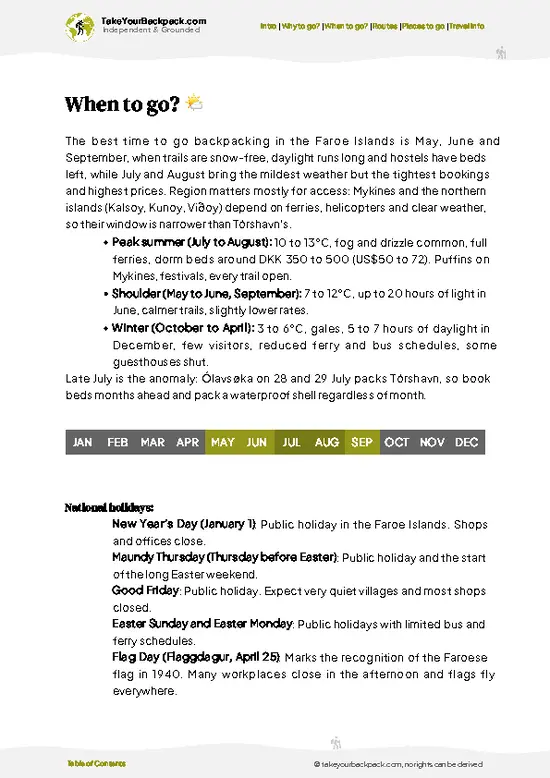
When to go?Best Time to Visit Faroe Islands for beaches

Best months for Faroe beaches: June to August are the best months, with the longest daylight (nearly 19 hours in midsummer), highs of 11 to 14°C and the calmest seas. Rain falls on roughly 200 days a year, so showers are normal even then, and fog can swallow a headland in ten minutes. Shoulder seasons: May and September bring fewer visitors, lower accommodation prices (often 10 to 25 percent below July) and crisper light, though highs sit near 8 to 11°C and wind picks up. Ferries and some guesthouses keep reduced hours. Winter: October to March means highs of 3 to 6°C, storms, big surf and daylight shrinking to around 4 to 5 hours. Many seasonal guesthouses close, and ferry timetables thin out. Coastal walking is possible, but bring serious waterproofs.

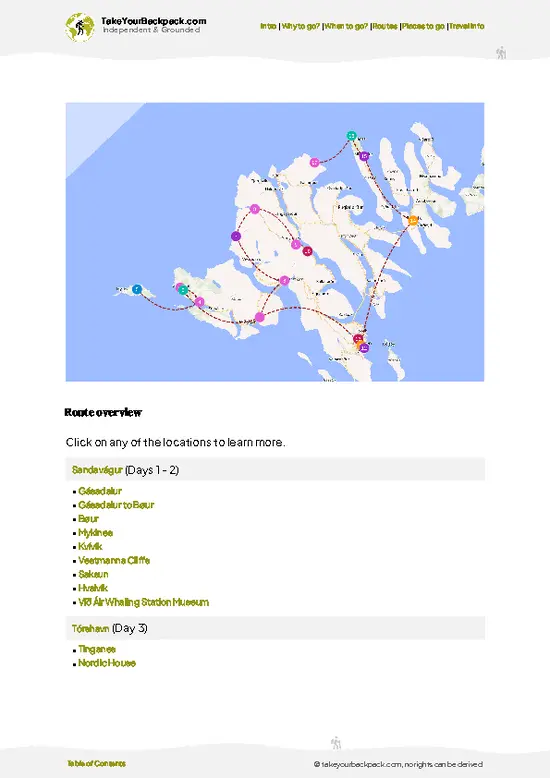
beach hoppingPlanning Your Route Efficiently

How long to allow: A trip linking several beaches needs 5 to 8 days, because weather and ferries set the pace more than distance does. Which regions pair well: Start in Tórshavn and Streymoy, then cross the bridge to Eysturoy, and only then add Vágar (the airport island, linked by an undersea tunnel) or the southern islands by ferry. Moving one direction, such as south to north, avoids doubling back. Allow 1 to 2 hours per stop for walking, wind and photos, and 30 to 90 minutes between neighboring regions by road. Ferries to islands like Suðuroy take about 2 hours. Common planning errors: Travelers cram four or five beaches into a day and spend it staring at fogged windshields. Build in a buffer day for low cloud, and check ferry times and road tunnel conditions each morning. Keep one flexible slot for sudden sunshine.

The ListHighly Recommended beaches of Faroe Islands

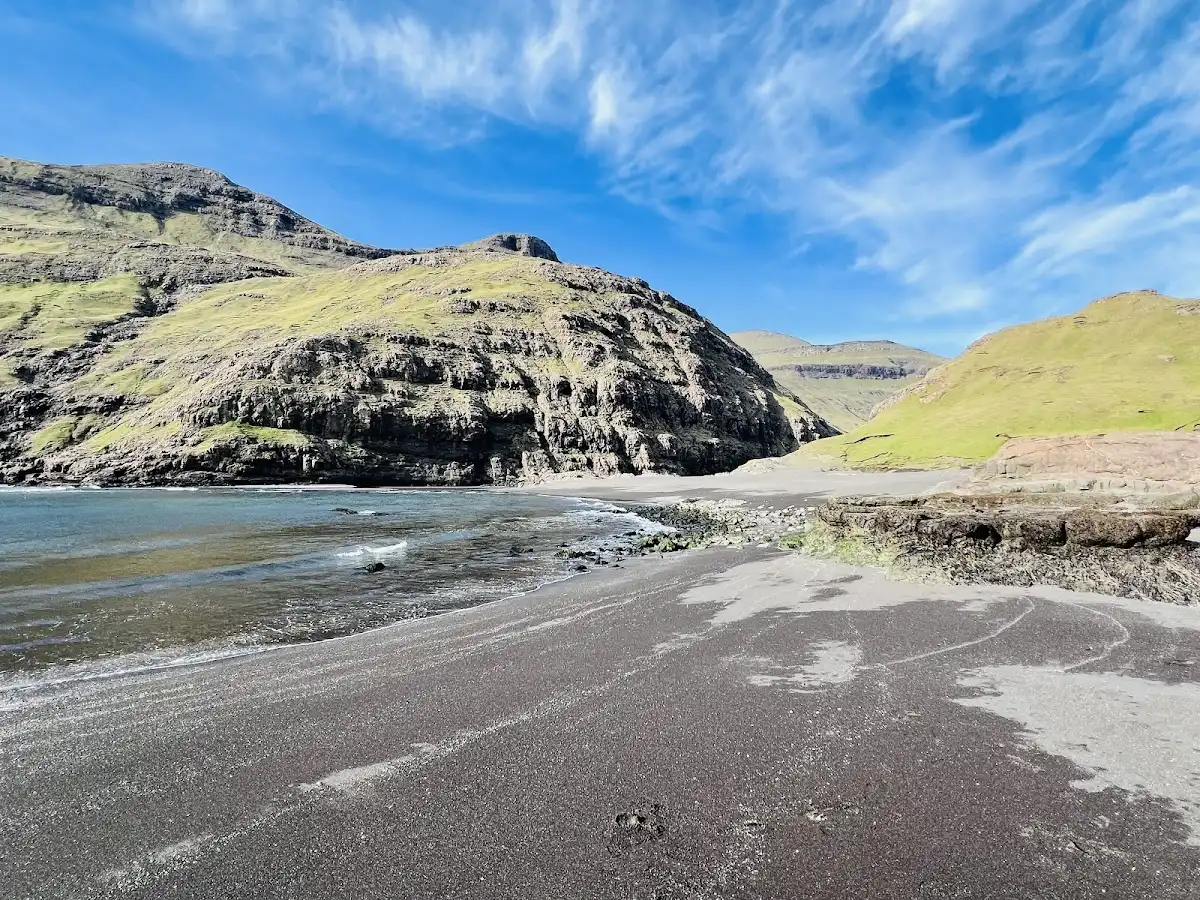
1 Saksun Beach

black sand, tidal lagoon, steep cliffs

Wander along a tidal lagoon where dark volcanic sand meets dramatic cliffs, with shifting tides revealing new perspectives on the surrounding valley.

faroe-islands-beach-saksun-beach
© Google |

2 Tjørnuvík Beach

surf waves, river mouth, distant sea stacks

Stand at the river’s edge as Atlantic waves roll in, with the silhouettes of Risin og Kellingin sea stacks anchoring the horizon.

faroe-islands-beach-tjornuvik-beach
© Google |

3 Sandavágur Beach

grassy dunes, village views, basalt shoreline

Walk past grassy dunes to a basalt-fringed shore, where the nearby village and distant sea stacks create a layered coastal landscape.

faroe-islands-beach-sandavagur-beach
© Google |
Loading the map 🌍

Expert viewInsights from Locals and Experts

How many beaches to visit: Aim for three to five beaches in a week. Each one involves a drive on single-track roads, a gate, often a muddy walk across pasture, and a long stretch of listening to surf and wind. Rushing through more means more time in the car than on the sand, and the rewards come from lingering while the light shifts across black sand and wet stone.Choosing between kinds: Shelter-seekers and families should favor protected bays with a gentle slope, where you can sit and paddle. Photographers and walkers will prefer exposed coves under cliffs, where the swell crashes and spray hangs in the air. Surfers need a 5/4 mm wetsuit, boots and gloves, and should go with a local operator. Budget travelers can choose any of them, since beaches charge nothing, but a few reach points involve … read more 👉
How many beaches to visit: Aim for three to five beaches in a week. Each one involves a drive on single-track roads, a gate, often a muddy walk across pasture, and a long stretch of listening to surf and wind. Rushing through more means more time in the car than on the sand, and the rewards come from lingering while the light shifts across black sand and wet stone.Choosing between kinds: Shelter-seekers and families should favor protected bays with a gentle slope, where you can sit and paddle. Photographers and walkers will prefer exposed coves under cliffs, where the swell crashes and spray hangs in the air. Surfers need a 5/4 mm wetsuit, boots and gloves, and should go with a local operator. Budget travelers can choose any of them, since beaches charge nothing, but a few reach points involve small parking or landowner fees of roughly DKK 50 to 100 (US$7 to 15).Budget: Plan on US$90 to 140 a day: hostel or guesthouse dorm DKK 300 to 500 (US$45 to 75), groceries from Bónus supermarkets around DKK 100 to 150 (US$15 to 22), and bus fares of DKK 20 to 80 (US$3 to 12) per leg. A rental car runs DKK 500 to 900 (US$75 to 130) a day. Wetsuit rental and surf lessons cost DKK 500 to 900 (US$75 to 130).Safety and etiquette: Never turn your back on the water. Sneaker waves and rip currents can sweep people off rocks, and sea water stays cold enough to cause shock within minutes. Check tide and swell forecasts at vedur.fo before setting out. Close every gate behind you, keep dogs on leads near lambs in spring, and stay out of fenced fields unless a path is marked. Pack out all trash. Locals use these shores for fishing and sheep gathering, so keep a polite distance and say hello. You will get quiet shores, clean air and the sense of having a coastline to yourself.

✈️ The backpacker research shortcutFaroe Islands Travel Guide

An offline-friendly backpacking guide with optimized travel routes, ranked highlights, transport advice, and the best areas to stay.
example page 0 from our offline Travel Guide for Faroe Islands
example page 1 from our offline Travel Guide for Faroe Islands
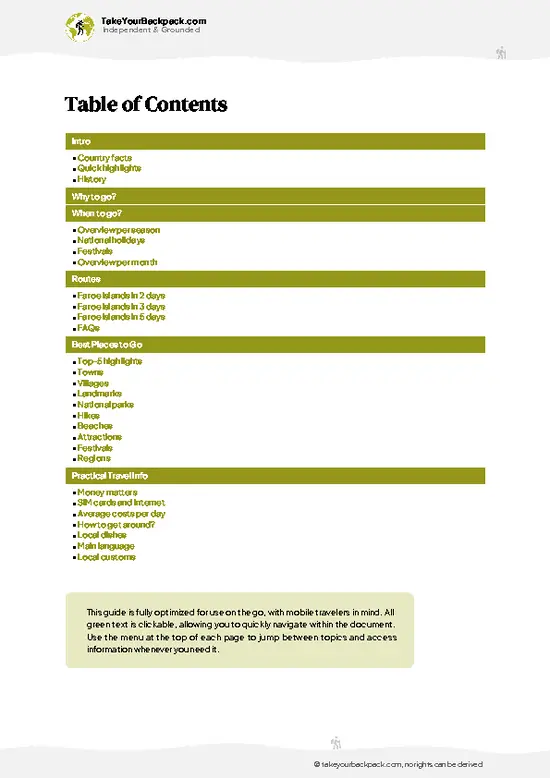
example page 2 from our offline Travel Guide for Faroe Islands
example page 3 from our offline Travel Guide for Faroe Islands
example page 4 from our offline Travel Guide for Faroe Islands
example page 5 from our offline Travel Guide for Faroe Islands
example page 6 from our offline Travel Guide for Faroe Islands
example page 7 from our offline Travel Guide for Faroe Islands
The digital guide (161 pages) contains:
✅ 39 highlights, ranked by travel appeal
✅ Optimized 2, 3 & 5-day travel routes
✅ Cities, national parks, landmarks, beaches
✅ How to get around
✅ Offline-friendly for travel without Wi-Fi
👉 Click to see all 30+ guide features

📅 Plan smarter in minutes, not weeks
✅ Month by month travel advice
✅ Festivals & national holidays
✅ Budget expectations

🗺️ Go to the right places, skip the overrated ones
✅ Honest pros & cons of destinations
✅ Top hikes, parks & viewpoints
✅ Lesser-known places most travelers miss
✅ Clear “worth it vs skip it” guidance

🛏️ Travel smoothly without rookie mistakes
✅ Best areas to stay
✅ Transport systems explained simply
✅ Common scams & safety advice
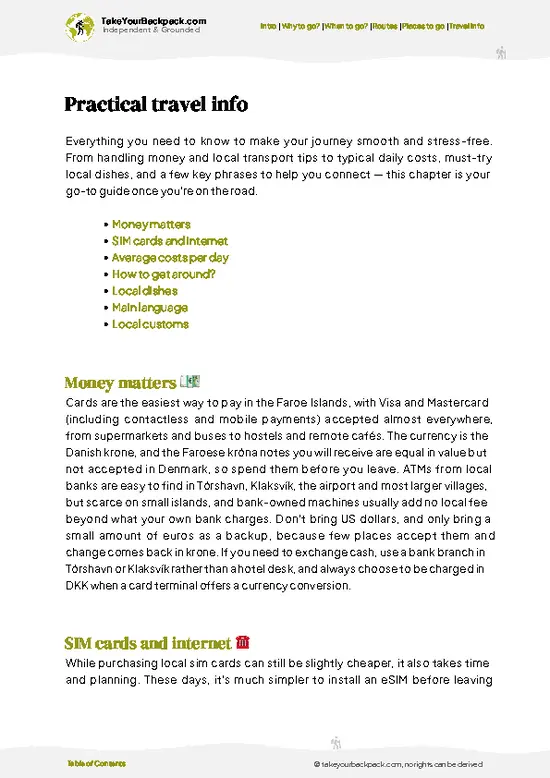
✅ SIM cards, money & practical tips

🌍 Understand the country, not just visit it
✅ Culture & traditions
✅ 52 Essential phrases & customs
✅ Festivals worth planning around
✅ Traveler-friendly historical context
✅ Insights that make places more meaningful

📱 Built for real travel conditions
✅ Fully downloadable PDF
✅ Works completely offline
✅ Optimized for phone use
✅ Useful in remote areas & buses
✅ Everything in one place
Stop searching, start planning
Get instant access to your full guide. 30‑day money-back guarantee.
+ Add another guide for just

By proceeding you agree to our terms.
Sent to your inbox immediately after payment • 100% Secure Checkout
Best Backpacking Travel Advisor 2025 tourism awardBest Backpacking
Travel Advisor
2025
What others say about Take Your Backpack Guides:
⭐⭐⭐⭐⭐
Fantastic, amazing amount of information!
⭐⭐⭐⭐⭐
My goodness this is amazing, it's what I've been looking for hats off too you!
⭐⭐⭐⭐⭐
I think this is absolutely BRILLIANT
⭐⭐⭐⭐
Very complete and informative. It's still missing places, but I gotta to commend you
⭐⭐⭐⭐⭐
This is truly amazing, thank you, can't wait to explore it with my kids!
⭐⭐⭐⭐⭐
Awesome resource, thank you!
⭐⭐⭐⭐⭐
This is amazing! Can't wait to explore the ones I haven't seen
⭐⭐⭐⭐
I love this! Well done, great idea.
⭐⭐⭐⭐⭐
Thanks for taking the time to make this gem!
⭐⭐⭐⭐⭐
This might be the best website I've ever seen.
⭐⭐⭐⭐⭐
Congratulations, and thank you so much for your work; it's incredibly valuable.
⭐⭐⭐⭐
In all seriousness I think you did a great job pointing out the important spots
⭐⭐⭐⭐⭐
10/10 very good
⭐⭐⭐⭐⭐
As someone who's only just starting to visit regularly this is awesome, thank you.
⭐⭐⭐⭐
Thank you very much! I'm going to visit my dad, it's going to be very useful!
⭐⭐⭐⭐⭐
This is really cool! We'll be travelling for the first time and this definitely come in handy.
⭐⭐⭐⭐⭐
You are now our minister of culture, congratulations 👨‍💼
⭐⭐⭐⭐⭐
Just wanted to tell you that this is a pearl! Going to follow your recommendations.
⭐⭐⭐⭐⭐
This is so cool. I'll definitely be using the resource for my travels soon.
⭐⭐⭐⭐⭐
This is very impressive! Good work.
⭐⭐⭐⭐⭐
This is an amazing and informative site. Very well done!

🛏️ Where to stay?Where to Stay: Faroe Islands Edition

Budget beds in the Faroe Islands exist but are scarce, so expect a few hostels and guesthouses with dorm beds around DKK 300 to 450 (US$45 to 65), plus summer campsites, and book weeks ahead for June to August. Tórshavn has the widest choice: the harbor area around Tinganes puts you near the bars, cafés and every bus route, though weekend nights get loud, while suburbs like Hoyvík and Argir are quieter and cheaper but a 20 to 30 minute walk or bus ride from the center. Klaksvík suits hikers heading to the northern islands but has little nightlife, and villages on Vágar such as Sørvágur and Miðvágur are peaceful, close to the airport and Múlafossur, and a long way from Tórshavn’s restaurants. … read more 👉
Budget beds in the Faroe Islands exist but are scarce, so expect a few hostels and guesthouses with dorm beds around DKK 300 to 450 (US$45 to 65), plus summer campsites, and book weeks ahead for June to August. Tórshavn has the widest choice: the harbor area around Tinganes puts you near the bars, cafés and every bus route, though weekend nights get loud, while suburbs like Hoyvík and Argir are quieter and cheaper but a 20 to 30 minute walk or bus ride from the center. Klaksvík suits hikers heading to the northern islands but has little nightlife, and villages on Vágar such as Sørvágur and Miðvágur are peaceful, close to the airport and Múlafossur, and a long way from Tórshavn’s restaurants.

If you enjoy meeting fellow travelers, consider choosing hostels with high ratings for atmosphere. On the other hand, if you prefer having your own space, a hotel might be a better option.

Faroe IslandsExplore Beyond This Category

👋 Meet the founderWho’s Behind Take Your Backpack?

Johan, backpacker and founder of TakeYourBackpackHi, I’m Johan (Netherlands 🇳🇱), the creator of TakeYourBackpack. Over the past 3 decades, I’ve backpacked through 90+ countries across six continents, gaining extensive experience with independent travel, long-term trips, and overland routes.

This site is built on a combination of firsthand travel experience and carefully curated insights from other backpackers. Many guides are based on places I’ve personally visited, while others bring together tips, observations, and practical advice shared by trusted travelers I’ve met along the way.

The goal is to provide realistic, experience-driven guidance — not generic itineraries — so you can explore destinations with better context, clearer expectations, and more confidence.