×

Faroe Islands🇫🇴 | best regionsEssential regions to Explore in Faroe Islands

The Faroe Islands are a patchwork of dramatic landscapes and rich culture, divided into distinct regions that shape your backpacking experience. From the rugged cliffs of Vágar to the serene valleys of Eysturoy, each area offers unique climate and attractions. Choosing the right region influences your vibe, budget, and even safety. Seasonal shifts bring different challenges and rewards, making regional knowledge essential for independent travel. Embrace the nuances to truly immerse yourself in this captivating archipelago.

By Johan Kruseman 🇳🇱 | Updated September 5, 2026
Explore the best cities in Faroe Islands

Why go?Understanding Their Importance

The Faroe Islands stand out for their climatic diversity and rugged landscapes, where dramatic cliffs meet lush valleys. This unique geography creates microclimates, allowing travelers to experience everything from misty rain to bright sunshine within a single day. The islands’ cultural character is deeply rooted in a history of resilience, shaped by isolation and a strong maritime tradition.

However, the trade-off for this rich experience is the infrastructure; while roads connect many islands, travel times can be lengthy, requiring patience and planning. Accessibility varies, with some areas demanding a commitment to reach, but this often leads to more immersive encounters with local life. Understanding these constraints is crucial; the reward lies in the depth of exploration, where each … read more 👉
The Faroe Islands stand out for their climatic diversity and rugged landscapes, where dramatic cliffs meet lush valleys. This unique geography creates microclimates, allowing travelers to experience everything from misty rain to bright sunshine within a single day. The islands’ cultural character is deeply rooted in a history of resilience, shaped by isolation and a strong maritime tradition.

However, the trade-off for this rich experience is the infrastructure; while roads connect many islands, travel times can be lengthy, requiring patience and planning. Accessibility varies, with some areas demanding a commitment to reach, but this often leads to more immersive encounters with local life. Understanding these constraints is crucial; the reward lies in the depth of exploration, where each hike or ferry ride reveals the islands’ raw beauty and cultural depth, making every effort worthwhile.
Our Approach to Ranking
The list of best regions in Faroe Islands is created based on landscapes, local culture, attractions, vibes, and overall appeal. If you feel a region is missing in this list, please let us know.

When to go?Best Time to Visit Faroe Islands for regions

Climate Variation
The Faroe Islands experience a maritime climate, leading to unpredictable weather year-round. Expect cool temperatures, with summer highs around 15°C and winter lows dipping near freezing. Rain is frequent, so waterproof gear is essential regardless of the season.

Optimal Months
Late spring to early autumn offers the best conditions for exploration. June to August provides milder weather and longer daylight hours, perfect for hiking and outdoor activities. However, this is also peak tourist season, leading to crowded trails and higher accommodation costs.

Shoulder Seasons
Visiting in late spring or early autumn can yield a more intimate experience. Fewer crowds mean quieter trails, but weather can be less predictable. Expect cooler temperatures and occasional rain, yet … read more 👉
Climate Variation
The Faroe Islands experience a maritime climate, leading to unpredictable weather year-round. Expect cool temperatures, with summer highs around 15°C and winter lows dipping near freezing. Rain is frequent, so waterproof gear is essential regardless of the season.

Optimal Months
Late spring to early autumn offers the best conditions for exploration. June to August provides milder weather and longer daylight hours, perfect for hiking and outdoor activities. However, this is also peak tourist season, leading to crowded trails and higher accommodation costs.

Shoulder Seasons
Visiting in late spring or early autumn can yield a more intimate experience. Fewer crowds mean quieter trails, but weather can be less predictable. Expect cooler temperatures and occasional rain, yet the landscapes are often at their most vibrant.

Seasonal Constraints
Winter brings harsh conditions, limiting access to some areas. While the dramatic scenery can be captivating, the cold and wind may deter outdoor activities. Balancing comfort with experience is crucial when planning a visit.

region hoppingPlanning Your Route Efficiently

Traveling through the Faroe Islands requires a strategic approach to maximize the experience. Start in the capital, Tórshavn, then cluster regions based on proximity. Head east to the rugged cliffs of Viðoy, then south to the lush landscapes of Suðuroy. This route allows for a natural flow, minimizing backtracking.

Allocate at least half a day per major stop to soak in the atmosphere, whether it’s hiking the trails or enjoying local cuisine. Common mistakes include trying to cram too many locations into a short timeframe, which can lead to rushed experiences. Prioritize depth over breadth; a few well-explored areas will yield richer memories.

Consider trade-offs: faster travel means less immersion, while a slower pace allows for spontaneous discoveries. Flexibility is key; weather can read more 👉
Traveling through the Faroe Islands requires a strategic approach to maximize the experience. Start in the capital, Tórshavn, then cluster regions based on proximity. Head east to the rugged cliffs of Viðoy, then south to the lush landscapes of Suðuroy. This route allows for a natural flow, minimizing backtracking.

Allocate at least half a day per major stop to soak in the atmosphere, whether it’s hiking the trails or enjoying local cuisine. Common mistakes include trying to cram too many locations into a short timeframe, which can lead to rushed experiences. Prioritize depth over breadth; a few well-explored areas will yield richer memories.

Consider trade-offs: faster travel means less immersion, while a slower pace allows for spontaneous discoveries. Flexibility is key; weather can change rapidly, impacting plans. Embrace the unexpected, and let the islands reveal their charm at your own pace.

The ListHighly Recommended regions of Faroe Islands

1 Mykines

Puffin colonies, dramatic sea stacks, lighthouse views

Hike windswept trails above the Atlantic, watch seabirds nest on grassy ledges, and reach the westernmost point marked by a solitary lighthouse.

Loading the map 🌍

Expert viewInsights from Locals and Experts

Geographic Diversity
The Faroe Islands are a patchwork of rugged cliffs, rolling hills, and deep fjords. Each region offers a unique flavor, from the stark, wind-swept landscapes of the north to the lush, green valleys in the south. You’ll want to experience at least three regions to grasp the islands’ full character. The contrasts are striking: one moment you’re navigating rocky paths with the ocean crashing below, and the next, you’re enveloped in the soft, mossy embrace of a valley.

Transport Between Regions
Getting around can be a challenge. Ferries connect many islands, but schedules can be sporadic, especially in winter. Expect to spend time waiting, which can feel frustrating but also allows for unexpected moments—like sharing stories with locals at a small café while you wait. … read more 👉
Geographic Diversity
The Faroe Islands are a patchwork of rugged cliffs, rolling hills, and deep fjords. Each region offers a unique flavor, from the stark, wind-swept landscapes of the north to the lush, green valleys in the south. You’ll want to experience at least three regions to grasp the islands’ full character. The contrasts are striking: one moment you’re navigating rocky paths with the ocean crashing below, and the next, you’re enveloped in the soft, mossy embrace of a valley.

Transport Between Regions
Getting around can be a challenge. Ferries connect many islands, but schedules can be sporadic, especially in winter. Expect to spend time waiting, which can feel frustrating but also allows for unexpected moments—like sharing stories with locals at a small café while you wait. If you’re driving, be prepared for narrow roads and sudden weather changes. The effort to traverse these landscapes is worth it; each journey reveals new vistas that make the bumps in the road feel like part of the adventure.

Cultural Variation
Each region has its own cultural nuances. The northern islands often feel more traditional, with a slower pace and a strong sense of community. In contrast, the southern areas may have a more modern vibe, with art and music festivals that pulse with energy. Embrace these differences; they enrich your experience. However, be mindful of local customs—respecting the quiet of small villages is crucial.

Pacing Trade-offs
Plan your time wisely. A week allows you to explore a couple of regions in depth, but if you’re short on time, prioritize one or two areas that resonate with you. The trade-off is clear: rush through and miss the soul of the islands, or slow down and savor the moments. The first sip of a local beer after a long hike, the sound of sheep bleating in the distance, or the sight of a sunset over the cliffs—these are the rewards that make the effort worthwhile.

✈️ The backpacker research shortcutFaroe Islands Travel Guide

An offline-friendly backpacking guide with optimized travel routes, ranked highlights, transport advice, and the best areas to stay.
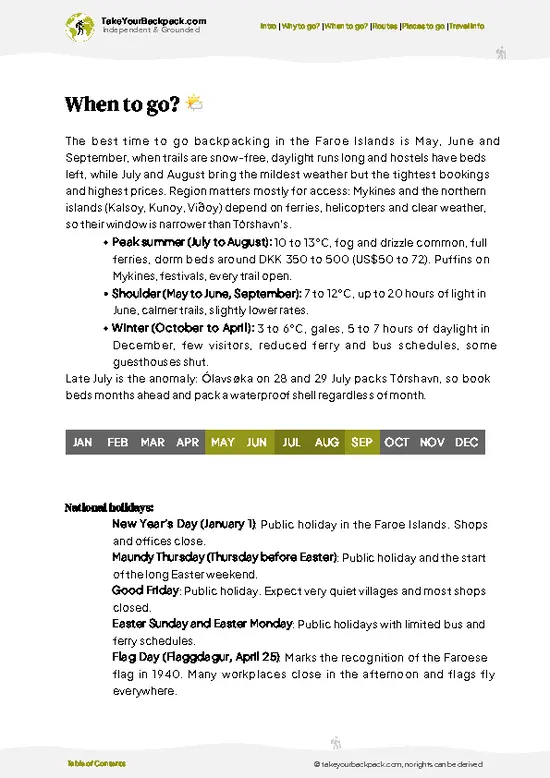
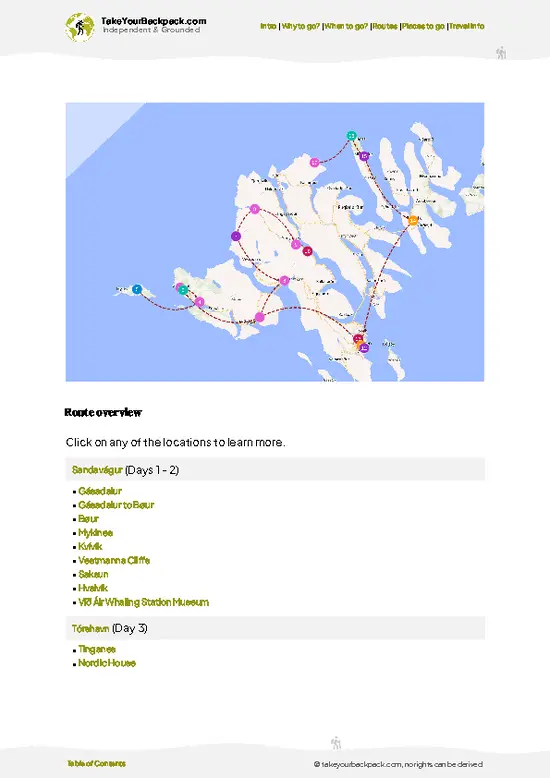
example page 0 from our offline Travel Guide for Faroe Islands
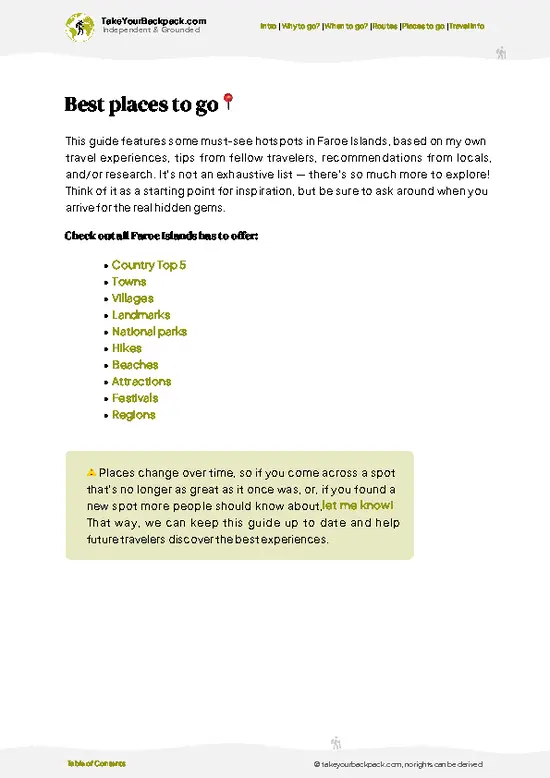
example page 1 from our offline Travel Guide for Faroe Islands
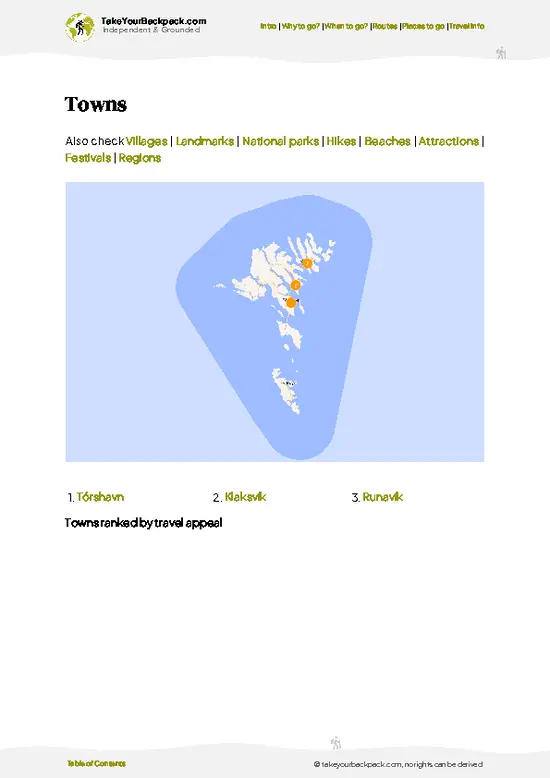
example page 2 from our offline Travel Guide for Faroe Islands
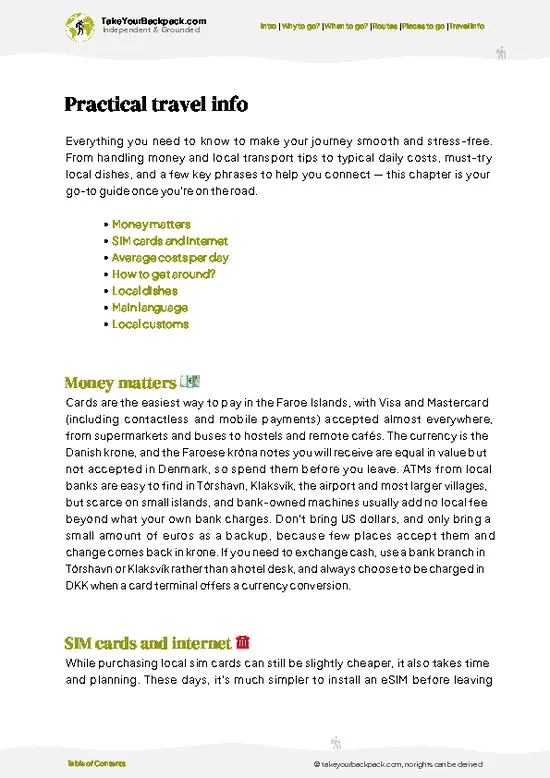
example page 3 from our offline Travel Guide for Faroe Islands
example page 4 from our offline Travel Guide for Faroe Islands
example page 5 from our offline Travel Guide for Faroe Islands
example page 6 from our offline Travel Guide for Faroe Islands
example page 7 from our offline Travel Guide for Faroe Islands
The digital guide (164 pages) contains:
40 highlights, ranked by travel appeal
Optimized 2, 3 & 5-day travel routes
Cities, national parks, landmarks, beaches
How to get around
Offline-friendly for travel without Wi-Fi
👉 Click to see all 30+ guide features

📅 Plan smarter in minutes, not weeks
Month by month travel advice
Festivals & national holidays
Budget expectations

🗺️ Go to the right places, skip the overrated ones
Honest pros & cons of destinations
Top hikes, parks & viewpoints
Lesser-known places most travelers miss
Clear “worth it vs skip it” guidance

🛏️ Travel smoothly without rookie mistakes
Best areas to stay
Transport systems explained simply
Common scams & safety advice
SIM cards, money & practical tips

🌍 Understand the country, not just visit it
Culture & traditions
52 Essential phrases & customs
Festivals worth planning around
Traveler-friendly historical context
Insights that make places more meaningful

📱 Built for real travel conditions
Fully downloadable PDF
Works completely offline
Optimized for phone use
Useful in remote areas & buses
Everything in one place
Save weeks of stressful planning
Get instant access to your full guide. 30‑day money-back guarantee.
+ Add another guide for just US$7.80

By proceeding you agree to our terms.
Sent to your inbox immediately after payment • 100% Secure Checkout
Best Backpacking Travel Advisor 2025 tourism awardBest Backpacking
Travel Advisor
2025
What others say about Take Your Backpack Guides:
⭐⭐⭐⭐⭐
Fantastic, amazing amount of information!
⭐⭐⭐⭐⭐
My goodness this is amazing, it's what I've been looking for hats off too you!
⭐⭐⭐⭐⭐
I think this is absolutely BRILLIANT
⭐⭐⭐⭐
Very complete and informative. It's still missing places, but I gotta to commend you
⭐⭐⭐⭐⭐
This is truly amazing, thank you, can't wait to explore it with my kids!
⭐⭐⭐⭐⭐
Awesome resource, thank you!
⭐⭐⭐⭐⭐
This is amazing! Can't wait to explore the ones I haven't seen
⭐⭐⭐⭐
I love this! Well done, great idea.
⭐⭐⭐⭐⭐
Thanks for taking the time to make this gem!
⭐⭐⭐⭐⭐
This might be the best website I've ever seen.
⭐⭐⭐⭐⭐
Congratulations, and thank you so much for your work; it's incredibly valuable.
⭐⭐⭐⭐
In all seriousness I think you did a great job pointing out the important spots
⭐⭐⭐⭐⭐
10/10 very good
⭐⭐⭐⭐⭐
As someone who's only just starting to visit regularly this is awesome, thank you.
⭐⭐⭐⭐
Thank you very much! I'm going to visit my dad, it's going to be very useful!
⭐⭐⭐⭐⭐
This is really cool! We'll be travelling for the first time and this definitely come in handy.
⭐⭐⭐⭐⭐
You are now our minister of culture, congratulations 👨‍💼
⭐⭐⭐⭐⭐
Just wanted to tell you that this is a pearl! Going to follow your recommendations.
⭐⭐⭐⭐⭐
This is so cool. I'll definitely be using the resource for my travels soon.
⭐⭐⭐⭐⭐
This is very impressive! Good work.
⭐⭐⭐⭐⭐
This is an amazing and informative site. Very well done!

🛏️ Where to stay?Top Places to Consider Staying

Faroe Islands hostels are scarce, but budget accommodation exists in the form of guesthouses, bunkhouses and self-catering apartments concentrated in Tórshavn and on Vágar near the airport.
Tórshavn has the most options and is the best base for restaurants, ferries and day trips but is usually pricier and busier on weekends; Vágar (Sørvágur/Sandavágur) gives quickest airport access and direct routes to sights like Mulafossur while offering quieter nights and very limited services; Klaksvík and west-coast villages have fewer beds, are calmer and closer to northern highlights but add travel time and transfer costs.
The islands are very safe and quiet, so book early, pick lodging close to the … read more 👉
Faroe Islands hostels are scarce, but budget accommodation exists in the form of guesthouses, bunkhouses and self-catering apartments concentrated in Tórshavn and on Vágar near the airport.
Tórshavn has the most options and is the best base for restaurants, ferries and day trips but is usually pricier and busier on weekends; Vágar (Sørvágur/Sandavágur) gives quickest airport access and direct routes to sights like Mulafossur while offering quieter nights and very limited services; Klaksvík and west-coast villages have fewer beds, are calmer and closer to northern highlights but add travel time and transfer costs.
The islands are very safe and quiet, so book early, pick lodging close to the attractions you plan to visit, and expect a trade-off between convenience and price because supply is limited and public transport is sparse.

If you enjoy meeting fellow travelers, consider choosing hostels with high ratings for atmosphere. On the other hand, if you prefer having your own space, a hotel might be a better option.

Faroe IslandsMore Places Across Faroe Islands

👋 Meet the founderWho’s Behind Take Your Backpack?

Johan, backpacker and founder of TakeYourBackpackHi, I’m Johan (Netherlands 🇳🇱), the creator of TakeYourBackpack. Over the past decade, I’ve backpacked through 80+ countries across six continents, gaining extensive experience with independent travel, long-term trips, and overland routes.

This site is built on a combination of firsthand travel experience and carefully curated insights from other backpackers. Many guides are based on places I’ve personally visited, while others bring together tips, observations, and practical advice shared by trusted travelers I’ve met along the way.

The goal is to provide realistic, experience-driven guidance — not generic itineraries — so you can explore destinations with better context, clearer expectations, and more confidence.

Get full country guide •
Instant download • 40 highlights • Full Offline guide